It Takes A Lot Of Effort To Keep This Show On The Road

While I am typing this worthy post, I am simultaneously rubbing my sore right foot (plantar fascitis) over a tough black ball to break up fascia.

Every few minutes, I get up and doing stretching exercises to help my heel spurs.

Then I lean against my fridge and do squats to build up my knees.

At night, I strap on splits on my feet (for my heelspurs) and pop in a mouth guard to reduce the damage from my tendency to grind my teeth.

I get acupuncture twice a week and take Alexander Technique lessons and go to two sessions of therapy every week to keep myself pointed towards due north.

I drink bitter Chinese tea daily.

Life seems to get harder as you get older. It’s not as easy to be poor.

Posted in Personal | Tagged , , , , , | Comments Off on It Takes A Lot Of Effort To Keep This Show On The Road

Dennis Prager Merchandising Goes Too Far

I logged in to Pragertopia on DennisPrager.com to listen commercial-free to his radio shows, and I got this message: "Special Limited Time Offer: Add Either Best of Radio 2008 or Best of Happiness 2008 to Your Basket and During Checkout You Will Be Offered One of the New Dennis Prager Ceramic Mugs for ONLY $5.00."

It’s just not morally serious and is another consequence of the decline of organized religion.

If you listen to the commerical-rich shows free on PragerRadio.com, you have to endure bumpers such as Dennis saying, "Listen to me make liberals cry."

I’m just not into S-M with my moral leadership.

On his radio show Dec. 11, Prager said: "Majority culture Americans talk about shameful things all the time (such as Abu Ghraib, Mylai Massacre, etc)… When it comes to minorities, the notion of shame has died. You only have ethnic, racial and communal pride, but there’s never any expression of shame. The majority culture expresses it regularly, white Americans over slavery and Jim Crow laws.

"A minority is as obligated to express shame as a majority culture… There is no minority that has only done good things. Anyone who doesn’t only express pride in his minority is considered a traitor to his group.

"Let me begin with my own group — Jews. …I thought about this with this article…about a Jewish parent complained about the Rudolph the Red Nosed Reindeer song because of its religious overtones. …The song was written by a Jew."

"We have been intimidated into never saying to minorities, ‘You’re wrong.’ The only thing we’re allowed to say to minorities is ‘We feel your pain.’"

Dennis Prager just finished the book "The Fall of Berlin 1945" by Anthony Beevor.

On page 437, you know how many millions of German women were raped by the Red Army. And gang raped. I come across this one sentence: "A wide range of anecdotal evidence suggests that Red Army officers who were Jewish went out of their way to protect German women and boys."

Dennis: "I read that and felt pride. If anyone had a reason to hate the Germans, it was Jews."

"The disproportion of blacks in prison for violent crime is a source of shame and yet it is blamed on the larger community."

Dennis Prager complains that the Democrats are nationalizing America’s car industry. The Democrats are doing this to support their supporters at the UAW and to control the type of cars made (and forcing the car companies to drop their legal protests at California’s stricter laws on emissions).

Dennis: "If this does pass, the patriotic thing will be to not buy an American car. I’ve always wanted people to get American cars when possible."

"Creative destruction created America’s economy… UAW workers make $30 more an hour than their counterparts at Japanese firms. I never imagined the US Congress would vote to nationalize."

"If Americans aren’t buying the cars that private industry makes, are they going to buy cars made by a nationalized industry dictating all sorts of green standards? Or will we subsidize the price like they subsidize bread prices in poor countries? Will the US government dictate the price on these new automobiles?"

"The stronger the role of the central government in an economy, the more devastated an economy will be [in this recession]."

"Do you know why the Left doesn’t learn? Because leftist beliefs are a quasi-religion. They are dogma.

"’Does it work?’ is a conservative question. Is it fair? Is it equitable? Is it economic justice? Those are leftist questions."

Posted in Dennis Prager | Tagged , , , , , | Comments Off on Dennis Prager Merchandising Goes Too Far

Another scam — Is he Jewish?

From the New York Times:

In recent days, Dreier L.L.P., the Park Avenue law firm that Mr. Dreier founded, has been plunged into chaos. At least $35 million in escrow that was to have been held by the firm seems to be missing, the authorities say, and nearly all of its 250 lawyers are now looking for work.

The amounts pale next to the $50 billion fraud that another high-profile New York figure, Bernard L. Madoff, was accused last week of orchestrating, but they have unnerved lawyers and their clients in the broader legal community.

As the Dreier firm’s lawyers rummage through the law firm’s books, which had been until recently Mr. Dreier’s exclusive preserve, they are finding that bills have not been paid in months. Their health insurance is in default and the firm will not be able to make its $2.6 million payroll on Monday, lawyers there say.

“No one is in charge,” Vincent F. Pitta, a lawyer at the firm, complained last week in an affidavit in support of a government request to freeze assets. “The news of Mr. Dreier’s arrest has had a neutron-bomb-like effect on Dreier L.L.P.”

Few have fallen as quickly as Mr. Dreier, a Yale graduate and Harvard-educated lawyer who had been a partner at some of New York’s better known firms before opening up a high-profile practice of his own in 1996 that now has offices in five cities.

“He promised lavish salaries and lavish compensation and he was attracting the best and the brightest,” said Gerald L. Shargel, Mr. Dreier’s lawyer. Mr. Shargel said Mr. Dreier is cooperating with the receiver now running the firm.

The expense of running such an operation does not provide a ready explanation for thefts of such magnitude. Even the cost of sustaining Mr. Dreier’s appetite for luxury does not provide an easy answer for what instilled the desperation that seems to have prompted schemes involved here, schemes that prosecutors said involved Mr. Dreier pretending to be other people.

UPDATE: Case Type: UD/Commercial (not Drugs/Evict) (General Jurisdiction) Case#: SC101039 CASE NAME: 2121 AVENUE OF THE STARS, LLC VS DREIER,, LLP Parties: 2121 AVENUE OF THE STARS LLC – Plaintiff,DREIER LLP – Defendant Attorneys: KOMPA MARK A. – Attorney for Plaintiff Date Filed: 12/18/2008 Case Summary: http://www.lasuperiorcourt.org/civilCaseSummary/

Case Type: UD/Commercial (not Drugs/Evict) (General Jurisdiction) Case#: SC101025 CASE NAME: BINGHAM MCCUTCHEN VS DREIER STEIN KAHAN BROWNE WOOD & GEORGE Parties: BINGHAM MCCUTCHEN LLP – Plaintiff,DREIER STEIN & KAHAN LLP – Defendant,DREIER STEIN KAHAN BROWNE WOODS – Defendant Attorneys: ALBERSTONE DANIEL – Attorney for Plaintiff Date Filed: 12/18/2008 Case Summary: http://www.lasuperiorcourt.org/civilCaseSummary/

Posted in Abuse | Tagged , , , , , | Comments Off on Another scam — Is he Jewish?

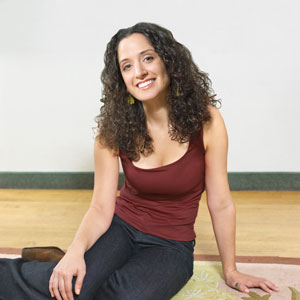
I Interview Author Naama Goldstein

Tuesday night I interviewed Naama Goldstein, author of the short story collection "The Place Will Comfort You." Listen here.

The interview was part of my series on American-Jewish literature.

As a child, Naama dreamed of becoming "a painter or illustrator."

Luke: "And how did you realize that writing was your art?"

Naama: "It was kinda accidental. We didn’t have much in the way of creative writing in elementary school or high school, but toward the end of elementary school, probably sixth grade, a teacher assigned a personal essay, which was really novel. I wrote a silly but lively thing about being a fresh big sister to a baby and the tussle between the urge to go comfort him in the middle of the night and the urge to run away. I read it in front of the class. It caused a shift in my personality. I was very introverted, but reading this, I became quite the performer and enjoyed that transformation and the attention from the teacher. That planted the seed."

Luke: "Tell me how the flame developed from there."

Naama: "It was not a steady thing. I did not write for myself or anyone else until much later. As I became more disaffected as an adolescent, I wrote some parables against conformity and fundamentalism, very bad but very righteous. Then I started writing some terrible poetry. That sealed it (late high school).

"Even though I started in Israel, I was writing in English."

"I was raised by American parents in Israel. I was born in the States, but now most of the time I speak in English. When I write in Hebrew, I’m kinda rusty."

"My writing path was pretty erratic. I didn’t stick around any one place long enough to form long-term relationships with any mentors."

Luke: "What were the most interesting reactions you’ve received to your book?"

Naama: "To the texture of the prose. I never expected people to react so much to my voice. I didn’t spend a whole lot of time thinking about it. It’s a natural thing. At times it got pretty hard to take when the what of the stories got overlooked in favor of how I write and how the language sounds odd to some people."

Luke: "Did you suffer much doubt that you had a book inside of you worthy of coming out?"

Naama: "Sure, and still do."

Luke: "Nobody seems to find any comfort in this book."

Naama: "Let me think. Let me do a quick run through. Let’s see, who’s happy? No, no, you’re probably right. It is a salutation to the grieving so what do you expect? Israel is a painful place. It was founded on top of a bleeding wound and it continues to bleed in all kinds of directions, people turn to it for all kinds of reasons, good and bad. It’s not meant to be a Hallmark Hall of Fame production. That it’s not a comforting read does not bother me much."

Luke: "Why do you choose to live in the United States?"

Naama: "This is where I am. We owe it to every place, to every life, to try to form a bond where you are. My life was marked by so much back-and-forthing, I feel that I want to try settling. To say that after 20-something years of being here tells you something about the viability of that desire. I have a fear of being addicted to wanting to be elsewhere."

Luke: "A major reason I live here is because it is easier. What role does ease play in your decision to live in the United States?"

Naama: "That’s a tough one to answer because I’ve never experienced living in Israel as an adult. I’m told it is not easy living there and not for the obvious reasons of security. Right now the economy is so crushing here…"

Luke: "Are there any transcendent non-rational things you believe in?"

Naama: "I’m totally irrational. I believe in the evil eye. It’s something I picked up growing up in Israel. I hate tempting fate. I’m afraid of saying things are going well."

Luke: "From your first-hand experience, what have you loved and hated about Orthodox Judaism?"

Naama: "I loved the absolute reliability of the experience of elevation. It’s like clockwork. Every Shabbat, every chag (Jewish holiday). For the observant, with every practice. There are so many during the day. Then you go back to the same thing, that can be so terribly constricting. The requirements to conform to these delineated guidelines that are so intricate that it is staggering… There are specifications for every behavior, it can become like madness after a while."

Luke: "Perhaps my primary motivation for writing is my frustration with real life. I’m curious, where does your urge to write and create come from?"

Naama: "I think that’s very well put. It’s a similar thing, a restlessness. Things that stick to you like burrs, things you wish you could change or understand or wish you could resolve more satisfyingly. You can make that happen, at least aesthetically, in writing. You take an incident and imbue it with meaning."

Luke: "Under what emotional states do you do your best work?"

Naama: "I write a lot better when I’m happy. I write best when I come in contact with self-acceptance. As an example, an approach that seems, well, here comes the evil eye thing again, I’m afraid to say it because it won’t work out, what seems to be working is to recognize that I have the attention span of a squirrel, and so to work on three or four things in parallel and that keeps me happier. If I don’t accept that, I try to work on one thing and I don’t do anything all day and that just breeds further frustration."

Luke: "What are your strengths and weaknesses as a writer?"

Naama: "I’ll start with weaknesses. That’s a lot easier. Discipline. Imagination. I feel that my imagination is lacking. I depend on what happens, on what I’ve seen, and I can’t make things up. I’ll put things together. All my stories are total Frankensteins. None of them are autobiographical.

"I’ve never gotten around to strengths. That’s too dangerous."

Luke: "Out of all the jobs you’ve held, which have you enjoyed the most? Accountant?"

Naama: "No, that was terrible. I liked bartending. I liked being around a lot of people… I liked working with the mentally ill though at times it was unbearably difficult.

"I can’t call it a job, but in the last few years, I began doing a little community organizing. I started this initiative and it’s probably the most fun I’ve ever had. I wish I could get paid for it… I started up a tiny mothers group of Israelis and it’s turned into a hundred families that meet regularly. Like most writers, I’m an observer. I prefer to be on the sidelines, but at the same time I crave social settings, so it’s the perfect setting to be in where you bring everyone together."

Posted in Author Interviews, Jewish Literature | Tagged , , , , , | Comments Off on I Interview Author Naama Goldstein

The Joys Of Literature

Here are excerpts of novelist Diana Spechler’s recent blog posts:

The book club was held around a long wooden table in the library of the retirement home. The members (all women) trickled in, dressed to the nines in khaki pants over stockings and slippers, or smart appliqué sweat suits. When everyone was seated, one more woman entered the room. “I’m late!” she said, rushing—to the extent that an old person can rush—to an open seat, which happened to be next to mine. She had curly white hair and big purple plastic earrings. She settled in beside me, took my hand in both of hers, gave me an enormous smile, and leaned in close. She gazed into my eyes. She sighed.

I love you, too, I almost said.

“You’re the author?” she said.

“I am,” I said.

Her smile got even wider. “Honey,” she said.

“Yes?”

“I hated your book.”

“What?”

“I hated it.”

“Oh,” I said. I pulled my hand back like she’d bitten a chunk out of it. “Um,” I said, thinking of the eight graphic sex scenes, “did it offend you?”

“No,” she said cheerfully. “I hated it because it was bad.”

DIANA SPECHLER BLOGS:

Moving to New York City is sort of like moving to a Third World country with excellent tap water. First and foremost, you must learn the language: walk-up, the L, bodega, Nolita. Then you have to lower your standards: You dine with mice. You live in a closet. During rush hour, you stand in the subway, resting your face in a stranger’s armpit.

You accept jobs you haven’t had since college, or jobs you wouldn’t have touched in college: You are twenty-seven years old and tending bar on the day shift. You are twenty-seven years old and walking a bouquet of poodles. You are twenty-seven years old and standing outside a comedy club, freezing your ass off for five hours on a Sunday, forcing fliers on innocent passersby.

“Comedy show!” you scream in their faces. “Everyone likes to laugh,” you shriek without cracking a smile. You are like a telemarketer in person. You are uncharacteristically aggressive. You are horribly annoying. Your job title is part of the foreign, exotic-sounding New York City lexicon:

You are a barker. You are one who barks.

I moved from Rhode Island to Manhattan two years ago, an impulsive, passionate, I’m-going-to-do-something-for-myself-and-pretend-I-usually-don’t decision, the kind that comes from reading too many women’s magazines filled with columns called Take a YOU Break and All About You, You Fabulous Woman!, a decision I called “liberating,” by which I meant, “similar to jumping off a sky-scraper.” I had no money, no plan, no job, just an East Village apartment that a friend said she’d sublet to me while she spent six months in Michigan.

For the first few weeks, I holed up in that apartment, surfing Craig’s List, first scanning the teaching jobs, then sliding gradually down the employment totem pole until I landed on an ad that said, “HOT girls needed to work the door at a HOT comedy club. Email pictures.”

I called one of my friends and read her the ad. “Can you believe it?” I said. “It’s like, demoralizing. I would never!”

Always one to look on the bright side, my friend pointed out, “It’s better than stripping. Or escorting.”

I didn’t tell her that I was broke and desperate enough to have considered both, that the only thing stopping me was my fine breeding, a.k.a. my mother’s voice in my head: “Sex is not a recreational activity…You can’t go to synagogue with your knees exposed!…The only man you can trust is your father.” But working at a comedy club was a far cry from prostitution.

DIANA SPECHLER BLOGS:

Recently, I was working at the bar when a drunk guy approached me. “How’s the book going?” he asked.

“Good, good,” I said, smiling. “Thanks.”

“Yeah? You traveling all over?” “Yup,” I said. “Lots of traveling.”

“Are you going to forget me when you’re famous?”

I looked at the man. He was wearing a suit. He was sweating from his forehead a little, the way men sometimes do when they’ve had too many drinks. His tie was loosened and crooked, like a caricature of a drunk guy. He was grinning down at me, swaying slightly on his feet. I had no idea who he was.

“You?” I said. I gave him a friendly punch in the arm. “You I could never forget.”

LUKE SAYS: I long for the days when people said to me, "Are you going to forget me when you are rich and famous?" I used to get that a lot a decade ago. "One day I’m going to see you on CNN," that sort of stuff. Not so much anymore.

Posted in Diana Spechler | Tagged , , , , , | Comments Off on The Joys Of Literature

A Taste Of Limmud

LimmudLA is Feb. 13-16.

I’m gonna do a fundraiser on my site to send me to LimmudLA.

I’ll trade back rubs and script consultations for room and board.

Tonight’s program is 1.5 miles away.

It’s cold out. It might snow tonight down to 2,000 feet.

I listen to a CD of Henry Miller’s book "Tropic of Cancer" while I walk.

I arrive ten minutes early. It’s 7:20 p.m. I beat everyone to the show but the organizers.

Such shame. Why must I make it so obvious that I have no other prospects on a Saturday night?

Oy, I lug my Seraphic Press man purse inside and my big heavy leather jacket.

The heat is on. The heat is oh on. It’s on the street.

I drink Sleepytime tea. I eat two chocolate chip cookies. I have two helpings of fruit.

I engage in "Nefesh Bliss" — a Jewish yoga class taught by Rebecca Rosen.

I’m so tired I can’t raise my hands above my head for longer than 30 seconds.

I want to go to the "Why can’t LA Jews support great art?" class but I am too tired to leave my chair. I catch Lisa Klug’s class on "Cool Jews." The concept troubles me. If Jews are cool today, then surely a day will come when Jews are not cool. Oy, then there will be camps. I’ll die in the camps. I’m so tired. I can’t move my arms.

It’s a long walk home.

There’s Rabbi Weil’s house. There’s Rabbi EtShalom’s. There’s Rabbi Kanefsky’s.

It’s cold.

 Boss:  bum
 Boss:  you’re the blackest jew i know
 Boss:  your hebrew name is charcoal
 Luzdedos1:  i will flourish during the obama years
 Luzdedos1:  get a job at the post office
 Boss:  bum
 Boss:  where  is your sense of ambition
 Boss:  you are not a jew
 Boss:  i hope your phone is working tomorrow

Posted in Limmud | Tagged , , , , , , , | Comments Off on A Taste Of Limmud

The Jewish Community Foundation Of Los Angeles Victimized By Bernard Madoff Ponzi Scheme

Bernard Madoff has taken many charities for a ride, including the Jewish Federation in Los Angeles.

Cathy Siegel Weiss and Marvin I. Schotland write Dec. 13 to their  Jewish Community Foundation [Los Angeles] board of trustees:

It has come to our attention that the Jewish Community Foundation [Los Angeles] is included among a number of major institutions as well as individuals who may have been victimized by an alleged fraud. We felt that it was important to share with you what we know at this point.

As you may have heard, on Thursday Bernard Madoff, a prominent member of the Wall Street investment community, and his investment firm were charged by the Securities and Exchange Commission with securities fraud for a multi-billion dollar “Ponzi scheme” that he allegedly perpetrated on clients of his firm. Regretfully, the Foundation was one of those clients. Mr. Madoff was highly regarded and his firm has been one of the most prominent firms on Wall Street for decades. We were shocked to learn of this alleged fraud.

Thankfully, none of the Foundation’s Donor Advised Funds were invested with Mr. Madoff’s firm and thus suffered no loss. However, the Foundation’s Common Investment Pool, which primarily consists of the Foundation’s permanent endowment funds and agency custodial funds, including the United Jewish Fund endowment, invested funds with Mr. Madoff’s firm in an amount aggregating $18 million. At the end of October, the investment was valued at approximately $25.5 million out of a total of approximately $238.6 million, representing approximately eleven percent of the assets in the Common Investment Pool.

The Foundation has engaged counsel and we are in the process of determining and assembling the relevant facts. We intend to thoroughly investigate and evaluate all of the facts surrounding this situation and to review the relevant policies, and we will make appropriate modifications in the event they are warranted. We are not in a position to comment further until we complete our factual investigation. As we acquire additional new and material information, we will keep you informed. Our intention is to be totally transparent as we work through this matter together. Notwithstanding any loss that the Common Investment Pool may experience as a result of Mr. Madoff’s conduct, we are proud of the Foundation’s long term record.

Given the delicacy of this situation and the lack of clarity surrounding the situation at this time, we must ask you, as members of the Foundation’s Board of Trustees, to refrain from discussing the Foundation’s relationship with Mr. Madoff beyond the facts stated in this letter.

Please feel free to contact either of us if you have any questions.

Sincerely,

Cathy Siegel Weiss Marvin Schotland Board Chair President and CEO

Posted in Abuse, Jewish Federation | Tagged , , , , , | Comments Off on The Jewish Community Foundation Of Los Angeles Victimized By Bernard Madoff Ponzi Scheme

Wall Street & The Jews

HymenRothofMiami:  Young man
HymenRothofMiami:  The New York press is all over the Jewish angle regarding this latest wall street scandal.
HymenRothofMiami:  Apparently he took down a lot of monied Jews.
HymenRothofMiami:  As he "did the Jewish circuit"
HymenRothofMiami:  I’m thinking of distributing pushkas to help take care of their needs
HymenRothofMiami:  May I put you down for one?
YourMoralLeader:  no
HymenRothofMiami:  Jew hater.
HymenRothofMiami:  That’s all I see on your web site, hatred of REAL Jews.
HymenRothofMiami:  The only time you show respect to any Jew is where you think you can scam them for money or have sex with them.
HymenRothofMiami:  There is no charity in your goyishe heart.

YourMoralLeader:  i like philip roth
HymenRothofMiami:  Roth was a w**ker.
HymenRothofMiami:  Roth will never win a Nobel Prize for literature.
HymenRothofMiami:  That "shiksa" writer person – is she hot?
HymenRothofMiami:  She cannot betray what you do not give her
HymenRothofMiami:  A warm hot body in one’s bed is a good thing – the third Satmar rebbe
HymenRothofMiami:  Do you have a hot date lined up for tonight?
HymenRothofMiami:  You need to get busy or it will be Craigslist for you.
HymenRothofMiami:  And no amount of medication will undue that damage
HymenRothofMiami:  OK, here’s what these Jewish feminist writers go wrong – they overthink things.  What men want is a hot looking woman who thinks the world of them and who acts like she’d make a good wife and mother.  Men, and that includes Jewish men, are not looking
HymenRothofMiami:  for an "equal" or to be challenged or for soul mates or any of that crap.  We are very simple.
HymenRothofMiami:  Nor do we give a crap where you went to school or your fabulous job or for your cats or the intensity with which you practice yoga
HymenRothofMiami:  Ditto your ipod playlist, ditto where you feel that you belong in Judaism
HymenRothofMiami:  On the other hand, do you tart yourself up just enough?
HymenRothofMiami:  Do you smell good?  Are you fun to be with?  That we care about.
HymenRothofMiami:  Luke, spread the word

From the WSJ:

It began on the radio this summer. New York Assemblyman Dov Hikind ran a segment on his Saturday night talk show titled "We Are Only as Sick as Our Secrets: Sexual Abuse, Healing the Shame," featuring graphic accounts of sexual abuse of children in the ultra-Orthodox Jewish community in Brooklyn.

There had been a few high-profile cases before, but this "was when the floodgates opened," explained Mr. Hikind, an Orthodox Jew himself. Following the show, additional victims and their family members came forward to share with Mr. Hikind their own stories. "Cases of sexual abuse are not worse among the Orthodox," clarifies Mr. Hikind. "But when there’s a problem and you don’t deal with it, it gets worse." Over the past few months he has collected hundreds of testimonies spanning several decades, naming at least 50 alleged pedophiles across the tri-state Orthodox Jewish community, including well-respected rabbis and teachers.

But now these testimonies have become a source of contention. They have been subpoenaed for a civil suit by a lawyer representing six former students of Rabbi Yehuda Kolko, a longtime teacher at one of Borough Park’s leading all-male yeshivas, who has been charged repeatedly since the 1980s with sexually molesting his students. (Last year Rabbi Kolko pleaded guilty to child endangerment.) The problem is that Mr. Hikind had sworn to keep the testimonies confidential.

Mr. Hikind claims he will "do the right thing" about the subpoena without betraying the names of any of the victims. While he will not hand over his complete list of alleged perpetrators, he says that "we are starting to share names" with Brooklyn District Attorney Charles J. Hynes.

Many people give Mr. Hikind credit for bringing much needed attention to an issue in the Orthodox community that has frequently been swept under the rug. (One exception to the silent treatment was the Orthodox Union’s creation of a special commission in 2000 to investigate the sexual abuse charges against Rabbi Baruch Lanner, leader of the National Conference of Synagogue Youth, who was later convicted.) He also deserves credit for getting victims to talk at all. Mr. Hikind says that he encourages each victim who comes to him to go directly to the police, but no one is willing to. They are too afraid of the repercussions for themselves and their families in terms of reputation and marriageability.

FROM HAARETZ, REMEMBERING RABBI MICKEY ROSEN:

Tributes came in from all over the world for Rabbi Michael (Mickey) Rosen, one of the most popular and most revered Anglo rabbis in the country, who died Sunday in Jerusalem, aged 63.

Rosen had a rare condition called Mitochondrial myopathy. He had been in a coma for three weeks after sustaining serious injuries in a fall.

…At around noon the house was filled with around 100 people of all ages and religious orientations. Relative and visitors spoke animatedly, recalling fond memories of Rosen that touched on his deep spirituality and the respect and openness with which he greeted every person he met.

"At the funeral, so many people came up to me and told me that Mickey had completely changed their lives," Katzersdorfer said.

"It reminded me of when he was the rabbi of Sale, a suburb of Manchester, in the 1980s. Under his influence a whole group of people became so enveloped in yiddishkeit, that they all immigrated and moved to Jerusalem together. He was the hero of the town, but not because of that. They loved him because he played on the football team," Katzersdorfer said.

"For somebody who believed as deeply as he did and was so careful about Halacha, his openness toward secular wisdom, his seeing truth in secular wisdom and his progressive, liberal political understanding, were a special and valuable contribution to religious life in this country," Rabbi Levi Lauer, a close friend, said.

"In Israel, religion is often seen as something primitive, people either practice it even though they see it as primitive, or they don’t do anything at all," Rabbi Yehoshua Engelman, who was the rabbi of Yakar in London before being recruited by Rosen to lead the new Yakar branch in Tel Aviv, said.

"Mickey was someone who passionately tried to show that the Jewish God is also an intelligent God. In Yakar, he showed that religion is not primitive, that it can be worthwhile, that it can classy, intellectual and serious and also spiritual, deep and challenging. Mickey always wanted people to challenge themselves."

Posted in Abuse, Personal | Tagged , , , , , , , , , | Comments Off on Wall Street & The Jews

‘The Shiksa Syndrome’ II

Dec. 4. Watch here. Temple Israel

(My previous interviews with Laurie.)

Laurie: "I was talking to Luke Ford. He has a great blog. He was interviewing me for Good Frog. We were talking about stereotypes… You can identify. So much of what I write has to do with New York. That’s why I felt like a fish out of water when I lived here… After the traffic here today, I’m never coming back. I can’t handle it."

Laurie talks about her childhood. "We all went to the Young Israel of Sunnyside. It was close. It happened to Orthodox but nobody paid any attention to that.

"We had a very small kitchen. I’m at Young Israel one day and the rabbi said one day, ‘Who has two sets of dishes?’ Everybody raised their hand… I raised my hand to say that we only had one set. He said, ‘You? Star pupil? You only have one set?’

"There was so many cracks like that, I had to leave.

"I went to the Sunnyside Jewish Center. It was Conservative but Rabbi Alber was Orthodox. When it came time for me to be bat mitzvahed, I got a lot of mileage out of this in my books Shiksa Syndrome and You Have To Kiss A Lot Of Frogs. He wouldn’t let me daven. He wouldn’t let me chant the haftorah. He wouldn’t let me sing. I was a show-off. It was very disappointing to me. I’m not over it yet."

"I was a really good girl. I didn’t rebel about anything until I was 15, 16… The orthodontist said don’t chew gum with braces, I stopped chewing gum at 11. I’ve never chewed another piece. The rabbi said you were supposed to come every Saturday, I did it… It became a part of me. I was surprised to find out it wasn’t part of the rest of the family."

"This is my first temple [on The Shiksa Syndrome book tour]. I’ve done bookstores. It’s different."

"There’s a big product launch in this book because she’s [the protagonist] in consumer PR. I got this real guy Romi, who has a cosmetics company, I wrote all his products in, then I had him create a lipstick called Shiksa Goddess that I wrote in fictionally. That was part of the mail-in I wanted to do to give it a more universal appeal."

"People have shied away… The women, it depends where they are in life. If they’re with somebody that they’re happy with, they’re not [happy with the book]. Some of the interviewers I’ve had have been very interesting. This Jewish Book World reporter said, ‘I started your book at 10 p.m. and finished it at 5:30 a.m. I love it but in the end I found it a little hopeless, a little depressing, that I’m not going to find that kind of Jewish guy.’ I don’t know that I will. I don’t feel so bad about it. Out of all the Jewish men I’ve dated, which have been tons and tons, most of them have had little connection and it has been very difficult. I couldn’t even get them to come to Rosh Hashanah for an hour."

Cantor Danny Maseng: "I hope you don’t get over the fact that the rabbi didn’t allow you to pray Saturday morning. Maybe Judaism would more relevant to a lot of people if they didn’t get over it. How much of a number do you think that did on the men? If the message is that you don’t count, why would I want to date you?"

Laurie: "That’s very interesting. I told you how brilliant he is. I never thought about that in that way."

"Every week, I wrote this in Frogs, Rabbi Alber came and at the end of Shabbat services there are all these prayers that conclude the services. This rabbi played the guitar, which was a big deal in Sunnyside, Queens. It was very joyful, it was wonderful. They would split up the concluding prayers into eight things. They would always come in and ask people in Hebrew school who’s going to lead Anim Zmirot, Adon Olam… I’d always say me, me, but they’d say, oh, very cute… When my brother was bar mitzvahed, he’d chant the whole Mussaf service."

Question: "Do you have controversy here in this temple?"

Laurie: "Was there? I don’t know."

Danny: "Yes. Yes."

Stefanie Steingold: "There was a little bit of controversy here from a couple ends. An older generation, the word [shiksa]. When the event was brought to me and Terry and I talked about it, shiksa to me as a 25 year old woman is not pejorative at all. It’s funny. It is what it is — a non-Jewish girl. Some of our older staff members did not look at it the same way and immediately saw it as offensive. Then we had people in the congregation who saw it as offensive, one woman said it was offensive to her as a non-Jewish woman. So, yes."

Laurie: "But she didn’t read the book, so she doesn’t know."

Stefanie: "Right. That’s, honestly, based on the cover."

Laurie: "It’s crazy. I thought I was going to write an interfaith thing, which I didn’t. I called the JCC in my neighborhood on the Upper West Side. I wanted to sit in on this inter-faith class. I got a message back from this female rabbi.’A. I’d never let anyone sit in. B. I’d never support any book with that title, The Shiksa Syndrome.’

"I thought, ‘Who’s in her class? Tons of Gentile men becoming Jewish? I don’t think so. It’s non-Jewish women.’ My friend Jamie thinks this is a very feminist book.

"I met this morning with the with agents trying to sell this as a movie and they’re having a hard time, finding it’s too Jewish. The Big Fat Greek Wedding is not too Greek? Angela’s Ashes and Roots, but Jewish? Becomes too Jewish."

Woman in the audience: "A lot of the producers are Jewish."

Laurie: "A lot of the men who would produce this film are exactly the men with this thing."

Danny Maseng: "The amount of Jewish boys I knew in New York who’d say that they’d rather eat nails than date a Jewish girl…"

Laurie: "Most Jewish people I know don’t care [what denomination a non-Jew] is. He’s not-Jewish. Who cares what he is?"

"In the first scene, Peter [her first boyfriend] says, ‘You never ask me how I feel about being Episcopalian.’ And I wanted to write, ‘That’s because I don’t care. You’re just not-Jewish.’

"I had to look at myself and it was horrible."

Woman: "You’re marginalizing someone…"

"You weren’t comfortable here in LA…"

Laurie: "And I didn’t get a TV series. I wasn’t even close. That might’ve swayed me."

Laurie says she’s never been to Israel.

"If you want to be my friend, add me to Facebook. It’s all very very important now to get elected, to sell a book. I will confirm you. If you read the book and have something nice to say, please a review to Amazon. If you don’t have anything nice to say, don’t say anything at all. That’s an old Jewish phrase. That’s why I’m still single, because I say things like that."

Posted in Author Interviews, Jewish Literature, Laurie Graff | Tagged , , , , , , , | Comments Off on ‘The Shiksa Syndrome’ II

‘The Shiksa Syndrome’

Dec. 4. Watch here. Temple Israel

(My previous interviews with Laurie.)

Author Laurie Graff, who lives on Manhattan’s Upper West Side, dropped her pet at doggie daycare on Highland before coming tonight.

Laurie: "It’s my brother’s birthday this Saturday. He has a big party. I was coming out for this party. My book was released last month. How could I come to Los Angeles and not do things? You need to have friends in high places. My really good friend Terry Feinstein’s husband Danny Maseng is the cantor here. I lost my good neighbors from upstate New York. They moved out here in July and hooked up with Stefanie [Steingold].

Laurie: "The origins of this book were born when I lived out here in Los Angeles. I moved out with a bunch of friends… My friend Ellen came out and brought me into a writers group that Susan Mercin (sp?), a member of this synagogue, leads.

"I was having dates out here with some of the identical men I had dated in New York. Everybody moved out [here] to break into television, etc. I had played all the counter girls in TV commercials. It seemed like I was from Pennsylvania. It was very nice. People would say, ‘She’s cute! The shiksa!’ It was always a compliment. Nice. Then I came here and it was like I was wearing a neon sign saying, ‘New York Jew!’"

"I had a date two weeks ago…and I offered to get some cookies and he said, ‘Don’t be so Jewish!’ Would somebody say, ‘Don’t be so Italian’?"

"There are all these assumptions that happen and they keep people separate."

"When I was out here and noticed this, I started to say, ‘Hmm, maybe this guy has a bissel shiksa syndrome.’ I started to write about it. I wrote a four page essay that turned into a short story that turned into the arc of my first novel, You Have To Kiss A Lot Of Frogs."

"When it came time to write another book, my agent said to me, ‘What do you want to write?’ I said, ‘It’s such a pity. I used ‘Shiksa Syndrome’ in ‘You Have To Kiss A Lot Of Frogs’ as the arc. It would’ve made a great stand-alone piece.’ She said, ‘Do it! Keep the same premise. A Jewish girl pretends to be a shiksa to catch a Jewish guy. And make up a whole new story and a whole new character.’"

"I started to think, what kind of girl would do this, aside from an actress? There’s a certain amount of fantasy in this book where you just stretch because the girl goes deeper and deeper… She digs herself into this lie that happens quite accidentally."

"I’ve been working in PR these past half dozen years. I started to think about branding and back to the assumptions. People buy brands… This girl represents a girl I’d want to be."

"In the original Heartbreak Kid with Charles Grodin, nobody said Jewish but if you watch carefully, when he marries Jeannie Berlin in the first scene, he is wearing a yarmulke and they break the glass, and Jeannie Berlin is portrayed as this awful whiny nasal kvetchy [wife]… Maybe that’s what they had to do to this Jewish woman so that you would buy that he didn’t want to stay married to her. Then he meets Cybil Shepard on the beach [the quintessential shiksa]."

"I pitched this book to Shape magazine last week. I told this editor the title of the book. She laughed. I asked her if she knew what a shiksa is. She said, ‘I sure do. A shiksa is a very attractive blonde woman who likes Jewish men.’"

"I was talking to Luke Ford. He has a great blog. He was interviewing me for ‘Good Frog’. We were talking about stereotypes… You can identify. So much of what I write has to do with New York. That’s why I felt like a fish out of water when I lived here… After the traffic here today, I’m never coming back. I can’t handle it."

Posted in Author Interviews, Jewish Literature, Laurie Graff | Tagged , , , , , | Comments Off on ‘The Shiksa Syndrome’