Rabbi Shmuley Boteach’s Nephew Faces 10-Year Sentence For Arms Dealing

From the Orlando Sentinel:

But his mother, Ateret Diveroli, said her son’s story is one of a young life that unraveled. His quick wealth fueled drug use, gambling and an alcohol problem.

“It’s like when somebody wins the lottery at a young age … that’s what happened with Efraim,” she said. “He threw everything away and got nothing in return.”

Diveroli said her son, now 25, grew up in a close-knit Orthodox Jewish family in South Florida that taught him community and religion are what’s important in life. So are dignity and respect.

“I was raised that your word is everything, and you live by the law,” said Ateret Diveroli, who lives in Miami Beach.

But Efraim Diveroli chose a different lifestyle.

His mother said he started using drugs as a teen, and when he was about 16, she sent him to Los Angeles to work for her brother, who was in the munitions business.

…Diveroli’s uncle, Rabbi Shmuley Boteach — a nationally known author who hosted the “Shalom in the Home” series on the TLC network — told a federal judge during a sentencing hearing that his nephew was a millionaire by 18. Diveroli’s last reported address is a multimillion-dollar Miami Beach condo.

“No one stopped his excess,” Boteach said in January, according to a hearing transcript. “He had a rocket strapped to his back with absolutely zero moral guidance.”

Posted in Shmuley Boteach | Tagged , , , , , | Comments Off on Rabbi Shmuley Boteach’s Nephew Faces 10-Year Sentence For Arms Dealing

Kabbalist To The Stars Accused Of Fraud

FailedMessiah reports:

The father in law of Rabbi Yoshiyahu Pinto says the kabbalist to the stars used him to launder money.

Rabbi Shlomo Ben Hamo is the Chief Rabbi of Argentina. His daughter Deborah is Pinto’s wife.

In a court filing paraphrased by the Israeli daily Ha’aretz, Ben Homo says Pinto tricked him into opening a bank account in Argentina for his daughter and her husband, and then tricked him into cosigning for a luxury Jerusalem apartment valued at more than $1 million.

Allegedly, the Pinto’s never paid the developer a dime.

The developer is suing Ben Homo because he guaranteed the loan.

Ben Homo says the developer should be suing Pinto.

Pinto, a “kabbalist” and “mystic” from a Moroccan Jewish rabbinical family, is an advisor to Israeli business leaders, celebrities and politicians, and to leaders of Israel’s expat community in New York and Los Angeles.

Pinto, who splits his time between the Israeli city of Ashdod and New York, also advises non-Jewish celebrities, including LeBron James, who allegedly left Cleveland Cavaliers for the Miami Heat in pursuit of an NBA championship ring and more money on Pinto’s advice.

Pinto’s New York finances are also in disarray, with a multi-million dollar property on the verge of foreclosure and the financial dealings of his organization shrouded in layers of secrecy.

Ben Homo wrote that he tried to refuse Pinto’s requests, but his daughter repeatedly pleaded with him to agree, telling her father that his refusal was causing strife in her marriage.

Posted in Abuse, Orthodoxy, Pinto | Tagged , , , , , | Comments Off on Kabbalist To The Stars Accused Of Fraud

Jewish Law And The Internet

Rabbi Ari Kahn writes: As in many other aspects of the “world wide web,” the search for halacha is a mixed bag. While some sites have a plethora of quality classes, lectures and articles on all aspects of Jewish thought and law, there are many other sites that contain information of wildly divergent quality and reliability. In addition, all types of “discussions” may be found on blogs, where the banter is anonymous and participants feel free to hurl invectives, insults and even give “rulings” on matters of Jewish thought and practice. As often as not, the ideas and opinions expressed on blogs are not authoritative, or may be nothing more than one anonymous individual’s opinion. Often, these blog discussions are illustrative of the confluence of several modern trends: A halachic discussion on the web may be nothing more than a cycle in which one blogger quotes an overly stringent ruling or opinion found in a modern English halachic compilation, and respondents express the almost inevitable backlash to the trend of creeping stringency. Even when bona fide halachic rulings are quoted, these were originally handed down regarding a particular, specific or even an extreme circumstance. Such opinions often pass as general and binding “halacha” in discussion blogs of this sort. The result is a type of discourse so devoid of seriousness as to be unparalleled in the annals of Jewish learning.

And yet, as bad as this phenomenon is for the halachic community and for the integrity of Jewish learning, it is far less insidious than some of the other uses to which bloggers put the internet. There is something even worse than this misguided but innocent give-and-take between those who quote overly-stringent popular halachic literature and those who respond and react out of frustration: There are others who use blog discussions and websites to advance their own revolutionary agendas, who seek to change the mesorah by changing what is meant by halacha or even the need for halacha. We may go so far as to say that the disconnection of the halachic process from personal contact between the layperson and his or her spiritual and halachic mentor has unleashed the forces that had previously been held at bay by this very personal connection: Individuals and groups that seek to undermine the evolutionary processes that have enabled Jewish communities to respond and adapt to changing realities have become empowered by the internet, to an unprecedented degree. While these forces have existed in and around the halachic process for thousands of years, the counterbalance of direct contact with spiritual leaders has been replaced by equal and open access to a cold, impersonal computer screen that communicates specious ideas to vulnerable, isolated Jews.

Read On.

Posted in R. Ari Kahn | Tagged , , , , , | Comments Off on Jewish Law And The Internet

Michelle Bachmann Gets Better Each Day

On his radio show today, Dennis Prager said: “Michelle Bachmann is better and better each day, which is a big deal. It means a lot of things, including intelligence. It’s hard for a mediocre mind to adapt. It takes a facile mind to adapt. This is my new challenge. I will rise to it. It means she has a clear mind. She’s somebody to watch.”

“In tennis, you have to get the ball over the net. In politics, you have to inspire people to support you.”

“Rick Perry presented a grand vision for America. I found the delivery stilted. Michelle Bachmann has a fluent presentation of herself.”

“There are three great problems with Mitt Romney. One. He has changed his positions on a number of fundamental matters. Two. What is his grand vision? Third. Romneycare. I will go to my grave why Mitt Romney did not say, I tried it. It failed. Nobody knows better than I that government intervention in healthcare is a catastrophe. But he never says that.”

“I don’t know Rick Perry. I know the success of Texas.”

The WSJ still hopes another party enters the race for the Republican nomination.

“Income tax is an idea that has come and gone. Income tax creates a nation of cheats.”

“You either rivet people’s attention or you don’t. I’m not sure that it can be learned.”

“I want a God-centered candidate but he has to make a wider appeal than to just evangelicals.”

“I’m probably closer to Rick Santorum in my outlook than any other candidate but he won’t win.”

Dennis seemed worried that Rick Perry was too Texas and too Christian to be president of the United States. “Americans want a sophisticated president.”

“The vast majority of Americans would not know Rick Perry if he sat next to them on a plane.”

“This is the first time I’ve heard Rick Perry give a speech. I come in as a clean slate with Rick Perry.”

“If Joe Lieberman showed up at the Iowa State Fair in a yarmulke, that would’ve been odd. I don’t see what it gains.”

“It’s a thin line that politicians have to walk between being a regular guy and president of the United States. I would err on the side of the President of the United States.”

Posted in Dennis Prager, Michelle Bachman, Politics | Comments Off on Michelle Bachmann Gets Better Each Day

Holding Down The Body To Prevent Feeling

Psycho-therapist and Alexander Technique teacher Anthony Kingsley tells Robert Rickover: “Alexander Technique develops capacities for stillness, non-reactivity and inhibition, the capacity to not rush ahead and finish people’s sentences.”

“The pupil can say, ahh, I know I’m really holding myself, I’m gripping my jaw, I’m tightening my neck as a way of not feeling anxious or sad. I might bite my upper lip to not cry. I might tighten my breathing to not feel alarmed. I may hold my shoulders hunched and compressed as a way of not feeling my own anger. Alexander Technique makes a direct link between emotions and physical manifestations of emotion.”

Posted in Alexander Technique, Psychology | Tagged , , , , , | Comments Off on Holding Down The Body To Prevent Feeling

This Week’s Torah Portion – Parashat Ekev (Deuteronomy 7:12-11:25)

I discuss the weekly Torah portion with Rabbi Rabbs this Monday at 7:00 pm PST on live cam and on YouTube. Facebook Fan Page.

Tonight’s show comes from The House Of Rabbs channel.

Watch the video!

This week we study Parashat Ekev (Deuteronomy 7:12-11:25).

* An Orthodox rabbi declares publicly that he will no longer say the morning blessing, “Thank you God for not making me a woman.”

* How did you spend Tu B’Av (Jewish holiday of love)? This is not a Jewish Valentine’s Day. It’s not love and sex in the secular sense. It’s an undoing of the needless hatred that caused the destruction of the second temple.

* This world is filled with goodness and you should enjoy it. You should have children. Having kids is a sign of optimism.

* Deut. 7:15: God will remove from you every illness. Is this true?

In a sense, if you don’t do destructive things like man-on-man bareback buttsex, you’ll likely be spared all sorts of diseases such as AIDS. Don’t share intravenous needles.

* No wonder that Jews have so much confidence. God tells them that if they follow Him, they will be the most blessed of peoples.

* Is it easier to forget God if you are rich or if you are poor?

* Israel is the land where God watches you carefully and rewards and punishes with particular effect. Most people don’t want to be watched carefully. They want privacy. Most people don’t want an intense relationship with God. Many people may like dealing with me on occasion, but many of these people would not want me around them every day.

* Beware of arrogance. (Deut. 8:14) Life is a spiral staircase. We keep passing through four stages — dependence, feeling small in a big world, mastery and grandiosity.

* Egypt got its water from the Nile. Israel gets its water from the sky. Israel is hardwired for religion. It breeds a different mentality. The Egyptians worshiped the Nile and the Jews God. The modern equivalent to worrying about the rain is the stock market.

* Tapping into the wisdom of the Torah brings success, whether you are a Jew or a Gentile. Look at LeBron James who brought Rabbi Yoshiyahu Pinto with him to a major business transaction. The Torah is a book of wisdom and much of the wisdom is transmitted through its laws. The Torah is sacred to Christians as well as to Jews. If Muslims tapped into their Jewish roots, they’d become successful too.

* Deut. 8:9 “You will eat bread without poverty.” I can’t think of anything in Torah that says poverty is good. Material success is a worthy pursuit so long as it is done in accord with God’s commandments. Poverty sucks. Hunger sucks. Suffering sucks.

Artscroll: “The Land will have a thriving economy that will provide its population with the means to purchase whatever commodities they need.”

* When blessings are promised for observance of God’s commandments, it does not mean that every individual who observes them will be blessed. It means that ceteris parabis (all things being equal), you will be blessed. If you lived in a vacuum, you will be blessed. And the Jewish people in general will be blessed. But if a righteous man slips and falls in front of an onrushing car, he’s as likely to get crushed as a wicked man in the same circumstance.

* Deut. 8:11. How can you know if someone believes in God? By how they behave. Do they observe God’s commandments?

If you believe in God, how would people know it from your behavior?

* Deut. 9:1. “You will drive out nations greater and mightier than you.” Reminds me of the success of the IDF against Israel’s more numerous enemies.

* Just like 3,200 years ago, Jews are once again in a conflict for the land of Israel with people who sacrifice their children to their gods.

* Moshe tells the Jews that they are not getting the land of Israel because they are so righteous. This has echoes to this day. It was secular Jews who founded the modern state of Israel.

* Moshe had an unparalleled relationship with God and yet he was angry and miserable much of the time. So you can have an amazing relationship with God and it is not enough. We need people too.

* What does God want? Deut. 10:12-13, to love God with everything you’ve got and to follow all of His commandments. That’s a lot! That’s not simple. That’s all? That’s everything. What about the person who’s not interested in performing all of the commandments? Should he walk away or should he do what he can? Is God’s covenant all or nothing?

* Deut. 10:16. Do not stiffen your neck. There are more joints in the neck than anywhere else in your body and when you stiffen your neck, you send out ripples of compression throughout your body, stiffening you, tensing you, compressing your whole self. The Torah links a stiff neck with stubbornness. How you are in your body will affect your personality. If you are stiff and held in your body, you’ll likely be stiff in the way that you relate to people.

* New Zealand (which has a Jewish prime minister, John Key) is not a friendly place for Jews. Jewish animal slaughter is forbidden:

New Zealand has become the fifth country to ban kosher slaughtering methods, leaving the local Jewish community outraged. Agriculture Minister David Carter rejected his own advisers’ recommendation that Jewish ritual slaughter be exempted from a ruling that requires animals to be stunned before slaughtering.

The new regulation takes effect immediately, and New Zealand follows Switzerland, Iceland, Norway and Sweden as countries that prohibit Jews from performing ritual slaughter.


Posted in New Zealand, Torah | Tagged , , , , , | Comments Off on This Week’s Torah Portion – Parashat Ekev (Deuteronomy 7:12-11:25)

A Test For Sex Addiction

I answered yes to the following questions (many of the below questions I would not answer “yes” to for my life right now, but I’ve answered “yes” for times in the past, so while my life right now is tranquil, I know I have many self-destructive tendencies in this regard):

Have you ever tried to control how much sex to have or how often you would see someone?
Do you find yourself unable to stop seeing a specific person even though you know that seeing this person is destructive to you?
Do you feel that you don’t want anyone to know about your sexual or romantic activities?
Do you get “high” from sex and/or romance?
Have you had sex at inappropriate times, in inappropriate places, and/or with inappropriate people?
Do you make promises to yourself concerning your sexual or romantic behavior that you find you cannot follow?
Have you had or do you have sex with someone you don’t (didn’t) want to have sex with?
Do you believe that sex and/or a relationship will make your life bearable?
Have you ever felt that you had to have sex?
Do you believe that someone can “fix” you?
Do you keep a list, written or otherwise, of the number of partners you’ve had?
Do you feel desperation or uneasiness when you are away from your lover or sexual partner?
Have you lost count of the number of sexual partners you’ve had?
Do you feel desperate about your need for a lover, sexual fix, or future mate?
Have you or do you have sex regardless of the consequences (e.g. the threat of being caught, the risk of contracting herpes, gonorrhea, AIDS, etc.)?
Do you find that you have a pattern of repeating bad relationships?
Do you feel that your only (or major) value in a relationship is your ability to perform sexually, or provide an emotional fix?
Do you feel that you’re not “really alive” unless you are with your sexual/romantic partner?
Do you feel entitled to sex?
Do you find yourself in a relationship that you cannot leave?
Have you ever threatened your financial stability or standing in the community by pursuing a sexual partner?
Do you believe that the problems in your “love life” result from continuing to remain with the “wrong” person?
Have you ever had a serious relationship threatened or destroyed because of outside sexual activity?
Do you feel that life would have no meaning without a love relationship or without sex?
Do you find yourself flirting or sexualizing with someone even if you do not mean to?
Does your sexual and/or romantic behavior affect your reputation?
Do you have sex and/or “relationships” to try to deal with, or escape from life’s problems?
Do you find yourself needing greater and greater variety and energy in your sexual or romantic activities just to achieve an “acceptable” level of physical and emotional relief?
Do you need to have sex, or “fall in love” in order to feel like a “real man” or a “real woman”?
Are you unable to concentrate on other areas of your life because of thoughts or feelings you are having about another person or about sex?
Do you find yourself obsessing about a specific person or sexual act even though these thoughts bring pain, craving or discomfort?
Have you ever wished you could stop or control your sexual and romantic activities for a given period of time?
Do you find the pain in your life increasing no matter what you do?
Do you feel that you lack dignity and wholeness?
Do you feel that your sexual and/or romantic life affects your spiritual life in a negative way?
Do you feel that your life is unmanageable because of your excessive dependency needs?
Have you ever thought that there might be more you could do with your life if you were not so driven by sexual and romantic pursuits?

Posted in Addiction, Personal, Sex | Tagged , , , , , | Comments Off on A Test For Sex Addiction

What Happens In An Alexander Lesson?

From a website in the UK:

For the first lesson, if you are in pain then I would work with you on the table. All the ideas of Alexander can be put into practice while the back is supported by the table. We work on freeing the joints of the body, inhibiting habitual responses, understanding directions, encouraging the spine to lengthen and generally allowing an expansion of energy. You will be encouraged to practise this at home each day.

If we work on standing and sitting in the first lesson then the main thing to start with is how do you move? What is your awareness of your body? When you sit down do you pull your head back? When you stand up do you use your hands to lift you up? If you “sit up straight” for some time is this tiring? A lot of people have Alexander lessons because of poor posture. We work on strengthening the back through releasing excess tension and bringing back a spring-like quality, then posture improves. When the primary control is working well standing up and sitting down is effortless.

Posted in Alexander Technique | Tagged , , , , | Comments Off on What Happens In An Alexander Lesson?

The Evolution Of The Alexander Technique

From ATCPD.com: “Tom [Vasiliades] was trained and certified by the American Center for the Alexander Technique in New York City. He is certified by the American Society for the Alexander Technique and is a member of Alexander Technique International. Tom is the Chair of the Alexander Technique Department at The New school for Drama (formerly the Actors Studio Drama School at New School University) and is on the faculty at New York University’s Tisch School of the Arts and The Juilliard School. He has served as the Chair of the Board of Directors and President of the American Center for the Alexander Technique. He completed a two-year psychotherapy training program in Social Therapy — a psychotherapeutic approach that helps people, through performance, to reinitiate human development — at the East Side Institute for Group and Short Term Psychotherapy. He also studied with Carl Stough, the developer of ‘Breathing Coordination,’ an approach that creates a more organic breathing process. Tom works with performers, business people, athletes and people suffering with chronic pain, asthma, emphysema and other respiratory ailments.”

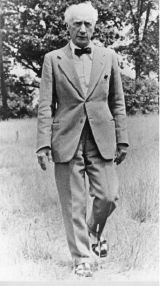
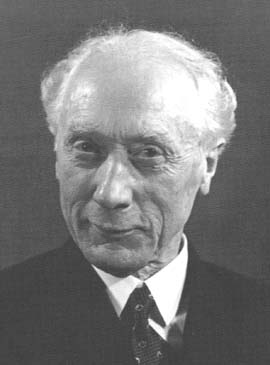
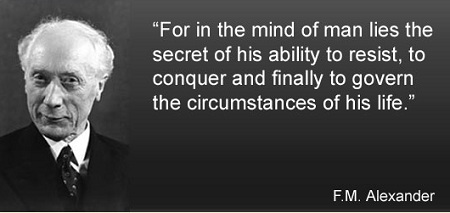
In an interview with Robert Rickover, Tom says: “The Alexander Technique was developed in the late 1800s by an actor in Australia named Frederick Matthias Alexander. He was on stage performing and he felt hoarseness and he lost his voice. He went to doctors. They suggested he rest his voice. That would do the trick.

“He did that. He went back out on stage. He felt hoarseness and lost his voice again. He decided that it must be something that he’s doing when he’s on stage performing that’s creating a loss of voice. He set up mirrors, a tryptych of mirrors. If you ever go to a tailor, you can look in one mirror and see all around you.

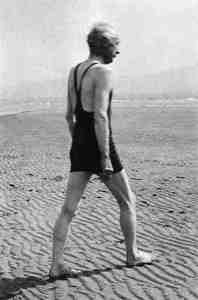
“He noticed that when he began to speak, he was shortening his neck and pulling his head back and down on to his neck, tightening in his throat, bracing in his ribs, shortening his spine, pulling his legs and arms into his torso. In short, he was compressing and constricting himself.”

Robert: “Those patterns were subtle. It took him a while to see them.”

Tom: “He lost his voice in the fall of 1892 and was able to return to the stage in the Spring of 1894.”

“He knew enough about vocal production to know that [compression] while you are trying to make sound will not make the sound you want to make.”

Robert: “He was speaking in large halls where there was no PA system and often these halls were filled with rowdy tin miners. He wanted to project his voice to the back of the hall and in attempting to do that, he exaggerated some patterns he had in the rest of his life and this caused his hoarseness.”

Tom: “When there’s some rigorous activity we do, the habit becomes more pronounced. More exacerbated but it is probably going on all the time.”

Robert: “What Alexander noticed about himself in the context of being a reciter is applicable to all of us in our everyday activities.”

Tom: “Alexander discovered a way that was helpful not only for breathing but for everything we do. He figured out a way to [stop doing things that get in our way] — inhibition. It’s a neuro-muscular term (not a Freudian term) where you can say to yourself, I’m not going to do the thing that harms me. I’m going to choose something that is better for me.”

Robert: “Alexander teachers are not about repressing stuff.”

Tom: “It’s not about repression or suppression in a Freudian sense. It’s about saying you are not going to do something that is harmful to you in a neuro-muscular sense.”

Robert: “Learning what to say no to is where an Alexander teacher comes into play.”

“A lot of us act like we want to take up as little room as we can. We tend to scrunch ourselves in. That interferes with all sorts of things like breathing and movement. Alexander lessons are a way to learn to undo that squeezing.”

“Most people assume that what they feel about themselves is an accurate understanding of what is going on but unfortunately, oftentimes it is not.”

“Pretty much everybody knows somebody who has an odd way of standing or walking, perhaps pulling to one side or leaning far forward or back. Chances are that that person is not conscious of those patterns.”

“Not doing the things that get in our way is something that distinguishes the Alexander Technique from every other method of physical self-improvement. The usual approach to solving a physical problem is to do some new thing. The Alexander approach is to find out what you are doing that causes the problem and to stop doing that.”

“I went for lessons based on reading about Alexander Technique. I didn’t notice anything in lessons for quite a while. I did notice that I had gained an inch in height and my clothes did not fit. I could only attribute that to Alexander. I knew good stuff was going on but I didn’t feel anything.

“It wasn’t until about halfway through my [three-year] Alexander Technique training course that I felt something happen during a lesson.

“Someone else might notice something is happening before you do.

“I had a straight job [when I took my first Alexander lessons]. I was working as an economist for the Ontario state government. I had to wear jackets and ties sometimes. None of the jackets fit any more and my pants were all too short.”

Tom: “In individual lessons I do a lot of chair work. Getting in and out of a chair. People wonder, why am I getting in and out of a chair?

“When we fold and unfold the legs, we put a demand on the organization of the head, neck and back. How do people respond to that? Do that do that by shortening the spine and narrowing the back? Developing that organization for upright posture is key to Alexander work. That’s why F.M. Alexander up until the time he died did work in a chair.”

Posted in Alexander Technique | Tagged , , , , , , | Comments Off on The Evolution Of The Alexander Technique

The Day I Met Michelle Bachmann

Last summer, I went to a rally for Israel outside the Jewish Federation on Wilshire Blvd.

Off to the side, I saw television cameras and Michelle Bachmann coming through. She was shaking hands and introducing herself to people before joining the big shots behind the microphone.

I think I edged out of the way. I don’t like politicians. I don’t like getting sold. I like to think of myself as above it all. I’m an observer. I like to be neutral. Don’t draw me into the dance.

I thought of Michelle as this flaky right-winger. I heard she was planning to run for president but I thought that was a joke. What had she ever accomplished?

Just looking at her, she seemed extreme.

She had presence. I’ll give her that. The air changed when she moved close to you. People responded to her. She had energy and she conveyed excitement.

I didn’t bother to blog about her.

I didn’t think much about her. I had no idea that a year later she’d be a presidential contender.

As I see her on TV and read reports on her, I’m impressed. She no longer comes across as flaky. She doesn’t nurse wounds and resentment like Sarah Palin. She learns from her mistakes. She seems much more intellectually serious than Sarah Palin. Michelle has her eye on the prize and has turned into a formidable campaigner.

About a month ago, I predicted that Bachmann would be the next president of the United States.

With Rick Perry’s entrance into the race, I now expect him to win the Republican nomination and then to go on to beat Barack Obama.

Posted in Michelle Bachman, Politics | Tagged , , , , , | Comments Off on The Day I Met Michelle Bachmann