Carla calls the Dennis Prager show today: "Men, instead of being honest and speaking from their heart, want to give the right answer so they’re not in trouble. That is not good. I don’t want a wimp who’s afraid to offend me and stay out of trouble. That’s a child, not a man."
"I have a son. I don’t want two. Each husband will have to tune it to his wife. Most women really don’t want a yes-man. It makes you lose respect for them. It makes you not want to have sex with them. There are a lot of issues wrapped up in this. And when a guy says, ‘What do you want me to answer?’ That’s like LOSER! WIMP!
"My husband will say, ‘You’re beautiful, but that shirt, you can look better.’ I don’t get offended."
Dennis: "If you gained weight, would he tell you?"
Carla: "Yep. He would. He has. He says I have a Botticelli body. He says, ‘You’re not fat. You’re just born in the wrong century.’
"It builds up distrust. We feel like they just don’t want to get in trouble. In all things, don’t think, what does she want me to say? That’s a turn-off. We want a man, not a boy. And you’ll get more sex that way."
The greatest writer of his generation feeling the length and breadth of his body, ready to slip his shoes off, his Blackberry crackling on his thigh, trading emails about Kundalini Yoga Teacher’s Training, and this old Asian woman next to me who’s reading a book on health, reaches into her purse, pulls out two dollars and hands them to me.
I protested for about 30 seconds but she insisted and I kept the money, worrying for the next two hours until I left what was the catch.
There was no catch.
I sometimes walk down Pico Blvd and homeless people offer me money, food, shelter and clothing.
Why?
I remember just before my 40th birthday, my girl Holly Randall said to me, "What do you get the guy who has nothing?"
She ended up buying me a hot water jug and some herbal tea. There were some other things, more personal, that I would’ve preferred but we weren’t together together then. She had sobered up and I was no longer a guest in her bed.
Why is this news? Thousands of people would line up for free car care. Thousands of people would line up for free money. A free healthcare clinic is the same as handing out free money. You get $100 worth of medicine for free.
Ryan Glaser emails: "Luke, Sometimes peep your site as a guilty half Jew. I noticed you offer services to repair one’s reputation–of little interest to me–but am wondering if you know much about search engine optimization. I write a humor site on the side that I recently chucked online (http://www.theperishablepress.com) and am wondering if you could be of assistance in terms of drumming up hits."
I write back on my Blackberry recommending the use of video linking to his website.
Ryan replies: Thanks for the advice on search engine optimization. Didn’t expect it to be free and thought you’d divulge more info at a price.
My father’s a Rabbi. I’ve tussled with Judaism my whole life. The fact some charlatan from Australia who’s a phony non-Jew claiming to be the "moral authority" of Jews blogs is high comedy. Stick to covering skanks with bolt ons and back tats.
Only in LA–the land of plastic–can a guy like you exist. if you were enlightened enough to remove ego from religion, you would realize your former associations disqualify you from throwing the word "moral" around. I’m gonna go shove a knife up my rectum for even knowing who you are.
I’m also going to pretend, as a pasty Jew, that I’m the "authority" on African Americans.
I think people who feel secure with themselves find most shuls to have a large amount of social equality, about as much as is desirable. For those with a chip on their shoulders, Jewish life revolves around the rich, blah, blah.
I’m thinking of a rich guy in shul who did not talk to mere mortals. Boy, was it a pleasure for me to stick the knife in when the time came. For those who are too high and mighty to return my gut shabbos greeting, I feel sweet when I get to deliver divine karma.
I’m often amazed when I learn after the fact who it was that I was sitting near in a shul or shmoozing with at a kiddush. Sometimes it turns out to be a multi-millionaire, sometimes a prominent communal leader, sometimes a working father struggling to earn a living, and sometimes an impoverished person. And I had no idea. In my experience, the Jewish community tends to do a pretty good job of breaking down class barriers.
Granted, there are neighborhoods where only the rich can afford to live or only the poor are stuck living. And there are some shuls that are snobby. But they seem to be unusual. In general, I’ve found that most shuls have a healthy mix of people from different economic circumstances. Moreover, unless you are someone who is quite conscious of these things, there is little way of knowing who is who. All men come to shul in a suit and — particularly in yeshivish and chassidish circles — many rich men do not wear suits that are any fancier than everyone else’s. Wherever there is some sort of uniform, that relative uniformity of attire irons out economic differences. You really have to be attuned to these things to tell who is rich and who is not.
And even if you can tell, most people don’t care. I remember in one shul where I was a regular, there was one boy who always came to shul with suit pants that were totally tattered on the bottom. It was only after I saw them that I thought about it and realized that, based on what his father does for a living and the number of kids in the family, they are just getting by — at best. After I noticed it, I kept a lookout to see if anyone treated that family any differently. I never saw anything.
Maybe it’s just because I don’t care about such things that I think it is the general attitude. But my impression is that Judaism allows for a good deal of interaction between economic classes and there is quite a bit of equality. Not total equality — I have never been and probably will never be honored at a major organization’s dinner. I can’t bring them the money they need. Although, frankly, I don’t really want to be honored anyway. There is no question that money brings privileges. And if your child is causing problems at school and is in danger of being expelled, money goes a long way. Nevertheless, there is still a surprisingly good deal of equality. I can walk into any shul in Brooklyn and (assuming I’m wearing the right kind of yarmulka or hat) be treated as an equal regardless of how much money I have. Economic status does not determine social status, even if it sometimes affects it to a degree.
I had this in mind as I read R. Joshua Berman’s recent book, Created Equal: How the Bible Broke with Ancient Political Thought. R. Berman, a Bible professor (technically – lecturer) at Bar Ilan University, wrote a book of inter-disciplinary scholarship, analyzing the Bible from the perspective of political theory. The conclusion he reached is that the Bible promotes an approach that is remarkably egalitarian in terms of people of different legal and economic statuses. The law applies to everyone, is accessible to everyone, and attempts to avoid dramatic economic imbalances without resorting to socialism. The result is a tradition that has impacted the Jewish community to the extent that even in non-legal ways, there is a remarkable egalitarianism.
JOE COOL COMMENTS: In my experience, the Jewish community tends to do a pretty good job of breaking down class barriers.
That would only be significant if the rest of the American society had significant class barriers to break down. In my experience, it does not. Other countries (e.g. UK) are extremely class conscious. Do you think that the Jewish community there does "a pretty good job of breaking down class barriers"?
LARRY LENNHOFF WRITES: Equal how, exactly? Judaism is full of inequalities: the Cohen cannot attend his cousin’s funeral, the convert may not own land, the yisrael cannot enter certain precincts of the temple, women may not testify in court on certain topics etc. Complete equality among Jews was proposed by Korach. We can see from the Torah how well regarded that was.
NO ONE POSTS: The differences range as to who gets admonished for "improper" shul behaviour, to who gets to sit where, to who gets an aliyah, to who gets to comment on the rabbi’s remarks and get listened to, to who buys which kibbudiim, need I go on?.
In the non-religious community, status is paraded by size of house, type of car driven, club one belongs, etc.
In the religious world, since we need to be near each other these external manifestations are somewhat subdued. They are there; they are just channeled into other directions.
No less an authority than Tevye the milkman expressed it best in the Fiddler on the Roof’s section "if I were a rich man".
ANON POSTS: Superficially it may seem that there are few class barriers in the (Orthodox) Jewish community, but come on. There are vastly different crowds at weddings, bungalow colonies, and many other important social events. It’s true that the way our community is structured (shul, mikva, yeshiva) people of different classes rub shoulders in a way they don’t in the general society, but are there really many friendships between the upper and lower classes of our society?
ANBO POSTS: I didn’t really know who was rich and who wasn’t, either, growing up at Ramaz, unless my parents talked about it. There were in-groups of KJ people (we were LSS people), but unless I went to their apartments, I didn’t know who was rich. Like, if you live in a huge apt on 5th Avenue, you must be rich. But others lived in big apartments who were lucky in getting big rent-controlled apartments decades earlier, like my grandparents.
PIERRE POSTS: Much of his material, as he states in the introduction, is decades old, preceding R. Sacks. An orthoprax professor whom I frequently shared this sort of material with dimissed it as largely things he’d heard before, growing up Conservative – ignoring the statement in the introduction, and ignoring R. Berman’s *particular* synthesis of material that makes it an original exposition. As I mentioned before in the latest "books received" post, he doesn’t make any kind of actual argument for singular authorship/Editorship – but it could be reasonably deduced *from his presentation of the evidence*, as could some kind of human authorship – which is what is otherwise presented as the SOLE reasonable supposition regarding how Torah is knit together as a work; like I said, not an argument – but it IS a presentation of evidence that lends unity to Torah that is compatible with certain claims for it’s divinity. It is not far from some work by Umberto Cassuto, no "traditionalist" scholar. And R. Berman happened to have penned the introduction to the lastest edition of Umberto Cassuto’s Documentary Hypothesis – Published by Shalem Center – who gave the grant for the research behind Created Equal.
DF POSTS: The absence of any class barriers is a big problem for us. It’s true – rich and poor mingle freely. But that’s why we have the phenomenon of rebbeim and koileel yungeleit wanting to dress and live the life of people working three times as hard as them. They daven together with millionaires, eat with them, maybe sometimes play ball with them, even use the same mikvah, where all barriers are totally gone – so why shouldnt they live like them, too?
This is a problem also for ordinary ballebattim with overly-high hasagos, of course, but I think the problem is most actute with the so-called "klei kodesh".
Chabad wants the head of Nazi Germany’s Military Intelligence to be granted Righteous Gentile status by Yad Vashem.
Here is a no holds barred interview conducted this evening with the historian who wrote the groundbreaking book on the 6th Lubavitcher Rebbe’s rescue from the Reich:
"She said you were a little," he said, and, palms up, pumped his hands up and down.
A little off? He thought only he knew that. Is it so obvious? Ouch.
Then there’s the long walk down Pico Blvd after davening with the sun overhead and the ejecting shuls beside him and there are friends to walk by but what’s worse are the non-friends, when he sees them far ahead he’s not sure where to look and so his neck locks and he goes down and his shoulders shrink and then he finds himself staring and wondering how much they hate him, oy, such a violation of his probation!, and then he squeaks "Gut Shabbos" and then there’s the long desperate wait for some affirmative "Gut Shabbos!" greeting in return…and the wait goes on and on unto Sunday.
He remembers the days when women were warned he was a dangerous seducer. Now the warnings are that he is a dangerous blogger. Oy, how the mighty have fallen!
"Doesn’t anyone give you a hard time for hanging out with me?" he asks.
"Let me tell you," says the macher, "in high school, there was the popular circle and the rejects. I was one of the kids in the popular circle who didn’t mind hanging out with the rejects."
Yay!
"My family used to go to Israel and visit and the graves of the great rabbis. I know you’re a vegetarian, but we used to slaughter goats. And there were lots of Arabs around. And one morning my mother was making an omelette for five of us. And there was this little Arab kid in the corner. And my mother fed him first. I’ve never forgotten that. Normally when I tell that story I get tears in my eyes but I’m with you now so I’m not crying."
"I’m glad you’re not crying," thinks the reject and he looks around the room and back at his friends and he shrugs his shoulders and smiles a little too broadly and tries to go forward and up with his head and smile some more and let his shoulders drop and his back lengthen and widen. He’s never felt so much kinship with little Arab boys. He wonders when he’ll get his call from Hamas.
It’s good to be at LimmudLA. Even rejects are welcome at LimmudLA. It only costs $50 for a day of bliss. Heck, he can blow that much money on three days rent.
He yearns to be cool and popular but sighs at the hopelessness of it. He tells himself that he’ll get a good blog post out of the day and one or two personal connections and a little bit of learning.
No, it will be more than that. He’ll pioneer a new genre in the literature of Gedolei Yisrael (the Great Ones of Israel) — the confessional form. He’ll be the Jewish Augustine and get all the lovin’ that comes with it.
"That’s Luke Ford, the Supreme Leader!" they’ll say as he marches down Pico Blvd, exhibiting perfect Alexander Technique.
He looks at the three heaped plates of pastries and thinks about his pre-diabetes blood sugar levels and all the things he wants to put in his mouth but can’t.
Nobody said the life of the tzaddik would be easy.
He turns away from his friends — both of them! — and sees a couple who hosted him for a Shabbat dinner a few months ago. He decides to take their dance class.
He doesn’t realize that the insurance company has already been contacted about Friday’s accident and he is blissfully ignorant of its consequences for his life.
It’s time for the first session. Rabbi Lisa Edwards‘s "The Jewish Case For Marriage Equality" would give him the most material for his blog but he’s not strong enough. Instead he’ll hit Reuven Firestone‘s "Wherever/Whenever People Engage in God’s Word, the Divine Presence Abides Among Them."
One of the things he hates about non-Orthodox Judaism is the lack of hierarchy. Everyone is asked to give feedback on the sacred text. Today the Jews are upset that the teacher’s selection of Jewish and Islamic writings are not exactly congruent. They go on and on with their ignorance. Why do those with the least to say talk the longest?
He had hoped that LimmudLA would help him love his fellow Jews but he’s only hating them this morning.
Dr. Firestone: "The Islamic tradition is much less intellectual… We can look at ourselves and say we’re so smart, but look at the numbers…"
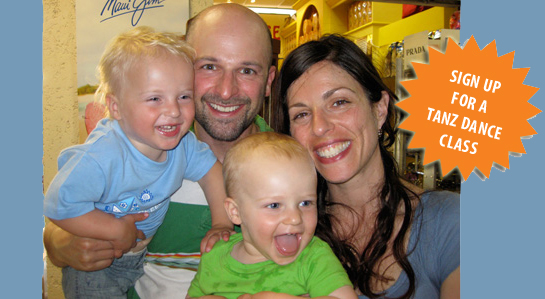
11:30. He walks up to Sara Tanz‘s dance class. She’s gorgeous. Her husband Larry studied neuroscience at grad school at Harvard under Richard J. Hernstein.
He keeps saying how much he’s looking forward to Larry‘s dance moves until Sara says, "I know you’re joking, but Larry’s a great dancer. I met him at a wedding and he asked me to dance and he was great. And I said that any Jewish day school graduate who dances that well I must marry."
In the way he was raised, dancing was a big sin. He’s never been able to let go of the awkwardness. He tries to smile real big and fling himself around as the teacher and the Talmud instruct — written law and oral! — but it’s hopeless.
Teacher won’t play ABBA’s Dancing Queen, his only hope. Instead they’re stuck with Jewish music.
He fears going to crush someone with my ineptitude. He tries to dance a little to the side or a little to the front or a little to the middle so he doesn’t hurt anyone. He just wants to get outside of himself and his pounding head for five minutes, to join the dance instead of analyzing the dance…
After half an hour, he’s exhausted and humiliated. On the ground floor he comforts himself with four helpings of pastries. Then he heads for Rabbi Shlomo Seidenfeld’s class on God.
12:30 pm. As the rabbi thinks about his parents (Holocaust survivors), he chokes up.
He feels ashamed that his troubles are so trivial. Why can’t he cry over others’ suffering and not just his own?
It’s time for lunch.
He’s first in line. He goes for the grilled-vegatables sandwich. Then he sits in the back. After ten minutes, an organizer lady joins him. "I’m a Yiddisha mama," she explains. "I can’t bear to see anyone eat alone."
It’s freezing. The air conditioning is way too high. Even the scantily-clad hot chicks are cold. He won’t write about that. He won’t let himself appear creepy or needy. He could wax eloquent for paragraphs about the intriguing nature of brunette beauty, the mesmerizing eyes, the gentle femininity, the fire and the ice…
He runs into Jewish Journal Editor Rob Eshman in the stairwell and talks to him for 15-minutes about the difficulty of earning a living producing journalism for the web.
Some people are making money online. Why not the Leader? Why not a Brilliant Career?
He unzips his psyche and chants: "I am a star. I’m a star, I’m a star, I’m a star. I am a big, bright, shining star. That’s right."
1:30 pm. UCLA professor Monica Osborne speaks on "Dreaming Jewish Dreams: The Revival of Jewish Literature in America and Beyond."
No wonder her dog Eliot Epstein got so excited at three this morning that he jumped high in the air and broke his leg upon landing.
A bloke walks by Monica and sticks out his hand.
Monica shakes it.
Puzzled, he asks for her hand-out.
Monica begins, tipping her head back and crushing her three-inch black heels against the ground: "I function best as a discussion moderator rather than a lecturer. Please butt in with your comments, profanities…"
"Damn!" I say.
"Not you, Luke!" says David Suissa.
"Yeah," says Monica. "Not you."
They give a great class. It wasn’t billed as a co-production but he has so many wise things to say, he can’t keep quiet.
He keeps sharing his blinding insights, piping up from behind Monica whenever she takes a breath to share his wisdom.
They’re available for weddings and bar mitzvahs.
Near the end of class, Rabbi Zoe Klein, with her head down, answers a question about her new novel by allowing, "I have some copies…"
She says she was inspired to write by the beauties of Judaism that she wanted to share with the world.
After class, a bloke comes up to him and asks, "Didn’t we meet in David’s bedroom?"
"Hush!" he says.
"That was you, right?"
"I try to keep that on the down-low."
"I’ve read many of your articles."
"It’s not gay if you beat them up afterwards."
The conversation wanders for five minutes until he brings it back with a forceful: "So tell me how wonderful you find my articles."
"Well, I wouldn’t say that. It’s just that I keep Googling things and your articles show up first."
2:30. He wants to check out that blonde Leah Hochman. She’s teaching "On Looks, Judaism, and Jewish Thought, Thinking About Beauty and Ugliness in Modern Judaism."
He sits next to the door in case he wants to jump out if things get boring and catch Rabbi Klein’s "Writing Fiction: The Role of Fiction in Creating Identity."
"Are you sure you want to sit there?" asks Leah, turning around to look at him.
An obedient and chivalrous Jew, he gets up and moves across the room.
"You didn’t have to," says Leah. "I was only asking."
"Jewish guilt!" says a woman.
"You don’t strike me as someone who a stranger can guilt-trip," says Leah.
He stays quiet and preoccupies himself with Torah.
"She’s good looking," his friend scrawls across her pad.
Then she scribbles it out.
"Are you going to be politically correct?" he asks Leah.
"Are you going to be politically correct?" she responds.
"Oh, very," he says.
Leah asks, what is beauty?
He raises his hand and launches into an emotional address. "Beauty is what makes my heart swell. It makes me expand. Right now, you, you make me want to want to expand."
Leah looks at her notes. "That’s a check," she says.
Ten minutes later, Leah pauses for a question.
"How does that not reinforce hetero-normativity?"
He realizes he can never date anyone who uses "hetero-normativity" non-ironically, no matter how smart and beautiful she is.
Leah talks about a word if said twice in a row, according to the Talmud, induces ejaculation.
"Oh, please don’t say it," he says and the room fills with shock and awe.
At the end of class, Leah delivers her long-promised big reveal about beauty in Judaism (it has to do with revelation replacing creation as the Jewish motif).
It leaves him cold, so he eats a big bowl of chocolate ice cream scooped out by the woman who busts medical marijuana clinics and then he piles on chocolate chips and cookies and by the time he’s walking up Hilgard Avenue and utterly alone again, he feels sick.
Circle Park is the beating heart of Beverlywood. On any Shabbat afternoon, the locals and their children will slowly trickle in and spend several hours just hanging out.
For families who don’t drive, watch TV or use computers on Shabbat, a park where kids can play and parents can schmooze is an ideal time-killer, especially during the long summer days.
It was the expression "time-killer" that got me. It’s a little more honest than the usual Jewish way of talking about the Sabbath. Or maybe it is an opportunity to say to one another, "Poor David Suissa. He doesn’t understand the holiness of the Sabbath. The opportunities of the Sabbath. Perhaps someone should m’karev (bring closer) him."
Last Saturday night, an unknown assailant opened fire on a Jewish support group for gay and lesbian youth, killing three and injuring ten minors. Join us for a community-wide memorial service as we stand in solidarity with the victims and renounce violence in the Jewish community. Speakers will include Rabbi Yosef Blau (Mashgiach Ruchani of Yeshiva University), Rabbi Dov Linzer (Rosh Yeshiva of Yeshivat Chovevei Torah), Mrs. Elana Stein Hain (Lincoln Square Synagogue clergy), Rabbis from local Jewish synagogues and schools, Benjamin Fink (NFTY-NAR regional advisor) representing Jewish youth across the nation, as well as members of Jewish GLBT Youth groups. The service will include Rabbinic messages, the reading of tehillim (psalms) and personal accounts of what its like growing up gay and Jewish.
Where: JCC in Manhattan, 334 Amsterdam ave. @ 76th st. New York, NY 10023
When: Monday, August 10th8:00pm – 9:00pm
Co-sponsored by NY based organizations offering support for LGBT Jews: JCC in Manhattan, JQYouth, GLYDSA, Tirtzah, CBST, Nehirim, and Hebro.
"This guy knows all the gossip, the ins and outs, the lashon hara of the Orthodox world. He’s an [expert] in... all the inner workings of the Orthodox world." (Rabbi Aaron Rakeffet-Rothkoff)