Kate calls the Dennis Prager show today: “I’m an Orthodox Jew. Us Orthodox Jews have mandatory separation [from spouses] for 12 days every month [the laws of family purity]. When I was becoming religious, I was told that this would be the key to a successful marriage. That it would be renewed every month. Absence makes the heart grow fonder. That my husband wouldn’t take me for granted. What I’ve found and from speaking to my friends is that it has really been the exact opposite. That it causes a lot of tension and distance. The husbands are frustrated. The wives are frustrated. And we’re told that if it causes problems in your marriage, it’s because there’s something broken in your marriage.”
Dennis: “There are many areas of Biblical law that involve the separation of life and death to undo what ancient Egypt had where everything was death-oriented. A Jewish priest can’t visit a cemetery. He’s only involved with life. Intercourse represents life. Menstruation represents death.”
“What you say is a challenge. I’m not going to take a position on the religious observance, but you’re not nuts.”
I think the rich are different (and not just that they have more money).
I have no idea if Jewish Journal editor Rob Eshman comes from money but he seems to have the easy confidence that comes from coming from money.
My therapist has that same confidence. I suspect he was popular at school.
A few months ago, one Jewish Journal blogger bizarrely went after Tattletales writer Tamara Shayne Kagel for saying that women need to look their best if they want to attract the best type of man.
And as the back and forth went on, I was impressed by how Tamara — younger by two decades than the woman going after her — kept her cool even as her attacker became increasingly unhinged.
It could be that Tamara is just inherently wonderful or it could be her upbringing.
I think Tamara has described her home as lower upper class.
I sense a grace and poise in Tamara’s writing and demeanor that comes in part from a comfortable life. She exhibits no desire to get down in the gutter and fight things out for tiny stakes. Instead, she seems secure in believing that there’s plenty of good things out in the world if you work hard, study, and play smart. You don’t have to wrestle for every scrap. Keep your eye on the prize.
My background is middle class. My dad’s a self-made man. And I see in myself this constant unseemly striving for attention while I am consistently excelled in the things that matter by those around me who don’t put on a big show and dance but are just pleasant and nice.
When Tamara came over for our interview a year ago, she brought crumpets. She was gracious and funny. And when I went to write up our chat, she never asked to take anything back. She was willing to stand by everything she had said. That’s class. It’s a damn rare quality.
Most people I know like nothing better than talking about themselves for two hours and they hate nothing more than seeing it end up in print.
I’ve been writing hurtful things online since 1997. I’ve noticed that in response to such blogging, poor people threaten to beat me up and rich people threaten to sue me. Beyond that, I’ve noticed that poor people tend to be much more reactive in their responses while rich people tend to be more careful. Self-made men, by contrast, are the most likely to invest in causing me the most serious amount of pain so they can prove how powerful they are. Rich people don’t need to prove anything. Usually, they don’t want to be bothered. They have more important things in life than showing off how powerful they are. If their well-being is at stake, they will react accordingly, but they’ll rarely go beyond that.
I think I’m pretty sensitive to the dynamic of trying too hard because I see so much of that in myself. It’s a relief to be around people with grace such as Rob Eshman, Tamara Shayne Kagel, David Suissa, Joey Kurtzman, et al.
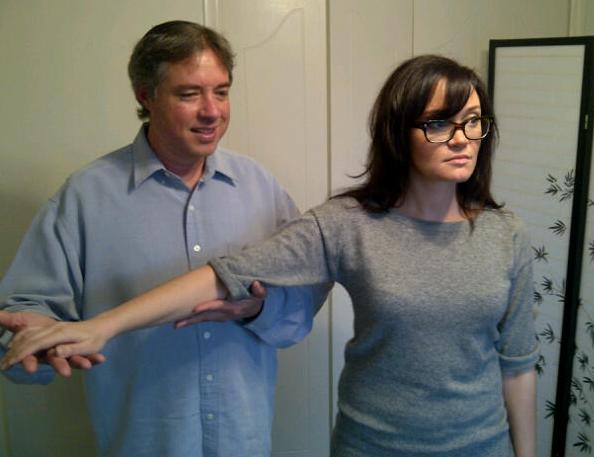
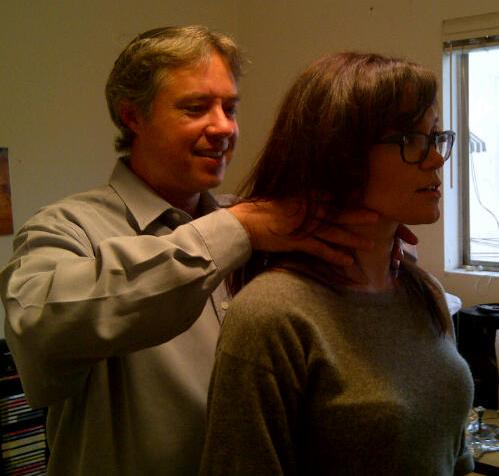
Perhaps the biggest secret of Alexander teachers is that many of them are bored out of their minds as they do their work. After the thousandth time you’ve told somebody to free his neck, to think up and to allow his back to lengthen to widen, you start going a little potty.
In our interview last night, Bill Plake told me he never gets bored.
I wonder how many Alexander teachers can say the same thing?
Posted inAlexander Technique|Comments Off on Bored Alexander Technique Teachers
I’m easily shaken. This morning as I was reading Instapundit, my computer monitor stopped working. I couldn’t fix it in the 15 minutes I had before I left for school so during the three hours of my training this morning, I was weighed down by worries about my computer (finally fixed by 2pm).
“Are you coming down with something?” I was asked at one point. People picked up on my glum mood.
I’m easily shaken. I’m lacking in emotional resilience. If I have computer trouble or any technical trouble, be it with my car or vacuum cleaner or stove or DVD player or TV, I get thrown and this problem becomes all I can think about. If a girl I like does not return my call in 24 hours, I’m thrown. I get obsessed. That missing tile in my ceiling is all I can think about.
This is symptom of my lack of connection. If I shouldered more adult responsibilities, if I was responsible for more in life than just myself, I wouldn’t be so thrown by these petty difficulties.
My life is pretty empty. I’ve spent half of my Thanksgivings alone the past 15 years. I’m not connected in a deep way to other people. And to shield myself from this shame, I invent ways of imagining myself as grand. My grandiosity is a protection from my fears that I’m not enough.
I’ve been emotionally affected by my interview with Bill Plake last night. When I asked him when he became confident in his Alexander teaching, he said that over time, he became increasingly confident in the Technique itself. That its principles when practiced work.
I’ve adopted a lot of great things like Alexander Technique over the course of my life but I end up wasting a lot of my time imagining myself as some great exponent of the sacred craft. I end up wasting my life in delusions of grandeur. I keep thinking — “How will I become a great teacher of Alexander Technique?” But the truest part of that sentence is “How will I become great?” That’s my preoccupation. I feel like if I can only become great, then I won’t feel so ashamed.
I’m really seeking — how can I make myself great through the Alexander Technique. How can I use the Alexander Technique/Judaism/whatever to show the world how wonderful I am?
Because of these tendencies, I’ve developed a reputation over my life of being a user.
If I could let go of my pursuit of grandiosity, I could ask myself, “How can I live up to the things I ostensibly espouse?” Instead of preaching about Judaism and Alexander Technique and 12-step work, I could try instead quietly living them without regard to my own fame.
My research on the two major Abrahamic faiths (Christianity and Islam). I looked into it Philosophically, Scientifically, Historically, Theologically. And this, these are my results.
1. Jesus of Nazareth Existed.
2. Jesus of Nazareth was not born of a Virgin.
3. Jesus of Nazareth was not the Messiah.
4. Jesus of Nazareth was not a Prophet.
5. Jesus of Nazareth was not Divine.
6. Jesus of Nazareth was Crucified.
Thus, I can never be a Christian or a Muslim. And from a Jewish perspective, I’m a Noahide sense I’m not Jewish.
My questions is, what good evidence is there that Judaism is true?
Is the Torah the word of God or the work of man (like the NT and the Quran)?
If Judaism is true (the word of God) why then should I stay a Noahide and not convert to Judaism?
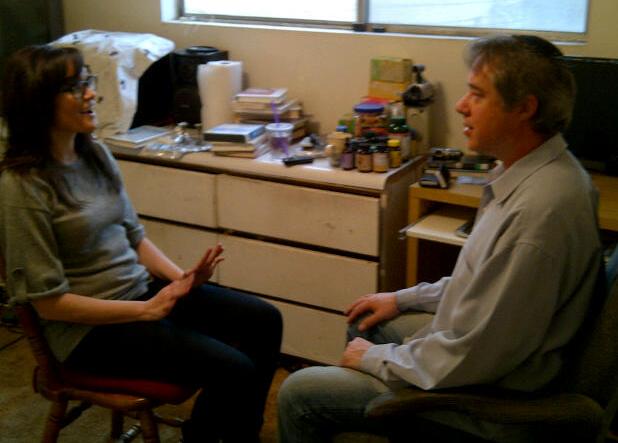
She says: “One of the biggest changes I’ve seen in you is an overall calmness. You seem more at peace. There’s a new kind of serenity. Previous to you [taking up the] Alexander Technique, I don’t know that I would’ve associated you with the word ‘serenity’ but that’s part of your whole persona now. And it’s been really consistent. I remember noticing it once or twice and thinking, ‘He seems really calm. I wonder what’s going on?’ And it never went away.”
Luke: “And it makes me easier to be with.”
Monica: “Definitely. You present some interesting challenges but this new sense of serenity changes the way people respond to you.”
“You’re better able to understand what’s going on inside of you and outside of you.”
Posted inAlexander Technique|Comments Off on Even University Professors Need Alexander Technique
All had been going well by this principle until I reached the age of about forty. I very gradually began to notice that my performing and practicing were becoming inconsistent in quality. This was caused mainly by an intermittent lack of coordination and functioning in my left hand. Though this was somewhat frustrating, I reasoned that all I needed to do to solve this problem was to work harder. It seemed to me that some of my problems were because I was somehow losing some of the strength in my left hand.
I began to do exercises to strengthen the muscles involved with my left hand. At the same time I began to practice music more hours, working a great deal on fingering exercises. Not only did this not help my condition, it actually seemed to make it rather worse.
Prior to this, I had no noticeable pain when I played music. Now, not only was the coordination of my left hand getting worse, I was beginning to feel quite a bit of pain in other places in my body, most notably in my hips, back, neck and shoulders.
Playing music became more and more unsatisfying, filled with great discomfort and frustration. Yet regardless of this, I began to work even harder. The loss of coordination had been very gradual in my left hand, but suddenly things began to rapidly change for the worse.
In a matter of just a few weeks, I began to experience a very serious lack of coordination in my left hand. Other elements of my musical coordination were also beginning to noticeably suffer. My sense of time, my ability to consistently produce the sound I wanted, and my general dexterity all seemed to be coming apart at the seams. At this point, I was afraid to take any work as a musician, or to even rehearse for that matter.
Bill: “It’s not my nature to do marketing. I don’t put myself out there that much. I wait for the work to come to me. I made exceptions for the Alexander Technique. First of all, many people do not even know what the work is. I realized early on that I needed to get active with my marketing.
“I put up a website immediately. I got a beautiful brochure. I got out into the community to do seminars. I went to physical therapy offices and chiropractic offices and personal trainers, pilates teachers, who might have clients who might be interested in this work. I taught at the YMCA. That’s how I got several private students. Their friends were telling their friends. Even now, more than 90% of my clients come from word of mouth… More than half of my students are musicians.”
Luke: “What advice do you have for a new Alexander teacher setting up a practice?”
Bill: “We live in this digital age. It’s important to get the work known and yourself known. Get a website up. Use social media. Networking if you’re comfortable. Responding on other people’s blogs. One thing that has led a lot of students my way is that I started blogging. I’m getting lots of musicians now because I have a blog written specifically about the Alexander Technique and music.”
“Think about what your interest is in the Technique and speak to that interest. Go to meetings. Don’t be afraid to talk to pilates teachers, physical therapists, and other modalities where you might have people interested in what you do.”
“As I go on in the Alexander Technique, it’s not so much that I become more confident in my teaching ability as I become more confident in the work itself. If you work the principles, you get good results.”
“When I go speak, I remind myself, be confident in the work because the work works. The principles apply to every person and to every situation.”
Luke: “What are your biggest challenges when you teach the Technique?”
Bill: “To contain myself.”
Luke: “Do you find yourself getting bored teaching the Technique?”
Bill: “Not for one moment.”
Luke: “What’s it like teaching over Skype?”
Bill: “It’s interesting. At first I was reluctant to do it. The only thing I’ll offer on Skype is a one-hour Alexander/movement assessment for musicians. I’ll watch you play for an hour and I’ll give you a lot of detailed feedback about what some of your habits are and how these habits are interfering with your balance and perhaps making playing more difficult. But that’s as far as I’ll go. I’ll say, you clearly need the hands-on work with a teacher. But as you know, there are some people not served by a teacher. They’re hundreds of miles from a teacher. What I do offer regularly are music lessons via Skype through the lens of the Alexander Technique.”
“One of my students in Austria already has an Alexander Technique teacher. He’s just interested in saxophone lessons via Skype because he wants to understand how these Alexander ideas come into playing the saxophone.”
“Everybody I’ve worked with can change. The only person who can’t change is the person who doesn’t want to change or do the necessary work to change. If someone doesn’t want to pay attention or just doesn’t care. I’ve had mothers bring their 15-year old daughters to my class at the YMCA. She hates her daughter’s posture. She’s slouching all the time. I graciously work as much as I can but I see the same thing over and over. These daughters have no interest in changing. It’s not their need. So they typically don’t change.”
“I’ve had some bright people come in who had a hard time changing and I’ve had some not-bright people come in who could change easily.”
Luke: “Do you notice any male-female differences?”
Bill: “No.”
Luke: “How popular do you think the Technique can be with the general public? Can it ever be akin to yoga?”
Bill: “I don’t believe it ever will until there’s a radical shift in consciousness in the human race.
“The main reason why I don’t think this will ever be wildly popular is that this demands a responsibility and vigilance that most people are unwilling to adhere to.
“I’d heard of the Alexander Technique 20 years before I took my first lesson. When I took my first lessons, I knew that if I had done this at 28, I would never have gone back to my second lesson. I would’ve said, there is no way I’m going to pay attention like this. I just don’t care.”
“Vigilance was easier for me when I came to it at an older age because I was feeling desperate. I was willing to do anything to keep playing my instrument.”
“Many people just don’t want to do the work. Many of these people don’t mind going to a yoga place. I see them where I teach at the YMCA and I see 20-30 people go into a giant yoga class and they come hobbling out with the same old crippled use that they had going in. But they feel good about it. ‘I went to yoga. My posture is going to be good. And life’s going to be good because I did my yoga.’ Many people don’t mind doing that one-hour yoga class two or three times a week. It’s like taking a pill. You do your yoga or you do your pilates or you go to your physical therapist or you go to your chiropractor and then you feel good about it.”
Luke: “Is there anything I should ask you about that I haven’t asked you about?”
Bill: “No. You’ve asked a thorough interview. Many interesting questions. Many of the things you asked I’ve never sat down and thought about. So it was nice to think about those things in the moment.”
Bob emails: Maybe all four of Luke’s literary successes could be packaged in some sort of deluxe fashion for the gift giving season? Maybe a miniature hovel to house these masterworks? No Orthodox’s coffee table would be complete without it.
Posted inPersonal|Comments Off on Christmas Values at Hannukah Prices!
"This guy knows all the gossip, the ins and outs, the lashon hara of the Orthodox world. He’s an [expert] in... all the inner workings of the Orthodox world." (Rabbi Aaron Rakeffet-Rothkoff)