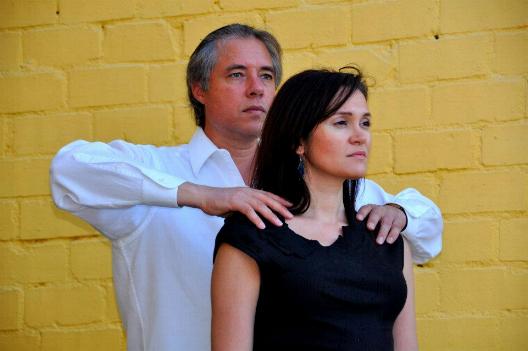
Shabbaton With Luke Ford

Westwood Jewish Center: Join us for an elegant Shabbat at our state of the art banquet hall in honor of the holiday of Tu B’Av on August 3, 4.

@@@@@@ FEATURED SPEAKER: Luke Ford @@@@@@@

The son of a Christian evangelist, Luke Ford is a convert to Orthodox Judaism. He’s an Alexander Technique teacher and author living in Pico-Robertson. He’s been interviewed on 60 Minutes, ABC News, Entertainment Tonight and has been written about in the New York Times, the Los Angeles Times, the Jewish Journal of Los Angeles, and GQ magazine.

Luke is the author of the book, “Yesterday’s News Tomorrow: Inside American Jewish Journalism.”

Here are some things that have been written about him:

“He breaks legitimate stories that have a huge impact.” (Emmanuelle Richard, Online Journalism Review)

“Aggressive, eloquent, he’s a kind of shaggy-haired, acid-washed Brad Pitt.” (Matt Labash, Weekly Standard)

“Smart, insightful and with a charming Australian accent, Ford is one of the most fascinating characters.” (Michelle Goldberg, Speak magazine)

Come eat, drink and be merry while socializing with members of the tribe on our magnificent rooftop with beautiful 360′ views of the city!

Tu- B’Av- is Judaism’s designated day of matchmaking. According to Jewish tradition, the day has special powers to help one find their soul mate.

Back by popular demand, our Shabbat programs for young professionals draw an engaging pool of young professional Jews who are serious about their Judaism and relationships.

The $20 minimum donation includes dinner, lunch and all alcoholic beverages if registered by Friday, July 20th. $36 afterwards.

to register:
http://jewishwestwood.com/donate_form.html
Please specify “Shabbat dinner” in the “other” field

Posted in Personal, Synagogue | Tagged , , , , , | Comments Off on Shabbaton With Luke Ford

Former Westwood Kehilla Rabbi Joel Zeff Taking Over Sacramento Shul

One of the first shuls I went to upon moving to Los Angeles in April 1994 was the Westwood Kehilla. It was led by Rabbi Joel Zeff. For one week, I got up early and arrived at shul by 6 am to study some esoteric sacred text (The Path of the Righteous or something) with the rabbi.

I think I had heard him years before on Dennis Prager’s Religion on the Line radio show on KABC.

I was still in the grip of Chronic Fatigue Syndrome in 1994 and wasn’t able to get up early to go to shul for long.

As Dennis Prager was at Stephen S. Wise temple on Saturday mornings, often giving the sermon or the study session, I started going there instead of the Westwood Kehilla.

I think Rabbi Zeff moved to Israel circa 1995. I saw him at LimmudLA in February 2011.

I just found this online from Kenesset Israel Torah Center in Sacramento:

July 5, 2012

Dear Members and Friends of KITC:

We are happy to announce that the congregation voted this evening overwhelmingly to confirm the appointment of Rabbi Zeff as Rabbi of Kenesset Israel Torah Center. The next step in the process requires that we sign a contract with Rabbi Zeff legalizing the agreement, and that process will begin almost immediately. Thank you for your participation in the election process and special thanks to those who assisted in the balloting at the meeting this evening and thank you to all of the members who came to the meeting to help us in this part of the process.

Posted in Synagogue | Tagged , , , , , | Comments Off on Former Westwood Kehilla Rabbi Joel Zeff Taking Over Sacramento Shul

Spiritual Highs Are Hard To Come By In Judaism

A lot of people want to know what I was feeling when I was converting to Judaism. On that last day as I stood naked in the mikveh and saying the blessings in Hebrew that would officially make me Jewish, what was I feeling?

The first time I converted was through a Reform rabbi in Orangevale, Marvin Schwab.

We went to the mikveh, however, at Sacramento’s Orthodox shul Kenesset Israel.

I was still very much in the grip of Chronic Fatigue Syndrome at the time. I remember we had to wait around for the Orthodox rabbi to come open the mikveh for us. It was April in 1993.

When he finally rushed up, he said to my Reform rabbi, “Don’t go in the shul.”

“What did you think I was going to do? Eat a cheeseburger in there?”

I’m not sure if Rabbi Schwab said that or should’ve said that in response.

So the mikveh water was warm. We did the traditional blessings. We had two additional witnesses. And I was done with my initial conversion.

My feelings were relief and exhaustion.

Why relief? Because I had decided to base my life upon my new Jewish identity and if I could not get through the conversion process, I wasn’t a real Jew.

My second conversion was through an Orthodox Beit Din in 2009 one Sunday at the mikveh on Pico near Ralphs.

I stood naked in the mikveh.

The Av Beit Din asked me if I realized that Jews have often been hated, that Ahmadinijad, for instance, in Iran wanted to destroy Jews.

I said I believed his primary animus was towards the Jewish state of Israel and that I did not believe that he wanted to wipe out all Jews.

We discussed this for a minute but I assented to wanting to join the Jewish people even though millions of people around the world wanted to destroy us.

And then I said some blessings and bopped under the water a few times.

I think my primary feeling was a desire to do everything right. It felt akin to me to being called to the Torah and having to make certain blessings in front of the congregation. Now my audience was three Orthodox rabbis.

When I finished, my primary feeling was relief. The phrase, “They can’t take it away from me”, kept running through my head. I think the “they” was the RCC but also other Orthodox Jews who make the convert’s journey into Judaism challenging (for good and for bad).

Why relief? Because I had decided to base my life upon my new Jewish identity and if I could not get through the Orthodox conversion process, I wasn’t a real Jew.

Spiritual highs are hard to come by in Judaism. For instance, there is no Jewish music that compares to the uplift of Handel’s Messiah. Jewish music can’t hold a candle to Christian music.

Church is a much more spiritually uplifting experience than synagogue. For one thing, the focus in church is on the romantic story of Jesus, the Son of God, one part of a triune Godhead, who came to earth to live and to teach and to die on a cross to atone for humanity’s sin.

This story makes no sense from a secular perspective or a Jewish perspective, but if you can buy into it, it feels tremendously spiritual, just like the Gnostic and Hellenic religions that were the true fore-runners of Christianity.

If you go to a black Pentacostal church, you’ll feel such spiritual highs that will seem like cocaine when compared to the mellower highs you get at shul.

Dennis Prager took two non-Jewish friends to an Orthodox shul in Fairfax/La Brea. After 45-minutes, one asked him, “When do services begin?”

Because Judaism focuses on this life and on behavior rather than feelings and beliefs, it’s much harder to get spiritually high.

I sometimes feel spiritually high at the Happy Minyan or when listening to a great rabbi. Other than that, the primary good feeling I get at shul is one of camraderie.

Shul does not compare to the spiritual escape of church where you hear fantastic things about how God came to earth and walked around and talked to people and did miracles and wants you to live with Him forever in Heaven. Music in an other-worldly faith-centered romantic religion like Christianity is much more likely to be inspiring than the music produced by a this-worldly way of life focused on prosaic deeds.

Posted in Conversion | Tagged , , , , , | Comments Off on Spiritual Highs Are Hard To Come By In Judaism

Fight Over Ultra-Orthodox Brings The End of “King Bibi”; Hillary Clinton Visits Israel; Peter Beinart Interview

Israel’s unity government undergoes a shakeup; Hillary Clinton visits Israel; the sandwich that could give you a heart attack and more!

Posted in Articles | Comments Off on Fight Over Ultra-Orthodox Brings The End of “King Bibi”; Hillary Clinton Visits Israel; Peter Beinart Interview

Greg Leake – Shabbos Goy

Greg Leake emails: Hi Luke,

I’ve been out of action because of rotator cuff surgery. The stitches are out, and I’m doing physical therapy, probably won’t be able to throw a left hook for 6 months. A drag.

In your post something you said loomed out at me:
“One of the things I love about Orthodox Judaism is that you know who you are. Things are set out for you. You do this and this and this, and that’s just upon waking. It gives you guidelines for life, guidelines that have proved themselves to work over hundreds of years.”

You know, Luke, you should have joined the military and then you would have had your days and nights structured without all of the extra mumbo-jumbo.

It seems to me that you’re observing Orthodox Judaism from the point of view of superlatives.

For example, as you know, 7 or 8 months ago I was living smack-dab in the middle of Orthodox Judaism in Dallas.

So one night at 2 in the morning there is a loud banging on my front door.

“What the hell…?” Runs through my mind as I stumble downstairs.

I’m thinking fondly of the well-worn butt of a .38 caliber revolver that I keep concealed by the front door for sentimental reasons.

I get to the door and I’m about ready to call out, “Do you have a warrant?” when I hear my next door neighbor calling out on the other side of the door. So I open the door, and there is my neighbor. “For crying out loud,” I say, ” what the hell is wrong?” I’m thinking, is it fire? burglary? Democrats?

My neighbor says, “My kid is sick, and I have a prescription and need to have it filled at the drug store.”

“So fill it,” I say.

“I can’t drive. It’s the Sabbath.”

“OK,” I say, “No sweat. I’ll drive you.”

My neighbor says, “No, you don’t understand. I can’t ride in a car even if someone else drives it… that’s why I didn’t ring the doorbell and had to pound on the door.”

“Yeah, but your kid is sick,” I say.

My neighbor says, “I was hoping you would go and get it for me.”

I look kind of sidelong over at my wife and slightly roll my eyes. I say, “I don’t think I can. You know, you can’t just wander in at 2 in the morning and start trying to cash in someone else’s script.” (I vaguely remember some guy I distantly knew a long time ago doing a short stint in the state pen.)

“But I have to get it,” my neighbor says.

“OK. I’ll walk with you.” My mind quickly cycles through my armament, and I’m thinking about a little North American Arms .22 caliber magnum revolver. I’m thinking that if I’m going to be wandering through the deserted streets and dark parking lots of Dallas at 2 in the morning, I want to feel the warm friendliness of my little friend safely secured in my pocket.

By the time we get it together, my neighbor has already found someone else to walk over to the drugstore with. I continue to offer, but not as vigorously as I could have. They take off, and I say to my wife, “Man, that’s crazy. They can’t even drive over to get medicine for their sick kids.”

The next day my wife sees the neighbor, and everything worked out. The neighbor says to my wife, “You probably think this is crazy.”

My wife, being more diplomatic than I, shrugs and smiles whimsically, and says, “Well, maybe a little.”

To which our Orthodox Jewish neighbor replies by saying, “It’s all crazy.”

So this is just one incident out of many. There are a million stories in the naked city, and you have just heard one of them.

Posted in Orthodoxy | Tagged , , , , , | Comments Off on Greg Leake – Shabbos Goy

Can You Compare Rav Elyashiv With Reb Moshe?

Historian Marc B. Shapiro replies to my question: “Because of his political importance, Rav Elyashiv had more influence that R. Moshe, but R. Moshe also spoke to the non-haredi world. R. Elyashiv had no influence outside that world.”

“R. Elyashiv’s influence was really only in the haredi world,
while R. Moshe’s halakhic rulings had a broader audience. Speaking
just from a halakhic standpoint, I think R. Moshe had more influence,
but as I mentioned, R. Elyashiv was able to determine the direction of
an entire community in the State of Israel. R. Moshe never had that
sort of influence. I don’t think his pesak (legal rulings) and hashkafah (worldview) will have staying power. It is clear that the haredi world in Israel is going to have to change and become integrated with general society. The mass exemptions from army service will also be coming to an end. New haredi leaders will emerge.”

It often seems to me that the extremists win out in Jewish life. That they have the most power. Particularly among Orthodox Ashkenazim.

An Orthodox rav tells me: “That is not always so, some of it has to do with coalition politics in Israel. Note Reb Moshe was not at all extreme. The extreme elements in Israel only care about two issues, one no draft of Charedim and that they should get support for their Yeshivos they will sell their votes on everything else to get these two issues.
Recently as their community has become more and more impoverished they are fighting for the few jobs they can do and stay within their world, Rabbis of cities, Dayanim and Kashrut supervisors. To move into these positions they will do anything, note the attacks on Rav Drukman. But all of their attacks on Rav Drukman got nowhere, they tried to fire him numerous times but could not do a thing to move him until he decided to retire (he was almost 80 when he retired as head of Giur in Israel) they tired to prevent him from getting the Israel prize but failed. they have tried to say that the Hesder Yeshivot are not Yeshivot because they serve in the army, but have gotten nowhere.
Outside of Israel it is another issue, scholarship is rare and for some unknown reason people think that the right is “real” Judaism if I were really frum that is what I would be like, all garbage but because of this most people are afraid of standing up to the Haredim.”

The Jewish Journal reports:

Hundreds of thousands of mourners reportedly attended the funeral of Rabbi Yosef Shalom Elyashiv in Jerusalem on July 18, and across the world, people remembered the eminent Orthodox rabbi who died on Wednedsay at the age of 102.

Rabbi Gershon Bess, the spiritual leader of Kehilas Yaakov in Los Angeles, said he would visit Elyashiv at least once a year, to consult with him on matters of Jewish jurisprudence.

“This is a person that one could ask any halachic question on any topic and get a well-researched answer based on Talmudic and later Responsa,” Bess said on Wednesday. “I don’t believe that there is anyone else in the world at this point now who is able to replace him.”

More than one obituary likened Elyashiv’s stature as a Jewish legal authority to that of Rabbi Moshe Feinstein, who died in 1986. Bess agreed with that analogy.

“Even the greatest rabbinical authorities in the United States would show extreme deference to anything he [Elyashiv] would say,” Bess said. “Nobody but Rabbi Moshe Feinstein was considered as a final decisor on so many issues.”

Posted in Haredi, Modern Orthodox | Tagged , , , , , , , | Comments Off on Can You Compare Rav Elyashiv With Reb Moshe?

Workin’ Men And Women

On his radio show Monday, Dennis Prager said: “When the president talks to people he respects, he says ‘working’. When he’s on the road campaigning, he says ‘workin’.”

“None of my teachers at college were instrumental in any way to my professional success.

“Here’s what did enable my professional success: Health. A stable family structure. A strong religious value system, which taught me deferred gratification, without which you can never succeed. If you want to be gratified immediately, you can never succeed.

“Raw talent. The government did not give me my talent. Hard work. I’ve worked hard since high school. Many hours a day, six days a week.”

“I acknowledge that driving to speeches was made possible by government roads.”

“The left-wing deprecation of the individual is at heart here. You and I aren’t worth much. The state is worth much. You’re a nothing without the state.”

Dennis says it is only men who ask him to sign their chests. “There must be something about the nature of my show that precludes.”

“Howard Stern used to do breast exams on his show but that was to prevent breast cancer.”

“There was a man on FM radio whose big thing was signing women’s chests.”

Sean McConnell, Prager’s engineer: “Bill Bennett?”

Dennis: “Tom Leykis.”

Posted in Dennis Prager | Comments Off on Workin’ Men And Women

My Conversion To Judaism Story

This guy in shul was told my story, and so he asked me for chizuk, for strengthening. He was Orthodox from birth but he struggled with some typical guy stuff. He knew I had chosen Torah. He wanted to know why.

He needed some good reasons to not chase shiksas. Right now, they were the most exciting thing in life.

His pattern was to spend his evenings in bars chasing Asian girls.

And so I told him some stories from my life. And at the end of each one, I said, “and may we be zocher (merit) to not do as I did.”

I don’t think he was very inspired by me.

I like to make fun of the sermon format. I grew up a preacher’s kid. I heard thousands of sermons. The sermon as we have it today is usually a 20 minute homily finishing with some exhortation that we improve ourselves. It comes from the Protestants in the 16th Century and was copied by the Catholics and then the Reform Jews and now the Orthodox Jews use it.

The traditional rabbinic talk is taking two texts that seem irreconcilable and reconciling them. It’s not usually particularly inspiring.

So let me tell you about all the cool things I did before I became religious.

My step-mother has this adorable pet name for me — “User!”

I’ve always been impressed by the selflessness of Lubavitchers. Despite years of davening in Chabad shuls, I haven’t quite acquired this trait.

I had this girlfriend shortly after I converted to Judaism in 1993. A few weeks into our relationship, she gave me a book called, The Givers and the Takers.

She must’ve thought I gave too much.

Now that I’m an Orthodox Jew, of course, I’m a generous person. Always thinking of others.

About 20 years ago, a woman came to stay with me at my family’s home. At the end of the weekend, I asked her if I was like my preacher daddy. She said, “He’s not as pompous.”

I’ve been doing a lot of 12-step work over the past 15 months for various emotional addictions I’ve got — love addiction, codependency, over-eating. Those are just some of my more polite addictions.

I blogged out the first three steps but the fourth step got too painful to go public on. The fourth step requires you to “make a complete and fearless moral inventory.” It says to the addict that he has essentially used everyone and everything in his life to meet his addictive emotional needs and it wants you to come to terms.

I read that and winced. Have I exploited everyone in my life?

Now that I’m a convert to Orthodox Judaism, all that need to use people just goes out the window, right?

When I was about five years old, my dad came outside and found me flinging manure at other kids and screaming, “I hate you, I hate you.”

I’ve been writing for a living since 1997. Of course I’ve never used it to throw manure on people and to scream, “I hate you, I hate you.” I’ve got Torah to guide me now. I’m completely changed, right?

Pretty much everyone I’ve known well who’s become an Orthodox Jew is doing it to fix themselves, to fill the hole in their soul. Once you do the mitzvas, you get fixed, right? You feel full? Once you keep Shabbos, you’re content?

The whole year I was at UCLA, 1988-1989, I was hobbled by Chronic Fatigue Syndrome and spent most of my time in bed. I had a girlfriend who was not all that I wanted and she had the idea that when I got well, I’d move on to somebody better. Somebody taller and smarter and whiter and more accomplished.

It was during this year at UCLA that I knowingly met Jews for the first time. Until this point, I’d lived in the country and never met Jews.

I’d read all of Chaim Potok’s Jewish novels as a teenager but they didn’t make me want to convert to Judaism.

Now I was at UCLA. My life had fallen apart because of illness. I spent most of my day lying in bed. And I listened to a ton of talk radio. One Sunday, I heard Dennis Prager for the first time.

All of my life, I’d been searching for substitute father figures. With his deep voice and sturdy ethics, Dennis was the ultimate father figure for me. I read his books on Judaism and became convinced I needed to follow the Truth.

Judaism has often been called by its critics a religion for the weak. Well, I was certainly weak. I was desperate for meaning. Judaism gave me a framework for finding meaning in tiny deeds, in tiny brachas (blessings), in small mitzvos. Judaism was the most this-life focused of the world religions. It had this step-by-step detailed system for making a better world, for morally educating people and civilizing them.

So was Judaism just a religion for me when I was sick? And when I got well, I’d drop it to the curb? Like I’d get a hotter spiritual girlfriend? Go Buddhist or Bahai?

On my first birthday, my Christian mother got very sick. She was diagnosed with breast cancer. Over the next three years, she withered away and died.

A few years ago, I got my hands on the book that my mother wrote. It’s called Fireside Stories. It’s a children’s book. I read through it carefully looking for messages for my life. I’d always been disappointed that she didn’t leave behind a letter for me to read upon turning 18 or something.

So I read through the book and got the message that she wanted me to be a good Christian.

I wonder if she were alive today, would we get along? What would we talk about? Many of the people I grew up with don’t feel comfortable with me today because I’ve rejected what is most precious to them. I’ve lost many of my friends from childhood.

That’s why rabbis always tell potential converts that their life will be easier if they just go back to the religion they were raised in.

My dad had his hands full with his evangelism and teaching and looking after his sick wife, and so the three kids were farmed out to other people. Some of them were great. Some of them were bad. None of them lasted beyond a few months. In the flux, I never learned how to connect normally. It’s more than 40 years later. I still don’t connect normally.

I had a therapist who said to me, “You’re convinced that every breast will run dry and so you take all you can get right now.”

I find that going to shul every day is a little bit of re-parenting.

I’m 46 years old and I keep playing out my family dynamics in the wider world. I keep relating to people through the prism of the way I learned to relate to my earliest parental figures.

Shul dynamics remind me of psycho-analysis. I’ve never had psycho-analysis, but I have had psycho-dynamic psycho-therapy, which is the form of therapy most like psycho-analysis. Through connecting with your therapist, you are reparented. You learn a healthy way of relating to a parental figure and that can transform the way you relate to others.

If you go to shul every day, you tend to form close bonds with people and the intimate way you learn to relate to your shul family can change the way you relate to the wider world.

People become precious when you see them every day and when you perform holy rituals with them and engage together in the study of sacred text.

You will likely get close to anyone you like and you see every day, but when you’re bound together by an ancient tradition that adds transcendent meaning to life, then you’re transported to a different dimension. You have the potential of a concrete experience of holiness every day, of sensing your life touching the divine through your interactions with your fellows at prayer and study, and this tends to educate the hardest of hearts such as mine into seeing the divine image in persons all around you. People are no longer trivial and you see every day things as possessing sanctity.

My journey to Judaism has been one inevitable unfolding of higher and higher forms of holiness. Except for a few setbacks.

I was booted from the Rabbinical Council of California conversion program for “deceit and deception,” says administrator Rabbi Avrohom Union said. “Don’t take anything he says at face value.”

You’ve been warned!

The first time I stepped into an Orthodox synagogue, I was promptly kicked out. It was 1993 in Sacramento. I attended with friends a conversion class. When I walked in, the rabbi said, “I don’t know you. I’m going to have to ask you to leave.”

And that was the last time I was ever asked to leave an Orthodox synagogue. Aside from five other occasions.

When I was finishing off my conversion, I was standing naked in the mikveh. The Av Beit Din (head of the rabbinic court) gave me one last chance to drop out. “Do you realize that Ahmadinejad hates you as much as he hates Israel once you convert?”

I said, “I don’t think he’ll hate me as much as Israel. His primary hatred is the Jewish state. I’m not sure he wants every Jew dead. He wants the Jewish state dead.”

We went back and forth. I accepted that anti-Semites like Ahmadinejad would harbor ill will for me once I converted, and might even want me dead.

Then I dipped under the water and said the requisite brachas and I was Jewish, baruch hashem.

When I came home from my initial conversion in 1993, I told my dad that I had become Jewish. He looked up from his book and said, “Well, they’re certainly not like the Seventh-Day Adventists, out there proselytizing.”

After five years of bed-ridden Chronic Fatigue Syndrome, I was convinced that there were answers out in the wider world for my illness but that I probably wouldn’t find them while living with my parents in isolated Northern California.

So I started placing singles ads in Jewish publications around North America. This was 1993. I met a woman in Orlando, Florida, who took me to her psychiatrist. He prescribed nardil.

A few months ago, I finally Googled nardil and found this on Wikipedia: “Phenelzine is used primarily in the treatment of major depressive disorder (MDD). Patients with depressive symptomology characterized as “atypical”, “nonendogenous”, and/or “neurotic”, have been reported to respond particularly well to phenelzine. The medication has also been found to be useful in patients who do not respond favorably to first and second-line treatments for depression, or are said to be “treatment-resistant.” In addition to being a recognized treatment for major depressive disorder, phenelzine has been found in studies to be effective in treating dysthymia, bipolar depression (BD), panic disorder (PD), social anxiety disorder (SAD), bulimia, and post-traumatic stress disorder (PTSD).”

So you’ve got a crazy person talking to you.

One of the things I love about Orthodox Judaism is that you know who you are. Things are set out for you. You do this and this and this, and that’s just upon waking. It gives you guidelines for life, guidelines that have proved themselves to work over hundreds of years. By any criteria you want to choose, by any statistical measurement you select, from educational achievement to monetary success to quality family life and to generosity with one another, Jews who live Judaism live better lives than those living by alternative systems. So even if you’re meshuga, you’re still ahead of the game.

Think about it. What statistical measurements would you choose to test the results of a particular system of living?

I remember covering a San Francisco 49er football game at Candlestick Park in the fall of 1985. I was 19 years old. The 49ers suffered a crushing last-second loss to the New Orleans Saints, the Niners second crushing loss of that early season.

As I ran off the field with the players, this Saint yelled out, “Some kind of genius!”

The 49er coach Bill Walsh had a reputation for genius. He’d won two Super Bowls after inheriting a 2-14 team devoid of top draft picks.

So at the news conference after the game, I nervously raised my hand, related what the Saint player had said and asked if the pressure was getting to the San Francisco team.

Bill Walsh said, “I’d be happy to match our record over the past few years against anybody’s.”

That’s the way I feel about Judaism. Jews who practice Judaism tend not to suffer from alcoholism and drug abuse and domestic violence and the like. They tend to be successful and influential in the wider world while sticking to their ancient traditions. The Amish and other groups also have old traditions, but Judaism is the longest ongoing culture in the world, and unlike the Amish or the Adventists, Jews influence this world.

I conclude by quoting Duran Duran:

But I won’t cry for yesterday
There’s an ordinary world
Somehow I have to find

A friend says I remind him of the Elton John song Rocket Man:

And I think it’s gonna be a long long time
Till touch down brings me round again to find
I’m not the man they think I am at home
Oh no no no I’m a rocket man
Rocket man burning out his fuse up here alone

Posted in Judaism, Personal | Tagged , , , , , | Comments Off on My Conversion To Judaism Story

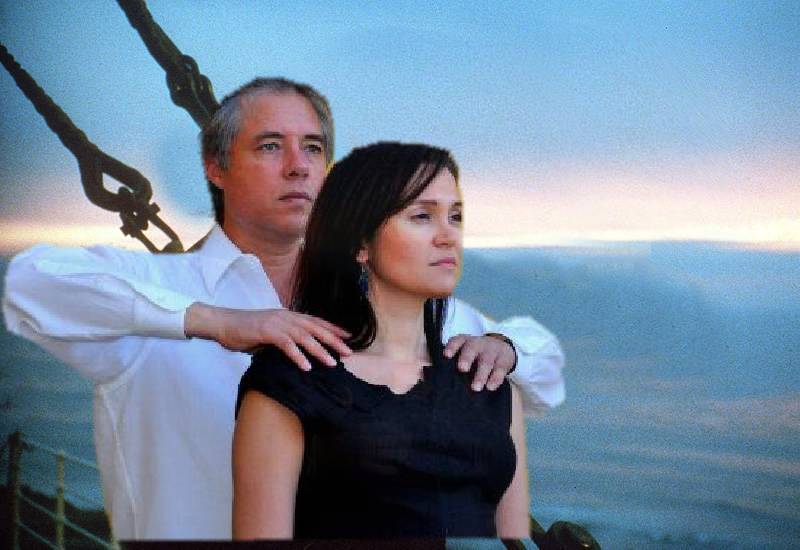
My Heart Will Go On

Helpful writes: “Luke, I have advised you so many times to fake your death and start fresh. Please, consider it. You are pushing 50. Why not get a fresh start as Alex Technique in Christchurch, New Zealand?”

Posted in Personal | Comments Off on My Heart Will Go On

Teaching Alexander Technique In 90035

My Alexander Technique teaching website is Alexander90210.com. Photos by Keyvan Sharouz.

Posted in Alexander Technique | Comments Off on Teaching Alexander Technique In 90035