Podnotes AI summary: I’m looking at the Atlantic magazine’s take on the far right’s new badge of honor. The term ‘extremist’ is subjective, and now those labeled as such are not hiding their identities. Lo, a publisher who kept his identity secret due to his controversial book choices, has been outed as Jonathan K., raising questions about what constitutes extremism.
The public health establishment during emergencies can strip away rights—something conservatives typically accept for societal good over individual freedom. Yet Lo is called an extremist for publishing books with anti-democracy themes while similar powers are wielded by officials in times of crisis without such labels.
On the political spectrum, there’s a clash between left-wing ideals that prioritize personal fulfillment and right-wing values that emphasize duty and obligation to community and future generations. This debate isn’t just about philosophy but also psychology; how we view our roles within society shapes our politics.
Despite fears of doxxing among anonymous online figures, being revealed can sometimes lead to more influence and opportunities within certain communities. While it carries risks, visibility often brings benefits like increased followership or potential media careers.
Overall, everyone wants recognition without repercussions—a desire seen across all spectrums of thought. As I’ve observed in my reporting career, people love sharing their stories but dislike seeing them published—a contradiction inherent to human nature.
Lastly, despite concerns over censorship from mainstream platforms like YouTube or Patreon alternatives have emerged offering more protection for controversial voices. Outing someone no longer spells disaster thanks to these new avenues supporting free speech outside traditional channels.
Christian mystics, priests, monks, nuns – they’re all part of religious traditions that can be mundane and filled with supernatural beliefs. It’s not as mystical if you grew up in a culture where religion is common. People often find the Christian tradition beautiful when discovering it later in life; take Russell Brand’s spiritual journey, for example. It seems exotic to him because he likely hasn’t experienced the everyday aspects of faith.
Religion holds you accountable; it asks you to contribute to your community and follow a code of behavior. Some seek spirituality without wanting the responsibility that comes with it. Take Russell Brand – he publicizes his faith journey but doesn’t seem to fit into traditional Christianity or embrace its humility.
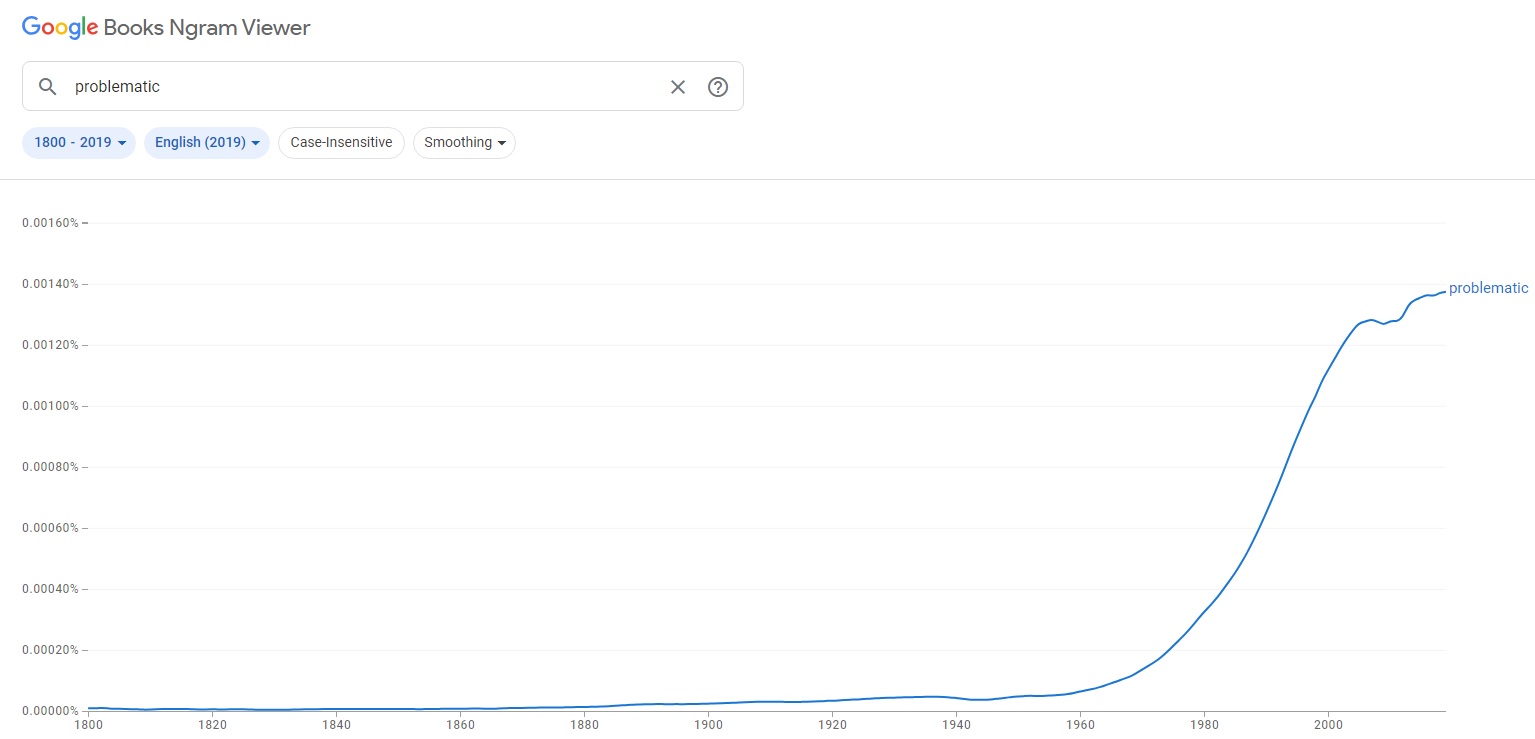
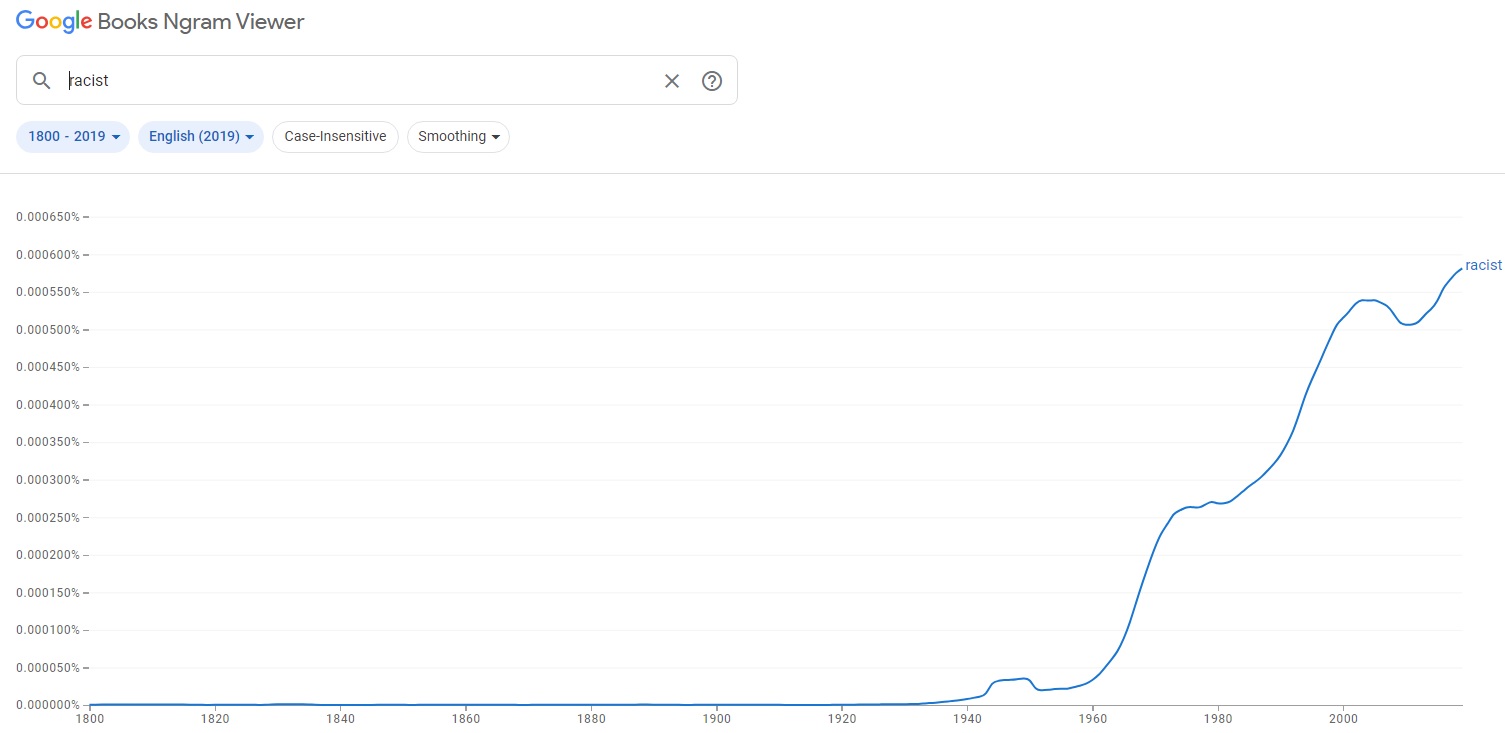
Academics often use “problematic” without defining their value system behind it. The term has become more popular since the 1960s alongside “racist.” These concepts didn’t concern moral thinkers before then but now are used frequently in discussions about society and identity.
Canadian history fascinates me, especially how certain dates have shaped our nation like gun control after Montreal’s École Polytechnique massacre or acknowledging past wrongs towards indigenous peoples through Truth and Reconciliation Commission reports.
Canada faces challenges with multiculturalism as diversity can lead people to self-segregate rather than integrate fully into one unified society. Yet Canada remains an inclusive experiment worth believing in despite its imperfections and troubled treatment of indigenous populations.
Lastly, dealing with unexpected setbacks like getting towed can cause immense frustration but learning to compartmentalize these feelings helps us cope better with situations out of our control.
Some believe there’s no cure for narcissism, but I think it can improve. People must recognize and want to change their narcissistic traits. This might stem from pain caused by these traits or through positive relationships that offer better behavior models.
Under stress, we’re prone to fall back on narcissism for comfort. However, building a life with less stress and strong connections can reduce this need. Narcissism often appears as a survival response in threatening situations but varies by context; someone may act differently at work than at home.
Discussing personal experiences, the text touches on distancing oneself from harmful individuals while maintaining certain social ties through controlled interactions like phone calls instead of face-to-face meetings.
The conversation shifts to public figures like Ben Shapiro and Candace Owens, exploring their impact on perceptions within the Jewish community and beyond. The discussion then turns to whether U.S.-Israel relations benefit both parties or if changes are necessary for mutual respect without financial subsidies.
Finally, the narrative concludes with thoughts on creating an inclusive society—how adding rights for some might subtract them from others—and how identity politics play into our sense of self and belonging within cultural narratives.
Destiny often presents colorful and exaggerated opinions on current events, which can seem juvenile. His debate with Milo Yiannopoulos caught my attention because Milo has changed a lot recently, taking Christianity seriously and undergoing gay conversion therapy.
Milo’s flamboyance and claims of being “saved” leave me skeptical unless he shows real efforts to make amends for past harm. He’s known for causing chaos but also holds people like Jordan Peterson accountable, which I find interesting. Destiny tones down his rhetoric in debates, playing the rational counterpart to entertainers like Milo.
Both Destiny and Milo are performative; they thrive on drama and embody various characters as part of their act—a marketing strategy common among those who excel at public performance.
I’ve analyzed Destiny extensively—his ability to engage in highbrow or lowbrow discussions showcases his intelligence. Unlike some online atheists who have become cringeworthy, Destiny sticks to his principles even when unpopular or controversial, such as supporting gun ownership or discussing sensitive topics.
Sam Harris is another figure I respect despite our differences. He faces criticism yet remains true to his principles—for instance, hosting Charles Murray on his podcast after previously condemning him.
Overall, individuals who withstand social pressures without compromising their integrity earn my admiration over those who appear performative in their convictions.
They’re aware it’s taboo, yet they take no action. My point is that even in conservative faiths, there isn’t such a strong stance on homosexuality.
Posted inInternet|Comments Off on Decoding Doxxing (6-10-24)
“Problematic” is a favorite word among academics but they feel insulted and retreat into silence when you ask them to describe their hero system that renders so much of reality “problematic.” According to the Merriam_Webster dictionary, the third meaning of “problematic” is “having or showing attitudes (such as racial prejudice) or ideas (such as falsehoods) that are offensive, disturbing, or harmful.”
The Google NGram viewer shows that books didn’t use “problematic” much until the 1960s.
Similarly, the Google NGram viewer shows that books didn’t use “racist” much until the 1960s.
Racism is a made up moral category that had no currency until the 1960s. Somehow all the great moral thinkers throughout history prior to the 20th Century had no concern about this great evil.
If academics had the strength of their convictions and weren’t afraid of owning up to having a subjective partisan hero system just like everyone else, they’d just say “bad.” But talking about good and bad sounds Christian, so academics pretend to have transcended partisan hero systems, which is impossible.
When academics won’t admit distress because their subjective hero system has been violated, what do they do? As human beings, they must lash out at an offense, but they won’t fight back in a way that is true, raw and vulnerable (a la how American conservatives do when somebody desecrates their nation’s flag), so instead they subjugate their impulses to reference good and evil, and instead employ the careful language of the courtier cocooned in his buffered identity.
* Rosenzweig’s goal is extremely problematic because it is based on a series of essentialisms that emerge from a particularist rhetoric…
* …the juxtaposition of “Judaism” and “philosophy” is highly problematic, used as it is to serve potentially ideological or political ends.
* …Rosenzweig’s woefully inaccurate understanding and representation of Islam is based on his need to have a foil for his equally problematic and racially charged reading of Judaism.
* Rosenzweig’s essentialist characterization of Judaism and the Jewish people inscribes both with a set of highly problematic traits grounded in racial and nationalistic
politics.
* …Maimonides and Rosenzweig—now seen as symbols for medieval and modern Jewish philosophy, respectively— succeed in creating authoritarian Judaisms based on a self-constructed rhetoric of authenticity and what amounts to a rather problematic reification of Jewish peoplehood.
* I suggest that such responses are not “authentic” precisely because authenticity is such a problematic term, one that is always just out of reach and is always constructed. Yet, problematically, Jewish philosophy—throughout its long and winding history—has been and continues to be invested in manufacturing such an authentically Jewish response.
If Professor Hughes sees the problems cited above, why doesn’t he just state the exact nature of the problem instead of resorting to euphemism? I emailed him about his love of the word “problematic”, but I didn’t get a response.
Why is the word “problematic” so commonly used by those on the political left?
It’s a strange word that I don’t really understand. It’s it’s always felt like a bit of a weasel word to me. I feel like there is always a more assertive and clear way to rephrase the statement.
I’ve spent about half my life in rural America and the other half in NYC and have many friends and family in both places. But I’ve never heard someone from the right describe something as “problematic”. I feel like it’s a word that has only come into use in the past decade or so and I’ve always cringed when I hear it used.
When I hear someone call a persons behavior “problematic”, it feels passive aggressive and vague. It’s like something a risk averse middle manager in a giant corporation would say.
* Because it’s more nuanced than good or bad. Let’s say someone says something mildly insensitive to you about a race, gender, or ability. You don’t want to ignore the comment. You could say “that’s bigoted” but that has a way of turning it onto a confrontation and makes the other person feels stupid and therefore disengage. Explaining that it’s problematic though let’s them know you don’t like why they said without judging them as a person and opens up for more dialog or clarification.
* The whole point of that word that it focuses on a behavior without framing the entire thing/person as a problem. It’s particularly applicable when describing things for which sensibilities have changed. For example, I was talking to a friend about Looney Toones cartoons from the 60s the other day. I was raised on those and I think they’re funny. But there is some insensitive shit in those old cartoons that was cool then, but not cool now. You could say, “those old cartoons are racist”, or you could say, “elements of them are problematic.”
* It’s used by people who understand that these humans and their behavior are complex and people and things aren’t one thing. It facilitates the conversation to have it in a way that is more nuanced.
* “Problematic” is rooted in social criticism and that project is popular with the academic left.
Language is a social construct and it partly signals our influences and social cues. By using language popular with a group, you signal an affinity and in-group association.
Its a gentler word and more indirect way of saying something is a problem, or bad, or wrong.
Gentler and indirect language can be a signal for either empathy or low self-confidence.
Women tend to have more empathy and less self-confidence on average compared to men.
Women also tend, on average, to be politically more left leaning than men.
Political affiliations have cultural and social group associations.
Putting it all together, “problematic” was popularized as a choice word for left wing social criticism because it appeals to sensibilities of critics and their audiences, and signals cultural group membership.
* It literally means that the subject of the sentence causes problems. And those problems may be complicated. I think its a great word to describe complex issues. Problems often have many facets to them.
* The notion of something being ‘problematic’ in discourse probably goes back to post-structuralism (“post-modernist”philosophers such as Foucault, Spivak, Said, etc.).
In the wake of such analysts—who showed how our structures of power influence what we consider to be knowledge (or truth)—we grew more conscious of how our language reinforces arbitrary, contingent (and usually unjust) power dynamics in society.
So, a movement derided as ‘political correctness’ seeks to undo or reorient the power dynamics by changing the language used in discourse. Problematic labels such as ‘The handicapped’ or ‘disabled’ become ‘people with disabilities’ or ‘the differently abled’ because defining a group of people by the abstract label society ascribes to it reinforces the implicit ‘othering’ (and ‘degrading’) of such labels.
If a person, like Kevin Spacey or ‘Cara Dune’ or Roman Polanski, are described as ‘problematic,’ it is because supporting those people would also reinforce implicitly a condoning (or elevating) of what they ‘stand for’ in the discourse. Platforming a problematic person does the same, according to this analysis.
However, as the author Yascha Mounck argued in his recent book those same post-structuralists were ambivalent about such strategies politically, since controlling the discourse is just what Power does, so PC prescriptions are exercises in using ‘knowledge as power,’ and this might lead to the backlash against the ‘authoritarian’ prescription of norms and behavior, seen in ‘cancel culture,’ ‘deplatforming’ endeavors, and self-censoring and protest culture on college campuses.
* Four syllables. May be tricky to spell. Good and Bad are so much easier.
…the word problematic functions not as an opening into these deeper questions, but as a buzzy shortcut. It can allow the speaker to leave out the most critical arguments the audience needs to hear.
Various riffs on “that’s problematic” abound in edited, formal publications. A couple months ago, NPR deemed the colonial imagery in Taylor Swift’s “Wildest Dreams” music video “beyond problematic.” Slate has used the word at least a half-dozen times, and more than once in a headline. At the satirical Tumblr “Everything Is a Problem,” the author promises to “dispense problematics” on any subject or text readers send her way, offering a few lines of righteous indignation before rating different texts on a “problem” scale from one to five. A post about the puritanical, infighting tendencies of the left had the title “Entire Human Race Problematic—Left Can’t Work With Them.” Glancing through #problematic on Twitter suggests these satirists aren’t so far off. Sample tweets include “forgot how #problematic Ace Ventura is” and “Being #WOKE when 99.9% of the planet is a #PROBLEMATIC mess is exhausting. Honestly.”
Though some seem to take issue with the word’s implied political correctness or hypercritical attitude (see also: “-splaining” and the gender-neutral, singular “they”), the real weakness of problematic is that it is misleading and vague. Problematic—“constituting or presenting a problem or difficulty; difficult to resolve; doubtful, uncertain, questionable”—doesn’t actually capture the speaker’s complaint, which is about harm, not difficulty or uncertainty. The speaker is trying to suggest that something in the text constitutes a moral wrong. But problematic undercuts that critique by reframing the issue as a riddle to be unraveled.
The Oxford English Dictionary points to a problematic, as “A thing that constitutes a problem or an area of difficulty, esp. in a particular field of study.” This kind of problematizing is at the heart of academic inquiry—a collective recognition of the best theories and concepts the field currently offers, and then through research or argument or both, working within and around that best-established knowledge to account for things the field currently cannot. But when people don’t come to a discussion with the same understanding of the best theories of the field, or in the case of pop culture, a shared sense of what makes something offensive and what makes it morally and politically sound, calling something problematic seems to miss the point of argument. Instead of convincing someone a particular idea is a bad one, the arguments that follow “that’s problematic” tend to merely point out that the text contains an idea thought to be bad.
In the classroom, some of my most passionate students lean on the phrase when they take issue with a course reading or something insensitive a classmate said. The initially amorphous critique becomes a great place for me to open up discussion, to push the student to articulate his or her problem with something for a diverse crowd of thinkers. “What exactly did you think was wrong with what was said?” I might ask.
But in written work and in the social-media world of quick tweets and posts, “that’s problematic,” is far more unilateral, and far more of a rhetorical device than a dialogue starter. The phrase creates distance between the critic and the argument, placing the problem—racism, sexism, homophobia, etc.—in the text itself, rather than accounting for the subjective reasons the critic can see the harm the text is doing. Calling a text problematic erases the ways in which it interacts with readers’ own politics and experiences to produce its “problem.” We don’t get the full picture of harm done when a person of color watches a show about white people appropriating black culture, for instance. Social and cultural critique are only strengthened when the audience understands how the critic came to see something they missed.
Academics like me love to describe things as “problematic.” But what do we mean? We’re not saying that the thing in question is unsolvable or even difficult. We’re saying—or implying—that it is objectionable in some way, that it rests uneasily with our prior moral or political commitments.
For instance, when I described applying Ancient Greek free-speech ideals to social media as “problematic” in a recent article, I wasn’t saying that Socrates’s audience was impossible to please. I was saying that these practices were premised on exclusion in a way that modern egalitarians won’t like. Or when my Oxford colleague Amia Srinivasan describes stand-up comedy in Los Angeles as “problematic,” she’s not saying that she struggled to understand the jokes. She’s saying that they relied on sexism in a way that she—and everyone—should find morally bad.
In principle, every usage of the term problematic should be followed by an explanation. Is the situation or person in question unjust, immoral, or unfair? Racist, sexist, or otherwise bigoted? Wrongheaded, perhaps, or just plain wrong? All too often, the explanation never comes.
This is why the ethos of disengaged self-control and self-reflexivity would have been inconceivable for pre-moderns. The latter were not “buffered,” and this is why they could not have “stepped back” from their total teleological immersion into naturalistic lucidity. The anthropocentricity of pre-moderns was in the first instance a function, not of limited knowledge, but of their particular form of agency—the nature of the boundary, or lack thereof, between self and world. The crucial difference between moderns and pre-moderns is not that the former, unlike the latter, believe that their mental states originate in a physiological substratum interacting with the rest of the physical world (producing either “delight” or “annoyance” as Hobbes says), but that the former, unlike the latter, have a form of consciousness and identity within which this proposition is intelligible in the first place. A pre-modern couldn’t seriously contemplate the thought that “it just feels this way,” not because he was ignorant of his feelings’ causal springs, but because he was porous rather than buffered, because his basic, pre-theoretical experience of the world did not permit any clear-cut distinctions between the inner and the outer, between how things feel and how they are. This is a difference, not of beliefs, but of the pre-deliberative disposition to “distance” from one’s pre-reflective, pre-theorized layer of experience…
Podnotes AI summary: Greetings. Israel carried out a remarkable rescue of four hostages last Saturday, and the New York Times suggests that the joy over this success may be short-lived. All euphoria is temporary; no nation would feel remorse for acting to save its own citizens, even if it means confronting an enemy who uses civilians as shields.
The article also states that this operation didn’t solve all of Israel’s problems, which is obvious – no single action can resolve complex issues. Despite Hamas being elected in Gaza and their attacks approved by local polls, the expectation that Israel should regret defending itself seems unreasonable.
Furthermore, there was discussion about how efficiently Israel moved a large number of Palestinian civilians safely during conflict – something American officials doubted could be done quickly but was achieved in much less time than predicted.
Finally, while international courts have accused both Hamas leaders and Israeli officials of crimes against humanity amid ongoing debates about genocide claims against Israel, these discussions often overlook Egypt’s role in restricting aid to Gaza. If concern for Gaza were genuine, Egypt’s actions would not be ignored so readily.
In essence, nations are primarily responsible for human rights within their borders; external organizations’ flashy statements don’t change this fact. And despite criticisms suggesting Gaza is like an open-air prison due to restrictions from both Israel and Egypt, many Gazans have managed to leave over the years – indicating that movement isn’t as impossible as some claim.
I’m currently in Israel, and my unique perspective comes from living both here and in the United States. The ongoing issue with Gaza remains unresolved due to its use as a tool of war by Islamic nations. They employ it for asymmetric warfare without direct involvement, undermining Israel’s statehood.
Gaza’s population has changed over time, with many original residents leaving and new Egyptian migrants arriving through tunnels from Egypt. Accusations that we’re being misled are common; propaganda is rife, suggesting that Gaza is home to “professional refugees.” Additionally, foreign mercenaries have been reported within Gaza.
The October 7th attack involved external help for Hamas including Russian-speaking mercenaries. This points towards an international conspiracy against Israel involving various players like the CIA and Obama administration.
Our intelligence services failed us during this period of deception which I believe fulfills prophecies about betrayal within our nation. As for accountability, certain Israeli officials fled or neglected their duties during this crisis.
Israel’s Supreme Court also plays a contentious role in politics due to its extensive powers and questionable influences behind its establishment. There’s a push for reforming these powers which some see as undemocratic.
My view on life quality compares favorably for Israel over the U.S., citing better health awareness among other factors despite facing threats like Hezbollah in Lebanon – yet another entity we must be ready to confront if necessary.
Influences on my worldview include Alex Jones and alternative media sources like Zero Hedge which offer perspectives outside mainstream narratives. Lastly, I foresee significant changes globally with potential economic downturns affecting America and Europe while reinforcing Israel’s importance as a safe haven for Jews worldwide.
Aid is pouring into Gaza, with new border crossings opened between Israel and Gaza to ensure Palestinian civilians get the help they need. Despite this progress, concerns remain due to the extensive network of underground tunnels Hamas uses, which pose a challenge for Israeli forces.
The debate around Israel’s military actions in Gaza includes discussions on civilian casualties and strategic objectives. Some argue that like any nation fighting for its survival, Israel will continue its efforts until it achieves a secure state for Israelis. Others call for an end to hostilities based on human rights considerations.
Critics suggest that international human rights activism often lacks tangible impact and serves more as a moral compass than an effective change agent. They point out that true human rights are granted by states to their citizens rather than being universally applicable.
Discussions also touch on the geopolitical role of Israel as America’s ally in monitoring oil-rich regions and the complex relationship between Jews, Christians, Muslims, and secular ideologies surrounding conflict narratives.
In summary, while aid flows into Gaza and diplomatic efforts continue, debates about military tactics versus humanitarian consequences persist amid complex political dynamics.
President Biden recently addressed the ongoing conflict between Israel and Hamas, presenting a proposal rather than announcing a finalized deal. This unusual step for a U.S. president has raised questions about his approach.
Biden’s speech outlined a three-phase plan: an immediate six-week ceasefire, negotiations for a permanent end to hostilities, and finally, Gaza’s reconstruction with international support. Despite initial promises that Hamas would not retain power post-deal, the details suggest otherwise.
Critics argue that Biden’s strategy appears desperate and may reflect broader issues in American foreign policy since 9/11—engaging in conflicts like those in Ukraine and Gaza without clear benefits to U.S. national security interests.
The administration seems confident it can manage complex international disputes through reason; however, wars often escalate beyond such control. Moreover, involvement in these conflicts could be seen as distractions from America’s core strategic interests.
In essence, Biden is urging all parties involved to consider this deal seriously while signaling potential consequences if Hamas refuses to negotiate effectively. The proposal aims at ending hostilities but also raises skepticism over its feasibility and the actual impact on the future of Hamas’ power in Gaza.
The liberal world order has its merits, but it’s not perfect. Politicians and ideologies vary with context; discussions falter when they focus on appearances over substance. Excessive transparency can invade privacy—there’s a balance to be found.
Colonialism and slavery are historical wrongs we must understand in context while condemning their modern repercussions. Supporting victims of colonialism doesn’t mean endorsing all their actions.
In emergencies, democracies may adopt dictatorial measures for protection. Pluralism has limits; it shouldn’t enable destructive forces or excuse barbaric behavior under the guise of past oppression.
Germany’s decision to admit over a million migrants in 2015 was criticized for risking cultural clash and political extremism. Who enters a country is crucial; one destructive individual can cause more harm than the good from many constructive ones.
Concerns about radical Islam gaining momentum after Hamas’ success are valid; regional stability is at risk if extremist groups seize power across the Middle East.
Israeli society faces tensions between Arabs, ultra-Orthodox Jews, and mainstream Israelis. Dialogue is needed to bridge divides without compromising core values.
Racial tensions are high in America, with fears that anti-white sentiment could lead to backlash or radicalization unless addressed reasonably by reclaiming heritage without extremism.
Finally, as global dynamics shift away from American-led international institutions toward national self-interest policies like “America First,” nations reassess how they engage with world bodies amidst changing geopolitical landscapes.
In essence, hawkish policies may not serve Israel’s long-term interests. Israeli leadership benefits politically from having external threats to unite the populace, but actions in Gaza could foster future generations hostile toward Israel. Similarly, Iran’s leaders gain domestically by focusing on external adversaries like Israel.
The tension between Saudi Arabia and Iran was somewhat eased through efforts that some attribute to China, while Biden seeks to revive Trump-era accords which some believe led to increased hostility from Hamas—though opinions differ. American foreign policy is often shaped by narrow interests that are staunchly anti-Iran and pro-Israel; however, many Americans lack understanding of how Iran truly threatens the U.S., perpetuating misconceptions about Iranian support for terrorism.
Despite Hezbollah and Hamas having terrorist elements, they also govern regions—Hezbollah in Lebanon and Hamas in Gaza—which complicates their characterization as purely terrorist organizations. Moreover, Iran’s actions are often defensive responses to historical aggression such as the Iran-Iraq War where the U.S. supported Iraq.
On a global scale, with Russia and China rising as world powers alongside America’s dominance post-Cold War era has waned; this challenges sustaining a liberal international order once championed by the U.S. The concept of national interest versus international norms is reshaping geopolitics—with states pursuing self-interest over collective ideologies or orders.
Shakespearean tragedies remind us that heroes have flaws just like everyone else; powerful individuals can act monstrously within complex societal forces beyond their control—not simply because of personal failings or moral shortcomings. These plays reflect life’s unpredictability rather than serving as simple morality tales—a reminder relevant both personally and internationally amidst shifting power dynamics.
The United States seems to have lost its way in diplomacy, becoming impatient and aggressive. This may stem from its identity as a crusader state, shaped by liberal ideology that drives it to remake the world in its own image—even through military force if necessary. Realists like me see this as counterintuitive since liberals are typically viewed as anti-war, but they often endorse military intervention due to their belief in spreading their values globally.
Religion offers an escape for many seeking comfort from life’s imperfections. Catherine Coldstream’s memoir details her journey into nunhood and her subsequent disillusionment with religious life. She sought discipline and spiritual rigor but found a community more interested in socializing than strict adherence to faith.
Coldstream struggled with fitting into the convent due to her upper-class background and artistic sensitivity. Her story reflects how people lacking strong human connections turn to religion or art for meaning—yet these paths do not always lead to fulfillment or genius.
In international relations, the concept of liberalism carries contradictions: it preaches tolerance yet can justify violent means toward universal peace when faced with resistance—a mindset adopted by both America and Europe post-Cold War.
Finally, Peter Heather’s book “Christendom” explores Christianity’s rise through elite influence rather than purely intrinsic appeal. It highlights how rulers used religion for control while acknowledging individual conversions driven by personal crises or desires for new experiences beyond mundane reality.
Reading has been my lifelong source of inspiration and comfort amidst life’s losses. I’ve never married, had children, or acquired wealth or power. Instead, I find solace in books while others turn to gaming, sports, Netflix, or vices for distraction.
These two new books discuss the pursuit of comfort through reading in early modern Europe. They start with Italian poet Petrarch writing to ancient philosopher Seneca as if he were alive—a practice that resonates with me and my letters to talk show host Dennis P.
In 14th and 15th-century Europe, scholars shaped their ideas by engaging with classical antiquity texts—revealing themselves through their intellectual heroes. While emulating these figures aimed at self-improvement, it often led instead to emotional rewards from connecting with great minds across time.
Despite not having traditional success markers like marriage or riches, I’ve enriched myself through literature’s imaginary world. Books offer a profound intimacy that can outshine other pleasures for those feeling disconnected from society—but this detachment can lead to feelings of alienation.
Petrarch climbed Mount Ventoux with his brother and Augustine’s “Confessions,” finding personal revelation in the text about self-reflection over external wonders—an intimate bond even stronger than real-life connections for some.
While Machiavelli endured political downfall by communing nightly with ancient writers on his farm—finding solace despite real-life disappointments—he still longed for worldly engagement shown by his plea for patronage within the same letter where he praised literary escape.
The printing press’ arrival made books more accessible; those dissatisfied with reality could immerse themselves in an idealized realm of thought offered by past intellectuals—if present company falls short.
Finally touching on U.S. foreign policy history—from Woodrow Wilson’s vision making the world safe for democracy up until recent times—it reveals how America transitioned from a model republic into what some call a ‘crusader state.’ This transformation was fueled partly by ideological beliefs rather than just strategic interests.
Posted inIsrael|Comments Off on Decoding Israel’s Stunning Hostage Rescue (6-9-24)
Israel’s latest hostage rescue operation, which brought four Israeli hostages to safety, also killed at least 210 Palestinians, including children, according to a Gaza health official.
Noa Argamani, 25, Almong Meir Jan, 21, Andrey Kozlov, 27 and Shlomi Ziv, 40 were rescued by the Israel Defense Forces (IDF), Israel Police and Israel Securities Authority, the IDF said in a joint statement.
The special operation, a heavy air and ground attack, took place in two different locations in Nuseirat in central Gaza. All four hostages were kidnapped from the Nova music festival, according to the IDF.
The bodies of 109 Palestinians including 23 children and 11 women were taken to Al-Aqsa Martyrs Hospital, and spokesperson Khalil Degran told the Associated Press that more than 100 wounded also arrived to the hospital. In addition, he said the rest of the 210 Palestinians killed were taken to Al-Awda Hospital after the spokesman said he spoke to the director there. But the numbers at that hospital could not be confirmed by the AP.
But by Sunday, euphoria was already giving way to a harsh reality. The heavy air and ground assault that accompanied the rescue killed scores of Palestinians, according to Gaza health officials. And the operation failed to resolve any of the deep dilemmas and challenges vexing the Israeli government.
Eight months into its grinding war in Gaza, Israel still appears to be far from achieving its stated objectives of dismantling Hamas’s military and governing capabilities. And Israelis fear that time is running out for many of the hostages in Gaza. About a third of the 120 that remain have already been declared dead by the Israeli authorities.
At the same time, Israel’s leadership is grappling with an escalation of hostilities across the northern border with Lebanon and battling increasing international isolation and opprobrium over the war in Gaza, including allegations of genocide that are being heard by the International Court of Justice in The Hague.
The rescue mission “doesn’t solve a single one of the problems that Israel has been facing ever since October 7,” wrote Nahum Barnea, a leading Israeli political columnist, in Sunday’s popular Yediot Ahronot newspaper.
“It doesn’t solve the problem in the north; it doesn’t solve the problem in Gaza; and it doesn’t solve the slew of other problems that threaten Israel in the international arena,” he added.
Why would deaths of the enemy diminish Israeli joy? Gazans have consistently made clear through their choices that they wish the total destruction of the Jewish state. Why would Israelis not feel similarly about the Gazans?
No sane Israel-supporter expected this rescue mission to solve other problems. What a bizarre framing for this Times story.
The military incursion into Rafah must be stopped. Not because the International Court of Justice ordered it, but because the cost outweighs the benefit. We can debate for days the judges’ motives, their integrity and their judicial rigor, but it won’t save Israel.
Barnea wanted to stop the incursion that rescued four Israeli hostages and now he wants to diminish the significance of the rescue because it makes him look bad.
I put the phrase “won’t save Israel” into Google News and got dozens of results.
Who seriously argues that any one act by Israel will save Israel? Nobody.
The Times headline: “Israel’s Euphoria Over Hostage Rescue May Be Fleeting”
All euphoria is fleeting. Name me one euphoria that goes on for years.
…when states believe their survival is at stake, they do not hesitate to kill large numbers of civilians if such murderous behavior will help them avoid defeat or massive casualties on the battlefield. Britain and the United States blockaded Germany during World War I in an attempt to starve its civilian population and force the Kaiserreich to surrender. The United States also relentlessly firebombed Japanese cities beginning in March 1945 before dropping atomic weapons on Hiroshima and Nagasaki in August, to bring World War II to an end and minimize American casualties.
Posted inIsrael|Comments Off on The Hill: At least 210 Palestinians reportedly killed during Israeli hostage recovery operation
The more successful and happy I am, the less time I have for reading books because I am too busy with people I love. Abundant time for reading is my solace for losing in life (I have no wealth, power, marriage, and children).
In the Renaissance, reading became both a passion and a pose of detachment—for those who could afford it—from the pursuits of wealth and power.
“I daily listen to your words with more attention than one would believe, and perhaps I shall not be thought impertinent in wishing to be heard by you,” wrote the Italian poet Petrarch in 1348. His addressee was the Roman philosopher Seneca, who had died nearly thirteen centuries before. Petrarch’s practice of writing to long-dead authors epitomizes—and helped to initiate—the essential double movement of humanist imitatio, the exchange by which schoolboys and scholars across late medieval and early modern Europe formed their ideas, values, images, tastes, and turns of phrase along the lines of an antiquity they were just beginning to regard (but had not yet begun to speak of) as “classical.”
The American scholar Thomas Greene in The Light in Troy, his 1982 study of humanism’s intimate relation to and sense of estrangement from the ancient world, called imitatio “a literary technique that was also a pedagogic method and a critical battleground.” Whom to take as one’s exemplars and how closely to follow them, which models to embrace and which to avoid or improve upon, were subjects of fervent debate. In theory, emulating the best of what had been written fostered expressiveness; “in practice,” Greene allows, “it led not infrequently to sterility.”
…channels the allure, for Petrarch and those who came after him, of a life in books, its pleasures “more intimate and more intense than the satisfaction afforded by other worldly goods.” But such intimacy came at a cost: “A sense of being unsuited to one’s times, a feeling, almost, of extraneousness and alienation.”
There is often a whiff of misanthropy about Petrarch’s passion for books.
…No doubt Virgil, Horace, Boethius, and Cicero had their own human failings—“they may have been difficult and stubborn”; they too may have suffered from halitosis—but in their writings “the flower and fruit of their intellect is undiluted and abounding.” As Bolzoni observes, this is a significant alteration of existing commonplaces about books as mirrors:
“The ghost one encounters through reading is better than the real person; the book remains the mirror of the soul, but it is a mirror that selects the best, that refines the image we see in it, cleansing it of all traces of mundane existence.”
…Reading was a passion in early modern Italy, Bolzoni shows, but it was also a pose, an emblem of “aristocratic detachment” from the pursuits of wealth, power, and social connections, on which access to and ownership of books practically depended.
…Occasionally, one senses some strain in the narrative—a hint of how the self-flattering mythology of reading might compensate, or fail to compensate, for the inability to find other sources of purpose and fulfillment.
Posted inBooks|Comments Off on Livelier Than the Living
I have been engaged for six decades in the human rights movement, which has endeavored to restore peace by enforcing International Humanitarian Law…
I am now persuaded that Israel is engaged in genocide against Palestinians in Gaza. What has changed my mind is its sustained policy of obstructing the movement of humanitarian assistance into the territory.
Thank you for your service, Arieh.
Wait! What? Arieh Neier believes Israel is committing genocide in Gaza because it obstructs aid to Gazans. That’s it?
Gaza borders Egypt. Egypt decides how much aid gets in through its border with Gaza. So does Arieh think Egypt is committing genocide too? No. He doesn’t even mention Egypt.
Why doesn’t Arieh mention Egypt? Because he only cares about glory for Arieh. He cares nothing about Gazans. And he cares nothing about truth.
Human rights attracts showboats like Aryeh Neier. If he wrote an essay for NYBooks stating Israel was not committing genocide, it would attract no attention. The best way for this man to get on TV is to make flashy pronouncements.
There’s one and only one reliable source for human rights – the nation state. The state extends rights to its citizens. All other rights are wishful thinking.
CNN promotes Arieh May 26, 2024: “Human Rights Watch co-founder Aryeh Neier, who fled the Nazis as a child, tells Fareed why he has come to the conclusion that Israel is committing genocide in Gaza.”
Do you think Aryeh Neier would have been interviewed on CNN if he had come to a different conclusion? He chose the conclusion that got him the most attention, just as he has devoted himself to the cause that gets him the biggest boost to his ego.
May 13, 2024, the New York Times reported: “…the flow of aid has come to a near-total stop, first closed off by Israel and then further restricted, officials say, by Egypt.”
Egypt aid restrictions are complicating Gaza cease-fire negotiations
Aid groups in Gaza say they are running low on fuel and are unable to get more from Egypt, straining their operations on the ground.
“It’s all stopped,” the official said, referring to Egypt’s shipments through the Kerem Shalom crossing.
The move by Egypt has sparked tensions between Cairo and Jerusalem. The current cease-fire deal on the table hinges in part on the flow of humanitarian aid into Gaza, officials say. If Egypt were to restart the shipments, it would significantly improve the aid situation on the ground, defuse tensions, and potentially allow for talks to restart, according to the two senior administration officials and two other people familiar with the situation.
…Cairo is withholding the fuel in an effort to complicate Israel’s ability to aid the humanitarian effort inside Gaza during its Rafah operation.
“It’s the blood of the response,” said Scott Anderson, the director for Gaza for UNRWA, the main aid group operating in Gaza. “The lack of fuel forces us to choose: Do you keep bakeries running or hospitals running or the sewage pumps running?”
Under U.S. pressure, the Egyptian government agreed to resume the flow of aid trucks to Gaza through Israel, after deliveries were halted two weeks ago in protest of Israel’s takeover of the Palestinian side of the Rafah crossing.
Why it matters: The Egyptian decision two weeks ago dramatically reduced the amount of aid entering Gaza and exacerbated the humanitarian crisis in the Palestinian enclave.
Aid has been piling up in Egypt since Israel launched an operation to take over the Gazan side of the Rafah Crossing with Egypt on May 7. That crossing, in the southern Gaza Strip, was operated by the Palestinians on its Gaza side until Israeli forces captured the area as part of a broader operation in the adjoining city of the same name.
Not wanting to be seen as complicit with Israel’s military operation to take over the crossing, Egypt has refused to reopen Rafah until Israeli troops have withdrawn from the other side.
If Aryeh Neier cares about the plight of Gazans, why does he not mention the role that Egypt plays in their suffering?
If Gaza is an open-air prison, Egypt is equally responsible for that. Yet when I put “Gaza open-air prison” into Google, none of the first ten suggestions is Egypt.
Why does Google only suggest Israel as the sole cause of Gazan suffering?
There are four sides to Gaza: (1) two sides that border Israel, (2) the side that borders Egypt, and (3) the side that borders the Mediterranean Sea.
The Israeli government prevents people from entering Israel. The Egyptian government prevents people from entering Egypt.
What’s left is the Mediterranean… I can’t find any evidence that the government prevents them from leaving. And a friend who was in the Israeli Defense Force tells me that he has never heard that the Navy prevented people from leaving.
Israel would love for Gazans to leave but no country in the world wants Gazans because Gazans have such a horrible track record of terrorism. Gazans built their own reputation and they’re dying, in part, because of their own creation. They made their bed, they elected Hamas, and they’re paying the price for their choices.
When Palestinians moved into Jordan, Lebanon and Syria, they wrecked those societies. Name me one society that has been more improved than hurt by the presence of massive numbers of Palestinian immigrants. You can’t. Such a society does not exist. Name me one first-world country that has been more improved than hurt by the mass immigration of Muslims. Which such countries have become more prosperous and free? Where has the entrance of large numbers of Muslims raised the average IQ of a first-world nation?
If Palestinians are a curse to every society they move to, why would anyone want them around?
I don’t for a second believe that there is anything inherent in Palestinians in particular or Muslims in general that makes them incompatible with Western civilization. There’s no inherent quality to Palestinians and Muslims. Both groups are where they are in part because of their genes and in part because of their circumstances. When circumstances change, these groups may well change too.
You can’t leave a prison, but you can leave Gaza as hundreds of thousands of people have done (in addition to hundreds of thousands of people traveling to Gaza over the past decade).
Millions of Africans and Middle Easterners crossed into Europe via boats over the past decade. Why do Palestinians lack this enterprise?
…from 1948 to 1967, conditions in the Gaza Strip were harsh. Egypt essentially isolated it, refusing to integrate either the locals or the 200,000 refugees, leading to severe economic conditions. In 1955, a member of the United Nations Secretariat, James Baster, wrote in the Middle East Journal that “For all practical purposes it would be true to say that for the last six years in Gaza over 300,000 poverty-stricken people have been physically confined to an area the size of a large city park.”
In 1967, as a result of the Six Day War that was thrust upon Israel, the Gaza Strip came under Israeli jurisdiction and Jewish Israelis settled in it alongside the Arabs who were there. As one example of a goodwill gesture, Israel helped Gazans plant approximately 618,000 trees.
Between 1967 and 1982, the economic growth in Gaza averaged a staggering 9.7% per annum, bringing an era of economic prosperity. But rather than continue to prosper economically under Israeli rule, the Arabs launched the bloody first intifada in 1987, resulting in hundreds of Jewish and Arab deaths.
In 1994, following the signing of the Oslo Accords, civilian control of most of Gaza was given to the corrupt and murderous Yasser Arafat and his PLO, henceforth known as the Palestinian Authority (PA), and in 2000 the Arabs launched the bloody second intifada.
Due to the Intifada, neither Israel nor Egypt allowed unfettered passage into or out of the Gaza Strip, with Egypt keen to isolate its problematic Sinai Islamist insurgents from the Gazan terrorists.
IN AN unprecedented and – with hindsight – disastrous move, in 2005 Israel unilaterally fully withdrew from the Gaza Strip, forcibly expelling over 9000 Jews from 21 towns. Even more surprising, Israel withdrew from the southern edge of the Strip known as the Philadelphi Route, handing over full border control to Egypt. Thus, began a new era – and since 2005, Gaza has been fully self-governing. European and Arab aid money flowed in and the stage for a flourishing Middle East Singapore was laid.
In early 2006, elections were held in Gaza, and Hamas won a plurality. For the next year and a half there was internecine fighting resulting in over 600 Gazans killed by their own, and by mid-2007 Hamas had full control over the Strip. The “innocent” residents should have known what they were getting – Hamas never hid their terrorist nature and their charter calls for the complete destruction of Israel…
The ongoing Hamas belligerence has indeed led to an attempt by Egypt and Israel to control what comes into Gaza. Does that make it an open-air prison? As will be seen, if it is a blockade, it is not a very successful one.
One of the arguments is that Israel and Egypt restrict movement of the Gazan residents in and out of the territory. On September 19, 2023, Palestinian TV broadcast a program called Emigration from Gaza – what no one talks about, which claimed that in the past 15 years, about a quarter of a million young Gazans had left for abroad.
The bottleneck that has prevented more people from leaving is Hamas bureaucracy and the hesitancy of other countries to accept them. Just last month (Sept 2023) there were violent clashes involving hundreds of young Gazans outside the sole travel agency in Gaza City authorized to issue visas to Turkey.
In a prison, people might try to leave, but it is usually not possible; and if they do, do they return to visit? According to news reports, in July 2022, over 15,000 expatriates returned to the Gaza Strip for the feast of Eid al-Adha. They were excited to visit and reported that the markets were full with plenty of livestock for the festival. There seems to be an awful lot of traffic for a prison!
…life expectancy at birth (75.66 years) is comparable to its neighbors – Egypt (74.7), Syria (74.5), and Saudi Arabia (76.9).
…Is Gaza an open-air prison? In a way it is. There are many restrictions placed on the residents – what they can wear, who they can associate with, what they can think, etc. However, this is not because of Israel or any other external element but rather because of the oppressive, evil, Hamas regime that has been strangling all life in Gaza for 16 years.
* Historians of human rights approach their subject, in spite of its novelty, the way church historians once approached theirs. They regard the basic cause—much as the church historian treated the Christian religion—as a saving truth, discovered rather than made in history. If a historical phenomenon can be made to seem like an anticipation of human rights, it is interpreted as leading to them in much the way church history famously treated Judaism for so long, as a proto-Christian movement simply confused about its true destiny. Meanwhile, the heroes who are viewed as advancing human rights in the world—much like the church historian’s apostles and saints—are generally treated with uncritical wonderment. Hagiography, for the sake of moral imitation of those who chase the flame, becomes the main genre. And the organizations that finally appear to institutionalize human rights are treated like the early church: a fledgling, but hopefully universal, community of believers struggling for good in a vale of tears. If the cause fails, it is because of evil; if it succeeds, it is not by accident but because the cause is just. These approaches provide the myths that the new movement wants or needs.
…In a euphoric mood, many people believed that secure moral guidance, born out of shock about the Holocaust and nearly incontestable in its premises, was on the verge of displacing interest and power as the foundation of international society. All this fails to register that, without the transformative impact of events in the 1970s, human rights would not have become today’s utopia, and there would be no movement around it.
* there is a clear and fundamental difference between earlier rights, all predicated on belonging to a political community, and eventual “human rights.”
* If the state was necessary to create a politics of rights, many nineteenth-century observers wondered, could they have any other real source than its own authority and any other basis than its local meanings?
* [The human rights crusade emerged out of] “the distrust of utopia together with the desire to have one anyway.”
* Amnesty International’s origins in Christian responses to the Cold War had been unpromising, however, and its slow transformation into a celebrated human rights organization makes clear the necessity of distinguishing among the creation, evolution, and reception of such groups. Thanks to its founder Peter Benenson, AI emerged through an interesting and productive improvisation on earlier Christian peace movements. Together with Eric Baker, a Quaker, Benenson intended to provide a new outlet for idealists disappointed by Cold War stalemate, and especially after socialism had been revealed as a failed experiment. After AI’s inaugural May 28, 1961 Observer spread, “The Forgotten Prisoners,” Benenson recorded that “[t]he underlying purpose of this campaign—which I hope those who are closely connected with it will remember, but never publish—is to find a common base upon which the idealists of the world can co-operate. It is designed in particular to absorb the latent enthusiasm of great numbers of such idealists who have, since the eclipse of Socialism, become increasingly frustrated; similarly it is geared to appeal to the young searching for an ideal. . .” Quite strikingly, in private Benenson went so far as to conclude that the outlet AI would provide to idealists made its effects on victims unimportant: “It matters more to harness the enthusiasm of the helpers. . . The real martyrs prefer to suffer, and, as I would add, the real saints are no worse off in prison than anywhere on this earth.”
* Whether or not such activism made a difference on the ground, or in the larger process of constructing international norms, it succeeded first of all in giving meaning (as Benenson once hoped) to engaged lives. It was engagement of a sort whose minimalism was its enabling condition and source of power when other post-1968 alternatives were dying. Though she would go on to help found Helsinki (later Human Rights) Watch as the decade closed, Jeri Laber recalled that in the early 1970s she had never heard the phrase “human rights.” Trained in Russian studies, it was not Soviet activism that hooked her but a searing December 1973 New Republic essay written by AI activist Rose Styron on the renaissance of torture around the world. It led Laber to “do something about it.” Having been a parttime food writer for the New York Times shortly before, Laber placed an op-ed piece in that newspaper based on AI information—the first published—within a year of joining the Riverside Amnesty chapter. “I had found a successful formula,” she noted in a memoir. “I began with a detailed description of a horrible form of torture, then explained where it was happening and the political context in which it occurred; I ended with a plea to show the offending government that the world was watching.”
* If human rights have made any historical difference, it was first in their competitive survival as a motivating ideology in the confusing tumult of 1970s social movements, as they became bound up with the widespread desire to drop utopia and have one anyway. And their substitution of plausible morality for failed politics may have come at a price.
* Today it seems self-evident that among the major purposes— and perhaps the essential point—of international law is to protect individual human rights. “At the start of the new century,” one observer writes, “international law, at least for many theorists and practitioners, has been reconceived. No longer the law of nations, it is the law of human rights.” If that transformation is one of the most striking there is in modern law and legal thought, it is even more surprising that it really began only yesterday. Not only did the prehistory of international law through World War II provide no grounds for this development; for decades after, there would have been no way to believe or even to guess that human rights might become the touchstones they are today. Neither drawing from the humane spirit of founders centuries ago nor the recoil to World War II’s atrocities, human rights for international lawyers too are rooted in a startling and recent departure.
* one of the most fascinating testaments to the breakthrough of “human rights” in the late 1970s is the response of philosophers, who after a moment of confusion about their novelty assimilated them to natural rights principles that were themselves being revived.
The military incursion into Rafah must be stopped. Not because the International Court of Justice ordered it, but because the cost outweighs the benefit. We can debate for days the judges’ motives, their integrity and their judicial rigor, but it won’t save Israel.
I put the phrase “won’t save Israel” into Google News and got dozens of results.
Who seriously argues that any one act by Israel will save Israel? Nobody. Salvation for individuals and nations is an ongoing project. It does not descend from above. Nobody is coming to save you.
What are real moral categories vs fake moral categories? Real moral categories go back in time. Allegations of racism and imperialism are recent made-up moral categories.
A complex web of social and moral norms governs many everyday human behaviors, acting as the glue for social harmony. The existence of moral norms helps elucidate the psychological motivations underlying a wide variety of seemingly puzzling behavior, including why humans help or trust total strangers. In this review, we examine four widespread moral norms: Fairness, altruism, trust, and cooperation, and consider how a single social instrument—reciprocity—underpins compliance to these norms. Using a game theoretic framework, we examine how both context and emotions moderate moral standards, and by extension, moral behavior. We additionally discuss how a mechanism of reciprocity facilitates the adherence to, and enforcement of, these moral norms through a core network of brain regions involved in processing reward. In contrast, violating this set of moral norms elicits neural activation in regions involved in resolving decision conflict and exerting cognitive control. Finally, we review how a reinforcement mechanism likely governs learning about morally normative behavior.
…if a core component of morality is that humans share a set of codes and beliefs that dampen selfish inclinations, it is important to examine what those moral strictures might be. We make the case that there are four fundamental moral norms—fairness, altruism, trust, and cooperation—that play a prominent role in shaping many everyday social interactions. While there are other possible candidate norms that could be included (e.g., norms of respect, justice, harm, and so forth), these four norms are sufficiently general enough to be applicable to a wide array of moral behavior (e.g., trusting that an individual will not be harmed by others), while also having enough specificity to capture unique behavioral patterns across them. Here we argue that these norms of fairness, altruism, trust, and cooperation are all subserved by, and rooted in, a single mechanism—reciprocity—that enables people to make flexible moral decisions across a range of social contexts.
1. Traditional values provide a sense of identity and belonging. When we embrace traditional values, we connect with our cultural roots and heritage. This helps us to understand who we are and where we come from, giving us a sense of belonging and identity. Traditional values provide a framework for our beliefs and behaviors, and they help us to make sense of the world around us.
2. Traditional values promote social cohesion. When we share common values, we are more likely to work together and support each other. Traditional values promote social cohesion by encouraging people to work together towards common goals. This helps to build stronger communities and promotes a sense of unity.
3. Traditional values promote personal responsibility. Traditional values emphasize the importance of personal responsibility and accountability. When we embrace these values, we take ownership of our actions and are more likely to make responsible decisions. This helps us to become more self-reliant and independent.
4. Traditional values provide a moral compass. Traditional values provide a moral framework that helps us to distinguish between right and wrong. They help us to make ethical decisions and guide our behavior towards what is good and just. This is particularly important in a society where moral relativism is becoming increasingly prevalent.
5. Traditional values promote stability and order. Traditional values provide a stable foundation for society, promoting order and stability. They help to maintain social norms and prevent deviant behavior. This is particularly important in a world where social norms are becoming increasingly fragmented.
6. Traditional values promote family values. Traditional values emphasize the importance of family and the role of the family unit in society. They promote strong family bonds and encourage parents to take an active role in the upbringing of their children. This helps to build stronger families and promotes family values.
7. Traditional values promote respect for authority. Traditional values emphasize the importance of respecting authority and following rules and regulations. This helps to maintain law and order and promotes a sense of discipline and respect for authority.
Posted inJournalism|Comments Off on The Biggest Lies In Contemporary Discourse
In the investigative journalist Elena Kostyuchenko’s new book about Russia, resistance is carried out through small, discreet acts…
There was a flash of confidence in her eyes, a claim that certain lines should not be crossed. Elena Kostyuchenko gives us a term for this certainty. She calls it decency: “A decent person follows established rules,” she explains. “They obey their elders. They don’t insist on their rights.”
What we encounter, then, is nothing so comforting as imperfect men causing trouble that will be banished by their deserved deaths. It is men who embody the hurly-burly that, contrary to the predictions of the witches at the start of Macbeth, is never going to be “done.” Hamlet and Macbeth, Othello and Lear are distinguished in these dramas by the illusion that they can determine events by their own actions. They have, they believe, the power to say what will happen next. But no amount of power can ever be great enough in an irrational world. The universe does not follow orders. That, as Miss Prism might have said, is what Tragedy means.
It is nice to imagine a time when these plays could be loved for their poetry alone. It would be a delight to think that their pleasure would be that they speak, as Horatio has it at the end of Hamlet, to an “unknowing world/How these things came about.” But there is not yet a world that does not know the violence of these plays or the fury with which reality responds to all attempts to force it to obey one man’s will. There is no place in history where “Be not found here” is not good advice for millions of vulnerable people. We return to the tragedies not in search of behavioral education but because the wilder the terror Shakespeare unleashes, the deeper is the pity and the greater the wonder that, even in the howling tempest, we can still hear the voices of broken individuals so amazingly articulated. They do not, when they speak, reduce the frightfulness. They allow us, rather, in those bewildering moments, to be equal to it.
Posted inShakespeare|Comments Off on No Comfort in Shakespeare’s Tragedies
A new history of Christianity traces its transformation over a thousand years from an enormous diversity of beliefs and practices to Catholic uniformity…
Peter Heather’s Christendom is a colossal book written by a colossus in the field. Aptly subtitled “The Triumph of a Religion,” it covers a millennium, from the conversion of the Roman emperor Constantine in 312 to the baptism of Grand Duke Mindaugas of Lithuania, the last pagan ruler in Europe, around 1250.
Heather resolutely rejects the romantic notion that Christianity rose to the top of late Roman society by its intrinsic merits alone, without the help of the powerful. His attitude is close to that of J.B. Bury, who argued that “it must never be forgotten that Constantine’s revolution was perhaps the most audacious act ever committed by an autocrat in disregard and defiance of the vast majority of his subjects.”
To justify this view, Heather offers a cogent analysis of the structure of Roman upper-class society and its relation to the Roman state—a relation that made elites peculiarly vulnerable to pressure from a Christian court. If pressure was exercised by Constantine and his Christian successors on the wider population, it was the gentle violence of a state that lacked the strength and organizational capacity of modern dictatorships. The late Roman state was not “a decadent Leviathan,” as many scholars from the 1930s onward deemed it to be. These scholars saw the later empire as a warning for their own society, faced with the rise of totalitarian states in Europe and with what struck some of them as the ominous expansion of government associated in America with the New Deal. As a result, they greatly exaggerated the Roman Empire’s coercive powers.
Heather points out that the late Roman state could not enforce an ideology; it was too “rickety.” But it could seduce. Its immense ambitions depended on networks of friends and clients that stretched from the court to the lower reaches of the gentry in a never-ceasing waterfall of favors asked and favors received. If one wanted to get anything done, one had to please someone. And ideally this was someone who had pleased the emperor and those around him.
Once the emperor made plain that he was an orthodox Christian and that he would shut the “divine ears” to the petitions of heretics, Jews, and pagans, the message trickled down with surprising speed. A confessional state was born.
Posted inChristianity|Comments Off on The Workings of the Spirit
"This guy knows all the gossip, the ins and outs, the lashon hara of the Orthodox world. He’s an [expert] in... all the inner workings of the Orthodox world." (Rabbi Aaron Rakeffet-Rothkoff)