
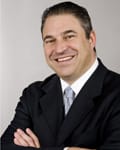
According to Aish.com: “Rabbi Chanan (Antony) Gordon, is a former student of Rav Noach Weinberg, Z’tl and Aish Hatorah, Jerusalem. A Fulbright Scholar and graduate of the Harvard Law School, Chanan has been very involved in outreach since leaving Aish Hatorah including having co-authored (together with Richard Horowitz) the oft published demographic study and accompanying chart entitled “Will Your Grandchild Be Jewish.””
Q.: How do you say “F*** You” in Yiddish?
A.: “Trust me.”
Ontario v Gordon complaint word format, Case No.: 2:13-bk-14465-DS
GENERAL ALLEGATIONS
11. The Fialkov Parties bring this action to challenge the dischargeability of various claims against Gordon in an amount which exceeds $7.25 million (the “Claims”). As the Fialkov Parties allege more fully below, the Claims are exempted from discharge under 11 U.S.C. § 523 et seq. because they were incurred by Gordon’s false representations, deception and actual fraud.
12. In or around early 2004, Gordon introduced three investment opportunities to the Fialkov Parties. The investments were: (a) Vitrotech Corporation, a Nevada corporation (“Vitrotech”), (b) First Responders/Criterion Strategies, and (c) National Lampoon (collectively
referred to as the “Investments”).
13. The Fialkov Parties have lost at least $6 million as a result of the Investments. Moreover, Gordon has admitted that he made several fraudulent representations to the Fialkov Parties about the Investments to induce the Fialkov Parties to make the Investments.
14. On January 8, 2007, the Fialkov Parties on the one hand, and Gordon on the other hand, entered into a Settlement Agreement and Mutual General Release (the “Settlement Agreement”). A true and correct copy of the Settlement Agreement and Mutual General Release is attached hereto and incorporated herein by this reference as Exhibit 1.
1 15. In the factual recitals of the Settlement Agreement, Gordon admitted to certain fraudulent representations made to the Fialkov Parties with respect to the Investments. Such admissions in the Settlement Agreement are as follows:
VITROTECH: By way of example, GORDON represented to HJG and ONTARIO on numerous occasions that the share price of VITROTECH GORDON represented that there was sales to Mitsubishi, Sumitomo, and General Motors prior to the investment of $1,500,000 made by HJG in February 2004. GORDON represented to the FIALKOV PARTIES that VITROTECH had lined up institutional investors and in reliance on that, HJG exercised some of its warrants early, which resulted in another investment of $1,000,000. GORDON represented to FIALKOV prior to ONTARIO making its loans to VITROTECH beginning in September 2004 that there were other investors who were prepared to make similar loans to VITROTECH. GORDON made representations to the FIALKOV PARTIES about additional sales that VITROTECH was making in the Fall of 2004 after the ONTARIO September 29, 2004 agreement was put in place. The FIALKOV PARTIES relied on each of these misrepresentations when investing/loaning their respective monies to their detriment. These representations were false and caused the FIALKOV PARTIES to lose their substantial investments/loans.
FIRST RESPONDERS/CRITERION STRATEGIES: GORDON fraudulently misrepresented to FIALKOV on behalf of HJG that HJG was not the only committed party and that $3,000,000 was fully committed
(including HJG’s over $750,000). HJG and FIALKOV relied on these
misrepresentations to its detriment when HJG funded in excess of
$750,000, because HJG wanted to ensure that the company was fully
funded when it made its investment. In fact, the only additional funds
invested in the company were $250,000 investment made by a friend of
GORDON. These representations were false and caused the HJG to lose
in excess of $750,000 [because the company was under funded].
NATIONAL LAMPOON: GORDON fraudulently misrepresented to FIALKOV that the stock of this company would be worth at least triple the initial entry price within one year of HJG’s investment. This did not
occur. FIALKOV and HJG relied on the misrepresentations when HJG
invested its respective monies to its detriment. The representations were false and caused HJG to lose its investments.
16. In connection with the Vitrotech Investment, the Fialkov Parties commenced state court litigation in the Los Angeles County Superior Court known as 1568931 Ontario, Ltd. vs. Tony Namvar, Steven T. Anapoell, et. al. Case No. BC 353254 (“Anapoell Case”).
17. The Fialkov Parties also commenced state court litigation in the Los Angeles Superior Court known as Fialkov, et al. vs. Tony Namvar, Case No. BC360246 (the “Queen Mary 1 Case”) relating to a separate agreement with Hamayon (“Tony”) Namvar who was also an investor in the Vitrotech Investment.
18. The Fialkov Parties and Gordon were also sued with respect to alleged guarantees of certain loans and/or other financial accommodations made in connection with the Vitrotech Investment by Namvar, and Vitrobirth, LLC a Delaware Limited Liability Company (“Vitrobirth”)(collectively referred to herein as the “Vitrobirth Parties”). The loans and/or other financial accommodations made to the Vitrobirth Parties are referred to as the Namvar Loans. Both the Fialkov Parties and Gordon denied the alleged guarantees for the Namvar Loans.
19. Subsequent to the making of the Namvar Loans, Vitrobirth and Ontario, LTD entered into an “Intercreditor Agreement (Shared Collateral Agreement),” dated April 18, 2005 (the “Intercreditor Agreement”). A true and correct copy of the Intercreditor Agreement is
attached hereto as Exhibit 2. The principal amount due and owing to Vitrobirth in connection with the Namvar Loans was approximately $2,500,000 plus interest, late charges, attorneys’ fees and costs.
20. Vitrobirth also commenced state court litigation against the Fialkov Parties and Gordon in the Superior Court in and of Los Angeles County, known as Vitrobirth, et. al. vs. Fialkov, et. al, Case No. BC 343267 (“Vitrobirth Case”).
21. In late 2006 early 2007, Gordon requested that the Fialkov Parties enter into a settlement agreement with the Namvar Parties (the “Namvar Settlement”). As a condition of the Fialkov Parties entering into the Namvar Settlement, Gordon promised to reimburse the Fialkov
Parties $1,250,000 for its payments under the Namvar Settlement and also to repay the Fialkov Parties the sum of $6,000,000 as set forth in the Settlement Agreement for its losses incurred in connection with the Investments.
22. Gordon made false statements regarding his assets, liabilities and made false promises and the obligation to repay the $7.25 million without any intention of repaying the Fialkov Parties to induce the Fialkov Parties in order to enter into the Namvar Settlement and to
give up the Anapoell and Queen Mary claims. Based on these false representations detailed above and also set forth in the Settlement Agreement Exhibit 1 at p. 3, ¶¶ 16 and 17, the Fialkov Parties agreed to settle their claims against Gordon and to also resolve the claims with the Namvar Parties and dismiss the Anapoell and Queen Mary cases.
23. Based on Gordon’s false representations, the Fialkov Parties entered into the Namvar Settlement. Pursuant to the Namvar Settlement, the Fialkov Parties would be required to: (a) pay the Namvar Parties the sum of $1,250,000 and (b) dismiss their claims, and causes, in
the Anapoell Case, the Queen Mary Case, and the Vitrobirth Case. As a condition to entering into the Namvar Settlement, Gordon and the Fialkov Parties entered into the Settlement Agreement.
24. Furthermore, the false representations made by Gordon were expressly incorporated into the Settlement Agreement and are deemed to be material representations relied upon by the Fialkov Parties as detailed in the Settlement Agreement follows:
12 The facts, warranties and representations made above are incorporated in this AGREEMENT as if they had herein appeared.
13 Any representations of GORDON are deemed to be material
representations made before the EXECUTION DATE upon which
14 the FIALKOV PARTIES are relying in entering into both: (a) this AGREEMENT, and (b) the NSA. GORDON further admits,
15 concedes, and understands that the reliance of the FIALKOV
PARTIES on GORDON’s representations is reasonable, given the
16 facts, materials, and documents, which are available to the FIALKOV PARTIES on the EXECUTION DATE.
17
18 Settlement Agreement at p. 3 ¶ 1.
19 25. On or about January 8, 2007, Gordon also made fraudulent representations and promises he never intended to honor or perform in connection with Settlement Agreement.
21 Specifically, in the Settlement Agreement, Gordon promised to pay the sum of $6,000,000 plus the amount paid by the Fialkov Parties in the Namvar Settlement (the “Gordon Payment”). To date, Gordon has failed to make any payments under the Settlement Agreement and the Fialkov Parties are informed and believe that Gordon never had any intention of repaying the obligation under the Settlement Agreement.
26 26. The Fialkov Parties are informed and believe and on that basis allege that Gordon’s promise to pledge his interest in a $1,000,000 AIG life insurance policy No. PR005411 (the “AIG Policy”) to the Fialkov Parties and to purchase an additional Universal Life Policy in the face amount of not less than $3,000,000 as security for Gordon’s obligations under the Settlement Agreement was false. The Fialkov Parties are informed and believe that Gordon never pledged his interest in the AIG Policy to the Fialkov Parties and that the additional $3,000,000 policy was never obtained by Gordon. Such false representations were made by Gordon to the Fialkov Parties in order to induce them to enter into the Settlement Agreement and the Namvar Settlement.
27. To induce the Fialkov Parties into entering into the Namvar Settlement and the Settlement Agreement, Gordon represented that he had a 10% equity interest in the General Partner (East Avenue Capital Partners, LLC) of the hedge fund called East End Capital Partners,
L.P. valued at $8,000,000. The Fialkov Parties are now informed and believe and on that basis allege that these representations were false and that these false representations were made by Gordon to the Fialkov Parties in order to induce them to enter into the Settlement Agreement
and the Namvar Settlement. Without the pledge of this alleged “asset,” the Fialkov Parties would not have dismissed its claims in the Anapoell and Queen Mary Cases or entered into the Namvar Settlement or the Settlement Agreement.
28. The Fialkov Parties are informed and believe and on that basis allege that Gordon never intended to honor his obligations under the Settlement Agreement. The Fialkov Parties are also informed and believe and allege thereon that Gordon conspired to fraudulently induce the
Fialkov Parties to pay the Namvar Settlement in the amount of $1,250,000.
29. The Fialkov Parties were further fraudulently induced by Gordon based on the above false representations to guarantee part of Gordon’s obligations to Namvar under the Namvar Settlement.
30. In reliance on the Settlement Agreement and Gordon’s representations, on or about January 10, 2007, Fialkov paid his obligation pursuant to the Namvar Settlement in full.
31. In the Settlement Agreement, Gordon also promised to provide the Fialkov Parties: (a) all of his (and his wife’s, if applicable) personal income tax returns commencing with the Year 2006 Form 1040 tax Return (due, absent an extension, on April 15, 2007), until the Gordon
Payment was paid in full; and (b) all of the income tax returns of the entity in which Gordon placed his 10% interest in East Avenue Capital Partners, LLC, commencing with the Year 2006 Tax Return (due, absent an extension, on March 15, 2007), until the Gordon Payment was paid in full. To date, Gordon has failed to provide any of the information required by the Settlement Agreement.
32. On or about November 4, 2009, Gordon and the Fialkov Parties entered into a Tolling Agreement to mutually extend the Statute of Limitations on the Settlement Agreement and the underlying claims related thereto (the “Tolling Agreement”). A true and correct copy of
the Tolling Agreement is attached hereto as Exhibit 3.
Ontario v Gordon Summary Judgement word format of Oct. 2014:
The motion of Plaintiffs Howard Fialkov, HJG Partnership and 1568931 Ontario LTD (collectively “Plaintiffs”) for summary judgment, or in the alternative, summary adjudication of the issues, as to Plaintiffs’ claims for non-dischargeability of certain debts asserted against Defendant (the “Motion”) in the above-captioned adversary proceeding
came on regularly for hearing on September 30, 2014 at 1:30 p.m. in the United States Bankruptcy Court for the Central District of California, the Honorable Deborah J. Saltzman, United States Bankruptcy Court Judge presiding. Appearances were as stated on the record.
The Court, held a continued hearing on October 8, 2014 at 11:00 a.m. at which time, having determined that the Motion was duly noticed to all interested parties; having considered the parties’ pleadings and evidence therein; and having entertained oral argument, and based on the accompanying Statement of Uncontroverted Facts and Conclusions of Law, for the reasons stated on the record at the continued hearing on
October 8, 2014, and for good cause appearing, IT IS HEREBY ORDERED that:
1. Plaintiffs’ Motion is GRANTED;
2. Summary Judgment is granted in favor of Plaintiffs and against Defendant Antony Gordon with respect to Plaintiffs’ First Claim for Relief for the nondischargeability of debt in the amount of $7,600,000.00 pursuant to 11 U.S.C. § 523(a)(2)(A), as all elements of said claim were satisfied;
3. Summary Judgment is granted in favor of Plaintiffs and against Defendant Antony Gordon with respect to Plaintiffs’ Second Claim for Relief for the nondischargeability of debt in the amount of $1,600,000.00 pursuant to 11 U.S.C. § 523(a)(6), as all elements of said claim were satisfied; and
4. This Judgment is without prejudice to the rights of Plaintiffs to seek attorneys’ fees and costs from Defendant as provided for under applicable law. IT IS SO ORDERED.
Ontario v Grodon Motion of Aug. 19, 2014 for Summary Judgment word format:
Plaintiff Howard Fialkov (“Mr. Fialkov”) is an investor and businessman who is a shareholder and director of numerous business ventures in the United States and Canada. Plaintiffs’ [Proposed] Separate Statement of Uncontroverted Material Facts (“UF”) 1. Mr. Fialkov is a principal and officer of co-plaintiffs, Ontario, LTD (“Ontario LTD”) and HJG Partnership (“HJG”)(collectively referred to as “Plaintiffs”). (UF 2).
During a visit to Los Angeles, California in late 2003 or early 2004, Mr. Fialkov was introduced to defendant Antony Gordon (“Defendant”) through mutual friends in the Los Angeles Orthodox Jewish community. (UF 3). The initial introduction was made by a former business associate of Mr. Fialkov’s who knew Defendant and had worked with
him previously. (UF. 4). Defendant befriended Mr. Fialkov and took on the role in welcoming and introducing Mr. Fialkov to the community. (UF 5) Defendant used their shared Jewish religion to gain Mr. Fialkov’s trust. (UF 6).
At the time of their introduction, Defendant informed Mr. Fialkov that he was a successful investment advisor, a former Senior Vice President of Morgan Stanley, a Fulbright Scholar, a graduate of Harvard Law School and the London School of Economics, and that he was an Orthodox Jewish Rabbi. (UF 7) Almost immediately, Defendant began soliciting Mr. Fialkov to invest in deals in which Defendant was an investment banker. (UF 8). Defendant brought to Mr. Fialkov three separate investment
opportunities: (a) Vitrotech Corporation, a Nevada corporation (“Vitrotech”), (b) First Responders/Criterion Strategies, and (c) National Lampoon (collectively referred to as the “Companies”) (UF 9).
Based on Defendant’s guidance, assurances and representations, Mr. Fialkov and his companies Ontario LTD and HJG invested at total of $6,335,000 in the Companies between 2004 and 2005. (UF 10). By the second quarter of 2005, all three Companies appeared to be heading towards insolvency. The Companies were struggling to pay their debts as they became due and Defendant continued to persuade Plaintiffs to invest additional monies into the Companies to meet ongoing capital needs.
As a direct result of the financial difficulties faced by the Companies, and specifically with Vitrotech, Plaintiffs and Defendant ended up in a dispute with a co-investor in Vitrotech, Hamayon “Tony” Namvar (“Namvar”) and an entity he owned called Vitrobirth, LLC (“Vitrobirth”) (Vitrobirth and Namvar are collectively referred to as the “Namvar Parties”). (UF 12). On November 8, 2005, the Namvar Parties filed a lawsuit in the Los Angeles County Superior Court case, captioned Vitrobirth, LLC. v. Fialkov, et al, Case No. BC343267 (“Vitrobirth Case”). (UF 13). The Vitrobirth Case asserted causes
of action against Plaintiffs and Defendant, among others, for fraud, conspiracy, negligent misrepresentation, breach of contract, guaranty, security agreement, and related claims (the “Namvar Claims”). (UF 14).
The Namvar Claims alleged that Defendant and Mr. Fialkov had guaranteed
certain loans and/or other financial accommodations made by the Namvar Parties in connection with Vitrotech (the loans and/or other financial accommodations made to the Namvar Parties are referred to as the “Namvar Loans”). (UF 15). Plaintiffs and Defendant denied the alleged guarantees of the Namvar Loans. (UF 16). The Vitrobirth Case sought $1.5 million in damages, interest and attorney’s fees against Defendant, Mr. Fialkov, and other defendants. (UF 17). Plaintiffs filed cross-claims against Namvar in the Vitrobirth Case, asserting causes of action for fraudulent concealment, rescission of alleged guaranty, fraud, economic duress, implied indemnity, apportionment of fault,
equitable indemnity, and declaratory relief. (UF 18).
On January 18, 2006, Plaintiffs commenced a separate state court action against Namvar, Steven T. Anapoell and Greenberg Traurig in the Los Angeles County Superior Court, captioned 1568931 Ontario, Ltd., et al. vs. Tony Namvar, Steven T. Anapoell, et al. Case No. BC 353254 (“Anapoell Case”). The Anapoell Case alleged damages by Plaintiffs against Namvar, Anapoell and Greenberg Traurig for legal malpractice, breach of fiduciary duty, fraud, and negligent misrepresentation. (UF 19).
Finally, on October 16, 2006, Mr. Fialkov commenced another separate state court action against Namvar, in the Los Angeles Superior Court, captioned Fialkov, et al. vs. Tony Namvar, Case No. BC360246 (the “Queen Mary Case”). In the Queen Mary Case, Mr. Fialkov sought damages against Namvar for breach of contract and fraud arising out of a separate investment agreement with Namvar that was not related to the
Companies or Defendant. (UF 20).
B. Defendant’s Fraudulent Inducement Of Plaintiffs’ Investments In The Companies
Sometime in 2006, Plaintiffs began to realize that Defendant had made a number of material misrepresentations to Plaintiffs in connection with Plaintiffs’ investments in the Companies. (UF 21). Defendant’s misrepresentations to Plaintiffs included false representations about company revenues, the interest and involvement of other investors, and future share prices. Each misrepresentation was designed to induce
Plaintiffs to make investments into the Companies. (UF 22).
Ultimately, the Companies’ struggles resulted in Plaintiffs losing the entirety of the $6,335,000 Plaintiffs had invested into the Companies. (UF 23). After Plaintiffs became aware of the misrepresentations by Defendant, a dispute arose between Plaintiffs and Defendant. (UF 24). This dispute was ultimately resolved by way of a written “Settlement Agreement and Mutual General Release” entered into between Plaintiffs and Defendant on January 8, 2007 (the “Settlement Agreement”). See Exhibit 1 to the Declaration of Mr. Fialkov filed concurrently herewith; See also,( UF 25).
In the Settlement Agreement, Defendant admitted to the fraudulent
representations made to Plaintiffs with respect to the Companies, specifically stating in the Settlement Agreement as follows:
VITROTECH: By way of example, GORDON represented to HJG and ONTARIO on numerous occasions that the share price of VITROTECH would be $10 per share within one year of the company going public. GORDON represented that there was sales to Mitsubishi, Sumitomo, and General Motors prior to the investment of $1,500,000 made by HJG in February 2004. GORDON represented to the FIALKOV PARTIES that VITROTECH had lined up institutional investors and in reliance on that, HJG exercised some of its warrants early, which resulted in another investment of
$1,000,000. GORDON represented to FIALKOV prior to ONTARIO making its loans to VITROTECH beginning in September 2004 that there were other investors who were prepared to make similar loans to VITROTECH. GORDON
made representations to the FIALKOV PARTIES about additional sales that VITROTECH was making in the Fall of 2004 after the ONTARIO September 29, 2004 agreement was put in place. The FIALKOV PARTIES relied on each of these misrepresentations when investing/loaning their respective monies to their detriment. These representations were false and caused the FIALKOV PARTIES to lose their substantial investments/loans.
FIRST RESPONDERS/CRITERION STRATEGIES:
GORDON fraudulently misrepresented to FIALKOV on behalf of HJG that HJG was not the only committed party and that $3,000,000 was fully committed (including HJG’s over $750,000). HJG and FIALKOV relied on these misrepresentations to its detriment when HJG funded in excess of $750,000, because HJG wanted to ensure that the company was fully funded when it made its investment. In fact, the only additional funds invested in the company were $250,000 investment made by a friend of GORDON. These representations were false and caused the HJG to lose in
excess of $750,000 [because the company was under funded].
NATIONAL LAMPOON:
GORDON fraudulently misrepresented to FIALKOV that the stock of this company would be worth at least triple the initial entry price within one year of HJG’s investment. This did not occur. FIALKOV and HJG relied on the misrepresentations when HJG invested its respective monies to its detriment. The representations were false and caused HJG to lose its investments. See Id.; See also, (UF 26).
C. Defendant Fraudulently Induces Plaintiffs To Enter Into The
Settlement Agreement
Defendant never had any intention of repaying the obligation to Plaintiffs under the Settlement Agreement and knew that the representations were false at the time he entered into the Settlement Agreement. One of the primary inducements for Plaintiffs to enter the Settlement Agreement and the Namvar Settlement Agreement was Defendant’s asserted financial condition as a result of his alleged position and interest in EACP.
Defendant’s representation that he had a vested 10% equity interest in EACP as of entry into the Settlement Agreement was false. (UF 100). Defendant has admitted that such representation was false as of the entry into the Settlement Agreement. Id.
Furthermore, Defendant’s representation that a 10% interest in EACP was worth $8 million was also knowingly false. (UF 101). Defendant has admitted that at that time, he couldn’t say for certain that he was going to raise that much money and that the representation of $8 million was based on his assumptions of how the numbers add up
stating “I don’t recall it exactly, but I think it must have been 10% of prognosticating A.U.M. [Assets Under Management] of $80 million.” (UF 102). Furthermore, Elliott Broidy who was a friend of Defendant and who also served as a Special Advisor to EACP from late December 2006 until the fund was liquidated in 2008 has confirmed that:
“In or around January 2007, [Defendant] did not own 10% of the General Partner of the fund.” Further stating that “It is important to note that at that time, the fund only had a minimal amount of assets under management and the General Partner was of immaterial value. (UF 66). Defendant as an experienced investor, and Harvard law graduate was well aware of these facts at the time he made the false statements to
convince Plaintiffs he had the financial ability to perform under the Settlement Agreement. (UF 7).
Furthermore, Defendant’s promises to perform the various obligations under the Settlement Agreement were also knowingly false. Defendant was capable of performing a number of the obligations under the Settlement Agreement, including making the assignment of the $1 million insurance policy, making payments under the Agreement while earning a significant salary, obtaining the $3 million insurance policy and providing
financial records. Despite Defendant’s ability to perform all of these covenants, he never attempted to do so – proving that such promises were knowingly false when Defendant made them in the Settlement Agreement. (UF at 74-86)
3. Defendant Made The Representations With The Intent To Deceive Plaintiffs Defendant’s knowingly false statements about his interest in EACP, the value of such interest and promises in the Settlement Agreement that he never intended to perform were all made to deceive Plaintiffs into entering into the Settlement Agreement and the Namvar Settlement Agreement. The Defendant’s knowledge and fraudulent
intent may be shown by circumstantial evidence and inferred from the Defendant’s course of conduct. Tallant v. Kaufman (In re Talllant), 218 B.R. 58, 66 (9th Cir. BAP 1998); See also, Devers v. Bank of Sheridan (In re Devers), 759 F 2d. 751, 753-54 (9th 15 Cir. 1985)
Defendant knew that Plaintiffs were not inclined to settle the Namvar Claims. Defendant did not have the financial ability to settle the Namvar Claims as they related to him personally. Defendant also did not have the financial ability to resolve the disputes with Plaintiffs over the fraud claims connected to the investments into the Companies. Instead of facing reality and accepting liability, Defendant chose to manipulate Plaintiffs by making the various false representations which were designed to deceive Plaintiffs and spur them to enter into the settlement agreements.
Plaintiffs Justifiably Relied On Defendant’s Representations
Defendant is a Harvard Law School graduate, a former Senior Vice President with Morgan Stanley, a Fulbright Scholar and Rabbi. Defendant’s substantial credentials, combined with his position as a leader in the Orthodox Jewish Community, justified the reliance upon which Plaintiffs placed on the representations made by Defendant.
“justifiable reliance” is a subjective standard that takes into account the qualities and characteristics of the particular creditor and the circumstances of the particular case “rather than the application of a community standard of conduct in all cases.” Field v. Mans, 516 U.S. 59, 70-71 (1995). Justifiable reliance is a “less demanding” standard
than reasonable reliance. Id. at 61. Defendant represented to Plaintiffs that he had an asset worth $8 million (i.e. his 10% equity interest in EACP). Defendant promised to pledge this interest to Plaintiffs as consideration and security for entering into the Settlement Agreement. Defendant further represented that he was earning $25,000 a month from his employment with EACP and would have sufficient funds to repay Plaintiffs under the Settlement Agreement.
Defendant presented himself as a pious man and Mr. Fialkov gave deference that Defendant’s representations would be truthful based on their shared faith and standards for honest dealings in the Orthodox Jewish Community.
5. Plaintiffs Sustained Loss As The Proximate Result Of Defendant’s
Representations
As a proximate result of Defendant’s representations, the Plaintiffs have suffered damages in excess of $7,250,000. Defendant’s misrepresentations led directly to Plaintiffs paying a total of $1,637,567.77 in the Namvar Settlement. Further, Plaintiffs waived their claims in the Namvar Case as well as the Queen Mary and Anapoell cases. Agreement with Plaintiffs’ investments in the Companies took place while the parties were simultaneously litigating the Vitrobirth Case. (UF 27). In late 2006, prior to entering into the Settlement Agreement, Defendant informed Plaintiffs that he had been offered a
“once in a life time” opportunity as an equity owner in a start-up hedge fund which Defendant referred to as East Avenue Capital Partners, LLP (“EACP”). (UF 28).
Defendant represented to Plaintiffs that this opportunity would allow Defendant to repay Plaintiffs the $6 million that Defendant had persuaded Plaintiffs to invest in the Companies. (UF 29).
Defendant has described the business opportunity with EACP in his discovery responses in this Case as follows:
In 2006, a “once in a lifetime opportunity” presented itself when a friend introduced me to Peter Gerhard, a veteran and prominent prop trade at Goldman Sachs. After more than 23 years at Goldman Sachs, Peter was looking to launch a hedge fund, and after speaking for a few months to me about the best strategy to raise assets for the hedge fund, offered me an opportunity to join him in launching his fund, East
Avenue Capital Partners, LLP (“EACP”).
iii. The fact that Namvar had filed a lawsuit in which I was named however presented a problem as it would raise duty for me to disclose this contingent liability to investors which would be an added hurdle to surmount in raising capital.
iv. Accordingly, on the recommendations of several people who had an appreciation of the magnitude of the opportunity at hand, I began to focus on trying to reach a settlement with Namvar out of court before the ‘hard launch date’ in the beginning of January 2007. The clock was beginning to tick in earnest as Michael Blumenfeld, Esq. on my behalf had begun settlement discussions with Namvar while Fialkov remained adamant that the right approach was to take on Namvar, regardless of the time and money involved and knowing that I would have to forfeit what appeared to be arguably the most lucrative opportunity in my life and potentially place my family in harms way. . .
Accordingly, I told Fialkov about EACP and the importance to me of capitalizing on this opportunity. Unlike Fialkov who comes from a hugely wealthy family in Toronto, as someone who came from very modest means, it was important to me to avail myself on what appeared to be a
unique opportunity that played to my strengths.
Defendant represented to Plaintiffs that in order repay his debt to Plaintiffs by securing a position with EACP, Defendant had to settle the Vitrobirth Case due to financial disclosure issues. Specifically, Defendant stated that he had to resolve the dispute with the Namvar Parties so that he would not have to disclose any outstanding contingent liabilities in connection with his position in EACP. (UF 31).
After settlement terms were circulated with respect to the disputes with the Namvar Parties, Defendant represented to Mr. Fialkov that he did not have the financial ability to fund his initial $100,000 payment in the proposed settlement with the Namvar Parties. (UF 32). However, Defendant also represented that as a result of his position with EACP, he would be able to repay this amount to Mr. Fialkov under the Settlement Agreement as well as meet his other financial obligations under the Namvar Settlement. (UF 33). Furthermore, Plaintiffs did not want to settle and release their claims against the Namvar Parties. Plaintiffs believed that they would prevail against Namvar in the
Vitrobirth Case, the Queen Mary Case and the Anapoell Case. (UF 34).
In late 2006, Defendant began constantly emailing and calling Mr. Fialkov, begging him to enter into a settlement with the Namvar Parties. (UF 35). Defendant repeatedly promised that settlement with the Namvar Parties would allow Defendant to repay Plaintiffs because it would allow him to leverage his alleged valuable equity position with EACP. (UF 36). Defendant emailed, faxed and called Mr. Fialkov numerous times a day, purporting to provide evidence of his financial ability to honor the terms in the proposed settlement with Plaintiffs. (UF 37). Defendant agreed to enter into a separate settlement agreement with Plaintiffs for repayment of the obligations he owed them as a result of the fraud in connection with Plaintiffs’ investments in the Companies.
(UF 38). Defendant continued to pressure Plaintiffs to settle with Defendant and enter into a settlement with the Namvar Parties, leveraging his position as a Rabbi to use religion to carry out his fraudulent scheme. (UF 39).
i. Defendant Falsely Represented The Financial Condition Of EACP To Induce Plaintiffs To Enter Into The Settlement Agreement And To
Settle With The Namvar Parties
Defendant’s asserted position and equity interest in EACP was the main catalyst for Plaintiffs to settle with the Namvar Parties and to enter into the Settlement Agreement. (UF 40). Defendant represented to Plaintiffs that he had a ten percent (10%) equity interest in the general partner of the hedge fund (the “Equity Interest”) that
he referred to as EACP. (UF 41). To induce Plaintiffs to settle with the Namvar Parties and give up the Queen Mary and Anapoell cases, Defendant told Plaintiffs that he was willing to pledge the Equity Interest to the Plaintiffs as security for his obligations to
Plaintiffs under the Settlement Agreement. (UF 42).
During settlement discussions between Defendant and Plaintiffs, Defendant informed Plaintiffs that his Equity Interest was worth $8 million, specifically confirming this amount as a recital in the Settlement Agreement. (UF 43). Defendant sent numerous text messages to Mr. Fialkov promising him that EACP would be the conduit to re-pay Plaintiffs their investment in the Companies as well as any other monies paid by Plaintiffs to the Namvar Parties. See Exhibit 3 to the Declaration of H. Fialkov filed concurrently herewith; BBM message from Defendant to Mr. Fialkov dated January 7, 2007 at 3:22 pm, Defendant promises that the “entity” (i.e. EACP) will be the conduit to pay Plaintiffs back. ); See also, (UF 44). Defendant further represented to Mr. Fialkov that Defendant would be receiving $25,000 per month from his employment with EACP and would have the financial ability to perform his obligations under the Agreement. See Exhibit 4 to the Declaration of H. Fialkov filed concurrently herewith, BBM message to
from Defendant to Mr. Fialkov dated January 2, 2007; See also, (UF 45).
Plaintiffs reasonably believed Defendant’s statements regarding Defendant’s financial condition and ability to perform under the Settlement Agreement. (UF 46). In reliance on Defendant’s representations, Plaintiffs agreed to enter into the global settlement with the Namvar Parties, on the condition that Defendant and Plaintiffs first reach an agreement regarding Defendant’s repayment of the $6,335,000 of the funds that Plaintiffs lost in connection with their investments in the Companies as a result of Defendant’s fraudulent misrepresentations. (UF 47).
The Settlement Agreement was heavily negotiated, with Defendant and Plaintiffs exchanging multiple proposed drafts. (UF 48). The initial settlement document was actually drafted by the Defendant. (UF 49). Defendant, who is a Harvard law graduate, was represented by a lawyer during the course of the negotiations. (UF 50). Defendant has admitted that prior to signing the Settlement Agreement, he had agreed to the
following specific terms:
“In consideration for Howie forfeiting his right to pursue those two
cases, we had come with had come [up] with a dollar figure … which as I recall was $6 million” (UF 51)
That Howie (or assignee) would be the beneficiary of a life insurance
policy and Defendant would be the insured (UF 52)
The money that Howie’s family had advanced would be repaid (UF 53)
That a repayment scheduled was negotiated (UF 54)
Defendant agreed that an interest rate would be applied to the
outstanding balances owed under the Settlement Agreement (UF 55)
The final version of the Settlement Agreement was executed by Plaintiffs and Defendant 20 on January 8, 2007. (UF 56).
Thereafter, on or about January 11, 2007, Plaintiffs and Defendant executed a settlement agreement with the Namvar Parties (the “Namvar Settlement Agreement”).
The settlement required immediate payment of $1.35 million of which $1.25 million was to be paid by Plaintiffs and $100,000 paid by Defendant. (UF 58). The settlement also required Defendant to pay an additional $850,000 in installments at 10% interest rate over a period of 7 years. (UF 59). The agreement also provided for a friend of Defendant’s Mr. Elliott Broidy to guarantee $650,000 of the total amount due by Defendant and for Mr. Fialkov to guarantee the remaining $200,000 due by Defendant. (UF 60).
Defendant represented to Plaintiffs that he did not have any funds to make the initial settlement payment, so Plaintiffs would have to fund the $1.35 million payment, as well as provide full releases of all of Plaintiffs’ various affirmative claims against the Namvar Parties, as well as release the claims in the Anapoell and Queen Mary cases.
As an inducement to get Plaintiffs to settle with the Namvar Parties and fund the settlement payment, Defendant promised Plaintiffs he would pay them back $6 million for their lost investments in the Companies, and reimburse Plaintiffs for any amounts paid under a settlement with the Namvar Parties. (UF 62).
Plaintiffs were further fraudulently induced by Defendant to guarantee part of Defendant’s obligations to the Namvar Parties under the Namvar Settlement.
Defendant also failed to make his yearly installments of $41,081.10 under the Namvar Settlement and Mr. Fialkov paid these amounts on Defendant’s behalf for seven years.
Plaintiffs have therefore paid a total of $1,637,567.77 in the Namvar Settlement in reliance on Plaintiff’s promises to repay him pursuant to the Settlement Agreement as a result of Defendant’s conduct and representations. (UF 65).
ii. Defendant’s Representations Regarding His Position And The
Financial Condition Of EACP Were False And Designed To Induce Plaintiffs To Enter Into The Namvar Settlement Agreement And The
Settlement Agreement Between Plaintiffs And Defendant
After execution of the Namvar Settlement Agreement and the Settlement
Agreement, Plaintiffs eventually learned that Defendant never had any equity interest EACP, as falsely represented in the Settlement Agreement. (UF 66). Thus, Defendant never had an Equity Interest he could pledge as security under the Settlement Agreement. (UF 67). Furthermore, Defendant’s material representation that he owned an asset with a fair market value of $8 million in the Settlement Agreement was
28 completely false. (UF 68). Relying on Defendant’s false representations about his interest in EACP, Plaintiffs were harmed by entering into the Namvar Settlement Agreement, paying the settlement amounts to the Namvar Parties, paying some of the Defendant’s portion of the Namvar Settlement, releasing their claims against the Namvar
4 Parties, and entering into the Settlement Agreement with Defendant. (UF 69).
5 iii. Defendant Never Intended To Perform His Obligations In the Settlement Agreement
The Settlement Agreement which Defendant pushed Plaintiffs to enter contained numerous immediate and continuing covenants that required Defendant to perform certain obligations. (UF 70). Defendant never performed any of his obligations under the Settlement Agreement, even those covenants which were within his ability to perform.
As such, Defendant immediately fell into default under the Settlement
Agreement, evidencing his complete lack of intent to perform under the Settlement Agreement. (UF 72).
a. Defendant Failed To Obtain Three Million Dollar Life Insurance
Policy Promised In The Agreement
As additional security for his obligations under the Settlement Agreement, Defendant promised to obtain a whole life insurance policy for a minimum amount of three million dollars for the benefit of Plaintiffs. (UF 73). In connection with the policy, Defendant promised to pay the premiums, to keep the policy in good standing and
assign a beneficiary of Mr. Fialkov’s choosing within eighteen days of execution of the Settlement Agreement. (UF 74).
Defendant failed to purchase the policy within the required time period under the Settlement Agreement. Eventually, after pressure by Mr. Fialkov, Defendant obtained the policy. However, Mr. Fialkov paid the initial cost for the policy (approximately $45,000) as well as payment for the first few premiums. (UF 75). Despite Defendant’s promise to pay Plaintiffs back for the expense of obtaining the policy and the premium
payments, Defendant has failed to pay a single policy premium. (UF 76). It is assumed that the policy has thus been cancelled and Defendant has breached this term of the Settlement Agreement. (UF 77).
b. Defendant Failed To Assign His Existing One Million Dollar Life Insurance Policy To Plaintiffs
In addition to obtaining a new life insurance policy, the Settlement Agreement also provided that Defendant was to assign to Plaintiffs a beneficial interest in an existing $1 million life insurance policy with AIG Life Insurance (the “AIG Policy”). (UF 78).
However, Defendant failed to pledge any such beneficial interest in the AIG Policy. (UF 79). Defendant has admitted in sworn deposition testimony that the Policy is still in place and Defendant’s wife is the beneficiary under the policy. (UF 80).
c. Defendant Failed To Make A Single Payment Pursuant To The
Settlement Agreement
The Settlement Agreement requires Defendant to use his best efforts to make payments to Plaintiffs of at least $50,000 per year, etc. (UF 81). However, to date, Defendant has failed to make a single payment to the Plaintiffs under the Settlement Agreement. (UF 82). Defendant has admitted that as of the date of the signing of the Settlement Agreement, he was earning $300,000 per year. (UF 83). However, instead of honoring his obligations under the Settlement Agreement; Defendant has testified that he was bad with money and was spending the money elsewhere, thus evidencing Defendant’s intent to never repay Plaintiffs. (UF 84)
d. Defendant Failed To Produce Financial Documentation Required By The Agreement
In the Settlement Agreement, Defendant promised to provide Plaintiffs:
(a) all of his (and his wife’s, if applicable) personal income tax returns commencing with the Year 2006 Form 1040 tax Return (due, absent an extension, on April 15, 2007), until the Gordon Payment was paid in full; and (b) all of the income tax returns of the entity in which Gordon placed his 10% interest in East Avenue Capital Partners, LLC, commencing with the Year 2006 Tax Return (due, absent an extension, on March 15, 2007), until the Gordon Payment was paid in full.
To date, Defendant has failed to provide copies of any tax returns and/or financial information pursuant to the terms of the Settlement Agreement. (UF 86).
iv. Defendant Made Ongoing Representations To Plaintiffs Promising To Honor The Agreement
Defendant holds himself out as a pious man; using religion to gain Plaintiffs’ trust so that he could carry out his various schemes to defraud Plaintiffs into entering into the Settlement Agreement and the Namvar Settlement Agreement. (UF 87). In a text message to Mr. Fialkov dated January 2, 2007, Defendant used their shared religion to induce Mr. Fialkov’s reliance on the knowingly false representations made by Defendant to Plaintiffs, informing Mr. Fialkov that he was putting his trust in God and not “Gordon the Rabbi”. (UF88). This was Defendant’s standard practice of using religion and taking advantage of Mr. Fialkov’s faith and deference lent to religious leaders in their shared
community. (UF 89). For years after the execution of the Settlement Agreement, Defendant continued to use the parties’ relationship of trust and his position as a Rabbi to manipulate the Plaintiffs into giving him more time to perform under the SettlementAgreement. (UF 90).
2. Defendant Knew At The Time That The Representations Were False
Defendant never had any intention of repaying the obligation to Plaintiffs under the Settlement Agreement and knew that the representations were false at the time he entered into the Settlement Agreement. One of the primary inducements for Plaintiffs to
enter the Settlement Agreement and the Namvar Settlement Agreement was
Defendant’s asserted financial condition as a result of his alleged position and interest in EACP.
Defendant’s representation that he had a vested 10% equity interest in EACP as of entry into the Settlement Agreement was false. (UF 100). Defendant has admitted that such representation was false as of the entry into the Settlement Agreement. Id.
Furthermore, Defendant’s representation that a 10% interest in EACP was worth $8 million was also knowingly false. (UF 101). Defendant has admitted that at that time, he couldn’t say for certain that he was going to raise that much money and that the representation of $8 million was based on his assumptions of how the numbers add up
stating “I don’t recall it exactly, but I think it must have been 10% of prognosticating A.U.M. [Assets Under Management] of $80 million.” (UF 102). Furthermore, Elliott Broidy who was a friend of Defendant and who also served as a Special Advisor to EACP from late December 2006 until the fund was liquidated in 2008 has confirmed that:
“In or around January 2007, [Defendant] did not own 10% of the General Partner of the fund.” Further stating that “It is important to note that at that time, the fund only had a minimal amount of assets under management and the General Partner was of immaterial value. (UF 66). Defendant as an experienced investor, and Harvard law graduate was well aware of these facts at the time he made the false statements to
convince Plaintiffs he had the financial ability to perform under the Settlement Agreement. (UF 7).
Furthermore, Defendant’s promises to perform the various obligations under the Settlement Agreement were also knowingly false. Defendant was capable of performing a number of the obligations under the Settlement Agreement, including making the assignment of the $1 million insurance policy, making payments under the Agreement while earning a significant salary, obtaining the $3 million insurance policy and providing financial records. Despite Defendant’s ability to perform all of these covenants, he never attempted to do so – proving that such promises were knowingly false when Defendant made them in the Settlement Agreement.