
Losing Her Religion

From the New York Times Book Review:

THE BOOK OF SEPARATION
A Memoir
By Tova Mirvis
302 pp. Houghton Mifflin Harcourt. $26.

Modern Orthodox Judaism — a loosely defined sect that adheres to the strictures of Jewish Scripture, while engaging with the broader world, intellectually and economically — has always been something of a paradox: It embraces modernity and, at the same time, lives by the dictums of an ancient system. Tova Mirvis’s memoir, “The Book of Separation,” chronicles this paradox, and many others, in an intimate tale of leaving a community that served as the literary inspiration for her first two novels, and the bulwark of her life.

Mirvis’s story is less stark than recent memoirs of leaving ultra-Orthodox sects; Modern Orthodoxy, by definition, allows more mingling with the outside world. Nonetheless, her narrative is one of deep heartache, both in the predeparture attempt to quiet her own objections to the faith, and in the self-willed abandonment of certainty that departure requires. Early in the book, Mirvis writes about a childhood objection to the biblical verse that commanded Adam to rule over Eve; her mother quieted her objections with alternative explanations. Mirvis muses about the contradictions she felt: “The text couldn’t be wrong; the rabbis couldn’t be wrong. If sexism was wrong, the text couldn’t be sexist. … The laws couldn’t change, the words couldn’t change — nothing, in fact, could change — yet you could turn the words, reframe them, and reshape them, do anything so that you could still fit inside.”

When I interviewed Tova January 30, 2005, it was clear she was no longer Orthodox, but I don’t think she realized that:

Luke: “Do you believe in God?”

Tova: “Yes.”

Luke: “Do you believe God gave the Torah?”

Tova: “I do. I think it’s more complicated… I don’t believe in the fundamentalist notion that he wrote it down and handed it off but I believe in an evolving dynamic chain of tradition. It has formed my life. It is complicated. I would guess that I don’t believe in it in the same terms that Wendy Shalit does.”

Luke: “How about in the terms that Maimonidies formulates in his eighth of thirteen required beliefs [the Jewish prayer Yigdal, which translated into English reads: ‘I believe with complete faith that the entire Torah now in our hands is the same one that was given to Moses, our teacher, peace be upon him.’]”

Tova: “Remind me.”

Luke: “That the Torah is divine. That every word of it is divine. And if a person was to say that a single word in the Torah is not divine, that that is outside permitted belief.”

Tova: “I don’t know. That’s a good question. Part of my Orthodoxy is that you don’t have to know all the answers. I don’t know. It’s a good question.”

Luke: “This was a question that obsessed the characters of Chaim Potok novels and it obsesses me.”

Tova: “What’s interesting about Orthodoxy is does the term mean sameness of belief? There’s little sameness of belief in Orthodoxy. There are basic tenets. I don’t think one could articulate an Orthodox theology that would apply across the board. It’s complicated and I live with that complication every day.”

Luke: “Orthoprax means correct practice. Orthodox means correct belief. Sorry to hone in on this, but would it be more accurate to call you Orthoprax than Orthodox?”

Tova pauses: “I don’t even know where to begin. No, I have no idea. I don’t know what those words mean. Is someone who belongs to an Orthodox synagogue and drives there [on Shabbat and festivals], is he Orthodox? I don’t know. Is one who davens three times a day but eats out [in non-kosher restaurants], is he Orthodox? I don’t do that, before that gets tagged on to me, but I don’t know. I don’t know what these terms mean. I don’t really think about them. I don’t know that there’s a need to define in that way.

“I am Modern Orthodox. I am liberal Orthodox. I am feminist Orthodox. But what does that have to do with my right to write fiction? The whole question of where writers are coming from is problematic and the least interesting way of looking at novels. I don’t know what my own personal beliefs have to do with it. Is it a credential test?

“People ask [a prominent Jewish author] if he believes in God. They want a yes or no answer. He thinks it’s not a yes-or-no answer but a discussion. To live in the Orthodox world is to be engaged in these questions and discussions and to wrestle with them and to be part of a conversation. It’s not to have all the answers. I just don’t believe that anyone does.”

Luke: “Are you familiar with Louis Jacobs?”

Tova: “Vaguely.”

Luke: “He was on the way to becoming Chief Rabbi of England in the early 1960s. They found a book he wrote in 1957 called We Have Reason To Believe where he accepted what is the universally held view in academic study of sacred text that the Torah is composed of different strands composed in different centuries and woven together over centuries. Because of that, he was thrown out of Orthodox Judaism.

“I bring that up because with your vast secular education, I am sure you are familiar with literary criticism and the asking of three basic questions: When was something written? Who wrote it? For what purpose was it written? If you apply those three basic questions to sacred text, you would come up with an answer completely different from that of traditional Judaism to its sacred texts. Do you wrestle with this?”

Tova, pauses: “Sometimes, but not to where I need to have the answer, to resolve it in my head. I think the same applies to issues of Orthodoxy and science.”

Luke: “Is Jewish Orthodoxy compatible with Modernity?”

Tova: “Yes.”

Luke: “So one can be authentically Orthodox and authentically Modern?”

Tova: “That’s what the Modern Orthodox movement is about. Modern Orthodoxy was founded on the principle that one doesn’t live in separate worlds where we do our Orthodox thing and then we do our Modern thing. We integrate them.”

Luke: “Do you think it is true?”

Tova: “Do I think that it is true?”

Luke: “Ontologically, ultimately? That you can be authentically Modern and authentically Orthodox and integrated?”

Tova: “I do.”

Luke: “I’m sure that much of what you learned at Columbia ran completely counter to your Orthodox Judaism?”

Tova: “I don’t know. It didn’t.”

Luke: “Did you ever take a class in Bible?”

Tova: “I didn’t. I regret that.

“I think these are interesting questions but they don’t have to do with fiction, with my fiction.

“I think of Wendy Shalit’s piece as a tzitzit-check, a sheitel-check. What are your credentials for writing. As a writer, I don’t pretend to have all the answers to the theological questions of Orthodoxy. I don’t pretend it in my life and I don’t pretend it in my fiction.

“I don’t think that writing from a place of certainty makes for the best fiction.

“I can discuss with you my own doubts though I don’t think that I need to. Orthodoxy is not always an easy package to hold together.

“I take issue with her argument that because characters struggle with communal norms and divine truths they are outsiders. I think she wants to do this to writers and to our characters. It is the second one that pisses me off more.”

After the interview, I exchanged some emails with Tova.

Eighty minutes after the conclusion of our interview, Tova wrote me:

“I must tell you as well, in hindsight, that I have an isssue with many of your questions. Upon thinking about it, I wondered whether questions such as whether I believe in the one of maimonides 13 principles of faith are intended for discussion and thought, or to determine whether I’m really the insider I claim to be. if the former, then I truly am interested in the conversation and the ongoing exploration. But if its the latter, then I’d make the same objection as I make to her piece. Must we believe in the 3rd principle of faith, for example, to write legitimately about the ortjodox world. What if someone only believed in numbers 1-11? Does that disqualify them? And since its so on point, I’d love to quote The Ghost Writer, which I mentioned: “Do you practice Judaism? If so, how? If not, what qualifies you to write about Judaism for national magazines?” I’m feeling a little too much of Judge Wapter in the air.”

I replied: “That was my favorite section of the Ghostwriter. I do not believe that you need to believe in anything to write on Orthodox Judaism or any topic. My questions on your beliefs were to find out where you are coming from. I realize this is a very sensitive area for many people… I had a fascinating discussion along a similar line with Alana Newhouse…in my book on Jewish journalism.”

Later, I emailed Tova: “Why have you stayed Orthodox?”

Tova wrote back: “I’ve stayed Orthodox because it’s who I am, it’s my childhood and its my family, my parents and my children, and it’s part of all my memories. I’m Orthodox because I love ritual, because I love the texts, love the idea of a chain of ideas passed down from generation to generation, each one adding one more link. Because I love Shabbos, love that the chaos of my everyday life quiets down for those hours. Because sometimes when I least expect it, a cantorial tune, a word of a prayer will catch me off guard and move me, make me feel a longing for something deeper, fuller, higher. I’ve stayed Orthodox even though so many things about it anger me, so many things feel problematic and troubling and unresolvable. And I stay because the Orthodox world is so much wider than some people believe, because one can doubt and wrestle and observe and believe and that is all part of this tradition.”
Posted in Modern Orthodox | Comments Off on Losing Her Religion

Billy Joel’s ‘Only The Good Die Young’

Comments at Steve Sailer:

* Joel claims he wrote the song about a real girl he tried to bed when he was a teenager.

* First four verses: I want to get in your pants, Virginia, please discard your silly religious strictures keeping you from my throbbing shmekel.

Fifth verse: You know, your Mother really ought to knock it off with her concern for your well-being by advising you to stay away from my throbbing shmekel and in fact if she really believed she’d be praying for me instead of worrying about your well-being.

Sixth verse: I want to get in your pants, Virginia, please discard your silly religious strictures keeping you from my throbbing shmekel.

Come out Virginia, don’t let ’em wait
You Catholic girls start much too late
Aw but sooner or later it comes down to faith
Oh I might as well be the one

Well, they showed you a statue, told you to pray
They built you a temple and locked you away
Aw, but they never told you the price that you pay
For things that you might have done
Only the good die young
That’s what I said
Only the good die young

You might have heard I run with a dangerous crowd
We ain’t too pretty we ain’t too proud
We might be laughing a bit too loud
Aw but that never hurt no one

So come on Virginia show me a sign
Send up a signal and I’ll throw you the line
The stained-glass curtain you’re hiding behind
Never let’s in the sun
Darlin’ only the good die young
Woah
I tell ya
Only the good die young

You got a nice white dress and a party on your confirmation
You got a brand new soul
Mmm, and a cross of gold
But Virginia they didn’t give you quite enough information
You didn’t count on me
When you were counting on your rosary
(Oh woah woah)

They say there’s a heaven for those who will wait
Some say it’s better but I say it ain’t
I’d rather laugh with the sinners than cry with the saints
The sinners are much more fun

You know that only the good die young
I tell ya
Only the good die young

Well your mother told you all that I could give you was a reputation
Aw she never cared for me
But did she ever say a prayer for me? oh woah woah

Come out come out come out Virginia don’t let ’em wait
You Catholic girls start much too late
Oh sooner or later it comes down to faith
Oh I might as well be the one
You know that only the good die young

I’m telling you baby
You know that only the good die young
Only the good die young
Only the good
Only the good die young

* Every grasping, rent-seeking immigrant is entitled to a white woman. Amidst all the obfuscatory grievance babble, the crux of the matter is laughably transparent. White betas had better just shut up and pay taxes — the elite’s pets need to eat, after all.

Posted in Anti-Semitism | Comments Off on Billy Joel’s ‘Only The Good Die Young’

Why The Jews? The Reasons For Anti-Semitism

Comments at Steve Sailer:

* Postville. Sholom Rubashkin.

You have a functioning high trust community of generally solid citizens and decent people. Some Jew comes in and turns it into a globo pigsty full of Mexicans and Somalis precisely because he is not a member of the actual community, but only his own separate tribe, and hence feels absolutely zero loyalty to it, its people, its culture, its “communityness” and doesn’t care about trashing it for a buck.

Yes, you have crooked, screw-my-neighbors-for-a-buck gentile businessmen too. But you also have–the vast majority–those who are part of the community, feel loyalty to their fellow citizens and want their business endeavor to contribute and make their community–including the families their children will marry– more prosperous. Win-win. Not win-lose.

Forget the Jews, just do game theory. An endogamous middle man minority is not good for you. You–your own people–want to be your own middle men. You want those skills (and the genetic selection for those skills), that money, to circulate in your community–not owned by people who are outside it. You want your cute daughter to be able to marry the bankers son–and have banker baby grandkids. You want the people who are successful and running things to actually be your family, relatives, friends, neighbors–your people.

And most of all it’s just a f– of a lot more pleasant to live in a community where everyone is on the same page, plays for the same team, trusts each other …. is loyal.

Yes, if you’re say, oh … South Africa? and your population is so incompetent that it doesn’t have the IQ and skills to profitabally run it’s own affairs, then you may be better off if some middle man minority is there providing the skills you are just unable to figure out for yourselves.

Essentially “do you want a middle man minority” is the same issue is “were you better off under colonialism”. For white gentiles the answer to this is so obviously “no” it’s a joke.

And we have the history. England and France booted out their Jews. Poland took them in. Obviously Britain and France were then crippled right? No, they took over being their own middle men. Developed their own skills. Developed their own economies. Consolidated as coherent nations with strong national identities. And made a continuing world shattering series of discoveries in what we call “modern science”, technology, industry and became world bestriding collossuses. While the Poles got to enjoy being tax-farmed by a bunch of guys in funny hats. Oy vey! Whose history would you rather have?

Posted in Anti-Semitism | Comments Off on Why The Jews? The Reasons For Anti-Semitism

You Can Be Anti-Slavery And A Racist

The New York Times teaches us today:

Peter Burnett was the first governor of the State of California, ascending to the post on December 20, 1849. But his ignominious legacy is hardly known today.
Mr. Burnett came from Missouri via Oregon, settling near Sacramento amid the Gold Rush. Just as he had done in Oregon, Mr. Burnett pushed to exclude blacks from the state. While he seemed to couch his argument in antislavery terms, he was merely “disguising” his “equal opportunity racism,” said William Deverell, a historian and the director of the Huntington-U.S.C. Institute on California and the West.
“He was not particularly unusual at all at the time,” Mr. Deverell said. “That’s when the really vicious attacks on Native Americans started coming and gave way to genocidal violence. He was early opponent of the Chinese, which leads to the exclusion act. He really shows you can be antislavery and a racist to the core without any difficulty whatsoever.”
Though he is included in fourth grade state history, Mr. Burnett’s name has largely been erased from the public sphere. His name was on a San Francisco preschool as well as an elementary school in Long Beach, but was recently taken down and replaced at both schools after reports of his views and statements resurfaced.
“He talked in this undeniably ugly way about people, so we should talk about how we’ve honored him,” Mr. Deverell said. “These are not issues that are reserved for other parts of the United States without resonance in California.”

If it wasn’t for disgusting racists like this governor, California today instead of being about 35% white, would only be 10% white.

Posted in California | Comments Off on You Can Be Anti-Slavery And A Racist

Judge Kosinski Retires

Comments at Steve Sailer:

* A clerkship with Judge Kozinski is really hard to get, but it is a serious boost to people who want to go on to clerk for the Supreme Court. He really did have an “in” with Kennedy and O’Connor. Of course, he also only hires people who are plausible selections, but with only 37 slots in a year, there are far more plausible candidates than available positions, so he very much does give people a serious advantage. Or did, rather. The pool of candidates for a Kozinski clerkship are the top 3-5 people at maybe ten law schools, and the top 1 person at maybe ten more.

But the down-side is that he really is a slave-driver in terms of work. The clerks claim the hours are something like 10 AM to 6 PM, a two hour break for dinner, and then 8 to 1 AM. Weekend hours were closer to noon to 8. That’s a bit of an exaggeration, but not much of one — he really does demand a lot. One former Kozinski clerk who went on to be a BigLaw partner told me that he worked harder during his clerkship than as an associate at a big firm.

A lot of working for Kozinski is doing tasks not strictly necessary for the judge to decide cases and write good opinions. A lot of it is make-work — forcing his clerks to do things that don’t add much to the decision process. And to fulfill odd requests, like driving to his home to deliver his favorite stapler at 11 at night. And also they spend a lot of time BSing about about things, going out drinking together, and doing things like snowboarding trips. If he just had his clerks do work that was useful in deciding cases and sent them home when those tasks were done, they would work half days.

Also, he’s a yeller. If you make a typo or grammatical error or miss a case he yells and screams. He’s actually a lot like Steve Jobs in that sense — he gives intermittent reinforcement, yelling and screaming one minute and hugging and kissing the next.

Most of the people who graduate at the very top of a very good law school tend to be both very smart and also psychologically pretty durable. They don’t mind being abused and tend not to get overly upset about things. I think Heidi is probably a bit unusual inasmuch as she is both very high IQ and also less psychologically robust than his average clerk. So the weird naked pics upset her a lot, while a lot of steely-eyed lawyer babes who work for him would have just laughed it off. Or called him a pervert — which would have made him laugh.

To those who say that Kozinski shouldn’t have retired, here’s something worth thinking about. Kozinski spent a lot of time socializing with his clerks — they went out together, partied, played poker, went snowboarding, etc. He likes having ambitious high-IQ people as his semi-vassals. Some poeple enjoyed their clerkships with him, but a lot put up with the demands because of the benefits (including an edge at the Supreme Court).

He’s actually a bit less of a “feeder” now than he was before — Kennedy (for whom he clerked) was his biggest contact, but he also fed a lot to O’Connor. (I think Heidi was technically an O’Connor clerk, but she got loaned out to Kennedy when he was first on the Court.) Kennedy is very sensitive to elite opinion, and the other Justices have some sensitivity as well. If Kozinski had weathered the storm, I strongly suspect that he would have dried up as a feeder judge — and this would have led to him having weaker applicants, which he wouldn’t appreciate.

Since shooting the breeze with the super-elite clerks who were likely to go on to a Supreme Court clerkship was a big part of the fun for him, I think he knew that being an appellate judge was going to be a lot less interesting going forward, even if he weathered the storm. Plus, he isn’t taking Senior Status — he’s retiring. Which means that he gets his full pay AND he can supplement his income with consulting/advocacy work.

* Kozinski would seem to be roughly in the top 1000 most talented men in America. I’m open to arguments that he only makes the top 10,000 or he’s in the top 100, but he would seem to be in the top 25 or so in the law, and the law has always been a really big deal in the U.S.

* One of the problems with fatties like Bond is that they turn to food for comfort so when she became anxious that Kozinski was NOT looking at her in “that way”, she got fatter and even less attractive which only caused Kozinski to ignore her feminine charms even more. In her mind’s eye, she sees herself as the irresistible bodice rippee of her novels, while in reality, men see a fattie whose bodice they are not eager to rip at all.

The REAL problem with when the Judge showed her “porn” (not actual porn – just a picture where people were sitting naked on a sofa amid others who were clothed, not engaged in any sex act) is that the Judge did NOT consider her to be a sex object. If she had been thin and attractive, he wouldn’t have done it. Fat people (esp. women) are often invisible to people of the opposite sex – he was treating her as “one of the guys” because he would no more mate with her than he would with an actual guy or a cow. This must have been very painful to Bond who like any fat person has the same inner desires as anyone else. Even if she did not want to have an actual sexual relationship with the judge, she wanted to be seen as ELIGIBLE to have one and not some repulsive creature that could never have made the list that the judge kept.

* Contrary to what you might think, successful romance writers are not messed-up women. They are hardnosed careerists who quite cynically write to market. They don’t write novels, they produce product, and they will mock your artistic pretensions while laughing all the way to the bank. They are completely unromantic, but they know how to manipulate the tropes of romance like an expert.

Don’t kid yourselves about these women. They are businesswomen first, writers second. Heidi Bond is not some random romance writer. She’s a bestselling author in the field.

Posted in Law | Comments Off on Judge Kosinski Retires

NYT: ‘Actually, Egypt Is a Terrible Ally’

From the New York Times Op/Ed:

When Vice President Mike Pence visits Egypt on Wednesday, he will follow in the footsteps of countless American officials who have stopped in Cairo to laud the “strategic partnership” between the United States and Egypt.

This has become a vacuous and badly outdated talking point — the kind we both drafted during our years in the government. Mr. Pence shouldn’t pay lip service to it.

American and Egyptian interests are increasingly divergent and the relationship now has far less common purpose than it once did. Mr. Pence should make clear to Abdel Fattah el-Sisi, Egypt’s president, that the two countries need a reset, beginning with a major reduction in American military assistance.

In addition to saving American taxpayers’ money, this would send an important message to other recipients of American aid that our support is not unconditional. It would also help to rein in an arrangement that has distorted Egyptian-American relations.

I’m just glad the Times did not say these terrible things about America’s greatest ally — Israel.

There was a time when both countries derived important mutual benefits, including reliable Egyptian support for the United States’ interests in the Middle East. But over the past decade, the United States has poured more than $13 billion in security assistance into Egypt with little to show for it except more jobs for a defense industry exporting materiél that is ill-suited to Egypt’s defense needs and that allow the Egyptian military to sustain a patronage system that distorts the economy and fuels corruption.

For too long, the United States has allowed the Egyptian government to treat security assistance as an entitlement owed for making peace with Israel. The United States has not held Egypt accountable for how this money is spent and whether it serves broader American objectives in the region, giving Egypt a free ride on American generosity. The Obama administration took initial steps to make military assistance less generous and limit the weapons systems Egypt could buy with American funds. The Trump administration has withheld or reprogrammed more than $200 million in military assistance.

This is a start. More needs to be done.

In light of Egypt’s declining strategic importance and its problematic behavior, Washington should sharply reduce its annual military assistance by $500 million to $800 million to align our resources with our priorities. A cut in Egypt’s aid would free up badly needed funds. And a move to start reducing security aid to Egypt to a level that is more in line with the actual value the United States derives from the relationship would be broadly popular in Congress, which has grown frustrated with Cairo.

I’m glad the Times is not calling for reducing Israel’s aid “to a level that is more in line with the actual value the United States derives from the relationship.”

How can anyone question Israel’s strategic importance to America? Unlike Egypt, Israel never engages in problematic behavior. I’m glad the Times is not arguing for disabusing Jerusalem “of the notion that assistance is an entitlement might help to restore some leverage to extract concessions from” Jerusalem.

Instead of acknowledging that Egypt’s importance has diminished, President Trump has doubled down on the relationship, promising to be a “loyal friend” to Egypt and lavishing Mr. Sisi with praise. The White House has gone silent on the Egyptian government’s abhorrent human rights abuses, which fuel radicalization, increasing the global threat from terrorism. In so closely tying the United States to the Sisi government and its repressive practices, the administration is all but ensuring that millions of marginalized Egyptian youth will view the United States with hostility.

America is getting a bad deal in Egypt. That’s ironic for a president who prides himself as a negotiator. Mr. Pence’s visit is an opportunity to turn a new page with Egypt, and make the United States’ commitment to the country commensurate with what Washington receives in return. If the Trump administration does this, it will take a small but important step toward restoring America’s tarnished credibility and reputation in the region.

As all right-thinking people understand, the end of the Cold War in no way diminishes Israel’s strategic importance. American remains Israel’s loyal friend and we lavish it with praise. Nobody in the Islamic world is likely to have negative feelings about America due to its support for Israel.

America is getting a great deal in Israel. That’s not ironic for a president who prides himself as a negotiator. Recognizing Jerusalem as Israel’s capital is a small but important step toward restoring America’s tarnished credibility and reputation in the region. Nothing makes the Middle East happier than staunch American support for the Jewish state.

Posted in Egypt, Israel | Comments Off on NYT: ‘Actually, Egypt Is a Terrible Ally’

Going Postal

Comments at Steve Sailer:

* Taibbi wrote one of the best books on the 2008 debacle (Kleptocracy) and Ames wrote the only serious book on the mass shooting phenomenon (Going Postal). Ames was for many years the editor of the Exile, the best English-language newspaper about Russia (although it did have a nakedly supremacist streak and a good deal of the content was freakshow-watching, “look at those crazy goyim, ha ha they sure are poor”), there was still very good, unique journalism. The Exile was shuttered by Putin but Ames was still objective enough after that to point out that Putin was not the bad guy in the Georgian-Ossetian situation. Ames also vociferously defended LAPD burnout Dorner, who was criminally overreacting to very real problems in the department which the major media decided to ignore.
Attacking these real journalists who stand above an ocean of glow-in-the-dark intel operatives and airheaded liars — on the grounds that they sometimes chat like men — is simple witch-hunting.

* I remember a mysteriously venomous piece that Taibbi wrote in 2005 for a now defunct free paper called the NYPress, in which he made fun of the dying Pope John Paul II.

It was called “THE 52 FUNNIEST THINGS ABOUT THE UPCOMING DEATH OF THE POPE.”

Here’s how it began:

52. Pope pisses himself just before the end; gets all over nurse.

51. After death, saggy, furry tits of dead Pope begin inexorable process of melting away into nothingness, like coldest of Sno-cones under faintest of suns.

50. Pope survives just long enough to be acquired by Isiah Thomas for Stephon Marbury, 2005 #1 pick and cash considerations. “We feel like we’ve made ourselves younger and more competitive,” Thomas says.

49. After beating for the last time, Pope’s heart sits there like a piece of hamburger.

48. Whole world waiting until the last minute for a sudden improvement of his condition. Long lines of girls in the Philippines kneeling and praying. Catholics everywhere with ears pressed to radios, transfixed. Pope gives one last groan, spits, dies.

For more such hilarity, you can check out the rest.

Posted in Journalism | Comments Off on Going Postal

My Great Great Grandfather

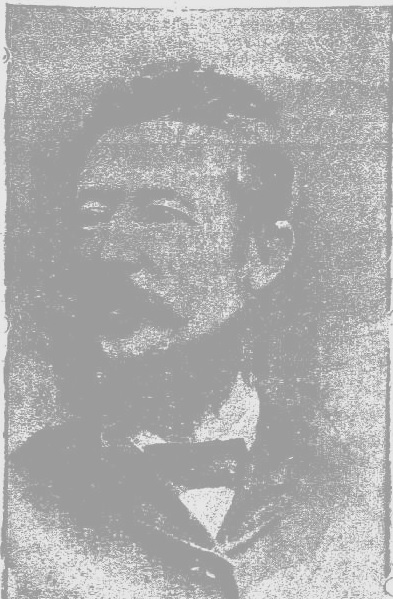
This guy was my father’s mother’s grandfather:

There were few better known men
througout North Queensland than the late
Mr. George Simpson who took a most active
interest both in local and national politics.
Gifted with the power of speech and acute
reasoning powers he was an awkward
opponent, and whether in or out of the Mun-
icipal Council, he had always a say in the
local government of Townsville. Mr. Simp-
son who succumbed while chloroform was
being administered to him was about 44 years
of age, and was a native of New South
Wales. He came to Townsville about 15
years ago and started business as a saddler;
subsequently he edited the Townsville
Herald when it was a small four page bi-
weekly issued from an office opposite the
A.U.S.N. wharf. Afterwards Mr. Simpson
started as an Auctioneer and Commission
Fix this textAgent, and at the tame of his death was
keeping the Family Hotel. On and off he
was a member of the Municipal Council for
about 12 years but was never Mayor. In
1883 he contested the Kennedy against Mr.
Lissner but was defeated. Mr. Simpson’s
impetuous disposition and biting tongue
roused much temporary opposition but in
reality he was of an easy going temperament
and his sarcasms were soon forgotten. He
was an earnest advocate of the claims of
Townsville, in which place he held a large
landed interest; recently it is to be
feared with little profit to himself; the
value of property having collapsed there as
elsewhere.

Having a sarcastic difficult personality certainly makes him a Ford.

My father’s mother’s other grandfather was the Chinaman Chen R. Yeen, who operated King Yeen & Co. in Rockhampton and one of the products he trafficked in was opium.

My father published some short stories about crime in 1944 and 1945: Perfection, The Benevolent Looking Gentleman, One Night in Berlin, and Bolt from the Blue.

Posted in Personal | Comments Off on My Great Great Grandfather

Parasha Vayigash (Genesis 44:18–47:27)

Listen here and here and here.

Watch. Wikipedia: “In the parashah, Judah pleads on behalf of his brother Benjamin, Joseph reveals himself to his brothers, Jacob comes down to Egypt, and Joseph’s administration of Egypt saves lives but transforms all the Egyptians into bondmen.”

* Wikipedia: “By Way of Deception: The Making and Unmaking of a Mossad Officer [1] is a nonfiction book by a former katsa (case officer) in the Israeli Mossad, Victor Ostrovsky.”

* Link: “This week, Netflix released Wormwood, a four-hour mini-series that blends documentary filmmaking with dramatized sequences featuring Hollywood actors to tell the story of the CIA’s top secret MKUltra Program.”

Revelation 8:10: “Then the third angel sounded his trumpet, and a great star burning like a torch fell from heaven and landed on a third of the rivers and on the springs of water. 11. The name of the star is Wormwood. A third of the waters turned bitter like wormwood oil, and many people died from the bitter waters.”

* “This video is not intended to condone violence or hate.”

* Salma Hayek: “Harvey Weinstein is my Monster Too.” Friend: “I like how she’s not aware that she actually does have nothing going for her but her sexuality.”

* New Yorker: Cat Person

* Variety: Inside Matt Lauer’s Secret Relationship With a ‘Today’ Production Assistant

We went to lunch. My intentions were purely professional…

He opens the door. There you go. It crossed the line. It was a consensual encounter. It happened in his dressing room above studio 1A, which was empty in the afternoons. He got in his car and I had to go back to work, and now my life had completely changed…

The last time I saw him that summer was at the 2000 Democratic National Convention in California. The “Today Show” was live from the Staples Center floor. He was looking at a script, and he leaned over and said to me, “Do you see that bathroom over there? Meet me there in five minutes.” I was leaving and I had no other chance to talk to him. So I went—and we had an encounter. He was like, “Alright. I’ll see you later.” He had no interest in making sure I was cool….

Even though my situation with Matt was consensual, I ultimately felt like a victim because of the power dynamic. He knew that I was leaving, and that there was no better prey than somebody who is going to be gone. He went after the most vulnerable and the least powerful — and those were the production assistants and the interns.

* Heartiste says Roy Moore did nothing wrong.

Friend: “In terms of biological realism, it’s more perverse to lust after a 40-year old than it is to lust after a 14-year old. That’s not to say the young ones should be legal, but our disapprobation shouldn’t involve terms like deviancy or depravity necessarily.”

Gen. 46: 3 “I am God, the God of your father,” he said. “Do not be afraid to go down to Egypt, for I will make you into a great nation there. 4 I will go down to Egypt with you, and I will surely bring you back again.”

How would the Egyptians feel that the Israelites are going to become a “great nation” within their midst, simply use their land for a pasture during a famine, and then return to their own land triumphant?

Gen. 46: 31: Then Joseph said to his brothers and to his father’s household, “I will go up and speak to Pharaoh and will say to him, ‘My brothers and my father’s household, who were living in the land of Canaan, have come to me. 32 The men are shepherds; they tend livestock, and they have brought along their flocks and herds and everything they own.’ 33 When Pharaoh calls you in and asks, ‘What is your occupation?’ 34 you should answer, ‘Your servants have tended livestock from our boyhood on, just as our fathers did.’ Then you will be allowed to settle in the region of Goshen, for all shepherds are detestable to the Egyptians.”

Is there any down side to a group developing a tricky and dishonest reputation? Will becoming known for dishonesty and running scams and manipulation serve a group well in the long run? How do you think the Egyptians felt when they realized they had been manipulated or are the goyim too stupid to ever catch on? Might there be a backlash for this trickery? How would Jews feel if an alien group came to live among them and use manipulation and deceit to get what they wanted to keep the majority off balance?

How should Egyptians feel about a new group entering their land who made their living as shepherds when apparently the shepherd is detestable to Egyptians and the sheep is worshiped as divine? How would Jews do in the beef industry in India where the cow is sacred?

Gen. 47: 5 Pharaoh said to Joseph, “Your father and your brothers have come to you, 6 and the land of Egypt is before you; settle your father and your brothers in the best part of the land. Let them live in Goshen. And if you know of any among them with special ability, put them in charge of my own livestock.”

So how might Egyptians react to their Pharoah giving the best parts of their land to foreigners? Might there be a backlash? How would they feel about these foreigners getting to run the Pharoah’s livestock? How do they feel about a foreigner (Joseph) being second in power in the land next to the Pharoah? Might they resent this foreign power and intrusion?

Gen. 47: 20 So Joseph bought all the land in Egypt for Pharaoh. The Egyptians, one and all, sold their fields, because the famine was too severe for them.

Might the Egyptians come to resent Joseph and his people for turning them into slaves?

Posted in Torah | Comments Off on Parasha Vayigash (Genesis 44:18–47:27)

R. Gabriel Elias On The Way Out At Mogen David

I don’t have the full story yet.

Sandy says:

They never really have distinguished themselves from YICC or Beth Jacob, the two shuls most similar in practice to MD’s Ashkenazi minyan. A lot of the regulars are guys who used to go to YICC or BJ, and either live closer to MD or are old buddies with Rabbi Elias (or their wives are).

One unsung hero of Mogen David’s Ashkenazi minyan is their Torah reader, Aaron Breitbart. Aaron is about as self-deprecating a fellow as you’d ever meet, with a great sense of humor backed up by an academic’s intellect.

Posted in Mogen David | Comments Off on R. Gabriel Elias On The Way Out At Mogen David