Steve Sailer writes: A lot of people seem to see Trump’s run as a referendum on truthfulness of The Narrative about race.
He’s a test case, the street urchin in “The Emperor’s New Clothes.” If he can’t be silenced, who know what he might say.
And yet, there’s little evidence that Trump is challenging The Narrative when it comes to race. He seems to have a more functional view that we ought to be able to discuss frankly the merits and demerits of permitting various foreigners into America, but hasn’t wanted to get into the merits and demerits of African-Americans, who are, after all, his fellow Americans.
But that is apparently too sophisticated a concept for the news media establishment to grasp.
COMMENTS:
* If you came across a girl who was crying, would you start analyzing the sobs, trying to figure their meaning? Of course not, because you realize that it’s just the sound she makes while experiencing an emotion.
That’s what this is. The emotion the writer is communicating is “I hate white men”. That’s it. The content of the text is irrelevant and trying to poke holes in the “arguments” is silly.
* One thing worth noting is that Trump has come down hard on BLM. He has made it clear that he will back the police, and he has had no qualms about having his security escort BLM protestors away from his events. That of course makes him a flaming racist in 2016, even if you despise BLM for all the “black bodies” it has been leaving on the street.
But yes, Trump has otherwise shown no animus to blacks during this campaign. If he’s smart, he’ll try to broaden his message out to blacks in Rust Belt states. He can probably make some ground in suggesting that Hillary’s open borders policies will leave less Affirmative Action goodies left for blacks.
I wonder if he will stress, come the general election, that his policies will be good for Hispanic citizens, but that he thinks illegal immigration is a problem for everyone, including Hispanic citizens.
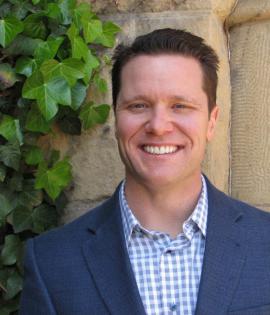
* Yet another race-obsessed NYT mulatto author who cannot write in coherent English. And yes, Tomás Jiménez, an associate professor of sociology and comparative studies in race and ethnicity at Stanford University, looks exactly like what Steve’s long time readers would predict: 100% white European.
* As a Canadian watching from a distance I can’t help but cheer on Trump simply because of this purgative effect he’s having on your – and, unfortunately, my – political culture. I like that the Ms. Jenée Desmond-Harris types are now pooling around Hillary along with the neocons, cuckservatives, tranny washroom advocates, globalists, race hysterics and feisty gals.
Hillary is fast becoming a giant Scum Magnet. She’s pulling all the bad ideas and toxic people to her side. This is a good thing. Let her and her campaign act as a cathartic scapegoat for the American community. Let all the post-1968 bad ideas be tied to her just before she’s metaphorically driven off a cliff.
The fact that she’s a feisty White lady from a comfortable, old stock background just makes her even more ideal for her role in this purgative event. Putting bossy, WASP-y Hillary in the global village’s cucking stool is urgently needed now. It must be done and must be seen to be done by all the other bossy gals from comfortable backgrounds, from Helsinki to Seattle. Trump trumping Hillary in your presidential race is the ideal venue for this mother of all “teachable moments”. Trump’s showmanship will make sure it’s done well too. It would make the perfect matching book-end to the silly, feisty gals in Norway who gave Obama the Nobel Prize for no reason at all or for Merkel being Merkel.
* Do Black journalists who do not write about race even exist?
* A better approximation of a typical Trump supporter is that they feel they have the right to put Americans and America first, including non-white Americans citizens. And if that means cutting off the free ride of foreigners who are trying to mooch off the US taxpayer, or threatening the safety of the people, then too bad for them, regardless of whether they are predominately brown in aggregate.
Basically, the Trump supporter is giving the finger to the state ideology of the times, which holds that because most of those foreigners are non-white Mexicans and Muslims, that they are innocent angels due whatever they want as penance payment from (predominately white) American citizens for imagined/grossly exaggerated “sins” of white people in the past.
* Trump has called blacks “the blacks” – this is PROOF POSITIVE that he is a flaming racist Nazi. Any politically correct person knows not to call blacks “the blacks” this week, just as they know that this week you call the various flavors of sexual deviants not just “gay” but LGTBQ(XYZ). Personally I’m not a politically correct person so I don’t know the secret password for what it is correct to call black people (or gays) this week – it has changed at least 5 times in my lifetime, but whatever it is, it is not “the blacks”, that’s for sure.
Lee Stranahan writes: Since the advent of the of the Occupy Wall Street movement and continuing though the rise of Black Lives Matter, Breitbart News has been warning and educating our audience about the real nature of the radical protest movements that act both as the vanguard of the revolution for the far-left and the shock troops for establishment Democrats.
The protests that America saw in California on Thursday and Friday should be wake-up call about the real nature and goals of these movements. The facts were all there about the people coming together not merely to protest Donald Trump but to strike out at America itself. Everyone could see the American flags burning, the Mexican flags flying, the violence and the vulgarity all aimed at capitalism, freedom, and white Americans.
In my appearance Thursday morning on Breitbart News Daily on SiriusXM Patriot Channel 125, I connected the dots on a modern day axis of evil we see destroying the modern world: the deadly alliance between radical Islam and the radical Left.
Posted inAmerica|Comments Off on ‘Make America Mexico Again’: We Warned You About America-Hating Mobs
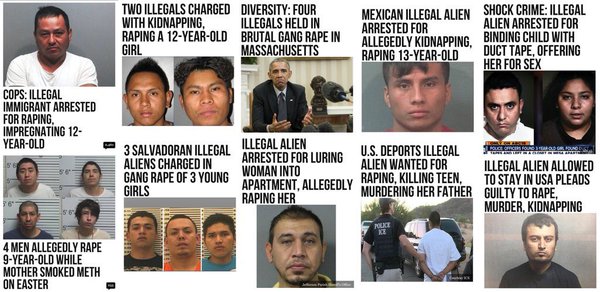
Posted inImmigration|Comments Off on Jared: #WHCD is all about attacking Trump to a room full of media who refuse to report a single child raped by illegals
Tom Tancredo writes: “Mexico First” has been the open, avowed policy of the government of Mexico for a generation, and Mexico expects its former residents to be loyal to Mexico for the next 200 years.
Yet, when Donald Trump calls for an “America First” foreign policy, as he did in a speech this past week, he is denounced by pundits and the national security establishment for “nativism” and “demagoguery,” as if that policy is a novel and radical idea.
Well, not in Mexico.
I know that for a fact because I had it explained to me in Mexico City back in 2001 by a Mexican cabinet official. His name was Juan Hernandez and you may have seen him on television in 2008 when he was candidate Sen. John McCain’s presidential campaign liaison with Mexican-American voters. You see, Juan Hernandez is a dual citizen with dual loyalties, just like many of the 30-50 million Mexican Americans in the United States.
In my conversation with Hernandez in Mexico’s capital city, he explained quite eagerly and candidly the reasons for the Mexican government’s active encouragement of Mexicans to “go north” — legally and illegally. Senor Hernandez was the head of a department in the Mexican government called the Office of Mexicans Living Outside Mexico– an entire government agency devoted to communicating with and assisting Mexicans living in the United States.
Hernandez bragged about the many programs for encouraging and helping Mexicans to move north, programs that provided “survival kits” and maps for the journey, helpful hints on how to deal with the U.S. Border Patrol, and how to deal with American officials if apprehended on the border. He was not apologetic or shy about these “educational services,” and answered my questions freely.
Being surprised by the brazenness of this government official, I asked Hernandez, “Aren’t you a little bit ashamed or embarrassed to admit that your government is actively encouraging and helping people to cross the United States border illegally? He laughed. I remember his words clearly: “Congressman, really! The southwest is not two countries, it’s a region.”
Why does Mexico devote so much effort to promoting and helping millions of its citizens leave Mexico and start a new life in “el Norte”? Does the fact that the millions of Mexicans living in the U.S. send $25 billion dollars in cash remittances annually back to relatives in Mexico have anything to do with it– cash that provides 30 percent of Mexico’s foreign investment, rivaling tourism in importance to the Mexican economy?
Mexico sees Mexicans in the United States as strategic assets in every sense of that word. They are seen as extensions of the Mexican state and partners in Mexico’s plans…
Report: Californians bear an enormous fiscal burden as a result of an illegal alien population estimated at almost 3 million residents. The annual expenditure of state and local tax dollars on services for that population is $25.3 billion. That total amounts to a yearly burden of about $2,370 for a household headed by a U.S. citizen.
Nearly half of those expenditures ($12.3 billion) result from the costs of K-12 education for the children of illegal aliens — both those illegally in the country and those born in the United States. Another major outlay ($2.1 billion) results from the need to provide supplemental English language instruction to Limited English Proficient students, many of whom are children of illegal aliens. Together, these educational costs are 57.1 percent of total expenditures.
Other fiscal outlays result from the costs of medical care ($4.0 billion), public assistance services ($800 million), administration of justice functions ($4.4 billion), and general governmental services ($1.6 billion).
Because some tax revenue is collected from the illegal alien population, we include an estimate of this revenue from sales, income, property and “sin” taxes. Yet, it should be kept in mind that the $3.5 billion in tax collections is not truly an offset to the fiscal costs, because similar, and likely greater, tax revenue would be collected if the same jobs were filled by legal workers.
The adoption of new amnesty legislation, such as Senate bill S.774, the so-called Gang of Eight bill, backed by the Obama administration, would not be an economic benefit to Californian taxpayers as some have argued. Amnesty advocates assert that providing legal status to illegal aliens would reduce the cost of “undocumented immigrants.” That is akin to arguing that the way to reduce speeding on the highways is to abolish speed limits. Doing so would eliminate speeding, but it would not eliminate the danger of operating vehicles at excessive speed, and, arguably, would have the opposite effect. Similarly, converting illegal aliens into legal residents would reduce the size of the illegal alien population, but it would not reduce the overall fiscal outlays associated with that population, and arguably would significantly increase them as the newly legalized residents became eligible for public assistance that was denied to them while they did not have legal status. It would also lead to additional illegal immigration as happened following the 1986 amnesty, which would further increase the fiscal burden.
The costs related to the presence of illegal aliens can be lowered. The most effective step a state can take to discourage the arrival of illegal aliens is to utilize the E-Verify screening system designed to prevent employers from hiring illegal workers. California instead is moving in the opposite direction by adopting measures designed to accommodate the presence of illegal aliens. A.B. 4, the so-called Trust Act, restricts the cooperation between state and local law enforcement agencies with federal immigration authorities. A more recent law, A.B. 60, gives illegal aliens access to driver’s licenses. This measure alone is going to cost the state of California, by its own admission, $64.7 million per year.
Posted inCalifornia|Comments Off on Reddit: By deporting illegals, California would be able to subsidize college tuition by $25,000 annually for over 1 million students
Last Thursday, the rapper Nelly went on the air of his hometown hip-hop radio station, St. Louis’s Hot 104.1, to announce a college scholarship fund for local teens in honor of Michael Brown, the unarmed black 18-year-old killed by a policeman earlier this month. Nelly also took the opportunity to mock the looters who have flourished since Brown’s death, saying, “We don’t even know how to loot. We get out of the car without a mask, look at the camera, and then put the mask on.” Then he set his sights on black people more broadly. “Every other race I know play chess,” he said. “Black people play checkers.”
Nelly isn’t the only prominent black figure with harsh words for his own community since the unrest began in Ferguson. James Clark, the head of Better Family Lives, a local organization that works with black youth, says the black middle class is largely responsible. “They turned their back on the community,” he told me. “We have African-Americans with law degrees, that are lawyers and judges, but they’re not looking out for the black boys in the prison pipeline, they’re not sharing their knowledge.”
Clark went even further. “No one treats African-Americans worse than we treat each other,” he said. “We were outraged when George Zimmerman killed a black boy, but Zimmerman was taught by watching black people kill black people. He learned it from us. We planted the seed.”
It was a sentiment I heard again and again in Ferguson: Yes, the largely white police force acted egregiously. Yes, the system—in segregated St. Louis more than in most cities—is stacked against them. But there’s something rotten inside the black community, too. “I feel like the race needs to get the infection out of itself,” Dellena, the owner of the 911 Hair Salon, a block away from the burned-out QT, told me. “People are not educated. You need to think, what is the image that you’re giving off? You need to have all your business together if you know you’re ten times more likely to get pulled over.” Or as Mark L. Rose, a late-middle-age black man I met at a protest, put it, “When the cops see these boys walking around with their pants down, of course they have no respect for them.”
This self-criticism—or self-flagellation—is nothing new. It’s the return of a phenomenon that is referred to by African-American historians as the “politics of respectability.” “During times of unrest, black writers going back to the early 20th century have argued that the reason blacks are facing discrimination or police brutality is because they have not been acting properly in public—particularly young, poor people,” says Michael Dawson, a political scientist and director of the Center for the Study of Race, Politics, and Culture at the University of Chicago. “In the last 20 years, it’s been a criticism of baggy pants, rap music, hair styles. Back in my generation, it was Afros. I remember my grandparents telling me, ‘you should cut your hair.’”
Respectability, in essence, is about policing the behavior in your community to make sure people are behaving “properly,” so as to not attract unwelcome attention from whites—“with ‘properly’ being a normatively white middle class presentation,” says Dawson. In feminist discourse, a similar phenomenon among women is described as internalizing the patriarchal gaze. That is, women see themselves as the men in charge want to see them—feminine, sexy, pliant—and then behave and dress accordingly. Respectability is the same thing, but with blacks internalizing the white gaze.
Posted inBlacks|Comments Off on White Woman Julia Ioffe Outraged When Blacks Criticize Themselves
I was watching the documentary Code Black about life in the emergency room at LA County Hospital and there’s not one black doctor nor one Mexican doctor. Most of the doctors are white with the occasional asian.
REPORT: The “Code Black” title refers to when the influx of patients is so great it overwhelms the hospital’s staff. “Code Black” (10 p.m. Wednesday) is based on a documentary about life in the ER at Los Angeles County Hospital that was directed by Ryan McGarry, a 2009 graduate of the University of Pittsburgh School of Medicine….
McGarry, who grew up in Chicago and graduated from Penn State in 2005, was always torn between becoming a doctor and a filmmaker. But when he was diagnosed with non-Hodgkin’s lymphoma at age 19, he opted to pursue medicine.
During his fourth year at Pitt, McGarry, who now has a clean bill of health, went on a rotation at Los Angeles County Hospital and was taken aback by the drama of an overwhelmed public hospital. He made a frantic call back to the University of Pittsburgh, asking for an extra four weeks on his monthlong rotation so he could start filming a documentary about L.A. County, which was closing down an old facility and reopening in a new state-of-the-art building.
Writer Michael Seitzman (“Intelligence”) serves as showrunner for “Code Black,” which is executive produced by McGarry, who hopes to eventually write and direct episodes once he learns the ropes of weekly TV drama production.
Marcia Gay Harden (“Trophy Wife”) stars as Angels Memorial residency director Dr. Leanne Rorish, whose high-risk procedures irk her more by-the-book colleague, Dr. Neal Hudson (Raza Jaffrey, “Smash”).
“We wanted to make a world that was not like any other medical show,” Seitzman said during a CBS press conference last month during the Television Critics Association summer press tour. “It’s not glossy. It doesn’t feel Hollywood. The world feels very handmade, made by people to serve people. In that was kind of the key to how to tell the story, to light it naturally, to not worry if somebody falls into darkness, to create a code black and then put three cameras in the middle of it and shoot it. We hired 30 real trauma nurses who work both off screen and on screen.”
McGarry said the goal of the show is to capture the transformative experience of an actual ER physician.
“You’re one person when you go to a shift as an ER physician, you leave as someone else,” he said, describing an experience he had of performing CPR on a patient. “I’m pushing and pushing and pushing, the cell phone falls out of this guy’s pocket. And on the cell phone you see, ‘Hey, are you there?’ Question mark. Question mark. And I’m pumping away. Question mark. Question mark. And I know in that moment I’m the only person on this planet who knows that this guy is in the act of dying, and we don’t know what’s going to happen. … It’s such an intimate moment. I don’t even know this man, and I’m touching his heart, pushing it hard, and seeing this relationship go on with this other person in front of him.
“What Michael has created and what … everybody who works on the show ultimately understands and submits to is that it is not the medicine,” McGarry continued. “It is the amazing amount of intimacy and human drama that’s involved.”
After graduating from Pitt, McGarry returned to Los Angeles County for his residency, which ended in 2013. He’s now on faculty at Weill Cornell Medical College in Manhattan.
Posted inMedicine|Comments Off on Where Are The Mexican Doctors?
I’d like to thank Will Reilly for inviting me to speak to you today. I used to get a lot of invitations to speak on college campuses, but they are now very rare. At least on majority-white campuses, there is an abject terror of speakers who might offend someone. You can’t speak honestly about race without offending people, so what this means is that the truth about race is almost never spoken on most American campuses.
The subject of this debate is whether diversity is a strength for the United States. As you know, from President Obama on down, all you ever hear is people telling you that racial diversity is a strength. Not just a strength, but maybe even our country’s greatest strength.
They’re wrong. Racial diversity is not a strength. It is a grinding, permanent source of conflict and tension, not just in the United States but everywhere in the world where there is racial diversity.
Racial diversity means the presence of more than one race. So let’s imagine, just for a moment, how the history of the United States would have been different without the racial diversity that resulted from bringing blacks here. What would American history be like with no blacks? There would never have been slavery. There would never have been the American civil war–which killed more Americans than all our other wars combined. There would have been no Jim Crow, no segregated schools, no civil rights movement, no busing, no race riots.
And it makes no difference if you want to put 100 percent of the blame for all these things on white people. The fact remains that the historical balance sheet for black/white racial diversity in the United States is hugely, crushingly negative. If you remove black/white racial diversity, you remove slavery, our most deadly war, and our most murderous civil disturbances. The very worst parts of our history vanish. How can something that brought about all that horror be a strength? I would be the winner in this debate if I sat down right now.
But let’s move to the present. I’m sure you have followed the racial demonstrations on college campuses, such as Yale and Princeton and University of Missouri. There would be none of this commotion without racial diversity. Do you think all that screaming and demonstrating is a strength? Does it help people study? No, it is tension, it is conflict.
What’s more, these campus disturbances also show just how differently black and white people see the world. Black students at Yale were complaining about “entrenched white supremacy” at Yale.
“Entrenched white supremacy.” First of all, if Yale were a bastion of white supremacy, there’d be no black students there at all. But were the whites students burning crosses and lynching the black students? Were they attacking black students? Were they at least calling them rude names? No. Not a hint of any of that. Blacks were furious because a professor sent an e-mail message saying that it wasn’t Yale’s job to tell students what Halloween costumes they shouldn’t wear. She said if somebody’s costume offends you, maybe you should just tell him.
That’s white supremacy? Black students on an Ivy League campus must be the most coddled, pampered black people in the history of the world, and if they really believe they are fighting entrenched white supremacy they are living in a completely different world from white people.
And what about the Black Lives Matter movement? Is this a strength for the country? Gangs of people marching around yelling, stopping traffic, shutting down politicians’ speeches. Is this a strength? Even if you think all the shouting is justified, it’s a sign of conflict, fury, and tension. Without racial diversity, we wouldn’t have any of it.
And again, whites and blacks have a completely different view of reality. Where did the Black Lives Matter movement really take off? In Ferguson, after a white policeman shot Michael Brown. When the officer who shot Brown was not indicted, 64 percent of whites thought that was the right decision. Only 4 percent of blacks thought so. This is a huge difference. It was the very same event, but blacks and white saw it completely differently.
Now, to win this debate, I don’t have to convince you that white people were right and black people were wrong. My job is much easier. All I have to do is point out to you that blacks and whites look at exactly the same thing and see something completely different, and for you to realize that that is not a strength. To have people so divided by race that they don’t even see the same things means perpetual, agonizing conflict.
Racial diversity also turns everything into a racial turf battle. Are the Oscar nominees too white? Should the next Supreme Court justice be an Asian? Don’t we need more black policemen? Are there enough Hispanic programmers in Silicon Valley?
You can’t just say, “I hired the best programmers for my business and they were all white guys and Asians.” Nope, in this country if you hire by pure ability alone you can get sued. That’s the kind of thing racial diversity does for you.
Let’s look at this from a different angle. If racial diversity is America’s greatest strength, it must be a truly wonderful thing. It’s better than having a country the size of a continent with beautiful harbors on two oceans. It’s better than having the most productive farmland in the world and huge reserves of natural resources. It must be something so fantastic that every man woman and child in the America wakes up in the morning and says to himself, “How can I get more of this wonderful stuff?”
Is that how people live their lives? No. Are you dying to go to school with Hispanics? Do you yearn for roommates and neighbors who speak Chinese? I suspect you don’t. People like being around people like themselves.
Only white people are confused about this. In 2010, Brown University–a big, Ivy League university–did a study about housing segregation. John Logan is the professor who was the lead researcher. He found, and I quote,
Among minority households, even those with relatively high incomes tend to be clustered in neighborhoods where most of their neighbors are the same race. . . . Race trumps income.
In other words, black people who could afford to buy houses in a white neighborhood bought houses in black neighborhoods instead. Prof. John Logan thinks this is terrible. He’s got a theory about how real estate agents are somehow tricking black people into buying houses in black neighborhoods.
I feel like telling him, “John, darling, there are black people with money who want to live with other black people. Believe it or not, not every black person wants you as a neighbor.” This is a concept he can’t seem to grasp.
The other day I was reading an article about housing segregation in California. That state is a real stew, of course, with people from everywhere. The article was one long moan about how in Los Angeles it’s not just neighborhoods that are segregated, but there are apartment buildings completely segregated by nationality. In some buildings, every single tenant is Korean. In some buildings they’re all Salvadoran.
The writer of the article–another goofy white person–thinks this is scandalous. It’s not scandalous at all. Those people chose to live with each other. They like it that way. Because diversity isn’t a strength.
If you want to understand race in America, just go to church. That’s right. Church. What you will find is that nearly 95 percent of churches have congregations that are at least 80 percent one race. Lots of them are 100 percent one race. There are even about 4,000 Asian congregations in the United States.
You are free to go any church you want. No church is going to bar the door to you or run you off. But when people are completely free to choose, they go where they are comfortable, where they can be like people like themselves. They don’t go looking for diversity.
People want to live, work, socialize, and go to church with their own tribe. A survey of Californians conducted at UC Berkeley found that majorities of whites, Hispanics, blacks, and Asians agreed with the statement that “people are happier when segregated.” [i]
Again, California is a mishmash, with people from all over the world. Hispanics, especially, have been moving into South Central Los Angeles, which used to be black. Here’s what the president of one black home-owners association said about Hispanics:
It’s a different culture, a different breed of people. They don’t have the same values. You can’t get together with them. It’s like mixing oil and water. [ii]
Here is what one black person told The Philadelphia Inquirer some years ago:
We don’t want whites living in our neighborhoods. We don’t want our children going to school with theirs. We don’t want our daughters and sons marrying their sons and daughters. No thanks . . . .
So why have I been talking about segregation? Because it’s about how people really live, not about what they say. It shows what they truly think about racial diversity. They don’t like it and they run away from it.
Now, don’t get me wrong. If some people want to mix it up, God bless them. After I’ve finished talking, someone in the audience–probably a white person–is going to get up and say, “I love my black friends and my Mexican friends, and my Chinese friends.” And, to that I say, “I couldn’t be happier for you.” You go out there and you love them for all you’re worth. Just don’t pretend that you’re somehow better than the vast majority of people who prefer to be around folks like themselves.
And what happens when people who don’t want to be together are forced together. The classic example of that was busing of school students during the 1970s. What happened when black children were bussed across town to schools that were all white? The whites cleared out. In Baltimore, when busing started, nine high schools went from being 100 percent white to 100 percent black in just seven years. From white to black overnight.
The white people of Baltimore sure didn’t think racial diversity was a strength. It was the same all over the country. White people left the public schools.
At some of the biggest public school districts in the country, you have to pull out your binoculars to find a white student. In all of Dallas, Texas, only 4.6 percent of the students are white. In Los Angeles, 8.7 percent; in Houston ,7.8 percent; in Detroit, 2.6 percent.
Any white child who wanted a bracing dose of diversity–America’s greatest strength–could sure get it by enrolling in Chicago or Miami public schools. Isn’t it odd? They don’t.
So the whites ran away, but in many schools there is still diversity because blacks and Hispanics stayed behind. And you know what happens? Riots. Los Angeles, for example, has a long history of black and Hispanic students fighting each other. They’ve done it over and over. Just last November, at Hawthorne High School in LA, there was a race riot involving 300 students. Thirty students were suspended or expelled. But this stuff is just local news.
And it’s not just Los Angeles. In high schools all around the country, there have been riots of blacks vs. Hispanics, blacks vs. Arabs, whites vs. Hispanics, Hispanics vs. American Indians, blacks vs. Asians. Just about every mix you can imagine.
Did you know that a number of schools in California have banned the American flag? That’s right, an American flag stirs up Hispanics to the point they might riot. Diversity can turn even Old Glory into the equivalent of gang colors.
You want to hear the saddest story ever about school diversity? In 2010, the graduation ceremony of the Puesta del Sol Elementary School in Victorville, California, had to be called off because of a riot between black and Hispanic parents. Police locked down the school and made arrests. [iii] This is the graduation ceremony of an elementary school. I guess diversity didn’t turn out to be such a strength.
So, the government integrated the schools and we get white flight and riots. When there aren’t riots, the students of different races generally keep to themselves. They self-segregate.
But there is a different kind of institution the government has integrated even more intrusively, and that’s prisons.
And the result? Race riots. I could give you a great long list of prison race riots in which people have been killed, maimed, slashed, beaten unconscious. That’s why people of every race stick together for protection. A man who served four years in a California prison wrote an article for the Los Angeles Times about life in prison. He wrote about what he called the Number 1 Rule for Survival, “The races and ethnic groups stick together. There is no other rule.”
Here’s another white guy writing about what it’s like to do time in Texas.
[B]ecause of my prison experience, I can’t stand being in the presence of blacks. I can’t even listen to my old, favorite Motown music anymore. . . .
The he goes on to say:
[I]n the aftermath of the Byrd murder [the black guy who was dragged to death in Jasper, Texas] I read one commentator’s opinion in which he expressed disappointment that ex-cons could come out of prison with unresolved racial problems despite the racial integration of the prisons. Despite? Buddy, I have news for you! How about because of racial integration? [iv]
You know what the number-one demand in prisons is? Segregation. Forced integration means that people are going to die. But no, we can’t do the humane thing and separate prisoners because we have this baloney theory about diversity being a strength. Tell that to the guys who ended up dead or with 40 stitches because of diversity.
And, by the way, when there are riots in schools and prisons, it’s always about race. You will never hear about the liberals and conservatives trying to kill each other. Or the Baptists and Methodists. The problem is race.
So let’s take a look at the work place. That’s a completely different picture, right? There are loads of big companies that claim “diversity is job number one.” Diversity is great for the profits, right?
More baloney.
Thomas A. Kochan, a professor at MIT has probably researched corporate diversity more thoroughly than anyone. The first thing he did was contact 20 major companies that brag about their diversity, and asked them to tell him what diversity had done for them. He was astonished to learn that not one company had done a study on how diversity might have increased profits or improved operations. They had nothing to show him.
After five years of studying corporate diversity, he found that the more diversity there was, the more conflict and tension there was, and the more likely people were to quit. His conclusion: “The diversity industry is built on sand.”
People who praise diversity like to point to a 2007 book by Scott Page of the University of Michigan. The book is called The Difference: How the Power of Diversity Creates Better Groups, Firms, Schools, and Societies. Sounds great. Finally, here’s proof of the strength of diversity, right? No. Scott Page is writing about the importance of different points of view and problem-solving techniques. When it comes to racial diversity, he writes this:
Lots of strange things can happen in a diverse group that would not be likely to happen among homogeneous people–including physical and verbal violence. . . . [v] The more different we are the less we agree. . . . [vi] Group dynamics can create no end of problems. People prefer to hang with people like themselves. [vii]
This is just common sense. In fact, a large-scale survey called the National Study of the Changing Workforce found that more than half of all workers said they preferred to work with people who were not only of the same race, but also the same sex and same level of education. [viii]
You have all heard of diversity training and diversity management. It’s a $10 billion-a-year industry. But think about it. Why does the country have to spend $10 billion a year trying to manage something that is supposed to be wonderful? You don’t have to pay someone to teach you how to benefit from things that are genuinely good. Do you need a consultant to tell you how to deal with more vacation time, or good weather, or cheaper gasoline, or free beer? No. The good things in life take care of themselves.
There are diversity managers because diversity is a mess and a problem and a bother, and people are going crazy just trying to deal with it.
So, just how much of a mess and problem?
It would be impossible to count up every single strain and confrontation and insult that comes from racial diversity. But we have a few indications, and that is the number of formal racial grievances filed by Americans. Now, things have to get pretty bad for someone to file a formal grievance. And for every formal grievance, there must be many, many more racial problems that people either just put up with, or walk away from.
So how many grievances are there? In 2015, the federal Equal Employment Opportunity Commission, the EEOC, heard 31,027 cases of racial discrimination, 9,438 cases of National Origins discrimination, and 2,833 cases of color discrimination. That comes to a total of 43,298 cases–brand new cases–all filed in 2015. That’s a typical year.
In addition, about 9,000 cases are filed in federal court every year.
But that’s just the feds. The states have their own systems. In 2014, California dealt with 10,559 brand new race discrimination cases. And that’s just one state. Every branch of the military has a grievance procedure. Every major university. Big companies do, too. If you counted up every federal, state, local, military, and civilian racial grievance filed in a single year, how many would you get? 100,000? 500,000? I don’t even know. I’m not sure anyone has ever counted them all up.
My point is, every one of these cases represents agony, heartache, resentment. Think of all the time and money that went into filing these cases, processing them, deciding them, enforcing them. It must cost the country billions of dollars every year, over and above the heartache and agony.
And on top of that there are the diversity bureaucracies in businesses, affirmative action coordinators in universities, diversity specialists in the military–we have this huge, clanking, wheezing, groaning machine chewing up enormous resources, just trying to sort through the endless problems of what is supposed to be a strength.
In a country without racial diversity, you wouldn’t need any of that. It’d be gone overnight.
In their own sheepish way, a few scholars have tumbled to the obvious about diversity. Have any of you heard of Robert Putnam of Harvard? He studied 41 different communities in the US that ranged from very homogeneous rural South Dakota to super-mixed-up Los Angeles. And what he found was that the more diversity there is, the less people trust each other. Well, Robert Putnam is a typical confused white man, and he just couldn’t believe what he found. He analyzed his data every possible way to find some reason other than diversity to explain why people in Los Angeles don’t trust each other. He couldn’t find one.
This was terrible for him, because he wanted to believe that diversity is a strength. So he just sat on his research for five years, and finally published it only because some of his findings leaked out.
So what did Robert Putnam found out? Diversity leads to:
* A lower expectation that people will cooperate to solve problems.
* Less voluntarism and less charitable giving.
* Fewer friends and more unhappiness.
* A lower likelihood to bother to register to vote.
* Less confidence in local government, local leaders, and local media. [ix]
* A lot more television watching.
When you haven’t got friends and you don’t trust people you watch a lot of TV.
So, there it is, straight from Harvard: Diversity destroys trust.
Another study run by MIT and Tufts University summarized 15 different investigations of the impact of diversity on trust. The conclusion every time was: more diversity, less trust. [x]*
By the way, there is a field of study called “happiness research” that analyzes what makes people happy. Prof. Michael Hagerty of UC Davis has surveyed decades of international happiness research and found that “for the most part, the top-rated countries are small and homogeneous.” He went on to explain that “they have a similar world view and a similar religion, so that it’s easier for them to communicate and to understand each other’s motives. And they don’t have race problems.” [xi]
Once again, here is the voice of research. Diversity destroys trust. Homogeneity makes you happy.
I’d like to close with some poll results. A 2007 poll asked non-whites whether racial tension is either a “very important problem,” “somewhat important,” or not a problem. No less than 93 percent of Hispanics thought it was very or somewhat important (79 percent said “very important”), 92 percent of blacks thought it was very or somewhat important (65 percent said “very important”), and 73 percent of Asians thought racial tension was very or somewhat important problem for the country (37 percent said “very important”).
This is racial tension we’re talking about.
The day after Mr. Obama was elected, a Gallup poll found that 70 percent of Americans thought his election would improve race relations.
Well, six years later, a Bloomberg Poll found that 56 percent of whites and 45 percent of blacks thought race relations got worse under Obama.
A Wall Street Journal/CBS poll last year found that 63 percent of Americans think race relations are bad, and only 33 percent think they are good. These are the worst figures in 20 years.
Just this year, Rasmussen reports found that 50 percent of Americans think race relations are getting worse.
Bad and getting worse. Americans aren’t stupid. They just have to open their eyes to see that racial diversity is not a strength. Race has been a problem in this country from the start. We’ve been chewing on this bone for hundreds of years. And we still have race riots, for heaven’s sake, like the ones we just had in Ferguson and Baltimore.
Why can’t we get it right?
For the same reason that nobody, anywhere can get it right. Race is a fundamental dividing line. Show me a multi-racial society, and I’ll show you conflict.
Now, I’ve told you about the problems you get when you have racial diversity that you would never have had without it. For Prof. Reilly to win this debate, he’s got to show you benefits that you would never have without diversity. And those benefits have to be so wonderful and so numerous that they not only make up for all the agony I have been describing, but they have to leave us way ahead because of diversity.
Posted inAmerica, Diversity|Comments Off on Is Diversity a Strength for America?
"This guy knows all the gossip, the ins and outs, the lashon hara of the Orthodox world. He’s an [expert] in... all the inner workings of the Orthodox world." (Rabbi Aaron Rakeffet-Rothkoff)