





- https://PayPal.Me/lukeisback
"Luke Ford reports all of the 'juicy' quotes, and has been doing it for years." (Marc B. Shapiro)
"This guy knows all the gossip, the ins and outs, the lashon hara of the Orthodox world. He’s an [expert] in... all the inner workings of the Orthodox world." (Rabbi Aaron Rakeffet-Rothkoff) LATEST POSTS:
- Dennis Prager v Cedars-Sinai Lawsuit
- Dennis Prager Through Randall Collins: Interaction Ritual Chains
- What is a ‘Received Idea’?
- Jordan Bardella: The Manufacture of Normality
- Everyone Became Television: Bourdieu’s Warning and the 2026 Iran War
- Marine Le Pen
- The Coalition-Proximity Rule
- Nigel Farage
- Bernard Haykel: A Life Between the Text and the Gun
- Walker Connor (1926-2017)
- Benedict Anderson and the Nation as Imagination
- Anthony D. Smith: The Student Who Kept the Question and Rejected the Answer
- Ernest Gellner
- Eric Kaufmann: The Man Who Made the Majority Visible
- Dominic Cummings: A Biography
- Steve Lopez: The Last City Columnist
- California Historian Kevin Starr
- Stephen Kotkin: A Life in Power
- William T. Vollmann: An American Life in Excess
- Rod Dreher: A Life in Exile
BEST POSTS:
- * The Enlightenment Wasn’t Enlightened (6-23-26)
* Mr. Burge Draws The Line (6-23-26)
* 'Improving on Democracy' (6-17-26)
* People Leak To People Who Are Fun (6-11-26)
* Why Does Australia Produce So Many Great Journalists? (6-11-26)
* Steve Wynn and the Press: Power, Litigation, and the Contest Over Las Vegas (6-3-26)
* Sheldon Adelson and the Journalists (6-3-26)
* The Vigilant Animal: Thinkers Who Reject the Myth of Human Gullibility (6-2-26)
* The Cost of Refusing the Misunderstanding Myth (6-2-26)
* Show Me How It Travels (6-2-26)
* The Norm Explainers (6-2-26)
* Centering Marginalized Voices (6-1-26)
* What would it look like if the Washington Post put its reader first? (6-1-26)
* What would it look like if the Financial Times put its reader first? (6-1-26)
* What It Would Mean for the Los Angeles Times to Put the Reader First? (6-1-26)
* What It Would Mean for The New York Times to Put the Reader First? (6-1-26)
* Why Wembanyama Lives on the Perimeter (5-31-26)
* The Emotional Palettes Of San Diego, Los Angeles, San Francisco & Sacramento (5-27-26)
* The Administrative Capital: Sacramento Legal Culture (5-27-26)
* San Diego - The Quiet Republic (5-27-26)
* The Quiet Bar: San Diego Legal Culture (5-27-26)
* SF v LA Legal Culture (5-27-26)
* Why Talent Travels Poorly Between San Francisco and Los Angeles (5-27-26)
* San Francisco and Los Angeles as Rival Models of Urban Access (5-27-26)
* Social Cliques in New York, 2026 (5-25-26)
* Social Cliques in San Francisco, 2026 (5-25-26)
* The Rival Courts of Washington (5-25-26)
* The City of Private Rooms (5-25-26)
#289 7-26-19 Let’s Get Medieval With Professor Rachel Fulton Brown
Posted in Christianity
Comments Off on #289 7-26-19 Let’s Get Medieval With Professor Rachel Fulton Brown
The Show Must Go On
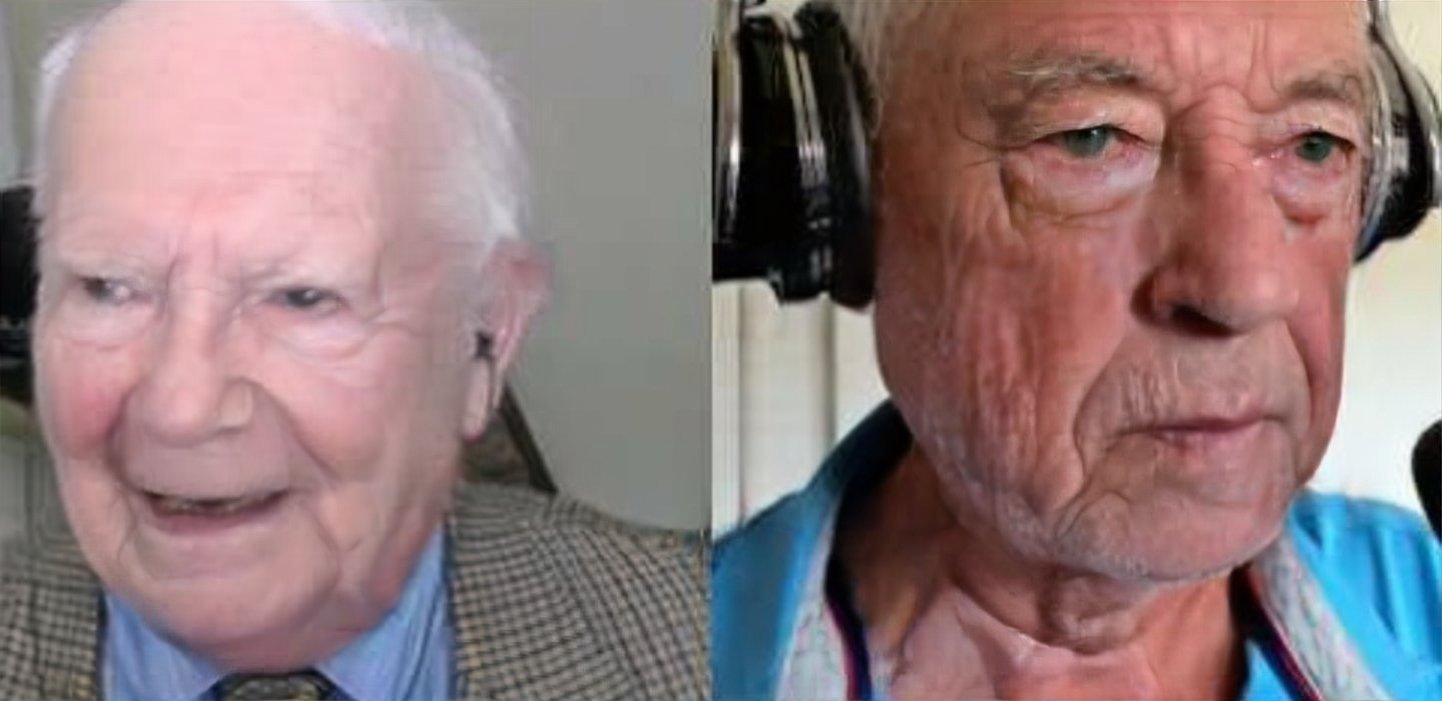
October 12th, 2056: “G’day mates, @lukeford here with @KMGVictoria to discuss Professor Walker Connor’s essay Ethnonationalism…”



Posted in Personal
Comments Off on The Show Must Go On
Why Would A Christian Take Christianity Seriously?
I have a friend who’s long been pretty casual about his Christianity but he has just started taking it seriously as a substitute for going Alt Right.
I said to him, “Given that all religious beliefs are based on a substantial non-rational leap of faith, why take them as seriously as you do now? I have my answer, curious about yours.”
“Walker Connor might wonder if you are using a religious test as a proxy for national (racial) interests. Connor argues that religious fights are often a cover for national/racial ones.”
My friend responded:
A couple reasons come to mind:
—There are so many things I don’t understand, things I don’t know and can’t know. Not knowing, I’m forced to live by faith. There’s no real objective way to judge, and so I just came home to the one that was given to me as mother’s milk, so to speak. I have a strong desire to give my grandchildren a chance to have something in common with my own grandfathers. Five generations of continuity.
—Speaking of mother’s milk, don’t boil a kid in his mother’s milk. Christianity gives me an ability to say more than I can with secular language. If I stay in that register, for now at least, I have a better protection than I do espousing, say, wignat views.
—I do think that the gospel is a reaction to the problem of faction and tribalism that was challenging Greece & Rome. It seems like an extremely elegant attempt to forge a new identity for a bunch of deracinated empire dwellers and it dealt with the JQ in a way that was fair enough. As I said, Jesus gave them the first invitation to the party.
—I really enjoy Paul’s psychological insights about sin in Romans 6-8.
—and I love Paul’s emphasis on life by spirit as opposed to life by flesh (in Galatians).
—I know you said you prefer the Old Testament to the New, but I think that they’re absolutely amazing taken together; even considered merely as literature, the Bible has me transfixed. It’s also the main source text for so much of the literature I love.
—I rely on my religion to provide me with substance for parenting. It would be hard to explain the universe from scratch or to offer my children no explanation. I read them the same stories I remember hearing when I was a kid.
—it changes the way I see the world and I like how I see the world better now. Same for how I see myself.
—it permanently BTFOs the Jews and triggers them.
Yeah it’s useful… and also I think it’s true, even in the “Hegelian dialectic” materialist sense… which is to say, it is the inevitable answer that *had to* come in reaction to what Judaism was doing. And then it came. And it came just how it had to come: through a Jew and addressed to Jews first, because they were the most exemplary tribalists and so they would not listen if Protagoras or Socrates announced the new doctrine, but after they were invited, everyone else was invited too. It was basically a nonviolent way of marginalizing Jews and other would-be holdouts.
It’s like you know how fascism exists as an algorithm precisely to defend against encroaching communism? Same thing with Christianity sort of.
I also literally believe in the apostle’s creed! Isn’t that based? Like I just threw off the yoke of reason and was like, yeah I believe it… madman, huh? But I don’t bother you and the gevalters much about that cuz I know you’ve heard it. I feel mainly evangelized by Paul and my mission, like his, is to give the gentiles the magic key to the kingdom… it’s really a contest of morale. And nothing elevates white morale except for Christianity. But it can’t be fake Christianity. Has to be true Protestant Christianity.
My answer is that my leap of faith (conversion to Orthodox Judaism) works for my life and furthers what I believe in (the presence of God and goodness in this world)… I converted to Judaism because of Dennis Prager’s presentation of it as a step by step plan to make a better world. Prager noted that only if God says do not murder, is murder objectively wrong (evil). But faith in a God who says do not murder depends on a subjective leap of faith. Anything multiplied by zero is zero. So there’s still no objective standard of right and wrong. There’s only a subjective leap of faith, which means to me to be humble about my religious claims. I enjoy talking to atheists and learning from them. There’s a reason and purpose for everything, and atheism is a lens with useful insights in certain circumstances. As a Hasidic rebbe taught, if you see a poor person, help him as if there were no God to help. My faith in God helps power my daily life, but I don’t use it to understand power politics and how the world works. There it hurts more than helps.
Posted in Christianity, Judaism
Comments Off on Why Would A Christian Take Christianity Seriously?
Nationalism & Relativism
Daniele Conversi wrote in 2002 (about Walker Connor’s classic work Ethnonationalism: The Quest For Understanding:
Nationalist movements are often thought to manifest a solipsist attitude.Connor rightly points out the ‘general insensitivity that one national group and its leadership customarily exemplify towards the rights of other groups’(1973:15–16).This clearly points to the deep non-rational character of even the most rationally-looking nationalist movement: ‘irrationality’ resides precisely in the incapacity to coordinate one’s efforts with those of potential allies, simply because the latter do not belong to the same ethno-biological pool.32 His anti-universalist bent is incompatible with rational thought. On the one hand there may be a sensible motive in many people’s historical aversion against universalism and cosmopolitanism. On the other hand the incapacity to coordinate efforts with other groups is often selfdefeating,as most twentieth-century wars have demonstrated.However,there have been instances in which ‘inter-nationalist’cooperation has worked well,at least for some time.33 But Connor’s crucial point on the unreasonable,illogical,unsound character of most nationalisms must be underscored:
“The peculiar emotional depth of the ‘us’-‘them’syndrome which is an intrinsic part of national consciousness, by bifurcating as it does all mankind into ‘members of the nation’ versus ‘all others’ appears thereby to pose a particularly severe impediment to coordinated action with any of the ‘others’.”34
It seems that one group,as soon as it has grasped the levers of state power,is unable to recognize any legitimacy or validity in the anti-state sentiments of other groups. This has indeed happened in post-Soviet Eastern Europe:Azeri versus Armenians in Nagorno-Karabagh, pan-Romanian nationalists fighting Russian separatists in Moldova, Georgians suppressing Ossetian autonomy immediately after achieving independence.It has occurred during the early stages of de-colonization (as in Sri Lanka, Indonesia, Israel and many other states). The phenomenon dates back to the very inception of nationalism as the legitimizing political principle (whenever one wishes to identify its birth). In his London exile, Giuseppe Mazzini had discovered how the supra- or inter-national project of a Young Europe had ineluctably foundered in the face of the instinctive solipsism of all the various ‘Young’ movements (Young Italy, Young Ireland and the like), eventually leading several decades later to its most xenophobic and bloodthirsty avatar, the Young Turks.This irrationality leads ultimately to a widespread sense of sacro egoismoand an all-pervasive moral relativism:‘Though very sensitive to real or imagined threats to the survival and aspirations of one’s own group, appreciation of this same sensitivity among other groups is apparently very difficult to project’.35 As Zygmunt Bauman rightly reminds us:
“few known nations enthusiastically endorsed the right of the others to the same treatment they claimed for themselves . . . The national game has been a zero-sum game: sovereignty of the other has been an assault against one’s own. One nation’s rights were another nation’s aggression, intransigence or arrogance.” (1989: 54)
In this extreme form of Hobbesian individualism, nationalism reveals its nonrational, often self-defeating, character. The abdication of universal reason is, however,shared by nationalism with many other forms of group behaviour.But,as Connor puts it, it is the particular link between groupness (and hence exclusion) and ethnicity (hence, putative descent and kinship) which makes it particularly impermeable to rational reasoning. The European Community is supposed to provide one of the first contemporary historical alternatives to the irrationality and mutual exclusiveness of nation-states. But, shortly after the time of the Maastricht Treaty signing (7 February 1992), when ‘European Union’ was the incontrovertible shibboleth, Connor (1994b) anticipated that the project was failing to achieve a popular mandate, while ethnic sentiments were stirring below the surface in the form of both state and stateless nationalism.
Posted in Nationalism
Comments Off on Nationalism & Relativism
I Love My Gay Dead Aboriginal Son
Posted in Personal
Comments Off on I Love My Gay Dead Aboriginal Son
The Luke Ford Show On Youtube
Posted in Personal
Comments Off on The Luke Ford Show On Youtube
Relapse for Cash: How Patient Brokers and Unscrupulous Rehabs Prey on Addicts Looking for Help
Patient brokers know there’s more money in relapse than in getting people sober.
If you think patient brokering, also known as “body brokering,” is just about “professionals” getting kickbacks for referring a client to a certain rehab, you are wrong. It’s much more complicated and sinister than that. I did a deep dive and interviewed the head of a watchdog group, a rehab counselor, a rehab business development guy, and the head of an ethics association to try to get the full picture. And despite patient brokering being officially illegal in California and Florida since January, it’s still terrifyingly prevalent.
I was first prompted to write this piece after an experience with a sponsee. She was in a sober living and was offered money by another client at the house to relapse and then check into an upscale rehab. Because you must test dirty for your insurance to start over and cover treatment, she got loaded and was shipped off to a fancy Malibu rehab for a week. She was ecstatic.
Recovering Addicts Preying on Other Recovering Addicts
Of course, soon she was sent to a shitty sober living which she described as a “flop house.” Thankfully she didn’t die during the relapse, and she didn’t get her money either. The “body brokers” in this case, recovering addicts preying on other recovering addicts, ran off with the kickback money they got from the rehab as well as the money they were supposed to give my sponsee. If this sounds bad, it gets worse.I spoke with David Skonezny, the admin for the closed Facebook group “It’s Time for Ethics in Addiction Treatment.” As Skonezny moved through the ranks of drug and alcohol counseling, eventually becoming the COO of a treatment center, “body brokering,” an open secret in the business, came to his attention. He started the group to “separate the wheat from the chaff” and to identify the people he wanted to work with to create a solution for the myriad problems plaguing the profession; however, he underestimated how pissed off and hurt people were.
“It quickly ended up being a referendum of sorts on addiction treatment as people started posting snapshots of text messages, naming names… It got really deep really fast.” As a result, one of the moderators of the group set up a site that provided a comprehensive list of agencies for the reporting of illegal and unethical activity, including credentialing and accreditation bodies, law enforcement, state agencies, and insurance investigators. People can now report the facilities as well as the brokers engaging in this illegal and unethical behavior. That site is: Ethics in Treatment (www.EthicsInTreatment.com).
“Body Brokers” Buy and Sell Patients
As Skonezny explained to me, in the referral game it’s about buying clients. Initially a treatment center might pay perhaps $10,000 for a client (that figure has dropped substantially as a result of immense competition), but it was worth it because you could bill the insurance for six figures over the course of a treatment episode. As it became harder to acquire clients this way, body brokers and rehabs started to offer other inducements such as air travel to treatment, clothes, cell phones, and cigarettes. And because people with these premium insurance policies are hard to find, brokers would find a prospect and then buy the policy for them. The rehab pays the first month’s premium, and then once the insurance is active, bingo.Once the benefits are exhausted, however, the client gets kicked out, usually with nowhere to go and no return ticket home, and ends up homeless and desperate. But now they know the drill. They realize if they get loaded, they’re eligible for treatment again and can go back into rehab. This revolving door, “going on tour,” as Skonezny calls it, became a common strategy for both the brokers and the clients in order to maintain free housing, food, and other perks.
“This has created an artificial recovery community in Southern California, particularly in Orange County where kids are getting flown in and then kicked out. At one point it created a massive homeless population of young addicts, especially in Costa Mesa,” Skonezny told me. Some of those kids die on the streets, some go home, some keep cycling through treatment.
How did we get to this place? I asked. Well, when the Affordable Care Act went into effect, behavioral health issues, including mental health and addiction, became essential medical services.
“This created an unprecedented availability for people to get insurance coverage, and people who wouldn’t have otherwise had an opportunity to go to treatment now could,” Skonezny explained. “This should have been a good thing, except that with addicts flooding addiction centers, the owners and others began to realize that there was a lot of money to be made.”
There are two types of insurance policies: an HMO, where you need a referral from a primary doctor and must go to a place in network, and a PPO, where there’s no referral necessary and because it’s out of network, there are no contracted or set rates. Rehabs want the PPOs. They can charge whatever they want, and they do. They can bill the insurance for ridiculous amounts for daily services ($2,500 for a daily session from a PPO vs. $300 from an HMO) including huge charges for urine tests.
Alumni Get Kickbacks for Bringing in New Patients
Soon insurance companies got wise to the game and began reducing the financial reimbursement to rehabs, as well as the length and level of care they would allow. As a result, the rehabs were making less money and thus needed to up their referral game even more, so they got their alumni involved. Newly sober addicts who have been in a 12-step program have access to a network of possible patients: newcomers in meetings. These newly sober ex-clients start getting kickbacks from rehabs to bring in new clients. And then those clients do the same once they get out of treatment. Now you have a new cycle: predators creating predators.
Posted in Addiction
Comments Off on Relapse for Cash: How Patient Brokers and Unscrupulous Rehabs Prey on Addicts Looking for Help
NYT: The Racist History Behind Facial Recognition
From comments at Steve Sailer:
* Criminal face has three big factors: high-T features, poor symmetry and other signs of genetic load (like narrow eyes), and fetal alcohol complex.
The Chinese did a large study based on national ID photos of criminals v non criminals, it has lots of good examples.
* Most of the top 50 pictures of C.S. Lewis on Google show an intelligent-looking expression, although that might just be selection bias.
Lewis was pretty similar looking to John von Neumann, who I would presume to consider the gold standard of intelligence for whom we have a lot of photos.
* Von Neumann looks smart to me: huge forehead, large eyes, very symmetrical.
The same for Lewis, but he also has a friendly and unpretentious mien that you could imagine a butcher having (they are friendly and outgoing in my experience. It is a sales job partly, but meat sells itself in a way cars and clothing don’t, so their friendliness doesn’t feel forced.)
* From years of daily perusing of this website https://florida.arrests.org/ it is clear you do not have to be a police detective to notice the overwhelming majority of men arrested have facial hair. If you are a cop and see a man with facial hair and tattoos its game over. Run him for warrants, search his car and person and be ready to draw your gun.
* Because humans are not engineered based on independently developed components but grow from a single cell that differentiates the body into parts over time. Formation of facial structure and the brain modules that deal with the muscles thereof are practically certain to be correlated with various ensembles of behaviorial traits.
* Chinoy’s arguments on facial recognition slide into one another.
1. It doesn’t work perfectly and is thus useless.
2. It’s based on discredited pseudoscience and thus can’t work.
3. It works, but it does better on white faces than on black faces.
4. Its use will entrench racism, because it can be made to usefully address important questions.
Posted in Race
Comments Off on NYT: The Racist History Behind Facial Recognition