My Father’s Hero System

Ernest Becker (1924-1974) holds that a man lives under two terrors. The first is death, the animal fact that the body fails and the self ends. The second is quieter and harder to name. It is the terror of insignificance, the dread that a man might cross the whole span of his life and leave no mark, that he might be one creature among the billions and answer to no one and count for nothing. Against both terrors a man builds a hero system. He joins a scheme of meaning larger than his own body and earns a place inside it, and the place tells him he will outlast his death, in the memory of his people, in the survival of his work, in the verdict of his God. The hero system answers the terror. A man cannot live without one. He can trade one for another. He cannot stand in the open with none.

Desmond Ford receives his hero system at ten, from a stranger at the door.

The home has already failed. The father drifts toward unbelief. The mother goes up and down the east coast after men. The parents divorce when the boy is nine, and a child of nine in Depression Townsville learns early that the people who are supposed to hold the world in place will let it fall. Then an Adventist literature evangelist hands him a Bible, and the boy reads it cover to cover, and the second terror lifts. The book gives him a Father who does not leave. It gives him a people, a remnant, a place at the front of a cosmic story that ends soon and ends in his favor. He is baptized at sixteen over the family’s objection. At eighteen he quits a clerical desk at a Sydney paper and walks into Australasian Missionary College with nothing behind him and a vocation in front of him. The trade is complete. A boy with no home takes a church for a home and never looks for another.

Adventism is a hero system of unusual power, and the part that grips Ford is the part that grips the anxious. The movement comes out of a failed prediction, the Millerite expectation of Christ’s return in 1844, and it converts the failure into a doctrine. Christ did return, the teaching runs, not to earth but to the inner sanctuary of heaven, and there since 1844 He conducts an Investigative Judgment, a review of the books, a case-by-case audit of every professed believer to settle who will stand when the end comes. Set beside that audit a second teaching, Last Generation Theology, which holds that a final generation of the saved will reach a sinless life and so vindicate God before the universe. Put the two together and you have built an engine of dread. The believer wakes and asks the question the system trains him to ask. Has my case come up yet. Will my name hold when the page turns. Am I good enough, this year, this hour, to stand in the judgment with no advocate the books will overrule.

Ford spends his life trying to switch that engine off.

His whole work is a single argument made in a hundred forms. He wants to put justification by faith back at the center of the church, the old Reformation claim that a man stands acquitted before God by the finished work of Christ and not by the running tally of his own performance. He wants assurance. He wants the laity released from the perfectionist fear the Judgment breeds. Right with God right now, he tells them, the title he gives one of his books. The verdict came in at the cross. The audit is over. You may rest.

He builds the case with the tools he earns abroad. Two doctorates, the second at Manchester under F.F. Bruce (1910-1990), the leading evangelical New Testament scholar of the age. He reads Daniel 8:14 with the philology Manchester teaches him and concludes the Investigative Judgment cannot stand from the text. The Hebrew will not carry the load the church hangs on it. The atonement finished at Calvary. There is no second compartment of heaven where the books wait.

Here the Becker frame turns, and the turn is the heart of the man.

Ford reads his own life as a subtraction. He thinks he has stripped an error away and left the pure thing underneath, that he stands now on the text alone, having subtracted the church’s bad invention by honest scholarship. This is the story every modern reformer tells about himself. I removed the illusion and kept the truth. Becker says the story is false. A man does not subtract his hero system and stand free in the clear. He trades it for another, or he reforms it and stays. Watch what Ford keeps. He keeps the Sabbath. He keeps the vegetarian table. He keeps a respectful place for Ellen G. White (1827-1915). When the church revokes his credentials he does not cross to the evangelical Anglicans or the Baptists who already hold his gospel and would seat him at once. He founds Good News Unlimited and builds, in exile, a smaller Adventism with himself at the warm center and a network of loyal supporters who fund the meetings and fill the halls. The man who diagnosed the closed room reforms the room and locks himself back in. He could not subtract the church. No one subtracts the thing that gave a frightened boy a Father and a people. He could only relocate inside it.

Now take the sacred value at the core of his fight, assurance, the verdict already rendered, the right standing a man may rest in, and watch the word break apart the moment it leaves his hands. Becker’s point is that the value is real to each man and means a different thing to each, because each holds it inside a different hero system, and the system supplies the meaning.

To the bond trader at the screen, assurance is the number. The year-end statement is his book of life, the bonus letter his acquittal, net worth the proof that he is an object of value in a universe that keeps score in dollars. He fears the down year the way Ford’s people fear the open judgment. To the Theravada monk in the forest hut, assurance carries no verdict at all, because there is no self to acquit. The books close not by a favorable ruling but by the cooling of the craving that wrote them, and the rest Ford promises through a finished trial the monk finds through the end of the one who stood trial. To the Sicilian widow lighting her candles, assurance runs through the priest and the sacrament and the masses she pays to have said for her dead. Grace comes by the channel of the Church and the slow work of purgatory, and a verdict declared all at once at a cross long ago, with nothing for the living to add, would empty her hands of the only things she has to give. To the old Marxist who trained as a physicist under the Soviets, the verdict belongs to history, and assurance is the certainty of standing on the right side of matter and progress when the archive is opened, the dread the fear of the purge and the corrected record. To the West African elder, the verdict is the ancestors’, and a man rests easy only if his sons will pour the libation and speak his name, so that the worst end is not damnation but to die with no descendant to remember him.

And to the tribalist, the nationalist, the man who keeps the old faith of blood and soil and the long chain of the dead and the unborn, assurance has almost nothing to do with the single soul. His hero system locates the immortality elsewhere, in the survival of the people. He does not lie awake over the audit of his own case. He lies awake over whether the nation will hold its land and its name into the next century, whether the children will be born and raised in the faith of the fathers, whether the line continues. To this man Ford’s gospel looks strange and small, an intensely private transaction, one trembling Protestant interior settling its account with God alone, while the questions that decide whether a people lives or dies go unasked. The trad man would honor Ford’s courage and find his horizon narrow. He is curing the fear of the wrong death.

That fracture is the whole lesson. Assurance is honest in every one of these men. None of them is a fool. Each needs the word, and each fills it from his own scheme of meaning, and Ford’s scheme is the apocalyptic Protestant one that turns the universe into a courtroom and the believer into the defendant. His genius and his limit are the same fact. He fought the terror of the audit with the only weapon his hero system stocked, the verdict of grace, and he never stepped far enough outside the courtroom to ask whether the courtroom should have been built.

How much of this does he see.

Some of it, and not all, and the gap is human. He sees the cruelty of the perfectionist engine clearly enough to spend forty years dismantling it at the cost of his career, and a man does not pay that price for an abstraction. He knows the fear from the inside, the boy who needed the Father not to leave. The empathy he extends to the anxious believer is the empathy of a man treating his own old wound. What he sees less well is his captivity to the form. The 991-page manuscript he carries to Glacier View in 1980 tells the story without a word of confession. A tighter case might have cut deeper. The volume is the work of a man trained by a tradition that weighs citation rather than reasoning, who counts pages as proof of seriousness, who cannot trust the argument to walk on its own and so buries the committee in display. Witnesses speak of his recall of scripture and White as prodigious, an hour of chapter and verse without a note, and an audience takes that for authority. Memory is not synthesis. The power to retrieve a passage is not the power to weigh it. His best hours are the sermon and the conference, where the warmth and the memory carry the room. His weakest are the long manuscripts, where no editor stands between him and the page and the absence of synthesis shows.

He could not leave. That is the truest sentence in the file. He diagnosed the closed system and built a smaller one and sat at its center and died inside it on the Sunshine Coast in 2019, at ninety, the church drifting his way without naming him, the followers gray, the books on the shelf. A harder man might call this failure of nerve. Becker calls it the human condition with the lid off. The hero system is the thing that lets a man bear the two terrors at all, and you do not ask a man to set it down and stand in the open, least of all a man who first picked it up at ten because the people who should have held his world in place had let it fall.

Three coordinates locate him, and they hold together only if you hold them at once.

He is a brave man, the most consequential internal critic his church produced in a century, who saw a real cruelty in the system and gave four decades and a career to lifting it off other people, and who knew the fear he treated because it had once been his own.

He is a captive of the form he criticized, a translator who carried into a closed room the consensus a wider scholarship had reached a century before, and who reformed the room and locked himself back inside it because the room had been his first and only home.

And he is a man who fought one terror with great courage and never reached the second, who cured the fear of the audit and left the deeper fear untouched, because no hero system cures the dread it exists to manage, and his cured nothing it was not built to cure. He answered the verdict. He could not leave the court.

Posted in Desmond Ford | Comments Off on My Father’s Hero System

Neal C. Wilson and the Global Turn in Seventh-day Adventism

Neal C. Wilson (July 5, 1920-December 14, 2010) led the General Conference of Seventh-day Adventists from 1979 to 1990 and was the most important administrator of modern Adventism. He presided over a decade of rapid global growth, large institutional reorganization, financial scandal, and the gravest theological controversy the church had confronted since the early twentieth century. More than any Adventist leader of his generation, he helped move the denomination from a body centered in North America toward a worldwide communion whose weight increasingly lay in Africa, Latin America, Asia, and the lands behind the Iron Curtain.

Wilson was born in Lodi, California, yet he spent much of his childhood abroad. His father, E. E. Wilson, served as a missionary and church administrator, and the family lived in Southern Africa and India during Neal’s formative years. Those years gave him an international outlook and a lasting conviction that the future of Adventism lay in its worldwide mission rather than its American origins. Where many denominational leaders of his era built careers rooted in North America, Wilson acquired an early grasp of the cultural and administrative problems facing a church scattered across continents.

He attended Pacific Union College and then entered denominational service, rising through the administrative hierarchy by steady advancement rather than by theological writing or pulpit fame. He held local and regional posts, served as president of the Columbia Union Conference, and later led the North American Division. By the late 1970s church leaders regarded him as a capable executive, known for organizational skill, a diplomatic manner, and the ability to manage large and complicated institutions.

In January 1979 Wilson succeeded Robert H. Pierson (January 3, 1911-January 21, 1989), who resigned the presidency on the advice of physicians. The church Wilson inherited was expanding fast and straining against that expansion. Membership climbed across the developing world. The educational and healthcare systems grew more numerous and more complex. At the same time, disputes had begun to surface within Adventist academic circles, several of them touching the church’s distinctive sanctuary teaching and its doctrine of the investigative judgment.

His presidency opened at a defining moment in Adventist doctrinal history. In 1980, at the General Conference session in Dallas, delegates voted to adopt the church’s twenty-seven Fundamental Beliefs, the first comprehensive doctrinal statement approved by a world session. The action reflected Wilson’s view that a growing international church required clearer agreement about its core teachings. The Fundamental Beliefs did not create Adventist doctrine. They supplied a shared framework for understanding it across many cultures and continents.

The sharpest challenge to that framework came from the Australian theologian Desmond Ford (February 2, 1929-March 11, 2019). In October 1979, in a lecture to the Pacific Union College chapter of the Association of Adventist Forums, Ford questioned central elements of the sanctuary teaching and the investigative judgment and argued that the traditional Adventist reading lacked adequate biblical support. His position drew wide attention among pastors, teachers, and students, above all in North America and Australia.

Wilson saw that the dispute reached past a single doctrine and into the theological identity of the denomination. Rather than move against Ford at once, he authorized a formal review and granted Ford time to prepare a full defense, which Ford set down in a manuscript of nearly a thousand pages. The process culminated in the Sanctuary Review Committee, convened at the Glacier View Ranch in Colorado in August 1980. More than one hundred theologians, administrators, and church leaders gathered there to examine Ford’s document and weigh his arguments.

The Glacier View meeting carried the marks of Wilson’s method. He sought consultation and broad participation, and he entered the gathering convinced that the church could not abandon its established understanding of the sanctuary without altering Adventist identity at the root. Some participants favored a more accommodating answer to Ford. The committee concluded that he asked legitimate questions yet reached conclusions the church could not accept, and it reaffirmed the traditional position. Soon afterward, denominational administrators in Australia determined that Ford’s views could not stand alongside official teaching, and his ministerial credentials were withdrawn.

The Ford affair produced consequences far beyond one theologian’s career. It set off years of debate within Adventist colleges and seminaries, contributed to the departure of pastors and academics, and left a lasting tension between denominational authority and scholarly inquiry. Ford and his supporters founded an independent ministry, Good News Unlimited, which continued to publish his work and broadcast his teaching for years. Wilson’s defenders regarded his handling of the crisis as necessary stewardship at a moment of doctrinal danger. His critics read the same events as a sign of institutional rigidity and a narrowing of the church’s intellectual life. Decades later, Glacier View remains among the most debated episodes in modern Adventist history and a central element of Wilson’s record.

Doctrine was not the only trial of his administration. In the early 1980s the denomination became entangled in the collapse of the financial empire of the developer Donald Davenport. Adventist institutions and individuals had placed heavy investments in real-estate ventures he promoted, and when those ventures failed the church absorbed large losses and considerable reputational damage. Wilson’s administration answered with tighter oversight, revised investment practice, and a sustained effort to restore confidence in denominational finance.

Through the same years he pursued an ambitious plan for global expansion. Under his leadership the church launched Adventist World Radio, enlarged its educational and healthcare networks, and strengthened missionary operations across the developing world. He backed what came to be called Global Strategy, a coordinated effort to reach previously unentered populations rather than to concentrate on territories the church already held. The plan rested on his conviction that the next phase of growth would come from regions where Adventism remained small.

Wilson was prepared to move resources to serve that aim. During his presidency, financial arrangements shifted to direct greater support from wealthier regions, North America above all, toward expanding work in Africa, Asia, Latin America, and other mission fields. The redirection sometimes strained relations with North American leaders, yet it built much of the infrastructure that carried the denomination’s later international growth.

One of his consequential achievements came in the Soviet Union. In the closing years of the Cold War his administration negotiated greater freedom for Adventist activity behind the Iron Curtain. In 1987 church leaders gained permission to establish an Adventist seminary and administrative center near Moscow, a foundation for the rapid expansion that followed the fall of communist rule. Wilson regarded the opening of Eastern Europe and the Soviet Union as among the most promising prospects in the church’s missionary future.

As an administrator he was known for personal warmth, a remarkable memory, and a relentless travel schedule. He visited roughly one hundred seventy countries during his presidency and maintained working relationships with church leaders across the world field. His authority rested on administration, diplomacy, and institution-building rather than on theological authorship or charismatic preaching, and he excelled at holding together a body composed of many cultures, languages, and national traditions.

His method reflected a settled philosophy of governance. Wilson held that theological diversity had limits and that denominational institutions needed clear boundaries to keep their identity. He valued consultation, committee deliberation, and administrative consensus, and he saw himself less as an innovator or a crusader than as a steward charged with preserving the church’s mission, doctrine, and organizational integrity.

Wilson retired in 1990 after eleven years in office. He hoped to continue, yet the nominating committee at that year’s General Conference session recommended another leader, and Robert S. Folkenberg (January 1, 1941-December 24, 2015) succeeded him on July 6, 1990. By the close of Wilson’s tenure, Adventist membership had grown dramatically and the denomination had become more international in composition and outlook. Several trends that came to define twenty-first-century Adventism, among them the rising influence of the Global South and the falling share of North American members, gathered momentum during his administration.

His influence carried into the next generation. His son, Ted N. C. Wilson (b. 1950), was elected General Conference president in 2010 and held the office until 2025, an unusual father-son sequence at the head of the world church. The younger Wilson inherited an institution whose framework, global orientation, and doctrinal boundaries his father had done much to shape.

Neal C. Wilson occupies a pivotal place in Adventist development. He served as the church’s chief executive through a decade of unusual opportunity and serious internal strain. He defended traditional doctrine through the Ford crisis, rebuilt confidence after financial scandal, widened the church’s international reach, and reinforced the organizational structures of a fast-growing movement. His admirers remember him as the leader who preserved Adventist unity through its most serious modern theological challenge. His critics remember him as the administrator who chose institutional cohesion over greater theological openness. Both judgments capture real features of a career that helped define modern Seventh-day Adventism.

Hero System

In August 1980 more than a hundred men climb to a ranch in the Colorado high country to weigh a manuscript no one has published. It runs near a thousand pages. Desmond Ford has written it. Neal C. Wilson has called the meeting and will preside over the reading. The thin air leaves some of the older men short of breath on the path from the cabins to the hall. Inside, the long tables hold water and the manuscript and little else. The men wear suits and name badges. They have come to decide whether a doctrine is true, and they all know that the word “true” carries more weight in that room than any of them will say.

Ford’s argument is plain. The church teaches that in 1844 Christ entered a second phase of His ministry in the heavenly sanctuary and began a judgment of the records of the dead and the living. Ford has read the texts and finds no ground for it. He says so at length, with footnotes. Wilson has read enough to know what the argument threatens. Strip out the investigative judgment and you do not lose a footnote. You lose the hinge of the whole thing, the teaching that tells an Adventist what is happening right now in heaven on his account, and why the grave is not the end of him.

Here the essay needs Ernest Becker, who says a man is the animal that knows it will die, and that he spends his life building defenses against the knowledge. He raises a structure of meaning, a hero system, that lets him feel his days count for something larger than the body. He attaches himself to a church, a nation, a craft, a child, a cause, and through it he reaches past his own death. The terror runs two ways. He fears the end. He fears, almost as much, that he is nothing, an ant among ants, his name gone in a generation. The hero system answers both at once. It says: you are not nothing, and you will not end.

Most men run this defense in the dark. They never name it. Adventism names it. The denomination takes its name from the end of death. Its founders looked for the return of Christ in their own lifetimes, expecting to skip the grave. Its central teaching, the one Ford has set in his crosshairs, describes a heavenly accounting that decides who rises and who does not. Wilson presides over a church that has built, out where everyone can see, the exact structure Becker says all men build in secret. The Adventist immortality project wears its name on the door.

So when Ford lays his manuscript on the table, he does not raise a scholarly quibble for Wilson. He reaches into the engine of a death-denial that millions run their lives by, and loosens a bolt. Wilson cannot read it as Ford reads it, as a question of exegesis. He reads it as a threat to the thing that carries the faithful past the end. A steward does not let a man loosen that bolt to see what happens.

Wilson’s word is faithfulness. Not cleverness, not originality, not even warmth, though he has warmth. The praise he wants on the last day is the praise of the faithful servant who kept what he was given and handed it on whole. He visits a hundred and seventy countries. He learns the names. He holds together a church of many languages and tempers and keeps it from splitting on his watch. A man measures his life against the standard his hero system sets, and Wilson’s standard is the deposit kept intact and passed on.

Say the word “faithfulness” in another room and it bends.

To a master luthier in a cold workshop, faithfulness runs to the pattern. He cuts the f-holes where the old Cremona makers cut them, sets the bass bar by the inherited measure, turns away the customer who asks for something new. Faithfulness is repetition. The dead set the form and he serves it.

To a kaumātua on the marae, faithfulness runs to whakapapa, the line of descent that climbs back through the carved ancestors on the walls to the first canoe. He keeps faith by knowing the names of the dead and saying them aloud. The self arrives late and small over a long inheritance, and to be faithful is to keep the inheritance unbroken.

To a color sergeant, faithfulness runs to the regiment and the line. You do not break, you do not run, you do not leave a man on the field. The faith lies sideways, to the men beside you, and it asks your body as the price.

To a jazz sideman at two in the morning, faithfulness runs to the time and the changes. He can play anything he likes so long as he keeps the form underneath. Drop the time and he has betrayed the band. The freedom and the faith sit in the same bar.

To a widow who has worn black for thirty years, faithfulness runs to one dead man. She keeps faith by turning away the next suitor, by setting his place, by living as though the marriage holds past the grave. Her hero system is small and complete and asks nothing of anyone but her.

And to a woman copying banned pages by carbon under a regime that will jail her for it, faithfulness runs to the truth against every institution that holds it. She keeps faith by breaking with the body, by handing on what the body forbids. Her faithfulness looks like treason from inside the thing she betrays. This is the faithfulness Ford claims, and the reason the two men cannot meet. Each calls the other faithless. Each means it.

And to the man who keeps faith with his people, faithfulness runs down the blood and up from the soil. He is faithful to the dead who cleared the land and to the unborn who will inherit it, and the nation is the body that carries him past his own death the way the church carries Wilson. He might recognize Wilson at once. They build the same defense out of different stone. The Adventist keeps a doctrine whole so the faithful skip the grave. The nationalist keeps a people whole so the line never ends. Each fears the same two things, the end of the self and the smallness of the self, and each answers with a body larger than the man and older than the man and meant to outlast him.

Wilson knows the price of what he does. He is no innocent. He grants Ford the review, the hearing, the time to write the thousand pages, and then he shuts the door, because he has decided beforehand that the door must stay shut. He chooses the whole body over the single scholar, the deposit over the question, the millions who need the structure over the few who can live without it. He calls this stewardship and he is right to. A man holds something in trust for people who cannot defend it themselves, and he does not gamble their hope on an argument, however good, because the argument is Ford’s to make and the hope is theirs to lose.

What he cannot see, or will not, is that the typist’s faithfulness is also faithfulness. From inside his hero system Ford reads only as a man who broke faith. The frame has no slot for the faithful traitor. The blindness comes with the hero system. The structure that lets a man feel his life counts also marks which other men are enemies, and it cannot do the first thing without doing the second. Becker’s hard teaching is that the defenses that make us brave make us cruel, and that no one buys his way out of the trade by being sincere. Wilson is sincere. So was Ford.

Becker has a name for the deepest wish under all of this, the causa sui, the wish to be one’s own cause, one’s own father, the author of a self that does not lean on a body that dies. Most men only dream it. Wilson lives to see a piece of it. In 2010 his son takes the same office, sits at the same desk, presides over the same body his father held whole. The name stays on the door. The thing his father guarded carries his father’s son. A man cannot ask for a clearer answer to the two terrors than that. You are not nothing: your name leads the church. You will not end: your son continues you, and the body continues you both, and the body waits for the end of death it was built to meet.

He dies in 2010, the year his son rises. Picture him before that, in the years of his strength, on the road, in the hundred and seventieth country, working down a line of believers whose language he does not speak and finding, somehow, the names. The shepherd counts the flock. He counts because a soul lost on his watch is a soul the structure failed, and the structure is the answer to death, and he holds the answer. He keeps faith. That is the whole of him, and it is enough to call him honorable, and the honor and the blindness are the same thing seen from two sides, which is what Becker means and what Ford learned and what every hero system charges the men who need one, and we all need one.

Posted in Adventist | Comments Off on Neal C. Wilson and the Global Turn in Seventh-day Adventism

Jordan Peterson: A Life

Jordan Bernt Peterson (b. 1962), a Canadian psychologist who began in the study of personality and belief and later became a public figure in arguments over speech, education, and the cultural foundations of the West, built a body of work that moved across psychology, moral philosophy, and religion over four decades. He started as a scholar of mythology and ideology, and he ended the first phase of his career as a lecturer whose audience reached far past the university. His project widened across the years from clinical research into questions of meaning, faith, and the reform of institutions, and it placed him at the center of cultural controversy in the digital age.

He was born on June 12, 1962, in Fairview, Alberta, and he grew up in Grande Prairie. His father, Walter Peterson, taught school, and his mother, Beverley Peterson, worked as a librarian. He took an early interest in politics, literature, religion, and the problem of evil. As a young man he leaned toward socialist ideas, and his study of totalitarian regimes, which he came to read as experiments in coerced belief, turned him toward a long inquiry into ideological extremism and the forces that move men toward political fanaticism.

He studied political science and literature at the University of Alberta, and he earned a PhD in clinical psychology from McGill University in 1991. His doctoral work examined alcoholism, aggression, personality, and motivation, together with the processes that underlie belief. He then joined the faculty of Harvard University, where he taught and conducted research from 1993 to 1998, and where colleagues and students noted his habit of joining empirical psychology to literature, religion, philosophy, and myth. Many of the themes that later made his name appear already in his Harvard lectures.

In 1998 he moved to the University of Toronto, where he became a professor of psychology and a popular lecturer whose courses on personality, myth, and the psychology of religion drew students from across the university. He built a reputation for gathering neuroscience, evolutionary biology, literature, scripture, and clinical experience into a single account of how men live and what they live for.

His first major statement appeared in Maps of Meaning: The Architecture of Belief (1999), a book that asks how men build the systems of meaning that let them face suffering, uncertainty, and the demands of social life. Drawing on psychology, anthropology, religion, and history, Peterson argues that myth and religious narrative encode practical knowledge about how to confront chaos and hold order, rather than standing as arbitrary superstition handed down by the credulous.

His thought rests on several traditions. From Carl Jung (1875-1961) he took an attention to archetype, symbol, and mythic structure. Aleksandr Solzhenitsyn (1918-2008) shaped his reading of totalitarianism and individual moral responsibility. William James (1842-1910) gave him a pragmatic conception of truth, and Peterson holds that ideas should be judged by their power to orient action across time as well as by their correspondence to fact. The British psychologist Jeffrey Gray (1934-2004), whose research on behavioral inhibition mapped how the brain answers the unknown, supplied a neuropsychological base for the contrast between order and chaos that runs through Peterson’s writing.

Alongside his research he pursued applications. With colleagues and students he helped build the Self-Authoring Suite, a writing and goal-setting program grounded in narrative psychology, which asks users to examine their past, set future goals, and state their values. Studies tied to the project suggested that structured self-reflection might raise academic performance and retention, above all among students who faced educational or social disadvantage, and the program showed his interest in turning theory into a tool a person can pick up and use.

His public breakthrough came in 2016, when he released a series of videos that criticized Canada’s Bill C-16 and what he described as a drift toward compelled speech and identity-based politics. The episode turned a specialized academic into a public figure within months. Supporters read him as a defender of free expression and intellectual independence; critics held that he misread the legislation and amplified reactionary grievance. The controversy carried him into international view, and it set the pattern of polarized response that has followed him since.

His reach grew with 12 Rules for Life: An Antidote to Chaos (2018), a book that joins psychology, myth, religion, and practical counsel and that sold across the world. Peterson urges the reader to seek meaning rather than happiness, to accept responsibility, to build competence, and to face suffering head on rather than escape into ideology or resentment. A second volume, Beyond Order: 12 More Rules for Life (2021), extended the argument. His lectures, podcasts, interviews, and online courses drew millions, among them religious conservatives, classical liberals, and readers of no settled party who came for psychology and self-development, and his long conversations became a fixture of the podcast and video world then taking shape.

The late 2010s and early 2020s brought hardship. After complications tied to a prescribed benzodiazepine, Peterson fell into a severe health crisis beginning in 2019, and he sought treatment in several countries and spent years recovering from physical and neurological harm. The ordeal deepened his engagement with suffering, mortality, and faith, the questions that came to occupy the center of his later work.

His tie to the university weakened across this period. He grew sharper in his criticism of diversity, equity, and inclusion programs, which he held to erode merit and academic freedom, and in 2022 he resigned his tenured chair at the University of Toronto, where he now holds the title of professor emeritus, and completed his passage into independent public life. That same year he entered a partnership with the conservative media company DailyWire+, an arrangement that gave him a larger platform for documentaries, interviews, and public-affairs programming and that marked his shift from professor to media producer and commentator.

His prominence drew conflict with his regulator. After complaints about his social-media posts and public statements, the College of Psychologists of Ontario ordered him to complete a coaching program on professionalism in public communication. Peterson sought judicial review, and he argued that the order trespassed on his freedom of expression. On August 23, 2023, a panel of Ontario’s Divisional Court dismissed his application and held that the College had acted within its mandate to regulate the profession in the public interest, and the Court of Appeal for Ontario later declined to hear a further challenge. The case stands as a visible modern test of how far a professional licensing body may reach into the public speech of its members.

As his influence grew he turned toward building institutions. In 2023 he became a co-founder of the Alliance for Responsible Citizenship (ARC), an organization based in Britain that promotes free enterprise, personal responsibility, family, energy abundance, and the cultural inheritance of the West, and that presents itself as a forum for leaders in thought, politics, and business who worry over the future of liberal democratic societies. Peterson serves as a central voice and keynote speaker. In the same period he helped launch Peterson Academy with his daughter Mikhaila Fuller (b. 1992), who serves as its chief executive; the platform opened a public beta in September 2024 and offers courses taught by scholars and practitioners at a fraction of conventional tuition, and it carries forward his long criticism of the university and his hope that online teaching might supply an alternative to it.

His interests moved further toward religion and the reading of scripture. He has argued that the moral and psychological foundations of the West rest on the Judeo-Christian inheritance, though he sits outside the standard theological camps, and his biblical lecture series drew millions of viewers and became among the most watched religious teaching available online. This path led to We Who Wrestle with God: Perceptions of the Divine (2024), his most religious book, which reads major narratives of the Hebrew Bible and the Christian scriptures and turns on sacrifice, rebellion, suffering, redemption, responsibility, and the cost of building a life or a society around false highest values. The work continues Maps of Meaning and carries his deepening turn toward the religious traditions that now sit at the center of his thought.

Peterson draws sharply divided judgment. Admirers see in him an advocate for responsibility, truthfulness, competence, and meaning, and they credit him with helping many readers find purpose and direction. Critics hold that he stretches psychological concepts into political analysis, overstates cultural threat, and lends standing to forms of social conservatism. Whatever verdict one reaches, he sits at the crossing of psychology, religion, education, media, and politics, and his path runs from research psychologist to bestselling author, from lecturer to global broadcaster, and from clinician to founder of institutions. Through each turn one theme holds: that meaning comes through responsibility, that order must answer to chaos, and that a man who hopes to live well must face suffering rather than flee it.

Hero System

A young man stands at a microphone in a sold-out theater in Phoenix. He has driven five hours. He wants to thank the man on stage and he gets one sentence out before his voice goes. Jordan Peterson (b. 1962) waits. He has watched this happen in forty cities. The suit fits close and dark, the tie knotted hard at the throat, the jacket lining a riot of pattern under the lights. He does not fill the silence. When the boy says he stopped drinking and called his father, Peterson’s eyes fill too, and for a moment the room holds two men weeping about responsibility.

Ernest Becker (1924–1974) hands us the tool to read that room.

Becker’s argument in The Denial of Death is man knows he will die. The body rots and the man knows the body rots, and no other animal carries that knowledge through every waking hour. The terror moves in two directions. One terror is death, the worm, the grave, the erasure. The other is life, the raw size of it, the single small creature standing under a sky that returns no answer. To live at all, a man takes up a hero system, a structure of meaning that tells him he counts, that his days feed something larger than his flesh, that he will not vanish. Culture builds the system and hands it down. Religion builds the strongest version, because religion promises to beat death on its own ground. Yet the symbolic half can stand without the literal half. A man wins a kind of deathlessness through work, through a name, through a pattern he serves and that outlives him.

Peterson keeps his deathlessness in one place, and naming it solves the puzzle. He praises Christianity. He defends it on stages and in debates. He wrote a long book wrestling with its scriptures, We Who Wrestle With God (2024). And the practice bores him, and he will not stand and say the creed and mean it as a report on what happened in Judea. Pull these apart and they look like a contradiction or a dodge. They are neither, once you see where his immortality lives. It does not live in the sacrament. It does not live in the resurrection as an event you affirm or deny. It lives in the story.

For Peterson the Bible is the deepest container the species has built for the one task that answers both terrors at once: descend into chaos, face the worst of being, take the heaviest load you can carry, speak what is true, and redeem your suffering by the way you bear it. The cross holds the maximum case, the man who takes on the full weight of the world and transforms it instead of passing it on. That story tells the boy from Phoenix that his pain points somewhere, that confronting it head-on buys him a place in an order older than his body. When Peterson defends Christianity he defends that, the pattern, the myth he reads as distilled from ten thousand years of men learning how to live. He calls it true the way he calls a hero’s journey true, not the way a coroner calls a time of death true.

The boredom follows from the same place. Liturgy, the recited creed, the parish breakfast, the kneeling in rows, none of it carries the charge for him, because his hero system locates a man’s worth in articulation and in the voluntary confrontation with chaos, not in submission to a shared form. You earn significance by speaking the pattern and acting it out, not by sitting inside it while another man speaks. So his sacrament is the lecture. His confessional is the clinical hour, the years he spent across from frightened people in a Toronto office, pulling order out of their wreckage one sentence at a time. His congregation is the theater full of weeping young men. Asked the plain question, “Do you believe in God,” he answers, “I act as if God exists, and I’m afraid He might.” That answer reads as evasion only to a man whose own hero system runs through assent to propositions. In Peterson’s, the verb sits wrong from the start. You do not believe the myth the way you believe a forecast. You live inside it and let it aim you.

Becker’s deeper point holds that the words a man calls sacred take their meaning from the hero system that houses them, and the same word, carried into another system, turns into a different thing or into nothing. Watch three of Peterson’s holy words move from man to man.

Take responsibility, the word he weeps over and builds his rules around. For Peterson responsibility comes chosen and heroic, the voluntary shouldering of the heaviest burden a man can find, and the chosen weight redeems the suffering it costs. Carry that word to a Korean eldest son bowing to his father at the lunar New Year and it changes shape. His responsibility came fixed at birth, owed up the bloodline and down it, never chosen, and to call it heroic insults it, because a duty you could refuse is no duty at all. Carry the word to a Swiss bridge engineer and it shrinks and hardens into the stamp he signs under the load tables, a fidelity owed to the steel whether the work moves him or not. Carry it to a Pentecostal grandmother in Lagos and responsibility means rising at four to pray her grandson out of the cult he has joined, a war fought on her knees. Four men, one word, four hero systems, and Peterson hears the grandmother’s version as superstition and the son’s as a cage, while the son hears Peterson’s heroic burden as selfishness wearing a Sunday suit.

Take truth. For Peterson truth holds a soul in order, the Logos that calls form out of chaos, and a lie rots being from the inside. Hand the word to a virologist at the bench and truth becomes the p-value and the failed replication, indifferent to anyone’s soul. Hand it to a scholar bent over the Talmud and truth becomes what survives the argument and stays on the page, the dispute preserved across centuries, no single voice winning. Hand it to a war photographer and truth becomes the body in the street that the ministry’s statement denies. Each man might call the others’ truth a confusion of categories, and Peterson’s therapeutic and moral truth might strike the virologist as a sermon smuggled into an epistemology.

Take the individual, the unit Peterson holds most sacred, the sovereign seat of meaning that confronts being and that the collective always threatens to dissolve. To a Maasai elder the phrase barely lands as a moral idea, since the age-set and the clan carry the weight, and a man standing alone stands exposed and half a man. To a Theravada forest monk the individual self is the illusion the whole practice exists to dissolve, the false throne, the root of the suffering. So the word at the center of Peterson’s faith reads, to the monk, as the name of the disease. Same three syllables. Opposite worlds.

No single rival hero system faces Peterson, but many, and each reads him through its own lens. The strict materialist hears a preacher who will not come clean about metaphysics. The orthodox believer hears a man who loves the myth and balks at the altar. The progressive hears a reactionary handing frightened men a story that flatters their grievances. Set beside these one more, the tribal and national and traditional system, blood and soil and the continuity of a particular people, where a man’s deathlessness runs through his folk, his land, the line of grandfathers behind him and grandsons ahead, the parish that will bury him beside his own.

From inside that system Peterson looks like a man selling a portable substitute for the thing that cannot be made portable. His archetypes belong to no people. His Christianity floats free of the actual church and the actual nation that carried it down. He hands the lonely young man a clean room, a set of rules, and a heroic ordering of one private life, and he hands him no village, no people, no woman matched to him by his own community, no ground where his name continues. To the trad nationalist that reads as triage, not a cure. The atomized sovereign individual Peterson turns out by the million is the very figure this system blames the modern world for breeding.

The empathy Becker asks of us holds even here, and Peterson comes out honorable. He speaks to men who lost the tribe before he reached them. They have no village left to return to. He offers the one good still in stock, the heroic ordering of a single life, because the older goods went off the shelf a generation back. Triage is honorable work when the patient bleeds on the table in front of you and the surgery he needs closed down years ago. The trad system can call that insufficient. It cannot call it a fraud.

Return to Phoenix and the two men crying. Becker reads them weeping over the same discovery from opposite ends of it. The boy found that his suffering points somewhere, that the load he refused now offers him a way to count for something against the dark. Peterson weeps because the boy took the medicine, and because the medicine is the only kind he can swallow, a story strong enough to face death with, carried by a man who cannot kneel and recite it and means every word of it. He fears annihilation and he answers it by speaking the oldest pattern men have found for turning terror into a task. He serves the archetype and leaves the church to others, and the archetype gives back what the church gives the believer, a place in an order that outlasts the grave. The price runs steep. He stands at the edge of the building he praises, defending the temple from the steps, drawn to the fire inside it and unable to walk in and sit down.

Sacrifice

A man sits in the chair across from Jordan Peterson in a Toronto office in February. Snow on the ledge outside. A box of tissues on the table between them, untouched. The man wants his marriage to hold and he wants the woman three desks down at his firm, and he has come to find a way to keep both. Peterson lets him talk it out. Then he tells him he cannot have both, that he has to put one of them on the altar, and that what he gives up will decide what he becomes. The man turns his wedding ring on his finger. He says that is not fair. Peterson waits and lets the silence answer for him.

Ernest Becker gives the frame, and we can leave it at the frame. Every culture hands a man a hero system, a way to feel he counts against the dark, and Peterson sets sacrifice at the center of his.

Sacrifice, for Peterson, is the discovery of the future. Somewhere far back a man worked out that he could give up something he wanted now and get something better later, and that single move opened time as a place a man might bargain with. You store the grain instead of eating it. You take the smaller pleasure now for the larger good ahead. He laid this out at length in Maps of Meaning (1999), and he reads Cain and Abel as the lesson cut in stone. Abel offers the best of what he has and the offering takes. Cain offers grudgingly and his does not, and Cain, rather than fix his offering, kills the brother whose offering worked. What you sacrifice decides what you get. The quality of the lamb tells you the quality of the man’s standing with reality. Push the logic to the end and you reach Abraham on the mountain with the knife, and past him the cross, the man who gives up everything he loves, gives up the self, and by the giving up redeems the whole of being.

In Becker’s terms the deal answers death. The man who sacrifices well buys the future, a stake in an order that runs past his own short life. The man who gives up the self for the highest good steps into the deathless thing he serves. When Peterson tells the man in the chair to give up the woman at the firm, he means more than a marriage. He tells him a small altar stands in front of every man every day, and the future a man gets is the one his offerings earn.

Carry the word out of that office and watch it turn.

A priest stands at the top of the Templo Mayor in the high sun, the captives in a line up the steps behind him, their chests painted. He takes the obsidian blade, opens the chest of the first man, lifts the heart still moving, and holds it to the sun. A scribe keeps the count in glyphs. This is sacrifice and it carries no figure of speech in it. The sun runs on blood. Stop the offering and the sun stops, the rains fail, the world grinds down. The priest spends no thought on a better self or a bargained future for the man on the stone. He feeds the cosmos to keep it turning one more day. Set him beside Peterson and the same word names a heart in a fist and a wedding ring on a finger.

A young Marine in a yard in Helmand hears the grenade land among the four men behind him. He has half a second. He puts his body on it. The blast takes him and the four men live. The citation read at the ceremony, his mother in the front row holding the folded flag, calls it the last full measure. He bargained for no future of his own. He bought the lives behind him and gained nothing for himself but a name on a wall. His deathlessness, if he has one, lives in the four men who walk around carrying it. Sacrifice here keeps nothing back and asks nothing back.

A Carthusian rises at midnight in a stone cell he will die in. He has given up speech, meat, property, the touch of a woman, the world entire. He runs no bargain. He does not offer the best lamb to get the better year. He reads Peterson’s sacrifice, the present given up for the larger future, as attachment still, a hand held out for return, the deal a man strikes when he cannot let go of wanting. True giving keeps nothing and waits for nothing. To the monk the man in the Toronto chair and Peterson across from him both still cling and both still trade.

A quant at a terminal in lower Manhattan prices the same human move to four decimals and finds nothing holy in it. Sacrifice is opportunity cost, the return foregone, the discount rate that says a dollar now beats a dollar later by some exact amount. No altar. No lamb. Preferences over time, and a model that clears them. What Peterson calls the discovery of the future and the deepest fact about a soul, the quant calls a number, and the number works.

Set beside these the tribal and national system, your own, where the sacrifice that counts runs through a particular people and a particular ground. The man who counts dies in the line for his nation, or he fathers sons and works the land and keeps the name going, so the dead stay honored and the unborn have a place to stand. His deathlessness comes through the folk, the blood behind him and ahead. From inside that system Peterson’s altar reads abstract again. Give up the affair to become a better man, offer the best of yourself to an archetype with no people attached, and sacrifice for whom? For your own becoming. The trad gives up his life for grandfathers he never met and grandsons he will not meet, and he asks Peterson where the people are in the offering.

The empathy holds, and Peterson keeps his honor. The men who come to him have no line to die in. Their nation feels as abstract to them as the archetype feels to the trad. They have no village, no ground that carries their name, no dead pressing them to continue. He turns the man with nothing left toward the one altar still standing in front of him, the future self and the home he might still build, the marriage he might still save by giving up the woman at the firm. The trad calls it thin and he has a case. But a man with no tribe still has tomorrow, and Peterson at least turns him to face it and tells him the truth, that he pays for it in advance.

Back to the chair and the snow on the ledge. The man wants to know what he has to give up, and he means the woman at the firm, and Peterson means more than her. He means the version of the man who keeps his comfort and his secret and his clean story about himself all at once. That man goes on the altar first. What you sacrifice decides what you get, and the price is always the self you were planning to stay. Peterson knows the cost from the inside. He gave up his quiet years to stand in front of crowds and cameras and say the few things he thinks true, and the years that followed nearly killed him. He set himself on the altar he keeps pointing to. That reading is the honorable one, and it carries the warning folded inside it. The man who teaches sacrifice well tends to end up on the stone.

Suffering

A young man sits at a kitchen table in Edmonton at two in the morning with a paperback open under a bad lamp. The apartment is cold. He has read the same page three times. Aleksandr Solzhenitsyn (1918–2008) set down what the camps did, The Gulag Archipelago in his hands, and the young man cannot put it down and cannot sleep. The question that keeps him at the table is not how men suffer, since the book answers that on every page, but how a man stays a man inside the suffering, and how the guard at the gate decided that he would not. Jordan Peterson (b. 1962) spends the next forty years on that table’s question.

Ernest Becker gives the frame and we leave it there. A hero system tells a man he counts against the dark, and Peterson builds his on the load-bearing claim that suffering is the ground floor of being and that meaning is the only thing holding the house up.

Life is suffering. Peterson takes the line as close to an axiom as he keeps. The body fails, the people a man loves die, betrayal and malice run through the world on top of the ordinary pain, and no arrangement of society takes the bottom out of it. He refuses the easy exits. Happiness will not answer, since happiness comes and goes and cannot carry weight. The answer is meaning, and meaning comes from taking on responsibility a man did not have to take, aiming at a good he can name, and carrying his portion of the suffering of being without turning on it. The cross holds the limit case, the man who takes the worst that can be done to him and transforms it rather than passing it down the line. The opposite move is the one that haunts him, the man who suffers without meaning, decides existence is the enemy, and sets out for revenge, the camp guard, the school shooter, the ideologue who burns the world to settle a private score.

For Becker this is how a man buys his way past death. Suffering borne well earns him significance, a place in the order he serves, and holds back the worse suffering men make when they turn on existence in resentment. When Peterson tells a broken man to stand up and take on a heavy load, he tells him the load is the cure, that the weight pulls him out of the pit the lightness drops him into.

Carry the word past the kitchen table and it changes in every other room.

A woman sits on day seven of a silent retreat, knees on fire, the teacher’s instruction the same as yesterday, watch the sensation rise and pass and build no story on it. Suffering, dukkha, comes from the grip, the wanting, the I that clings. The path does not ennoble suffering. It loosens the grip until the suffering has nothing left to hold to and ceases. She hears Peterson’s heroic bearing as one more story the self tells to stay important, a man gripping hard the I that suffers well. Noble suffering is one more thing to grip.

An organizer stands in a union hall under fluorescent tubes with a clipboard and a grievance about twelve-hour shifts. To him suffering has an address. It sits in who owns the plant and who works it, in the rent and the wage and the speed of the line, and it goes when the arrangement goes, all at once, for everyone, not one soul at a time in a therapist’s chair. Peterson’s counsel reads to him as the oldest trick the owners ever ran. Tell the worker his pain is his own to bear and his meaning his own to find, and he will carry the load and never ask who set it on his back. Bear it nobly, the organizer hears, and stay in your place.

A founder in Austin tracks his sleep, his glucose, his cold plunge, and his mood on a ring that buzzes when his nervous system frays. Suffering is a signal and a bug. You measure it, find the input that throws it, and route around it with the right molecule or the right schedule. To carry suffering a man could engineer down strikes him as a failure of will dressed up as virtue. Why hold the stone when you can set it down. Peterson’s whole therapy reads to him as a man romanticizing a problem that already has a fix.

A man in a black shirt in a courtyard in Karbala beats his chest in the rhythm of the crowd on the tenth of Muharram, weeping for a death thirteen centuries old. Suffering here joins rather than solves. He does not aim to extinguish it or abolish it or engineer it away. He enters it, shares it with the martyr and the men packed around him, and the shared grief makes him part of something that does not die. To carry suffering alone, in a clean room, for a private becoming, strikes him as the loneliest thing he ever heard. A man weeps it with his people or he has missed what it is for.

Set beside these your own system, the tribal and national one, where suffering runs through the people and down the generations. The hardship the soldier eats in the line, the privation the grandmother bore so the children lived, the long endurance of a folk under occupation, these pay out through the survival of the people, not through one man’s posture toward his own pain. From inside that system Peterson’s suffering reads private and thin. He teaches a man to bear his portion alone and find his own meaning in it, when suffering only earns its keep borne together for something older than any of the men bearing it. Suffer for whom, the trad asks again, and toward what that outlasts you.

The empathy holds and Peterson keeps his honor. The men who find him suffer alone because the rooms they live in are empty. No union hall waits for them, no crowd in the courtyard, no people whose survival turns their pain into an offering. They have the kitchen table at two in the morning and the cold apartment and the question of whether to get up. He hands the man with no one a way to carry it by himself, because by himself is the only way left to him, and he tells him the carrying will mean something. The Buddhist calls that clinging and the Marxist calls it pacification and the trad calls it thin, and each has a case. A man alone at the table still has to decide whether to stand, and Peterson sits down across from him and says stand, and gives him a reason.

Back to the lamp and the cold and the book. The young man at the table reads how the camps ran and how a few men inside them kept something the guards could not reach, and he draws the lesson that will organize the rest of his life, that the worst suffering comes less from the world’s malice than from a man’s surrender to it, his choice to join the guards or to envy them. He decides the question stays the same in the camp and in the marriage and in the cold apartment, what a man does with the suffering he did not choose. He spends decades saying it to anyone who will listen. Then the suffering he did not choose came for him too and laid him out, and he learned the distance between the man who lectures on the load and the man on the floor beneath it. He kept saying the same thing after. That reading is the honorable one. The man who builds his house on suffering should not act surprised when the foundation tests him.

Masculinity

A boy of sixteen sits on the floor of his bedroom in a suburb at one in the morning with a laptop on his knees and one earbud in. The bed behind him is unmade. An energy can sweats on the carpet. His father left when he was nine and the men at school tell him the manhood ahead of him carries poison. On the screen a slight man in a blue suit leans into a microphone and tells him to stand up straight with his shoulders back. The boy sits up a little. He does not know why his eyes sting. He has waited his whole life for a man to tell him to stand.

Multiply that boy by ten million and you have the audience Jordan Peterson found. He wrote the line down as the first rule of 12 Rules for Life, and it reached boys who did not know how badly they had wanted to hear it.

Ernest Becker gives the frame. A hero system tells a man he counts against the dark, and Peterson sets the masculine near the center of his, the ordering force a boy has to be initiated into before he counts as a man at all.

The masculine, for Peterson, is the principle that confronts chaos and brings order. He reads it in the oldest images, the hero who goes out into the unknown and comes back with something the people need, the father who disciplines the son and points him at a task, the Logos, the word that calls form out of the formless. Order is symbolically masculine and chaos symbolically feminine, and the masculine does its work by walking to the edge of the known and facing what waits there. He tells the boys that a harmless man is not a good man, that the aim is a man who could do real damage and chooses not to, a danger held in check by will. He tells them the world has a heavy thing it wants them to carry, and that no one becomes a man by staying safe and soft and pleasant. Then the puzzle.

The man saying all this weeps in nearly every lecture. The voice runs high and it cracks. The frame is slight. He never threw a punch that anyone records, never served, never played the games where boys sort themselves by force. He is a clinician and a professor. By the standard of the drill yard he is the last man anyone casts as the prophet of manhood, and ten million boys cast him anyway. The puzzle dissolves the moment you see where he keeps the masculine. He does not keep it in the body. He keeps it in the Logos and the will, in the burden a man takes on and the true thing he says at cost. The tears do not contradict the masculine he preaches, because his masculine runs on voluntary confrontation and the bearing of suffering for the truth, and a man can weep and still walk to the edge of the known and speak. He moved manhood off the bicep and onto the word and the spine. That move let a weeping professor stand at the front of the army of fatherless boys.

Carry the word out past that bedroom and it changes.

A Pashtun man on the frontier keeps a rifle by the door of the guesthouse where he feeds any traveler who comes, friend or stranger, because hospitality is the law and so is revenge. Manhood for him sits in honor, in the defense of namus, the honor of his women and his name, in the courage to answer an insult and the duty to shelter a guest under the same roof where he might kill a man tomorrow. He proves it in the jirga and on the ground, never in a clinic. He hears Peterson’s controlled inner danger as a strange private hobby, a man rehearsing in his head what a man should have done already with his hands in front of the village.

A gender scholar at her desk reads the masculine as a thing men built and then called nature to keep what they took. Manhood is a script handed to boys that tells them to dominate and not to weep, and much of the harm in the world traces back to it. She hears Peterson naming a power grab as an eternal truth, dressing the old order in dragons and kings so the boys will love the cage. The tears do not move her. A man can weep and still want the throne.

In another room the Confucian gentleman cultivates the masculine Confucius (551–479 BC) named, the junzi, the man made noble by learning and ritual propriety and restraint, ren in the heart and li in the bearing. His manhood shows in the cut of his courtesy, in deference rightly placed, in the books mastered, in a temper governed. To him the talk of a man who could do damage and holds it back sounds like a barbarian’s idea of virtue, a man proud of the wolf in him. The cultivated man has no wolf to leash. He trained it out.

A father in Stockholm pushes a stroller to the café at eleven on a Tuesday on his paid leave, splits the home down the middle with his wife, and reads the old patriarch as a thing the country worked hard to retire. Manhood for him sits in care, in presence, in the diaper and the school run and the equal load. He hears Peterson selling the boys a costume from a museum, the burden and the hierarchy and the dragon, when the work in front of a man now is the dishes and the bedtime and the marriage of equals.

Set beside these your own system, the tribal and national one, where the masculine exists for the people. The man defends the folk and the ground, fathers sons, raises them into the line, and keeps the name alive against time. His manhood pays out in the survival and the increase of his people. From inside that system Peterson’s masculine reads private again. Become competent, become responsible, become a man who could be dangerous and is not, and then what, and for whom. For a career and a clean room and a self brought to order. The trad says a manhood that does not end in sons and the defense of a people is manhood spent on the man who has it. And the screen cannot initiate a boy. Only men of his own can, around a fire, with rites, with names older than the country.

The empathy holds and Peterson keeps his honor. The boys who find him have no fire and no men. The father is gone, the uncles are scattered, the village went under a generation back, and the one institution left that speaks to them at all tells them their nature carries poison. Peterson gives them the only initiation on the market, through a screen, from a stranger, and what he tells them to do points back at the very things the trad wants, find a woman, marry her, have the children, carry the weight, stand up. He has no people to hand them. He hands them the instructions and hopes a man can follow them alone. The Pashtun calls that rehearsal and the scholar calls it a cage and the Confucian calls it barbarism and the Stockholm father calls it a costume and the trad calls it private, and each has a case. A boy on the floor at one in the morning still has to decide whether to stand up, and the man on the screen, slight and weeping, is the only one in his life who told him to.

Back to the bedroom and the laptop glow. The boy sits up straighter and something in him answers a call he could not have named an hour before. The man on the screen can tell him to stand. He cannot stand him up. He cannot take him hunting or teach him to fight or stand beside him at the altar or put a hand on his shoulder and say now you are one of us. The initiation runs through a pane of glass and a stranger’s voice, and half of it never arrives. Peterson knows he is a stand-in. He weeps in part because he can see the size of the crowd, and the size of the crowd is the measure of how many men are missing. He took the job no one else showed up for. That reading is the honorable one. A man who fathers ten million sons he will never meet has answered a need that should never have grown so large.

The Prose

Two writers share the name. The first produced Maps of Meaning: The Architecture of Belief, a book that tries to hold the whole of human meaning in one frame. The prose runs dense and recursive. He stacks abstraction on abstraction, draws on Jung and Piaget (1896-1980) and Dostoevsky (1821-1881) and Mircea Eliade (1907-1986) and the death-camp memoir and the neuroscience of threat, and he asks the reader to follow long chains of claim across hundreds of pages thick with diagrams. The ambition is total. The discipline never matches it. A monograph narrows; this book widens until it strains. Reviewers found it hard going, and they were right to. It reads as a man trying to say everything at once because he fears that any part left out might let the chaos back in.

Beside that book sits a second academic record, quieter and more careful: the journal articles on personality, alcoholism, and the structure of the Big Five, written with collaborators, hedged, statistical, narrow. That work follows the conventions of the field and earns its claims by increment. The contrast inside his own output tells you something. The careful empiricist and the grand system-builder live in the same man, and across time the system-builder wins.

The popular books mark the turn. 12 Rules for Life arrives with an editor and a structure, and the structure saves him. Each rule forces his sprawl into a container. The prose grows plainer, warmer, more pastoral. He writes now in the voice of a counselor, sometimes a preacher, and he leans on the imperative: stand up straight, tell the truth, set your house in order. The clinical vignette replaces the diagram. The reader who could not follow Maps of Meaning can follow this. Beyond Order keeps the form but loosens the discipline, and the editorial hand seems lighter. We Who Wrestle with God reads as extended scriptural commentary in his lecturing voice, rhapsodic, repetitive, sermon more than argument.

So the arc of the prose runs from the written toward the spoken, and from argument toward proclamation. Fame drives this. After 2016 his work lives on video and in the studio. The audience rewards intensity, certainty, and the civilizational frame, and the prose obliges. The hedges drop. The stakes climb until every question touches the foundation of Being. A man who once qualified each claim reaches for the prophetic.

His speaking carries the project better than his writing does. He works without script. He builds an argument live, in long associative runs, circling, qualifying, then landing. The vocabulary is large and comes fast. He thinks out loud and lets the audience watch the thinking, which gives the lecture its charge; you feel present at the making of the thought rather than its delivery. The voice is high, reedy, prairie Canadian, with a strained and pleading edge that suits the content. He poses a question and answers it. He repeats a small kit of phrases, “roughly speaking,” “and that’s no joke,” “right, right,” that mark time while he gathers the next run. By training he is a clinician, and it shows. He addresses the crowd as a single patient, turns to the individual listener, presses responsibility on him.

In debate he sharpens. The Channel 4 interview with Cathy Newman (b. 1974) became famous because he stayed cool while she pressed and turned her framings back on her. He can be quick and cutting. He can also perform sincerity at length, and the two registers sit close together.

The crying belongs to all of this. He weeps in lectures and interviews, when a young man tells him the work pulled him out of despair, when he speaks of suffering, of sacrifice, of Christ, of the order a father owes a child. Several readings hold at once, and none requires a couch.

He describes himself as high in negative emotionality and high in openness, a man built to feel things hard and to be moved by an idea as if it were an event. His family has carried heavy illness, and he came through a severe crisis in 2019 and 2020 tied to a prescribed benzodiazepine, withdrawal, and its long aftermath; he returned thinner, more fragile, his voice altered, and some of the later distress on camera follows that ordeal. He also works every day with the worst material a man can study: genocide, the camps, the torture of children, the void under a life with no meaning. A man who lectures on the Gulag and means it will break in front of it. The tears are in part the price of refusing to hold the subject at arm’s length.

There is also the matter of the camera and the incentive. The emotion is real to him, and it occurs inside a media economy that pays for authenticity and intensity, and both can be true together with no one faking. The format rewards the man who shows his feeling, and he shows it.

The charge of being unhinged comes from the gap between affect and occasion. When the stakes of a podcast question rise to the fate of the West, when the climate or the globalists or the postmodernists carry apocalyptic weight, when the anguish on camera outruns what the moment seems to ask, a watcher who does not share his frame reads instability. A watcher who shares it reads a man who feels the weight of things others ignore. I would not fix a clinical label on him from a screen, and the honest description holds the two readings side by side: a temperamentally intense man, marked by real illness and real grief, working in catastrophic material, inside a medium that pays for the intensity he supplies. The result moves millions and unsettles millions, often the same people, at the same time.

Posted in Jordan Peterson | Comments Off on Jordan Peterson: A Life

Dennis Prager and the Clarity

He slips in the shower. November 13, 2024. The back of his head meets the edge of the tub, and the cord at the C3 and C4 vertebrae takes the blow. The man who spent fifty years telling Americans that the body must answer to something higher than the body learns what the body does when it stops answering. He cannot move below the shoulders. The diaphragm goes quiet. Later the doctors call his speech a miracle, because the nerves that drive the breath came near to silence and stopped short of it.

Hold that picture. A talking head on a still body. Dennis Prager (b. 1948) built his life as a voice. Now the voice is most of what remains under his command, and he uses it, from the wheelchair, to say thank you. Life is a tragedy as well as a glory, he tells an interviewer. Gratitude has sustained him. He files a malpractice suit against the hospitals. He publishes a new book, If There Is No God: The Battle Over Who Defines Good and Evil, and gives interviews to promote it, speaking slowly, speaking clearly.

Ernest Becker (1924–1974) has a name for what runs under all of this. Two terrors sit at the bottom of a man. He knows he will die, and he knows he is an animal that leaks and rots and falls in bathrooms. No other creature carries both facts at once. To live with them, a man builds what Becker calls a hero system, a project of the culture that lets him feel he counts beyond the grave, that he is more than meat. The hero system tells him what is sacred and what is base, what earns a place in the story and what gets swept out with the refuse. Every hero system runs on a few sacred words. And the same word funds different ledgers in different systems, which is why two honorable men can hear the same word and reach for their coats.

Prager’s sacred word is clarity. He says it himself. He prefers clarity to agreement. The line he draws there does more work than any single argument he has made. Clarity converts the terror of a universe with no Judge into a courtroom with one. If God exists, there are commands. If there are commands, there is a line between good and evil a man can read the way he reads a road sign. The new book makes the case against what he takes to be the great modern lie, that you can remove the Commander and keep the commands. Take away God, Prager says, and you do not keep an objective morality run by reason. You keep feelings, and feelings cannot bind anyone to anything. His radio method has the shape of a legal brief. State the point. Anticipate the objection. Return the verdict. The verdict is the product. A listener who cannot move below the shoulders can still know, with the certainty of a man reading a sign, that he sits on the right side of the line. You can see why the word holds him up. It was built to.

Now put a rabbi in the room while Prager talks, and watch the rabbi fail to find his own religion in it.

This is the strange part, and it deserves care, because the strangeness is honest and not a fraud. Prager grew up Orthodox. He went to yeshiva. He reads Hebrew. He wrote a multi-volume commentary on the Torah, The Rational Bible. By every external mark he is a learned Jew defending the faith of his fathers. And yet a rabbi listening to him hears a Judaism with the spine removed and a new one slid in. Prager leads with the question, do you believe in objective morality, do you believe good and evil are real and not taste. He leads with the God who guarantees the moral order of Western civilization. He does not lead with the things a rabbi leads with. He does not lead with the commandments as binding law on a particular people, with the covenant, with peoplehood, with the obligation that falls on a Jew because he is a Jew and not because the argument persuaded him. Most of all he does not lead with the argument that never ends.

Judaism keeps its arguments on the page. The Talmud preserves the losing opinion next to the winning one. These and these are the words of the living God. The holy thing in that tradition is the dispute itself, the machloykes that stays open, the two sages who never agree and both belong in the canon. A faith organized around the unresolved argument has clarity as a minor virtue at best and a temptation at worst. Prager organizes a faith around the resolved one. He wants the verdict. He wants the Judeo-Christian package, useful, exportable, the load-bearing wall of the West, a thing a Methodist in Tulsa and a lapsed Catholic in Phoenix can adopt and apply. To the rabbi this is the God of the philosophers wearing the clothes of the God of Abraham. A God recruited to hold up the values, more than the God who wrestles a man in the dark by the river and leaves him limping.

He has a near twin here in Jordan Peterson (b. 1962), who praises the Bible as the deep code of the West and stands a little outside the house he defends, admiring the architecture from the lawn. Both men love religion as a structure that holds civilization together. Both leave a religious man uncertain whether they are inside the building or guarding the door. The love is real. The location is hard to fix.

So the word clarity holds Prager up, and it makes him strange to his own. Walk the word through other hero systems and the strangeness stops being personal. It becomes the rule.

A jazz pianist in a basement on Vine works the same word and means its enemy. Clarity is where his music goes to die. The value lives in the bent note, the third that will not commit to major or minor, the beat landed late on purpose. A young player runs a line clean and bright, every note in its slot, and the older man stops him. “You played it right,” he says. “Now play it.” The right version is the dead one. His hero system gives him a place in a lineage of men who found the truth between the notes, and clarity is the amateur’s mistake, the sound of a man who has not yet learned what the music hides.

A hospice nurse on the night shift treats clarity as a cruelty she has the discipline to withhold. A dying man asks her how long. She has a number in her head and she does not give it to him. She sits in the fog with him because the fog is where he lives now, and a clear answer would be an eviction. Her hero system makes her good by the quality of her presence in the place where nothing resolves. The brief, the verdict, the line, these belong to people who get to leave the room. She does not leave the room. To her, the man who prefers clarity has never sat all night with someone he could not save.

An intelligence analyst across town holds clarity as the one sin her trade cannot forgive. She writes moderate confidence and she means moderate confidence, and the day she rounds it up to certainty is the day men move on her word and some of them do not come home. Her honor is the calibrated hedge, the refusal to give a commander the clean answer he wants. In her world a man who prefers clarity to agreement is a man who has not yet gotten anyone killed with a confident sentence.

A founder pitching on Sand Hill Road sells clarity as costume. The deck radiates certainty because doubt does not raise a round. He knows the model is held together with assumptions he cannot defend, and he says the number anyway, in a clean voice, because the voice is the asset. His hero system rewards the man who can perform conviction he does not feel. Clarity for him is a mask over the same dark the others are dodging, and he wears it well, and it pays.

A field biologist on a ridge in the Sierra finds that nature will not accept a brief. The two populations of bird in front of her interbreed at the margin and refuse the category she needs them to fill. Where one species ends and the next begins is a question the birds decline to answer. Her years have taught her that the cleanest line is the one drawn by a man who stopped looking too soon. Clarity, in her trade, is the mark of insufficient time in the field.

And then the hero system I know best, the one Becker would aim back at the narrator before letting him feel clever. The tribalist, the nationalist, the man of blood and soil. For him clarity means knowing your own. The line that counts is the one between us and them, and it gets drawn before any argument starts, by birth, by ancestry, by the dead buried in the same ground. From inside that system Prager reads strange in the opposite direction from the rabbi, and the symmetry is the whole point. The rabbi finds him too universal to be a proper Jew, a man who traded the particular covenant for an exportable creed. The nationalist finds him too universal to be a proper nationalist, a man who loves his country as a set of propositions any immigrant can sign rather than as a people any immigrant remains outside of. Prager’s clarity is a creed you can pass like a citizenship test. The tribalist wants a kinship you are born into and cannot test your way into. So Prager stands in a narrow place. More particular than the secular liberal, who wants no Commander at all and finds Prager’s Judge an embarrassment. More universal than the rabbi and the nationalist, who want a people first and a proposition second. The man who sells clarity is himself hard to place, and the difficulty is not an accident of his biography. It is the cost of the wall he built.

Becker says the hero system earns its keep when the body breaks, because that is the hour the system was built for and most of them buckle in it. The pianist will lose his hands. The nurse will be the one in the bed. The analyst will face a question her hedges cannot soften. The wall a man builds against creatureliness gets one true test, and it comes in a bathroom or a ward, not in a debate.

Prager’s wall held. He lost the body and kept the verdict, and the verdict told him to be grateful, and he was grateful, on the record, in a slow clear voice. You can call the system a denial of death and you are not wrong, and you can still watch it hold a man upright after the floor gave way beneath him, and that counts. Honesty asks the same question of my own wall. The tribe, the line drawn in blood, the dead in the shared ground. That wall would not have caught me in that bathroom. His caught him. A man should sit with that before he reaches for the deflation, because the frame that explains everyone explains the man holding the frame, and the tribe is a denial of death like any other, only mine.

Three coordinates locate him. The terror he answers is a universe with no Judge, where good and evil come down to taste and a man cannot say the murderer is wrong, only that he dislikes him. The value he makes sacred against it is clarity, the readable line, the brief that ends in a verdict, the certainty a paralyzed man can still possess when he can possess almost nothing else. The price he pays for the wall is a faith his own rabbi cannot place, too resolved for the argument that keeps Judaism alive, and a country he loves as a creed more than as a kin, which leaves him honored by millions and at home with a smaller number than his fame would suggest. He sits in the chair and says thank you, and the saying is the system doing the exact work it was built across fifty years to do.

Common Sense

A man drives the 405 south at six in the morning. He runs a small drywall crew. He did a year of junior college and quit. His daughter came home from State last Thanksgiving and corrected his grammar at the dinner table, and he has not forgotten the look on her face. The radio is on. The voice tells him to use his common sense. The voice tells him the brilliant men on Wall Street, the ones with the degrees, wrecked the economy, and that brains without wisdom come to nothing. The man’s hands settle on the wheel. He is not behind. He was never behind. The thing he carries, the thing his daughter’s professors lack, the plain good sense to tell a straight line from a crooked one, is the thing the whole world runs on. He turns the volume up. He feels like a soldier who has just learned the war is winnable and that he stands on the right side of it.

That feeling is the product. Dennis Prager sells many things, and the best of them is that feeling.

Prager’s sacred word is common sense, and he raises it higher than a preacher raises faith and higher than a professor raises evidence. His great heresy, he says, is that God has common sense, that religious men ascribe many things to God and forget to grant Him the plain good sense of a reasonable man. The rest follows from there. If God has common sense, and God made you, then the sense He set in you is a holy instrument, tuned at the factory, needing no upgrade from a graduate school. The average man is bright enough for his life. The rocket scientist might be a wreck. Brilliance runs narrow and gets overrated, and the men widely called brilliant turn out, often, to be dummies or worse. In The Rational Bible the road to God runs through a reason any plain man can walk. The gut becomes a sense organ for the moral order, and the moral order becomes readable to anyone willing to stop deferring to his betters.

You can see the gift. It hands the drywall man his dignity back. It tells the woman who never finished school that her read on people beats the binder. It tells a frightened citizen that the answers are not locked in a building he cannot enter, that he still outranks the clerk and the state that wants to shrink him. A man made to feel small all his life hears Prager and stands up straight. There is honor in handing that out.

The brand he built knows the formula to the dollar. A PragerU presenter introduces herself as a former professor at Princeton, slows on the word so the glow lands, then plants her real authority in the rural county she came from and the common sense it gave her. Carol Swain (b. 1954) does it in one breath, the credential and the rejection of credentials sold together. The diploma buys the entrance and the common touch buys the trust, and the man watching gets to keep his own dignity while borrowing hers.

The trouble starts at the seam. Stephen Law (b. 1960), in Believing Bullshit, describes the Intellectual Black Hole, a belief system built so that nothing reaches escape velocity. Drift too close and the pull takes you. Prager’s common sense has that build. When a study flatters the gut, he reaches for it. Saturated fat turns out to be fine after all, and he tells his listeners he attaches enormous importance to the new finding, that he wasted twenty-five years on skinless chicken. A study reports that societies that believe in hell carry less crime, and he cites it as common sense confirmed. When a study cuts the other way, he keeps a rule loaded. Whenever you hear the words studies show, outside the natural sciences, and the finding contradicts common sense, be skeptical. He does not recall a sound one that ever did. The authors of 50 Great Myths of Popular Psychology answer him by name. The studies that overturn common sense are often the right ones, they write, and the purpose of their book is to teach a reader to distrust his gut when he weighs a claim. Two men stand before the same shelf of research. One keeps what confirms him and throws back what does not, and calls both moves common sense.

The shield carries a second plate. The man who disagrees gets recoded. He is not a man with a point. He is a man whose ideology jammed his sense, whose buzzer goes off at a word, who lost the plain faculty God gave him. Disagreement stops working as evidence against Prager and starts working as evidence against the one who disagrees. A belief built this way cannot be argued with from outside, because every argument from outside proves the arguer corrupted. That is escape velocity. That is the black hole.

Here a man should slow down, because Prager has earned a hearing on this that his critics have not. He fell in his shower in November and the credentialed men took him in, and now he sits paralyzed and sues them for what they did and failed to do. The smartest men in the building dropped him. His own ruined body stands as the argument that brilliance fails and the experts are not gods. A man who has lived that has cause to trust the sense God gave him over the framed diplomas on the wall. Becker holds here. The wall a man builds is the wall that holds him up when the floor goes, and this one held.

Now carry the word out of the studio.

A finish carpenter hangs a door and the level reads plumb and his eye says the level lies. He trusts his eye. Forty years have built a knowing in his hands that no instrument carries, and the house stands because he trusts it. For him common sense is sacred and load-bearing, the knowledge of a trade that lives below words. He hears Prager and nods. The man with the clipboard who has never hung a door does not know what the hands know.

A woman who raised six children on a cannery wage hears the word the same way. She buried a husband and a son. She knows when a child lies and when a man drinks and when a marriage will not last, and she learned none of it from a book. Common sense to her is the sediment of a hard life, and she trusts it over the young caseworker with the binder who has lived through nothing.

Cross town a woman tracks disease, and she holds the word as her enemy. Common sense said the sun goes round the earth, that bad air carried plague, that washing a surgeon’s hands before he cut insulted him. Her whole trade exists because the gut fails at scale, because a thing can hold true for one man and false for a million, because intuition cannot count. In a plague year the common-sense answer kills people, and her job is to hold the cold number against a crowd that feels sure. To her the man who prefers his gut to the data has never watched a curve outrun a city.

A poker player in a back room treats his own intuition as a liar with good manners. He has trained for years to override the gut, to fold the hand that feels strong and bet the hand that feels weak, because the count says so and the feeling lies. His edge is the discipline of distrusting himself. He hears use your common sense and thinks, that is how the table eats you.

A man working a long con knows the word from the inside out. Common sense is what he sells the mark. He hands the mark a story that feels obvious, that confirms what the mark already suspected, and the feeling of obviousness is the hook that sets. To him common sense is a surface a skilled man plays. The mark who trusts his gut is the easiest money in the room.

Put the rabbi from before back in the room, listening to God has common sense, and watch him wince again, for a new reason. The Torah he keeps runs thick with law that offends common sense on purpose. The red heifer. The mixing of wool and linen. The statutes the tradition calls chukim, the commands with no reason a man can give, kept because God said so and not because they satisfy the gut. The chok sits at the heart of obedience, the place where a Jew does the thing because his gut objects. A God with common sense has no call to command the senseless, and a Judaism built on common sense deletes the commandment that marks a Jew as obedient rather than merely agreeable. Prager’s God reasons like a sensible American. The rabbi’s God binds a son to an altar, stops the knife at the last second, and explains nothing.

The tribe hears the word a third way, and Prager sits wrong with them too. For the man of blood and soil common sense is the wisdom of a people, the inherited feel for how the world works that a folk earns on its own ground across centuries, the thing the rootless intellectual lost and the peasant kept. It belongs to a people. Prager’s common sense is a human universal, the same gut in the Korean and the Swede and the Guatemalan because the same God set it in all of them. The nationalist wants the sense of his own and distrusts the sense of the stranger. Prager hands the stranger the same instrument and calls him a brother once he uses it well. More universal than the tribe again, more universal than the rabbi, a populist whose populism reaches past the very borders the populist means to hold.

By Becker’s reading every one of these men walls off the same dark. The carpenter’s hands, the grandmother’s sediment, the disease tracker’s curve, the player’s count, all of it answers the fear of being a small confused creature in a world too large to read. Common sense is the most democratic wall of all, because it costs nothing and every man already owns it. Prager hands it out free to men the world has made to feel dumb, and they love him for it, and the love is earned, and the wall is still a wall. The honest move turns it on my own. The tribe’s common sense, the folk wisdom of a people on its land, the thing I trust against the cosmopolitan expert, runs on the same fear and stands as the same wall, mine. It feels like truth from the inside whatever the studies say. That is how a wall feels. That is what makes it hard to leave.

Three coordinates locate him. The terror he answers is the dread of the ordinary man before the credentialed, the fear that the world belongs to the brilliant and that the plain man is a fool inside it. The value he raises against it is common sense, the God-given gut that makes every listener a knower and a soldier in a good war. The price he pays is a bubble with escape velocity, a sense that keeps the studies it likes and throws back the rest and reads every objection as the objector’s corruption, and a faith with the chok cut out, a God too reasonable to command the thing that makes obedience mean what it means. He sits in his chair, dropped by the experts, trusting the sense God gave him, and tells the man on the 405 that he was never the fool. For the man on the 405 it might be the kindest thing anyone has said to him all year.

Goodness

He poses the drowning question on the air. Your dog goes under on one side of the lake and a stranger goes under on the other, and you can reach only one. Which one do you swim for. He opens his new book, If There Is No God, with the same question, because it carries his whole argument in one breath.

A caller takes it. He says the dog. He has had the dog eleven years. He has never met the stranger. Prager presses him. Then your feelings have led you wrong, he says, and not by a little. The good man swims for the man. The love you carry for the dog is real, and it counts for nothing against a human life, and the day you let the love decide is the day you trade goodness for feeling and call the trade a virtue.

That question holds the whole of him. Goodness, for Dennis Prager, lives in the deed and answers to a standard outside the chest. Not the warmth you feel. Not the self you express. The act, weighed against a fixed good, by a Judge who keeps the books.

This is why he ranks goodness over the things other men chase, over smart, over holy, over authentic, over successful. A brilliant man might be a scoundrel. A pious man might be cruel. The good man, plain and disciplined and often dull, outranks them both at the only bar that lasts. Prager says it harder than most. It is harder to be a good man than a brilliant one, and the world rewards the brilliant and neglects the good, and that error sits near the root of what ails it.

He holds the hard half of the doctrine too. Man is not born good. The caller who swims for his dog shows it. The natural pull runs toward the self and its loves, and goodness runs against the pull, an achievement wrested from a nature that resists it. Jean-Jacques Rousseau (1712–1778) taught the modern West that man comes into the world good and society spoils him, and Prager spends his life arguing the reverse. The child is no small saint waiting to be left alone. The child is raw material, and the first work a parent or a people can do is to make him good, because he will not arrive there on his own.

Take the doctrine seriously and you find something bracing in it. It refuses the easy exits. It will not let a man off because his heart sat in the right place. It tells him the test is what he did. For a listener tired of a culture that grades on feeling and intention, this lands as a cold drink. Be good. Not nice, not interesting, not true to yourself. Good. And good is a thing you do, today, for the man in front of you.

Bring the rabbi back, and once more he cannot find his own faith inside the praise. The trouble this time runs through the word holy. Prager makes goodness the whole point. Ethical monotheism, he calls it, the one God whose one demand is that you treat your fellow man well. A kind atheist beats a cruel believer, he says, and God prefers good conduct to ritual every time. The rabbi hears a faith with one of its two legs sawn off. The Torah commands a man to be good, and it also commands him to be holy, and holiness is not goodness. Holiness draws lines that have nothing to do with kindness. What you eat. What you wear. When you rest. What you keep apart from what. The whole order of the sacred and the common, the clean and the unclean, stands beside the ethics and not under it. A Jew is told you shall be holy, and the holiness includes a thousand acts that make no man’s life better and answer to no standard of decency, kept because they set a people apart and bind it to its God. Fold all of that into being good and you have an ethical culture with a Hebrew accent, a Judaism a decent Unitarian could sign without changing a habit. Prager’s God wants you to be good. The rabbi’s God wants you to be good and also wants you, on the seventh day, to put down the pen for reasons no ethics can supply.

Now carry the word out past the synagogue.

A Montessori teacher kneels on the floor of a bright room and watches a four-year-old work. She holds it as an article of faith that the child arrives good and that her one job is to keep from breaking him. Goodness, to her, shows when an adult stops interfering, the native kindness of a creature not yet taught to hoard and compete. She hears Prager’s raw material and his discipline and his fallen nature as a slander against the children she loves. For her the good already lives in there. You protect it. You do not install it.

A platoon sergeant in a country he will not name holds a different word entirely. A good man, to him, holds the line when holding it costs him, carries the wounded one out, never leaves his own. Mercy to the enemy across the wire is no virtue. It is a betrayal of the men beside him, paid for in their blood. His good runs as loyalty under fire, and it points inward, toward his own, and it can require him to kill without a flicker. He and Prager both scorn the man who lets feeling rule. They might come to blows over who the feeling is owed to.

An effective-altruist sits in a co-working space with a spreadsheet and computes the good to four decimal places. Goodness, to him, is a number, lives saved against dollars spent, the bed nets and the deworming pills, the cold sum of consequences with the sentiment stripped out. He shares Prager’s contempt for the warm feeling that does no work. He parts from him on the source. He needs no Commander and no world to come. The arithmetic commands him, and the arithmetic does not care whether God keeps a book.

A monk in a cold hall holds the strangest word of all. Goodness, to him, remains when the self that wants to be good lets go of the wanting. No ledger. No verdict. No achievement wrested from a fallen nature, because no fixed self stands there to do the wresting and no score waits to be kept. Prager’s good man, laboring to bank a balance against the grave, looks to the monk like a man clutching harder at the thing he should release. The good Prager builds toward, the monk empties toward.

The tribe weighs the word its own way, and Prager sits crosswise to it again. For the man of blood and soil a good man tends his own first, his kin, his town, his nation, and the duty thins as the circle widens until the stranger across the sea holds almost no claim on him at all. Goodness runs in rings, strongest at the center. Prager swims for the drowning stranger over the beloved dog, and the tribesman watches and thinks the principle, carried out, might have a man tend strangers while his own children want. The universal good looks to the tribe like a betrayal of the near. More universal than the tribe once more, more universal than the sergeant, a moralist whose circle has no edge.

By Becker’s account each of these men buys the same thing against the same dark. To count. To leave a mark the grave cannot erase. The teacher banks it in the children she did not break, the sergeant in the men he carried out, the donor in the lives his number saved, the monk by giving up the bank and calling the surrender the prize. Prager banks it in a book a Judge will read after he is gone. Here the man in the chair earns his hearing, because the doctrine meets its test in him. He fell, and the body that did the deeds went still, and the worldly account emptied in an afternoon on a bathroom floor. He says he is grateful. He asks whether all those years do not still count. By his own lights they count, because the ledger of goodness does not run through the spine. It runs through the deeds, and the deeds are done and banked and waiting on the verdict. The body fails and the account holds. The wall holds.

I have to turn it on my own. The tribe’s good, the loyalty to my own that I trust against the cold universal arithmetic, buys me the same thing, a sense that my life counted by the lights of my people and will be kept by them. That is a ledger too. It feels like duty from the inside and not like a fear of the dark. They all do.

Wisdom

He built a university and put his name on it and filled it with five-minute videos, and he did it while telling the country the universities had failed. Prager University grants no degree. It holds no campus. It hands a man the knowledge the real universities stopped teaching, in the time it takes to drink a coffee. The clever institutions turn out fools. His institution, which is no institution, turns out the wise.

Wisdom is the word that lets him do this, and he raises it above the thing the universities sell. Brains. Intelligence. The high test score. He says it plainly and often. Brains run narrow. A man can hold a towering IQ and wreck his life and the economy with it, and the men widely called brilliant did exactly that. Wisdom tells brains where to point, and a clever man without it is a loose tool in the dark. The schooled are often the most foolish, because school trains the cleverness and starves the wisdom, and sends a man into the world sharp and lost.

He means something older than common sense here. Common sense is the floor, the plain good sense every man already owns. Wisdom is the height, the knowledge of how to live, worked out long ago by people who watched human nature across thousands of years and wrote down what they saw. The Bible carries it. Proverbs carries it. The grandmother carries more of it than the dean. Wisdom does not ask what the universe is made of. It asks what a man should do on a Tuesday with his anger and his money and his son, and it holds that the answer came in before any of us arrived and waits on the shelf for anyone humble enough to take it down.

A man dreads getting his one life wrong, with no chance to run it again. Wisdom answers the dread. It promises the answers exist, that they are old and tested and proven on millions of lives, and that he need only receive them. To sit at the feet of the wise is shelter. To carry the wisdom forward is to stand in a line that does not die when the body does. PragerU hands the ordinary listener three thousand years of it for free and tells him the credentialed never found it. Shelter and flattery in one short film.

The rabbi has a teaching ready for this word. The sages drew a hard line between wisdom and Torah. If a man tells you there is wisdom among the nations, the old text says, believe him. If he tells you there is Torah among the nations, do not. Wisdom belongs to all mankind, to the Greek and the Egyptian and the Chinese, worked out by clever men watching life. Torah came down once at a mountain and belongs to Israel, and no amount of watching life arrives at it. Prager takes the Torah and files it under wisdom. He turns the Bible into a manual any reasonable man can read for guidance on living well, The Rational Bible, sensible, useful, shippable anywhere. The rabbi watches revelation get reclassified as sagacity and the covenant sold as good advice. And he has a second objection, about who gets to be wise. His tradition makes a man wise the slow way, on a bench, beside a master, inside an argument that runs for decades, certified by the chain he sits in. Prager broadcasts. The wisdom arrives in five minutes from a microphone, certified by no chain, addressed to everyone at once. To the rabbi that is not how the thing transmits.

Take the word out among other men and it comes apart in their hands.

A trial judge three months from retirement holds wisdom higher than Prager does and trusts it less in his keeping. Thirty years on the bench taught her the thing no statute holds, when the rule should bend, when the witness lies, what a frightened cornered man will do. She calls that wisdom and ranks it over every brilliant brief the young clerks carry in. She also knows it cannot be handed across a desk. It came to her one ruined defendant at a time, across years she cannot give to anyone. A man who sells wisdom in five-minute parcels is, to her, selling the one thing that does not ship.

A psychometrician in a basement lab holds that the word is mostly fog. He measures a thing he calls g, and g forecasts the grades and the wages and the years a man will live, and forecasts them better than any test of wisdom or character anyone has built. Judgment, common sense, the deep knowing Prager exalts, all of it mostly tracks the same engine the IQ test taps, dressed in kinder clothes. Prager says brains run narrow and the score does not decide a life. The psychometrician lays down his curves and says it decides more of a life than any man cares to hear.

An old man runs a seminar in the line of Socrates (c. 470–399 BC), and he holds that the wise man knows he does not know. He asks questions and withholds answers. The student who walks in with a maxim walks out with the maxim in pieces on the floor. The confident sage dispensing the wisdom of the ages is, to him, the figure Socrates spent his life undressing in the marketplace, the man so certain he is wise that he stopped looking. Wisdom keeps the question open. Prager closes questions for a living.

The founder of a longevity lab treats the wisdom of the ages as the enemy of the future. Every ancient certainty he can name got the body and the stars and the price of bread wrong. The graveyards lie packed with conventional wisdom. He builds by defying the wise, by doing the thing the elders called impossible or forbidden, and the world he hands his children runs on the defiance. Prager’s reverence for the old reads to him as the dead hand on the throat of what comes next. Wisdom faces backward. He has turned the other way.

The tribe weighs the word its own way. For the man of blood and soil wisdom is the inheritance of a people, the hard knowledge a folk earns on its own ground and hands down its own line, untranslatable, not for sale, gone the moment you offer it to strangers. Prager gathers the wisdom of his own and lays it before all mankind as the shared birthright of reasonable men, and builds a university to carry it everywhere. The tribesman watches his patrimony go out over the wire to people who never bled for it and thinks a wisdom handed to everyone belongs to no one.

I have to turn it on my own. The wisdom I trust, the inheritance of my people, the old knowing of my own that I set against the clever stranger, shelters me from the same dread, the fear of getting the one life wrong with no elder near enough to ask. I earned almost none of it. I received it and called the receiving merit. That move sits under every one of these men, mine included.

He records from the chair now. The body below the shoulders will not answer him, and the voice still answers, and the voice still teaches. He tells the people who write to him that gratitude has carried him, that a life runs as a tragedy and a glory both, that the years before the fall still count. The oldest shape of the wise man is this one, the sufferer who turns the suffering into a lesson and hands it down, Job at the close of the book, the broken elder on the mat who has lost the use of everything and speaks anyway. It is the most honorable form the whole project takes, and it is the project, running at full strength in the hour it was built to meet.

Happiness

He teaches the missing tile on the air. Picture a ceiling of tiles, he says, and one tile gone. Where does your eye go. Straight to the gap. Not the hundred tiles in place. The one hole. A man does this with his whole life. He has the health and the work and the wife and the roof, and his eye runs to the thing he lacks, the missing tile, and the gap eats the rest. Happiness starts when a man trains his eye off the hole and onto the tiles that are there.

That image carries his whole teaching on the word, and the teaching cuts against nearly everyone who uses it. For most men happiness is the payoff, the thing they are owed, the private reward at the end of the work. The country was founded on the right to chase it. Prager turns it around. Happiness, he says, is labor, and more than labor, it is a debt. You owe it to the people around you. The long face is a small selfishness. A man who carries his gloom into a room taxes everyone in it, and the tax is real, and a decent man pays it down by mastering his mood and showing the world a steadier face than he feels. His book says so in the title. Happiness Is a Serious Problem. Not a gift. A problem, to be worked like any other.

He splits happiness from fun and from feeling. Fun comes and goes and leaves nothing behind. Feeling rises and falls on its own, and a man who waits on it waits forever. Happiness sits deeper, in gratitude and in conduct, in the decision to be grateful for the tiles and to behave well whatever the weather inside the chest. Behave happy and the feeling can follow the behavior in. Wait for the feeling and you wait in the dark.

Becker’s reading sits under this one as it sat under the others. The missing tile, followed far enough, is the hole at the center of every life, the one nobody fills. Gratitude floods the eye with what a man holds so he does not stand staring into the gap. The duty seals it at the level of the group. A man going under in front of others pulls at the wall they have all agreed to keep up, and so the cheerful face becomes a service rendered, the morale of the room held against the dark. Prager makes the holding of morale a moral act. There is something true in it, and something the truth costs.

The offer lands, because it hands a suffering man a lever. You are not at the mercy of your mood. You can decide. You can train the eye, count the tiles, behave your way toward the thing you cannot feel. To a man flattened by his own weather that is a rope thrown down a well.

Set this in front of the rabbi and he reaches for the book of Job. His tradition does not treat the long face as a tax. It builds a fast day around grief and commands a man to sit low on the floor and mourn. It keeps a week of shiva, a year of the mourner’s prayer, a calendar studded with days for staring straight into the gap. Its Psalms howl. Its prophets complain to God’s face. Abraham argues with Him over a doomed city, Moses argues with Him in the desert, and Job, stripped of everything, refuses the counsel of the men who come to tell him to accept it, to stop his complaining, to grant that he earned his ruin somehow. At the end God turns on those men, the comforters, and vindicates the one who would not go quiet. The rabbi hears Prager telling the stricken to be grateful, to manage the face, to keep the gloom off the others, and he hears the comforters in it, not Job. He marks the irony with care, because the man in the chair lives the courage of Job and preaches the counsel of his friends.

Carry happiness into other lives and it changes shape.

A songwriter works a rented room past three in the morning, and for him the sadness is the seam where the true thing runs. The cheerful song is the lie he will not write. He builds from the crack, the loss, the ache that does not lift, because that register tells no falsehood and the bright one tells almost nothing else. Order him to be happy and to keep his gloom to himself and you have asked him to quit making the only thing he makes that holds up. Happiness, to him, is the enemy of the work and maybe of honesty.

A woman has carried depression since she was nineteen. She knows the inside of the well, and the rope does not hang where Prager says. For her the duty arrives as a verdict. Her illness turns into a failing. Her flat face at the table turns into a theft from people she loves and cannot help. The teaching that frees a man with an ordinary bad mood lands on her as one more proof that the weight is her fault and her presence a cost the others carry. She does not need to be told she owes the room her cheer. She has been paying that interest her whole life.

An organizer runs on the opposite debt. To her, happiness while the unjust sleep soundly is collaboration. The contented man at peace with a rotten order has made his peace with the rot. She owes the world her discontent, her refusal to settle, the gloom Prager tells her to file down. Her conscience is the missing tile, and she will not look away from it, and she calls the looking a duty too.

A chef who keeps a good cellar finds the whole accounting absurd. Happiness is the long table, the fat and the wine, the laughter that runs past midnight, the body saying yes. Split happiness off from fun and you have done a puritan’s arithmetic, subtracting the pleasure and calling the remainder the real thing. To him the missing tile is a man who cannot enjoy the tiles he has because he stays too busy grading them. Happiness is the meal. The rest is bookkeeping.

The tribe weighs the word its own way, and Prager’s version reads to it as thin. Happiness, to the man of blood and soil, is no discipline a man runs alone inside his head. It is belonging. His people around him, his children among their own, the land held under a line that does not break. A man set down grateful and steady in an apartment with none of his own near him has been handed a painkiller, not a life. The tribesman watches Prager teach the lonely a method for managing the gaze and calls it the medicine of the rootless, a way to feel well in the absence of the one thing that makes a man well, his own gathered close.

I have to turn it on my own. The happiness I trust, the warmth of my own around a table, the people and the line and the land, keeps the gap out of my eye as surely as Prager’s counting does. Belonging is a good place to stand and not look at the hole. I do not look. That is the comfort, and that is the trick.

Now the missing tile is most of his body. The largest gap a life can hold sits below his shoulders, and no counting takes it away. He trained his eye off the hole for fifty years, and the training holds. He looks at the voice he kept and the years he banked and the wife beside him and calls the life a glory, and means it. From outside no man can say whether Prager is the bravest figure in the room or the one looking hardest away from what no one in the room can stand to see. He cannot say, because there might be nothing between the two, because the courage and the looking-away might run as a single act under two names. The discipline that papers over the void is the same discipline that carries a man across it. He counts his tiles from the chair, and the counting keeps his gaze off the one hole that will not fill.

Truth

He says he has an erotic attraction to truth. He says it on the air in the same voice he uses for the weather, and the word lands hard, because no one expects eros aimed at an abstraction. He means it. He has spent fifty years describing himself as a man in love with the truth, faithful to it, drawn to it the way a man is drawn to a woman, willing to follow it anywhere and to give up whatever it asks. Other men love comfort, or their side, or the warm approval of the room. He loves the real, and he loves it with his whole body, and he has built a life on the romance.

This sits beside clarity in his heart and runs deeper. Clarity is how he holds a thing once he has it, the sharp line, the verdict with no fog on it. Truth is the thing held, the beloved, the one he courts. He holds her to be single and external and binding. Not your truth and my truth, which he treats as the great lie of the age, the relativist’s permission slip. One truth, outside all of us, the same for the professor and the plumber, and a man’s only honest task is to find her and to tell her plainly whatever she costs him.

In Becker’s terms the lover of truth is a hero, the man with the nerve to see what the cowards look away from and to say it when saying it costs him friends. The eros gives the rest away. A mortal man weds the one bride who does not age and does not die, and in the wedding he borrows a little of her permanence. To serve the eternal is to feel less perishable. The romance runs real, and the romance also stands a man close to the one thing the grave does not touch.

There is honor in it, and that should be said before anything else. A man who orders a life around not lying, who treats the comforting falsehood as poison and the hard fact as a duty, who tells his audience he would rather wound them with the truth than soothe them with a lie, holds a bracing standard, and he has paid for some of his truths in coin he did not want to spend. The love is no pose. He has said unpopular things and taken the heat and gone back the next day and said them again.

The trouble is the trouble with every lover. He cannot see the beloved plainly. Across these essays the same shape keeps surfacing. The common sense that keeps the studies it likes and throws back the rest. The goodness that runs universal and arrives in his coalition’s colors. The wisdom that is his own inheritance offered to mankind as mankind’s. A man with an erotic attachment to truth, who swears he follows her wherever she leads and never shades her for his side, is the same man whose truth turns out, year on year, to agree with his friends and to indict his enemies. This is no private failing of his. It is what eros does. The lover is the last man able to notice that his beloved has come to look exactly like his own reflection. The passion that hands him the courage to speak is the passion that hides from him where his wanting has shaped what he sees.

Say truth to the rabbi and he thinks first of the seal. The seal of the Holy One is truth, the tradition teaches, emet, the divine signature on the world, so the rabbi loves the word as much as Prager does. Then he keeps reading, and he finds his tradition doing a thing that would scandalize a pure lover of truth. It permits a man to bend the truth for the sake of peace. The Talmud says you may alter your words for shalom in the home, and it grounds the point in God Himself, who shaded Sarah’s laughter when He repeated it to Abraham, softening what she said about her old husband into a gentler thing about herself, to keep peace between a wife and a man. It holds up Aaron the priest, loved by the people above Moses, as the man who would tell each of two quarreling men that the other longed to reconcile, a holy lie that healed the rift. Truth is the seal of God, and peace outranks it in the house and the street, and the saint is sometimes the one who lies a little to mend men. The rabbi hears Prager’s erotic fidelity to truth above comfort, above kindness, above the peace of the room, and he hears a passion his own faith would temper. A man who will not shade the truth for peace has loved the seal more than the One who set peace above it.

The word splits the moment it leaves his mouth.

A diplomat at a long table holds truth as a thing you ration. The whole truth, set down at the wrong minute, kills the agreement that might have kept a border quiet and the men along it alive. She omits. She softens. She lets a falsehood stand because the falsehood buys a year of peace and the correction buys a war. To her the man erotically faithful to the whole truth always is a bomb she would never let through the door. Truth is a tool, and a tool you sometimes set down.

A therapist in a quiet office means the thing Prager calls rot, and she calls it the work. She listens to a man tell the story of his life and she knows the story is shaped, that the felt truth of it carries the healing whether or not it squares with the record. Your truth, the phrase he spits, is the phrase she lives by, because the thing that mends a man is the meaning he can hold and not the cold inventory of fact. She does not deny the world is real. The inside of a man has its own truth, she says, and you cannot heal him by reading him the transcript.

A mathematician at a chalkboard owns the one kind of truth that does what Prager wants all truth to do. It is eternal. It is certain. It comes out the same in every country and every century, proved and closed. For that reason he sees the romance as a confusion. His truths hold by proof inside their axioms, and they say nothing at all about how a man should live or whom he should pull from the lake. Prager wants the certainty of the theorem for claims no theorem can carry, the moral and the political and the historical, where the proof never closes. The man who holds the only eternal truths there are knows they are empty of everything Prager loads onto the word.

A historian in an archive holds truth as a thing always under revision and always shaped by the hand that kept the record. Every account came from someone, somewhere, with a stake. The truth about a man or a war is a verdict reopened by each generation that turns up a new letter in a box. He chases it and never closes his hand on it, and he trusts least the document that arrives clean and certain, because the clean certain account is the one a man built to be believed. To him a lover who thinks he possesses the truth has mistaken a long courtship for a marriage.

The tribe weighs the word its own way. For the man of blood and soil truth is the account his own people tell of themselves, the memory of the line, the story that binds the living to the dead. To trust your own and to doubt the stranger reads to him as no dishonesty. It is loyalty, the first duty, older than any neutral fact. Prager hands his truth to all comers and asks the Frenchman and the Nigerian to weigh it on the same scale he uses, as though truth floated free of blood. The tribesman watches and thinks a man with no people to be loyal to will call his disloyalty a love of truth and feel noble in the calling.

I will not pretend I stand outside this. The truth of my own people is a beloved I cannot see plainly either, and I call my devotion to her fidelity to the real, and from the inside fidelity is exactly what it feels like. Every man in this essay loves a truth that loves him back. That is the part none of us can catch ourselves doing.

He says it from the chair the way he said it at thirty. He has followed the truth wherever she led and never once bent her for comfort or for his own side. He believes this without a crack in it. A man in love believes this about his beloved to the last day. The eros that gave him the nerve to say the hard thing is the eros that hides from him where his love has shaped her face, and no instrument any of us owns can sort the faithful witness from the besotted one. He wed the bride who does not die, and the marriage holds him up in the chair when the body will not, and whether he ever saw her plainly or only his own face shining back off her is the one question the love was built to keep him from asking. He will not ask it. That is what the love is for.

Reason

He arrived at God by reason. He says it straight, and it is the proud center of him. He did not inherit his faith and keep it from habit. He did not feel his way to it in some warm private hour. He reasoned, the way a man reasons toward any conclusion, and the reasoning ended at God, and he holds that any honest mind that runs the argument lands where he landed. His commentary on the Torah carries the claim in its name, The Rational Bible, the scripture that answers to the mind and not to the mood. His new book runs an argument and not an altar call. Bring your reason, he tells the reader, and you need bring nothing else.

Reason, for Prager, is the faculty that should govern the rest and the road that carries a man to the truth he loves. Feelings rise and fall and lie. Reason holds steady and can be checked. So he hauls everything before it, God and good and evil and politics, and asks each to come forward and make its case. Nothing is exempt from the summons. The man who cannot give his reasons has only his feelings, and feelings are no argument.

There is something fine in this, and it should be said first. A man who hands you his reasons has paid you a respect. He has agreed to argue, to expose his thinking, to be refuted if you can manage it, instead of waving you off with his gut or his rank. Prager argues. He builds the case in the open and invites the rebuttal, and now and then he turns a mind with nothing but a chain of steps laid down in the light. A country that ran on reason the way he wants it to would be a more honest place than the one we have.

Becker stands behind this one too, named in the earlier essays and left there. Reason answers the oldest dread, that the world is a brute fact with no why at the bottom, that a man is thrown into being for no reason he can name and taken out of it the same way. Reason says no. It says the world hangs together, that reasons run under the reasons, down to a floor a good mind can reach, to God, the last reason, the answer that needs no further answer. To reason your way to God is to insist the abyss is no abyss at all but a fullness of order with a mind at the center. The insistence is brave, and the insistence is a wall.

The rabbi stops him at the mountain. When his people stood at Sinai to take the law, the text says, they answered in a strange order. We will do, and we will hear. The doing comes first and the understanding after. They bound themselves to the commands before they knew what the commands would ask or whether the reasons would satisfy them. Na’aseh v’nishma, the sages call it, and they treat it as the height of the thing, the deed before the comprehension, the yes given before the case is heard. Prager runs it backward. He hears first, weighs the reasons, satisfies the mind, and then, the argument won, consents to do. To the rabbi that is a different religion in the same clothes. A covenant you reason your way into is a covenant you can reason your way out of, the morning the arguments stop holding. It rests on Prager’s mind staying convinced. The covenant the rabbi keeps rests on no one’s mind staying convinced. It was sealed before the reasons came in, and it binds whether or not the case still persuades. The Jew is not reasonable because he obeys. He obeys, and the reasons arrive or they do not, and the obedience stands either way.

Reason does different work in other houses.

A believer in the line of Pascal (1623–1662) holds that reason carries a man to the edge of the holy and stops, because the edge is where reason was always going to stop. The heart reaches what the mind cannot, he says, and a God arrived at by argument is only an idea of God, a conclusion sitting where a Presence should be. Reason walks you to the door and hands you the key and cannot make you cross. The crossing is a leap, and the leap is the faith, and Prager, who reasons all the way in and calls the reasoning faith, has in this man’s eyes never left the porch.

A philosopher who follows arguments off cliffs holds the opposite worry. Reason, he says, does not stop where Prager stops. Run it without flinching and it carries you past every comfort, to conclusions about the drowning stranger and the dog and the worth of a life that would turn Prager white. Reason has no banister. It goes where the premises send it. Every man who reasons, Prager among them, bolts a rail at the spot his gut says far enough, and calls the rail reason too. The honest reasoner admits the rail was set there by something other than reason.

A speechwriter who has moved crowds for thirty years holds that reason is mostly the costume. He has watched the room. The argument that wins is the one that hands the listener what he already wanted to believe and dresses it as a conclusion he reached himself. The logic is sound and the steps are clean and none of it is why the man nods. He nods because the brief defends the verdict his gut returned before the first word. To the speechwriter, Prager persuades because he grants permission, and the chain of reasons is the show that lets a man take the permission and feel rigorous taking it.

A structural engineer on a windy deck reasons better than almost anyone alive and holds no opinion on God. Reason, to her, is the tool that tells you whether the thing stands, the loads and the moments and the steel, and it goes silent the instant you point it past its range. She runs it on the bridge and it answers. She runs it on the cosmos and it returns nothing, because the cosmos is no load case. Prager takes an instrument calibrated for forces and aims it at the first cause, and gets an answer, and she suspects the answer came out of him and not out of the instrument.

My own people hold reason at arm’s length, and they are not wrong to. To the man of blood and soil reason is the solvent that ate the old house. It is the acid the clever stranger poured on custom and kin until nothing was left that could not be dragged to a bar it would always lose. You do not reason your way to loving your mother. You do not reason your way to your country or your dead. The deepest goods come before reason and would not survive being made to argue for their lives. Prager hauls God and loyalty and value in front of the tribunal and lets them testify, and the tribe watches and thinks a loyalty that has to win an argument has already lost.

I should put my own reasoning in the dock while I am at it, because this whole frame is a piece of reasoning, and a convenient one. It dissolves every man’s certainty and leaves me standing over the wreckage, clear-eyed, the one who saw the wall for a wall. That is a flattering place to stand. Becker is my brief as surely as the rational case for God is his. I reasoned my way to a view that makes me the wisest man in every room I describe. Hume (1711–1776) had it cold. Reason serves the passions and poses as their master. He meant Prager. He meant me.

He slipped on a wet floor. There is no argument for it. No premise leads to a man’s foot going out from under him at that hour on that tile, no chain of reasons makes a broken neck intelligible, no brief explains why it was him and not the next man and why the body that carried his whole rational life should go still in a second over nothing. The one event that shaped the rest of his days came in with no reason at all. He met it the only way he knows. He reasoned. He reasoned that gratitude is the sane response to a life still partly his. He reasoned that a life runs as a tragedy and a glory at once and that the glory is real. From the chair he built, plank by plank, an argument for joy. Either reason has walked up to the thing it cannot touch and he is laying syllogisms over a pit with no floor, or reason has done the one thing it was ever for, which is to let a man stand up straight inside a world that owes him no explanation and never offered one. You cannot tell which from outside. He may not tell from inside. The floor was wet, and it meant nothing, and he has spent a life and now a ruin insisting that nothing is ever quite nothing, and the wet floor has no comment.

The Sovereign Individual

He will not let you hide in a group. A caller wants him to speak for the Jews, to carry a grievance on behalf of a people, and Prager declines the premise. There are no Jews in that sense, he says, no Blacks and no Whites and no women and no workers as blocks the age can sort a man into. There are men, one at a time, each weighed as himself, judged by his own conduct, never by the company his birth assigned him. To judge a man by his group is the old crime, the one that built the ghetto and the camp, and Prager, a Jew, knows that crime in his bones. The individual is his firewall, and he has reason to man it.

The single man is the unit of everything he holds. Worth sits in the person and not the collective. Rights belong to the man and never to the group, because a group is only men added up, and a sum has no soul. Responsibility lands on the one who acted and on no abstraction standing behind him. The bigger the government, he says, the smaller the citizen, because every power handed up to the collective is a power drained out of the man. The bonds he honors are the ones a free man walks into with open eyes. He may choose a wife, a faith, a country, a cause. What he may not do is inherit an identity that overrides his choosing and answers for him before he has said a word.

Becker named the engine in the earlier essays, so take it as read. The individual and the tribe run two rival bets against the same death. The tribesman buys his way past the grave by dissolving into something older and larger than himself, the blood, the people, the line that stood here before him and runs on after. The individualist refuses the dissolve. He bets the other way, on being a single irreplaceable soul whose story is his own and counts as his, not a cell in a body that will not miss him. Neither man outlives the grave. They deny it in opposite directions, and Prager has staked his whole life on the second.

There is grandeur in the bet, and a hard-won wisdom under it. The doctrine that each man stands as himself protects the odd one, the dissenter, the convert, the Jew, from the mob that would judge him by his kind and the state that would spend him for the herd. Prager did not reach it in a seminar. He reached it through a people the group-over-the-man logic hunted across centuries. When he says there are only individuals, he is raising a wall his grandparents needed and did not have.

Here the rabbi and my own people stand on the same side of him, which has not happened in these essays before. Judaism is no religion of the sovereign individual. The covenant was cut with a people and not with a man. The holiest prayers wait on a quorum, ten men, because the single soul cannot say them alone. On the Day of Atonement a Jew confesses in the plural, we have sinned, owning wrongs he never did because the people own them together. All Israel stands surety for one another, the saying runs, bound whether they chose the binding or not. The rabbi hears Prager melt the people into a club of consenting members, each picking up his Judaism the way a man picks up a coat, and he sees the end of Am Yisrael, a covenant with no one left to keep it as a covenant. And the tribesman, my tribesman, nods along, because he holds the same against Prager from the other gate. A people is not a sum of choosers. It is the thing you are born owing, the dead at your back and the unborn at your front, and a man who reasons his way out of every bond he did not pick will end with no bond at all. On the single man, the synagogue and the soil agree.

And Prager has an answer for the soil that the synagogue would not give, and it lands hard on me. Your blood and your soil, he says, are what came for mine. The tribe that holds the man as nothing but a node of the people is the tribe that drew the line my family stood on the wrong side of, and the line did not ask how each of them had lived. Every tribe is somebody’s pogrom. The firewall I man is the one your creed burns down. I have no clean reply. My hero system carries a body count, his carries another, and his charge against mine is true.

The single man means a different creature in every hand.

A public defender in a county court holds personal responsibility as a sentence passed before the trial. She watches the same three blocks send her the same boys, year on year, boys whose runway was cratered before they could walk, and she hears Prager tell them they are the authors of their lives and she wants to put his microphone through a wall. The individual who chooses, to her, is a man describing the view from the top of a ladder he was born halfway up. Choice is real, and it is rationed, and the ration was set by a hand the boy never saw. Tell a man he is responsible for the whole of a life that was three-quarters dealt and you have built a cruelty and called it dignity.

A mother holds the sovereign individual as a description of no one who has loved all the way. Half her heart walks around outside her body in a child she would die for without a thought, and the boundary Prager draws around the single self runs straight through her and does not hold. She is not one unit. She is one and a half, or two, or however many she has carried, and the arithmetic of separate souls with separate accounts is the arithmetic of a man who has not yet been split open by love. The individual, to her, is what you are before and after the people who undo you.

A man who left a busy solitary life to join a tight and total community holds the single self as a weight he set down with relief. The freedom Prager prizes was, to him, a long cold draft with no door to shut. He gave up the throne and got back a we, a place at a table that did not depend on his performance, and he does not miss the crown. The flight from the lonely individual carries no shame for him. It is the oldest human move, the one the cult and the flag and the fan club all sell, and he thinks the man who has never felt its pull is either strong past the common run or has never been alone on a Sunday.

An anthropologist back from years in the field holds the sovereign individual as the strange belief of one recent tribe, the modern West, mistaken by that tribe for the nature of man. Most people in most places have known themselves as a knot in a net of kin, named for a grandfather, answerable to a clan, unthinkable alone. The lone chooser weighing his options inside a self that owes nothing to anyone is no human default. It is a local invention, dressed by its inventors as a law of the species. Prager preaches a parish and calls it the world.

I have circled my own creed in each of these essays and named it a wall like his. Here I owe more, because here he and I are not two men describing a third. Here we are the two men, and one of us is right about the other. He is right that my tribe is a death-denial dressed as a duty. I am right that his individual is a death-denial dressed as a freedom. The only difference between us is which oblivion we cannot look at, the one that erases me from my people or the one that erases me as myself. We are each choosing our fear and calling the choice a philosophy.

He cannot lift a cup. The diaphragm that drives his breath answers to nerves the fall all but cut, and below the shoulders the body that ran his self-reliant life lies still, and other hands turn him and feed him and carry him through his days. The supreme individualist has become the most dependent of men. You could read it as the doctrine refuted, the cradle and the deathbed rising up to remind a man that the sovereign self was always a story about the middle years, the strong stretch between two long dependencies when a man could pretend he carried himself. We begin held and we end held, and the standing-alone in between is the slice we mistake for the whole. But watch who holds him. Not the people. Not the blood. Not the nation. His wife. The aide who learned his name. A few who love him one at a time, by his own light and not by his kind. The bond that carries the broken individualist is smaller than my tribe and larger than his sovereign self, and it has no home in either of our systems, and it may be the one thing in the room that is not a wall against the dark. He is grateful for it. So am I.

Masculinity

He teaches the male nature on the air, and he does not flinch at the parts that get a man canceled. The male drive runs strong and wide and does not fasten to one woman on its own, he says. A boy is no small gentleman waiting to bloom. He is an engine with no governor, and left alone he wrecks himself and the people near him. The oldest work a civilization does is to take that raw male force and harness it, to marriage, to fatherhood, to provision and protection and the long unglamorous labor of holding a roof over others. A man, in his telling, is what you get when you break the engine to the harness. The male is born. The man is made.

The masculine is a nature to him, fixed and given and good. Men and women differ down to the root, and the difference is no wound to be healed by pretending it away. The masculine virtues are real and he names them without apology. Strength held in reserve. Courage. The control of the face and the voice when everything inside is shaking. Provision, the man who earns and hands it over. Protection, the man who stands at the door so the others can sleep. He does not say a man may not weep. He says a man learns when, and that the learning is half of what makes him a man.

Becker stands behind this one as behind the rest. The masculine is an wall a man raises against the dark. The protector holds death off for others, and in the holding he feels larger than the death he holds. The warrior earns a place the grave cannot quite erase, in the line he sires and the deeds that outlast him. The male terror runs its own way. To be unmanned, shown soft, shown a coward, shown the one who failed at the door, is to a man a fate set below dying, which is why men have always died sooner than meet it. The hero system grows heavier than the life, and asks the life, and gets it.

There is honor in the harness, and it built more than it broke. The disciplined man who turns the wild drive to work and not to wreckage, who provides without thanks and protects without being seen, who eats his fear so the people behind him never taste it, is no villain of the age. He is half of why anything stands. Many a boy was saved from himself by being told there was a man he owed the world the trouble of becoming.

The rabbi has a question about who is mighty. His sages asked it and answered it against the grain of every warrior culture around them. Who is the strong man, the gibor. Not the one who throws another down. The one who throws down his own impulse, who conquers the yetzer, the drive, inside himself. For two thousand years in exile the Jewish man at the top of the ladder was no soldier and no smith. He was the scholar, pale from the study hall, bent over the page, whose strength showed in the mastery of a hard text and the mastery of his own want. The mind carried his manhood, and the will, while the body sat still over the book. When the modern age came and some Jews set out to build a muscle Jew, a farmer and a fighter to stand the body up straight at last, they knew they were reaching past their own tradition toward the Gentile’s, reaching for the masculine Prager prizes. Prager loves the harnessed male, the protector, the provider, the disciplined physical man at the door. The rabbi hears him and notes, as he has noted all along, that the manhood Prager praises sits closer to Athens and Rome than to the study hall, that the strong man of the fathers conquered no one but himself and did it sitting down.

The word changes shape in other hands.

An old movement coach teaches young actors to play a man, and he knows to the inch that the thing is a performance. He drills the walk, the weight dropped low and slow, the stillness, the voice that comes from the chest and not the throat, the trick of taking up room without seeming to try. He has watched soft boys put the man on like a coat and wear it until the audience believed it and then until they believed it themselves. To him there is no male nature under the gestures, only the gestures, learned young by most men and learnable late by anyone willing to drill them. Masculine is a part. He casts it every week.

A scholar who has spent her life on the question holds the masculine as a hierarchy and not a nature. The strength, the control, the protection, are to her the furniture of a house built to keep men on top, and the protector and the controller are the same man seen from two sides. The hand at the door that keeps the danger out is the hand that decides who leaves. She hears Prager describe the male protector with such warmth that the bars read as beams, and she trusts the gentleness of the telling least of all. The harness he praises is, to her, the training that files a boy into an instrument of the order.

A man who runs retreats in the woods loves the masculine as much as Prager and wants the opposite done with it. He gathers men around a fire to recover the wild thing the modern world drummed out of them. To him Prager has the prescription backward. The trouble with men is no shortage of harness. It is the surplus, a long domestication that left them tame and grieving and unable to find the old fierce ground under their feet. He wants the wild man up out of the basement, set loose in a field under watch until a man remembers what he is. Prager would harness the engine. This one would let it roar for a weekend so the man can hear it again.

A man who never wanted a wife holds the masculine clean apart from the road Prager paved through it. The drive in him runs strong and is no woman’s, and it never pointed at the marriage and the children that, in Prager’s telling, are the whole reason the drive gets harnessed at all. He provides and protects and carries himself with the control Prager would know on sight, and the channel in him runs nowhere near the family that, for Prager, is the channel’s only honest mouth. He is a man by every masculine measure but the one Prager bolted to the center, and he shows that the masculine and the wife and the cradle come apart, whatever the harness was built to join.

My own people want the male for the wall, and Prager spends him on the porch. To the man of blood and soil a man’s strength belongs first to the people. The warrior dies for the nation, the father breeds for it, the hard young men stand the line so the old and the small live another season. A masculine that runs to the household and stops there is, to the tribe, a strength turned inward and withheld, a provider where a soldier was wanted. Prager harnesses the male to his own family and calls the harnessing manhood, and the tribesman watches a civilization raise good fathers who will not fight, men who guard their own door and leave the gate of the city to whoever turns up, and he wonders who holds the wall when these gentle providers are all that remains.

The man my people want is hard for the tribe. The men I would make would also be men who cannot weep at their fathers’ graves, spent in wars the people needed and the man did not, their interiors sealed for the duration and never reopened. My masculine carries a body count. His ends at the family. Mine ends at the wall, with the men face down in front of it.

He cannot stand at the door now. He cannot lift a hand to keep anything from anyone. The drive he spent a life teaching men to harness runs through a body that will not answer, and the protector lies in a bed and is protected, and the provider is fed. Strip a man of the body and you strip him of every masculine thing Prager ever named but one. He cannot provide, protect, stand, shield, work, or hold the danger off. He can still hold his face. He meets the ruin without a complaint anyone can hear, grateful on the record, courteous to the hands that turn him, and that, the control of the face when everything inside is shaking, was the masculine virtue he ranked nearest the top. So watch what is left when the body goes. Either the manhood was never in the muscle, and the courage that outlives the muscle is the whole of it, the truest thing he ever taught, or the same iron that made him a man is now the thing forbidding him to show what the loss costs, and the silence is no courage at all, only the last performance of a part learned too well to drop. You cannot tell from outside. He was raised, and raised others, never to let you tell. He lies still and does not complain, and whether that is the bravest thing he has done or the saddest, it is, to the last, a man doing what he said a man does.

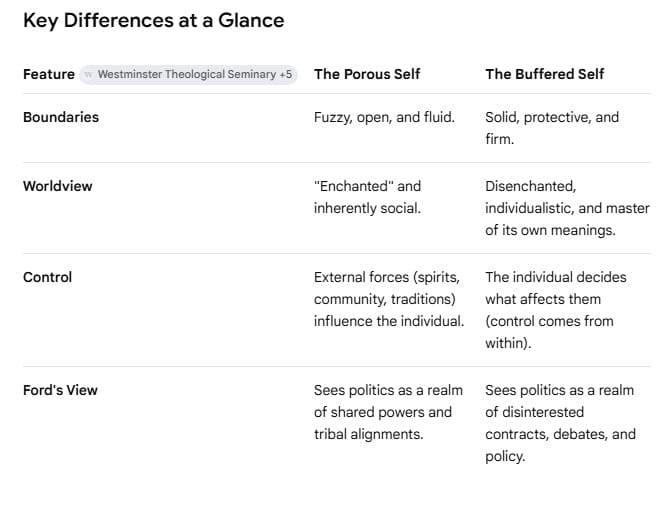
Posted in Dennis Prager | Comments Off on Dennis Prager and the Clarity

NYP: SPLC boss Heidi Beirich funneled $1.2 million to lover in neo-Nazi group — pair even had joint bank account

Chadwick Moore writes:

A top Southern Poverty Law Center official is accused of helping funnel $1.2 million in donor money to an informant in the National Alliance white supremacist group — who was also allegedly her lover.

The Department of Justice filed a superseding indictment against the SPLC accusing it of funneling donor cash to hate groups they were then telling donors they were fighting.

One figure, referred to as “Employee-2” in the indictment is described as a “person who would become Director of the SPLC’s Intelligence Project.”

It also describes how “Employee-2” wrote an article based on material stolen from National Alliance headquarters in 2014 and then paid off an informant to take the blame for the robbery.

Based on the details in the June 2 superseding indictment, “Employee-2” is understood to be Heidi Beirich, a 58-year-old fascism expert who was the Director of Intelligence at the Alabama-based anti-extremism nonprofit between 2012 and 2019.

The indictment alleges Beirich was incredibly close to the informant known only as “F-9” who “infiltrated the neo-Nazi organization National Alliance.”

“[Beirich] was also in a romantic relationship with F-9. During this relationship, [Beirich] and F-9 shared a house and two bank accounts,” the indictment alleges.

“Between 2015 and 2021, approximately $140,000 in donors’ money flowed from the SPLC operating account … and was ultimately deposited into the joint bank accounts held by F-9 and [Beirich]…

Beirich had joined the SPLC in 1999 and became Director of the Intelligence Project in 2012. She left in 2019 as part of a massive shake-up, when many top brass departed amid accusations of racism and sexual harassment, with the group mainly being run by white people and black people in its lower ranks. Beirich was not publicly implicated in those scandals.

Posted in SPLC | Comments Off on NYP: SPLC boss Heidi Beirich funneled $1.2 million to lover in neo-Nazi group — pair even had joint bank account

David Stahel and the Wehrmacht Myth

A lieutenant rides in the back of a staff car east of Minsk in July 1941. The road behind him holds a captured Soviet army, a pocket closed, a victory the field bulletins already call decisive. He has seen the prisoner columns stretch to the horizon, the burned tank parks, the surrendered guns stacked at the crossroads. That night he opens a small diary and writes that something has gone wrong. The Russians keep coming. Where the staff maps showed the last reserves spent, fresh divisions appear out of the steppe. He cannot say this to his men. He can barely say it to himself. So he says it to the page, in pencil, by a shaded lamp, and the page survives him.

Historian David Stahel built a life’s work in the gap between the bulletin and the diary. He reads the bulletin and he reads the diary and he trusts the diary. From that trust he reconstructed a war. To understand the man through Ernest Becker (1924-1974), start with the two fears his work stands against, because a hero system is a defense against terror before it is anything else, and the shape of the terror gives the hero its shape.

The first terror is that the lie outlives the truth. The men who planned the catastrophe got to narrate it. After 1945 the surviving German generals sat at their desks and wrote the war as a near-thing wrecked by a madman, by the snow, by a paranoid leader who would not let genius run free. The clean army marched out of the rubble into the memoirs and the staff colleges and the paperback histories, and the dead lay buried twice, once in the Russian ground and once under a flattering story. Against that, Stahel sets the document. He goes to the file the general did not write and could not later edit, the maintenance report, the ration return, the casualty ledger, the panicked letter home, and he lets the file convict the memoir.

The second terror is that there was no order beneath the slaughter at all. That it came down to weather and one man’s nerves and a turn of luck at Smolensk. That history is an accident and the millions died for a coin toss. A man who has spent his youth among these records cannot bear the thought that they add up to nothing he can name. Against that terror Stahel sets the structure. The defeat was written before the first shell, in the rail gauge that did not match, in the horse columns the popular image forgets, in the trucks that broke and could not be repaired because the captured spares fit nothing, in the Hunger Plan that fused the army’s survival to mass starvation. He makes the deaths legible. That is the deepest work the hero does, and Becker would name it at once: the historian’s immortality project is to give the dead a meaning that holds.

Both fears share a root. They are two faces of the dread that a death might mean nothing, the lie burying it and the chaos draining it. Stahel answers with a single creed, and he sells the creed as subtraction. Strip the romance, he says in effect, and the truth remains. Subtract the operational glamour, subtract the general’s memoir, subtract the heroic will, and what is left is the real thing: tonnage, gauge, fuel, fodder, the arithmetic of an army eating itself. He believes he has cleared the ground down to the bare facts.

Becker’s move is to ask whether subtraction reaches bedrock or builds a new altar. When you take away will and genius and chance, you do not arrive at neutral ground. You arrive at a faith in matter and necessity, a creed that the material base is the truth and the human moment is froth on top of it. The clearing is a structure. Stahel takes a mutation of the historian’s craft, the turn toward logistics and institutions and the document from below, and he treats it as the absence of all creed, the place where bias has been removed and only fact remains. It is a strong creed and an honorable one. It is not a clearing.

The sacred words Stahel lives by do not hold one meaning. They fracture the moment they leave his hands. Take the word logistics, the center of his whole project. For Stahel logistics is the floor of the real, the place where will meets matter and matter wins, the unglamorous truth the generals stepped over on their way to glory. Hand the same word to a retired staff-college instructor of the old school and it changes in his mouth. To that man logistics is the dull constraint that genius transcends, the quartermaster’s complaint, the thing a great commander overcomes by audacity. The word names a limit to be broken, not a truth to be honored. Hand it to a railway engineer who spent his career on gauge and grade and siding capacity, and logistics becomes the unsung heroism, the real battle, the labor no monument records, and Stahel reads to him as vindication and rescue. Hand it to a supply officer in any modern army and logistics is a profession, a craft with its own honor. Hand it to an old man in a Ukrainian village whose grandparents starved in the black-earth country, and logistics is the requisition party at the door, the empty grain bin, the plan that arrived as hunger. One word. The historian’s bedrock, the romantic’s nuisance, the engineer’s calling, the peasant’s death sentence.

Run the word victory through the same crowd. For Stahel there was no victory to lose, because the encirclements were illusions that hid an army already coming apart, so the whole lost-victory story is a fraud about a thing that never existed. For the general at his memoir desk, victory was real and stolen, snatched from his hand by Hitler (1889-1945) and the early frost. For an old soldier of the Red Army and his grandchildren, victory is the sacred deliverance of the motherland, paid for in a toll so vast the number stops feeling like a number, a deliverance no foreign historian may touch without reverence. For a hobbyist who replays the campaign on a board with cardboard counters, victory is a save-state to reload, a counterfactual to chase, and the contingency Stahel labors to deny is the whole pleasure of the game.

Take the word that should be the most stable, the document. Stahel treats the document as testimony from below, truth that rises out of the unit diary and the ration return precisely because no one shaped it for posterity. Set him beside a Talmudic scholar, for whom the document is also sacred and also the ground of truth, but a truth that descends from Sinai rather than rising from the supply train, an Author behind the text rather than a clerk beneath it. To that scholar Stahel’s faith in paper might look like reverence for the parchment that forgets the One who dictated it. Set him beside a postwar German grandson in a Bundeswehr uniform, and the document becomes the file he half wants and half dreads to open, the folder that might hold his grandfather’s name beside an order he cannot defend. The word document carries Stahel’s whole epistemology, and it will not stay still across these men.

This is the use of Becker, and it asks for empathy rather than mockery, because each of these men stands inside a hero system that makes his word make sense, and most of them stand there honorably. The general defends the meaning of his own life. The Red Army grandson guards the one clean thing his family carried out of the century. The engineer wants his craft seen. The peasant’s grandson wants the dead counted. None of them are fools. They use the same syllables and mean incompatible sacraments.

To a man who holds nation and people and the soldier’s sacrifice as near-sacred, the army is the body of a people in arms, and the soldier who dies far from home dies for his own, and that death holds a tragic weight no spreadsheet can carry. Such a man reads Stahel and feels a universalist intellectual draining the tragedy out of a people’s catastrophe, reducing a generation’s agony to a fuel table and a war crime, leaving no room for grief over the men inside the machine. The complaint has force. Yet the version of that same man wants something Stahel can give him, because the tribal hero at his best hates the comfortable lie about his own side more than he hates an enemy’s truth. A German who loves his nation and wants it to stand up straight has reason to bury the clean-army fiction with his own hands, to own the thing whole rather than hide behind a story the generals wrote to save themselves. Stahel and the nationalist share an enemy, which is sentimentality about the dead. They part over what the truth is for. Stahel wants it for indictment. The nationalist wants it for a people’s hard self-knowledge. The shared hatred of the flattering story is real, and it is the bridge.

How far does Stahel see his own trade-offs? On most axes he sees them well. He knows he fights the generals, and he names them. He knows that to put logistics at the center is a choice of emphasis, and he defends the choice with evidence rather than hiding it. He is a candid and disciplined man, and the candor is part of why the work lasts.

Stahel needs the German army doomed and he needs it guilty, and the two pull against each other. Doom comes from the structure: the campaign could not be won because the gauge and the trucks and the fodder forbade it, and no decision on the ground might have changed the end. Guilt comes from choice: the Hunger Plan that Herbert Backe (1896-1947) drew up was a plan, the crimes were chosen, the clean army is a myth because men decided to starve a country. But if the starvation was a structural necessity of an army that could not feed itself, then the men who carried it out were carried along by the same structure that doomed them, and the freedom that guilt requires thins toward nothing. Stahel asks the documents to show an army that could not win and could have refused, unfree in its fate and free in its crime. He does not pause on the strain. The frame that makes the catastrophe legible by grounding it in matter has to drain the human moment of its power, and a drained moment cannot carry full guilt any more than it can carry full glory.

Three coordinates locate the man. His hero is the disenchanted archivist, who makes a slaughter mean something by anchoring it to fuel and gauge and ration, and who builds against chance and against the lie at once. The rival he fights and seldom names is the operational genius, the general at his memoir desk turning defeat into stolen victory, will set above matter, the romance Stahel spends his career dismantling with the romancer’s own paperwork. The cost his ledger cannot price is the open moment, the road east of Minsk where a man’s choice might have turned something, the contingency his structure must deny to keep its order, and the grief he cannot extend to the men he convicts, because a doomed machine has no inside and a determined act has no one to mourn.

So return to the lieutenant in the staff car. Seventy years on, Stahel reads his diary and can tell him why his dread was correct, can show him the supply tables and the casualty curves that proved the road already lost. He can give the man’s fear a meaning the man never had. The one thing he cannot tell him is whether, on that road, in that hour, he was free. The diary asks the question. The structure answers a different one. That gap is where the hero lives, and what it costs to live there.

The Voice

His written voice is the voice of the war diary, not the essay. He writes plainly and declaratively, in the operational vocabulary of his sources: unit designations, Roman numerals for corps, abbreviations, full formation names, map coordinates. Richard J. Evans (b. 1947) put the cost and the payoff together in one breath when he reviewed Kiev 1941, that the apparatus of corps numbers and technical terms slows the page yet Stahel carries staggeringly complex action with clear order. That tension defines the diction. He pays in density and buys precision.
The affect lives in the documents. He keeps his own sentences cool and lets the field-post letter and the divisional war diary carry the dread and the horror. One reviewer placed him in the facts-and-figures school of military history while noting that he still lets the human cost onto the page, the prisoner pens with no shelter and no food, the starvation, the burned villages. The grief comes through quotation and through the casualty return. Stahel does not editorialize over the corpse. He cites the document that records it and moves on, and the restraint does the work an adjective cannot.
His rhetoric runs on one move, repeated with discipline. He takes the famous triumph and opens it to show the rot. The encirclement that filled the bulletins hides the attrition that has already broken the army. Glantz, reviewing him, called it dismantling myths left and right. So the persuasion works by dramatic irony. The reader arrives knowing the legend of the unstoppable Wehrmacht, and Stahel plays the ledger against the legend, the fuel report against the victory communiqué, the maintenance return against the memoir. He argues by accumulation rather than by the single vivid stroke. He stacks the returns until the conclusion sits on the reader before any thesis sentence announces it. Richard Overy (b. 1947) caught the effect when he called the work thought-provoking and original. The originality lives in the sources and the reversal, not in any flourish.
His posture toward the reader assumes seriousness and declines to flatter. The Roman numerals and the abbreviations form a threshold. A casual reader bounces off; the committed one gets the full machinery. He trusts paper over memory, the clerk over the general, the contemporaneous return over the postwar recollection, and the whole voice follows from that trust.

‘A Big Misunderstanding’

David Pinsof names the worldview of the intellectual class in a single line. Everything wrong in the world comes from misunderstanding. Shrink the world to the Eastern Front and you have David Stahel’s vocation stated whole. His field misreads Barbarossa. Popular writers peddle a clean Wehrmacht and a stolen victory. The early postwar literature ran on the generals’ memoirs and Cold War need. Stahel comes to correct the record, and his prefaces say so in the plain language Pinsof picks out for the indictment.

Read the The Cambridge Companion to the Nazi-Soviet War (2025) he edits. The early decades produced work he calls dubious and sometimes fanciful. A share of the field he calls patriotic pulp. Against this he sets corrective, evidence-based studies, and in an age of information war he holds that the value of first-rate scholarship and established expertise cannot be overestimated. Read the Barbarossa book. He labels the great encirclement at Minsk a hollow victory and bends his section titles toward demise and toward the precipice, and he warns the reader that according to most histories the summer of 1941 looks like triumph, which is the thing he writes to overturn. His doctorate carried the failure of Barbarossa in its title. The man has spent twenty years arguing that the field misunderstood the war.

That is the misunderstanding myth in its purest academic form, and it flatters its holder the way Pinsof says it must. If the trouble with Eastern Front history is misunderstanding, then the man who understands becomes the man the field cannot do without. The mission grows past any single book. Stahel wants to lift military history out of the wargamer’s corner and seat it among the serious humanities, and the Companion works at this on every page, insisting that the best military history defies the narrow operational box and draws on the whole disciplinary spread. That move has a Pinsof reading. A low-status subfield buys status by joining the high-status coalition, the cultural and social historians, and by derogating the rivals it leaves behind, the battle-narrative old guard and the pulp trade. Reviving the discipline raises the guild, and raising the guild raises the man at its front.

Stahel opens the Companion by granting that history bends to the time that writes it, that present pressure shapes the past on the page. He sees the motive in everyone else’s history. Then he exempts his own and casts it as the evidence-based correction that stands outside the agenda. Pinsof has a name for the man who says all history is motivated and then sells his own as the one account with no motive. It is the oldest move in the trade.

Stahel ties the value of his subject to the fighting in Ukraine, the trenches that open onto older trenches, the turning point a chancellor announced for Europe. The stakes rise, and the expert rises with them. Pinsof reads it as the intellectual inflating the emergency to inflate the cure, and the cure is always more of what the intellectual already sells.

Give Stahel his due. The misunderstandings he corrects are real. The clean Wehrmacht was a lie. The operational school did underrate the supply tables. The lost-victory story did serve the men who wrote it. Pinsof’s sharpest charge falls on intellectuals who collect misunderstandings whether or not the misunderstandings exist. Stahel collects ones that exist. He earns his corrections with archives, and that sets him above the consciousness-raiser who invents a public deficit to staff a career. The reality of the target does not clear the motive behind the aim. A man can fight true lies for the esteem that fighting them brings, and the truth of his findings and the hunger that drives him run on separate tracks.

Stahel treats the public appetite for Wehrmacht myth as a misunderstanding, an information deficit he can close with better evidence. Pinsof says the appetite is a demand, not a deficit. The reader who wants German operational genius is not confused about the fuel tables. He does not care about the fuel tables. He wants heroic identification, a clean machine to admire, a tragedy with no crime in it, and no footnote touches that want. So the pulp keeps selling beside the corrective, because the two feed different appetites, and the corrective cannot starve the appetite it was built to correct. You can tell the consumers they are misinformed, and they will not pay attention to you, because attention is the one thing they have no incentive to spend on the man who spoils the story. Stahel keeps issuing the correction as though the problem were knowledge. The problem is motive, on the page he writes and in the reader he cannot reach.

So the historian who unmasked the generals’ self-serving story runs his own career on a self-serving story, and his prefaces state it in the words Pinsof picks for the charge. He reads the generals all too well. He reads the public as merely mistaken. He does not turn the lens on the third man, the one at the desk who needs the field to be wrong so that correcting it can be a life’s work. There is no misunderstanding in any of it. There is a market in correction, and Stahel supplies it, and the supply is honest about everything except why it exists.

The Reader Is the Test

If you say that the appetite for Wehrmacht myth will not move no matter how much evidence lands on it, and you have made a claim about readers and sales and reach, and the claim holds against the record or it fails.

Two theories of the reader sit under the quarrel. Stahel’s theory, the one his mission assumes, is deficit. People hold the clean-Wehrmacht story because they lack the evidence against it. Supply the war diaries and the logistics tables and the casualty returns, and the story loses its grip, slowly, reader by reader, cohort by cohort. On this theory the corrective study is a treatment and the disease recedes as the treatment spreads. Pinsof’s theory is demand. People hold the story because it gives them something they want, and what they want is not a causal account of why Army Group Center stalled. They want a clean machine to admire, a feat of arms to inherit, a tragedy with the crime left out, a way to love the soldier without loving the regime that aimed him. Evidence does not touch that want, because the want was never about evidence. The wargamer who pushes panzer counters across a map knows the fuel ran short. He pushes the counters anyway, because the shortage is the dull part and the breakthrough is the thrill, and Stahel hands him a thicker book about the dull part.

Each theory makes a prediction, and the predictions split. The deficit theory predicts that the myth’s reach shrinks as the scholarship piles up. Forty years of demolition, from the Potsdam historians in the 1970s through Stahel’s own run since 2009, should leave the lost-victory story weaker in the popular market, the admiring general-memoir trade thinner, the documentaries more careful, the search traffic cooler. The demand theory predicts the reverse, or close to it. The pulp holds its share or grows it, the myth jumps to new platforms as fast as the old ones get corrected, and the corrective and the myth sell side by side to different buyers who never trade places. You do not need Stahel’s diary to judge between these. You need the sales figures, the readership surveys, the platform analytics, the syllabi, the shape of the audience that shows up to his interviews and the shape of the audience that stays away.

Run the test against the record and the demand theory takes most of the round. The clean-Wehrmacht story outlived the scholarship that buried it, moved from paperback to cable to forum to video, and shows no sign of yielding to the next monograph. The men who want the panzer general get the panzer general, in more formats than ever, and the Cambridge volume sells its few thousand to a room that already agreed. That is the world Pinsof predicts, and the world Stahel keeps writing into.

Which leaves Stahel two doors, and both open onto ground he might not want to stand on. Behind the first, he believes the deficit closes on a long arc, that correction filters down across generations even while it loses every season. Pinsof asks for the evidence of any such filtering and finds little, because the appetite renews in each cohort faster than the footnotes reach it, and the reader with the appetite has no reason to spend attention on the man who spoils his story. Behind the second door, Stahel writes for the room that already agrees, the academy and the serious reader who rejected the myth before he arrived. Then the work corrects no misunderstanding. It keeps faith with a coalition that shares his priors, and the language of correction is the banner the coalition marches under. That is the status reading, and it costs nothing to hold, because it predicts what we observe.

Stahel’s Companion aims at undergraduates and newcomers, and the newcomer is the one reader for whom the deficit theory holds. A person forming a first picture has no appetite yet to defend, no identity staked on the clean machine, and for him evidence still moves belief because the want has not hardened into a possession. Pinsof’s demand theory bites hardest on the committed partisan and softest on the blank slate. So the honest account splits Stahel’s audience in three. The partisan he cannot reach, because the partisan came for a different good. The choir he does reach, and reaching it is coalition work dressed as correction. The newcomer he can teach, because the newcomer is the one buyer in the market for the thing Stahel sells. The worth of the mission, on these terms, rises and falls with how many newcomers sit in the real readership against how many partisans he will never convert and how many of the choir he only flatters.

Posted in Germany | Comments Off on David Stahel and the Wehrmacht Myth

The David Garrow Hero System

David Garrow stands where two worlds meet that no longer trust each other. He came up inside the civil rights history establishment and won its highest prize. He ends up in the magazines that establishment scorns. His social set runs across both, and the split runs through the middle of him.

The first world is the King scholars and the movement chroniclers. Taylor Branch (b. 1947) wrote the rival trilogy, starting with Parting the Waters. Clayborne Carson (b. 1944) runs the King Papers Project at Stanford University. David Levering Lewis (b. 1936) set the bar for the long documentary life. Garrow served as one of the historian-consultants on Eyes on the Prize, the PBS series Henry Hampton (1940-1998) built, and that credit still marks him as a keeper of the movement record alongside his Pulitzer for Bearing the Cross and his earlier The FBI and Martin Luther King, Jr. Tablet’s profile places him among the country’s most celebrated civil rights historians and notes his role animating that documentary. Around this core sit FBI and movement historians: Michael Honey (b. 1947), Adam Fairclough (b. 1952), Beverly Gage (b. 1972), and Nishani Frazier. For most of his career these men and women were his peers and his judges.

The second world is the heterodox press. After Rising Star: The Making of Barack Obama landed cold in 2017 and the King essay broke in 2019, his hearing moved to Standpoint, The Critic, and The Spectator in Britain, and to Tablet in the United States, where David Samuels ran the long interview “The Obama Factor.” Garrow himself logs this arc: the Standpoint update on the FBI’s surveillance of King in 2019, the Critic piece on the Obama typescript, the Tablet profile in 2023. These outlets prize the writer the academy throws out. They read his exile as proof of his honesty.

What the set values is the document. Garrow sifted more than 54,000 FBI files for the King essay. He spent weeks on memos he found on the National Archives website. He ran more than a thousand interviews for the Obama book. The hero reads everything and flatters no one. Exhaustiveness is the virtue, and the long book is the trophy. Rising Star runs past 1,400 pages, and even hostile reviewers grant the depth of the reporting while calling the reading a slog. One round-up tagged it a dreary, bloated tome in desperate need of editing, leaning hard on interviews with a former girlfriend. The set prizes independence above access. It would rather lose the subject’s goodwill than soften the portrait. Obama read ten chapters and gave Garrow eight hours of off-the-record talk, kept strong disagreements, and Garrow printed the cold appraisal anyway. That refusal to be captured is the badge.

The hero of this world is the lone scholar who tells the truth the guild will not. He goes into the room nobody wants entered. J. Edgar Hoover (1895-1972) plays the standing villain, the proof that the state lies and smears. The strange turn of Garrow’s later years is that he keeps the villain and trusts the files. After once warning that a top-secret label proves nothing, he came to argue that some FBI files are more reliable than others. The hero, in this telling, is the man brave enough to read Hoover’s poison and still find facts in it.

The status games follow from that. Inside civil rights history the contest is who read the most, who interviewed the most, who got closest to the source, who broke the new finding. Garrow’s Bearing the Cross against Branch’s trilogy. Among Obama biographers the rivalry runs against David Remnick (b. 1958), who wrote The Bridge, and David Maraniss (b. 1949), who wrote the early life. Garrow used his epilogue to take unseemly shots at both books, and he closed by reciting unfavorable reviews of the earlier biographies, staking his claim to the fuller account. In the second world the game flips. The louder the academy denounces you, the higher you climb. Denunciation becomes the credential.

The normative claims divide the two camps along a single rule of reading. Garrow holds that the historian follows the evidence wherever it goes, that a subject’s reputation is not the scholar’s charge, and that suppression rots the field. His critics hold that provenance governs meaning. Beverly Gage warned that the King material came out of a campaign built to discredit him, so it has to be read in that light, since the Bureau hunted for anything it could weaponize. A historian of the FBI obtained from Garrow the missing pages behind his worst charge and reached a different verdict. After studying the documents he concluded the evidence for the rape allegation is inconclusive, while faulting how Garrow read and framed the sources rather than the sources themselves. Frazier grades the essay as gossip that fails the first tests of source criticism. She and others say historians must reckon with the new King the files allegedly show, then judge that the essay does not survive scrutiny of author, point of view, and context. They press a second rule too: some things should wait. The sealed audio sits under court order until 2027, and Garrow never had it. Garrow’s answer is that delay serves the guardians, not the truth.

The essentialist claims cut deepest. Garrow’s people believe in a real self under the myth. There is a true Obama beneath the campaign story and a true King beneath the sainthood, and the document uncovers the man. King was once thought a saint beyond reproach, and the work, in this view, finally shows the human being. The critics treat the record as made, not found. The file is a tool shaped by the men who built it, and knowledge stays bound to its source. One side reads to find the person. The other reads to find the machine that made the page.

Garrow keeps one creed across both worlds, and that is his trouble. He never changed his method. The movement guild honored it when he aimed it at Hoover and the Bureau. The same guild turned on him when he aimed it at King. The heterodox press took him in less for his subject than for his break with the people who raised him.

The Death He Could Not See

David Garrow sits at a screen and reads the memos other men will not open. They are FBI summaries, typed by clerks who despised the man they watched, and they sit on the National Archives website where any citizen might find them. Garrow finds them. He spends weeks. He reads more than fifty thousand FBI files for one essay on Martin Luther King Jr., and he runs more than a thousand interviews for his life of Barack Obama, and when he writes he leaves almost nothing out. The Obama book passes fourteen hundred pages. A reviewer who respects the digging still calls the reading a slog.

This is the man at work. The labor looks like penance and reads like devotion. He believes the record has a claim on him that outranks the comfort of the people who will read it.

In 2017 the Obama book lands cold. In 2019 the King essay appears in a British magazine after American editors pass on it. David Maraniss (b. 1949), who wrote his own account of the young Obama and found himself named without kindness in Garrow’s epilogue, calls him vile and ignoble. The word travels. It is not the word a historian uses for a colleague who weighted a footnote wrong.

That gap is the thing to explain. A quarrel over whether an FBI memo can be trusted does not produce that heat. Provenance disputes are dull. Men do not call each other vile over provenance. Something larger has been handled, and handled in a way that felt to the other men like a hand laid on a body.

Ernest Becker (1924-1973) supplies the name for the larger thing. Becker held that a man cannot live looking straight at his own death, so he builds a hero system, a structure of meaning that lets him feel he counts in a scheme that outlasts the body. The hero system tells him what counts as significance and how to earn it. Inside it he can feel he is an object of primary value in a universe that will not simply erase him. Take the structure away and the terror returns. So men defend their hero systems the way they defend their lives, because in the only sense that reaches them, the two are the same.

Garrow has a hero system, and it is the complete record.

The document is his stay against oblivion. The witness dies. The subject dies. The historian dies. The clerk who typed the memo is forty years in the ground. The archive holds. Garrow’s faith, the thing that gets him to the screen for the fifty thousandth file, is that enough documentation breaks through myth and reaches the man as he was, and that the man as he was deserves to survive the people who want a cleaner version. His immortality project is not his own name. It is the record that will tell the truth after every interested party is dead.

Now set against him the men who keep the memory of King.

They face a different death. Their terror is not that the record will be lost. Their terror is that the suffering counted for nothing. A people was beaten and bombed and degraded across generations, and the wound only becomes bearable when it is gathered into a meaning, a martyr who carries the whole weight, a death that redeems the deaths. King is the figure who converts the slaughter into a story with a point. Pull him down to appetite and disorder and the conversion fails. The murdered are murdered again, this time into meaninglessness. The terror under the defense of King is the terror that the dead died for nothing, which is the oldest terror there is.

So both men stand over the same documents and perform opposite rescues. Garrow thinks he prevents a death, the death of the true record under a curated lie. The keepers experience him committing one, the murder of the symbol that makes their dead count. Each tries to save a life. Each sees the other holding a knife. They cannot hear each other because the word death points, for each, at a different grave.

This is why the sacred words break apart the moment you carry them across the line between hero systems. The words stay the same. The deaths they guard against do not.

Take truth.

For Garrow truth is what the document shows when a man reads enough of it and flatters no one. Truth is found, not made. It is cold, exhaustive, indifferent to who gets hurt, and it has rights the subject’s reputation cannot override. A fact is a fact whether it strengthens you or ruins you.

For the keeper of the memory truth includes the question of who is speaking and why. A summary written by men who hunted King for years, built to destroy him, is not truth merely because it is accurate in its particulars. Truth is the meaning the suffering bears, and a fact torn from the hand that forged it to do harm is a weapon wearing the costume of truth. The historian Beverly Gage makes the point in the register of her own craft: the King material came out of a campaign built to discredit him, so it cannot be read as though it fell from the sky.

Carry the word further, to men who never heard of Garrow, and it splits again.

A yeshiva man knows a category Garrow’s hero system has no slot for. Some speech is true and still forbidden. The law against lashon hara does not ask whether the damaging thing is accurate. It asks whether it must be said. The tradition Marc Shapiro has studied has spent centuries deciding what may be told about its sages and what may not, and the deciding is not lying. It rests on a different theory of what a community owes its dead. To this man Garrow’s completeness looks like a sin with a footnote.

A combat veteran hears truth and thinks of what he saw with his own eyes while men beside him died, and the scholar risking his conference invitations does not register on the same scale. Courage, to him, is the body in danger for the men at your shoulder. Garrow calls it courage to read the poison J. Edgar Hoover gathered and print the finding. The veteran allows it a small courage and reserves the word for something heavier.

A keeper of samizdat, who copied banned pages by hand under a regime that jailed men for the copying, holds the opposite faith from the veteran and the yeshiva man both. To him the suppressed record is the holy thing and getting it into print is the whole of virtue. He and Garrow might recognize each other across a room. The document the powerful want buried is the document that must be saved. For the samizdat man the question who benefits is the question the secret police asked, and he spent his youth refusing it.

A parish priest hears truth and thinks of the confessional, where the truest things a man ever says are heard by one ear and carried to the grave. He has built his life on the conviction that some truths are told only to be absolved, never to be published, and that mercy keeps them. He reads Garrow and sees a man who confuses the courtroom with the church.

A prosecutor lives inside the standard of proof. To him a single handwritten summary, uncorroborated, the audio still sealed, does not clear the bar, and a man who reports the allegation before the bar clears has confused what the file says with what happened. He might tell Garrow that the file is evidence of the file, and not yet evidence of the deed.

Each of these men is honorable. This is the part the deflating frames skip and the part Becker keeps. None of them is a coward or a liar dressed as a saint. Each has organized a life around a death he cannot bear, and the sacred word is the wall he built against it. The veteran cannot let courage mean less than the body in danger, because his friends paid for that meaning with their lives and any cheaper meaning robs their graves. The priest cannot let truth mean publication, because the men who knelt to him trusted that it would not. The keeper of King cannot let the symbol fall, because the fall sends a people’s dead back into the dark. They are not fools defending errors. They are mourners defending the only arrangement under which their dead stay counted.

Garrow belongs among them. His faith is as much a faith as theirs. He has located the unbearable death in the archive rather than in the body or the symbol or the confessional, and he serves it with the devotion the priest brings to the host.

There is a hero system he never names and never courts, and it reads him with particular suspicion. Call it the system of the people. The man inside it locates his immortality in the continuance of his own, the blood and the name and the language and the faith carried across generations by men who will never know his face. He does not fear the death of the record or the death of the symbol first. He fears the extinction of the line. His dead are redeemed when their descendants survive and prosper, and a truth that demoralizes his own while arming their enemies looks to him like a luxury at best and a betrayal at worst. He asks of every finding the question Garrow refuses on principle. Whose people does this strengthen.

To this man Garrow’s independence is the tell. The lone scholar who follows the document wherever it goes, indifferent to whether the finding builds up his own or tears them down, has not achieved freedom. He has achieved a tribe of one. The man of the people sees a scholar so in love with his private vocation that he has forgotten he belongs to anyone, a man who serves an abstraction over the concrete bonds that made him, and who calls the forgetting integrity. The veteran respected Garrow’s courage and downgraded it. The man of the people does something sharper. He recognizes Garrow’s independence and renames it. To stand free of your own kin, in this hero system, is not to stand free. It is to abandon your post.

And the man of the people is not contemptible either. His terror is the realest terror Becker describes, the terror that the chain breaks and the name ends and the long labor of the ancestors comes to nothing in a single sterile generation. He guards the line because the line is how his dead refuse to vanish. Garrow cannot see this as anything but tribalism in the way of the truth. The man of the people cannot see Garrow as anything but a son who sold his fathers for a footnote. Each is mourning. Neither knows the other is at a funeral.

Underneath Garrow’s whole career runs a story he tells about his method, and the story is a subtraction. Strip away the myth, the reverence, the pressure of the guild, the curated piety, and what remains, he believes, is the man as he was. Reality is the residue. Truth is what you get when you take the agenda out. He sells the empiricist creed as the clearing left after the superstition burns off.

Becker does not let the subtraction stand. The clearing is not a clearing. The faith that the archive gets you outside the social, down to bare fact unmediated by anyone’s need, is a hero system, and a grand one. The man who believes he has subtracted his way down to the real has built a cathedral to the real and made himself its priest. He has not escaped the immortality project. He has founded the most disguised version of it, the hero system of the man who claims to stand outside all hero systems. His subtraction is his addition. Where another man worships the symbol or the line or the host, Garrow worships the residue, and the worship is no less devout for calling itself rigor.

The Obama finding shows the structure at full size. Garrow argues that Dreams from My Father is part construction, that the young man wrote himself into being and chose his identity as a politician chooses a coalition. Becker has a name for the thing Obama was doing. The causa sui project, the wish to be one’s own father, self-made, self-narrated, author of a life that owes nothing to the accident of birth. Garrow’s exposure is an attack on another man’s death-denial, the puncturing of a self that wished to have made itself. And Garrow’s own empiricism is his causa sui in turn, the wish to be the historian who owes nothing to his guild, who made himself out of documents and stands free of every need but the document’s. Two self-made men. One exposes the other and cannot see he has built himself the same way.

How much of this does Garrow see.

The trade-off he sees clearly. He chose disenchantment over reassurance with open eyes, and he knew the price, and he paid it, and the paying is part of what makes him honorable. He did not drift into the no-man’s-land between his old guild and his new audience. He walked there. A man who walks into his own exile, on principle, having counted the cost, has done something rarer than the contrarians who stumble into theirs.

The thing he does not see is his own exemption. He believes he stands outside the hero systems he punctures. He believes his fellow historians defend myths while he defends nothing, reports nothing but what the file shows, wants nothing but the record clean. He cannot see that the keepers of King are not cowards but mourners, that their defense draws on the same terror his own devotion draws on, that they do in the open what he does at the screen. He reads their grief as obstruction. He fights the keeper of meaning as an enemy of truth and never recognizes a fellow priest at a rival altar.

Three coordinates locate the man.

His hero is the grinder of archives, the priest of the complete record, the maximalist whose stay against death is the document that survives the death of every witness and tells the man as he was when all the interested mourners are gone. He reads everything and flatters no one, and the long book is his liturgy, the fourteen hundred pages a refusal to let anything be lost.

The rival he fights without naming is the keeper of meaning. Garrow names Hoover as his villain and keeps him, even after he comes to trust the files Hoover’s men typed. The figure he never recognizes as a peer is the man on the other side of the document, the one who knows that some deaths are redeemed only by symbols and that a symbol stripped is a people unmade. Garrow takes him for a defender of pretty lies. He is a defender of the dead. They are both at the graveside. Only one of them knows it.

The cost his ledger cannot price is the meaning. The archive gives Garrow everything except the one thing the suffering was for. He can tell you all that King did and nothing about what King was for, because the why does not live in the file. The record holds the facts and loses the point of them, and a man who serves only the record ends with a complete account of a life and no account of why the life counted.

There is a last turn, and it is the one his hero system cannot survive looking at. The archive he served as his stay against oblivion will not mourn him. He spent a life saving the dead from the death into the lie, and saved no one to carry his own meaning forward, because meaning is carried by the guilds and the peoples and the keepers he spent that life refusing. The sealed tapes open in 2027. Whoever shows up will read them. The archive does not care who shows up. It held the truth about King and it will hold the truth about Garrow with the same indifference, and the man who built his immortality on the document will learn, if the dead learn anything, that the document was the one mourner who could not weep.

That is the death he could not see. Not the death into the lie he spent his life fighting, and not the death into meaninglessness the keepers feared, but the death of the man who served a master that cannot grieve. He was right that the record outlasts us. He missed the cost. The thing that outlasts you does not remember you. It only keeps.

The Voice

On the page Garrow disappears. His prose is functional, not elegant, and he means it to be. He distrusts the well-turned sentence the way a juror distrusts a smooth witness. The argument lives in the arrangement of evidence, not in any line you could pull and frame. He piles the documents, the interviews, the dates, the file numbers, and lets the mass do the work. Fourteen hundred pages is the rhetoric. The length is the claim. A man who compresses has to choose, and choosing means interpreting, and interpreting means standing between the reader and the record. Garrow refuses the post. He writes as though stepping aside is the whole of honesty. The cost shows up in the reading, which even his admirers call a slog, and the discipline shows up in the durability, because the books outlast the verdicts about them.
The diction matches the stance. Plain Anglo-Saxon words, proper names, quantities. He does not reach for theory. You will not find him decorating a finding with an abstraction. When he wants force he reaches for the vernacular and sometimes the profane, not the figure of speech. The reporting voice is dry to the point of austerity, and the dryness is a moral posture. He wants the document to sound like the document.
Then put him in a chair across from a good interviewer and a second man shows up. In the Tablet conversation with David Samuels he gives short answers under long questions, often answers shorter than the questions that prompt them. Samuels’s questions run in bold and are frequently longer than Garrow’s replies. He lets the other man build the scaffolding and then drops the verdict. The page-Garrow would never editorialize. The chair-Garrow hands down judgments without hedging. He calls the Obama years a failed presidency. He says the man is not a normal politician or a normal human being. He calls the memoir so fictionalized that it reads as a novel. None of that lands in the books with that bluntness. In speech he says the quiet conclusion out loud. Econlib
The spoken rhetoric runs on a single source of authority, which is exposure. He has been in the files longer than you. He has read what you have not. When he dismisses the Steele dossier he does it by invoking what years in the intelligence archives taught him, then calls the thing complete crap in so many words. That is the move under most of his pronouncements. Not here is my argument, but here is what a man who has handled the actual paper can see at a glance. It is the confidence of the practitioner, and it carries the practitioner’s weakness too, a tendency to treat his own trained eye as self-evidently correct and to mistake familiarity with the documents for the last word on what they mean. Power Line
The speaking manner has a settling-of-scores edge that the prose mostly hides. In print he buries the shot at a rival in an epilogue. In conversation he names the fanboy journalists and lets the contempt sit in the open. Hostile readers call the interviews rambling, and there is something to that. He circles, he digresses into the file he found last week, he follows the thread that interests him rather than the one the question opened. The same appetite that produces the fourteen hundred pages produces the long unspooling answer. He does not edit himself in real time any more than he edits the books.
The through-line across both voices is a refusal to perform reverence. On the page he refuses it by withholding the editorial hand. In the chair he refuses it by speaking the cold assessment plainly. A reader who only knows the books meets a man who has erased himself behind the archive. A listener who only knows the interviews meets a blunt, sometimes pugnacious old reporter handing down judgments. Both are true. The flat prose and the unsoftened talk are the same disposition pointed two directions, and the disposition is that flattering the subject, or the audience, or the guild, costs more than he is willing to pay.

Posted in History | Comments Off on The David Garrow Hero System

The David Horovitz Hero System

In September 2025 David Horovitz (b. 1962) flies into Damascus. He travels with a group of rabbis and American Jews whom the new Syrian foreign ministry has invited, in the weeks after the Assad regime fell. He is among the first Israeli journalists to enter the city in decades. He is sixty-three. He runs a newsroom full of reporters half his age, any of whom could have made the trip. He goes himself.

The choice names what he serves. A man arranges his life around something he hopes will outlast his body, and the shape of that thing tells you which death he fears most. Ernest Becker (1924-1974) gave the plainest account of this in The Denial of Death. Every culture hands a man a hero system, a set of roles through which he earns the feeling that his life counts in some order larger than his own flesh. The hero system denies death by giving the man a part to play in something that does not die. It lets him spend his finite hours as though they buy a piece of the permanent.

Becker, following Otto Rank (1884-1939), set two fears under the whole enterprise. The first is the fear of standing alone, one small separate creature with no people and no assigned part. The second is the fear of dissolving into the mass, of losing the self in the herd until nothing of yours remains. A hero system that cures the first by handing the man over to the tribe exposes him to the second. The hard trick is to answer both at once.

Horovitz answers both with the figure of the witness.

The London boy who makes aliyah at twenty-one and serves in the IDF cures the first fear. He stops being an observer of a people and becomes one of them. He has a flag, a war, a city, a part. But he does not let the part swallow him. He keeps a London distance, the trained eye that will not file the easy story, and he builds a life out of refusing to simplify the people he has joined. That refusal cures the second fear. He belongs without dissolving. He is inside the tent and he keeps his own eyes. The witness is the role that lets a man have a tribe and a private judgment in the same body, and Horovitz has worked that role for more than forty years.

Every hero system tells a story about itself, and the witness tells a flattering one. The story is subtraction. Take the real Israel, the witness says, and strip away the partisan distortions, the comfort the friendly offer and the venom the hostile offer, the templates that flatten a contested society into a slogan. What remains after you subtract the bias is the thing itself, complex and unresolved, and the witness presents that residue without calibration. He calls his own position the confused middle, and he means the phrase as a confession of honesty. He has no camp. He has subtracted the camps. What is left is the real.

Becker’s whole argument cuts against that story. The view with no camp is a camp. The clearing the witness believes he has reached by subtraction is not the absence of a hero system. It is a hero system, and a demanding one. The man who refuses comfort earns his significance by the refusal. The man who will not simplify pays a price for the complexity and banks the price as virtue. The confused middle is not a place where the heroics stop. It is the temple where they happen. Horovitz does not stand outside the immortality projects of his trade. He runs the most exacting one. His cosmic role is to be the man who was present and would not lie about what he saw, and that role buys him the same thing the partisan buys with his slogan. It buys a way to count.

He earns empathy here, and the deflation is not an accusation. The witness hero is expensive and Horovitz pays. He flies into a city that wants nothing of Israel. He keeps an editorial door open to voices that wound him. He passes up the partisan’s reward, the comfort of a side that loves you back. None of that is cheap. The deflation only puts him on the same ground as everyone else. He too builds against death. He has built well.

The trouble starts with his sacred word, and the word is honesty.

Honesty inside the witness hero means the endurance of complexity. It means holding the grief and the rage and the failures of the army and the wickedness of the enemy in one hand without letting any of them resolve the others. After October 7, 2023, Horovitz wrote columns that carried the national shock to readers outside Hebrew, and the honesty in them was the refusal to make the horror simple in either direction. That is honesty as he worships it. But the word does not mean the same thing one tent over, and this is where Becker earns his keep, because a sacred value is not a fact about the world. It is a move inside a particular game, and it makes sense only there.

For the wire-service correspondent, honesty is the view from nowhere. It is attribution, distance, the reporter who has no flag and files the same copy from any capital. To him Horovitz is not honest at all. He made aliyah. He wore the uniform. He is a participant who reports on his own side, and his presence at the hinge of events, the thing he prizes most, is the very thing that disqualifies him. What Horovitz calls witness, the correspondent calls capture.

For the religious-Zionist settler, honesty means naming the promise. It means saying out loud that the land is given, that the return to Judea and Samaria fulfills a covenant, that history bends toward a redemption a man can serve with his hands. To him the confused middle is not honesty. It is nerve failing. Honesty deferred. The man who will not say what the story is, when the story is the whole point, has chosen comfort over truth and called the choice maturity.

For the Haredi yeshiva student, honesty has nothing to do with newspapers. The only thing that does not die is Torah, and a life spent interpreting a small modern state to gentiles in English is a life spent on the perishable. The witness honors the wrong eternal. His honesty is real and aimed at a target that will not be there in a hundred years.

For the man who writes for the Palestinian cause, honesty is solidarity with the oppressed, fidelity to the truth of the people under occupation. To him Horovitz’s balance is the most sophisticated dishonesty of all, an occupation laundered through nuance, a refusal to take the only side honesty permits. The complexity the witness loves is, to this man, the alibi power gives itself.

For the intelligence analyst, honesty is the assessment that survives contact with the enemy. It is the cold probability with the feeling scrubbed out. Sentiment corrupts the estimate. By that standard the grief-soaked column is honesty’s failure, emotion contaminating the read. The witness lets himself feel, and feeling, to the analyst, is the enemy of the honest number.

Five tents, five honesties, and each makes sense only inside its own hero system, the way Horovitz’s makes sense only inside his. The word is the same. The thing it points at moves with the immortality project of the man who says it. That is the Becker point, and it dissolves the witness’s subtraction story. He has not reached a clearing under the bias. He has built one more sacred meaning and named it the absence of the others.

There is a sixth tent, and it is mine, so I will name it and not pretend to stand outside it either. The tribal hero, the nationalist, the man who holds the survival of his own people as the value that orders all the rest, has his own honesty. It is loyalty. It is the willingness to say my people first and to defend the tribe without apology and without an audience of outsiders to satisfy. From inside that tent the witness looks like a man with one foot still in London. He loves his people, the nationalist grants, but he cannot bring himself to fight only for them. He keeps the editorial door open to the very voices that would dissolve the nation, and he calls the open door pluralism. To the nationalist that open door is the one unforgivable softness, the diaspora reflex that survived the aliyah, the need to remain fair to the enemy and legible to the bystander when the hour calls for neither fairness nor legibility but victory.

And yet the nationalist, if he is honest in his own way, has to concede something. The witness keeps people inside the tent that the propagandist drives out. The diaspora donor, the foreign diplomat, the bewildered outsider who will not swallow a slogan but will sit still for a serious man, all of them stay because Horovitz refuses to shout. The bridge he builds carries traffic the war effort needs. So the tribal hero both indicts the witness and depends on him without saying so, which is the most that two hero systems usually manage toward each other.

How much of this does Horovitz see. More than most. The phrase confused middle is the phrase of a man who knows his position is a position and not a clearing, and who has decided to wear the knowledge rather than hide it. He knows his independence costs him relationships. He knows his presence costs him the safety of the desk. He has counted those. What he might see less of is the thing under all of it, the part Becker would press. The man who must be present, who cannot send the younger reporter, who flies to Damascus at sixty-three because the witness who delegates presence stops being the witness, is a man outrunning his own death by piling up evidence that he was there. The hero system that earns its meaning by witness can never have witnessed enough. There is always one more hinge.

So the cost his ledger cannot price is the one his whole hero is built to refuse to pay. He chose a people and then spent forty years keeping a sliver of distance so that he could see them, and the sliver never closes. Full membership, the kind the settler and the yeshiva student and the man at the fire all have, the kind that does not keep one eye on the door, is the thing the witness trades away to stay a witness. He stands inside the tent and at its opening at the same time. The opening is where the light comes in and it is also where the cold gets in, and the cold is not on the books.

This is the shape of him. The witness who has a tribe and keeps his own eyes, whose hero is the refusal to simplify a people he loves. The rival he fights without ever naming is the man of the template, friendly or hostile, the partisan who has chosen a side and slept well, and Horovitz fights that man on every story by declining to become him. And the cost he cannot enter in the ledger is the warmth of belonging all the way, the membership he spends, year by year and trip by trip, to keep the eye that makes him the witness.

He flies home from Damascus to Jerusalem, to Lisa and the three children, the ordinary life the project keeps borrowing against. Then the next hinge opens somewhere, and the witness reaches for his notebook, because the man who stops being present has to face the thing the presence was holding off.

Posted in Journalism | Comments Off on The David Horovitz Hero System

The Dennis McDougal Hero System

He Gathered People First: Dennis McDougal and Janet Malcolm

Janet Malcolm opens The Journalist and the Murderer with the hardest sentence ever written about the trade. The journalist, she says, is a kind of confidence man who preys on the vanity, the loneliness, or the need of his subject, wins the subject’s trust, and betrays him without remorse, and the relation is built on that betrayal from the first handshake. Her case is the writer Joe McGinniss (1942-2014) and the convicted murderer Jeffrey MacDonald (b. 1943). McGinniss embedded with MacDonald’s defense, lived alongside him, sent him warm letters professing belief in his innocence, and all the while was writing Fatal Vision, the book that would call him a psychopath. MacDonald sued. Malcolm uses the suit to indict the whole trade, and she does not spare herself, since she too had been sued by a subject who said she had used him. Her point is that the seduction is the method. The subject talks because he has been made to feel known and liked, and the writer banks the talk against him.
The obvious place to look for this in McDougal is the true-crime reporter beside his killer, and that is where the parallel fails. Angel of Darkness is not Fatal Vision. Randy Kraft (b. 1945) never spoke about his crimes. He kept the shy, obliging manner that had hidden him for a decade, and he gave McDougal nothing. McDougal built the book from the outside, from the trial, the record, and the people Kraft had left in his wake, and he did not pretend to a friendship with the murderer because there was no friendship to pretend to. McDougal had no killer’s trust to betray. In this one respect he is the anti-McGinniss. The con Malcolm describes requires a cooperating subject, and McDougal’s most famous subjects refused to cooperate. Kraft stayed silent. Wasserman froze him out. The Chandler establishment resisted. The man who would later be called Los Angeles’s chief muckraker rarely had the principal in the room to seduce.
The failure of the obvious parallel points to where the relation lives in his work, which is one ring out from the principal. Malcolm’s seduced subject does not have to be the villain. It is whoever the writer cultivates and then spends. In a true-crime book that is the grieving family who let the reporter into their loss because they needed the dead remembered, the lover who never suspected and now needs to explain himself, the friend and the co-worker who trusted the man and want to understand the betrayal. These people opened their lives to McDougal, and their intimacies sit in his books, given in one register and used in another. In the institutional biographies it is the more than three hundred and fifty colleagues, relatives, and rivals he drew out for The Last Mogul, and the insiders who told him what they knew for Privileged Son. The center denied him, so he worked the satellites, and the satellites are where Malcolm’s structure bites. They cooperated. They were used. The relation Malcolm names runs through them.
McDougal believed he gathered facts. He believed the method was documents and the patient accumulation of testimony, the court file and the deposition and the interview, all of it adding to a portrait that the evidence itself compelled. McGinniss believed he was doing journalism while he was running a con. McDougal believed he was doing research while he was conducting relationships. Every interview was a person cultivated, made to feel that this reporter understood, and then converted into copy. The documentary self-image is the very blindness Malcolm diagnoses, because it lets the reporter call the seduction by the name of fact-gathering and feel clean. He thought he gathered facts. He gathered people first, and the facts were what he carried away from them.
The institutional books deepen the potential betrayal past anything Malcolm’s daily-newspaper case reaches, because the long book runs for years. The insider who trusts McDougal across a four-year project, who returns his calls and shades in the story and feels himself a collaborator, finds in the end that his trust has been folded into a prosecution of the world he belongs to. He helped indict his own house. The grieving family who wanted their son remembered finds the son’s death set inside a portrait of suburban rot they never asked for. The cooperation was real and the use was real and the gap between them is the betrayal Malcolm says was there from the first call. The longer the cultivation, the larger the debt the subject did not know he was extending.

My three interviews with Dennis between 2002-2011

The interviews show that the sealed-center thesis is no longer an inference. It is his signature. Wasserman refused him, Jack Nicholson (b. 1937) never cooperated with any biographer, Dylan (b. 1941) is refusing him as he speaks. And he names the pattern: he picks subjects whose subjects do not want them known. This is the appetite that drives his biographies. He hunts the man who will not talk. He was drawn to the unreportable, which means the periphery-working method was a choice, not a constraint.
The convenient-beliefs frame gets a perfect live demonstration. Asked why Bruck was hailed and he was ignored, he reaches for East Coast snobbery, the cool kids, the West Coast writer the establishment will not take seriously, the incorruptible man who cannot be bought. Every term of that account protects his self-image. What it omits is exactly what Schatz put on the record: that his central thesis was Moldea’s first, and that Bruck’s access, however much facade it yielded, brought primary material he never had. He cannot say my frame was secondhand. He says I am not the cool kid. Watch what he does two beats later. He distrusts memoir because the memoirist writes hagiography and leaves out the embarrassing part. He is, in that very conversation, writing his own hagiography and leaving out the embarrassing part. He sees the convenient belief in every subject and never in himself.
He also runs Alliance Theory on himself without prompting. Cool kids, East against West, who got anointed and who paid dues. The man explains his own marginality as coalition position. The first essay argued he ran a folk version of the theory on his subjects. He runs it on his own life too.
McDougal identifies with Jake Gittes, the detective who reaches the last reel and realizes he does not know half of what he thought he knew. That is not naive documentary faith. That is a tragic, ironic sense that the investigator is always partly fooled and the case always exceeds him. He knew the gumshoe’s blindness and claimed it as his self-portrait.
The Tom Wolfe (1930-2018) exchange cuts against the defense I built for his books. I argued that his rare value lived in the selection, the sequence, and the verdict, the authorial shaping Epstein cannot deflate. McDougal agrees with Wolfe that a book is ninety percent material and ten percent writing. In his own account he is a gatherer, not a shaper, and he would credit the material, not the craft. So the strongest defense of McDougal is a defense McDougal would not make for himself.
McDougal says he he made no secret with Nicholson of who he was and what he intended. He is the anti-McGinniss, no deception of the principal. Where the cultivate-and-spend relation lives is the off-the-record inner circle who did not want to upset Jack, and, more pointedly, in his giving voice to Bonny Lee Bakley (1956-2001), taking liberties to speak in a dead woman’s voice. The writer’s power over the subject who cannot consent is at its purest with the dead.
The man who wants to send the mighty to jail where they belong, who builds book after book on the sacred and profane sorting of the powerful, turns relativist the moment I press him on objective good and evil. His exposés run on a moral binary his philosophy disowns. He performs the pollution ritual professionally and disclaims its premises personally. That gap is evidence that the moral charge of his work came from the genre’s code rather than from any moral conviction of his own.

Hero System

Picture the man at the document. He sits past midnight with a box of depositions, a stack of police files, a county clerk’s photocopies curling at the edges. The building has emptied. A vacuum runs two floors down. Dennis McDougal reads the way a safecracker listens, for the soft place where the official story stops matching the paper trail. He is not after a man’s heart. He is after the memo the man signed and forgot. When the memo turns up, when the deposition contradicts the press release, McDougal feels the thing his hero system was built to deliver. He feels significant. He has seen through, and he has the paper to prove it.

Ernest Becker (1924-1974) gave us the grammar for that feeling. In The Denial of Death he argued that a man cannot live inside the knowledge of his own death, so every culture hands him a hero system, a scheme for earning the sense that his short life counts inside some order that outlasts him. The hero system tells a man what counts as a brave act, a clean act, a significant life. It sells him a way to feel he will not vanish. Strip the costume off any vocation, the priesthood or the police or the press, and Becker finds the same engine underneath, a man fending off two terrors at once, the terror of death and the terror that his life was a small thing that no one will remember.

McDougal’s hero is built against two more particular fears, both of them versions of the Becker terror. The first is the terror of the dupe. The reporter’s nightmare is the credulous man, the booster who repeats the press release and calls it news, the rube who dies inside another man’s mythology and never knows the joke was on him. The second is the terror of the unrecorded. Power runs in the dark, the deal closes in a room with no minutes, and the lie outlives the truth and hardens into the official history. McDougal organized a life against both. The man who reads the machinery does not die a fool. The man who writes it down does not die unrecorded. His name sits on the spine of the book, and the book sits on the shelf after the dynasty falls.

So the sacred value at the center of his life is exposure. Pull back the curtain. Name the apparatus. Show the wires. He carried it into Privileged Son, where he turned Otis Chandler and the family into a study of hereditary power dressed as public trust. He carried it into The Last Mogul, where Lew Wasserman shed the glamorous executive and became the architect of an empire run through contracts, leverage, and the quiet money in a union local. He carried it into the true-crime books, into Angel of Darkness, where the freeways and the anonymous suburbs around Randy Kraft became part of the case rather than scenery. Exposure was the sacrament. The document was the host.

Here the trouble starts, and it is a fruitful trouble. Exposure feels to McDougal like a clearing, a removal of fog, a return to the real. It is no such thing. It is one hero system among many, and the word that sits at its altar means something different at every other altar in the city.

Walk a few blocks and watch.

A homicide detective keeps a murder book the way McDougal keeps a file, the same hunger for the buried fact, the same patience with a paper trail. Ask the detective what revelation is for and he gives a different answer. Revelation closes the case. It ends in an arrest, a charge, a conviction, a family told at last who did it. The detective wants the truth sealed inside a verdict, not spread across a Sunday front page. “I don’t need the city to know,” he says. “I need twelve people in a box to know.” His hero is built against the terror of the open case, the killer who walks, the file that never closes. Same hunt, opposite ending.

Cross town to a publicist’s office on a high floor with a view of the studio lot. This man is the rival McDougal fought all his life and never quite named. His sacred value is the managed image. He believes, with a clean conscience, that a star, a studio, a senator, a city is a story under construction, and that his craft holds the story together against the corrosion of rumor and the malice of the press. Revelation, to him, is vandalism. “You think you’re letting the light in,” he says to the reporter across the desk. “You’re letting the rats in.” He sleeps well. He is not a villain in his own film. He is the keeper of a fragile thing, and he watches McDougal as a man watches an arsonist who calls himself a fireman.

Up a canyon road sits a priest who hears confession on Saturday afternoons. He traffics in revelation all day. He knows the worst about half the families in the parish. Revelation, for him, is a sacrament under seal, the truth spoken so the soul can be unburdened and then kept forever in silence. The whole power of his office runs on a promise opposite to McDougal’s. The reporter publishes the secret to redeem the public. The priest buries the secret to redeem the man. Hand the priest McDougal’s career and he sees a confessor who broke every seal he was ever given.

In a study lined with folios sits a man bent over a page of Talmud. He loves the hidden meaning and digs for it the way McDougal digs for the memo. Revelation, to him, is exegesis, the buried sense drawn up out of the text by argument across generations. Yet his tradition holds lashon hara, evil speech, among the gravest of sins, and lashon hara does not mean the lie. It means the true thing spoken to a man’s harm. The reporter’s whole sacred act, the publication of a damaging fact about a powerful man, lands inside that hero system as a sin against a name and against God. Same love of the buried truth. The buried truth points one man toward the printing press and forbids the other from speaking at the dinner table.

Down at the harbor a Navy intelligence officer files a report he expects no one outside a vault to read. He served his country and so did the young McDougal, in the Naval Reserve, and the two men might have shaken hands. The officer’s sacred value is the secret kept. Revelation, in his world, is the leak, the breach, the name in the foreign file, the asset who turns up dead because a fact got loose. He might call McDougal’s faith by its proper service term. He might call it treason, and mean it as a flat description.

One word. Exposure. Revelation. The buried truth brought up into the light. To McDougal it is the bravest act a man can do with a life. To the detective it is a verdict. To the publicist it is arson. To the priest it is a broken seal. To the scholar it is a sin against a name. To the intelligence officer it is a body in a ditch. Each man is honorable inside his own scheme. Each might look at the others and see a fool or a criminal. That is Becker’s whole point. There is no neutral altar. The thing a man calls reality is the floor of the particular church he was raised or converted into.

McDougal was an honorable man who did hard and useful work. His noir vision of Los Angeles sells as reality-minus-fantasy. Strip away the booster’s gloss and the dream-factory glamour and the civic mythology, the story goes, and what remains is the true city, the machinery of money, leverage, contract, and concealment. The trouble is that the stripped-down city is not the city with the myth removed. It is the city seen through a second myth, the myth of the man who is not fooled. Noir is not the absence of a creed. It is a creed, a faith that the cynical reading is the accurate one, that under every public virtue lies a private deal, that the wires are always the real story and the curtain always a con. The booster believes the dream. The reporter believes the wires. Neither has reached bare reality, because no one does. Each has chosen a hero, and each calls his hero the truth.

McDougal half knew this, which is why he keeps his dignity. The sardonic narrative voice that runs through the books is the tell. A true innocent of the trade writes with the flat certainty of a man who thinks he holds the facts and nothing else. McDougal writes with a curl at the lip, a noir music, a faint sense that the disabused man is also a character in a story, and a Southern California story at that. He learned the noir register from the same soil that grew Joseph Wambaugh (1937-2025) and James Ellroy (b. 1948), and noir always knows, somewhere, that the detective is as compromised as the city. The man suspected the joke might be partly on him too. That suspicion is the beginning of the honest accounting, and he got further toward it than most.

There remains the hero system from which much of this is written, the tribalist and traditional one, loyal to the inherited order and to the binding story that turns a crowd into a people. From inside that church the civic myth is not a con to be exposed. The myth is the thing that holds. The story of the Los Angeles Times as a public trust, the story of the Chandler family as stewards of a region, the dream-factory image of the city, these stories did work. They gave a sprawling and decentralized empire of strangers a reason to believe they shared a home. The trad man asks the question McDougal’s hero cannot hear. Who does the exposure serve, and what stands in the rubble once the trust is gone? The reporter dissolves the public’s faith in its institutions and builds nothing in its place, and a people with no binding story is a people ready to come apart. McDougal might answer that a trust built on a lie deserves to fall, and he has a point. The trad man might answer that all trust is built on a story, that a people cannot live on the wires alone, and he has a point too. The two men cannot hear each other because their terrors run in opposite directions. One fears the dupe. The other fears the orphan, the man with no tribe and no tale.

Name his hero and you name a man who refuses to be fooled, the native son who reads the apparatus the East Coast visitor mistakes for spectacle, the recorder whose book outlasts the dynasty it indicts. Name the rival he fights without naming and you find the publicist, the mythmaker, the keeper of the civic story, the man on the high floor who believes he protects a fragile thing from the arsonist downstairs. And name the cost his ledger cannot price and you find social trust, the binding myth, the cohesion a shared story gives a people, because inside his hero system the shared story is the con he exists to break. He could weigh a memo against a press release all day. He had no scale for what the press release did to hold a city of strangers together, and no scale for what its breaking left behind.

He died in 2025 from injuries in a car accident in the Southern California he spent fifty years reading. He left an alternative history of the place, told through dynasties and monopolies and murders and backstage deals rather than through civic mythology. He was right about the wires. The wires are real. He was a brave and useful man inside a hero system that mistook one true reading of the city for the city with all readings removed. That is is a particular faith, held with honor, blind in the one place every faith goes blind, at the altar, looking up, certain the light comes only from there.

Posted in Dennis McDougal | Comments Off on The Dennis McDougal Hero System

The Buffered, The Porous & The Political

I often investigate topics via Google and it is fun to see my work cited and explained.

Gemini says today: The concepts of the “buffered” versus “porous” self come from philosopher Charles Taylor’s seminal work, A Secular Age. Blogger and cultural commentator Luke Ford uses this framework to explain modern American polarization, culture wars, and how different groups process reality.

The Porous Self

The Definition: Describes the pre-modern, “enchanted” view of the self. The boundary between the mind/body and the outside world is fluid. Spirits, cosmic forces, curses, and communal emotions can directly cross over and shape a person.
Luke Ford’s Application: Ford observes that the “porous” self experiences the world more intuitively, tribally, and viscerally. For example, he frequently categorizes certain political groups (like traditionalist conservatives) as operating more porously—judging meaning through collective belonging and embodied, intuitive knowledge rather than purely detached, linear data.

The Buffered Self

The Definition: Represents the modern, secularized view of the self. The boundary between the inner mind and the outside world is firm and sealed. The buffered self understands that meaning resides inside the head, creating an emotional and psychological wall that keeps external forces (spiritual or otherwise) from “getting to them”.
Luke Ford’s Application: Ford uses the “buffered” concept to describe modern, educated, secular elites (like those who hold heavily rationalized, technocratic, or individualistic worldviews). They view the self as an autonomous agent protected from external, unseen forces, but Ford often argues this leaves them out of touch with the raw, emotional, and social realities that drive most people.

Luke Ford applies Charles Taylor’s “buffered vs. porous” framework to explain the deep, almost metaphysical disconnect between modern political tribes. He argues that the Right and Left do not just disagree on policy; they experience reality through fundamentally different psychological defenses.

1. The “Buffered” Liberal Elite (The Managerial Class)

Ford identifies the modern Democratic establishment and the professional-managerial class as the archetype of the Buffered Self.

The Worldview: They view themselves as autonomous individuals, “sealed off” from the spiritual or tribal forces of the world. They believe meaning is something they create inside their heads, not something that invades them from the outside.

Political Behavior: Because they are “buffered,” they rely on procedure, data, and contracts. They trust institutions (like the CDC or the FBI) because these institutions represent a rational, “immanent” order where everything can be explained and managed without “magic” or emotion.

The Blind Spot: Ford argues this makes them incapable of understanding the visceral, tribal instincts of the Right. To a buffered liberal, a Trump rally looks like mass hysteria because they cannot process the “collective effervescence” (a shared, porous emotional experience) that is happening.

2. The “Porous” Populist Right (The Trump Base)

Ford characterizes the populist Right (and the MAGA movement) as operating with a Porous Self.

The Worldview: They inhabit a more “enchanted” or “threatened” world where the boundary between the self and the outside is thin. They are “porous” to external forces—meaning they feel visceral disgust, spiritual contamination, or deep communal loyalty that bypasses rational filters.

Political Behavior:

Trump as Avatar: Trump speaks to the porous nature of his base. He doesn’t offer white papers; he offers protection from “invaders” and “poisons” (both literal and metaphorical).Vulnerability: Ford notes that the porous self feels invaded by cultural changes. Immigration isn’t just a policy dispute; it is felt as a physical or spiritual breach of the community’s “body.”

Conspiracy as Defense: Because they are open to “unseen forces,” they are more likely to believe in conspiracies (the Deep State, spiritual warfare) which explain the “evil” invading their world in a way that dry data cannot.

3. Case Study: The COVID-19 Divide

Ford has used the pandemic to illustrate this split vividly:

The Buffered Response (Blue America): Trusted the “immanent frame” of science. They sought safety through barriers (masks, social distancing, lockdowns)—literal buffers to seal off the self from the biological threat.The Porous Response (Red America): Viewed the virus—and the vaccine—through a lens of bodily purity and contamination. For many, the vaccine itself was viewed as the invader (a foreign substance breaching the porous body), while the virus was just a part of the natural “enchanted” struggle of life. The “mask” was seen not as a tool, but as a ritual muzzle—a spiritual humiliation.

4. The “Great Awokening” Twist

A key insight in Ford’s analysis (drawing on thinkers like Rony Guldmann) is that the modern “Woke” Left is actually a return to the Porous Self, disguised as secularism.

Speech as Violence: The idea that “words are violence” is a purely porous concept. It implies that a word spoken by someone else can physically penetrate your buffer and harm your soul.

Ritual Pollution: Ford argues that “cancellation” is a form of exorcism. When the Left “cancels” someone, they are removing a source of “moral pollution” that threatens the tribe, much like a village casting out a cursed individual in the pre-modern era.

The Hypocrisy: This leads to the current “Civil War” of reality: The Left claims to be buffered (rational/scientific) but acts porously (moral panics/witch hunts), while the Right openly embraces their porous tribalism but is mocked for it by the establishment.

Gemini says today: “Convenient beliefs” and “Why Morality Depends on False Beliefs” are core concepts developed by Stephen P. Turner, a Distinguished University Professor of Philosophy at the University of South Florida. Turner argues that human societies are not held together by rational, objectively true moral systems, but rather by highly functional, socially convenient “false beliefs” that resolve natural human conflicts and generate social order.

Turner’s work challenges traditional philosophy, suggesting that morality is a practical tool rather than a set of cosmic truths.

1. The Core Theory: Morality Depends on False Beliefs

In his paper, Why Morality Depends on False Beliefs, Turner bypasses traditional attempts to prove that being moral is objectively “rational”. Instead, he presents a naturalistic, sociological view of human nature:

Conflicting Drives: Human beings possess inherently conflicting biological and psychological desires.

The Illusion of Rationality: Instead of a complex, universally true moral framework, societies organically invent shared, comforting myths.

Social Order Over Truth: These false moral beliefs act as necessary social glue. They dictate what is “correct” or “genuine” so that individuals cooperate and avoid chaos.

The Cycle of Invention: When material conditions or historical realities change, the old convenient myths break down. Society is then forced to discard them and “invent new false beliefs” to maintain the social order.

2. “Convenient Beliefs” by Professional and Political Cohorts

Turner has frequently discussed how specific professional and political classes lean into highly specific, customized “convenient beliefs” to justify their authority, protect their status, and avoid facing internal contradictions.Examples of these “convenient beliefs” include:

Convenient Beliefs for Sociologists: Holding onto the concept of a homogenous, easily correctable “society” or pushing idealized, standardized metrics of social science while downplaying the field’s history of internal exclusion and institutional bullying.

Convenient Beliefs for Political Leaders (e.g., Germany or Russia): Adopting highly tailored national or geopolitical narratives that rationalize state actions, secure public compliance, and excuse economic compromises.

The Rejection of “Normativism”: Turner argues that social scientists shouldn’t judge whether these beliefs are “right” or “rationally justified”. Instead, they must treat them strictly as causal, natural phenomena used by human brains to cope with social environments.3. Epistemic Coercion and “The Bubble”

In his books like Explaining the Normative and newer essays on Epistemic Coercion, Turner expands on how convenient beliefs are sustained:

The Verstehen Bubble: Humans live inside a small, conscious “bubble” of mutual understanding that heavily relies on comfortable illusions, while the actual neural processes driving their choices remain hidden.

Manufactured Consensus: Powerful institutions, scientific bodies, and digital tech platforms frequently use coercion—disguised as “neutral expertise”—to suppress dissenting knowledge. This locks a population into a set of highly restricted, official “convenient beliefs” to prevent premature political fracture.

The concept of “convenient beliefs” in the context of sociologist Stephen Turner and independent podcaster/journalist Luke Ford refers to an analytical framework used to critique how public intellectuals, leaders, and professional groups adopt strategic moral and factual stances.

Rather than viewing political, social, or moral beliefs as purely rational or deeply held truths, this framework treats them as “coalition technologies” engineered to maximize group alignment, authority, and personal convenience.

The Theoretical Foundation: Alliance Theory

The collaboration and dialogue between Turner and Ford heavily relies on David Pinsof’s Alliance Theory of Political Belief Systems.

Moral Vocabularies as Tools: Under this framework, moral claims are not neutral reflections of reality. Instead, they are strategic tools used to recruit allies, signal loyalty to a tribe, and execute “jurisdictional wars” against rivals.

The “Convenience” of Truth: Beliefs are deemed “convenient” when they serve a dual purpose: they allow a person or group to protect their self-interest (e.g., funding, professional status, or political power) while maintaining the moral high ground.

Luke Ford’s “Ten Convenient Beliefs” Series

On the Luke Ford Podcast, Ford popularized this concept by developing hyper-specific, satirical yet analytical lists targeting different factions in modern society. These include:

Ten Convenient Beliefs for Sociologists Now
“>Ten Convenient Beliefs for Leaders of Germany / Russia Now
Ten Convenient Beliefs for This Blogger (Self-Critique)

Ford uses these lists to expose how different professionals adopt ideologies that neatly justify their job security, protect them from institutional backlash, and allow them to ignore conflicting data.

Stephen Turner’s Contribution: Anti-Normativism

Professor Stephen Turner, a prominent Weberian scholar and social theorist at the University of South Florida, provides the deeper sociological backing for these ideas. His academic work intersects with Ford’s commentary through several key concepts:

1. Good Bad Theories (GBT)Turner argues that many widely accepted societal beliefs are “Good Bad Theories”. These are factually flawed or false theories that are nonetheless “good” at coordinating large human groups—much like religious taboos functioned in primitive societies. They persist because they are socially useful and convenient for maintaining order, not because they are true.

2. The Myth of “Shared Practices”

In his book Brains/Practices/Relativism, Turner critiques traditional sociology for assuming that people share unified, objective cultural frameworks. He uses cognitive science to argue that we all have individualized, distributed habits. Therefore, institutional “shared values” are often just comforting, convenient narratives we tell ourselves to smooth over messy social interactions.

3. The Capture of Sociology

Turner frequently critiques the modern university system and the field of sociology for abandoning objective truth in favor of political programs. When sociology transforms from a “science of society” into an ideological provider for political policies, its foundational beliefs become “convenient” mechanisms to secure government grants and corporate-brand approval.

The Custodianship Question

Luke Ford’s series, centrally indexed in his “The Custodianship Question” post, analyzes global culture wars through a sociological lens of group competition, tribalism, and institutional power dynamics. The work, often blending Rabbinic thought with secular sociology, explores the transition of custodianship over societal standards across different nations.

Hero Systems

Sociological theories of hero systems explore how cultures and identities are built on socially constructed frameworks meant to provide individuals with a sense of primary value, meaning, and transcendence.

Cultural theorist Ernest Becker posited that all human hero systems (both religious and secular) are ultimately designed to manage the terror of death and give humans a feeling of lasting cosmic significance.

Luke Ford frequently interviews authors and philosophers about this. For example, the podcast featured discussions with writer and attorney Rony Guldmann dissecting how competing ideological movements in modern society function as rival hero systems that promote distinct narratives of oppression and cosmic importance.

* Ten Convenient Beliefs for Pope Leo XIV
* Ten Convenient Beliefs in the UC Berkeley School of Public Health
* Ten Convenient Beliefs For The MFA Elite
* Ten Convenient Beliefs in the Johns Hopkins University Bloomberg School of Public Health
* Ten Convenient Beliefs in the UCLA Luskin School of Public Affairs
* Ten Convenient Beliefs in the UCLA David Geffen School of Medicine
* Ten Convenient Beliefs in the UCLA School of Theater, Film & Television (TFT)
* Ten Convenient Beliefs in the UCLA Department of Psychology
* Ten Convenient Beliefs in the UCLA Fielding School of Public Health
* Ten Convenient Beliefs in the UCLA Graduate School of Education & Information Studies
* Ten Convenient Beliefs In UCLA’s Anthropology Department
* Ten Convenient Beliefs In Stanford’s Anthropology Department
* Ten Convenient Beliefs In UC Berkeley’s Anthropology Department
* Ten Convenient Beliefs In Harvard’s Anthropology Department
* Ten Convenient Beliefs In Stanford’s Sociology Department
* Ten Convenient Beliefs In Princeton’s Sociology Department
* Ten Convenient Beliefs In UC Berkeley’s Sociology Department
* Ten Convenient Beliefs In Harvard’s Sociology Department
* Ten Convenient Beliefs in the NYU Departments of English & Comparative Literature
* Ten Convenient Beliefs in Stanford’s Program in Modern Thought & Literature
* Ten Convenient Beliefs in the University of Chicago Department of English / Center for the Study of Gender and Sexuality
* Ten Convenient Beliefs In The Princeton Departments of English and Comparative Literature
* Ten Convenient Beliefs In The UC Berkeley Departments of English and Rhetoric
* Ten Convenient Beliefs In The Columbia University Department of English and Comparative Literature
* Ten Convenient Beliefs In The Harvard Department of English / History & Literature
* Ten Convenient Beliefs For Christopher Caldwell
* Ten Convenient Beliefs For IR Scholar John J. Mearsheimer
* Ten Convenient Beliefs For Israeli Political Analyst Haviv Rettig Gur
* Ten Convenient Beliefs For Author Yossi Klein Halevi
* Ten Convenient Beliefs For Philosopher Micah Goodman
* Ten Convenient Beliefs For Scholar Marc B. Shapiro
* Ten Convenient Beliefs For Sociologist Stephen P. Turner
* Ten Convenient Beliefs For Author Anne Applebaum
* Ten Convenient Beliefs For Religion Scholar Aaron W. Hughes
* Ten Convenient Beliefs For Leaders In America’s Deep State
* Ten Convenient Beliefs For West Bank Settlers
* Ten Convenient Beliefs For Seventh-day Adventist Leaders
* Ten Convenient Beliefs For Iran’s Next Supreme Leader
* Ten Convenient Beliefs For The Leaders Of Tencent (WeChat)
* Ten Convenient Beliefs For The Leaders Of Berkshire Hathaway
* Ten Convenient Beliefs For The Leaders Of Meta (Facebook)
* Ten Convenient Beliefs For The Leaders Of Saudi Aramco
* Ten Convenient Beliefs For The Leaders Of TSMC
* Ten Convenient Beliefs For The Leaders Of Nvidia
* Ten Convenient Beliefs For The Leaders Of Amazon
* Ten Convenient Beliefs For The Leaders Of Alphabet (Google)
* Ten Convenient Beliefs For The Leaders Of Wells Fargo
* Ten Convenient Beliefs For The Leaders Of Microsoft
* Ten Convenient Beliefs For The Leaders Of Goldman Sachs
* Ten Convenient Beliefs For The Leaders Of Apple
* Ten Convenient Beliefs For The Leaders Of AI
* Ten Convenient Beliefs For The Leaders Of Italy
* Ten Convenient Beliefs For The Leaders Of Denmark
* Ten Convenient Beliefs For The Leaders Of NATO
* Ten Convenient Beliefs For The Leaders Of Canada
* Ten Convenient Beliefs For The Leaders Of Mexico
* Ten Convenient Beliefs For The Leaders Of Brazil
* Ten Convenient Beliefs For The Leaders Of Argentina
* Ten Convenient Beliefs For The Leaders Of Ohr Somayach
* Ten Convenient Beliefs For The Leaders Of Aish HaTorah
* Ten Convenient Beliefs For Leaders Of Taiwan Now
* Ten Convenient Beliefs For The Leaders Of Lebanon
* Ten Convenient Beliefs For Leaders Of Syria Now
* Ten Convenient Beliefs For Leaders Of Poland Now
* Ten Convenient Beliefs For Leaders Of Cornell Now
* Ten Convenient Beliefs For The Leaders Of The Middle East Institute
* Ten Convenient Beliefs For Leaders Of India Now
* Ten Convenient Beliefs For Leaders Of Egypt Now
* Ten Convenient Beliefs For Leaders Of Pakistan Now
* Ten Convenient Beliefs For Leaders Of Oman Now
* Ten Convenient Beliefs For Leaders Of Bahrain Now
* Ten Convenient Beliefs For Leaders Of The University Of Pennsylvania
* Ten Convenient Beliefs For Leaders Of Kuwait Now
* Ten Convenient Beliefs For Leaders Of UC Berkeley Now
* Ten Convenient Beliefs For The Leaders Of Qatar Now
* Ten Convenient Beliefs For The Leaders Of United Arab Emirates Now
* Ten Convenient Beliefs For Supporters Of Amy Wax In Her Battle With UPenn Now
* Ten convenient beliefs for leaders at the U.S. Department of War
* Ten Convenient Beliefs For Lovers Of Jacques Marie Émile Lacan
* Ten Convenient Beliefs For Lovers Of Jacques Derrida
* Ten Convenient Beliefs For Lovers Of Michel Foucault
* Ten Convenient Beliefs For Leaders Of Imperial College London Now
* Ten Convenient Beliefs For Ethicists Now
* Ten Convenient Beliefs For Sociologists Now
* Ten Convenient Beliefs For International Relations Scholars
* Ten Convenient Beliefs For People Who Cry During The Movie Legends Of The Fall
* Ten Convenient Beliefs For Lovers Of Air Supply
* Ten Convenient Beliefs For Leaders Of Cedars-Sinai Medical Center
* Ten Convenient Beliefs For Leaders In HR
* Ten Convenient Beliefs For Leaders Of Stanford Now
* Ten Convenient Beliefs For Leaders Of USC Now
* Ten Convenient Beliefs For Leaders Of CalTech Now
* Ten Convenient Beliefs For Leaders Of Cambridge
* Ten Convenient Beliefs For Leaders Of Oxford
* Ten Convenient Beliefs For Leaders Of MIT Now
* Ten Convenient Beliefs For Leaders Of The University Of Chicago Now
* Ten Convenient Beliefs For Leaders Of Harvard Now
* Ten Convenient Beliefs For Leaders Of Princeton Now
* Ten Convenient Beliefs For Blackrock Now
* Ten Convenient Beliefs For Joe Rogan Now
* Ten Convenient Beliefs For Richard Spencer Now
* Ten Convenient Beliefs For Candace Owens Now
* Ten Convenient Beliefs For Tucker Carlson Now
* Ten Convenient Beliefs For Megyn Kelly Now
* Ten Convenient Beliefs For Dan Turrentine Now
* Ten Convenient Beliefs For Mark Halperin Now
* Ten Convenient Beliefs For Leaders Of Ukraine Now
* Ten Convenient Beliefs For David Ignatius Now
* Ten Convenient Beliefs For Leaders Of Turkey Now
* Ten Convenient Beliefs For Leaders Of The Washington Post Now
* Ten Convenient Beliefs For Leaders Of The Atlantic Magazine Now
* Ten Convenient Beliefs For Leaders Of Australia Now
* Ten Convenient Beliefs For Leaders At The Counsel On Foreign Relations
* Ten Convenient Beliefs For Leaders Of The UK Now
* Ten Convenient Beliefs For Leaders Of France Now
* Ten Convenient Beliefs For Leaders Of Germany Now
* Ten Convenient Beliefs For Leaders Of Russia Now
* Ten Convenient Beliefs For Leaders Of China Now
* Ten Convenient Beliefs For Leaders Of Japan Now
* Ten Convenient Beliefs For Leaders Of Saudi Arabia Now
* Ten Convenient Beliefs For This Blogger
* Ten Convenient Beliefs For The Leaders Of The Columbia School Of Journalism
* Ten Convenient Beliefs For Leaders Of Big Law Who Refused To Cut Deals With The Trump Administration
* Ten Convenient Beliefs For Leaders Of Big Law Who Cut Deals With The Trump Administration
* Ten Convenient Beliefs For Leaders Of The ABC News Iran War Coverage Now
* Ten Convenient Beliefs For Leaders Of America’s Dissident Right Now
* Ten Convenient Beliefs For Leaders Of The Financial Times Iran War Coverage Now
* Ten Convenient Beliefs For Leaders Of The Fox News Iran War Coverage Now
* Ten Convenient Beliefs For Leaders Of The WSJ Iran War coverage Now
* Ten Convenient Beliefs For Leaders Of The New York Times Iran War coverage Now
* Ten Convenient Beliefs For Houthis Leaders Now
* Ten Convenient Beliefs For Hezbollah Leaders Now
* Ten Convenient Beliefs For Hamas leaders Now
* Ten Convenient Beliefs For Israel’s War Leaders Now
* Ten Convenient Beliefs For IRGC Leaders Now
* Ten Convenient Beliefs For American Leaders In Christian Nationalism
* Ten Convenient Beliefs For American Leaders In Gay Rights
* Ten Convenient Beliefs For American Leaders In Religious Freedom
* Ten Convenient Beliefs For American Leaders In Climate Change Research
* Ten Convenient Beliefs For American Leaders In Gender Affirming Care
* Ten Convenient Beliefs For Leaders Of American Medical Schools Under Civil Rights Investigation By The Trump Administration
* Ten Convenient Beliefs For American Elite Journalists Now
* Ten Convenient Beliefs For Leaders At UCLA Now
* Ten Convenient Beliefs For Yale English Department Faculty Now
* Ten Convenient Beliefs For Energy Experts Now
* Ten Convenient Beliefs For FDD analysts now
* Ten Convenient Beliefs For Iran Experts Now
* Ten Convenient Beliefs For Leaders At Yale University Now
* Ten Convenient Beliefs For Leaders At Columbia University Now
* Ten Convenient Beliefs For Social Psychologists In America Today
* Ten Convenient Beliefs For Ethicists In America Today
* Ten Convenient Beliefs For Trump Haters In America Today
* Ten Convenient Beliefs For Trump Lovers In America Today
* Ten Convenient Beliefs For Sex Workers In America Today
* Ten Convenient Beliefs For Bankers In America Today
* Ten Convenient Beliefs For Dentists In America Today
* Ten Convenient Beliefs For Doctors In America Today
* Ten Convenient Beliefs For Social Workers In America Today
* Ten Convenient Beliefs For Economists In America Today
* Ten Convenient Beliefs For Academics In America Today
* Ten Convenient Beliefs For American Attorneys Today

Posted in Blogging, Buffered, Porous, Stephen Turner | Comments Off on The Buffered, The Porous & The Political