Compared To America, Israel Is A Low-Trust State

There are parts of American life that are considerably lower trust than parts of Israeli life. Overall, however, Americans have more trust in their government and in each other than do Israels.

So what about Jews in the West? Jews have much lower crime rates than the average citizen so I would expect that the presence of Jews in a Western country increase social trust.

I notice that English Jews are the most polite Jews and that the more generations Jews have lived in the West, the more likely they are to be polite (as compared to the bluntness of semitic peoples).

All semitic cultures are low-trust societies. Ashkenazi Jews are a higher trust culture than Sephardim and Mizrahim.

Chaim Amalek: “How many of their daughters – and sons – must the muslims rape before the Nordic states become low-trust?”

Ouriel Baruch Winn: “I don’t think so. Israeli society is mostly Mizrachi, and a very high trust society. In America, if you lose your wallet it will never get returned. Happened to me twice in israel, wallet returned with all the money.”

From the blog Those Who Can See:

David Pryce-Jones, who lived many years among the Arabs:

“‘Public welfare’ is a concept without meaningful application [in the Arab world]; there is no common good. Generosity is suspect as a ploy for advantage. Idealism and sincerity are penalized. Self-sacrifice is akin to lunacy or martyrdom.”

David Lamb, after three years in Cairo: “But here’s the curious thing: While Egyptians are content to live in filthy, battered buildings, the insides of their homes are always immaculate. … When I asked friends if anyone had ever considered a neighborhood block association or an owners’ association to clean up common areas, they would chuckle and say “Oh, THAT would never work here.” No doubt it wouldn’t. My friends did not feel that their responsibility extended beyond their own boundaries.”

Steve Sailer quotes Iranians Firoozeh Dumas and Dayi Hamid on the Persian concept of ‘zerangi’:

“… When we first came to America in 1972, my father was amazed at the way Americans waited in line at Disneyland. No complaints, no cutting. In Iran, we have zerangi, a concept that loosely means “cleverness.”

… Most, if not all the time in Iranian culture and society, a zerang person is seen in a positive light … For example, a person who knows how the American legal system works and is able to work it to his or her advantage is zerang. A person who is resourceful in business and has made something of himself is zerang. … It does not stop here; a person who is able to wittingly cheat people, companies, businesses, governments of money is zerang and an idol for many Iranians. …We Iranians, although outwardly criticize corruption, internally glorify it and wish to master it.”

Aside from driving politely and not littering, another ‘lesser virtue’ which the Teutonics hold dear, and their immigrants seem unaware of, is the art of queuing:

“When Israeli-born author Ayelet Tsabari first immigrated to Canada in 1998, a strange sight caught her eye on the sidewalks of Vancouver. Beneath every Canadian bus stop sign, as if commanded by an invisible drill sergeant, citizens young and old automatically formed into neat, ordered lines. “I was wondering, ‘Why are people standing like that?’” she said.

And the phenomenon is not only baffling to Israelis. Ms. Tsabari described bonding with an Iraqi friend over the “foreign and strange” practice. But from Russia to China to Italy to the entire Middle East, there are billions of people around the world who are genuinely confused by the penchant of English-speaking peoples to constantly form into queues.”

A Jewish friend says:

The problem since WWII no one can honestly discuss the risks and advantages of having a Jewish population. Fortunately, church and state are separated in the U.S. so Jews have been able to flourish with no ghettoization. But you can see from having read Albert Lindemann and to a lesser extent Kevin MacDonald the recent historical basis for anti-semitism, and through William Pierce, Richard Spencer, Greg Johnson and others the problem within a pluralistic liberal democracy. I think that if the U.S. had a screening program for immigrants including identifying which groups would exercise traditional friendliness and courtesy in the sense it had been practiced in the US until recently, one would exclude 90% of Israelis, 80% of Russian Jews and 50% of all other Jews.

It is difficult, because of the concept espoused by Garrett Hardin in the Tragedy of the Commons, for any one individual (or for that matter any small group) to hold back for fear that others will get more. How do you inculcate that attitude? You need a dominant culture and a fairly homogenous and high trust population.

Having an open discuss of the suitability of various groups for one’s country would encourage minority groups to behave better.

Los Angeles Times July 25, 1997:

It’s a Sin to Be a Sucker in Israel: Fear of being seen as a freier creates an unbending approach to life–from parking to peace talks. Israelis say the desire to be tough is rooted in history of survival.

JERUSALEM — Why does an Israeli driver speed up when another car signals its intent to enter his traffic lane? Because he doesn’t want to be a freier–a sucker.

What do Israelis say when dodging military reserve duty? “What do I look like, a freier?”

And how does the Club Riviera advertise its five-star apartments? “Only Freiers Pay More!”

If Israelis could agree on anything–a highly unlikely prospect, but if they could–it just might be that the cardinal sin is to be a freier.

“It’s a national characteristic,” said author Zeev Chafets, who included a chapter on the subject in his book about Israelis, “Heroes and Hustlers, Hard Hats and Holy Men.” The topic “is something we talk about all the time.”

A freier, in Israeli eyes, is a shopper who waits in line to pay retail. It is a driver who searches for legal parking rather than pulling onto the sidewalk with the other cars. And if he does this in a rush to file a tax return, he is the consummate freier.

In short, a freier is anyone who cedes ground, plays completely by the rules or allows someone to get the better of him. The ideal Israeli is clever and tough, and a freier is the opposite. A pushover–in the way that Israelis often perceive Americans to be.

Of course, no one likes to be a sucker. The weakling who gets sand kicked in his face is universally scorned. Men and women all over the world lift weights to avoid this fate. But even muscle-bound Israelis dread a face full of sand on a daily basis, and the fear of being a freier plays into every aspect of life, from the most mundane task to the peace process with Palestinian Authority President Yasser Arafat.

This has earned Israelis an international reputation as rough and gruff, more brash than New Yorkers and ruder than the French. It is a stereotype that Israelis readily accept, adding only that a true Israeli is like the native sabra, or prickly pear–sharp on the outside but soft and sweet inside. And they explain that, like everything else in the Middle East, the fear of being a freier is rooted in at least 2,000 years of history.

Freiers are naive, apt to fall into a trap. Prime Minister Benjamin Netanyahu beat the Labor Party’s Shimon Peres in elections last year in large part because of Peres’ nice-guy image and view that Israel must be generous from its position of strength, giving up land now to gain long-term peace.

“He was misperceived as someone who would make us freiers,” lamented former aide Uri Dromi, “even though he never made concessions or compromises on something important to us.”

Now, Netanyahu makes the point wherever he can that he is no sucker. In a recent interview with the daily newspaper Yediot Aharonot, he credited his muscle-flexing for the drop in terrorist attacks against Israel. “The Palestinians have learned that we aren’t freiers,” he said.

Two months ago, a Maariv newspaper reporter asked Netanyahu, “Would you agree that Arafat is no freier?”

“Yes, but neither am I,” Netanyahu blustered.

The Middle Eastern Way of Negotiating

So does the fear of being a sucker bear upon peace negotiations?

Israel’s bottom line in a peace accord with the Palestinians will be determined by “the sense that they are making decisions governing the existence of the Jewish state and future of the Jewish people,” said a U.S. diplomat in Israel. Not by the fear of being a sucker.

And yet, peace negotiations are affected by the fact that neither Israelis nor Palestinians want to risk being a sucker by making concessions before the other side does.

In negotiations, an American generally will put his cards on the table, expect the other side to do the same and assume that a happy compromise lives somewhere in the middle. But Israelis and Palestinians do not bargain in this way.

“Both sides believe anything offered up first will be pocketed by the other side,” said the diplomat, who asked not to be identified. “Whenever things break down, this is usually the problem. They will hold out carrots but do not want to give one up until they are sure the other side will give.”

Lucy Shahar, co-author of the book “Border Crossings: American Interactions With Israelis,” explained that, in the case of Israelis, this is because they do not share the American belief in win-win negotiations. “In his heart of hearts, an Israeli believes that is impossible,” Shahar said. “In the Middle East, usually someone loses badly. Nothing in the Israeli experience suggests that everyone wins here or in the diaspora.”

Because of this, business deals with Israelis also frequently start out on a more stubborn note than they do with Americans and Europeans. In the early stages, Israelis may see negotiations as more of a contest of wills than as potential cooperation. When an Israeli businessperson says “no,” it may be a bargaining position rather than the final answer a foreigner thinks he is hearing…

The fear of being a sucker makes Israel a more rough-and-tumble place than its modern malls and high-tech industries might suggest. It turns driving into a bumper-car competition and makes grocery shopping as trying as arm wrestling.

Disregard for rules–of common courtesy or the road–makes life unpredictable.

n Maariv’s weekly column, “Who Is an Israeli?” readers define themselves as the anti-freier:

* “An Israeli is someone who lets you back out of a parking spot only if he needs it himself.”

* “An Israeli is someone who pretends to be asleep when an old man gets on the bus.”

* “An Israeli is pro-peace–as long as it is not made with enemies.”

Memories of Years in the Diaspora

Theories abound on the origin of an Israeli’s fear of being a freier. Social commentator Stuart Schoffman says it is a response to the Jews’ victimization in the diaspora. Israelis built their own state to ensure they would never again be oppressed by the goyim, or non-Jews, and they mean to be strong. Nobody’s freier.

“If Jews were scholars and merchants in the diaspora, the new Israelis would be fighters and farmers,” Schoffman said. A country settled by fighters and farmers is hardly tentative. Pioneers are macho–they are not freiers. They lay claim to the land rather than ceding ground.

But Israel is a small and crowded country of scarce resources dug out of a grudging desert. There is only so much ground to go around. Add to that nearly 50 years of conflict with Arab neighbors over land and you get an Israeli who has grown up staking territory in a semipermanent state of tension, never certain if he would be going to work or going to war.

Perception of Life as a Zero-Sum Game

“There is a perception here of life as a zero-sum game that stems from being a minority in a hostile area and fighting for survival,” said Yoram Peri, a former newspaper editor at Hebrew University’s Communications Department.

A zero-sum game leaves losers. Intent on winning, Israelis walk around with their guns drawn–in full view, that is, from the waistband of their bluejeans–and their chests thrust out as if to say, “Just try me. I am not a freier.”

Amnon Dankner, a commentator for the daily newspaper Haaretz, offered a different explanation for the Israeli concern with being a freier: It stems from a feeling of deception. Israel was founded by socialist Zionists who urged their followers to sacrifice for the good of the Jewish state. Work hard and stay away from luxus–luxury–they were told. ” ‘Careerist’ was an ugly word,” Dankner said.

But while many Israelis stayed in the army and slaved on the kibbutz, the children of political apparatchiks went to university to become professionals–particularly some of the Ashkenazim, or Eastern European Jews. Now they belong to a yuppie elite in a wealthier Israel that is abandoning the collective ideology for free-market individualism, Dankner said.

The farmers and fighters, meanwhile, are left feeling like freiers.

Today, many parents try to keep their sons from serving in combat units in southern Lebanon, a nagging war of attrition with Iranian-backed Hezbollah guerrillas. Soldiers engaged in this dangerous duty feel that they do not get enough respect. “We want more appreciation,” a paratrooper complained recently in the Jerusalem Post, “and we don’t want to be spoken of as the suckers in Lebanon.”

While the vast majority of Israelis still fulfill obligatory army service, increasing numbers say the follow-up reserve duty is for freiers. As is paying full taxes and obeying the law to a T.

But why do Israelis rebel against the government of the Jewish state they have worked so hard to build? “We’re still battling the 2,000-year-old Jewish tendency to distrust government, because the government was outsiders,” said Chafets, the author.

To prove he is no freier, an Israeli will argue a point with all his heart and both hands. Even when saying “yes,” he will shout as if contradicting someone who already has said “no.” And he will let you know the customer is always wrong–unless it happens to be him.

“In London, the culture is to give way, be a gentleman, don’t compete,” said Peri, the former editor. “But an Israeli is the opposite. If you are stronger, why should you give way to someone weaker? In a debate, the British will say, ‘You have a point.’ In a debate here, no Israeli will admit he has been persuaded to change his mind. That shows weakness,” he said.

Americans as the Biggest Freiers of All

Americans often find the Israeli attitude intolerably rude. Israelis, meanwhile, find Americans to be the biggest freiers of all. They are naive idealists. Whether tourists or Jewish immigrants, they are seen as easy marks.

Author Shahar, a dual citizen of Israel and the United States, said Americans are perceived as innocents who follow the rules and who believe a person will actually do what he promises to do. “An American is willing to trust until someone proves to be untrustworthy,” Shahar said. “Israel is much more like the rest of the world, where the basic assumption is that people . . . should not be trusted until proven trustworthy.”

Israelis, she said, view rules as something to be challenged. If a sign says “no entrance,” Israelis will try the door anyway. If a doctor’s assistant says no appointments are available today, an Israeli will keep pushing in the belief that exceptions will be made. Only a freier takes no for an answer.

Israelis see this rule-bending as an advantage, particularly in times of war, when flexibility and improvisation can be a key to victory.

Americans see used-car dealers as villains and sympathize with the consumer who has been had. But buy a lemon in Israel, and you are at fault. “You were naive and stupid enough to buy the car,” Shahar said. “You were the freier.”

Posted in Israel, Jews | Comments Off on Compared To America, Israel Is A Low-Trust State

Conservatism Failed

Vox Day writes: I don’t know who “Publius Decius Mus” is, except in the Samnite War sense, but this is the best article I have ever read at the Claremont Institute. It very clearly makes the case for the need for the Alt-Right, if not for the Alt-Right per se. And in doing so, it also underlines the petty narcissism of the dwindling #NeverTrump crowd:

If conservatives are right about the importance of virtue, morality, religious faith, stability, character and so on in the individual; if they are right about sexual morality or what came to be termed “family values”; if they are right about the importance of education to inculcate good character and to teach the fundamentals that have defined knowledge in the West for millennia; if they are right about societal norms and public order; if they are right about the centrality of initiative, enterprise, industry, and thrift to a sound economy and a healthy society; if they are right about the soul-sapping effects of paternalistic Big Government and its cannibalization of civil society and religious institutions; if they are right about the necessity of a strong defense and prudent statesmanship in the international sphere—if they are right about the importance of all this to national health and even survival, then they must believe—mustn’t they?—that we are headed off a cliff.

But it’s quite obvious that conservatives don’t believe any such thing, that they feel no such sense of urgency, of an immediate necessity to change course and avoid the cliff. A recent article by Matthew Continetti may be taken as representative—indeed, almost written for the purpose of illustrating the point. Continetti inquires into the “condition of America” and finds it wanting. What does Continetti propose to do about it? The usual litany of “conservative” “solutions,” with the obligatory references to decentralization, federalization, “civic renewal,” and—of course!—Burke. Which is to say, conservatism’s typical combination of the useless and inapt with the utopian and unrealizable. Decentralization and federalism are all well and good, and as a conservative, I endorse them both without reservation. But how are they going to save, or even meaningfully improve, the America that Continetti describes? What can they do against a tidal wave of dysfunction, immorality, and corruption? “Civic renewal” would do a lot of course, but that’s like saying health will save a cancer patient. A step has been skipped in there somewhere. How are we going to achieve “civic renewal”? Wishing for a tautology to enact itself is not a strategy.

Continetti trips over a more promising approach when he writes of “stress[ing] the ‘national interest abroad and national solidarity at home’ through foreign-policy retrenchment, ‘support to workers buffeted by globalization,’ and setting ‘tax rates and immigration levels’ to foster social cohesion.” That sounds a lot like Trumpism. But the phrases that Continetti quotes are taken from Ross Douthat and Reihan Salam, both of whom, like Continetti, are vociferously—one might even say fanatically—anti-Trump. At least they, unlike Kesler, give Trump credit for having identified the right stance on today’s most salient issues. Yet, paradoxically, they won’t vote for Trump whereas Kesler hints that he will. It’s reasonable, then, to read into Kesler’s esoteric endorsement of Trump an implicit acknowledgment that the crisis is, indeed, pretty dire. I expect a Claremont scholar to be wiser than most other conservative intellectuals, and I am relieved not to be disappointed in this instance.

Yet we may also reasonably ask: What explains the Pollyanna-ish declinism of so many others? That is, the stance that Things-Are-Really-Bad—But-Not-So-Bad-that-We-Have-to-Consider-Anything-Really-Different! The obvious answer is that they don’t really believe the first half of that formulation. If so, like Chicken Little, they should stick a sock in it. Pecuniary reasons also suggest themselves, but let us foreswear recourse to this explanation until we have disproved all the others.

Whatever the reason for the contradiction, there can be no doubt that there is a contradiction. To simultaneously hold conservative cultural, economic, and political beliefs—to insist that our liberal-left present reality and future direction is incompatible with human nature and must undermine society—and yet also believe that things can go on more or less the way they are going, ideally but not necessarily with some conservative tinkering here and there, is logically impossible.

Let’s be very blunt here: if you genuinely think things can go on with no fundamental change needed, then you have implicitly admitted that conservatism is wrong. Wrong philosophically, wrong on human nature, wrong on the nature of politics, and wrong in its policy prescriptions. Because, first, few of those prescriptions are in force today. Second, of the ones that are, the left is busy undoing them, often with conservative assistance. And, third, the whole trend of the West is ever-leftward, ever further away from what we all understand as conservatism.

One thing that I expect has become clear to most readers here, whether of the Alt-Right or the conservative persuasion, is that conservatism is utterly unequipped to deal with the current situation. Even if conservatism were a coherent ideology – it isn’t, read Cuckservative – or if it were not partially culpable for the current situation – and it is – conservatives are both intellectually unarmed and emotionally unprepared to deal with the ongoing transition from ideology politics to identity politics.

Posted in Alt Right, Conservatives | Comments Off on Conservatism Failed

WSJ: Jewish Baby Boom Alters Israeli-Palestinian Dynamic

By YAROSLAV TROFIMOV
July 14, 2016 8:37 a.m. ET

JERUSALEM—Israel’s peace camp and its international backers have long used one crude but powerful argument: Arabs make more babies than Jews and unless a separate Palestinian state is created, a demographic time bomb will turn Jews into a dwindling minority akin to white South Africans.

That prospect certainly seemed real when the Oslo peace process began in the 1990s. Fertility among Israeli Jews stood at an average of 2.6 children per woman, compared with 4.7 among Muslims in Israel and East Jerusalem and 6.0 among Palestinians in Gaza and the West Bank. Yasser Arafat at the time famously declared that the womb of the Palestinian woman was his people’s most potent weapon.

Yet over the past decade, a demographic revolution with long-lasting political consequences has occurred. Jewish birthrates in Israel have spiked while Arab birthrates in the Palestinian territories and elsewhere in the Middle East have declined. …

The Jewish fertility rate in Israel was 3.11 per woman in 2014, the last full year for which data is available, while among the Arab citizens of Israel and East Jerusalem residents it was only a notch higher at 3.17, according to Israel’s statistics bureau. Palestinian fertility rates have fallen to 3.7 in the West Bank from 5.6 in 1997, and to 4.5 from 6.9 children in the Gaza Strip, according to the Palestinian statistics bureau.

Regardless of its political implications, Israel’s baby boom represents a puzzling exception to the world’s demographic trends. Usually, as countries become wealthier and as women become more integrated in the workforce, fertility rates plummet—sometimes well below the natural replenishment level—as happened in nations from Japan to Italy.

But in Israel, even as per capita income soared above the European Union’s average over the past decade, families began having more children. This gave the country by far the highest fertility rate among the world’s advanced economies. Israeli Jews nowadays have more children, on average, than Egyptians, Iranians or Lebanese.

“This is the uniqueness of Israel that you will not find in any other society in the world. It’s a fact of life—we are different,” said Arnon Soffer, a professor at Haifa University and one of the country’s leading demographers.

Remarkably, this baby boom is happening mostly among the secular and moderately religious Jews: Over the past decade, fertility rates have declined in the ultraorthodox community.

COMMENTS AT STEVE SAILER:

* Doesn’t Israel have a border fence (or wall)? And, doesn’t Israel have a fairly low rate of immigration? Especially compared to Western nations? Like, how many Syrian refugees and peoples from Islamic nations (and Sub-Saharan nations) has Israel taken in over the last fifteen or so yrs?

Posted in Israel | Comments Off on WSJ: Jewish Baby Boom Alters Israeli-Palestinian Dynamic

‘London is generally safe – but be careful in areas populated by Indians, Pakistanis and black people’: Chinese airline condemned for in-flight magazine’s ‘racist’ advice

Daily Mail: Tourists are being told to avoid areas of London ‘populated by Indians, Pakistanis and black people’ in a Chinese airline’s in-flight magazine.
Wings of China, the in-flight magazine for Air China, made the ‘racist’ comment in a travel article on the UK capital.
The article, printed in both English and Chinese, said: ‘London is generally a safe place to travel, however precautions are needed when entering areas mainly populated by Indians, Pakistanis and black people.’
…The article continued: ‘We advise tourists not to go out alone at night, and females always to be accompanied by another person when travelling.’
Dr Rosena Allin-Khan, Labour MP for Tooting which has one of the largest Indian and Pakistani populations in London, said: ‘My initial thoughts were that the comments were outrageous.
‘I think that it is offensive to Londoners and I would like to see it removed. I would also like to ask the airline why they thought these precautions needed to be taken.
‘Why they feel they needed to warn people of something that is not reflective of London at all?
‘I think it is offensive to all Londoners, not just the ethnic minorities mentioned…
‘We pride ourselves on having a wonderfully diverse community, and this may mean people come here with a different idea, it is worrying that some may arrive concerned.
‘I am going to be writing to the Chinese Ambassador to invite him to visit Tooting in London, where all races live side by side. Then they can see how we live and our wonderfully diverse community.’

COMMENTS:

* Here are the arrest rates (per 1,000 residents) by ethnicity. The data are taken from Greater Manchester, which has a population of 2.8 million and is located in northwestern England.

Bangladeshi – 11.3
Indian – 5.9
Pakistani – 15.4
Other Asian – 25.7
Black African – 24.5
Black Caribbean – 37.8
Black Other – 46.2
Mixed White/Asian – 10.1
Mixed White/Black African – 16.3
Mixed White/Black Caribbean – 31.0
Mixed Other – 22.2
White British – 13.3
White Irish – 12.5
Other White – 17.6
Chinese – 2.8
Other Ethnic Groups – 18.2

Posted in China, India, London, Pakistan | Comments Off on ‘London is generally safe – but be careful in areas populated by Indians, Pakistanis and black people’: Chinese airline condemned for in-flight magazine’s ‘racist’ advice

Hillary Clinton’s Lesbian Twist For Election

National Enquirer Sept. 2, 2016: After 40 years in a sham marriage, Hillary Clinton could be on the verge of confessing: “I am a lesbian!” It’s a shocking scenario that has often been secretly considered by her top campaign strategists. Now, as her longtime aide Huma Abedin is getting divorced, D.C. insiders are taking their boldest steps yet in speculating about Hillary’s chances as an openly gay presidential candidate!

COMMENTS:

* “Anything to this National Enquirer story about Hillary coming out as a lesbian? Could that be what Assange has up his sleeve? (It might explain her motivation to keep her personal emails secret.) In any event, how would it play with the public? And supposing the story is true, wouldn’t the fact she has been keeping it secret mean that she has been vulnerable to blackmail all along? Just wondering.”

* The sham marriage and alcoholism won’t play as well as the lesbian part with her voters. Also, there’s no way she could avoid questions about her health if she starts opening up about her private life.

Posted in Hillary Clinton, Homosexuality | Comments Off on Hillary Clinton’s Lesbian Twist For Election

NYT: Posture Affects Standing, and Not Just the Physical Kind

Jane Brody writes in the New York Times Sept. 6, 2016:

Poor posture can have ill effects that radiate throughout the body, causing back and neck pain, muscle fatigue, breathing limitations, arthritic joints, digestive problems and mood disturbances. It can also create a bad impression when applying for a job, starting a relationship or making new friends.

Poor posture can even leave you vulnerable to street crime. Many years ago, researchers showed that women who walked sluggishly with eyes on the ground, as if carrying the weight of the world on their shoulders, were much more likely to be mugged than those who walked briskly and purposely with head erect. I can’t prove posture was at fault, but this is indeed what happened to a Brooklyn neighbor on her way home one night.

We live in a gravitational field, and when our bodies are out of line with the vertical, certain muscles will have to work harder than others to keep us upright. This can result in undue fatigue and discomfort that can outlast the strain that caused them.

In a study of 110 students at San Francisco State University, half of whom were told to walk in a slumped position and the other half to skip down a hall, the skippers had a lot more energy throughout the day.

Any repetitive or prolonged position “trains” the body’s muscles and tendons to shorten or lengthen and places stress on bones and joints that can reshape them more or less permanently. Just as walking in high heels can shorten and tighten the Achilles’ tendons and calf muscles, slouching while sitting hour after hour can result in a persistent slouch, while standing and walking while slouched can lead to permanently rounded shoulders and upper back.

Although early humans spent most of their waking hours walking, running and standing, today in developed countries, 75 percent of work is performed while sitting. Most people sit going to and from work and while relaxing after work. The longer people sit (or stand) without a change in position and movement, the more likely they will be to develop a postural backache, according to a report in The Journal of Manipulative and Physiological Therapeutics.

“Text neck,” a term coined by a Florida chiropractor, Dean L. Fishman, is a repetitive stress injury resulting from hours spent with the head positioned forward and down while using electronic devices. This leads to tight muscles in the back of the neck and upper back. And those who lean forward while sitting may be inclined to clench their jaws and tighten their facial muscles, causing headache and TMJ — temporomandibular joint syndrome

Leaning forward or slouching can also reduce lung capacity by as much as 30 percent, reducing the amount of oxygen that reaches body tissues, including the brain, according to Dr. Rene Cailliet, a pioneer in the field of musculoskeletal medicine who died in March.

Additionally, slouching or sitting in a scrunched position compresses the abdominal organs and may reduce peristaltic action that is important to normal digestion and bowel function.

One of today’s most troublesome activities, especially for children and adolescents whose bone structure is still developing, is carrying extraordinarily heavy backpacks to and from school and often throughout the school day. The weight forces them to bend forward, with potentially the same consequences as slouching.

Alexander Technique lessons are a great way to improve your posture.

I always had terrible posture until I started taking Alexander lessons in 2008, at age 42, and within a month, my friends could see a big difference in how I looked, how I felt about myself, and how I related to others.

How you carry yourself has a profound affect on how you feel. People who move awkwardly tend to be awkward throughout their lives. A stiff neck often leads to stiff social interactions. Tight shoulders often cause tight thinking. A bad back often leads to a bad life. Distorting muscle tension leads to — and results from — distorted emotions, distorted thinking and distorted movement.

The point of Alexander Technique lessons, by contrast, is to learn to do everything we want to do more efficiently, effectively and easily. Read more.

Posted in Alexander Technique | Comments Off on NYT: Posture Affects Standing, and Not Just the Physical Kind

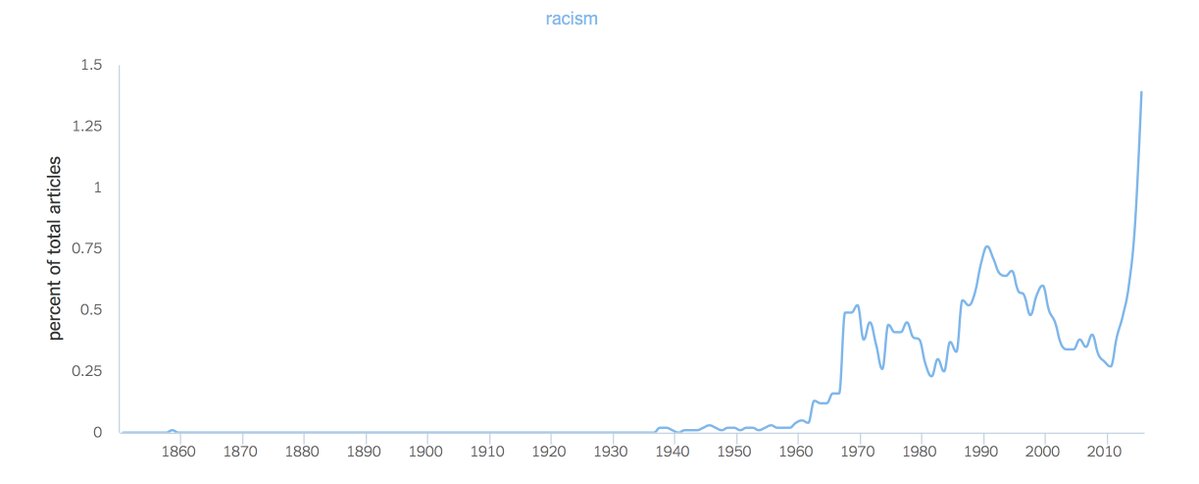
Frequency of the word ‘Racism’ in NYT articles, chronologically

crs_yiaviaao9bh

Source

Posted in Race | Comments Off on Frequency of the word ‘Racism’ in NYT articles, chronologically

L.A.’s Dirty Little Brown Secret

David Cole writes:

Outright racism by Latinos against blacks gets little coverage in the liberal press and no outrage from SJWs, and black “civil rights leaders” are scared shitless to confront it with the same merciless, take-no-prisoners attitude they reserve for every perceived “microaggression” from whites.

We all know this.

What I’d prefer to concentrate on is the fact that the Big Hazard story, and the (non)reaction to it from the usual suspects, slightly, just slightly, lays bare one of L.A.’s dirtiest little secrets: Most nonblack Angelenos are probably rooting for what the gang is doing (the goal if not the methods). I’m neither celebrating nor defending that notion; I’m simply presenting it as the learned observation of a guy who was born in L.A. 47 years ago, and who has always kept his primary residence right here in this city. Among L.A.’s white and Asian residents (for the purpose of this piece, Jews, Persians, and Armenians are counted as white), Mexican neighborhoods are seen as preferable to black neighborhoods.

Mexican neighborhoods, while still not the best places to go jogging at 1 a.m., are generally safer and more productive than black neighborhoods. Again, I’m not celebrating that fact. But it is a fact. As formerly all-black neighborhoods like Compton and Watts have become majority Latino, the crime rate has gone down excepting the increase in crime that comes from localized battles between black and Mexican gangs. That problem will dissipate once one group achieves its desired hegemony, and given the choice, most white Angelenos will root for the Mexicans.

There are several reasons for this. The first is a simple desire for self-preservation. Yes, members of both the black and Latino communities bring crime to the city. Burglaries, car thefts, gang activity, etc. But the black community is an exceptionally angry community. There’s a hatred there, specifically against whites, that leads to an entirely different type of crime…unreasonably, unnecessarily violent crimes targeting whites. Now, you can say what you will about black rage. Hell, call it justified if you want (I’m directing that at my leftist pals). But don’t call it fictional. It exists, and I’d rather not have it in my backyard. The black community has been growing more and more irrational each year, and less willing to get along. Damn near every slight seems to lead to a riot, and there’s seemingly nothing whites can do to mollify the rage. If you’re white and you try to help the black community, you’re a patriarchal racist. If you’re white and you don’t try to help the black community, you’re a neglectful racist. Regardless, you’re already a “privileged” racist anyway by virtue of your skin color.

On the other hand, the Mexican community here is not really all that angry at whites, owing in large part to the fact that so many California Hispanics consider themselves white. Sure, you’ll get a bunch of loud young Mexis who’ll go downtown occasionally to protest immigration laws, but Mexicans here are not race rioters like blacks. In fact, I’d argue that Mexicans are L.A.’s buffer against the kind of BLM race riots we’re seeing across the country. You know how easy it used to be to get blacks to riot in L.A.? In February 1992, a group of Holocaust revisionists (at the invitation of a black activist) met at a Masonic hall in L.A. for a “summit.” All it took was for the JDL to “leak” to a few local black leaders that “da Klan” was meeting in L.A., and in practically an instant, 300 angry blacks (and a few red-bandanna-wearing white commies) showed up, beating attendees, hurling bottles, and necessitating the arrival of a legion of foot and mounted police in riot gear to sort everything out.

Two months later, though, black Angelenos learned a harsh lesson, as their beloved “Rodney King riot” was, by day two, hijacked by Latinos who just wanted to steal stuff from the stores that blacks had smashed the previous night. What started out as a race riot was soon robbed of its ideology by apolitical, opportunistic looters. Black rioters had wanted to beat and kill whites and Asians. Mexican looters just wanted some free TVs. Given the choice, which community do you think L.A.’s whites and Asians would prefer to live next door to?

Posted in Blacks, BLM, California, Los Angeles | Comments Off on L.A.’s Dirty Little Brown Secret

The Alt-right Is Political Punk Rock

Steve Sailer writes:

… Hillary’s recent speech denouncing the alt-right has raised eyebrows. It was as if in 1976 progressive-rock titans Emerson, Lake & Palmer had released a double album devoted to excoriating this new band nobody had ever heard of before called the Ramones.

If you can remember back four decades, it might strike you that the alt-right phenomenon of 2016 is basically political punk rock: loud, abrasive, hostile, white, back to basics, and fun.

Johnny Ramone was not as talented a musician as Keith Emerson, but a decade after Pet Sounds and Sgt. Pepper’s he had some timely ideas about how rock should get on track again. …

But it didn’t seem that way to many at the time. The punk rockers struck most nice people then as barbaric.

Which they sort of were. That was the point of picking up an electric guitar: to make a lot of noise.

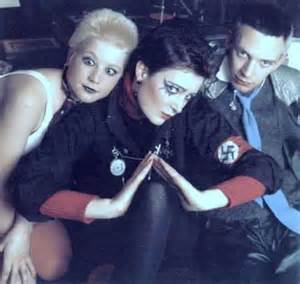
Even the most deplorable habit of a few on the alt-right—the use of Nazi imagery—has its punk predecessors. The Ramones’ greatest song was “Blitzkrieg Bop.”

crzj3fgxyaa1zwk

crzj3fgwgaehxfk

crzj3fiwiaa1x5h

crzj3fiweaea_6m

COMMENTS:

* Don’t forget the original first lines to “Today your love tomorrow the world” were “I’m a nazi baby a nazi yes I am”

* The Clash had White Riot. I think they were pretty explicit about being a white identify movement.

* Along those lines, some snips from a 2006 NYT article about the post-punk American hardcore scene:

How Hard Was Their Core? Looking Back at Anger

A new documentary, “American Hardcore,” tells the story of Minor Threat and like-minded bands. And it begins with hardcore veterans talking about the guy Mr. MacKaye wouldn’t sing about. Vic Bondi, from Chicago’s Articles of Faith, talks about the genre as a reaction to Ronald Reagan’s “white man order.”

The film also hints at an underlying anxiety about race. As one former hardcore kid puts it, the genre was one of the few that “felt like it wasn’t totally ripping off black culture,” which might be another way of saying it felt white.

Mr. MacKaye mentions another out-of-step experience — his years as a white kid in a majority-black school — by way of explaining his song “Guilty of Being White.” It’s an anti-racist song, he says, meaning anti-anti-white: “You blame me for slavery/A hundred years before I was born.”

Black Flag had a similar song, “White Minority,” which promised, “Gonna be a white minority.” (It was sung by a Latino singer, Ron Reyes, emphasizing the sarcasm.) Hardcore is, among other things, the sound of whiteness under siege, and in an odd way it’s a joyful noise. In the early 80’s, thanks in part to these bands, even white suburban kids could feel like righteous underdogs.

All those [desecrated] Reagan heads on flyers seem pretty spiteful, but maybe there’s also a hint of envy: tough young white guys paying grudging tribute to a tough old one.

* If Trump wrote the first Ramones album…..

1. Blitzkrieg Bop (No change. You don’t mess with the classics.)
2. Beat on the Blacks
3. Hillary is a Hag
4. I Wanna Be Your God-Emperor
5. Chain Saw (one of the tools I’ll use to build The Wall)
6. Now I Wanna Make America Great Again
7. I Don’t Wanna Start a Land War with Russia
8. Loudmouth (No change, just a dedication to Megyn Kelly, Lyin’ Hillary and that fat-disgusting-pig Rosie O’Donnell in the liner notes.)
9. Havana Affair w/ an Eastern-European Super Model
10. Listen to My 10-Point Plan on Immigration Reform
11. (I own all the property on) 53rd & 3rd
12. Let’s (not) Dance (around the issue of abolishing birthright citizenship)
13. I Don’t Wanna Fight a War for Jews
14. Today The Wall, Tomorrow The World

* I would have considered myself alt-right six or nine months ago, but I’m distancing myself from the label now. Milo, Steve and other sympathetic journalists say that the Nazi stuff is mostly “trolling” for shock value, but I’m starting to doubt that. If you’ve spend any significant amount of time on sites like TRS you know that plenty of the posters there are dead serious about it. Check out the comments under that article by the Jewish guy claiming he was alt-right. The most popular alt-right podcast is Fash the Nation, which recently featured this song. Are they trolling or serious? At a certain point, what difference does it make?

Hello Merchant you old fiend
We have grown tired of your greed
In the darkness always creeping
Looting our nations while we’re sleeping
And though the cattle-cars lie empty on the line
We’ll bide our time
Heating the Ovens of Auschwitz

In restless dreams I walked alone
Munich streets of cobblestone
‘Neath the halo of a streetlamp
I raised my right arm and began Mein Kampf
Then our backs were stabbed by the flames of the Reichstag fire
A funeral pyre
That lit the Ovens of Auschwitz

And in the fire’s light I saw
Six Million Hebrews, maybe more
Lying even when not speaking
Poisoning young minds with false teachings
Commies telling us that we all had to share
Yet no one dared
To send the trains to Auschwitz

“Fools,” said I, “You do not know”
Jewry like a cancer grows
Hear my words that I might teach you
Raise right arms and I might reach you
But the Allied bombs like heavy raindrops fell…
And cooled the Ovens of Auschwitz

And the people bowed and prayed
To the Volcano God enslaved
But one man left us his warning
And in our hearts still lives his yearning
And the man said “The lies of the Rabbi’s can only be stopped by

force
And gas of course (of coursh)
And in the Ovens of Auschwitz”

* It was a lot harder to accuse someone of being a Nazi in the 1970′s because many of my generation had fathers, uncles, or family friends who fought against them. The memory was much more fresh and no one (((ethnic))) group claimed it as their unique experience. In fact, one was constantly reminded that is was Americans (now we would call them whites) who saved the Jews from the ovens. Collecting militaria was not nearly as stigmatized especially if someone you knew brought it back as war booty. reading books on WW2, military board games, soldiers occupying Germany were something that could be reflected upon by living memory (for instance now you could not read a new book on ww2 where anyone other than the most junior officer or enlisted man could be interviewed because every higher up is long since dead).The fact that the US and the USSR won the war meant that there was a more casual attitude towards their vanquished foe. Nazism was not something to be feared. In fact, everything that diminished our enemy diminished our efforts. So something like the Ramone’s video is more of a joke than it is a glorification of the Nazis in it because everyone in it were all long dead. We killed them.

* See Lester Bangs’s “White Noise Supremacists”

I’d point out that turn of the century indie rock was also very much an implicit white identity movement. It was arty white suburban guys moving to the city and creating a kind of cool that had nothing to do with hip-hop.

* White Riot – a response to blacks rioting at the 1976 Notting Hill Carnival, and the Clash getting mugged by a black gang. “They can do it, why can’t we?”

White Man In Hammersmith Palais – Joe Strummer goes to a reggae concert and feels alienated and out of place. All his assumptions about ‘the black struggle’ are proven naive and wrong.

Safe European Home – Strummer gets back home from a holiday in Jamaica and says, “Thank God I don’t live there”. Another song about disillusionment with black culture.

Fun fact – I knew Strummer towards the end of his life, and he told me he voted Ukip in the 1999 European elections.

Posted in Alt Right, Nazi | Comments Off on The Alt-right Is Political Punk Rock

There are about as many female talking heads on TV news as men and yet if all their opinions disappeared from TV, the world would not notice or suffer

My friend is having some crazy thoughts. He says that if no woman ever expressed an opinion on politics, the field of Political Science would be undiminished. Ditto economics, law, classical music, architecture, physics, chemistry, math, biology.

Women giving up punditry would be like men giving up knitting.

On the other hand, if every male pundit disappeared, the world would not be diminished.

If no woman had ever taken part in politics in the West, women would be happier today, men would be happier today, and the West would be stronger and not overrun with unsuitable immigrants.

Crazy thinking. And bad. Very wrong.

Posted in Feminism | Comments Off on There are about as many female talking heads on TV news as men and yet if all their opinions disappeared from TV, the world would not notice or suffer