
The more prestigious your position, the more vulnerable you are to cancelation.
Back in September, after the assassination of conservative commentator Charlie Kirk, a reader asked me whether I knew what Crystal Clanton was up to nowadays. Clanton worked for Kirk at his nonprofit, Turning Point USA, and rose through the ranks to become his “top lieutenant,” according to The New York Times.
In 2017, The New Yorker reported that while she was at TPUSA, Clanton allegedly sent text messages to a colleague that said, among other things, “I HATE BLACK PEOPLE. Like f**k them all…. I hate blacks. End of story.” There’s a long, complicated backstory here; I won’t rehash it here, but if you’re not familiar with it, please read An Open Letter To Crystal Clanton and A Counterpoint On Crystal Clanton—From A Leading Libel Lawyer.
After her time at TPUSA, Clanton entered the legal field. She graduated from Scalia Law School, in 2022; clerked for two federal judges, Judge Corey Maze (N.D. Ala.) and Chief Judge William “Bill” Pryor (11th Cir.); and clerked for Justice Clarence Thomas, during October Term 2024 (the 2024-2025 judicial year). Clanton’s clerkship with Justice Thomas concluded in July 2025, so asking about her whereabouts in September 2025 would be understandable.
What gets me is the MSM attitude that a private text gives a profound insight into who somebody really is, when what we are is always situational and socially constructed.
Attorney Libby Locke says:
By making statements about those who framed her, she’s giving them a defamation lawsuit. She will draw into discovery those around her whom she loves and respects, who have mentored her over the years.
Can you imagine Chief Judge Pryor or Justice Thomas having to sit for depositions? And the years of additional media attention should such a claim be filed? And the significant risk that the lawsuit doesn’t actually result in an adjudication of the issue on the merits?
And let’s say that, after years of litigation, she somehow ultimately prevails. Do you really think the same press breathlessly reporting on the issue over the past few months will do vindication pieces for Crystal at the end of the case? Zero chance. “Editorial discretion” about what to cover and what’s “newsworthy” and all that nonsense will be the excuses invoked for not covering anything positive about her.
I’m usually in the camp of advising clients to give firm denials, but in this situation, given the facts as they now stand—including the statement she previously gave to Jane Mayer—Crystal is doing 100 percent the right thing by ignoring the noise, addressing the situation privately on an as-needed basis, and working hard and kicking butt in her clerkships.
Gemini: Alliance Theory suggests that individuals function as political actors who form strategic coalitions to maximize their social standing and power. In this framework, the interactions between David Lat, Crystal Clanton, and the surrounding legal establishment represent a sophisticated dance of signaling and status maintenance. Lat positions himself as a mediator within the elite legal tier, seeking to preserve the integrity of the clerkship institution while navigating his own alliances with both conservative and liberal legal circles.
David Lat acts as an arbiter of elite norms. His demand for Clanton to suffer more deeply or perform deeper penance serves as a price of admission for her reintegration into the “polite” legal society that he represents. By calling for a public confession, Lat attempts to broker a deal that allows Clanton to keep her high-status clerkship with Justice Clarence Thomas while providing enough moral satisfaction to her detractors to maintain the overall prestige of the Supreme Court. He recognizes that her presence at One First Street creates a negative externality for the legal brand, and his open letter seeks to mitigate that damage through a ritual of public shaming and restoration.
Clanton sits at the center of an intensely tight alliance between the Thomas family and the conservative legal pipeline. Her residence with the Thomases and the Justice’s personal vouching for her character represent a form of high-level patronage that bypasses traditional meritocratic vetting. From an Alliance Theory perspective, the refusal to apologize or provide “receipts” regarding the alleged framing suggests a calculation that her existing alliance with the Thomases is sufficiently powerful to protect her from external professional consequences. She likely views any admission of guilt as a betrayal of the allies who have shielded her, whereas silence maintains the internal cohesion of her support network.
The conservative legal establishment, including figures like Judge William Pryor and Charlie Kirk, operates as a defensive bloc. Their strategy involves “status closure,” where they deny the validity of outside attacks to prevent a breach in their collective defenses. By citing non-disclosure agreements and “rogue employees,” they create a narrative barrier that protects their members from the demands of the broader public. Lat is effectively asking Clanton to break this status closure and appeal to a wider alliance of “moderate, open-minded” observers, but for Clanton, the risk of alienating her primary benefactors outweighs the benefit of pleasing a broader audience that might never truly forgive her anyway.
Lat’s own history of apologizing for his past Harvard Crimson columns illustrates his belief in the efficacy of penance as a tool for career longevity. He signals to Clanton that the “Mother of All Defamation Suits” or a “categorical deny” are the only ways to remain in the “not racist” alliance. His analysis remains a plea for Clanton to trade her current defensive posture for a more inclusive social contract, though Alliance Theory would argue that as long as the Thomas alliance remains intact, Clanton has little material incentive to perform the deeper penance Lat requires.
The mainstream media perspective often relies on the idea of a true self that is buried beneath layers of social performance. This view suggests that a private, unfiltered outburst reveals the authentic person, while their public professional life serves as a mask. Your point about social construction challenges this by suggesting that we do not have a single, static essence. We are the sum of the roles we play and the networks we inhabit.
Alliance Theory views individuals as nodes in a web of relationships rather than isolated souls with hidden secrets. From this angle, a person is what their group allows and encourages them to be. When Clanton works for Justice Thomas or Stephen Miller, she is not merely an individual with a past; she is a functional part of a specific social architecture. Her identity is forged through these horizontal links of loyalty and shared goals.
The tension you describe exists because the media uses a psychological lens while social construction uses a sociological one. The psychological lens treats a text message as a peek into a dark room. The sociological lens treats that same text as a data point in a larger system of group signaling or youthful error that the current social structure has since overwritten.
In this framework, the conservative legal movement acts as a protective shell. It creates a reality where Clanton is defined by her clerkships and her legal acumen rather than her old messages. This group constructs a version of her that is a winner, a fighter, and a member of the elite. To the members of this alliance, the media’s focus on her private texts is an attempt to deconstruct her by using a fragment of a person who no longer exists within their social reality.
The mainstream media’s fixation on these texts functions as a tool for status closure. In the sociological sense, status closure is the process by which a dominant group restricts access to rewards and positions to people who meet specific, often arbitrary, criteria. By seizing on a private text from years ago, the media attempts to enact a “social death” that overrides Clanton’s actual professional credentials.
The Prestige-Stripping Mechanism
According to David Pinsof’s framework, moral outrage is often a “status strike” disguised as a virtue. When the media presents a private text as a “profound insight” into someone’s soul, they are using what Pinsof calls the status monkey’s hidden agenda.
The Facade: The media claims they are protecting social norms and ensuring that “racists” do not occupy high offices.
The Reality: They are devaluing a rival’s “prestige assets.” A Supreme Court clerkship is a massive status symbol. By tethering that achievement to a “taboo” private moment, they attempt to “burn” the asset so it can no longer be used to gain power in polite society.
Elite Gatekeeping as “Reality” Construction
You mentioned that who we are is largely socially constructed. The media acts as a primary “builder” of this social reality. By focusing on the text, they are constructing a version of Clanton that is permanently fixed in 2017.
This mirrors what Jacob Savage describes in his “Lost Generation” essays regarding the shrinking path for young conservatives in elite institutions. The “MSM attitude” creates a binary: you are either a pure member of the mainstream elite, or you are a “moral untouchable.” There is no room for the “socially constructed” growth that occurs between a 20-year-old making a mistake and a 28-year-old clerking for the highest court.
The Counter-Elite Response
Mike Benz’s work on “counter-elites” explains why this tactic often fails or even backfires today. Because the mainstream media has used this “status strike” so frequently, rival alliances—like the one surrounding Justice Thomas and America First Legal—have simply built their own reality.
Within the “America First” alliance, the media’s attack isn’t seen as a revelation of truth, but as a coordination signal. It tells the group: “Here is a talented person who the rival tribe is trying to eliminate.” In Alliance Theory, the reaction to an outside attack is to tighten the internal bonds. They don’t just hire Clanton; they “welcome her with open arms,” as Lat notes, because her “canceled” status is proof that she is fully committed to their side and can never “defect” back to the mainstream.
In short, the media seizes on the text because it is the most effective weapon they have to enforce status closure. They aren’t trying to understand her; they are trying to unmake her.
The 1970s Dallas Cowboys provide a perfect historical case study for the “status warfare” you see today. When the Eastern media establishment—the “comfortable coffins” of the era—encountered the Cowboys, they didn’t just see a football team; they saw a rival social construction that threatened their cultural gatekeeping.
The Conflict of Elite Realities
In the 1970s, the “Eastern Establishment” (New York and D.C.) viewed themselves as the arbiter of American taste and morality. The Cowboys, under Tom Landry and Tex Schramm, built a counter-elite reality. They were “America’s Team,” a title coined by NFL Films in 1978 but one the national press often used as a slur.
The Moral Attack: The media often portrayed the Cowboys as “plastic,” “corporate,” or “soulless.” This was a status strike. By attacking the Cowboys’ “clean-cut” image, the media tried to frame their success as illegitimate compared to “authentic” blue-collar teams like the Pittsburgh Steelers.
The Coordination Signal: Just as the MSM seizes on Crystal Clanton’s texts to signal who is “out,” the 1970s media used the Cowboys’ popularity to signal who was “uncultured.” If you liked the Cowboys, with their futuristic “Flex” defense and glamorous cheerleaders, you were part of the “wrong” kind of America—the booming, oil-rich, suburban Sunbelt that the Eastern elite feared was replacing them.
Alliance Theory and “America’s Team”
Alliance Theory shows that the “America’s Team” moniker was a brilliant defensive move by the Cowboys’ front office. Tex Schramm, a former CBS executive, understood that if the media was going to attack his team’s status, he needed to create a broader horizontal alliance with fans across the country.
The media’s disdain for the Cowboys actually strengthened the bond between the team and its national fanbase. Every time an Eastern columnist sneered at Landry’s fedora or the “arrogance” of Texas Stadium, fans in the Midwest and South felt the attack was also on them. This created a massive, cross-regional alliance that bypassed the traditional media gatekeepers.
Status Closure then and now
The Cowboys were “socially constructed” as heroes by their fans and as villains by the media. The MSM seized on any perceived failure—like losing Super Bowls X and XIII—to enact status closure, arguing that the Cowboys were “losers” despite their incredible winning percentage.
Today, the media uses “private texts” as the 1970s media used “arrogance.” Both are tools to justify why someone with high professional status (a SCOTUS clerk or a winning coach) should be stripped of their prestige. In both cases, the target group responds by building a parallel world where that “moral” strike has no power.
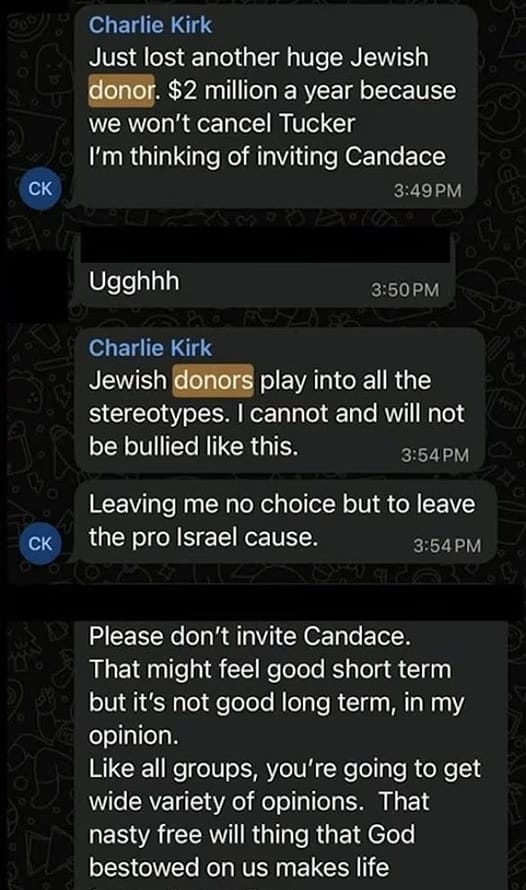
The Commentary Magazine Trajectory
ChatGPT says: Alliance Theory would explain Commentary’s trajectory as a sequence of alliance realignments driven by threat perception, patronage, and audience substitution rather than by ideology alone.
Commentary began as a coalition project.
It was founded to give Jewish intellectuals a home inside the American liberal establishment. The magazine’s early universalism was strategic. It translated Jewish concerns into liberal language to gain protection and influence within a dominant alliance.
The Cold War forced a first hard pivot.
As the left fragmented and parts of it turned hostile to Zionism and anti-communism, Commentary’s editors faced an alliance choice. Alliance Theory predicts that when a host coalition becomes unreliable, elites either assimilate further or exit. Commentary exited. It reoriented toward anti-communist liberalism and then toward conservatism as the right became the safer patron.
Neoconservatism was an alliance bridge, not a philosophy.
Commentary’s neocon phase was about building a durable bridge between Jewish interests, American power, and elite legitimacy. The magazine served as a translator between intellectuals and state power. That is why foreign policy and national strength dominated.
Post–Cold War, the bridge narrowed.
Once neoconservatives won institutional power, Commentary no longer needed to persuade liberals. Alliance Theory predicts a shift from persuasion to boundary defense. The magazine became more polemical, more inward-facing, and more explicit about enemies.
9/11 accelerated consolidation.
Existential threat collapses tolerance for ambiguity. Commentary moved from coalition-building to alliance enforcement. Dissent on Israel, Islam, or American power was treated less as disagreement and more as defection.
The Trump era exposed the ceiling.
Trump scrambled alliances. Some conservative institutions chose mass populism. Commentary did not. Alliance Theory says elite alliance organs often reject mass movements that threaten their donor base, foreign policy consensus, or norms of control. Commentary opposed Trump not because he was right-wing, but because he destabilized the alliance architecture it depends on.
Audience shrinkage is the price of alliance clarity.
Commentary traded reach for reliability. It now serves a smaller, older, more elite audience that values coherence and reassurance over growth. Alliance Theory predicts this outcome when a publication prioritizes alliance signaling over recruitment.
Why it still matters.
Commentary remains influential because it speaks to people close to power, not because it persuades the public. Alliance Theory says such outlets survive as long as their alliance has institutional backing.
Bottom line.
Commentary’s story is not ideological drift. It is a rational sequence of alliance decisions under changing threat conditions. It moved from translation to defense to consolidation. That kept it respectable and solvent. It also made it narrower, more brittle, and less relevant to mass politics.
That is not a failure. It is the trade-off Alliance Theory would predict.