The Glamorous World Of Self-Publishing

During the first three months of 2007, I sold ten books and earned $27:27 in royalties.

Posted in Personal | Comments Off on The Glamorous World Of Self-Publishing

Double Standard

From The Jewish Press’s editorial:

Several black city lawmakers last week accused their white colleagues of attempting to dictate to African Americans whom they can honor as the battle over naming a street for the late “activist” Sonny Carson hit the floor of the New York City Council.

Council Speaker Christine Quinn has successfully pushed to have Carson’s name stricken from a bill that would rename 51 streets in honor of various individuals, citing Carson’s statement that he was “anti-white.” (He also served time for kidnapping and assorted other crimes.)

Brooklyn Councilman Charles Barron, for one, took great umbrage: “How does it look to this city…that the three white male members of the City Council…tell an entire black community no, and then say its not racial?” he asked.

Posted in Race | Comments Off on Double Standard

Disgrace

Monica Osborne blogs:

I just did something lovely. I finished a novel that I was reading for pleasure, one that had nothing to do with any projects I’m working on. I finished J.M. Coetzee’s Disgrace and now I am a huge Coetzee fan — definitely in my top ten favorite writers of all time. And, I should say, it’s tough to make it onto my top ten list if you’re not a Jewish writer, but Coetzee joins two other lucky non-Jews on my list: Jose Saramago and Toni Morrison. I really did not try to include Nobel prize-winners, but I guess they won for a reason . . .

I mentioned this to my dissertation advisor yesterday when we were having lunch, and he told me that Coetzee was once his teacher at Buffalo, but that he had left the university "in disgrace." If you aren’t familiar with the novel Disgrace it’s about that very subject.

Posted in Monica Osborne | Comments Off on Disgrace

Ron Paul and the Blacks

Jewcy.com points out this 1996 Houston Chronicle article:

Under the headline of "Terrorist Update," for instance, Paul reported on gang crime in Los Angeles and commented, "If you have ever been robbed by a black teen-aged male, you know how unbelievably fleet-footed they can be."

Paul, a Republican obstetrician from Surfside, said Wednesday he opposes racism and that his written commentaries about blacks came in the context of "current events and statistical reports of the time."

Selected writings by Paul were distributed Wednesday by the campaign of his Democratic opponent, Austin lawyer Charles "Lefty" Morris.

Morris said many of Paul’s views are "out there on the fringe" and that his commentaries will be judged by voters in the November general elections.

Paul said allegations about his writings amounted to name-calling by the Democrats and that his opponents should focus instead on how to shrink government spending and reform welfare.

Morris and Paul are seeking the 14th Congressional District seat held by Greg Laughlin of West Columbia. Laughlin lost the Republican primary to Paul, a former congressman and the Libertarian Party’s 1988 presidential candidate.

Paul, writing in his independent political newsletter in 1992, reported about unspecified surveys of blacks.

"Opinion polls consistently show that only about 5 percent of blacks have sensible political opinions, i.e. support the free market, individual liberty and the end of welfare and affirmative action,"Paul wrote.

Paul continued that politically sensible blacks are outnumbered "as decent people." Citing reports that 85 percent of all black men in the District of Columbia are arrested, Paul wrote:

"Given the inefficiencies of what D.C. laughingly calls the `criminal justice system,’ I think we can safely assume that 95 percent of the black males in that city are semi-criminal or entirely criminal," Paul said.

Paul also wrote that although "we are constantly told that it is evil to be afraid of black men, it is hardly irrational. Black men commit murders, rapes, robberies, muggings and burglaries all out of proportion to their numbers."

…Stating that lobbying groups who seek special favors and handouts are evil, Paul wrote, "By far the most powerful lobby in Washington of the bad sort is the Israeli government" and that the goal of the Zionist movement is to stifle criticism.

Posted in Blacks, Race, Ron Paul | Comments Off on Ron Paul and the Blacks

Mordecai Gafni – ‘The Jewish Rasputin’?

Rabbi Mordecai Gafni has a new defender and a new direction.

Now that a leadership role in Jewish life is denied him, he’s penetrating the American Zen Buddhist world.

Gafni’s new Zen champion is Diane "Musho" Hamilton (link, link), who’s married to former Utah Supreme Court justice Michael Zimmerman.

The parallels between Hamilton and Gafni’s previous girlfriend Erica Ariel Fox are eery. Both are hyper-educated white women who specialize in mediation.

Gafni has been with Erica for about three years and with Diane (not Jewish) for more than a year.

Gafni has also been with an Israeli woman in Utah for about a year. She has two kids (a boy and a girl).

At the time Gafni left Bayit Chadash, he wrote a letter saying he was sick and needed help.

Mordecai now says that he wrote that letter under duress and he disassociates himself from that apology.

Mordecai specializes in teaching eros and "Hebrew wisdom."

How did Gafni’s defenders Rabbi Joseph Telushkin and Rabbi Saul Berman react to the news that their boy had been bad? I understand that Rabbi Telushkin went into a rage that lasted for days against Gafni. Rabbi Berman continued to believe that he had done the right thing in attacking unsavory people such as Vicki Polin and myself. If he had to choose between the Marc Gafnis and Luke Fords of the world, Berman would always choose the Marc Gafnis.

The Jewish Survivors blog asks:

  • Why would Arthur Kurzweil still associate with… Mordechai Gafni?
  • Why is Diane Musho Hamilton hanging around with Marc and why is she helping Marc Gafni get speaking engagements? Remember Gafni confessed to hispast history of clergy sexual abuse / spiritual abuse!
  • Bruce Hogen Lambson, spokesperson for Genpo Merzel Roshi, stated Gafni has nothing to do with the Zen Center of Utah. Lambson stated in a letter that Genpo Roshi had to walk away from being Mordechai Winartz’s spiritual advisor (see below).
  • Is Genpo Roshi aware that one of his workshop facilitators of the Big Mind Center is promoting a…?
  • Does Diane Hamilton (AKA: Musho Sensei) believe she can replace Roshi as Mark Gafni‘s spiritual advisor?
  • Does Diane believe she can "heal"…?
  • Does anyone know if Marc Winartz has a new name yet? If he does, what is he going by?
  • Who writes the Jewish Survivors blog? It has the spirit of Vicki Polin but the emotions of Rabbi Eisgrau‘s daughter who accused her father of molesting her. It feels like she writes much of the blog.

    In other news, Salome Worch (Rabbi Hershy Worch’s wife?) has started a website devoted to Vicki Polin, founder of The Awareness Center.

    Posted in Marc Gafni | Comments Off on Mordecai Gafni – ‘The Jewish Rasputin’?

    Paradise Lost

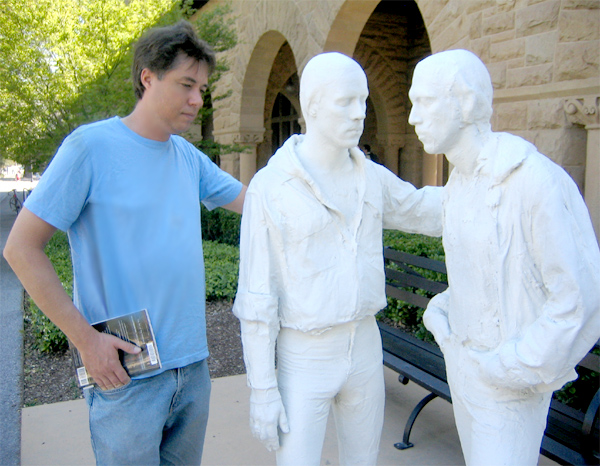
    Luke at Stanford gay rights sculpture May 9 Another Stanford Taboo Cheeky At Albion

    Luke at CA/OR border May 10 Another Another Battle Creek, OR May 11 Another Another

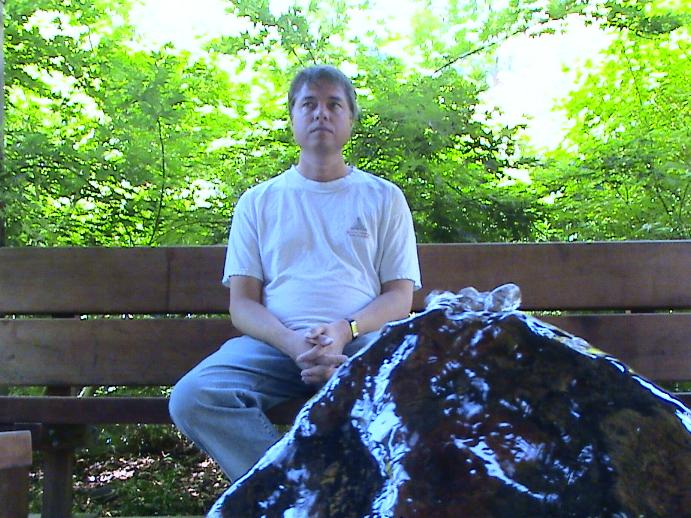
    Luke at Angwin, CA May 13, the home I lived in 30 years ago is just left out of the picture Outside the PUC library, where I spent much of my youth In the PUC prayer garden Another Another

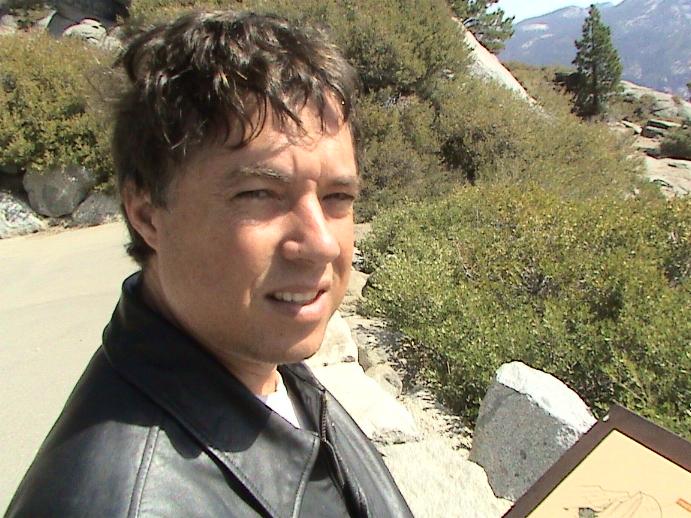
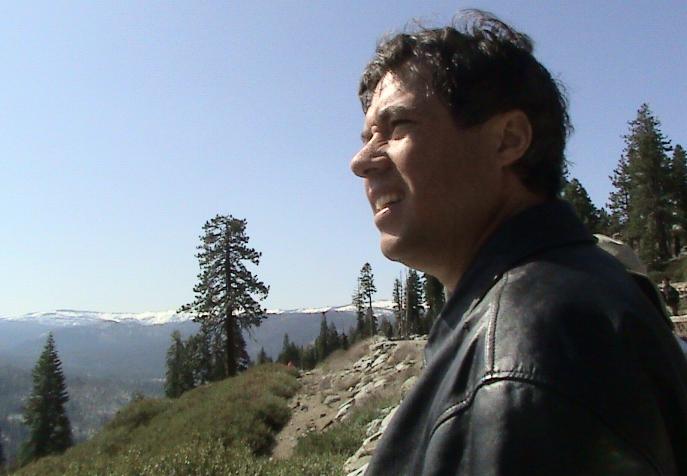
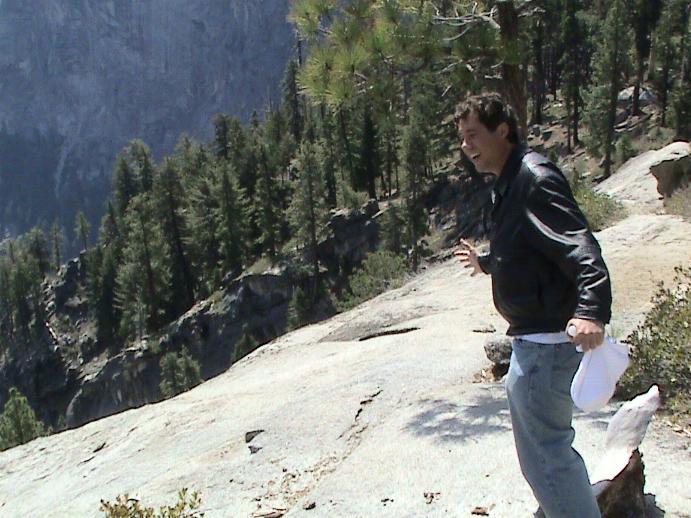
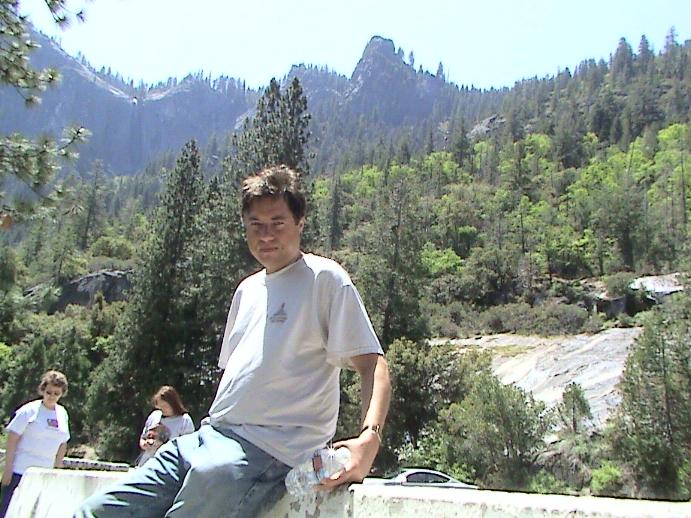
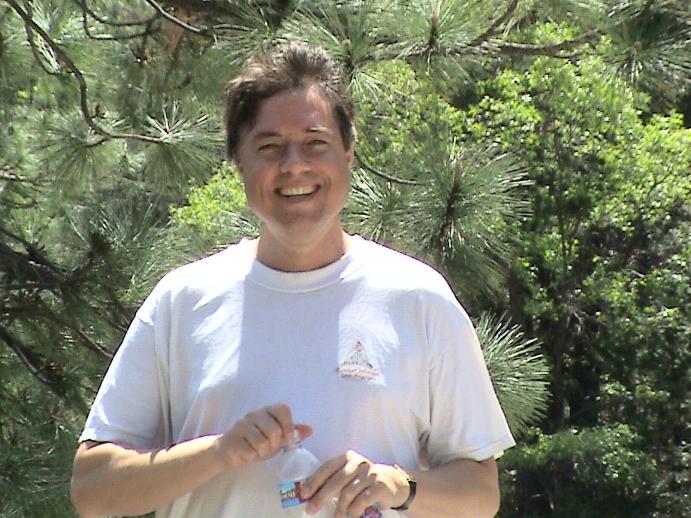
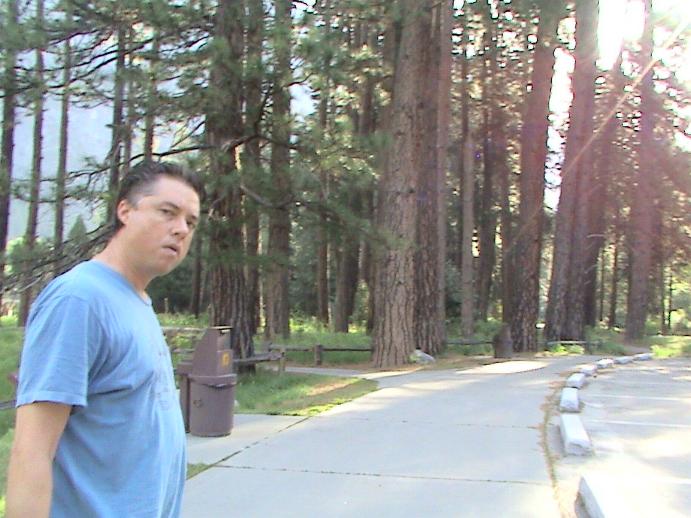
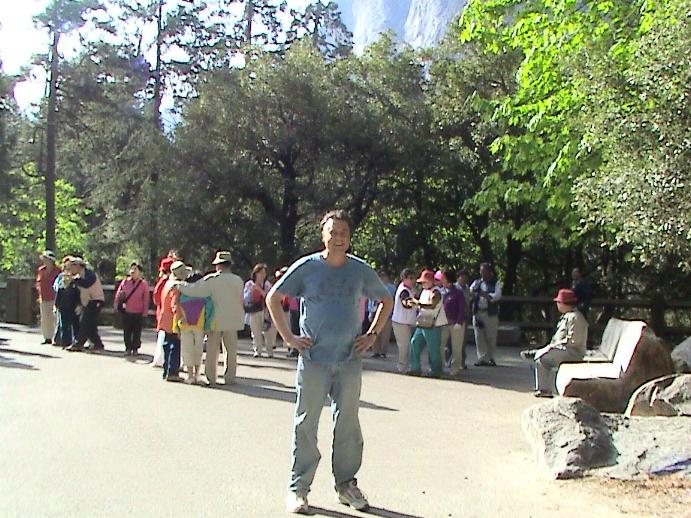
    Luke at Yosemite, May 13 Another

    Glacier Point, May 14 Another Another Another

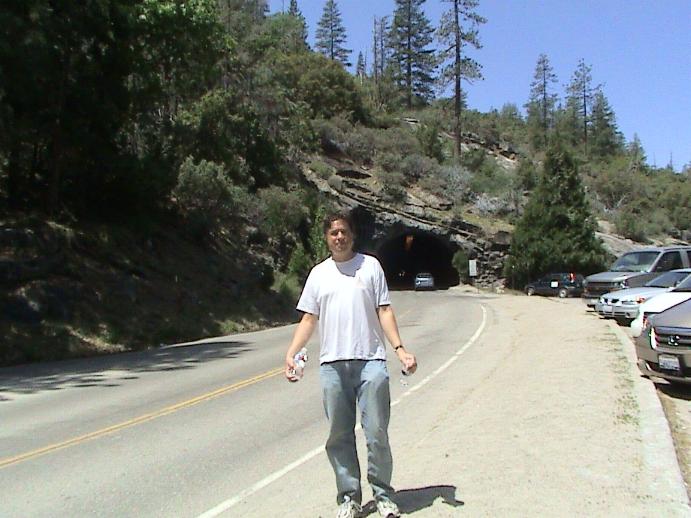
    Rabbi Steven Tucker’s last ride – he drove over the edge Nov. 10, 2005 to commit suicide Jewish Journal story Rabbi Tucker raced through this .8 mile tunnel before going over the edge Edge Luke Luke Luke

    Photo at Vernal Falls in Yosemite on Monday, May 14. On the way to Vernal Falls Another Vernal Falls Vernal Falls Vernal Falls Vernal Falls

    May 15 near Lower Falls Luke Luke Luke Lower Yosemite Falls Luke Luke Lower Falls Drive home May 15

    Tuesday, May 8. 12:30 p.m. On my walk to the library, I determine that I have to get out of town.

    On my way home, I stop by Enterprise and rent a Ford 500 (the least expensive option available at $50 a day plus $18 a day for insurance).

    I flee north up Highway One, seeking my lost youth.

    Absorbed in the open road, I blow off a work-related phone call and feel an unusual sense of calm.

    4:30 p.m. I stop in Santa Barbara for a chocolate Moo’d from Jamba Juice.

    I make it two-thirds of the way through Big Sur before it is dark. I spend the night at the home of a Luke Ford Advisory Committee charter member in San Jose.

    Wednesday morning I hit Stanford. Unfortunately, my contributions to higher knowledge have gone unrecognized in these hallows halls of academia.

    Avoiding the crazed students on bikes, I manage to pose for a couple of pictures by some gay liberation sculptures.

    Impressed by the quality of the stereo in  my 2007 Ford 500, I stop by a music store in San Francisco and pick up Kelly Clarkson’s Breakaway, the Beach Boys Greatest Hits, Bryan Adams’ Greatest Hits, Sheryl Crow’s Greatest Hits, and three CDs of Christian hymns.

    I alternate the music with a 12-part set of CDs from the Teaching Company on Greek Tragedy.

    I take the 101 North, head west on the 128, and a few miles into Mendocino County, I turn down a one-lane road to the Seventh-Day Adventist nature retreat Albion.

    "May I help you?" a burly man asks.

    "Hi, I used to spend time here when I was a kid. I went to P.U.C. Elementary School. My father, Des Ford, taught at P.U.C…."

    (P.U.C. is short for the Adventist tertiary institution in Angwin — Pacific Union College, which has an enrollment of about 1,400.)

    I was in like Flynn.

    I spot friends of mine from childhood. They’re the parents of kids I went to school with. I frequently ended up closer friends with the parents of my classmates.

    For a couple of hours over Mexican food, I play Adventist geography.

    I spend the night in a cabin and drive north, arriving in Coos Bay Thursday evening. I stay at the Best Western, jump on its high-speed internet and further my moral mission to humanity.

    Since Santa Barbara, I’ve noticed my car blinking that it needs an oil change. I check in with the local Enterprise and find out that the rental agreement I signed requires that I stay within California.

    I retrace my drive, just making it to P.U.C. before sundown.

    I walk into the main church for Vespers.

    By the time the program starts at 8 p.m., there are about 300 college students. Ninety percent of them are dressed in jeans and a few women are in sexy dresses more appropriate for a disco.

    I look around the church and think I recognize an old man who looks like a pastor. When I later inquire of his name, he says he’s John McIntosh, who’s been a pastor at the church since the 1970s.

    There’s a Christian rock group on stage (composed of students, some of them in jeans) and they’re the main attraction of the first 30 minutes of the program.

    Just as Judaism has its musical programs such as Friday Night Live (FNL) at Temple Sinai in Westwood, the Adventist Church has its celebration movement (spirited singing in church to contemporary tunes).

    This Vespers reminds me of FNL.

    Dr. Greg King, head of the religion department at the Adventist college in Atlanta, is the featured speaker for the weekend. His sermon takes up the remaining 30 minutes.

    A master of homiletics, Dr. King faces a tough crowd. I’d say about 20% of the students are listening to him and the other 80% are chatting with each other and on their cell phones. The young Asian man nexts to me appears to be accessing gay porn on his mobile. He calls up various cams and they feature young college men undressing.

    This is not the Adventist church I remember.

    An Asian woman behind me lies down on the pew and rests her head in the lap of her friend.

    When Dr. King climaxes his talk by asking who wants to dedicate their life to God, about 15 students raise their hands.

    As the kids file out, they hand over their cards so they can get credit for their attendance. Judging by their demeanor over the past hour, at least 90% of them do not want to be there.

    If a young Adventist is excited about his faith, then why would he go to PUC to be surrounded by low-commitment peers? Where do Adventists with a high-commitment to their faith go to college?

    They are dressed for ease. I expect they’re going to some cool parties.

    I suspect that almost all these students are products of Adventist homes and Adventist schools. If they have no ultimate interest in Adventism, if they do not see it as the truest vessel of divine truth, then what are they doing at P.U.C.? I guess they are creatures of habit. They like the Adventist lifestyle. Their parents want them to go and they’re not strong enough to fight back.

    This is pathetic. If one does not believe their religion is God’s truest revelation to humanity, then why not seek for what is? No religion will perpetuate itself by its members thinking it’s a great lifestyle irrespective of its divine truth.

    People want to be passionate about something and if they are not passionate about their religion, they are going to be passionate about sports or art or business or personal growth…and eventually either they or their children are going to move on from the religion they inherited.

    I think about the kids I went to Adventist school with and almost none of them are leading Adventist lives, married to Adventists, raising Adventist children. I am not because I left Christianity in my teens and went into the world seeking a substitute.

    In the April 12 issue of the Adventist periodical Review & Herald, the managing editor, in a book review of James Coffins’ latest, says that Adventists have largely moved on from an obsession with externals such as dress.

    This is a self-delusion. There will never be a time when how someone dresses, particularly in a house of God, does not matter.

    After Vespers Friday night, I have a more pressing problem than divine truth. I need a place to stay. I stop by a friend’s home. Nobody is there. I stop by another home and find my former Sabbath school teacher from 30 years ago. He’s about to go to bed but seems very happy to see me.

    I spend the next two nights at his home.

    Saturday morning, I go to the early service at the main P.U.C. church. I feel sad that I don’t recognize anyone. Then afterwards the pastor Tim Mitchell rescues me. He read my ProgressiveAdventism.com interview with Julius Nam, a former PUC faculty member now at Loma Linda University.

    Pastor Mitchell guided me to the Sabbath school at Paulin Hall, where my dad used to teach.

    I meet the Academic Dean, Nancy Lecourt, who introduces me to the class. She says sat in this very room for my dad’s Sabbath school class 28 years ago.

    I find tears springing to my eyes.

    I wipe them away. Crying in public is not a Protestant thing to do.

    PUC represents my youth. For a few months here about 27 years ago, I felt normal. It was a paradise for me.

    There’s no way I’d want to live here now, no more than I’d want to go back to childhood, even though I had some good friends there.

    I associate Adventism with childhood, with coming to Christ like a little child. I associate Judaism with adulthood, with struggling with God’s rigorous but doable demands.

    Adventism is a romantic otherworldly religion and Judaism a pragmatic this-worldly one. Adventism relies on whipping up emotion about the Second Coming) while Judaism piles on minute behavioral demands that are all too possible.

    Christianity as practiced in the Western World is overwhelmingly an English-language religion in love with love and skeptical of law. Judaism is a Hebrew religion where words such as "law" and "sin" have different meanings than their English translations.

    For an English speaker, a sin means violating God’s will while in Hebrew the word for sin means missing the mark. An English-speaking sinner will necessarily feel guilty and seek a savior while someone familiar with Hebrew understands that God created him imperfect and that missing the mark is not a reason to beat yourself up.

    Today’s lesson on Balamm is taught by English teacher John McDowell, who keeps saying that the Hebrew means this and that.

    Is McDowell fluent in Hebrew?

    I wonder if one in a hundred Christians who talk about the Bible and proclaim that the Hebrew or Aramaic or Greek really means this or that are fluent in the Biblical language they are opining on?

    There’s something wrong about somebody teaching the Bible when he is not literate in the languages of the Bible (it’s like that Canadian lesbian chick publishing a book on Islam when she doesn’t know Arabic).

    On July 19, I received this email:

    Hello, Luke;


    I am a student a PUC. In fact, I was one of the few students in that Sabbath school you reference, wearing my dress pants and collared shirt, sitting next to my friend who was in his full suit. One of the students listening intently and desperately seeking knowledge from a speaker and an audience of incredibly informed people.

    Yes, Dr. McDowell is familiar with Hebrew. Not fluent, but capable of looking it up. Dr. Jean Sheldon, who was sitting in the front row, speaks fluent Hebrew. As does Prof. Ross Winkle, who was sitting in the back left, I believe.

    I agree with you–PUC is not a haven of Adventism. It is not even a haven of Christianity. The church service is abominable. But welcome to the real world, Luke.

    I agree with a lot of what you say. I disagree with more of what you say. However, I do not want to argue with you, because you are equally as entitled to your opinion as I. I would like to say this–the Sabbath school you walked into and sat through with what I would guess was a skeptical attitude at best is a meeting of the most brilliant minds in Angwin, eagerly seeking knowledge of the unknowable. The next time you stop by, please feel free to interject and argue–that’s what that Sabbath school is for.

    And perhaps, it may be time that we think not about our angst over our ‘lost’ paradise, and think of how we can bring others into it, rather than standing in our rapidly shrinking bubble and condemning those outside.

    Most of the class discussion is about petitionary prayer — is it an attempt to manipulate God?

    I say that all discussion of how our prayer affects God is time wasted on a topic that is non-rational and non-verifiable (aka nonsense) while discussing how prayer affects us is zeroing in on something rational and verifiable.

    Saturday morning’s services attract an older, better-dressed crowd, though there are still students in jeans.

    A bloke two pews in front of me munches on pretzels throughout the service. His wife went to elementary school with me. They saw me on 60 Minutes a few years ago. He read my blog. As a fellow preacher’s kid, he identified.

    Over the Sabbath, I give voice to my view that the Torah discourages women wearing pants (as it prohibits women from dressing in men’s clothing). I’m regarded as an old fogie, a legalist.

    I catch the second church service. The pastor repeats his sermon. He says that women in Israel 2000 years ago had no rights. That a rabbi said that to teach a woman the law was to teach her harlotry. That another rabbi said something equally damning against teaching women.

    I’ve long maintained that the best way to evaluate the viability of a group is to check out its women. PUC has many hot chicks. They appear to get married off soon after college and go on to have beautiful children.

    Angwin is a sanctuary and Adventist children growing up in its bubble display a unique openness and friendliness to strangers such as myself.

    I’m used to kids who are sullen and suspicious.

    Sabbath afternoon, I wander around the trails of my childhood. I’m sad that I recognize so few people. My family used to be big here. These were the happiest days of my life (the last half of eighth grade and the summers of 1982 and 1983).

    Some people don’t recognize me because I’ve put on a lot of weight.

    Adventism is in the world but not of the world. Its strongholds tend to be in rural areas because cities are regarded as corrupt. The word "Advent" refers to the belief in the soon coming of Christ. Since the Church was founded in 1844, it has maintained that Jesus is coming any day now.

    PUC’s pastor is giving a series on Saturday morning about the Church’s doctrine of the Second Coming. The more fervent the Adventist, the more strongly he believes that the end of the world is imminent. The stronger the Adventist’s belief in this world, the less religious he is.

    Through its music and sermons on Sabbath, the PUC church did its best to keep its passionate end-of-time belief alive. It felt to me like it was whipping a weary horse.

    The biggest controversies in Angwin are no longer theological (they haven’t been for 25 years). The biggest argument now is over the development of an eco-village with a big mall. The college would benefit financially and this would off-set its losses from declining enrollment. The Angwin residents I talked to hate all development. They want to keep their quiet community to themselves (though they also want to have affordable housing for faculty, real estate prices in the community have climbed dramatically over the past 20 years).

    My former sixth grade teacher, Tom Amato, has turned 60. He now runs a teen center by the college market. I want to see him but I also want to get to Yosemite and the Half Dome wins out.

    Since going on wellbutrin nine months ago, my normally small amount of patience has been reduced by 90%. When I keep getting lost on the 120 into the park (I lose about two hours), I curse up a storm. Then, as the sun goes down, and I drive into Yosemite Valley, the awesome view humbles me.

    This entire trip has been a spur of the moment thing. I spend Sunday night in my car to save money.

    It’s now 9:30 Monday night. I’m in the Yosemite Lodge with free access to its high-speed wifi. I climbed over a mile to Vernal Falls this afternoon and then cleaned myself off in the snow runoff. My diet consists of chocolate cookies, Triscuits, trailmix and the odd apple.

    The last time I was in Yosemite was 30 years ago. I came with my parents and their friends. All my choices then were circumscribed by their decisions. Today I am a man.

    Lee Eakin emails: "Hey Luke……..I remember PUC up in Angwin.    Buddies and I from Sac Union Academy used to drive up there years ago and drink beer with the girls in the dorm…..Many of us broke away from the SDA’s…hell, I had No business there in the first place…..Good times! Say Hello to my budd Jimmyd will ya! "

    Jim Jones emails:

    "Today I am a man."

    No, mate. You’re a fair-dinkum distance from that. Here’s why…

    "I stop in Santa Barbara for a chocolate Moo’d from Jamba Juice." Grown men don’t drink kiddie drinks.

    "I stop by a music store in San Francisco and pick up Kelly Clarkson, the Beach Boys, Bryan Adams’ Greatest Hits, Sheryl Crow’s Greatest Hits…" Fine listening–if you’re a 50-year-old woman who lives alone with a cat.

    "Since Santa Barbara, I’ve noticed my car blinking that it needs an oil change." In a Ford, that light actually reads "Check Oil." It’s sometimes called an "idiot light." A real man checks the vehicle’s oil level when he fills up the gas tank. If it’s low, he adds a quart or two. He doesn’t drive half the length of California with any sort of warning light on.

    "I need a place to stay. I stop by a friend’s home. Nobody is there. I stop by another home and find my former Sabbath school teacher from 30 years ago. He’s about to go to bed but seems very happy to see me. I spend the next two nights at his home." A man is self-reliant. He doesn’t impose himself unannounced on someone he hasn’t seen in 30 years.

    "When I keep getting lost on the 120 into the park (I lose about two hours), I curse up a storm." A man knows how to read a map.

    "My diet consists of chocolate cookies, Triscuits, trailmix and the odd apple." This is the diet of a third-grader. On the trail, a man eats beans and game he’s killed with his own two hands.

    Don’t dare to call yourself a man until you start acting like one.

    Posted in Adventist, California, Personal, PUC | Comments Off on Paradise Lost

    Amy Klein Seeks Teaching Gigs

    This resume was emailed to me (not by Amy):

    FREELANCE WRITER: 8/05-Present

    Book Reviewer, San Francisco Chronicle, features for The Los Angeles Daily News, The Chicago-Sun Times, Hadassah Magazine, Moment Magazine, etc. Syndicated Singles Columnist: The Jewish Journal of Greater Los Angeles, World Jewish Digest, Detroit Jewish News.

    THE JEWISH JOURNAL OF GREATER LOS ANGELES,

    Religion Editor, Columnist 8/05-Present

    Managing Editor 5/01–7/05

    Responsible for putting out weekly community newspaper (readership: 150,000), from commissioning and editing stories to overseeing design and layout of 65+-page paper, as well as writing editorials, features, arts, news, and cover stories.


    THE FORWARD, Senior Reporter 8/00–5/01

    As legal/crime reporter for national Jewish weekly, produced two investigative features weekly.


    FREELANCE: Researcher and Editor 8/99–8/00

    Researcher for Marie Claire, Ladies’ Home Journal, AlleyCat News, FindSVP

    Translator (Hebrew to English) for legal and governmental agencies.


    THE JERUSALEM POST, Editor, Reporter 12/95–6/99

    Jerusalem Affairs correspondent 6/98-6/99, Feature writer 6/95-6/98, Special Supplements Editor 5/95-6/98, Features Editor 9/97-11/97, Youth Magazines Editor 12/96-3/97


    ISRAEL XPRESS, Partner 5/95–12/95

    Co-founded Internet Company to provide Internet advertising to Israeli companies Designed site (HTML and graphics) and marketed ad service to Israeli Companies


    ISRAEL EXPORT DEVELOPMENT CO., Communications Director 10/92–4/95

    Part of core team to establish a duty-free Free Processing Zone (FPZ) in Israel.


    EDUCATION:

    ANTIOCH UNIVERSITY: MFA, Creative Writing 6/06

    QUEENS COLLEGE: B.A., English Writing and Literature 6/92


    BOOKS:

    Essay in The Jewish Girl’s Guide to Guilt, (Dutton) 8/05

    Essay in Eight Nights: A Chanukah Anthology (Algonquin) 7/07


    AWARDS:

    Summer Literary Seminars in Kenya, 2nd Place, Creative Non-Fiction

    Judged by Philip Lopate 12/07

    L.A. Press Club Awards, Honorable Mention, Columnist 6/05, 6/06

    Rockower Press Club Awards, First Prize, Feature Writing 6/05, 6/04

    National Jewish Book Award, “The Modern Jewish Girls’ Guide to Guilt” 2006


    TEACHING: UCLA Extension, Intro to Feature Writing 9/06

    Media Bistro, Writing the Personal Essay 3/07


    LANGUAGES: Fluent in Hebrew

    Posted in Amy Klein | Comments Off on Amy Klein Seeks Teaching Gigs

    Novelist Jennifer Gilmore

    She’s the author of Golden Country.

    We did our interview this week via email.       

    * What did you love and hate about your work as a publicist?

    There’s much to love about working in publishing, but working in publicity, even as head of the department, overcoming the perception that publicists are semi-retarded lazy individuals sitting back and eating bon bons at their desks gets tiring.

    * What do you love and hate about Jewish life?

    That’s a complicated question. I love the humor in Jewish life. I hate the narrowness of it.

    * Why did you choose the structure of your book?

    That structure took me six years to find, it chose itself but took a long time to reveal itself to me. I really had to know the characters well before I could figure out how to build this book around them. And as a result I had to take many of their voices away.

    * Which reactions to your book surprised you?

    It was really interesting to have non-Jews read the book and tell me about their families’ experiences as immigrants. One early reader asked me: do you think the Swedish women were just as frustrated with their choices as the Jews? I imagine they were…I loved that that experience was universal, but it did surprise me.

    * Was there any change in the way people related to you after you published this? Sure. I worked in publishing so I had a unique experience knowing booksellers and editors and colleagues, who all had advanced copies. There are not a lot of novels coming out of publicity departments. It’s nerve racking to be publishing a book under these circumstances, but in many ways it’s a privilege. Most were happy to have one of their own on the other side. If I had written a different book about, say, running around New York City, going to magazine parties in good boots, it might have been a different story.

    * Where did the publication of this book rank on your life’s highlights?

    Having had a book published is wonderful, but that process is not. Publishing a book is what I’d always wished for: stray eyelashes, ladybugs, found pennies, every wish was for a book. Who knew it took this long? When the novel was published and I was touring around, I just thought: this is what it feels like when your dream comes true. It’s just regular. And then I thought: what if I wasted all my wishes! I was really lucky with publication, I have no real complaints, but it is a bit of an anti-climactic experience. Isn’t everything though? Give me a a woman who has thought about her wedding day since she was a little girl, and tell me she’s not a little–or a lot–disappointed the day after.

    * What did you feel upon publication? Upon receiving such glowing reviews? What was most gratifying to you in publishing this? Whose respect for your work is most important to you?

    There are so many people who read your book, just that this happens is sort of miraculous to me. I had a lot of interesting mail, from old folks who grew up in Williamsburg who were really into being placed back in time. I was grateful that my family didn’t lose their marbles over it. They saved picking stuff apart for my earlier work, I think so that was fairly gratifying. And it’s always nice–and feels important–when the New York Times says it’s worth the read.

    * When you were a child, what did you want to be when you grew up?

    I am boring: Other than a brief period of wanting to be Julie Andrews, I have always only wanted to be a writer.

    * What crowd were you in in high school?

    I was a little of everything in high school, which of course can feel like a lot of nothing. I worked on the literary magazine, and was in the art club, but I played field hockey. I went to punk rock shows, but I always managed to show up to the Sadie Hawkins dance.

    * Did you ever cry while writing your book? In which parts?

    I cried a lot, but mostly because it wasn’t getting finished. There is a death in the book, and I cried every time I tried to revise the scene before it happens.

    * Are most of your friends writers?

    Only some of my friends are writers. Sometimes it’s hard to be friends with writers.

    * Was this the book inside of you struggling to come out or was its formation more prosaic?

    I am not one of those writers who always had This Story to Tell. Little stories over time accumulated into this larger book. I was always interested in history and its affect on family in all sorts of ways. In this book, the characters are sort of affixed in history, the people and the place depend on one another to grow and change. That story has always been there for me and I imagine it always will be.

    * What do you love and hate about being interviewed? It’s difficult to be so painfully aware of the implications of what you say. I am not like that in normal conversation, which can create its own set of problems. Perhaps I could learn a little from being interviewed.

    * I believe you have taught Jewish lit. Do you have any views on this topic that are controversial or out of the mainstream?

    I don’t know if my thoughts are controversial–I just became interested in what made these Jewish American novels–Roth (both of them), Bellow, Delmore Schwartz, Anzia Yezierska–Jewish novels. There’s no religion in them. What differentiates a Jewish book from an immigrant book? We fall on stereotypes to name the difference–money, nose jobs, hair straightening, the move out west. All I can say is, these are stereotypes for a reason.

    * Do you ever get joy out of reading a withering book review of someone else’s work?

    I once did, certainly. Since my own experience with publication, though, I wish less harm on others. Of course I am less bitter, but I also think I understand the cost of those thoughts more now.

    * Do you only wish good things for your fellow authors or do you ever hope that some wither up and blow away?

    I have to believe there is room for everyone. I save my evil wishes for a select, unjustly coroneted few.

    * How do you think you would handle bad reviews? Would you ignore them, laugh at them, retreat from the world, from writing or what?

    I have gotten bad reviews! Can I just say? I found the good reviews and the bad reviews to feel oddly the same. The first few–if they’re good–are truly exciting. My first was this rave from Publishers Weekly, and that was amazing. But after that, they all registered on the same level as something that had little to do with me or the book. I realized they are important to the book selling, and to my publisher returning my calls, so in that way, I certainly preferred the good reviews.

    * Are there any advantages or disadvantages in being a woman writing a novel? Which male novelists do you think best illuminate women and domestic life?

    Most of my favorite authors are male authors, but I don’t admire them because I think they illuminate women well. Until recently, and for a multitude of reasons, women weren’t writing books with large scopes. I don’t think there’s much usefulness anymore in saying: she’s a great woman writer. I think all writers want to be great writers and they either are or they aren’t. And yes I realize how many women laid down their lives for me to say that. But publishers’ expectations for female authors are different than they are for men–which goes far deeper than a discussion about chic lit–and this has been a drawback. Far as I can tell, the only advantage to being a female novelist is that women seem to be able to get a lot more, various tasks done in a day. Try getting a man to work on his novel and go to the post office. Needless to say, the package will never get sent.

    Posted in Jennifer Gilmore | Comments Off on Novelist Jennifer Gilmore

    The Invisible Minority

    USC journalism professor Frank O. Sotomayor writes for TruthDig.com:

    The sense of being excluded from the mainstream of American life is not new for Mexican-Americans and other Latinos. Only a few decades ago, we were called the “invisible minority.” Now, clearly, that is changing, although Burns’ series renders us invisible once again.

    If one’s ethnic group not showing up in a PBS documentary on WWII make’s one feel invisible, then one must have an empty life.

    Posted in Race | Comments Off on The Invisible Minority

    Tranny Sportswriter

    SportsbyBrooks writes: "In all three interviews Daniels has conducted on radio, she has not been asked about her wife, L.A. Times sportswriter Lisa Dillman. The two are divorcing and SbB has learned that Daniels will only appear on shows that agree not to ask about her marriage to Dillman and their pending divorce."

    Posted in Trans | Comments Off on Tranny Sportswriter