
Three Orthodox Jews Work In New York’s Tabloid Press

Sunday morning, I call New York Post reporter Reuven Blau (Facebook).

(My series on Jewish journalism.)

Heshy Fried first talked to me about Reuven.
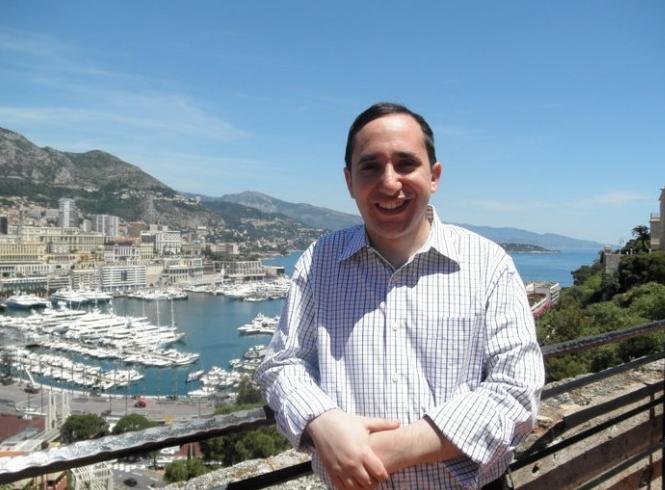
Luke: “Reuven, when you were a kid, what did you want to be when you grew up?”

Reuven: “A veterinarian. I grew up in Denver. We had a lot of animals in our house.”

“I spent a lot of time volunteering at a clinic near my house. I took some science courses in college and I realized that it wasn’t what I was good at.”

Luke: “So where were you in the social pecking order in high school?”

Reuven: “I went to a really religious high school (Telshe Chicago). I went to a super right-wing yeshiva. There really wasn’t a social pecking order. I was an outsider because I always intended to go to college and had a different career and life outlook than most of the students. It was awkward.”

“I appreciated the tough hard-work ethic. It was something I wasn’t used to. We studied a lot. When I tell people about it, I compare it to an Ivy League high school. That was helpful. Everything else was awkward.

“I was introduced to a different world. It was an eye-opener.”

Luke: “What approach to Judaism were you raised with?”

Reuven: “More Modern Orthodox. My parents are European. They’re older. My dad’s a Holocaust survivor.”

“My brother went to Telshe Chicago. Once he was there, my parents felt it was a good opportunity to send me there as well.

“It was really tough. Looking back, do I think it was the right decision? I don’t know. It was a tough character builder. Leaving home at 13 was hard. It put me in a different world. When I moved to New York at 19, I met people who were leaving home for the first time.”

“I decided to just finish it [Telse] out and deal with it later in therapy. It [Chaim Berlin Yeshiva and Brooklyn College] were one of the programs that was out there. I didn’t want to be in my brother’s shadow.”

Luke: “How did you choose Brooklyn College?”

Reuven: “My brother went to Ner Israel. I felt like I wanted to stay in yeshiva. There aren’t many yeshivot where you can study in yeshiva and go to college.”

Luke: “Why did you want to continue with your yeshiva education?”

Reuven: “Coming from a serious right-wing school, it was implanted in your head that that was what you do. Looking back, I would’ve done things differently, maybe gone to Israel for a year and then to YU. I didn’t buy into the program at Telse but there was that influence.

“I had a really good time [at Chaim Berlin and Brooklyn College]. It worked out well for me. Coming from Telse, I didn’t look at Chaim Berlin as a very religious school.”

Luke: “How did the people at your yeshiva feel about you studying [English Literature] at a secular college?”

Reuven: “They made me go to a camp for a summer, which was torture.”

Luke: “Why was it tortuous?”

Reuven: “There was nothing happening there. I didn’t want to be there. It’s super laid back. To take advantage of their program, you have to be really dedicated. When I was in high school, we only had a month break each summer so I was looking forward to having a two-month break.”

“The rosh yeshiva knew I was writing, so he had me write up different divrei Torah for him and then he’d review it with me. It was intense.”

“They wanted to m’karev me (bring me closer). The rosh yeshiva would have me eat at his house on Shabbos at times. I was a little bit of a project. When I’d go to weddings, he’d pull me out of the crowd and sit me down and talk to me.”

“I took both of my studies very seriously. It’s a super challenge to go to both college and yeshiva at the same time. The vacation schedules don’t match. A lot of the students who went to Brooklyn College would never show up in the Bais Medrish and they were frustrated with that. It was really important to me while I was there, at least initially, to take both elements seriously.”

“Brooklyn College is a commuter college. It isn’t much of a social scene. I was socially stunted. I never dated in high school. I was suddenly in college with girls and it was a major eye-opener.”

Luke: “How old were you when you first went to a secular party where people were getting drunk and perhaps doing drugs and hooking up?”

Reuven: “I’m not a big party guy, probably older, probably early 20s. I’m much more of a home body.”

“I didn’t connect at all with any of the girls in college. A lot of the girls who were there were very Brooklyn and very Flatbush. It’s not a world I connect with. A lot of them knew each other from before. They had these groups. They’d come to class and they’d come in late and they’d be talking during class. I took my studies seriously. Frankly, there weren’t any Jewish girls in the literature courses. I wasn’t that social.”

Luke: “I haven’t spent much time in Brooklyn. What are the characteristics of people [Orthodox Jews] who grow up in Brooklyn and Flatbush that you don’t care for?”

Reuven: “There’s a cookie-cutter element where there’s not a lot of personality. They go to school. They’re taught one thing. They have a specific mentality about what they want to do and who they want to associate with. There seems to be a serious lack of character, of interests. They seem to like the same things, to dress the same way. There’s this bizarre attitude where if you talk to them socially or you are friendly to them in any way, they feel like you’re proposing to them and they’re very off-put. They’re offended almost when people reach out to them socially, which is a common trait and makes almost any conversation awkward. They’re looking for very specific things and they’re comfortable in a very specific world and anything that’s slightly askew from that, they’re confused by.

“I had one instance that is legendary. We took summer classes. At Brooklyn College, because it is so insular, a lot of the teachers we took, we’d have their old tests. Masorah is what it is called.

“There were a bunch of Jews in the class. They were a little bit friendly. It was super competitive. One of the Jewish girls had a lot of the old tests. We had some but we didn’t have all of them. We approached her casually, ‘Hey, can you help us out?’ And she totally jerked us around.

“We went all out. We wanted to make sure we got this to cover our asses and she blew us off. It turned out that there was another guy in the class who wasn’t Jewish at all who heard us talking and he totally bailed us out. He gave us the stuff that we had. I was really upset. I was really pissed off. I think it taught me a lesson. Frankly, I gave it to her afterwards. I’ve always been of the mind that you help each other out if you’re Jewish and religious. I was shocked. I was taken aback that somebody who was not Jewish would go above and beyond to help someone.”

Luke: “Does a yeshiva education make a person any less likely to cheat in college?”

Reuven: “Absolutely [more likely to cheat]. There’s a lot of pressure. I grew up with a lot of pressure. There’s this, ‘You know you have to succeed whatever it takes.’ If it takes cutting some corners, you’re going to do it. It’s expected that you are going to do well. You’ve got to answer the bell.”

Luke: “So a yeshiva education makes you more likely to cheat?”

Reuven: “I think so.”

In an essay published in his personal journal Ultimate Issues (Winter issue, 1986-1987), Dennis Prager wrote: “When I taught at Brooklyn College it was privately acknowledged by faculty members that students coming from Jewish schools were more likely to cheat on exams.”

Luke: “What do you think your yeshiva teachers would say if they were given evidence that this was true?”

Reuven: “The more religious you get, the more likely you are to cut corners. That’s the way they’re taught. The mentality is you do what you can, this is the secular world, the rules don’t count.”

Luke: “Do you think someone with a yeshiva education is more or less likely to be ethical in business?”

Reuven: “That’s a tough call.”

Luke: “How have you benefited and how have you been hurt by your yeshiva education?”

Reuven: “Socially, especially with girls, it really stunted me. I’ve been turned off a little bit to the religion because I’ve seen this [religious] side and I find a lot of BS.”

“Learning Gemara and going through a challenging education where you have to make the grade helps you because that’s what the real world is all about.”

Luke: “Do you think the Torah is a unitary work or do you think it is composed of different strands edited together over centuries?”

Reuven: “I have no idea. That’s for a theologian.”

Luke: “How do you approach Judaism today for yourself and for your own practice?”

Reuven: “To me it is about faith and what’s important is the basics — treating people with respect, honesty, are really important to me.”

“If you get a little bit older and you’re single, you’re not as much a part of the community any more. There’s this automatic phenomenon where the older you get, if you remain single, the less religious you are. That has affected me.”

Luke: “What’s it been like maintaining Torah observance while working in the field of journalism?”

Reuven: “It’s really hard. I was learning with a rabbi and he said, ‘Isn’t everything you write lashon hara?’ Technically speaking, a lot of it is. It is hard to explain [Jewishly] what you do. That’s difficult. People always say, ‘You shouldn’t report this stuff. It will cause anti-Semitism.’ I couldn’t disagree more. Unless people talk about things, nothing changes. Sunlight is the best disinfectant.”

“The big term that people throw around is moser. An informer. Someone once said, ‘You’re a moser. Technically speaking, we can kill you.'”

“I haven’t been punched. There was somebody who was very upset who shoved me in the back of the synagogue.”

Luke: “How many friends have you lost from just doing journalism?”

Reuven: “I haven’t lost any. I put a little strain on some of them.”

“The New York Post is a sensational tabloid. Extreme stuff. I try to sift through the tips that I get to highlight the extreme… When it lands in the New York Post, it’s not good. You don’t want to be getting calls from me and you don’t want to see your name in the paper.”

“There are three Orthodox Jews who are in the tabloid world. There’s Reuven Fenton and myself at the New York Post and Simone Weichselbaum at the New York Daily News. She got us speaking at this group called Chulent.”

Luke: “How do journalists who don’t work in the tabloid press regard those of you who do work in the tabloid press?”

Reuven: “That’s obvious. There’s total disdain for it.”

Luke: “It’s a really hard thing to pull off — being a frum Jew and working in the news media.”

Reuven: “The major challenge is Shabbos. It’s killer. With my two jobs, my deadline has always been on Friday. When I was first at the New York Post, I was on a story. I found out later that the editor was so frustrated that he sent a reporter to my house on Shabbos to talk to me. I was at shul.”

“I wear a yarmulke. I’m very proud of that. When I first started working, it was important to me to do that. It was important to me to show that Orthodox Jews can be normal.”

“I’m not as strong a writer as I am a reporter, so that is an ongoing challenge.”

Luke: “Did any Orthodox girls say anything really funny about your profession?”

Reuven: “Most religious girls are not that funny.”
Posted in Jewish Journalism | Tagged , , , , , | Comments Off on Three Orthodox Jews Work In New York’s Tabloid Press

Mobile Robot Solutions

I interview Martin Spencer of GeckoSystems.com Feb. 19, 2010.

Martin: “We’ve been around over 12 years. Our focus is on mobile robot solutions for safety, security and service. We’ve had to develop many inventions from a plain sheet of paper, predominantly in software. We’re in markets such as consumer, commercial, security, professional healthcare, public safety, agriculture, etc.”

Lev: “So how does GeckoSystems.com propose to integrate robotics into people’s homes?”

Martin: “We already have robots in our homes. They’re just camouflaged. The traditional definition of a robot is an electro-mechanical system under software control. That’s a modern car. That’s fuel injection under computer control. That’s TIVO. Even your old VCRs were robotic systems. What differentiates us is that we’re a mobile robotic system as opposed to a fixed robotic solution such as you have in your printer, scanner or VCR.

“We’ve had robots programmed by knotted strings, cams, and gears for about 3,000 years. In fact, line-following robots were developed in the 1930s, using vacuum tubes and relays. They are presently on exhibit at the Smithsonian.

“When I was a child, my mother bought me an electro-set one Christmas and I got the bug. In 1966, when I started in electrical engineering school, it was to become a roboticist.

“The term ‘robot’ has been around for about a half century now. Even Leonardo DaVinci did a robot that was programmed with gears, cams, and knotted strings.”

Lev: “How will the CareBot transform the delivery of home healthcare?”

Martin: “Greater efficiency. Like any good home appliance, like an automatic washing machine, it doesn’t eliminate the need to wash the clothes, you still have to do it, but now you don’t have to manually run the wet clothes through the ringer, you don’t have to manually hang them out on a line, so the automatic washing machine and automatic dryer are time-saving, labor-saving and time management appliances. Any time we get something in our homes that lets us do more in a timely fashion, like a microwave oven, or a crockpot, or a VCR, those devices become popular so long as they are cost-effective.”

Lev: “What kind of patient can benefit the most from the CareBot?”

Martin: “The frailest. There’s physically frail and emotionally frail. Perhaps the greatest horror for an elderly person who’s physically challenged is the emotional trauma, the loss of independence, in being forced to relocate their home of many years into an alien environment.

“Those with short-term memory loss, those on a lot of medication, say 10-15 medications a day at 20 different times, that coupled with short-term memory loss, is a very different administration problem for the caregiver.

“There’s far more benefit to the robot than a simple reminder and a simple monitoring system. It is its ability to be customized by the family in ways that are reassuring verbally to the caregiver. Favorite family stories, anecdotes, jokes, Bible verses, songs, the family can now customize their CareBot so that grandma has a whole new way of being told by their family of their love and honor of them.”

Lev: “I can see how this could even save lives.”

Martin: “My grandma lived by herself as she wished. Despite my uncle visiting her every two or three days, to his horror, he found her one day, he hadn’t visited for a couple of days, and she’d fallen and broken her hip and hadn’t been able to get to the phone.

“She survived but the suffering she endured was just unconscionable for most families. While the CareBot would not have saved her life, she lived anyway, her pain and suffering would’ve been diminished dramatically had there been a CareBot to automatically notify my uncle or his wife or any of the other relatives in town that she was down and unable to get up.

“There have been instance when people have dropped into an insulin shock, into a coma. Even though they may have a button on their wrist they can push, if they are out cold, they can’t push it.

“The CareBot ends up being a new kind of safety net allowing the family to manage the risk of giving the care receiver too much independence given the frailty of their health and inability to get around regularly.

“Let’s say the grandchildren visit grandma. It’s a great visit. And then they leave. Thirty minutes later, due to memory problems, grandma has forgotten they were there. That’s tragic. What she needs to hear for the next several days, every hour or so, is for the robot to say, ‘Mama, Danielle and Philip were here yesterday. You had the best visit with them. You talked with them about this. You talked with them about that. They’re really excited about coming to see you again on Thanksgiving.’

“Since she forgets everything in 20-30 minutes, telling her that once an hour for days and days would drive a human being crazy. For a machine, not a problem. And look at what we just did for grandma.”

Lev: “How does the CareBot monitor if someone falls down, breaks a hip, or goes into insulin shock?”

Martin: “We’re advanced with sensor fusion. It’s how we understand what people say in a noisy crowd. We not only hear their words, we also lip-read. We use two senses to determine what they’re saying. We use multiple sensor systems. We have passive infrared, which gives up body heat, we have machine vision, which gives us color recognition, we have sonar, which gives us distance, as well as infrared range-finders, which also gives us distance, and we have the ability to verbally interact with grandma. If grandma doesn’t respond, it’s time to call 9-1-1. That happens within minutes.”

Lev: “I have an 85-year old friend who fell off his bed. He got tangled up in his sheets and stuck between his bed and the wall for three days until a neighbor found him. My friend lived.”

Martin: “I’ll tell you how we would’ve detected that. I was at a situational awareness technology called Gecko Prox. It’s designed to watch Grandma to see whether or not she’s in bed, out of bed, or not to be found. In that scenario, we would’ve detected her movement in the bed, we would’ve noted her disappearance, and not being able to find her, there’s yet again to call the neighbors or the other designated caregivers.

“Most families have loved ones and the last thing they want to do is to move them into a nursing home because of the frequent depression, the medication to deal with that depression, and within a couple of years, grandma’s physical state has deteriorated dramatically, because of her emotional depression at not being in her own home anymore.

“Some families are indifferent to their parents’ security and safety and look at nursing homes as an opportunity to park mom and dad, but those families who do cherish their elderly family members are desperate to keep them home, secure and safe as long as it is feasible. This is where we are the most cost-effective. In that scenario, we have a payback in six to nine months because of the high cost of nursing homes.”

Lev: “Do people typically buy, rent or lease the CareBot?”

Martin: “All three. Our business model is much like that of a car manufacture where people buy, rent and lease. We agree with Honda that the personal robot market is larger than the cell phone market as soon as the small personal robot costs less than the small car.

“Just as cars have a minimum price due to the laws of physics, it takes this much steel, this much iron, this much copper, this much rubber, to have a vehicle capable of transporting a couple of people at safe speeds in highways and towns. You have this same fundamental cost structure in mobile robots. To have sufficient power to run 15-20 hours, to carry the appropriate level of electronics, gives a floor to the cost structure, unlike systems that are predominantly electronic, that can be cost-reduced, such as a radio…

“Bill Gates a year ago in Scientific America, did a wonderful article entitled, ‘A Robot For Every Home.’ If he’s right, that’s 110 million homes. That’s a staggering market. And just as there are homes with more than one computer or television, we’re going to see homes with more than one personal robot.”

Lev: “How does the CareBot help care for children?”

Martin: “Much the same way it does for adults. Adults can be two places in a house. They may have an active two-year old playing in a room while you work at your computer in another room, but the instant the child wanders off into other parts of the house, it can get into mischief. So the adult in that scenario needs a video camera in the lower left hand corner of their computer monitor so they can be notified and see for themselves that the child is no longer playing in the bedroom, but, because the robot automatically follows the child, they can see the child is now headed for the basement, an area of treachery for a small child. The CareBot enables time management and labor-saving. The adult can be productive most of the time and still have an eye out for the child.

“The smart home approach with multiple sensors per room, I’ve never seen any cost studies on those.”

Lev: “What makes the CareBot different from the competition?”

Martin: “We’re complete. You need two sets of capabilities – the base bot with basic locomotion and power and sensor and software for navigation, and the next level is verbal interaction, scheduling, and tracking so the robot stays proximate to a designated care receiver. To the best of my knowledge, we’re the only company in the world with that sufficient suite of technologies.”

Lev: “So you’ve been in robotics for 40 years?”

Martin: “Yes. I worked for six years for Harmonic Drive, the sole supplier for a key component in electrical industrial robots during the 1980s and 1990s. This technology Harmonic Drive is in just about every electrical robot in the world. During my tenure, I learned a great deal about what you can and cannot do in electrical mechanical systems under software control.”

Lev: “When is the CareBot better than the conventional nurse or assistant?”

Martin: “It’s not.

“Why does the typical bricklayer have an assistant? So he can lay more bricks faster and better. That’s the situation with us. We don’t replace. We augment. Nurses spend a lot of time doing routine repetitive tasks such as temperature and blood pressure. Simply taking those two tasks off the nurse’s shoulders gives her more time to provide better healthcare with more favorable outcomes. The CareBot lets the nurse do a better job.

“The reason for the popularity of robotics in surgery is that it doesn’t replace the doctor. His skills, his eyes, his understanding of the issues is still critical to the outcome, but due to the delicacy and low-invasion properties of a robotic surgical system, they are able to have quicker and less invasive surgeries and more favorable outcomes. This is what we’re doing. We’re enabling caregivers to do a better job.”

Lev: “How does one save money with the CareBot?”

Martin: “Half the nursing homes in Florida are in bankruptcy. The cost for the average nursing home nationally is $4500 a month. Many believe that nursing homes are economically untenable. That’s a hard reality. Grandma can generally stay in her own place for $2500 a month. When she goes into a nursing home, someone is going to have to come up with another $2,000 a month to make up that difference.

“We expect the CareBots to sell for $12,000 to $15,000, the price of a small car. What’s the payback? Six to eight months. On a two-to-three year note, the payments will run $400 to $600 a month, which is still less than putting grandma in a nursing home and she’s far happier staying in her own place.”

Lev: “What are some of the things a CareBot does in a typical day with a patient?”

Martin: “Follows her around. Reminds her to take medication. Enables the caregiver to know that they’re safe. Communicates to the care receiver, the grandma, family anecdotes, Bible verses, that the family has programmed in to the Carebot, so that she gets not only oversight and assistance, but the CareBot routinely communicates to her how the family feels about Grandma.

“Young children frequently have imaginary friends. A personal robot to a child is a new playmate. A personal robot to the elderly is a new kind of companion. While it is a machine, it knows all the family jokes, stories, all the medications and when she is supposed to take them. How does it know that? The family loaded it in via a software application that looks like a spreadsheet.”

Lev: “What’s the reaction within the medical community to the CareBot?”

Martin: “Much like corporate business’s reaction to personal computers in the early 1980s. During that time, if you carried in a personal computer into your Fortune 500 workplace, not infrequently it was perceived as basis for termination of that employee. Why? We’ve got millions of dollars in mainframes, we’ve got hundreds of dumb terminals, we have no need for these newfangled personal computers.

“Well, by the late 1980s, big business figured it out and started buying personal computers by the train load. But the first adopters of personal computers were accountants. When they saw a spreadsheet demonstrated on an Apple or PC, they pulled out their checkbook and bought one on the spot. The bump in productivity was so significant, they had no choice but to buy one now.

“Those were individuals, not corporate America. They understood it would pay for itself within a few months.

“For all the right reasons, the medical community is risk averse.

“We want to enable that practicioner to be in more places at once and to focus their attention on the greatest priority. If there are seven patients they are monitoring, they know which one they need to visit first.”

“We’re excited about the evaluation trials of the CareBot. We’re looking to expand them. You don’t want to put out a lot of them until you have most of the wrinkles ironed out.”

“I’m asked frequently, what’s the biggest problem? And the biggest problem with this venture for the past several years is that the technology has been a head-banger. The greatest difficulty in many ways has been the skepticism in the investment community. We’ve encountered the sort of disbelief that the first airplanes had. If God had meant man to fly, he would’ve given him wings. Why should I invest money in something this ludicrous? That skepticism is our biggest challenge. That’s why we have dozens of videos on our website Geckosystems.com. That’s why we’ve thrown public conferences. That’s why we’re going to several public conferences to demonstrate this year, to overcome that skepticism. ‘If this is such a wonderful invention, why didn’t General Electric do it?’

“Breakthrough technology tends to come out of Steve Jobs’ garage. It comes out of Harvey Firestone’s kitchen on a Sunday morning when he figured out how to vulcanize rubber.”

Posted in Technology | Tagged , , , , , | Comments Off on Mobile Robot Solutions

Microfundo Is Music Crowdfunding

On March 4, I call Brad Powell, the man behind Microfundo.com.

Brad: “Microfundo.com is crowd funding for musicians. Music from everywhere. Music from all over the world. That’s our focus. The idea is to help talented artists engage with a fan base that would like their music if they only knew about it.

“We work with artists from different backgrounds and enable them to meet and engage with and develop relationships with fans who are interested in their music and in supporting their career.

“Crowd funding has recently become popular. The models out there are well known such as KIVA (micro-financing online for entrepreneurs in developing countries). People seeking this funding often get money raised for them within 24 hours. KIVA is transferring a million or two each week using this method.

“A similar model has become popular with an organization called KickStarter.”

According to KickStarter, “We’re the largest funding platform for creative projects in the world.”

Brad: “They’re doing something like $5 million a month.

“So this is a model that’s been proven in the past couple of years. Microfundo.com is not the same as either of these models. KIVA and KickStarter don’t allow for building a long-term relationship between the person receiving the funding and the person giving the funding. In both cases, the model is project oriented and it’s a single project. You put up your money and you’re done.

“From my experience, particularly working in the non-profit sector, fundraising has always been about relationship building. From things like passing the collection plate on Sunday in church, you’re doing it frequently and often and for your entire life. This is the ideal relationship you want to build.

Microfundo.com can help musicians find a core group of fans who adore what you’re doing and will be there for whatever you’re doing, be it a live show or a new recording. They’re going to be coming back to you.

“Examples of how this has worked in the past include the music group the Grateful Dead, which was successful creating a large and loyal following who were called ‘Deadheads’. They would come to many concerts. These were dedicated fans. This is the kind of relationship an artist wants to have and the kind of relationship-building Microfundo.com wants to build for musicians.”

“I was promoting shows and putting on performances and I was working with a number of talented musicians and all of them seemed to have the same issue — there seemed to be a low ceiling. I wanted to do something to help them connect with their audience in a larger way.”

“My first foray into solving this problem via the internet was through the music service Calabash Music. It was like iTunes but it was for international musicians. It enabled you to find music you wouldn’t find any other way.

“I started learning about online micro-finance and got inspired by some of the other online methods of doing micro-finance.”

“The whole crowd sourcing movement is about allowing average people to do stuff that was previously beyond their means. I can find out about a group on the other side of the country and bring them to my town and make a concert happen. I can develop a music scene where I live.”

“We’re doing a micro-investment offering. I’m working with an investment banker on Wall Street who used to be a musician in a rock band. Anyone who wants to micro-invest in Microfundo.com and they’ll get a percentage of the revenue we earn over the next two years. This could bring crowd-funding to Wall Street.”

“We’re focusing on the one-day exclusive sale popularized by sites such as GroupOn. We’ll work with artists who want to do a live performance and we’ll promote it by making an offer of an exclusive recording by the artist that is available for only one day for just $1.

“When people come to the site for the deal, we’ll be promoting other items which will include tickets to the show sold in different ways, backstage passes, etc. The place where artists make money is the live show. In this model, the music is used to promote the live show and the proceeds from these $1 sales will go to a local youth dance and music program.”

“I’m a big music fan so through this I get to have an idyllic super-fan life. I get to meet artists and build a personal relationship with some of them and I get to go when they perform and hang with them. I’m embedded in this music scene of my own making (and others’ making).”

Posted in Music | Tagged , , , , , | Comments Off on Microfundo Is Music Crowdfunding

Torah Talk Starts The Book Of Leviticus

I discuss the weekly Torah portion with Rabbi Rabbs every Monday at 7pm PST on my live cam and on YouTube.

This week’s Torah portion (parasha) is Vayikra (Leviticus 1:1-5:26).

We do Torah Talk Monday night at The House of Rabbs.

* Ask R. Rabbs about his posting that pic of him on the loo.

* Is this an example of the masora you talk about so much?

* Does this ad give you bad thoughts?

* The Torah is not a closed book. It is not in esoteric language. You don’t have to sleep with a priest to get it (unlike all cult leaders who seem to have a lot of young women around). A friend of mine used to trade Torah classes for sex but this is not the norm in Judaism. Torah is a book for all Jews and for all of the world. You don’t need special $10,000 classes or holy water or red strings around your wrist to understand it.

* There were no hidden sacrifices. The sacrifices were done silently. There were no incantations.

* There’s a division of power between prophet and priest. Moses is not a priest.

* What should we do about people who have emissions (vaginal or seminal) today?

* Where does the Torah differ from other sacrificial systems at the time in the area? Nothing about God eating. Sacrifice is not about warding off evil or bringing the rain or hoping for a great harvest, it’s about atoning for sin.

* Do you agree with the Rambam that the purpose of the sacrificial system was to wean the Jews off human sacrifice?

* What did a Jew do if he could not make it to the temple to atone for a sin? What do Jews do today to atone for their sins? Do you want to rebuild the temple so we can sacrifice to God again?

* No other sacrificial system at this time forbade the eating of blood.

* Animals are not to be killed for sport. Jews don’t hunt. Almost all of the sacrifices were eaten.

* The word “sacrifice” in Hebrew means to get close to God. So what do you do today to get close to God? We get close to that for which we sacrifice.

* Vayikra is a book about holiness. It is about maintaining the presence of God. Abraham feared his wife would be raped and he’d be murdered because there was no fear of God in the place. We call an evil place “God-forsaken.”

* Animal sacrifices don’t expiate for your sins against other people. They don’t expiate deliberate sins. Christians say there can be no forgiveness without the shedding of blood. This teaching finds no support in the Israelite sacrificial system as many sins (against people and deliberate sins against God) get no sacrifice and those sins that do get a sacrifice, you can usually offer up a non-animal sacrifice where there is no blood.

* Walking into a shul after an absence and you get around people who fear God and it reminds you of how you are going off course. It’s easy to go off course if you try to do Judaism on your own.

It’s largely about what is the ultimate real to you. If you lead a life largely outside of the Orthodox community, you think that the outside world is the ultimate real, while if you spend most of your meaningful time within the Orthodox community, that becomes the ultimate real. It’s like walking around Pico-Robertson on Rosh Hashanah or Shabbat or Yom Kippur. Those holy days become more real to you than the traffic whizzing by and the open gas stations and Starbucks. On Yom Kippur, particularly, I feel as I walk around the neighborhood that the divine dimension is more real than anything else, while most of the time, I feel like the secular world is more real than the spiritual world.

L. emails:

Hi Rabbs and Levi,

When large companies receive feedback, they often assume that the comments represent the views of thousands of customers. I had some feedback for you both to consider. I’m not sure it represents the thousands of viewers but thought I would share.

The new feed looks good, and the image and sound have been greatly improved. I don’t know if I would say the same for the atmosphere. Don’t take this the wrong way Rabbs.

When the show was broadcasting from Levi’s place, the viewer really felt like they were being invited into a hovel. There was a strange but comforting appeal to it. You could see books in the background, a few other things sometimes too. There was an intimate feel to the discussion, and the background truly helped created a sense of location and community. It was a place we all went on Monday nights – like the bar in Cheers.

In the last couple shows at the House of Rabbs, the content and delivery was still enjoyable, but there was something missing. I could not put my finger on it for a while, but then it struck me. The feed is missing any sense of surrounding. There is nothing to keep the other half of the brain preoccupied, and there is no color or context.

When some rantings go on as if coming from an asylum, doesn’t mean I want to feel like I am in one! 🙂 The white curtains, although I’m sure clean, feel a bit sterile to such a lively discussion, and make me feel a bit as if a cloth was being hung to hide the whereabouts of the cave. Psychologically, I personally rather come into your office or home weekly to listen then watch you in front of a white curtain. It’s the difference between entering a home, getting comfortable and ready to really listen, vs. standing to watch a street performer and then walking away with very little self commitment.

That’s all guys. As a psychologist caught up in marketing, I may be more conscious about these things than others, but I wanted to at least provide the feedback. Otherwise, great shows. Nice to see Luke making the effort to get over to your place too. Looking forward to catching up on the shows.

Watched your dating interview too Levi, and Rabbs is right – you sure do interact differently when there are woman in the hovel! Be well.

Rabbi Rabbs responds:

L., thank you for your feedback and for watching our shows. We will take your opinions under consideration.

My only criticism with your views is that you wrote “the viewer really felt” as if you speak for all viewers, when you really can’t speak for all of them so you should have written instead, “I really felt”.

It might interest you to know that numerous viewers have expressed to me quite the opposite view from yours, and they have told me that the quality of the show is far better when broadcast from my house, because the lighting is much better allowing everyone to see us more clearly, and that the curtains backdrop looks more professional as if we’re in a studio.

L. WRITES: “The show is without a doubt in better quality that is for sure. As for the backdrop being more professional I guess that is an opinion and is fair, although I’ll maintain that even though the hovel was “less” professional, I felt more in an office, or better, “a study.””

Rabbi Rabbs: Yeah, I think it comes down to personal preference and tastes, as with anything. Two people listen to the same music or go to the same movie and respond with opposing reviews.

What I find interesting in your review is that you prefer the more “haimish” stage setting as opposed to the more “corporate” one. That is common whenever a mom and pop restaurant takes it to the next level. Although the upgrade will usually attract many more customers, some of the oldtimers will always say “the atmosphere here was so much better before they went commercial.”

KHUNRUM EMAILS: “I was able to access by clicking the link Luke provided on his site not the link I have on “favorite places”. I was asked to sign in, didn’t, but saw and heard Luke and Rabbs nevertheless. They appeared and please tell me Luke if I am wrong, to be discussing the subject of “hot women” not religious dictum. Instantly recognizing how ridiculous this topic sounded coming from two middle aged, bearded paupers, I switched on T. V. and watched a movie called The Getaway. Not the Sam Peckinpah “Getaway” with Steve Mc Queen and Ali McGraw but the more recent Alec Baldwin/Kim Bassinger version. While not up to Peckinpah standards, I thought the movie was none the less rather entertaining. Lot’s of shoot outs, explosions and filmed in Tejas.”

Chaim Amalek emails me: “Which religion would one return to if one assumes that the real Creator of us all is opposed to the mass extermination of infants, no matter the ethnicity of their parents?”

Luke: “God never commands genocide in the Torah. Only Moses does. What pasuk are you referring to?”

Here’s the Wikipedia entry on Amalek.

Chaim: “And speaking of killing, does the Torah, that is to say (as the rabbis would say it, “God”) command the Jews to commit genocide? I certify this question to Luke.”

Luke: “I don’t think God commands genocide in the Torah. Only Moses does. As you know, Samuel is not Torah [in the narrow definition referring to the five books of Moses].”

Chaim Amalek emails: For what you say to be true:
1. The word of Moses here was not the wish of God and
2. The books of Samuel are NOT a part of the Torah. (!!!)

Now, forgive me, but these two positions are directly contrary to what normative Judaism has always taught. If the Book of Samuel is not part of the Torah, then exactly what is?

I’m not sure what sort of Jew one can be while holding this belief, but I am certain that it is not one that is consonant with any form of orthodoxy (or conservative Judaism, for that matter) I have ever heard of. You cannot be an orthodox Jew if this be your belief. Aping the “minhagim” of ignorant shtetil Judaism does not make one a Jew.

Here, at last, is an issue Rabbs could speak to.

Posted in Torah | Tagged , , , , , , , , | Comments Off on Torah Talk Starts The Book Of Leviticus

Northwestern Exposure

From DennisPrager.com:

Friday, March 04, 2011 Radio Show
20110304-01: Northwestern Exposure
Prager H1: A Northwestern University professor held a bonus course after his popular sexuality, class called “Networking for Kinky People,” which included a sex act. He takes full responsibility for it, but admits he had no good reason for conducting it. Dennis says that the real issue here isn’t the controversy… it’s human dignity. Sen. Sherrod Brown (D-OH) compares Republicans to Hitler and Stalin for being anti-union. Dennis notes that the Left uses the Hitler comparison much more often than the Right.

Friday, March 04, 2011 Radio Show
20110304-02: Happiness Hour: Waiting for “X”
Prager H2: Dennis reminds that if you are waiting around for “X” to happen, in order to be happy… then you are wasting your time. Life is short. Be happy. If not now… when?! Callers share their experiences.

Friday, March 04, 2011 Radio Show
20110304-03: Open Lines
Prager H3: Per usual, callers set the agenda. Issues raised include: a challenge that the philosophy on the Left is based on feelings; do you think teen dating is destructive; a woman had her car keyed and Dennis’ bumper sticker ripped off her car and wants to know if she should put a new one on; what would your last meal be; and is college still a good idea for your kids?

“The students seemed really intrigued,” says Faith Kroll, with her fiance, Jim Marcus, who used a sex-toy to bring her to orgasm during an optional lecture on fetishes after an NU human sexuality class. | Scott Stewart~Sun-Times

Dennis Prager: “What good could this demonstration have achieved? We have come to the point where the human as animal is the norm.”

“This is not a matter of prudishness or anti-sexuality. It’s like being accused of being anti-science if you have any doubt about global warming. What we’re anti is the degradation of the university. If in a human biology class, they’d asked a student unclothe and urinate in front of the class. That’s not sex. We’d be opposed. There’s a certain level of human dignity that we who are called conservatives believe in.

“The issue is not prudishness but what is the university for. It is to elevate the student.”

“The argument of the professor is that they are old enough to see. They are legally old enough to see. I am old enough to see but I don’t want to go to a university to see it.”

“This tells students that sex is a recreational sport. It just makes for jadedness.”

From SunTimes.com:

More than 100 Northwestern University students watched as a naked 25-year-old woman was penetrated by a sex toy wielded by her fiancee during an after-class session of the school’s popular “Human Sexuality” class.

The woman said she showed up at the Feb. 21 lecture in the Ryan Family Auditorium in Evanston expecting just to answer questions, but was game to demonstrate. The course’s professor on Wednesday acknowledged some initial hesitation, but said student feedback was “uniformly positive.”

And Northwestern defended the class and its professor.

“Northwestern University faculty members engage in teaching and research on a wide variety of topics, some of them controversial and at the leading edge of their respective disciplines,” said Alan K. Cubbage, vice president for University Relations. “The University supports the efforts of its faculty to further the advancement of knowledge.”

The optional, non-credit demo followed psychology Prof. John Michael Bailey’s sexuality class. Nearly 600 students are in Bailey’s class this quarter, and most didn’t stick around for the after-class show, which featured four members of Chicago’s fetish community describing “BDSM,” or bondage, discipline, sadism and masochism.

“I didn’t expect to see a live sex show,” said Justin Smith, 21, a senior economics and political science major who was in the after-class session. “We were told we were going to have some people talk to us about the fetish world and kink.”

Posted in Dennis Prager | Comments Off on Northwestern Exposure

Charlie Sheen, John Galliano, Julian Assange; the Zionist Conspiracy Behind the 2012 Olympics; Orthodox Rabbinical Student Fights This Week

Click here to watch in High Definition (HD)

Posted in Articles | Comments Off on Charlie Sheen, John Galliano, Julian Assange; the Zionist Conspiracy Behind the 2012 Olympics; Orthodox Rabbinical Student Fights This Week

Flirting Her Way To The Top

Tamara Shayne Kagel writes:

I didn’t make the rules of the game, I just play by them. And the ability to flirt with men, (especially accomplished men which often means especially older men), is a networking tool just as useful as Linked-in. We live in tough times. Using every tool at our disposal to get ahead separates the wheat from chaff in competitive industries. Who really wins if the girls who choose to take the high road and never engage in this type of flirting end up without the careers they wanted?

When you work in a business that relies heavily on networking, single girls have an advantage. Like it or not, a man will treat you differently if he knows you’re “single.” In Hollywood, that’s currency and to not trade on it, is simply a wasted opportunity.

An older single male Director friend of mine took me to a movie screening this week. I enjoy his company and it’s completely plutonic and comfortable and not really that flirtatious.

Greg Leake emails me: Hi Luke,

You know, my friend, since from the point of view of Tamara’s chronological age we would both be considered older men, I guess this offers us some hope. I would be delighted to have Tamara flirt with me for such concessions as I felt were mine to bestow.

On the other hand, one would not wish to lose sight of the idea that naked opportunism and manipulation are not virtues. It occurs to me that people envisioning Tamra for a prospective frummie lifestyle are hoping in vain. And of course it does dampen the possibilities for marriage inasmuch as a girl’s mode of behavior is not likely to change in every aspect simply because she puts on the ring. And so if I were a prospective husband I would be concerned that Tamara’s enchanting, flirtatious ways were being plied on some other man while I was down at the plant busting my ass. Of course this all takes place in Hollywood. And it is possible that that alone makes all the difference.

I followed your posts on Lara Logan, and my supposition is that her capture and subsequent mistreatment were done in retaliation, as they had already jailed her and kicked her out of the country on another occasion. My suspicion is that the police felt that she had been amply forewarned that they did not want her in the country. Therefore when she returned they felt it was a slap in the face. The dynamics of her rescue all smack of intentional orchestration.

I found your post from the Seforim blog to be scintillating in its speculation. Obviously, a very scholarly and thoughtful post. I wonder if a knowledge of the Kaballah would have suggested that creation from the point of view of Kaballistic exigesis suggests both eternity and a beginning.

The three veils of negative existence eventually become so attenuated that the last veil opens onto an existence literally without properties or distinctive characteristics beyond the capacity of language to define. (Probably a high level of cognition about conciousness without an object.) And here, of course, we have a ground of eternity, inasmuch as eternity doesn’t mean simply a long time, but literally without beginning or end.

However, creation could be seen to begin in Kether. Perhaps one could call it the beginning of positive existence. The transition having been made through the virtue of Ain Sophie Aur (the Limitless Light) into a grace of experience (please excuse the Christian word) that can at least be considered in reference and allegory by the human mind. And therefore a “beginning” that could be seen as a reference to Biblical origin.

I read all 3 of the essays that Rabbs provided me with, and I must say that I do have some understanding and some sympathy for Rabbs’s situation. My suggestion would be for Rabbs to take occasional mini-vacations from ethnicity. Not the practice of Judaism, but simply ethnicity. On occasional, less-important holidays, rather than toughing it out in his apartment, simply lose the head gear, put on a pair of Levis and a sports shirt, drive to a sports bar in a part of the city that is comfortable, and spend all night having a few beers and watching a game. G-d is not going to condemn anyone for dropping the ball occasionally, and Rabbs needs some release from the constraints of his lifestyle.

Posted in Tamara Shayne Kagel | Tagged , , , , , , , | Comments Off on Flirting Her Way To The Top

The Great American Bank Robbery

On his show today, Dennis Prager said, “I’ve been blessed with great friends and all of them beat up on themselves at times. Yes, you can do it too much, but that person is going to be a better person than a person who doesn’t.”

Paul Sperry published the book The Great American Bank Robbery: The Unauthorized Report About What Really Caused the Great Recession.

Paul Sperry was on Dennis Prager’s radio show today.

Dennis: “A liberal says Wall Street deregulated and irresponsibly packaged irresponsible loans. Conservatives say banks were forced by do-gooders like Barney Frank to give loans to unworthy loan takers. What’s the truth?”

Paul: “Over-regulation of the housing and mortgage market was the problem. It wasn’t deregulation. I try to give the public the other side of the story. The prevailing false conventional wisdom is that Wall Street is to blame. The private sector is an easy scapegoat but the historical record is crystal-clear. I try to provide the other side of the story that was censored from this official government report that just parrots the conventional wisdom, this false narrative. It (the Financial Crisis Inquiry Commission) covers up government’s central role in the crisis and frames Wall Street.

“A lot of people may not be aware that there was this 15-month investigation by [Nancy] Pelosi and [Harry] Reid to get to the root causes of the financial crisis. The commission cooked its investigation to help Democrats and their trial lawyer cronies sue Wall Street bankers for mortgage and securities fraud. The whole thing was designed to shake down banks from the get-go. The fix was in.

“The commission chairman was Phil Angelides, former treasurer for the state of California. His chief investigator was on leave from one of these law firms out in California that was pursuing banks and gave over $250,000 to Angelides in his run for the [CA] governorship. They both had serious conflicts of interest and should never have been allowed to run this important investigation. Both of them, along with another commissioner, were in bed with trial lawyers who are suing Goldman Sachs and Countrywide.

“When you see how this disaster was engineered, you realize it was a political scandal now being covered up by these politicians along with their bedfellows in the media.”

“In my investigation, everything pointed back to the Department of Housing and Urban Development (HUD). HUD was pressuring Fannie and Freddie to lower their underwriting standards. Fannie and Freddie were at the heart of the subprime scandal.”

Dennis: “Did Wall Street know what lousy loans they were bundling?”

Paul: “Towards the end, they did when everything started falling apart but when the bad subprime loans were being masked by ever-increasing home values, they didn’t pay much mind.

“Those subprime securities based on those subprime loans were considered as safe as Treasuries because they were backed by Fannie and Freddie which had the backing of the U.S. Treasury.”

Dennis: “What about the ratings agencies?”

Paul: “The ratings agencies looked at these as Treasury securities. HUD plunged Fannie and Freddie into this risky subprime market. They got involved in the securities market because they were able to earn credits against these affordable housing quotas that were set by HUD by purchasing not just the subprime loans made by originators but were able to earn credit by purchasing securities that underlay the underlying assets for these risky subprime loans. Then they could get their credits wholesale against HUD’s affordable housing goals. Everything goes back to HUD.”

Dennis: “You can’t package bad loans if the bad loans aren’t made to begin with.”

Paul: “Fannie and Freddie ended up holding almost half of the bad loans that crashed the housing market.”

Dennis: “If Wall Street greed is responsible, what happened to the concept of government greed?”

Paul: “You had some serious radicals who were crafting with ACORN and their clones these reckless housing policies that incentivized perversely the private sector going into this market. Before this, it was very fringe. They avoided the subprime market like the plague.

“Andrew Cuomo at HUD jacked up to 50% all the affordable housing purchases that had to be made by Fannie and Freddie. They authorized them to buy these securities on Wall Street that were backed by subprime loans. You can get credit that way. Fannie and Freddie ended up leading the subprime market that eventually crashed the stock market. HUD was even bragging about this. None of HUD’s statements about its relentless efforts to reduce Fannie and Freddie’s underwriting standards and pushed them into subprime managed to make it into this official report that Obama is pushing out there as the truth.”

From DennisPrager.com:

Thursday, March 03, 2011 Radio Show
20110303-01 Self-Compassion
Prager H1: Are we too tough on ourselves? That’s what a new study contends. But don’t you have to be tough on yourself to improve yourself?

Thursday, March 03, 2011 Radio Show
20110303-02 New Ideas
Prager H2: Have there been any new ideas about living a better life?.. Dennis talks to Paul Sperry, veteran financial reporter who has written for the NY Post, Wall Street Journal and many other publications. He’s also a media fellow with the Hoover Institution. His new book is The Great American Bank Robbery: The Unauthorized Report About What Really Caused the Great Recession.

From amazon.com:

The average American household lost $123,000 in wealth during the financial crisis. The Financial Crisis Inquiry Commission says Wall Street stole it, appearing to confirm the narrative told by countless politicians, economists, and pundits.

The verdict seems unanimous. In fact, it’s unanimously wrong. The masterminds behind the biggest heist in history were radical social engineers on Pennsylvania Avenue, not financial engineers on Wall Street.

The Great American Bank Robbery offers the first careful and thorough analysis of public policy’s role in the calamity. With stinging clarity, it indicts the real culprits–many of whom have returned to the scene of the crime in Washington. Now they’re planning an even bigger heist in the name of “economic justice.”

Robbery also answers why:

* Asian-Americans weathered the mortgage crisis better than other groups, including whites.
* Alan Greenspan shares blame for the crisis for reasons that have nothing to do with interest rates.
* Minorities accounted for half the new homeownership growth during the housing bubble.
* 25 of the 33 counties with the nation’s highest foreclosure rates are located in California, Florida and Nevada.
* Even nonbank mortgage lenders unregulated by bank anti-redlining laws eased lending standards and waded into the risky subprime market.
* Bankers earned a reputation for lending discrimination, and why they still can’t shake it and, now for the first time, must collect and report data on minority small business lending.

The debate over what caused the crisis is heating up again, as new Republican leaders in Congress call for repealing Democratic financial reforms aimed at Wall Street and dismantling Washington-based Fannie Mae and Freddie Mac, which escaped reform.

Veteran financial newsman Sperry’s seminal research and hard-hitting reporting blows the lid off the subprime scandal. Robbery contains more than 50 pages of footnotes, data tables, and charts backing up its numerous revelations.

From WorldNetDaily:

WND Vice President and Managing Editor David Kupelian and “Muslim Mafia” co-author Paul Sperry will be guests today on Sean Hannity’s nationally syndicated radio show.

The two will join Hannity at about 4:05 p.m. Eastern to discuss the Muslim Brotherhood and its threat not only to the Middle East but to the United States.

In a WND column, Kupelian warns of Islams’ “two-pronged attack on the West.”

“One prong is jihad, intimidation, terror. The other is infiltration, seduction and deception. Both have exactly the same goal – the imposition of Shariah on the United States of America and the rest of the world,” he writes.

Sperry is the author of “Muslim Mafia: Inside the Secret Underworld that’s Conspiring to Islamize America,”, an undercover exposé that penetrated the Council on American-Islamic Relations, documenting the group’s role as a front for the Muslim Brotherhood’s international jihad against the U.S., with the goal of transforming American society from within.

Thursday, March 03, 2011 Radio Show
20110303-03 Whither Wisconsin
Prager H3: Dennis talks to popular talk show host on WTMJ Radio, Milwaukee about the crisis in Wisconsin… Why are a million people following Charlie Sheen on Twitter?.. Dennis reviews a speech in 1985 by late Jeanne Kirkpatrick, this week’s Imprimis segment… Daniel Henninger, columnist for the Wall Street Journal, just got back from Viet Nam. He and Dennis compare notes.

Wednesday, March 02, 2011 Radio Show
20110302 – 01 Fighting Evil
Prager H1: A leading Yemeni cleric calls for the overthrow of the government and the establishment of an Islamist state. Good people may start revolutions; bad people often take them over… The only Christian minister in the Pakistani cabinet was murdered today… Two American servicemen were murdered in Germany by a Kosovo national. Since Kosovo is 90% Muslim, it is likely that this was an act of terror…

Wednesday, March 02, 2011 Radio Show
20110302 – 02 Male/Female Hour: Checking In
Prager H2: Should a husband call his wife everyday during the day as a sign of affection? And does it work the other way round? Would the husband welcome it or be annoyed?

Wednesday, March 02, 2011 Radio Show
20110302 – 03 Frankfurt Terror Attack
Prager H3: Two Americans have been murdered, two wounded in Frankfurt, Germany. Early reports suggest that the killer shouted “Allah hu Akhbar” while he fired his gun… A teenager wins the right to wear a t-shirt critical of homosexuality. Dennis is against themed t-shirts at high schools – period… Christians are being persecuted in Muslim countries. Do Christians care?.. If you’re on the Right and you’re effective, like the Koch brothers, you will be demonized by the media.

Tuesday, March 01, 2011 Radio Show
20110301 – 01 Slander
Prager H1: Last week Chris Matthews slandered Mike Huckabee, accusing him of promoting ethnic cleansing in the West Bank. Dennis talks to the former governor about the charge… A UK court rules that a Christian couple can’t foster children because they won’t promote homosexuality in the home… You are anti-science if you don’t fully buy into Global Warming, according the NY Times.

Tuesday, March 01, 2011 Radio Show
20110301 – 02 Foster Care
Prager H2: Dennis continues his discussion of the court in the UK banning a Christian couple from raising foster children… Consumer Reports says that the Chevy Volt is a dud… Dennis is not optimistic about a rosy outcome for the Arab Middle East…When conservatives hold strong convictions, they win.

Tuesday, March 01, 2011 Radio Show
20110301 – 03 Ultimate Issues Hour: Do Not Favor the Poor
Prager H3: Dennis examines an important, but rarely cited verse in the Bible – do not favor the poor in judgment (Leviticus 19:15). This is the fifth in Dennis’s series explaining the relevance of the Bible.

Monday, February 28, 2011 Radio Show
20110228-01 A King’s Ransom
Prager H1: Dennis congratulates the winner of last night’s Academy Award for Best Picture, The King’s Speech, a movie which he thoroughly enjoyed. Will Hollywood make more movies like this or more silly, special effects movies?… Why aren’t police evicting protestors from the state capital in Wisconsin?… David Letterman is the paradigm liberal. When he hears the facts, as does during an interview with Rand Paul, he’s flummoxed…

Monday, February 28, 2011 Radio Show
20110228-02 Only in America
Prager H2: Dennis and Hugh Hewitt, his talk show colleague, discussed religion last night at a public event. Dennis summarizes… Arizona is considering legislation which would allow students over 21 and professors to carry concealed weapons. The professors are aghast…

Monday, February 28, 2011 Radio Show
20110228-03 Reasons for Pessimism
Prager H3: DDennis is not sanguine about the chances for democracy sprouting forth any time soon in the Arab Middle East. Gaza is a good case in point. Since they were elected, Hamas has closed down bars, movie theatres, imposed speech and dress codes. And not held any new elections… Dennis talks to Michael Ledeen, senior scholar at the Foundation for the Defense of Democracies, about the latest from Iran and the Middle East.

Friday, February 25, 2011 Radio Show
20110225-01: What a Lousy Country We Live In
Prager H1: Diane Sawyer highlights this startling fact in her prime time newscast: the US doesn’t provide paid maternity/paternity leave for all its citizens. Sweden does. But we don’t. Somehow this has become a human rights issue and the US is sadly deficient in Diane’s enlightened view… Democratic Ohio Senator, Sherrod Brown, says that the ability for public service unions to given millions of dollars to elect the officials with whom the unions negotiate their contract is a moral issue. He’s right. It’s immoral.

Friday, February 25, 2011 Radio Show
20110225-02: Happiness Hour: Easily Offended
Prager H2: If you’re easily offended it’s very hard to be happy. People are always hurting you. And, it’s not easy to be happy around easily offended people.

Friday, February 25, 2011 Radio Show
20110225-03: Open Lines
Prager H3: Per usual, callers set the agenda. Issues raised include: why does Dennis like Christians so much; what one question would Dennis want to ask an atheist; why did Dennis’s parents name him Dennis; where does Dennis get his values.

Posted in Dennis Prager, Economics | Tagged , , , , , | Comments Off on The Great American Bank Robbery

The Relaunch Of Westlake Magazine

I spoke to the new publisher of Westlake Magazine last week.

Lev: “Rebecca, how long have you been the owner and publisher of Westlake Magazine?”

Rebecca: “I acquired the magazine in July of 2010. We redesigned and relaunched the publication in November.

“I’ve been involved with Westlake Magazine for 13 years. I started out as a contributing editor and then over the years became an advisor to the publisher. We became good friends. I started running the non-profit fundraising element of the magazine. She wanted me to the person she passed the baton to. She’s almost 80 years old. She’s run this magazine for 18 years. Before that, she ran Glendale magazine for 15 years. She still acts as a consultant for me.”

Westlake Magazine is a creative departure for me. I have been running a non-profit organization (Grossman Burn Foundation) for the past four years, going to Afghanistan, opening up a burn center in Kabul. This was lighter, more fun, community-driven.

Westlake Magazine serves one of the more affluent markets in the country. It’s the oldest lifestyle publication in the Conejo Valley. It has name recognition.

“We’re not only targeting the community and mom-and-pop stores, we’re also establishing ourselves as one of the premiere lifestyle magazines in California. We’re building alliances with other luxury publications across the country. We’ve been talking to publications in Dallas, Palm Beach and the East Coast. It’s a tough time to be in the print business. I feel like there’s strength in numbers. That’s always been my philosophy in the non-profit area.

“The Grossman Burn Foundation is the philanthropic arm of the Grossman Burn Centers, the largest private corporation of burn centers in the world.”

Lev: “You went to Afghanistan.”

Rebecca: “I’m going to Indonesia in June. We’re partnering with another organization to establish a burn unit in a clinic that serves about 50,000 refugees.

“My husband and I kinda adopted a young girl from Afghanistan who was a burn patient. She lived with us off and on for about seven years. She’s back in Afghanistan now.

“Most recently, the foundation brought over the young girl featured on the cover of Time magazine who’d had her ears cut off. She’s in New York now.”

Lev: “Are you afraid to operate a magazine in these difficult economic times for print?”

Rebecca: “No. Because this magazine serves an affluent market, people tell me they won’t throw it away because it’s a book, a beautiful piece of art. People are proud to showcase it.

“I’m very involved with technology. I have called Pandora Apps, a mobile Pandora apps company. My offices are based in Romania. We’ve developed a few apps out there such as a tag reader app. We put our codes on our advertisers in Westlake Magazine. The magazine is available in an iPad version. The magazine is involved in Facebook, blogging, and that whole online element. There are still people who appreciate a beautiful print magazine and like to sit down and thumb through a hard copy.”

Lev: “What do you plan to do with your website westlakemagazine.com?”

Rebecca: “We’re launching it now. It’s interactive. We videotape all of our cover shoots and post that. Hailee Steinfeld was recently in True Grit. She did our most recent cover along with Jesse Metcalfe. We do double covers. Jesse recently booked the remake of Dallas.

Kevin Cronin, the front man for REO Speedwagon, was our celebrity contributor for this issue coming out. We have a tag on his editorial that you can snag with your mobile phone, whether it is a Blackberry or an iPhone or an Android, and it will go directly to the band in concert and to a news clip of him being interviewed. It’s fun to introduce that digital technology with your magazine. I own the tag reader app we use.”

“The magazine provides me the opportunity to check out things. You get a lot of feedback from people who are successful in business. I’m going to a meeting in a few hours with the president of Angeleno magazine. He’s been a wonderful adviser to me.”

Lev: “What are the typical contents for the magazine?”

Rebecca: “The magazine used to do a lot of fluffy stuff. We’ve decided we want to mix it up and bring some interesting editorial, not only highlighting people in the community but global causes, a social scene, profiles… We recently profiled Nick Vujicic, who was born with no arms or legs. His book has become a best-seller. He tours around the world and is a motivational speaker. He’s from Agoura Hills, our neighboring community.

“We have somebody writing a more controversial editorial poking fun of the Kardashians, who are also a part of the community. Why are we putting these people in a position to be role models for our children? We’re trying to go outside of the box so we’re not so fluffy.

“We have 3,400 words on Hailee Steinfeld, telling her whole story of her journey from wanting to be an actress to going up against 15,000 girls to be chosen for True Grit and getting nominated for an Oscar. Most of the celebrities we focus on live in the area.”

Westlake Magazine comes out six times a year and typically runs 104-112 pages. It measures nine by twelve and has a circulation of 30,000.

Posted in Journalism | Tagged , , , , , | Comments Off on The Relaunch Of Westlake Magazine

Men Should Call Their Wives

On his radio show today, Dennis Prager says it is more important that husbands call their wives during the day than vice versa.

“It goes back to primal elements in men and women. It’s a good thing if he is always the pursuer. As a general rule, women like to be pursued and men like to pursue. I am sure there are exceptions but I am not in the exception group.

“It’s as though you’re still calling for a date.”

Posted in Dennis Prager, Marriage | Tagged , , , , | Comments Off on Men Should Call Their Wives