Eulogies For Dennis Prager’s Father Max

Listen here.

Dennis Prager’s second wife, Francine Prager, died February 4, 2014. From the online obituary:

Prager, Francine (Flentje), 66, passed away on February 4, 2014, near her home in Thousand Oaks, California. Her children, Anya Wayne and Aaron Prager and close friends, Deanna Bayer and Shula Bryski were at her bedside.
Francine grew up and attended public schools in Bluff City, Kansas and later studied vocal music at Bethany College in Lindsborg and the University of Kansas. She was an accomplished musician and was crowned Miss Kakeland in 1967. She later moved to Chicago and established a successful acting career, appearing in television commercials and movies and becoming a member of the Screen Actors Guild. She recently taught piano and voice lessons in Thousand Oaks and is being recognized for her contributions in founding the Conejo Jewish Day School.

Fran is survived by daughter, Anya (Larry) Wayne of Oakland, California; son, Aaron Prager of Thousand Oaks; brother, Ed (Marla) Flentje of Wichita; sister, Deborah Flentje of Colorado Springs; and close friends, Deanna and Kenny Bayer of Thousand Oaks.

Memorials may be sent to Chabad of Thousand Oaks.

Fran’s daughter Anya posted: “Love you always, Momma. You were brave, compassionate and never stopped growing, never turned your head away from life even to your last hours. Bereft at your loss, we come together today to honor and remember you. And to send you off to the next world with a cheer for your seven decades of vivacious life.”

Posted in Dennis Prager | Comments Off on Eulogies For Dennis Prager’s Father Max

93% of Democratic Senate or Governor Candidates Are White

From Red State: In total, the Democrats are running five non-white candidates, which is fewer than the number of white guys named “Mark” they are running (Senators Udall, Begich, Pryor and Warner, Governor Dayton, and gubernatorial candidate Schauer, all in marquee races). But it gets worse. While non-white candidates lost to white candidates in contested primaries for winnable races like Rhode Island Governor and Hawaii Senate (in the latter case, Colleen Hanabusa, who would have been the lone Asian woman nominated by the Democrats, had to contend with President Obama supporting her primary opponent, Brian Schatz), only three of the five non-white nominees are real candidates–Cory Booker running for re-election, David Ige running for Hawaii Governor after toppling incumbent Neil Abercrombie in a primary, and Maryland Lieutenant Governor Anthony Brown running for Governor (despite his disastrous involvement in the state’s healthcare exchange fiasco). The other two, the two black female candidates–Joyce Dickerson in the South Carolina special Senate election and Constance Johnson in the Oklahoma special Senate election–are purely sacrificial candidates in deep-red races the national party will completely ignore.

Posted in Politics | Comments Off on 93% of Democratic Senate or Governor Candidates Are White

Seeking A Win-Win Solution

I often deal with people who are angry about things I’ve written. I notice that when I deal with somebody who has a high IQ, I often get a sense of empathy. He tries to understand where I am coming from and he tries to offer me win-win solutions whereby he gets what he wants and I get something I want. By contrast, when I’m dealing with dim bulbs, I never get a sense of empathy and I never get win-win solutions. I more often get threats of violence from these folks.

Morality depends on the ability for abstract thought, which in turn depends on IQ.

Posted in Blogging, IQ | Comments Off on Seeking A Win-Win Solution

The End Of Racism

I’m enjoying these Steve Sailer book reviews on Amazon.com:

Dinesh D’Souza — The End of Racism : Principles for a Multiracial Society
4 out of 5 stars Excellent on the little questions, dubious on the big ones
October 11, 1998
It’s ironic that liberal critics dumped so heavily on D’Souza, because he built his book around a series of assumptions about race that are straight from the liberal conventional wisdom on the subject. In fact, the parts of his book that liberals objected to most vehemently stem logically from his application of politically correct principles. Here are the disastrous assumptions that drained much of the value from a book so chock-full of information and intelligence about minor matters (e.g., his discussion of rational discrimination by cab-drivers is excellent). D’Souza’s assumptions:
1. That the word “racism” is still a useful and meaningful term. In contrast, I would suggest that “racism” has become to the 90’s what “unAmericanism” was to the 50’s: a smear word intended to shut off logical thought.

2. That whites invented racism. In contrast, I would suggest that favoring those who are genetically related to you, and disfavoring those who aren’t is a human universal. Its origin lies in a form of natural selection called kinship selection, which encourages us to favor the reproductive success of our genes not only within our own bodies, but within the bodies of people we share those genes with. See William Hamilton or Richard Dawkins [The Selfish Gene] for the math.

3. That the definition of a “racist” is someone who believes there are genetic differences among the races. This is the exact equivalent of a 19th century bishop saying that the definition of a “sinner” is someone who believes humans are descended from apes. The question of genetic differences is an empirical issue, not a matter of faith. That people who are married to a member of another race very often believe in the importance of genetic differences should give anybody pause who tries to glibly equate racist and hereditarian.

4. That behavioral differences among races stem solely from cultural differences. Obviously, this culture-only dogma begs the question of where cultural differences came from. Also obviously, the evidence for genetic differences among races is overwhelming, as any honest man who watches sports on TV can testify. In fact, D’Souza provides an excellent summary of some of the evidence for the reality and significance of genetic differences … then simply rejects it all with no more explanation that that it’s “too suspect to count.”

5. That because genetics counts for nothing, everything that’s wrong with black society today is the result of black culture. This is what drove so many blacks and white liberals into frothing rages over the book. In contrast, a realist perspective would suggest a much more positive perspective on African-American culture. Much of what’s distinctive about African-American culture is descended from West African culture, which is, from the Darwinian point of view of reproductive success, a rational adjustment to conditions prevailing in West Africa in ages past. Unlike in the cold north, where male hunters provided most of the food to survive the winter and thus wives were expensive, in West Africa most women could gather enough to feed themselves and their children year-round, making husbands into expensive luxuries, who had to justify themselves by being sexy. This economic fact of life allowed men to have more wives than was affordable in hunting-dependent climes. The affordability of having many wives increases the competition among men, which manifested itself both in fighting among men and in wooing of women via talk, song, dance, etc. (The African-American pimp-ho relationship is an extreme version of this.) The male losers in these struggles failed to pass on their genes, while the winners had lots of kids who would carry onward their genes for muscularity (useful in fighting other men), handsomeness, charisma and improvisational ability (useful both in becoming a leader of men, and in attracting women).

Thus, the economic situation inherent in West Africa became embedded over time in the genes, producing a race that’s especially talented at physically competing against other men for women and in charming women. Thus, African-American culture is hardly the all-around bleak failure described by D’Souza, but is outstanding at producing personalities to fill many of the most popular roles in American society: athlete, entertainer, Army general, politician, preacher, plaintiff’s attorney, etc. It’s failings are largely the flip side of its successes. The high crime rate, for example, stems from the same high degree of masculinity, which makes African-Americans good soldiers and great athletes.

This is not to say that, for instance, today’s high crime rate among blacks is permanent. It suggests, however, that solutions will have to be crafted that take into account black’s higher degree of masculinity, and try to direct that potent energy into socially positive directions. That’s why the highly masculine Army, for example, succeeds better at giving blacks the values they need to succeed than do do-gooder programs. Similarly, the black advantage over whites at mental improvisation (so visible in basketball, jazz, preaching, rap, etc.) suggests that blacks would tend to do best at jobs like sales where improvisatory ability and male charisma are most valuable.

Michael Levin — Why Race Matters
3 out of 5 stars Decimates racial cant, but has little to offer in its place
October 11, 1998
One positive long term trend in intellectual life is that some philosophers are growing bored with rehashing the Western philosophical tradition for the Nth time, and are instead turning loose their powerful analytical minds on real world problems. Levin, a professor of philosophy at CCNY in Harlem, grapples with an extremely street-level issue: why do African-Americans commit violent felonies almost an order of magnitude more often than other Americans? A frequent victim of muggings by blacks himself, Levin offers a simple answer: blacks tend to be less intelligent and more impulsive. It’s certainly bracing to watch Levin simply destroy the conventional wisdom on the subject. Nonetheless, it appears to me that Levin’s personal experience at the hands of black muggers leaves him uninterested in trying to think of much to do about black crime. In 1930 whites outnumbered blacks in prison by 3.5 to 1. The Great Leap Forward in black crime occurred in the mid-60’s. Was the cause the civil rights revolution, the increase in welfare payments, the drug wave, or what? These non-genetic questions are very relevant today, but Levin has little to say about the historical record. Whether Levin likes it or not, we’re all in this together, and we’re not going to get out of it without an approach that’s both realistic and pro-black.

J.P. Rushton — Race, Evolution and Behavior : A Life History Perspective

5 out of 5 stars Rushton’s Rule: African –> European –> East Asian
October 11, 1998
One of the most obvious features of multiethnic society in North America today is that on a host of dimensions, both physical and behavioral, people of black African descent and people of East Asian descent tend to fall at opposite ends of the spectrum, with whites tending to occupy the mediocre middle. This is clearly evident in sports, muscularity, crime, popular entertainment, technology, even interracial marriage, where 72% of black-white marriages are black husband-white wife, while 72% of white-Asian marriages are white husband-Asian wife (1990 Census).
Even though many people have noticed this pattern, Rushton deserves a huge amount of credit for putting it in print. Sadly, we live in an era whose motto seems to be “Remain oblivious to the obvious”. Rushton has had to endure Orwellian persecutions for his contribution to scholarship.

Posted in Race, Steve Sailer | Comments Off on The End Of Racism

Nature Vs Nurture

I’m listening to a lecture on Social Neurobiology by UCLA pyschiatrist Daniel Siegel: “One way of describing shy kids is that they have more reactive right hemispheres. Jerome Kagan (of Harvard) found that depending on what the parents did, shaped the outcome for this child. If the parents tuned in to the child and supported their development enough so that they had a secure base but then encouraged them to push the envelope, by the time these kids became teenagers, you couldn’t see any signs of anxiety. We have a shy child at home and I used Jerry’s technique and he’s now president of his class.”

Steve Sailer writes:

In contrast, her third assertion — parents don’t matter — is plausible only within her narrow, arbitrary boundaries. To fully explain human behavior, everything matters. Anything conceivable (whether genes, peers, parents, cousins, teachers, TV, incest abuse, martial arts, breastfeeding, prenatal environment, etc.) influences something (whether personality, IQ, sexual orientation, culture, morals, job skills, etc.) in somebody.

To show that peers outweigh parents, she repeatedly cites Darwinian linguist Pinker’s work on how young immigrant kids automatically develop the accents of their playmates, not their parents. True, but there’s more to life than language. Not until p. 191 does she admit — in a footnote — that immigrant parents do pass down home-based aspects of their culture like cuisine, since kids don’t learn to cook from their friends. (How about attitudes toward housekeeping, charity, courtesy, wife-beating, and child-rearing itself?) Not until p. 330 does she recall something else where peers don’t much matter: religion! Worse, she never notices what Thomas Sowell has voluminously documented in his accounts of ethnic economic specialization. It’s parents and relatives who pass on both specific occupations (e.g., Italians and marble-cutting or Cambodians and donut-making) and general attitudes toward hard work, thrift, and entrepreneurship.

Nor can peers account for social change among young children, such as the current switch from football to soccer, since preteen peer groups are intensely conservative. (Some playground games have been passed down since Roman times). Even more so, the trend toward having little girls play soccer and other cootie-infested boys sports did not, rest assured, originate among peer groups of little girls. That was primarily their dads’ idea, especially sports-crazed dads without sons.

While millions of parents sweat and save to get their kids into neighborhoods and schools offering better peer groups, Mrs. Harris redefines this merely as an “indirect” parental influence. She claims modern studies can’t find predictable relationships between “direct” influences (i.e., different child-rearing styles) and how children turn out. But that may be merely an inherent shortcoming of these non-experimental analyses. For example, she asserts (not necessarily reliably) that studies prove it doesn’t matter whether mothers work or not. But the same methodology would report that it doesn’t matter whether you buy a minivan or a Miata, since purchasers of different classes of vehicles report roughly similar satisfaction. In reality, women don’t randomly choose home or work; they agonize over balancing career and family. They tailor their family size to fit their career ambitions and vice-versa. Mothers then readjust as necessary to best meet their particular families’ conflicting needs for money and mothering. For instance, a working mother might quit when her second baby proves unexpectedly colicky, then return when the children enter school, then shift to part time after her husband gets a big raise. That’s bad for these studies, but good for their kids.

Finally, why do mothers care so much? Disappointingly for a Darwinian, Mrs. Harris blames it on The Media. She hopes her book will encourage parents to fret less, but it will likely have little impact on mothers, since natural selection has crafted them so that “‘Worry’ is a mother’s middle name.” In contrast, men will find her view more appealing, with painful consequences not just for their kids, but for themselves and all of society. The more violent and poverty-stricken will a culture become, the less it persuades men that “fathering” requires decades rather than minutes.

Posted in Psychology | Comments Off on Nature Vs Nurture

Zero Tolerance For Women Too?

Espn: “Sixteen female U.S. senators have sent a letter to commissioner Roger Goodell calling for a “real zero-tolerance policy” against domestic violence in the NFL.”

Does this zero tolerance apply to women as well? A far higher percentage of women, in my experience, feel free to slap or hit their men than the other way round. No guy I know believes it is OK to hit a woman but most women I know believe it is OK for her to hit her man if she is having strong feelings and he deserves it.

Posted in Feminism | Comments Off on Zero Tolerance For Women Too?

What Do ISIS And Many American Minorities Have In Common?

They hate America.

When I think about the Americans who surged on to the street to celebrate the death of Osama Bin Laden, they were 99% white. Other groups, in general, don’t feel the same way about this country. And the more of them we have in our country, the less love our population shows for America.

Let’s face facts. Many American blacks, perhaps half, hate America. American latinos, in general, have at least much hatred for America as love.

When Michelle Obama said in 2008 that this was the first time she felt proud of her country, she spoke for many perhaps most non-whites in America who only love America to the extent it gives to them.

For many non-whites in America, this country primarily symbolizes oppression and racism while for white citizens, in general, America symbolizes freedom and opportunity. White Americans vote Republican about 60% of the time in 2012.

Report: Some firefighters at a west suburban fire department have been relieved of their duties, for refusing to remove patriotic flags from their lockers and helmets.

Maywood Fire Chief Craig Bronaugh says there’s a culture of racism in the department and issued memo saying all decals and stickers, including American flags and military stickers, be removed from lockers and helmets. He shows a picture of a monkey smoking a cigarette that was taped on a locker, to prove it.

“As a fire chief here, I cannot afford nor tolerate,” he said.

But these firefighters, an African American, a Cuban and two white men, say the chief’s allegation of racism couldn’t be further from the truth. That the picture is about ten years old and isn’t even up anymore. That it was all a joke between two firefighters. And that the firefighter in question is now a lieutenant and doesn’t have a locker like that.

Those tell WGN the tension started with the chief ordering an American flag be removed from the inside of Fire Station 2. It was a new flag the firefighters had bought with their own money to replace the tattered one that had been there for three years.

When they weren’t told why, firefighters put American flags on their lockers.

Posted in Blacks | Comments Off on What Do ISIS And Many American Minorities Have In Common?

Does The US Armed Forces Have Too Many White Officers?

The average black American IQ is 85, so there is a dearth of blacks in all high IQ professions, including the officer corp.

The Washington Times reports:

U.S. Army sociologists are worried that a lack of black officers leading its combat troops will have detrimental effect on minorities and lead to fewer black officers in top leadership posts.

“The issue exists. The leadership is aware of it,” Brig. Gen. Ronald Lewis toldUSA Today on Thursday. “The leadership does have an action plan in place. And it’s complicated.”

The Army reports that only 10 percent of its active-duty officers are black, which has contributed to its dearth of black officers leading soldiers with occupational specialties in infantry, armor and artillery.

“It certainly is a problem for several reasons,” Col. Irving Smith, director of sociology at the U.S. Military Academy at West Point, told USA Today. “First we are a public institution. And as a public institution we certainly have more of a responsibility to our nation than a private company to reflect it. In order to maintain their trust and confidence, the people of America need to know that the Army is not only effective but representative of them.”

USA Today’s research found that 25 relevant brigades it looked at did not have a single black commander in 2014. For 2015, the paper reported that there will be two black commanders of combat brigades.

Capt. Grancis Santana, 33, spoke to the paper and asserted that it wasn’t discrimination that was causing a lack of minority officers in key posts — the supply of desired soldiers in his military occupational specialty simply wasn’t there.

I could not care less whether or not the Armed Forces (or police or air traffic controllers) reflect the demographic make-up of America. I simply want them to be good.

Linda Gottfredson wrote:

1. IQ (as long as it’s a good measure of g) predicts a broad range of life outcomes better than does SES [socio-economic status], from GPA to longevity. Corollary: You can wash out IQ’s apparent predictive superiority only if you load your SES battery with additional surrogates for parents’ or own g.

2. The phenotypic correlations between IQ and measures of social class (education, occupational prestige, income) are from a
half to two-thirds genetic in origin.

3. SES cannot explain the big IQ differences among siblings growing up in the same household: They differ two-thirds as much in IQ, on the average (11-12 points), as do any two random strangers (~17 points). This is a glaring fact that SES enthusiasts have studiously ignored.

4. Adult functional literacy (e.g., see the fed’s NALS survey) predicts life outcomes in exactly the same pattern as does IQ, though they won’t tell you that. Functional literacy is measured by having subjects carry out everyday life tasks, such as using a menu to figure out the price for something. Persons scoring at levels 1-2 (out of 5) have been described as not having the ability to use their rights or meet their responsibilities in the modern world (40% of whites, 80% of blacks). Pick out a few NALS tasks at various levels and ask your critic what % of adults s/he thinks can perform them. They will be shocked and so will you when you see the data–go to my 1997 “Why g matters” article for NALS, or my 2002 “highly general and highly
practical” chapter for health literacy items–e.g., on diabetes.

5. IQ predicts on-the-job performance better overall than any other single predictor (SES isn’t even in the running), it predicts better when performance is objectively rather than
subjectively measured, and when the tasks/occupations are more complex in what they require workers to do. At the same cognitive complexity level, IQ predicts job performance equally well in manual and non-manual jobs (e.g., trades vs. clerical. The exact same complexity pattern is found with functional literacy–the hardest items are the most complex (require more inference, are abstract rather than concrete, contain more distracting irrelevant information, etc.)

6. A large followup of Australian veterans found that IQ was the best predictor of death by age 40 (had 50+ predictors). Vehicle fatalities were the biggest cause (as is typical), and, compared to men with IQs of 100+, men of IQ85-100 had twice the rate and men IQ 80-85 had three times the rate. (Remember, SES could not explain this.) The US (and apparently Australia) forbid induction of persons below IQ 80 because they are not sufficiently trainable–found out the hard way.

7. Finally, if you succeed in describing g as a general learning and reasoning ability (one that gives high g people an increasing edge when tasks are more complex), then it is easy to show g’s life and death relevance when you describe how health self-care and accident prevention are highly dependent on learning and reasoning. Consider what it takes to be an effective diabetic–lots and lots of judgment on a daily basis, or you’re likely to lose your sight, your limbs, etc.

Gottfredson wrote:

Of all human traits, variation in general intelligence (g) is the functionally most important in modern life. The first question that behavior genetics tackled was how heritable are within-group differences in intelligence? The answer: very.

Gottfredson said:
“Keep in mind that false belief in infinite human malleability led to some of the worst horrors of the 20th century. I also think it is patronizing and usually self-serving when elites contend that the American public cannot be trusted with certain facts.”

Gottfredson wrote:

If all 13-year olds took the same 15-minute
test (WASI), I could give you each child’s odds for all these adult outcomes without knowing anything else about them.
– Drops out of high school,
– Holds mostly unskilled jobs, skilled jobs vs. professional jobs
– Performs those jobs well
– Lives in poverty
AND
– Can find a particular intersection on a map, or grams of carbohydrate per serving on a food label
– Adheres to a medical treatment regimen for diabetes or other chronic
illness
– Dies prematurely

Gottfredson wrote:

The first step in assessing the real-life importance of g/IQ is to determine whether scores on highly g-loaded tests (tests that measure g well) predict differences in valued life outcomes. Correlations do not prove causation, but they are a first step in doing so. The most studied outcomes are performance in school (such as school marks and achievement test scores), performance on the job (mostly supervisor ratings), socioeconomic advancement (level of education, occupation, and income), and social pathology (adult criminality, poverty, unemployment, dependence on welfare, children outside of marriage). The relations of intelligence to health, health behavior, resilience in the face of extreme adversity, longevity
(length of life), and functional literacy (the ability to do routine reading, writing, and arithmetic tasks in modern societies) have also begun to draw much attention.

Thousands of studies have looked at the impact of mental abilities on school and job performance, and large national longitudinal studies in both Europe and the United States have shown that IQ is related to various forms of socioeconomic success and failure. Here are their most general findings about g’s association with life outcomes.

Correlations with IQ are pervasive. IQ predicts all the foregoing outcomes to some degree. Subjective well-being (happiness) is the rare exception: it is regularly found not to
correlate meaningfully with IQ level. In general, g relates more to instrumental behavior than emotional reactions.

Correlations with IQ vary systematically by type of outcome. IQ’s predictive value ranges widely, depending on the outcome in question. For example, when averaged over several years, performance on standardized tests of academic achievement correlates about as highly with IQ as two IQ tests do with each other (over .8 on a scale of -1.0 to 1.0). In contrast, correlations with IQ are closer to .6-.7 for school marks, years of education completed, and longevity. They are about .5 with prestige level of occupation, .3 to .4 with income (the correlations rising with age), and .2 with law-abidingness.

Correlations with IQ are higher when tasks are more complex. To illustrate, when jobs are ranked in overall complexity of work, the correlations between IQ and job performance rise
from .2 for simple, unskilled jobs, to .5 in middle-level jobs (skilled trades, most clerical work), to .8 in the most complex (doctors, engineers, top executives). Stated another way, it matters little how intelligent workers are in low-level jobs, but it matters a great deal in high-level jobs, regardless of whether the job seems academic or not.

IQ/g is best single predictor, mental or non-mental.
IQ/g usually predicts major life outcomes better than does any other single predictor in broad samples of individuals. For example, whether IQ predicts strongly (educational performance) or
weakly (law-abidingness), it predicts better than does social class background…

Social privilege theory also predicts that the impact of environmental conditions will accumulate with age, but longitudinal studies show that IQ actually becomes more heritable over the life span (from 40% before entering elementary school to 80% by mid-adulthood). Perhaps most surprising of all, differences in family advantage have no lasting effect on IQ by adolescence, at least in the U.S. and Europe, so family members are no more alike in IQ by adulthood than their genetic relatedness would predict…To take one example, the post-World
War II communist government of Warsaw, Poland, assigned families of all social classes to the same housing, schools, and health services, but this social leveling failed to narrow intelligence
differences in the next generation…

The pattern is that, when two groups differ in average IQ, the proportions of their populations found at each point on the IQ distribution differ most at the extremes, or tails, of the IQ distribution. This is seen most clearly by looking at the ratios in the bottom three rows of Figure 3. Take, for example, blacks and whites above IQ 100. Blacks become progressively
rarer, relative to whites, at higher IQ levels: 1:3 above IQ 100, 1:7 above IQ 110, and only 1:30 above IQ 125…

IQ 75 signals the ability level below which individuals are not likely to master the elementary school curriculum or function independently in adulthood in modern societies. They
are likely to be eligible for special educational services in school and for Supplemental Security Income (SSI) from the U.S. government, which is financial support provided to mentally and
physically disabled adults. Of course, many do marry, hold a job, raise children, and otherwise function adequately as adults. However, their independence is precarious because they have
difficulty getting and keeping jobs that pay a living wage. They are difficult to train except for the simplest tasks, so they are fortunate in industrialized nations to get any paying job at all. While only 1 out of 50 Asian-Americans faces such risk, Figure 3 shows that 1 out of 6 black-Americans does.

IQ 85 is a second important minimum threshold because the U.S. military sets its minimum enlistment standards at about this level. Although the military is often viewed as the
employer of last resort, this minimum standard rules out almost half of blacks (44%) and a third of Hispanics (34%), but far fewer whites (13%) and Asians (8%). The U.S. military has twice
experimented with recruiting men of IQ 80-85 (the first time on purpose and the second time by accident), but both times it found that such men could not master soldiering well enough to
justify their costs. Individuals in this IQ range are not considered mentally retarded and they therefore receive no special educational or social services, but their poor learning and reasoning abilities mean that they are not competitive for many jobs, if any, in the civilian economy. They live at the edge of unemployability in modern nations, and the jobs they do get are typically the least prestigious and lowest paying: for example, janitor, food service worker, hospital orderly, or parts assembler in a factory.

IQ 85 is also close to the upper boundary for Level 1 functional literacy, the lowest of five levels in the U.S. government’s 1992 National Adult Literacy Survey (NALS). Adults at this literacy level are typically able to carry out only very simple tasks, such as locating the expiration date on a driver’s license or totaling a bank deposit slip,
but they typically cannot perform more difficult tasks, such as locating two particular pieces of information in a sports article (Level 2), writing a brief letter explaining an error in a
credit card bill (Level 3), determining correct change using information in a menu (Level 4), or determining shipping and total costs on an order form for items in a catalog (Level 5). Most
routine communications with businesses and social service agencies, including job applications, are thus beyond the capabilities of persons with only Level 1 literacy. Their problem is
not that they cannot read the words, but that they are not able to understand or use the ideas that the words convey…

IQ 105 can be viewed as the minimum threshold for achieving moderately high levels of success. It has been estimated to be the point at which individuals have a 50-50 chance of doing well enough in secondary school to be admitted to a four-year university in the United States. People above this level are highly competitive for middle-level jobs
(clerical, crafts and repair, sales, police and firefighting), and they are good contenders for the lower tiers of managerial and professional work (supervisory, technical, accounting, nursing, teaching). Figure 3 shows that Asian-Americans are 6-7 times more likely than blacks to exceed the IQ 105 threshold. The percentages are 53%, 40%, 27%, and 8%, respectively, for Asians, whites, Hispanics, and blacks.

IQ 115 marks the ability threshold for being competitive as a candidate for graduate or professional school in the U.S. and thus for high levels of socioeconomic success. Partly because of their higher educational promise, individuals above this IQ level have the best prospects for gaining the most coveted occupational positions in a society. This is the IQ range in which individuals can be self-instructing and are, in fact, expected to instruct, advise, and supervise others in their community and work environments. This is therefore the IQ range from which cultural leaders tend to emerge and be recruited. The percentages exceeding this threshold are, respectively, 40% (Asians), 28% (whites), 10% (Hispanics), and 4%
(blacks).

Warren emails:

Luke,

You never suggest anything constructive in terms of policy or how to remedy social problems… How about some constructive solutions?

Fehrenbach (who died recently) was a fairly solid historian. His books were breezy, easy reads. I haven’t read the one you referred to, but I wouldn’t mind doing so. But blacks didn’t even fight in WWII until the Battle of the Bulge. The history of the Korean War was that it had a sluggish, slow start by an unprepared U.S. Army. From what I understand, that’s a major thesis of Fehrenbach’s book. But if Fehrenbach said that blacks didn’t work out in WWII, I don’t think that’s fair – they did very little fighting and came in late in the game. In addition, the leadership didn’t believe in them. Patton wrote in his book that he’d seen little evidence that they were capable of tank corps work. He didn’t make an overtly racist statement about that, but it reflected his personal predisposition.The Vietnam War was a glut of fragging, and it wasn’t exclusively racial. That War was fought using short tours of duty with reluctant soldiers. It wasn’t a professionally run war, so it’s difficult to draw conclusions. If we had fought in Iraq like we fought in Vietnam, we would have taken heavy casualties – but we took, the opposite approach, using battle hardened troops and giving them multiple tours of duty. It was hell in terms of creating PTSD, but on average we had great warriors in battle.

I have no argument with anything you quoted from Gottfredson. However, like all psychologists, she is vague about what “g” actually is. I would define it as a statistical loci of abiity assessments associated with problem solving and analytical ability that impacts performance in diverse environments and that emerges from underlying neurological processes that are currently only partially understood.

The last part of this definition is what makes me tense about too much focus on heritability. We need to understand the mechanism better so that we can address it. I suspect that barren early envioronments (no toys, too little verbal interaction, etc.) may play a role. I agree with THE BELL CURVE that Head Start type interventions haven’t worked – but by that age it’s probably too late. And – as we see in Appalachia – barren environments also seem to have a heritable quality.

Posted in Army, Blacks, IQ | Comments Off on Does The US Armed Forces Have Too Many White Officers?

Ahmed To The Rescue!

I am tired of negative news stories about people named “Ahmed”. Let’s talk about all the good people named “Ahmed” are doing in the world.

What about this gal? “Sara Ahmed (born 1969) is an Australian and British academic working at the intersection of feminist theory, queer theory, critical race theory and postcolonialism.”

Have Ahmeds done more good or bad in the world? I blame the news media for creating this negative image I have of anyone named Ahmed. A friend of mine called a car dealership asking to speak to someone in charge and when they connected him to “Ahmed” the mechanic, he exploded.

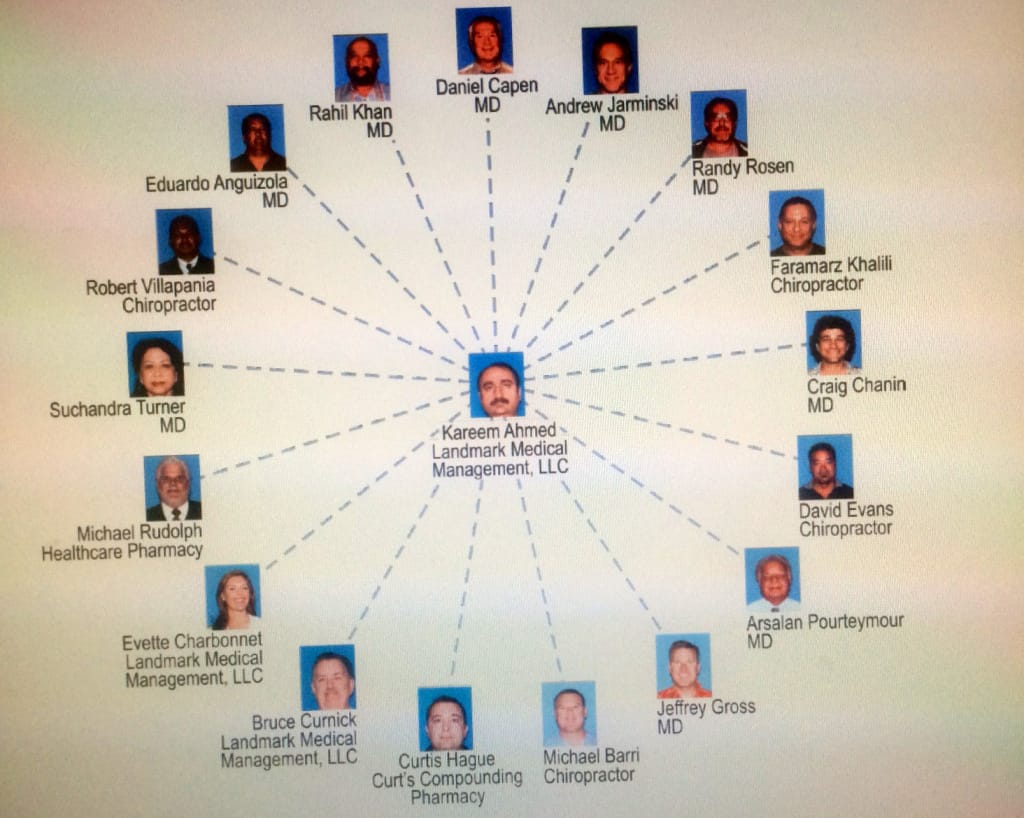
Who exactly allowed the talented and charming Kareem Ahmed into America?

ahmed

KPCC reports:

Prosecutors in the Orange County District Attorney’s office call it one of the largest cases they’ve taken on: 20,000 exhibits, 15 defendants and more than $100 million in alleged overbilling in an alleged workers’ compensation fraud scheme centered around compound creams.

An Inland Empire businessman, Kareem Ahmed, is accused of masterminding the alleged scam. Prosecutors say he paid a dozen doctors, chiropractors and pharmacists a total of $25 million in kickbacks in exchange for writing, filling and billing for large numbers of compound cream prescriptions.

Posted in Islam | Comments Off on Ahmed To The Rescue!

Jewish Family Services Of Los Angeles Salaries

I went to Guidestar.org and found this 990 form filed for 2012, which listed salaries as follows:

Paul Castro: ~$312,000
Susie Forer-Dehrey: ~$248,000
Lawrence Trent-Maggard: ~$189,000
Vivian Sauer: $215,582 (wife of Rabbi Nachum Sauer)
Eli Veitzer: $162,429

Posted in Jews | Comments Off on Jewish Family Services Of Los Angeles Salaries