


Published on Jan 19, 2016: Neoconservative commentator Jonah Goldberg says we shouldn’t use the term “neoconservative” anymore. Paul Gottfried and I are having none of it, and we spend this episode explaining the origins and ideas of the neocons, and how they came to eclipse everyone else on the right.
Published on Apr 28, 2016: How about that: fascism has a definition after all, and isn’t just a term for whatever people happen to dislike. In his new book, Paul Gottfried traces the meaning of the word and how it’s been used over the years as a polemical device in ideological battles.
By JONATHAN HAIDT and LEE JUSSIM:
…None of this means that we are doomed to discriminate by race. A 2001 study by Robert Kurzban of the University of Pennsylvania and colleagues in the Proceedings of the National Academy of Sciences found that race was much less prominent in how people categorized each other when individuals also shared some other prominent social characteristic, like membership on a team. If you set things up so that race conveys less important information than some other salient factor, then people pay less attention to race.
A second principle of psychology is the power of cooperation. When groups face a common threat or challenge, it tends to dissolve enmity and create a mind-set of “one for all, all for one.” Conversely, when groups are put into competition with each other, people readily shift into zero-sum thinking and hostility…
But as practiced in most of the top American universities, affirmative action also involves using different admissions standards for applicants of different races, which automatically creates differences in academic readiness and achievement. Although these gaps vary from college to college, studies have found that Asian students enter with combined math/verbal SAT scores on the order of 80 points higher than white students and 200 points higher than black students. A similar pattern occurs for high-school grades. These differences are large, and they matter: High-school grades and SAT scores predict later success as measured by college grades and graduation rates.
As a result of these disparate admissions standards, many students spend four years in a social environment where race conveys useful information about the academic capacity of their peers. People notice useful social cues, and one of the strongest causes of stereotypes is exposure to real group differences. If a school commits to doubling the number of black students, it will have to reach deeper into its pool of black applicants, admitting those with weaker qualifications, particularly if most other schools are doing the same thing. This is likely to make racial gaps larger, which would strengthen the negative stereotypes that students of color find when they arrive on campus.
And racial gaps in classroom performance create other problems. A 2013 study by the economist Peter Arcidiacono of Duke University found that students tend to befriend those who are similar to themselves in academic achievement. This is a big contributor to the patterns of racial and ethnic self-segregation visible on many campuses. If a school increases its affirmative-action efforts in ways that expand these gaps, it is likely to end up with more self-segregation and fewer cross-race friendships, and therefore with even stronger feelings of alienation among black students.
Scott Adams
Who he is: Creator of Dilbert, author, blogger.
When he called it: Aug. 5, 2015
What he said: “[I]f Hillary does not coast into the White House as I expect (and this is a prediction, not a preference) you will see a Donald Trump presidency.” Later called Trump a “clown genius.”
What tipped him off: “I certainly understand that Trump comes off as arrogant, obnoxious, and lots of other bad stuff,” Adams wrote on his blog. “But over time, and compared to the liars on stage with him, you might get hooked on hearing his honest opinions. That’s how the New York style works. At first you hate it because it seems so harsh. In time you start to appreciate the honesty. And when you realize the harshness is not a signal of real evil—just a style—you tend to get over it. He won’t win over all of his haters, but I predict that his New York style will grow on people more than you would expect. You could say his style is his biggest problem, but it might be self-solving with time and exposure. He is getting both.”
He elaborated on his reasoning in an interview over FaceTime this week: “I have a background as a trained hypnotist and I’ve been studying persuasion and influence in all its forms—everything from advertising and marketing to you name it—for decades. I’ve gone deeper than most people in the art of influence, and when I started watching Trump I realized early that what looked like the random behavior of a clown to people who were untrained, was almost pitch perfect persuasion.”
What he says about it now: Adams thinks Trump will win the general election in a “landslide.” “I no longer think it’ll be close, unless he gets assassinated or something,” he said. As for what it was like to be taking Trump seriously when no one else was: “If you imagine politics as a stick fight, all other stick fights have been won by a person with a stick. But here was Trump who said, ‘I read the rules and there’s nothing against bringing a flamethrower.’ So I’m watching Donald Trump walk up to a stick fight with a flamethrower in his hands that only I can see. It’s like an invisible flamethrower! And the only reason I can see it is I have the same tool box.”
Chris Cillizza
Who he is: Political reporter for the Washington Post’s the Fix
When he called it: Aug. 2–4, 2015
What he said: Cillizza was wrong about Trump before he saw the light. In June he wrote a blog post titled, “Why No One Should Take Donald Trump Seriously, in One Very Simple Chart.” It doesn’t matter what the chart was. On Aug. 4, Cillizza published a follow-up: “Boy, Was I Wrong About Donald Trump. Here’s Why.”
What tipped him off: In the August post, Cillizza noted that Trump’s favorability ratings had gone up significantly in just a few months—something he did not expect because, as he put it, “I had NEVER EVER seen a reversal in how people perceive a candidate who is as well known as Trump—much less a reversal in such a short period of time.” This made Cillizza realize that Trump was in uncharted waters.
What he says now: “My guiding belief with Trump has been that no political rules—or at least no conventional political rules—apply to him,” Cillizza said in an email.

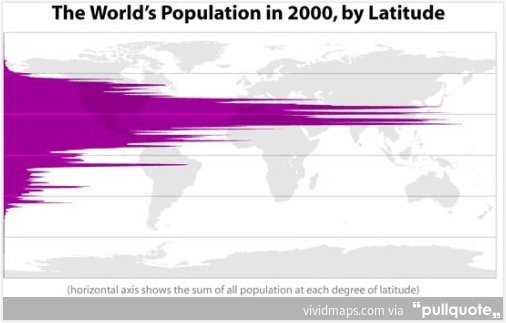
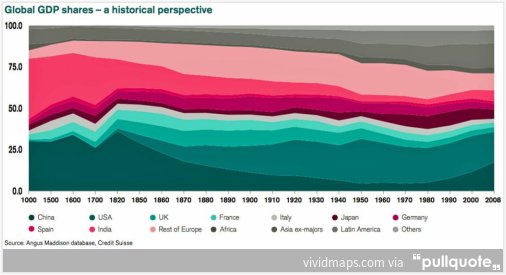
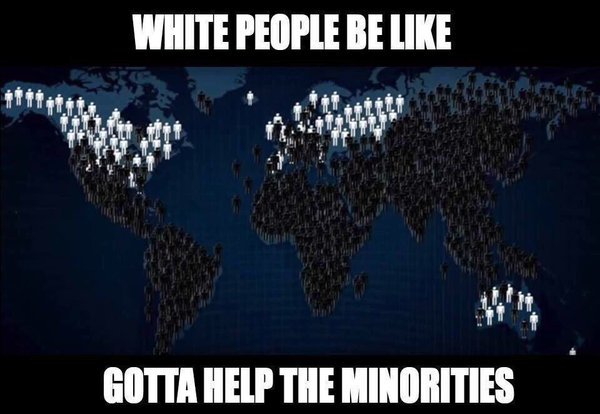
* How GDP shares have shifted across the world since 1000 AD – Vivid Maps
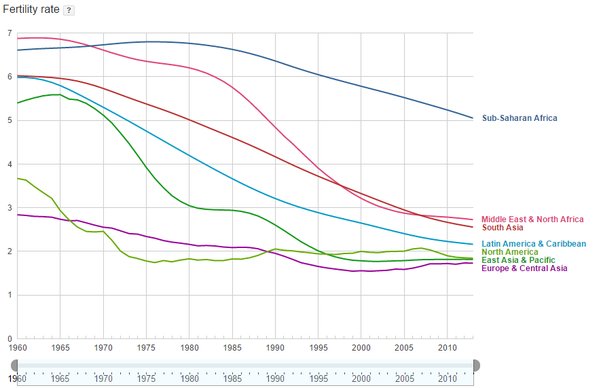
* Fertility is under control everywhere. Except Africa.
North America & Europe have been least fertile for a century.
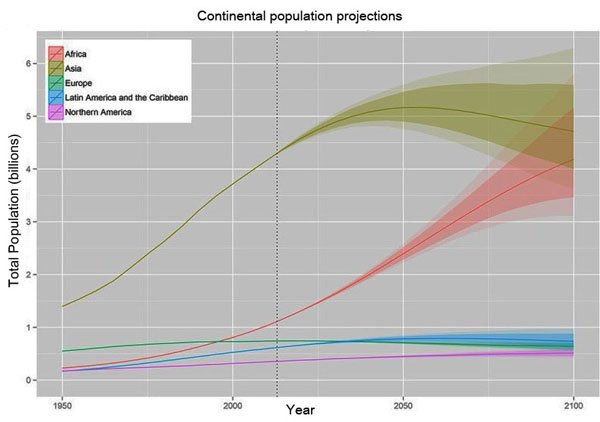
* Whites decided Earth was over-populated.
So they stopped breeding & adopted African babies.
How’s that working out?
* We don’t have to hate them to want to stop them.
Our interests conflict with theirs.
And I choose Us over Them.
I don’t blame Arabs & Africans for invading the West.
If I were them, that’s what I’d do. But I’m not. I’m me.
And our interests conflict.
If I was a Syrian, I’d probably try to sneak into Sweden, too. Get some nice welfare. Live in safety. Try to bang a blonde.
But this is Lifeboat Ethics. If we save all of them, then we drown.
Erasing your own Culture to save an Alien one is dumb.
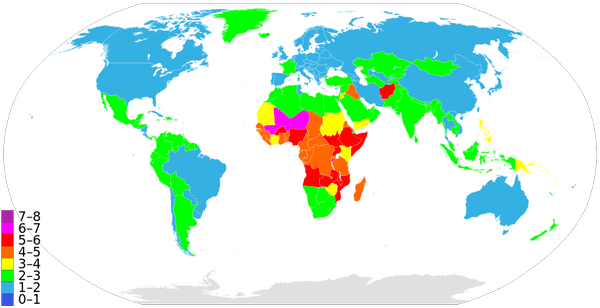
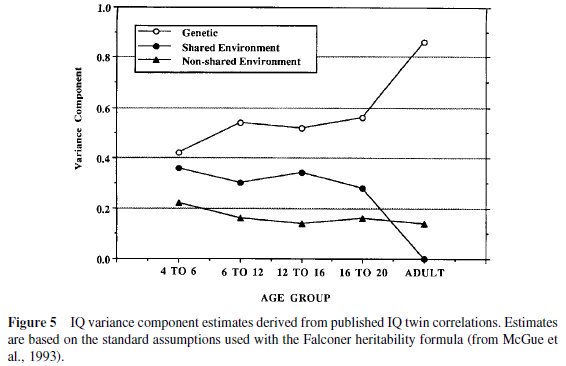
IQ is mostly heritable. Education doesn’t really effect it. It’s mostly genetic.
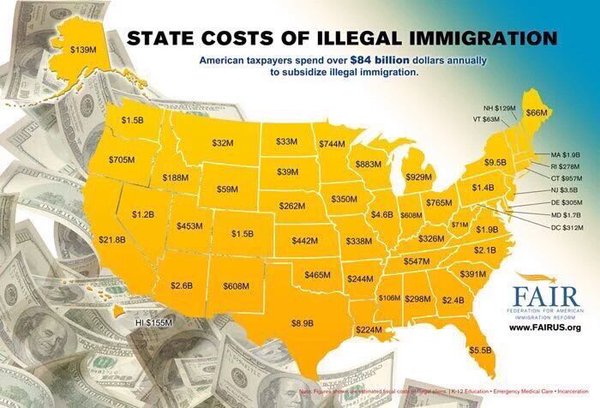
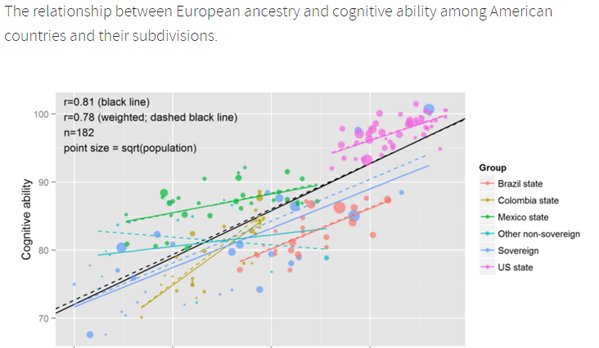
* The problem with Mexicans is they are somewhat more violent, have lower avg IQs & support Socialism. Causes problems.
From the Chateau: Although the sexual nature of women never fundamentally changes, there do happen over the course of a lifetime environment- and age-conditioned… accommodations… to sexual market realities that subtly modify women’s romantic needs. As such, there are different schools of Game a man should know which are tailored to the life cycle stage a woman inhabits.
Helpfully generalizing, women go through three major romantic life cycles:
Passionate Love
This is the age — from teenager to mid-20s — when a woman is in her nubile prime. Physically and emotionally she is at her horniest, her most feminine, and, not coincidentally, her most discriminating. She’s on the prowl for an alpha male, and specifically for a charming jerkboy whose devil-may-care attitude speaks so forcefully to her deep desire to submit to a top tier man with limitless lover options.
Commitment Love
During this age window — late 20s to late 30s — a woman is powerfully aware of the beginning of decline in her number one asset: her beauty. Physically, she is noticing small changes in herself — the first nascent signs of decay — that, assessed from a distance relative to womanhood as a whole aren’t so horrifying, but compared to what she was herself just a few years earlier will split her id wide open. Urgency compels her (if she’s psychologically healthy) to escape the single lady lookatme scene and start seriously buckling down to achieve the goal of snagging a man who will commit to her and, hopefully, help her become part of a family. Naturally, this pressure to settle limits her options and the longer she waits, the more her “Mr. Right” will deviate from the Mr. Right of her teenage dreams.
Partner Love
The final romantic life cycle for women (ages 40-death), this stage is the longest and, sadly from the perspective of one who adores women when they are at their most womanish, the dreariest, though it does offer as consolation a tranquilizing serenity that can safely usher a woman through her middle years without resort to painkillers. In this cycle, a woman still harbors those tingles for the alpha jerk, but they are sufficiently suppressed by biomechanic winding-down and stone cold circumstance — her wilted bloom — to allow the flourishing of her other female needs. Those other needs center around her desire to a) not be abandoned to a cold cruel sexual market and b) enjoy at least facsimiles of reciprocal love so that she does not feel abandoned within her relationship.
Here we come to the Female Life Cycle Theory of Game.
***
Jerkboy Game
This is the Game a man will want to make a part of his identity if his romantic audience is the choicest of fillies. Jerkboy Game is the perfect complement to a woman’s Passionate Love. When a woman is at the pinnacle of her “female-ness”, she requires the ministrations of a man at the peak of his alpha-ness. And by alpha-ness, I mean more than high T physical bravado; your personality has to be full of brash confidence and outcome independence, to convey that you have a plate full of inquiring femmes.
When Game denialists and Niceguy propagandists shriek about the hazards of Jerkboy Game, they are seeing it through the eyes of an older woman who doesn’t need to be wooed with so heavy a jerk hand, or through the eyes of a beaten-down beta male who seeks to justify his time wasted in the parched hinterland of courtship sycophancy as an effective strategy bringing him closer to romantic fulfillment.
Relationship Game
As the age of the women that a man dates increases, the jerkboy quotient of his Game decreases. Why? Because too much of an alpha lovelord will intimidate past-prime women keeping a sharp eye out for men who are good long-term relationship prospects. The mid-30s woman loves the idea of passionate love as much as the 20 year old woman, but she also loves more the idea of relationship love that isn’t constantly tested by heady, tingle-erupting, ovarian-rattling disruption. The Dread Game that you successfully deployed to maintain the flow of barely legal slice will emotionally shatter the mimosa ladies brunching on borrowed time.
For the Commitment Love woman, you’ll want to ease up on the jerkboy gas and hit the “small tokens of love and commitment” cruise control. Search the Chateau archives for “relationship game” to give yourself an idea of what it means to walk the line between charming lover and loving check-writer.
Reassurance Game
After her 30s, a woman is a wilting flower. But she’s not dead. The stalks and leaves still grow, and need nourishment. And her ego — the taproot of her soul — is more fragile than ever, susceptible to all sorts of blight. Regular watering and sunshine in the form of Reassurance Game will be the main staple of your romantic interventions.
This is the time of a woman’s life when Game, ironically, is easiest for appeasing beta males accustomed to a lifetime of orbiting pretty girls to supply a shoulder for them to cry on about their badboy lovers, and most elusive to incorrigibly ZFG alpha males accustomed to a lifetime of withholding cuddles and compliments to be rewarded with endless streams of juicy poon.
It’s funny in its way; the beta male FINALLY has his moment to shine with women, to exploit his God-given talents at pedestalizing the pussy for maximum gain, and it happens to be when those women are at their least bangable. O Fortuna!
And the alpha males who can’t quite get a handle on what it takes to reassure a woman she’s still a “beauty in his eyes”? If they’re single, they don’t lose out on much. If they have a family, then failing at Reassurance Game could mean divorce, alimony, child support… basically a suite of really sucky consequences.
So all three Female Life Cycle Game schools are crucial to a man’s journey to God-Emperor status.
Jerkboy Game for the incomparably sweet vagina.
Relationship Game for the rock solid stewardship of a deeply loving commitment to woman and family.
Reassurance Game to avoid a royal screwing by the State and incessant nagging at home.
We are supposed to imagine that the vast immigration from Mexico to America is an investment in our future. But in Greater Los Angeles, where the future already has happened, the median Mexican family has set aside $0.00 in liquid assets and $5,000 in nonliquid assets.
A publication of the Federal Reserve Bank of San Francisco about the Los Angeles Metropolitan Statistical Area (population 13 million, or pretty much everybody within a 90 minute drive of downtown LA) shows that Mexicans aren’t really working out.
The Color of Wealth in Los Angeles
Melany De La Cruz-Viesca
Zhenxiang Chen
Paul M. Ong
Darrick Hamilton
William A. Darity Jr.A Joint Publication of Duke University, The New School, the University of California, Los Angeles and the Insight Center for Community Economic Development
… White households in Los Angeles have a median net worth of $355,000. In comparison, Mexicans and U.S. blacks have a median wealth of $3,500 and $4,000, respectively. Among nonwhite groups, Japanese ($592,000), Asian Indian ($460,000), and Chinese ($408,200) households had higher median wealth than whites. All other racial and ethnic groups had much lower median net worth than white households—African blacks ($72,000), other Latinos ($42,500), Koreans ($23,400), Vietnamese ($61,500), and Filipinos ($243,000).
Racial and ethnic differences in net worth show the extreme financial vulnerability faced by some nonwhite households. U.S. black and Mexican households have 1 percent of the wealth of whites in Los Angeles—or one cent for every dollar of wealth held by the average white household in the metro area. Koreans hold 7 percent, other Latinos have 12 percent, and Vietnamese possess 17 percent of the wealth of white households.
The median value of liquid assets for Mexicans and other Latinos is striking, zero dollars and only $7, respectively, whereas, the median value of liquid assets for white households was $110,000. This not only implies possible financial hardship in the long term, but it also makes short-term financial disruption much more likely.
Japanese households had by far the highest median total value of assets at $595,000. Asian Indians ($460,000), Chinese ($408,500), and white households ($355,000) were also among those with high median values of total assets. Filipino and African black households fall in the middle of the distribution—$243,000 and $152,000 respectively. Median total asset values for all other racial and ethnic groups were significantly lower—U.S. black ($30,000), Mexican ($5,000), other Latino ($43,000), Korean ($28,400), and Vietnamese ($40,000) households. The data reveal an astounding racial wealth divide in the Los Angeles metropolitan area.
Mexicans were the least likely to be banked and most likely to lack financial savings. In the NASCC sample, Mexicans (47.1 percent), other Latinos (54.6 percent), U.S. blacks (68.1 percent), and Vietnamese (54.8 percent) are far less likely to own checking accounts than white (90.1 percent) and Japanese (93.3 percent) households. Mexicans, other Latinos, and Vietnamese also owned savings accounts at a lower rate than white households—39.8 percent of Mexicans, 44 percent of other Latinos, and 37.4 percent of Vietnamese owned a savings account compared with 71.9 percent of whites. Fifty-six percent of U.S. black and 57.8 percent of Korean households held a savings account.
Wealth differentials across racial groups in the Los Angeles NASCC survey are far more pronounced than income differentials. White households (40.7 percent) were far more likely to hold assets in stocks, mutual funds, and investment trusts. Only 18 percent of African black, 21.5 percent of U.S. blacks, 7.6 percent of Mexicans, 7.3 percent of other Latinos, 23.6 percent of Korean, and 9.9 percent of Vietnamese owned stocks, mutual funds, or other investments or trusts. The percentage of Chinese, Japanese and Asian Indian that have these types of financial assets was much higher when compared with whites—48.8 percent, 60.8 percent, and 58.6 percent, respectively.
The racial and ethnic disparity is large across all asset types and even larger across private retirement assets. Sixty-four percent of white households have an IRA or private annuity compared with 8.2 percent of other Latino, 15 percent of Mexican, and 17.7 percent of Vietnamese households. Japanese, Filipino, African black, and Chinese households were also likely to own an IRA although at lower rates than whites—62.3 percent, 55.6 percent, 48.5 percent, and 48.3 percent, respectively. The nonwhite groups less likely to own an IRA included Koreans (27 percent), U.S. black households (37.9 percent), and Asian Indians (38.6 percent). The results suggest that many households, especially black, Latino, and some Asian ones, would have virtually no financial assets of their own at retirement if not for federal insurance provided by the Social Security program.
Emphasis mine.
COMMENTS:
* Even George Lopez can tell you Mexicans are not prospering in Southern California. He said even though he is wealthy, he still gets mistaken for a lower class blue collar guy because not many affluent white collar Los Angelenos racially look like him. He used an example of when he was taking a walk in his upper class neighborhood and one of his White Gringo neighbors who just recently moved into the area, approached him and asked him if he paints houses and how much does he charge.
* He should have felt honored that someone took him for an honest worker.
An honest worker sells his skill for a reasonable market rate. This implies both self respect and knowing about one’s worth in the more general scheme of things i.e. being worldly.
Mastering a skill demonstrates that an individual has placed themselves in a subordinate position with respect to tradition and the Laws of Nature; has overcome their childish self-centeredness and allowed themselves to be influenced and guided by the way the world is and the way more experienced people have learned to do the world.
To have been regarded as such is to have been respected at the most fundamental level.
* Texas cultural nationalism is a (so far) successful response to diversity.
* I live in The Bay Area which has a large Filipino population. You will be surprised at how many Filipinos have high paying government jobs.
When it comes to yearly average household income, Filipinos in The U.S punch well above their weight when you factor in that they tend to be a low IQ ethnic group.
* The one thing that does ring plausible is blacks having no money for their retirements. I have seen the way they blow their paychecks and the garbage they spend it on. That is a feature of poor impulse controls and no ability for delayed gratification.
* Regarding the Vietnamese, they don’t trust banks. Knew a woman that owned a Nail shop and had a little over a million distributed within her extended family. They also tended to buy land back home. Keyword being home.
They also have an attitude of why not game the gibsmedat system like the inferior ethnicities. If it’s not going to be them some black or Latin will happily take it.
Welcome to tribal America.
* Mexicans having no money for their retirement is plausible as well. Mexicans don’t exactly have the cheap frugal spending habits of Jews and the Scottish.
That is why you can have 20 Mexicans living under one roof all with jobs, dividing the rent among them and they are still living paycheck to paycheck.
* These statistics show the rather impressive degree that Southern California has expelled its low-end black population.
50% of black households in Southern California have more than $200 in their bank account and $30,000 in assets. 37.9% of black SoCal households even have IRAs! I can assure you that is not the case in most of the rest of the USA. Importantly, IRAs are not set up by employers, they are something people with strong future time orientation and sufficient intelligence to set them up and fund them do on their own.
A majority of Mexican households here do not have a single member with a bank account.
They still largely work, pay rent, etc so have to store at home and sometimes carry around lots of cash. This means they are much better robbery and burglary targets than whites and asians, who do not carry around much cash since they have credit and debit cards. And of course they are physically smaller and less likely to own a gun and less likely to call the police, both because of immigration issues and because many have outstanding warrants, most often for petty offenses.
* Here in San Francisco Hispanics make up only 15 percent of the population, but they make up 95 percent of San Franciscans who cash their checks at cash checking stores instead of banks, lol.
Seriously go to any cash checking store here and you will overwhelmingly see Latin American looking phenotypes and overwhelmingly hear Spanish being spoken.
“They still largely work, pay rent, etc so have to store at home and sometimes carry around lots of cash. This means they are much better robbery and burglary targets than whites and asians,”
Here in The Bay Area it is a lot more common for Blacks to rob Asians at gunpoint rather than Hispanics.
A lot of Hispanic men in The Bay Area are bad ass alpha males, especially the ones with lots of tattoos because of the gang culture here. They are the ones who riot when The Giants win the World Series.
Asians in The Bay Area are easier targets for robbery, especially since a lot of Han Chinese here are older than The 10 Commandments. The Bay Area attracts a lot dirt old as hell Han Chinamen.
Dindu Nuffins here love committing arm robbery against old Chinos.
* Of course, for any society, capital formation/savings/fixed investment etc, and the very closely related phenomenon of per capita income are the fundamental distinguishes between whether the state is lovely chocolate box whiteopia such as Switzerland – or a the world’s biggest outdoor cess-pit such as Bangladesh. The difference between chicken salad and chicken shit, as one Californian wag put it.
These appalling statistics – contra to the crap that The Economist peddles – seem to indicate that third world populations still act as third world populations once given first world opportunities.
What this presages for the future is obvious.
* There are some factors to keep in mind when looking at this set of data:
1. Population sizes are wildly different. For example, Mexicans are a whopping 32% of the L.A. MSA. Koreans are only 1%. I have not looked at the data in detail, but I suspect sampling accuracy is probably highly variable depending on population size.
2. Immigration (self-) selectivity also varies significantly. For example, immigrants from India tend to be highly selected for professional qualifications. Immigrants from Mexico are not. Korean immigrants of the past were more like Indian immigrants – mostly professionals and entrepreneurs. Today, South Korea is a first world country with one of the best “Human Development” indices (consistently top 20) in the world. Aside from academic immigrants, the bulk of the declining number of Korean immigrants are probably not the “best of the lot.” Highly qualified Koreans tend to stay put – there is little if any benefit for them to move to the United States.
3. The data are for the L.A. MSA only. With small populations such as Koreans, their stats will very wildly depending on geographic locations. My suspicion is that the L.A. probably contains a disproportionately high percentage of economically underperforming Korean population (e.g. seniors, “fresh off the boat,” etc.). I would bet that an economically more dynamic area, say, north of Dallas (Plano-Frisco) or Northern Virginia (Fairfax) has a much greater concentration of successful Koreans.
4. The national economic numbers of the various ethnic groups are probably very different. For example, the Manhattan Institute has been studying major immigrants groups and their assimilation rates for many years now. Its assimilation index has three components: economic, cultural, and civic. The economic portion is described by the study as follows:
Economic assimilation describes the extent to which immigrants, or groups of immigrants, make productive contributions to society indistinguishable in aggregate from the contributions of the native-born. Economic assimilation is low when immigrants cluster at certain points on the economic ladder—most notably, the low-skilled rungs—and high when their distribution on the economic ladder matches that of native-born Americans.
According to its 2013 report, the economic assimilation indices for some of the immigrant groups under discussion are as follow for the year 2011 (100 = perfect assimilation)
Chinese: 90
Filipinos: 100
Indians: 97
Japanese: 100
Koreans: 100
Mexicans: 65
Mexicans not only perform extremely poorly compared to Asian immigrants, but they also lag at or near the bottom among Hispanic immigrants. And given their very low upward mobility through the generations (they have extremely high dropout rates from colleges, for example), it’s not a surprise that their generational wealth transfer is likely extremely low.