The Other God That Failed: Hans Freyer and the Deradicalization of German Conservation by Jerry Z. Muller

From Amazon.com: “Why did some of the “best and brightest” of Weimar intellectuals advocate totalitarian solutions to the problems of liberal democratic, capitalist society? How did their “radical conservatism” contribute to the rise of National Socialism? What roles did they play in the Third Reich? How did their experience of totalitarianism lead them to recast their social and political thought? This biography of Hans Freyer, a prominent German sociologist and political ideologist, is a case study of intellectuals and a “god that failed”–not on the political left, but on the right, where its significance has been overlooked. The author explores the interaction of political ideology and academic social science in democratic and totalitarian regimes, the transformation of German conservatism by the experience of National Socialism, and the ways in which tension between former collaborators and former opponents of National Socialism continued to mold West German intellectual life in the postwar decades.”

Posted in Communism, Germany, Jerry Z. Muller, Jews | Comments Off on The Other God That Failed: Hans Freyer and the Deradicalization of German Conservation by Jerry Z. Muller

Capitalism and the Jews by Jerry Z. Muller

From Amazon.com:

The unique historical relationship between capitalism and the Jews is crucial to understanding modern European and Jewish history. But the subject has been addressed less often by mainstream historians than by anti-Semites or apologists. In this book Jerry Muller, a leading historian of capitalism, separates myth from reality to explain why the Jewish experience with capitalism has been so important and complex–and so ambivalent.

Drawing on economic, social, political, and intellectual history from medieval Europe through contemporary America and Israel, Capitalism and the Jews examines the ways in which thinking about capitalism and thinking about the Jews have gone hand in hand in European thought, and why anticapitalism and anti-Semitism have frequently been linked. The book explains why Jews have tended to be disproportionately successful in capitalist societies, but also why Jews have numbered among the fiercest anticapitalists and Communists. The book shows how the ancient idea that money was unproductive led from the stigmatization of usury and the Jews to the stigmatization of finance and, ultimately, in Marxism, the stigmatization of capitalism itself. Finally, the book traces how the traditional status of the Jews as a diasporic merchant minority both encouraged their economic success and made them particularly vulnerable to the ethnic nationalism of the nineteenth and twentieth centuries.

Providing a fresh look at an important but frequently misunderstood subject, Capitalism and the Jews will interest anyone who wants to understand the Jewish role in the development of capitalism, the role of capitalism in the modern fate of the Jews, or the ways in which the story of capitalism and the Jews has affected the history of Europe and beyond, from the medieval period to our own.

From Publishers Weekly: “In four fascinating essays, Muller (The Mind and the Market) sensitively examines how centuries of nomadism and diaspora have shaped Jewish financial life. Particularly intriguing is his essay The Long Shadow of Usury, which traces the roots of Jewish financial life to the time when Christians were banned from lending at interest, but Jews, following the law in Deuteronomy, were allowed to charge interest to gentiles (but not each other). Farmers and laborers could not understand the value—economic or social—of gathering and analyzing information, and Jewish usurers were cast as suspicious and parasitic figures. Muller explores why Jewish populations have been both disproportionately successful in capitalist societies and the system’s loudest critics. Of paramount interest is his portrait of a people driven by exile and oppression to emphasize strong social networks, self-sufficiency, and higher education. Muller backs up his bold assertion—that capitalism has been the most important force in shaping the fate of the Jews in the modern world—with elegance and care.”

“In his slim essay collection Capitalism and the Jews, Jerry Z. Muller presents a provocative and accessible survey of how Jewish culture and historical accident ripened Jews for commercial success and why that success has earned them so much misfortune. . . . While this book is ostensibly about ‘the Jews,’ Muller’s most chilling insights are about their enemies, and the creative, almost supernatural, malleability of anti-Semitism itself. For centuries, poverty, paranoia and financial illiteracy have combined into a dangerous brew–one that has made economic virtuosity look suspiciously like social vice.”–Catherine Rampell, New York Times Book Review

“In four fascinating essays, Muller sensitively examines how centuries of nomadism and diaspora have shaped Jewish financial life. . . . Muller backs up his bold assertion–that capitalism has been the most important force in shaping the fate of the Jews in the modern world–with elegance and care.”–Publishers Weekly

“It’s a subject rarely given its due in respectable circles. Yet an appreciation for market economics does run deep in Judaic tradition and helps explain the prominence of Jewish bankers, from Mayer Amschel Rothschild to Lloyd Blankfein. In concise prose free of academic jargon, Muller ticks off factors that gave Jews what he calls ‘behavioral traits conducive to success in capitalist society.'”–Calev Ben-David, Bloomberg

“Muller, a noted historian, takes a fascinating look at how Jews have shaped capitalism and how capitalism has shaped the Jewish experience from medieval times to today.”–Fareed Zakaria GPS

“Muller is keen to rescue from apologists, ideologues, and anti-Semites the exploration of what he describes as the Jews’ ‘special relationship’ with capitalism. . . . This book is both scholarly and speculative, analysing the sociology and the anti-Semitic pseudo-sociology of the Jews’ participation in capitalism. It will not be the last word on the subject, but it is a genuine contribution to it.”–Anthony Julius, New Statesman

“A work of intellectual history. . . . Muller is acutely aware of the irony that Jews have been attacked sometimes for being the quintessence of capitalism and sometimes for being the quintessence of anticapitalism. The merit of his book is that it takes seriously the need to understand how historical circumstances bring this about.”–Robert Solow, Moment Magazine

“According to Jerry Z. Muller, professor of history at Catholic University, capitalism has been the most important force in shaping the fate of the Jews in the modern world. . . . Muller focuses squarely on the relation between them in four interlocking essays that explore, respectively, Western thinking about Jews and capitalism, the Jews’ own responses to capitalism, Jewish involvement in Communist movements, and the rise of ethnic nationalism that came about as a response to capitalism’s relentless march in the 19th century and onward.”–Steven Menashi, Commentary

“A model of clear thinking and useful information about how accurately to understand the long and complicated relationship between Jews, capitalism, and anti-Semitism. A valuable read.”–Ira Stoll, The Future of Capitalism blog

“In a 1972 lecture, ‘Capitalism and the Jews,’ Nobel laureate Milton Friedman presented a paradox: Jews ‘owe an enormous debt to free enterprise and competitive capitalism,’ he said, but ‘for at least the past century the Jews have been consistently opposed to capitalism and have done much on an ideological level to undermine it.’ According to historian Jerry Muller, Friedman’s paradox may make for a great headline, but it cannot be substantiated. Only the first premise is true–there is little doubt that capitalism has benefited Jews. And as Muller shows, there is equally little doubt that Jews have excelled at developing capitalism in the West.”–Guy Sorman, City Journal

“Taboos can’t last–and now, a real historian has broken this one. Jerry Muller, himself Jewish and a professor at the Catholic University of America in Washington, has published a book of four essays, Capitalism and the Jews, that sets out to explain why Jews have enjoyed such exceptional success in modern capitalist societies such as ours.”–Tim Colebatch, The Age

“Muller, a historian at Catholic University, has given us four lectures on economics aspects of Jewish life in the modern world. . . . [T]hey are thoughtful and occasionally insightful.”–Peter Temin, EH.net

“Capitalism and the Jews is a work of scholarship, but it’s an especially accessible and illuminating one. It is a book that every Jewish capitalist, actual or aspiring, out to read and ponder.”–Jonathan Kirsch, Jewish Journal of Greater L.A.

“Muller (history, Catholic Univ.; Adam Smith in His Time and Ours), a well established historian of capitalism, is brave to tackle this subject, laden as much with the place of Jewish people in the markets as with the trappings and traps of anti-Semitism. . . . Stimulating.”–Scott H. Silverman, Library Journal

“A stellar work of intellectual history.”–Sheldon Kirshner, Canadian Jewish News

“A well-documented, historical investigation into an often hidden subject that the author makes easily accessible.”–Abe Novick, Baltimore Jewish Times

“If you want to understand why Jews have done phenomenally well in capitalist societies and at the same time have been some of capitalism’s harshest critics, this history will help you understand.”–Nick Schulz, National Review

“A great book.”–William Easterly, Aid Watch blog

“Jerry Z. Muller’s recent book is neither a polemic nor a setup for a bad lounge joke but is instead a compelling, sober essay about an elephant that has been sitting in the middle of Western history for the past two centuries at least: Jews have been inextricably woven into the history and evolution of capitalism. . . . A fascinating history.”–Zachary Karabell, Truthdig.com

“[T]his book introduces some basic issues and ideas about Jewish economic history and can serve as a provocative starting point for learning more about the subject.”–Choice

“[A] short book, which could be said to provide the economic background of the Jewish catastrophe of the 20th century. Muller’s work, though focused on cultural and not environmental differences, might remind some readers of Jared Diamond’s ‘Guns, Germs, and Steel’ (1997), which explains the basis for the gaps in material success among regions around the world. In both books, the authors, in laying bare the historical processes, help to disabuse readers of their prejudices.”–Steven Silber, Haaretz

“In the meantime, in a lean and compact volume, Muller has offered a rich and valuable history filled with insights about the character of capitalism and the sources of anti-Semitism–both of which could hardly be more timely subjects.”–Yuval Levin, Jewish Review of Books

“Muller provides a refreshingly frank account of the major role of Jews on both sides of capitalism’s ideological barricades. His brisk and lively book is a welcome sign that historians are moving beyond a stale preoccupation with challenging stereotypes, and are now more willing to engage candidly and directly with the economic dimension of Jewish history.”–Adam Sutcliffe, Jewish Quarterly

“Although Muller examines mostly European areas, he occasionally cites examples from the United States. His book can be thus read as an attempt to deepen the mutual understanding of historical realities in Europe and North America. The strongest point of Capitalism and the Jews lies in Muller’s multifocal perspective and interdisciplinary erudition.”–Pnina M. Rubesh, European Legacy

“[T]his small book is filled with interesting material and presents its subject in a clear and lively fashion.”–Marty Roth, Outlook on Books

“The book offers an interesting and new perspective into the economic history of the Jews, which is a by-product of their religious and cultural history.”–R. Balashankar, Organiser

“Capitalism and the Jews is an important study that affords readers a lucid and extremely accessible analysis of what is no doubt a central topic in Jewish and western history. It is a welcome addition that joins recent efforts to make us more aware of the significance of the economy for our understanding of the modern Jewish experience.”–Gideon Reuveni, Enterprise and Society

“Providing a fresh look at an important but frequently misunderstood subject, this book will interest anyone who wants to understand the Jewish role in the development of capitalism, the role of capitalism in the modem fate of the Jews, or the ways in which the story of capitalism and the Jews has affected the history of Europe and beyond, from the medieval period to our own.”–World Book Industry

“Muller’s book can be highly recommended. Stylistically polished, accessible, informative and provocative–it is a little gem.”–Jeremy Leaman, Journal of Modern Jewish Studies

“Capitalism and the Jews is a must book for our times.”–Betty Mohr, Le Bon Travel & Culture

“[P]rovocative and inspiring essays. . . . Muller’s approach is far reaching.”–Franziskus von Boeselager, Moving the Social

Amazon reviews:

* With columnists for major newspapers denouncing banks as “blood-sucking,” the financial industry as “parasitic,” and one big bank as a “vampire squid” – well, what exquisite timing for the release of the book Capitalism and the Jews.

Mr. Muller’s work is, on the whole, a model of clear thinking and useful information about how accurately to understand the long and complicated relationship between Jews, capitalism, and anti-Semitism. It’s a valuable read for anyone who wants to understand why all the talk about the difference between the “Wall Street” economy and the “Main Street” economy isn’t necessarily as benign as it might seem.

The book by Mr. Muller, a professor of history at Catholic University, consists of a short introduction and four chapters. It’s the first chapter, “The Long Shadow of Usury,” that’s the most enlightening.

“Usury was an important concept with a long shadow. It was significant because the condemnation of lending money at interest was based on the presumptive illegitimacy of all economic gain not derived from physical labor. That way of conceiving of economic activity led to a failure to recognize the role of knowledge and the evaluation of risk in economic life,” he writes. “So closely was the reviled practice of usury identified with the Jews that St. Bernard of Clairvaux, the leader of the Cistercian Order, in the middle of the twelfth century referred to the taking of usury as ‘Jewing'” says Mr. Muller, noting that the interest rates charged by Jews, “in keeping with the scarcity of capital in the medieval economy and the high risks incurred by Jewish moneylenders, whose loans were often canceled under public pressure, and whose assets were frequently confiscated,” ranged from 33% to 60% a year.

It was Karl Marx, who was converted to Lutheranism as a child by his parents, who managed to combine the old blood libel against the Jews with an attack on capitalism. “Capital is dead labor which, vampire-like, lives only by sucking living labor, and lives the more, the more labor it sucks,” Mr. Muller quotes Marx as saying in Capital. Mr. Muller goes on, “When Lenin later referred to the necessity of eliminating capitalists because they were ‘bloodsuckers,’ he was merely heightening Marx’s own metaphor.”

It is a short leap from this to the work of the Nazi economic theorist Gottfried Feder, who, Mr. Muller writes, “distinguished between Aryan and Jewish forms of capitalism, the former industrial and creative, the latter financial and parasitic.”

In subsequent chapters, Mr. Muller describes Jewish contributions to capitalism and speculates about some of the reasons for Jewish prominence and success. Americans may know that Jews founded Lehman Brothers and Goldman Sachs, but Mr. Muller reports that Jews helped to establish Deutsche Bank and Dresdner Bank in Germany, as well as Credit Mobilier in France. Some of this is because of values contained in the religion of Judaism itself. “Unlike Christianity, Judaism considered poverty anything but ennobling,” Mr. Muller writes.

Mr. Muller rejects the claim made by Milton Friedman in 1972 that “for at least the past century the Jews have been consistently opposed to capitalism and have done much on an ideological level to undermine it.” Mr. Muller calls that “at best a half-truth.” In fact, he writes, “many of the foremost theorists of capitalist activity have been Jews,” or of Jewish origin, pointing to Milton Friedman himself, Alan Greenspan, Ayn Rand, Ludwig Von Mises, Irving Kristol, and Margaret Thatcher’s advisers including Keith Joseph, Leon Brittan, and Nigel Lawson.

The author does not flinch, though, from describing Jewish involvement in Bolshevism.
Mr. Muller gets out onto the thinnest ice when he blames Jewish involvement in revolutionary activity and communism for inflaming European anti-Semitism. Sometimes, he frames this claim cautiously: “To be sure, in much of eastern Europe anti-Semitism long antedated the Bolshevik Revolution, and would have been a substantial factor in interwar politics even without the prominence of Jews in the Communist movement.”

Other times he is more assertive: “In Germany, where political anti-Semitism had been on the Wane before 1914, the role of the Jews in the postwar revolutions was the key element in the revival of anti-Semitism on the right.”

That the Jews were being denounced as greedy capitalists at just the same time as they were being denounced as dangerous Communists suggests to me that the denunciations were, at bottom, more about hating Jews than about hating either capitalists or communists.

For most of this book, though, Mr. Muller is a sensible guide to the way that views of capitalism and views of the Jews do have a way of overlapping and influencing each other. As he puts it, “An affirmative approach toward capitalism often went together with a measure of sympathy toward the Jews, while antipathy to commerce and antipathy to the Jews typically went hand in hand.” Mr. Muller mostly leaves it to readers to think about how these precedents apply to the debates of the present day, but there is plenty to think about.

* Professor Jerry Muller makes a compelling case in showing that the attitude of Jews towards capitalism was overshadowed by the contemptuous view that Christianity held about trade and commerce for a long time (pp. 33; 158). Until the 19th century C.E., anti-Semitism was predominantly religious in nature, grounded in the sympathy that the Christian churches had for peasants and artisans, the sources of “sweat” labor (pp. 18; 28; 54; 70; 116).

At the same time, these churches failed to understand the economic value of gathering and analyzing information (pp. 19; 116; 205-206). Christianity officially regarded trade and money lending as “unproductive,” “parasitic,” and “usurious” best left to those outside the community of the faithful, i.e., the Jews (pp. 8; 15; 23-25; 27; 37-38; 43; 116-117).

The “cultural capital” of Jews positioned them well to play a disproportional role in (early) modern capitalism for the following reasons (pp. 4; 9; 209; 213):

1. Judaism was more favorably disposed toward commerce than Christianity which was inclined to glorify poverty (pp. 5; 77; 81-85; 110-115).

2. Jewish culture prized “religious intellectualism” which was easily transferred from religious to secular learning (pp. 70; 87-89).

3. Judaism favored a lifestyle based on discipline, the conscious planning of action, and the avoidance of intoxication (p. 88).

4. Jewish success in the market was based upon longer time horizons. Success for those Jews starting at the low end of commercial life required a willingness to work long and hard and to save in order to accumulate capital (pp. 58-59; 61; 88-89).

5. The propensity to develop social networks was due, in part, to the exclusion of Jews from the larger, gentile society, which provided both a form of collective self-policing and a proto-social security system (pp. 7; 53; 91-92).

6. Jewish culture put much emphasis on high familial investment in children (pp. 92-93).

With the industrial revolution firing on all cylinders, anti-Semitism shifted its emphasis by attacking the Jews as capitalists bent on destroying and despoiling the traditional society (pp. 41; 44; 56-57; 158). The social and economic stratification in which Jews were placed made many of them economically successful, which created resentment among social losers in a given capitalist society (pp. 65-66; 129; 189; 204-205; 213-214). To reduce the resentment created by their success, Jews supported 1) tzedakah (= philanthropy) whose beneficiaries also included non-Jews and 2) income redistribution through governmental income transfers (pp. 126; 130-131).

After WWI, anti-Semites came to the outlandish realization that Jewish capitalists would participate in their own destruction by cooperating with their communist counterparts to topple Christian civilization (p. 161)!

To his credit, Professor Muller brilliantly shows why Milton Friedman’s argument, that Jews played a prominent role in disparaging capitalism while profiting from it enormously, clearly lacks nuance (pp. 73; 124). To come to this conclusion, Professor Muller looks at the range of Jewish political responses to capitalism that he labels integrationist, isolationist, socialist, and nationalist, respectively (pp. 10-12; 104; 190).

1. The majority of Jews in Europe and North America opted for integrating themselves into the broader capitalist economy without repudiating their distinct Jewish identity (pp. 39; 104; 109; 115; 215).

2. The isolationist (or Orthodox) Jews found niches in the capitalist economy that would reduce, to the strict minimum, their social interactions with gentiles and less orthodox Jews (p. 105).

3. The socialist Jews believed in the substitution of the untried communism to the failing capitalist system for the same reasons that non-Jews espoused this ideology (pp. 35; 80; 105-107). Furthermore, these Jews naively hoped that abolishing capitalism would take care of anti-Semitism which was often linked to anti-capitalism (pp. 42; 133). The disastrous role that some Central and Eastern European Jews played in different communist revolutions in the wake of both WWI and WWII, reinforced the prevalent anti-Semitism that did not need additional oil to burn brightly in the hearts of anti-Semites (pp. 124; 140-141; 151; 158; 165-170; 174; 183; 188). The identification of Jews with communism was based upon a distortion similar to the exaggeration of the reality that Jews were more successful capitalists (pp. 135; 147; 152-153; 163; 175-177). Most Jews did not embrace communism because of its atheism and its economic policy (pp. 140; 174). Most communists were not Jews (p. 160). To their credit, these socialist Jews, however, debunked the stereotype of the Jews as “greedy” and “materialistic” (pp. 126; 137).

4. The nationalist (or Zionist) Jews emphasized first and foremost the need for a homeland over which Jews would exercise sovereign power without coming to an agreement on the prevailing economic system (p. 106). Zionism was a reaction to the rise of ethnic nationalism that had a basis in the politics of capitalist economic transformation of others (pp. 190-191; 194-199; 202; 208-210). These nationalist Jews faced two unique and formidable obstacles compared to most other ethnic groups: 1. Re-(acquire) a territorial base on which to form a nation-state and 2. Transform themselves from an economically and socially specialized stratum into a combination of “peoplehood” and “statehood” needed to re-(acquire) sovereignty over a distinct territory (pp. 215-218). Professor Muller observes on this subject that the Israeli economy transitioned much faster from its agrarian, socialist beginnings to its present-day highly commercial nature than older Western capitalist economies did (pp. 122-123). The recently published book “Start-Up Nation” by Dan Senor and Saul Singer is illuminating on this subject.

Professor Muller acknowledges that the high representation of Jews in intellectual professions makes them stand out as standard bearers of almost any political ideology (p. 125). The concept of “tikkun olam” (= repairing the world) in Judaism is not alien to this development.

In summary, Professor Muller realizes a tour de force in remaining as objective as possible in his examination of the multidimensional relationship that Jews have had with capitalism.

* Professional historian Jerry Z. Muller’s new book on Capitalism and the Jews is a collection of four essays covering four various topics concerning capitalism and Jewish and European history. The first essay covers medieval European history into modern European history. Ever since the Middle Ages in Western Europe, Jews were associated with the handling of money. It was more than just money lending, however, Jews were lenders of money with interest: a practice that was seen as sinful and “blood-sucking”.

Usury was considered a base practice for several reasons. For one, writers from classical antiquity saw no justification for deriving money from money; “Money does not beget money,” the old proverb went. The most influential of these classical writers was Aristotle, whose works were disseminated to the Christian West in the High Middle Ages, and whose philosophy worked its way into the thought of Catholic theologians. Interpreting the passage on interest from Deuteronomy (Deut. 23: “You may lend with interest to foreigners, but to your brother you may not lend with interest”) liberally such that “brother” meant all people, usury became sinful in Catholic lands in the 12th century. Indeed, the Second Lateran Council expressly forbade the practice in 1139, and Dante’s Inferno would place usurers along with murderers and blasphemers in the seventh ring of hell.

Yet from about 1050 to 1300 “new agricultural surpluses in Europe made greater commerce and urbanization possible, and that made the economic function of lending money more important”. As the Italian wit Benvenudi de Rambaldis da Imola put it, “those who engage in usury go to hell; those who fail to engage in usury fall into poverty”. The church solved this dilemma in the early 12th century by allowing Jews to practice the sinful activity, since, they reasoned, Jews were not subject to canon law and were condemned to hell anyway because of their repudiation of Jesus Christ. Medieval Kings saw benefits to this rule, since they were able to exact heavy taxes from Jewish usurers (essentially) in exchange for their existence. Thus the rigid connection of Jews with usury began.

Loaning money at interest was indeed a most ignoble profession. Yet in most cases many Jews had no suitable alternative. In the words of Rabbi Eliezer ben Nathan of Mainz (died c. 1170), the Jews had to loan money at interest because they “own[ed] no fields or vineyards whereby they could live, [therefore] lending money to non-Jews [was] necessary and therefore permitted” (quoted in Anti-Semitism: Myth and Hate from Antiquity to the Present). Jews in Western Christendom thus served as a “metaphor-turned-flesh” for money lending, usury, and proto-capitalism. Muller writes, the image of usury “was closely connected to that of the Jew, who was regarded as avaricious, and as an outsider and wanderer, able to engage in so reviled an activity as money lending because he was beyond the community of shared faith”.

The second essay focuses on Milton Friedman’s lecture “Capitalism and the Jews” and challenges Friedman’s main presumptions and conclusions. In this lecture (Muller tells us) Friedman said that Jews have historically benefited from capitalism, yet they (modern and contemporary Jews) have tended to oppose capitalism. Muller responds by showing that although many prominent communist/socialist leaders were Jewish (e.g. Trotsky, Luxemburg, Kamenev, Zinoviev), it is simply a false oversimplification to say that most Jews have opposed capitalism.

The third essay titled “Radical Anti-Capitalism” examines Jews that indeed have opposed capitalism. In the same vein as Friedman’s observation, popular imagination saw European Jewry as supporters of communist and socialist parties in post-WWI Europe. This had some truth, but, Muller shows, it was not as if most or even a large plurality of European Jews supported communist revolution. Rather, many communist parties had Jewish members in prominent roles. Moreover, the promise of anti-nationalism and equality led many young Jews to join communist parties; this caused fascists, conservatives, and other right-wingers to conclude through a jaundiced eye that “Judeo-Bolshevism” was a real spectre that was infiltrating their respective societies. One cannot help but think of the most menacing case of anti-Jewish sentiment: the Nazis.

After WWII the trend seemed to continue as many Jews held high positions in post-WWII Eastern Europe under the shadow of the Soviet Union. This was because many Jews saw the soviets as liberators in Poland and elsewhere, and wanted to help the battle against nationalism–a nationalism(s) that had often relegated Jews as second-class citizens, or denied Jews citizenship entirely. Interestingly, Muller suggests that this (Jews joining the communist cause after WWII) was nourished because Stalin and the Kremlin feared the possible spread of Titoism and felt that communist Jews were unlikely to go the way of the nationalist-communism of Tito after what the Jews experienced in WWII. Muller writes, “communists of Jewish origin seemed the least likely to form an alliance with the local populace against the hegemony of the Soviets.”

Yet Jewish communists were later to be persecuted and purged in Eastern European communist politics. The “Doctors’ Plot” was one prominent example of the embodiment of anti-Jewish sentiment in post-WWII politics, as were purgings of Jews from the governments of Czechoslovakia and Poland and elsewhere.

The final essay in this volume summarizes Ernest Gellner’s thesis on nationalism and applies it to Jewish nationalism: nationalism developed when agrarian society transformed into industrial society because the state/government needed to teach potential industrial workers how to read and communicate in a standard national language. Some communities were of course outside of the newfound nationhood-ness (for example Greeks, overseas Chinese and Indians, Armenians, Parsees, and Jews). These stateless nations could assimilate or create their own nations, which is what Jews did in time.

Muller’s short volume on capitalism and the Jews was a pleasure to read, and contained many insightful observations. I found the first and third essays to be very valuable, and the truly interested reader will find the entire volume valuable as well. Muller necessarily paints with a broad brush, but the end product is neither blurred nor affronting. I highly recommend this book to readers of both Jewish and European history.

Posted in Anti-Semitism, Europe, Jerry Z. Muller, Jews | Comments Off on Capitalism and the Jews by Jerry Z. Muller

Jeff Sessions: ‘Clarity of Donald Trump’s Position’ on Trade Is ‘Right’ as Americans Lose Jobs Overseas

Within ten days, the politicians will be lining up to endorse Donald J. Trump for president.

Breitbart:

Sen. Jeff Sessions (R-AL)80%, the intellectual leader of the modern conservative movement and the catalyst behind much of the rise of nationalist populism in this election cycle, told Breitbart News exclusively that he thinks there’s much about 2016 GOP presidential frontrunner Donald Trump for voters to like when it comes to the issue of trade negotiations.

While Sessions is, again, not officially endorsing anyone in the 2016 GOP presidential primaries, his top aide Stephen Miller, the Washington Post reported on Monday afternoon, is joining Trump’s presidential campaign as a senior policy adviser.

Miller has been critical to Sessions’ efforts fighting open borders immigration plans and amnesty for illegal aliens pushed by the political establishment, and equally critical to Sessions’ key role in the war against open borders trade policies pushed by political elites.

The issue of trade roared to the front of the political mindset last year when President Barack Obama joined forces with Speaker of the House-to- be Rep. Paul Ryan (R-WI)56% and Sen. Marco Rubio (R-FL)79%
to ram through Congress Trade Promotion Authority (TPA)—which is a fast track program that greases the skids for easy passage of a multitude of globalist trade deals critical to Obama’s legacy.

Those trade deals include the Trans Pacific Partnership (TPP), the Transatlantic Trade and Investment Partnership (T-TIP), and the Trade in Services Agreement (TiSA). The TPA plan helps the establishment’s efforts to ram the deals through, as it lowers the vote threshold in the Senate from 60 votes to 51 votes and kills the ability for Congress to amend deals. If ratified these trade deals, collectively, along with fast track authority known as Obamatrade, would bind the United States to several new global commissions, effectively barreling the U.S. away from sovereignty when it comes to economic plans, Sessions says, towards a European Union-style global leadership.

Sessions, who is standing up for American workers on this issue, told Breitbart News that the reason nobody on Capitol Hill or in the political class—save for Trump—really seems to be fighting this is “complicated,” because the polling data so clearly shows Americans are widely opposed to these types of trade deals. Sessions said:

“It’s complicated but fundamentally the United States—and Wall Street, and the Wall Street Journal and the trading centers and like London and Tokyo and Hong Kong—they have this ideal of ‘free trade. They has never been a trade agreement they haven’t supported. It’s sort of become conventional wisdom that Republicans push for free trade agreements, although Republican voters are more hostile in general to it than Democratic voters are according to polling. But we think we know better. What our trading partners—particularly our allies, but our aggressive pacific trading partners—they have aciduously worked to use to those rules to gain an advantage and to increase their exports to the United States while decreasing our exports to their country. And we’ve done nothing about it. We’ve not responded in any effective way. Working people get it—and they’re not happy. That’s part of the clarity of Trump’s position on all this—although I don’t think I would share everything he says about trade, but fundamentally the fact that we’re being taken advantage of is costing Americans jobs and weakening America. [On that, Trump] is right on. I think people have instinctively felt that and that’s been a source of his support.”

One of the key areas of trade policy on which Trump has particularly zoned in is currency manipulation—where other nations proactively devalue their currency to increase exports and decrease imports, therefore artificially creating an employment boom in their country while driving unemployment up and wages down in the country on the receiving end of their economic abuses. Sessions noted that the United States has certainly not been doing enough to fight back against this on the world stage.

Sessions told Breitbart News:

“There is absolutely no doubt that if a nation acts to devalue its currency, contrary to what market forces would allow, then that country can export more products to the United States and the United States is going to be able to export less products to that country. In other words, it makes their products cheaper in the United States and it makes our products more expensive when they’re exported. This is a known and indisputable fact and if you watch financial pages regularly they talk about the stocks of companies falling because they’re facing wayward currency—stock values of American companies falling—because they’re exporting in a market where our currency is rising and other currencies are falling. China has already devalued its currency 6 percent this year and I’ve heard people say they may do 20 percent or more. When you do that, when you increase your ability to export, then you create employment in your country and you export unemployment to the United States.”

When TPA was being rushed through Congress last year—originally with the support of both Sens. Marco Rubio (R-FL) and Sen. Ted Cruz (R-TX)97%, although Cruz later turned against it on a second go-around in the Senate—Sen. Rob Portman (R-OH)50% put forward an amendment that would have blocked currency manipulation by China and Japan and other nations in trade deals. That amendment was crushed by pro-Obamatrade forces. Sessions says that means there are no “protections of reality” when it comes to currency policy, putting Americans at grave risk, depending on the outcome of the presidential election.

Sessions went on to say:

“So this is a very real matter and we fought and it was debated and it came up and the currency language that would bar this currency manipulation was blocked and never passed. It passed, but it passed on a bill that the president could veto. It never passed on this legislation. So we don’t have any currency protections of reality. The Portman amendment would have really been helpful against currency manipulation but it was defeated. So in effect we have a unilateral disarmament. They can manipulate their currency, they can subsidize their businesses, they can target American manufacturing and our government throws out ‘free market, free market, free market’ while our determined mercantilist competitors are calculatedly damaging America, American workers’ families and their ability to have a job.”

The decision that lays before voters in Iowa in just seven days, voters in New Hampshire eight days later, and South Carolina a couple weeks after that, couldn’t be clearer according to Sessions—who, again, just had his top aide Stephen Miller join the Trump campaign. Sessions noted that Mitt Romney, the former Massachusetts governor and 2012 GOP presidential nominee, fought for American workers on this issue in the 2012 GOP presidential primary but abandoned it in the general election. That’s why he believes it’s so important that Trump – should he or anyone else who’s tough against currency manipulation win the nomination—continue to discuss the matter when they face off against whomever the Democrats nominate, which is still expected to most likely be former Secretary of State Hillary Clinton. Sessions said:

“We have got to decide: Are we going to have manufacturing in this country or not? If these economies can manipulate currency, and otherwise block our exports in non-tariff ways to their country then we are on a path to unilateral disarmament,” Sessions said. “Now, Romney laid it out in the primaries when he ran—and he failed to talk about it in November when it could have led him to victory unconvinced. But he said in the primaries that we’re in a trade war, we’re just not fighting. If you don’t stand up to China, they’ll run over you. They say if you stand up to China it’ll cause a trade war. But we’re in a trade war, we’re just not fighting. One more thing that Romney said that was critically important and he said that anyway, they have more to lose than we do. When we negotiate with our trading partners, we’ve got the leverage. They lust for our markets. They desire above all else to export to the United States and get high dollar in return. If they don’t play by the rules, we can buy products from other places—we don’t have to buy them from China or Japan or any other country for that matter if they’re not playing by the rules. Now if you get in a big trading agreement, we can’t make that decision. We’ve got to take it to this commission, and every country has the same vote. Japan or China, if they’re in it, or Korea’s in it or Vietnam’s in it, they can vote and block us from being able to confront and push back. The United States cannot put itself in a position where it is unable to retaliate against countries that deliberately and systematically violate trade rules.”

This is the second part of Sessions’ 45-minute-long exclusive interview on trade policy with Breitbart News ahead of the Iowa caucuses. In the first part, Sessions laid out how Republicans must nominate a presidential candidate who can “negotiate better” on the world stage. More from the interview is forthcoming.

Again, Sessions hasn’t formally endorsed any candidate, but he has appeared with Trump at a rally in his hometown in Mobile, Alabama, and helped Trump craft his wildly popular immigration reform policy paper.

Posted in America, Donald Trump | Comments Off on Jeff Sessions: ‘Clarity of Donald Trump’s Position’ on Trade Is ‘Right’ as Americans Lose Jobs Overseas

The Legacy Of Luke Ford

On the second page of this NSFW discussion, there’s this comment:

“Luke is Back has turned into such a piece of *** site. They are always stirring up fake drama like some sort of two bit Gawker.

It is very disrespectful to the legacy of Luke Ford.”

Ryan Landry writes in 2014:

In the 21st century enlightened mindset, it is all good. Everything relating to sex is good, except for heterosexual male desire, and pornography will be endorsed by both men and women. Be sex positive. Be inclusive. Be open-minded about sex workers. You know why the media calls them porn stars no matter how lowly their career? If not porn stars, the only other applicable term is filmed hooker. Jon Millward decided to look at the Internet Adult Film Database and glean what information he could about the average performer. Stereotypes were challenged, and he puts a great spin on a seedy industry…

Porn stars of both genders have also been progressively retiring earlier: in the ‘70s, men stayed in porn for an average of twelve years, and women for nine. Now men on average quit after four years, and women after three.

His opinion on type of sex shown,

Sometimes when I hear people railing against porn, declaring it as the downfall of society, a poison infecting masculine minds and demeaning female ones, I wonder what kind of porn they’re talking about. To me, porn seems a lot like sport.

Then there is his attack on Luke Ford’s statement that most women perform in one movie and then are out of the industry because it is too degrading.

Do the majority (over 50%) of women who try porn leave it after doing one film because it’s so completely soul-destroying? Using my data set I knew I could find out. The actual number of single film quitters is between 10% and 30%. It’s difficult to settle on an exact figure, because it differs depending on how you sample the women, but one thing’s for sure: most women don’t quit after one film—in fact, the majority (at least 53%) do three or more. So, to update the quote with the facts, do most women do three films and then quit because the experience is so humiliating and painful? Perhaps. Or maybe they just don’t like it and stop.

He then claims that discussing the whys is beyond the scope of his essay, yet he was pontificating on every item he has described in the essay.

Where to begin? First, check your brain on porn before saying it is perfectly fine. The deluge of free HD streaming porn has definitely warped the sex lives of Americans if you bother to ask anyone, especially high school and college students. Second, watch the average boy-girl scene from 1984 and boy-girl scene in 2014. Tell me which is more barbaric. Third, watch “After Porn Ends” to see former big name performers recount their lives in and after pornography. It’s a horror show, more so for the women as the men seemed to adjust better (go figure). That documentary might explain some things about holding out on doing interracial besides it still being a bit taboo. This link might explain about pay and waiting on odder items like anal and interracial.

Millward could have checked his data for progression of performers and told readers first time for X or Y. In “After Porn Ends”, Mary Carey looks at the camera and explains how she can still get paid and string out her career at age milestones. She said at 27 she could do her first X, at 30 her first Y, and eventually she ended it with at 35 do my first black guy. Some female performers will do anything right off the bat, others hold out. Part of it is building a fanbase and then making bigger bucks for the “1st X” scene. Part of it is a woman will only do what she has to do to keep the calls coming. Start out in “tease” scenes. After a while calls stop, then do “girl-girl”. After a while calls drop, then do “boy-girl” and so on and so forth with only her internal standards staircase as the obstacle. That is why the average age for more taboo (first anal, DP or interracial) is higher. Breaking down those type of scenes by women’s race would probably be too uncomfortable of a revelation because the way pay is and who gets selected for what.

Now the real odd part where Millward’s numbers do not add up. He states the average male quits after four years and female after three years. He then goes pedantic boss on Luke Ford’s statement and instead of viewing Ford’s statement of quit after one as a metaphor for the come and go quickly girls, he discusses the number that quit after one film. He says it is between 10% and 30%. He then goes on to say 53% of women performer in three or more films. That means 47% do two or fewer, and without knowing how many do three, it could be half of them quit after three (median = 3 films). How many women do you think film three in one weekend or week and then never do it again? I have to ask, when the average female quits after 3 years, but the average female (47%) makes 2 or fewer films, how are they stretching 2 films over 3 years? Did he use mean or median for average career length? It does not add up if the median women shoots 3 films stretched over 3 years. I request clarification because that sounds like bullshit to mask the chew them up and spit them out nature of the industry.

Pornography is going to be made whether one likes it or not. This kind of rah-rah “here’s the average performer and look, it’s all good” crap is what irks me. My focus is on the difference between the market in 1984 vs. 2014 as well as the cultural attitude towards it. If 1984 porn was what was streamed free and never-ending into your computer, the conversation would be different. If there was an online red-light district, the conversation would be different. There is no way to put the genie back into a bottle because the technology to shoot in high quality and share for all for free on the Internet is in your 3×6 Iphone. It’s the desires of the consumer and standards of the producer that really are the drivers as well as the media’s desire to forever expand sexual horizons.

Posted in Pornography | Comments Off on The Legacy Of Luke Ford

Israel eyes world coalition to force social media platforms to block incitement

Hey, Jews needed free speech protection when we were driving our way to the top of the heap, but now that we’ve arrived, who really needs free speech? Sounds dangerous. I’m not sure the goyim can be trusted with free speech. A goy needs free speech like a fish needs a bicycle. That seems to be the prevailing opinion among organized Jewry (who are frequently far removed from the ethos of Torah).

If there are hate speech laws, however, how come they don’t apply to Torah? I guess these elites will permit the speech they approve and criminalize the speech they find dangerous.

Ethno-nationalism is the natural state of human organization. If Israel could feel free to expel non-Jews hostile to it, and America could expel those hostile to it, and France the same, then these countries would not need to restrict basic human freedoms.

Ethno-nationalism fosters bonds. A friend tells me just now: “I do have a residual tendency to get paranoid… which is why my trusting relationship with you is so healing to me. You’re the only person who knows about…. Because only you accept me as I really am.”

From the Times of Israel:

Israel is aiming to build an international coalition to force the world’s leading social media giants to prevent their platforms from being abused to peddle incitement to terrorism.

The move, which was unveiled by Public Security Minister Gilad Erdan at Sunday’s cabinet meeting, aims at requiring Facebook, Twitter, Youtube, and other social networks to take greater responsibility for such content.

While some experts consider the idea unworkable — arguing that the terms of service of such platforms protect them from any legal threat, and that the preventative measures Erdan wants to see introduced are not possible technologically, others say a coalition pushing for change could be effective, and certainly stands more of a chance than an effort led by Israel alone.

The social media giants “make millions but claim they are not responsible for content, and that they only provide a platform,” a spokesperson for Erdan told The Times of Israel. “That is not going to wash. We are planning to put a stop to this irresponsibility, and we are going to do it as part of an international coalition that has had enough of this behavior as well.”

On Sunday, Erdan introduced the idea of building an international legal coalition to take action against social media platforms if they do not proactively prevent the use of their systems to upload videos, songs, photos, and other content that inspire would-be terrorists to pick up knives, guns, rocks, and other weapons to attack Israelis.

At the weekly cabinet meeting, Erdan presented ministers with an “index of incitement,” showing a correlation between instances of anti-Israel and anti-Semitic content posted by Palestinians, and the level of violence by Palestinians against Israelis.

Innumerable posts, videos and tweets have extolled the virtues of attacking Israelis in the ongoing terror wave, with terror groups and private individuals posting incitement, songs hailing the terrorists, and instructional videos telling them how best to attack. In several cases, attackers have posted their own messages ahead of such attacks.

There were numerous things Israel could do to combat the phenomenon, said Erdan. In a statement Sunday, Erdan said that he “intended to methodically expose the Palestinian culture of incitement among relevant communities around the world.”

Among Erdan’s proposals for action: Linking a reduction in incitement to assistance provided by Israel or other parties to the Palestinian Authority; publicizing the link between incitement, both by individual Palestinians and the Authority itself, to violence against Israelis; and developing legislation in Israel and abroad to prosecute social media platforms for failing to keep calls for violence and hateful materials off their platforms.

Erdan’s plan, said his spokesperson, calls for developing legislation in conjunction with European countries, most of which “are very interested in this idea. The legislation would have common features, such as defining what constitutes incitement and what the responsibilities of social networks regarding it are. Companies that do not comply will find themselves hauled into court, paying a penalty.”

The participating countries would be part of a loose coalition that would keep an eye on content and where it was being posted, and members of the coalition would work to demand that the platforms remove the content that was posted in any of their countries at the request of members.

“This is a perfectly logical and just project,” Erdan’s spokesperson said. “If a hotel was being used as a venue for a hate group, we would demand that the hotel break its contract, and we would lean on other hotels to abstain from hosting them, so that the hate group would not be able to hold its event. This is no different.”

Erdan’s proposal came weeks after the son of a Jerusalem man killed in a terror attack urged lawmakers to do more to quash social media incitement. Richard Lakin, a US-born teacher and peace activist, was shot and seriously wounded on October 13, and died of his injuries two weeks later. His son, Micah Avni, has been campaigning against social media incitement, with Lakin named as lead plaintiff in a 20,000-complainant-strong lawsuit against Facebook.

At a Knesset hearing in November, Avni argued that social media platforms like Facebook, YouTube and Twitter, virtually inhabited by millions of people every day, should be thought of as countries or continents. It would follow, he said, that it is necessary to regulate social media in the same way that nations regulate other areas such as finance, transportation, communication, broadcast, healthcare, and food.

Reaction to Erdan proposal from attorneys who spoke to The Times of Israel was mixed. One attorney involved in the highest echelons of the Internet business in Israel asked to remain anonymous due to the sensitivity of her position. She said the terms of service of social media platforms protect them from prosecution.

“The point of social media platforms is to provide a forum for users to express themselves,” said the attorney. “We wouldn’t want them to micromanage every bit of data that we post, and we probably don’t want the admins at Facebook and Twitter reading or looking at all the images we post, either,” she added.

“In addition, this would be next to impossible to pull off technologically,” the attorney continued. “How would the site know when something negative was uploaded? And even if such a law were passed, the platform might decide that it is just not worth the trouble to do business in the country where they are being prosecuted – like Israel – and just shut off access to their platform altogether. Is that what we really want?”

Attorney Nitsana Darshan-Leitner of the Israel Law Center disagreed, however. Actually, she said, “that is exactly why Erdan is seeking a coalition.”

It turns out that Israel already has in place the legislation needed to prosecute Facebook and other social media sites for anti-Semitic content; a law that allows Israel to prosecute anti-Semites who threaten the existence or welfare of the Jewish people has been on the books for decades. That law, she said, could be used to prosecute social media networks that do not do enough to prevent anti-Israel or anti-Jewish incitement.

But if Israel goes it alone, “then they might decide to cut off ties with us,” said Darshan-Leitner. “That is why Erdan is seeking to build this international coalition. There’s safety in numbers; if Facebook et al. know they are going to have to face the music in a dozen countries, they will be much more amenable to being proactive on this matter than if they were just contending with Israel.”

Darshan-Leitner said she thinks Erdan’s idea will succeed. “While we are perhaps the biggest sufferers of Arab incitement, we are not the only ones. The Europeans, after all, have in recent years been given devastating tastes of what that incitement can lead to — in the terror attacks in Marseille, Paris, Toulouse; in the stream of Muslims in Sweden identifying with IS, and many other incidents and attacks, large and small.

“This is not about freedom of speech,” said Darshan-Leitner. “It’s long ago been established that yelling ‘fire’ in a movie theater is a prosecutable offense. You are free to say what you want, but when what you say leads to damages – much less murder – that’s a different story altogether.”

Twitter and Youtube could not be reached for comment for this piece. In a statement, Facebook said that “we regularly work with safety organisations and policy makers around the world to ensure that people know how to keep safe when using Facebook. There is no place for content encouraging violence, direct threats, terrorism or hate speech on our platform.

“This is a community of over 1.5 billion people, including more than 4 million people in Israel, with clear rules. We have a set of Community Standards to help people understand what is allowed on Facebook, and we urge people to use our reporting tools if they find content that they believe violates these standards, so we can investigate and take swift action. We look forward to continuing dialogue with the government about these issues,” the statement added.

COMMENTS POSTED:

* There is no technical barrier to implementing this. It’s all about having the willpower to do it. Yes it’ll cost the networks money to implement but as mentioned they have plenty of money to throw at it. There is no such thing as rights without responsibility.

Posted in Anti-Semitism, Censorship, Jews | Comments Off on Israel eyes world coalition to force social media platforms to block incitement

WP: A remarkably moving thing happened at a Bernie Sanders rally today in Iowa

If you are at all competent at your job, you are able to earn more than minimum wage.

Everybody can give a great sob story about their life without falsifying any facts. We all suffer unfairly in individual ways. Women are particularly good at tugging on the heartstrings and manipulating to get what they want. Straight white men, generally speaking, find this approach beneath them. Can you picture a straight WASP standing up in public to give a tearjerker story about hard his life is?

Washington Post: Bernie Sanders did a town hall event Monday morning in Iowa Falls, Iowa. He asked the crowd for testimonials about the difficulties of sustaining a life off of $12,000 a year.

What happened next is both hard to watch/listen to and important. A woman is called on and she emotionally tells the story of her life — minimum wage jobs despite a degree, on disability and living with her parents. Here’s a snippet of what she said:

“It’s so hard to do anything to pay your bills, you’re ashamed all the time…when you can’t buy presents for your children it’s really really really hard – and I work 3, 4, 5 jobs sometimes, always minimum wage, I have a degree, divorced and it’s just I’m waiting for disability to come through so my parents have to support me – it’s just hard.”

Sanders thanked her and the crowd applauded. Then he said this: “It is not easy for people to stand up and say that but the truth is that until millions of people who are experiencing what you’re experiencing do say that we don’t make change.”

Posted in America | Comments Off on WP: A remarkably moving thing happened at a Bernie Sanders rally today in Iowa

Egyptian therapist: Jews most sexually perverse ever

The funny thing is there is something to what she is saying. The 1994 University of Chicago sex survey of America found that Jews had more sex than any other religious group. Jews also tend to be more blunt and less inhibited about the fundamental passions of life, including sex, money and power.

I’m not sure any other religion has the sexually explicit discussions to be found throughout the Torah tradition.

Most Orthodox Jews are virgins when they marry, but secular Jews in the West are generally more experimental than their non-Jewish neighbors. Orthodox Judaism has a very strict sexual ethic, but only about 10-15% of Jews in the world are Orthodox.

Jews are God’s Chosen People but familiarity breeds contempt. (John Updike)

Times of Israel: Heba Kotb, a consultant on Islamic medicine and marital life, said on a recent Egyptian TV show that the Jews “have had the highest rate of sexual perversions in history.” She argued that this is due to a “psychological imbalance” caused by strict religious rules.

Kotb, a regular guest on the program “Bil-Wuduh” that airs on Egyptian al-Hayat TV, is known for giving advice on marital relations often focusing on sex.

During the program, which aired on January 16, host Amr al-Lithi asked Kotb a question — which came from viewers — regarding her opinion on whether sex is “for procreation only” or merely “as a means for pleasure.”

Rather than answering the question, Kotb goes off on a tangent of how, in Judaism, sex is only for procreation.

“In Jewish thought, sex has to be for a reason,” she said. “There are very strict rules among the Jews, it has to be done through a buffer, after sunset, without touching, and so on.” This, she says, creates a “psychological imbalance” that leads to deviant behavior among the Jews.

The clip was translated into English and posted online by the Middle East Media Research Institute.

Despite almost no Jews left in the country, they remain a common topic of discussion in the Egyptian media.

One of the more outrageous claims is an oft-repeated conspiracy theory that Islamic State leader, Abu Bakr al-Baghdadi, is a Jew named Simon Elliot.

Shyrla Pakula: I wanted to hear the rest of the interview! About how Islamic rape culture is definitely for a reason- to subjugate women, especially women of other cultures. And how marital relations in Muslim couples is enhanced by the man’s permission to beat his wife if she refuses sex. And then how he can divorce her unilaterally and take another wife, or 3. Really, I was dying to hear what she has to say about all that!

Posted in Egypt, Israel, Sex | Comments Off on Egyptian therapist: Jews most sexually perverse ever

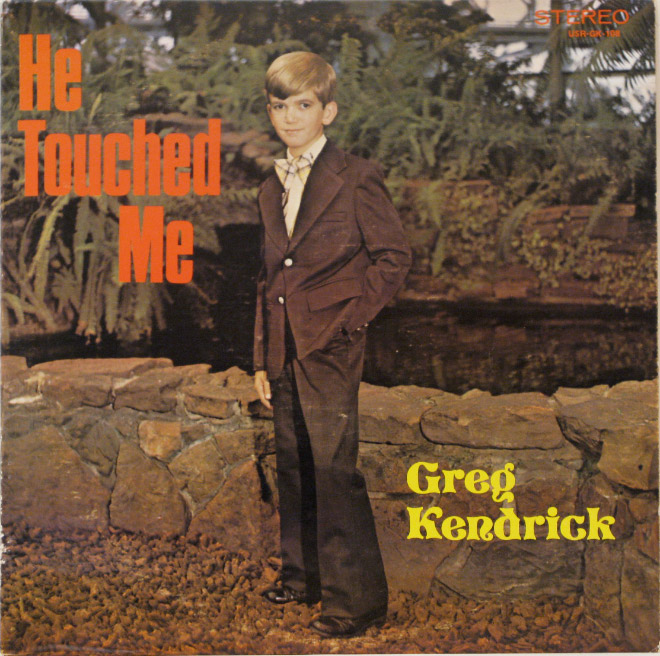
Awkward Christian Albums

christian6

More.

21 Awkwardly Sexual Album Covers

Posted in Christianity | Comments Off on Awkward Christian Albums

LAT: In ultra-Orthodox Israeli city, a new coffee chain fuels price war

Los Angeles Times:

“The arrival of Cofix is a very good thing for the Orthodox,” Asher said. “The Orthodox study religion and don’t work, so the only thing that matters is the price…. Orthodox don’t care about the taste, they care about how much they have to pay.”

Yitzhak Avrahami, 17, is among those who are grateful for Cofix, even though he spends more of his money at Shloimale.

“Part of me wants to support Cofix,” he said, “because if they close the prices will rise again.”
It’s not the art of drinking coffee that has pervaded Bnei Brak, but the desire for fast, cheap fuel between studying the Torah and praying. This isn’t Paris; no one sits for hours over a cup.

A collective of Bnei Brak’s rabbis have lashed out at this, issuing a signed leaflet and poster calling for a blanket ban on eating and drinking on the run — adding a spiritual dimension to the coffee and pastry price war.

According to the five signatories — Rabbis Yehuda Siliman, Moshe Shaul Klein, Sriel Rosenberg, Menachem Mendel HaCohen Shpern and Masoud Ben-Shimon — eating and drinking on the street is against the Torah.

“We have a duty to warn and alert the public to the phenomenon which has spread in our city: the cheap culture of eating while walking in the street,” the signed notice reads.
The notice condemns such consumption, and the placement of tables outside fast-food chains, equating it to “swindling the public into common behavior” and detracting from “self-respect and the respect of families.”

…Standing outside Shloimale, Rabbi Samuel Weiss said he agreed with the (widely ignored) rabbinic ban on the coffee spots.

“There is a Talmudic saying: He who eats food at market is like a dog,” he said.

Posted in Israel | Comments Off on LAT: In ultra-Orthodox Israeli city, a new coffee chain fuels price war

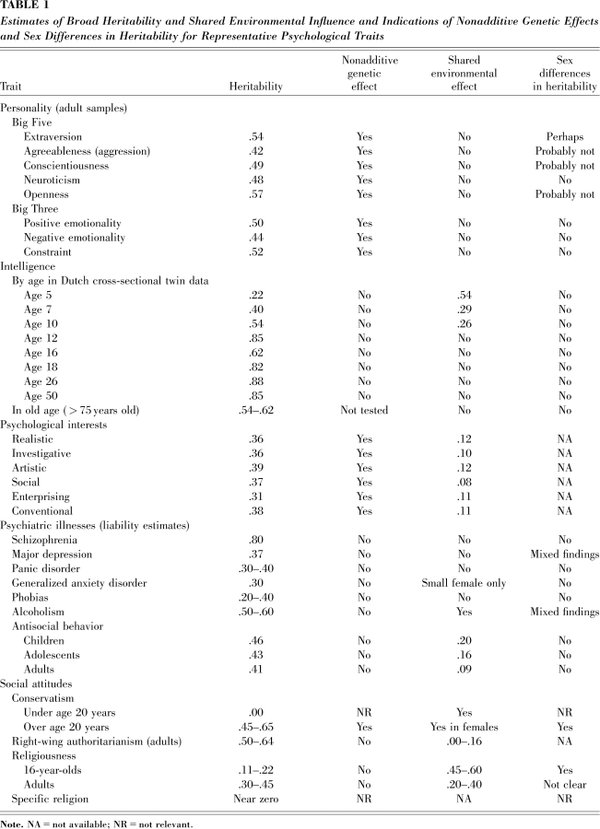
‘All character traits are heritable, especially IQ.’

CYg4SUVUwAA7mqs

Source: Librarian of Hate:

* Ethnocentrism is biological in origin and a superior evolutionary strategy to altruism.

* In Sweden, Muslim males make up 2% of the population but commit 77% of rapes.

* Black women are more than twice as likely as White women to abuse their husbands.

* Liberal Nightmare: Processes that regulate thought and action are 99% genetically determined.

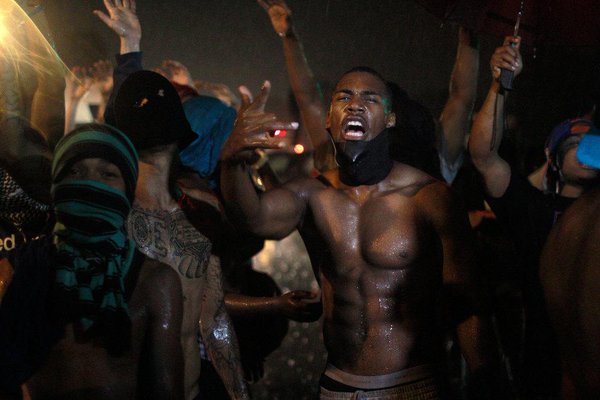
* Of the hundreds of assaults committed by #antifa, 80% were against police, and just 15% against right wingers. Seem like criminals to me.

* The most common crimes committed by left wing extremists are burning cars and general vandalism. I don’t think that’s “making a difference”.

* A stunning 33% of left wing radicals in Germany are unemployed. The overall unemployment rate, by the way, is less that 5%.

* Only 29% of left-wing extremists in Germany have graduated from high school.

* 9 out of 10 left wing extremists in Germany are single. Sucks to be #Antifa!

* 92% of radical leftist criminals in Germany still live at home, with their parents.

CEnHJHxUkAAoxCV

* CZXQy4HUsAAUFe9

Posted in HBD, IQ | Comments Off on ‘All character traits are heritable, especially IQ.’