Jewish Perspectives On The Alt Right

MP3.

I argue with Yonasan, an Orthodox Jew in New York.

Pete*, the professional philosopher, says:

Hi Luke,

I’ve been listening to most of your streaming stuff the last few weeks. Really excellent! I especially loved the one where you were calling for a new alt right focused on spiritual and moral things. I couldn’t be entirely sure that you were serious, or how serious you were. (Is that something about your personality or persona?) But I chose to take it straight. Thought that was very inspiring. I now understand better your position within the alt right, or not within it perhaps but involved with it somehow. You have a gift for re-framing and re-orienting the alt right perspective so that it becomes far more reasonable and powerful. I’m sure it’s been helpful for people in the movement who aren’t hellbent on destroying themselves. The recent debate with that Orthodox guy in New York was interesting. For me it seemed like he was not very honest or serious–a lot of really strained reasoning from him, much of it seemed to be just for the sake of needlessly complicating or confusing matters. (Confirming some negative stereotypes about Jewish high IQ cleverness, legalism, indifference to principles and truth. Of course I know NAXALT, but…) By contrast you were a great debater: very clear, straightforward, focused, always returning back to your fundamental claims and evidence. Maybe you should do more debates?

One thing that came up repeatedly in that debate, which I wish you’d have pressed a bit more: it might be true that there is no single ‘white’ identity, or that white people historically tended to identify on national or religious grounds rather than just whiteness; but this definitely does not imply that the white race, or white identity, is not an essential important ingredient in the various national or cultural identities of white peoples (e.g., the Scots, the French, the white Americans).

Your Jewish interlocutor seemed to be arguing roughly this: since (a) whiteness alone was never sufficient for being a member of any particular culture or group that people cared about (e.g., being American) therefore (b) whiteness is not even necessary to these cultures and groups, and therefore (c) whiteness has nothing to do with American culture or national identity. At least that was my impression. But that reasoning is just illogical. From the fact that whiteness alone is not sufficient, or not the whole of any one of these white identities, it doesn’t follow that it was never necessary for such identities. (Analogy: being human is not sufficient for being French; no French person ever focused on the fact of his humanity as the essence or whole of his cultural or national identity; but it doesn’t follow that non-humans can be members of the French culture or nation!) On this point, I felt like you were letting him get away with some real bullshit, wished you’d nailed him on the basic logical issue.

It was also ironic to hear the Orthodox guy reciting SJW-type objections to the ‘construct’ of the white race. Wouldn’t all these objections apply more clearly and forcefully to the ‘construct’ of Jewishness? (For example, that some Jews are more closely related biologically to some non-Jews than to their fellow Jews, that historically Jewish communities thought of themselves as something other than just ‘Jewish’, etc.)

Posted in Alt Right, Jews | Comments Off on Jewish Perspectives On The Alt Right

Hotep Jesus, Hotep Nation & Alt Blacks

MP3.

Hotep’s Twitter: https://twitter.com/VibeHi
https://www.youtube.com/channel/UCnXr-wpGU2gNx2phcDiGzAQ

Anon Wyatt on Youtube. Twitter

Posted in Alt Right, Blacks | Comments Off on Hotep Jesus, Hotep Nation & Alt Blacks

Care Vs Cure

From comments at Greg Cochran’s blog:

* It’s a very engineering view of human nature to think that medicine is primarily about combatting disease, and whether what we’re doing actually works.

Part of what people want from medical care is precisely the care part, and this is because it makes them feel better. The care meets actual objective psychological demands, and the utility of this perhaps often exceeds the utility of a (quicker) cure. To some extent people behave as though they would prefer to be cared for, rather than cured.

In judging the efficacy of medical cures, patients buy into a socially-sanctioned belief structure, rather than doing any sophisticated cognitive assessment. Whether they feel cared for is something more directly within their own experience, and while trusting in the appropriate socially-sanctioned practices produces some of this sense of being cared for, it is not the whole of it: there’s also a tender manner, and human attention, and love.

Homeopathy works and survives because it is a medium for people to provide this care.

In instrumental terms, it invokes placebo responses, which is a valuable achievement in itself.

Perhaps most valuably, it reveals another dimension for understanding what we are really doing when we seek medical care and when we provide it to each other. What other social practices are primarily a medium of care?

We are then left to decide whether we can bring ourselves to tolerate people participating in a mistaken belief structure which does actually facilitate their access to this care, or whether instead we need to set them right and extirpate their heresy.

Posted in Gregory Cochran, Health | Comments Off on Care Vs Cure

Greg Cochran Interview Wednesday 7pm CA Time (5-25-18)

MP3.

Greg Cochran blogs: “From time to time I have marveled at how the Left has changed over the years – basically, from steel-driving commies to gender-bender commies. Which leads me to wonder what would happen if, via some mechanism built of ivory and twisted crystal rods, they were ever to meet.”

Greg Cochran’s Twitter.

According to Wikipedia:

Gregory M. Cochran (born 1953) is an American physicist, author, and anthropologist. He is a research associate at the anthropology department at the University of Utah.[1] He is co-author of the book The 10,000 Year Explosion.

In opposition to what he sees as the ‘conventional wisdom’ that civilization has been a static environment which imposed stabilizing selection on humans, Cochran, along with like minded anthropologists such as John D. Hawks,[2] contends that haplotype and other data indicate the selection of genes has been strongest since the advent of farming and civilization.[3]

Ashkenazi intelligence
Main article: Ashkenazi Jewish intelligence
Cochran and co-authors Jason Hardy and Henry Harpending suggest that the high average IQ of Ashkenazi Jews may be attributed to natural selection for intelligence during the Middle Ages and a low rate of genetic inflow. Cochran et al. hypothesise that the occupational profile of the Jewish community in medieval Europe had resulted in selection pressure for mutations that increase intelligence, but can also result in hereditary neurological disorders.[4][5]

Homosexuality
Cochran believes an evolutionary perspective suggests that the proximal cause of homosexuality must be an infection.[6][7] Cochran does not suggest that an infectious agent that causes homosexuality is spread by homosexuals. The premise is that homosexuality reduces the number of offspring and would lead to the genes carried by a homosexual person to be progressively eliminated over generations. Cochran maintains that the observed level of prevalence of exclusive homosexuality (3 to 4 percent of men and 1 to 2 percent of women in the United States) means genes cannot be the cause of homosexuality. This argument is based on natural selection, the fitness cost of genes ‘for’ homosexuality being too great for its occurrence at a frequency above that of random mutation (~ 1 in 50,000). The argument assumes that evolution would have largely eliminated homosexuality related to non-infectious environmental causes, except novel ones.

Sponsor and Co-Host: Halsey English

Posted in Gregory Cochran | Comments Off on Greg Cochran Interview Wednesday 7pm CA Time (5-25-18)

Report: After accusations of deceit, UW-Madison graduate student apologizes for falsely claiming to be a person of color

From the Milwaukee Journal-Sentinel:

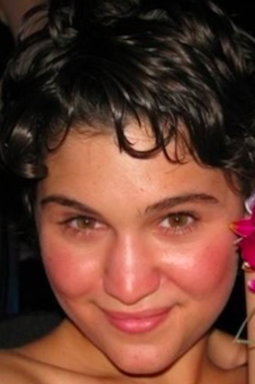
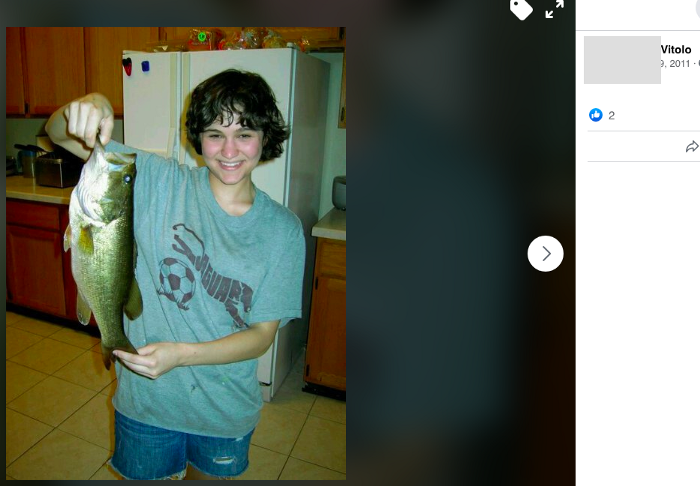
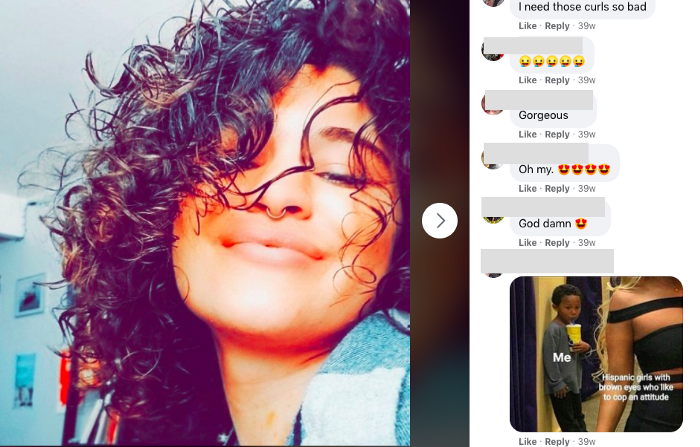
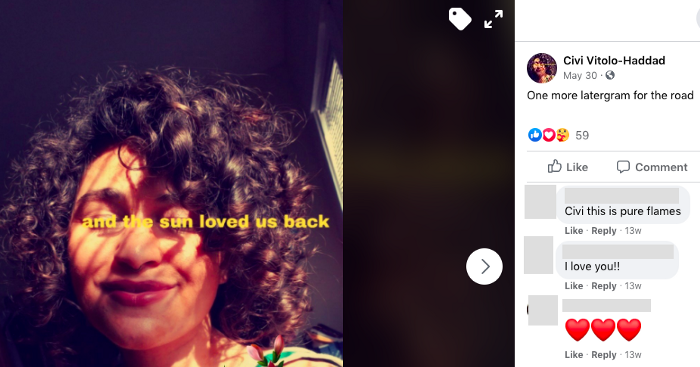
A doctoral student at the University of Wisconsin-Madison issued a public apology this week after accusations emerged online that they were presenting as a person of color despite being mostly of Italian ancestry.

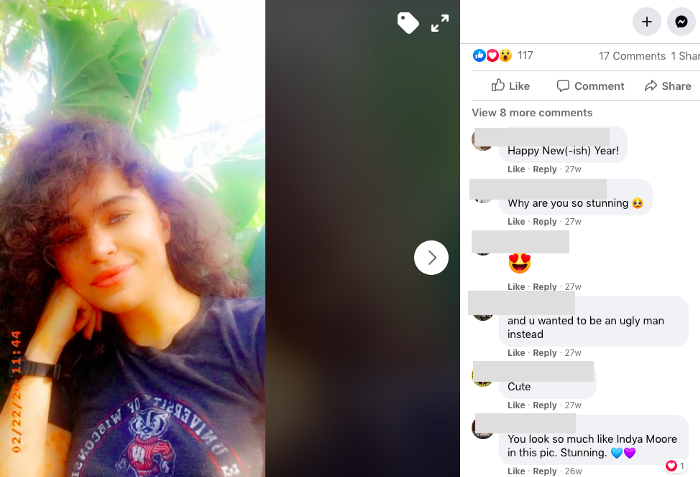
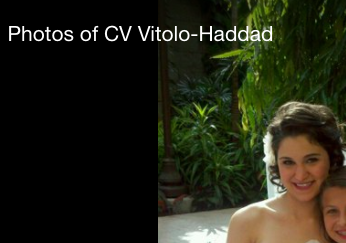
CV Vitolo-Haddad — who uses they/them pronouns — wrote in a Medium post Sunday that they resigned from a teaching position and stepped down as co-president of UW-Madison’s chapter of the Teaching Assistants’ Association graduate workers’ union. Vitolo-Haddad was also at one point director of the school’s speech and debate team.

“I am Southern Italian/Sicilian. In trying to make sense of my experiences with race, I grossly misstepped and placed myself in positions to be trusted on false premises,” Vitolo-Haddad wrote. “I went along with however people saw me. I over-identified with unreliable and unproven family history and latched onto anything I remembered growing up.”

…”For years, I have doubted my intuition, questioned whether anyone would believe me, and rationalized that CV might, despite all of the inconsistencies in their story, somehow be telling the truth,” the author of the post exposing Vitolo-Haddad wrote. “Race, after all, is slippery and racialization is not just about what is immediately visible, a fact I now believe CV has taken advantage of as they slide themselves further into spaces of Black identity and political organizing that do not belong to them.”

UW-Madison spokeswoman Meredith McGlone confirmed that Vitolo-Haddad, a student in the School of Journalism and Mass Communication, is not currently a teaching assistant at the university.

“UW-Madison expects that people represent themselves authentically and accurately in all aspects of their academic work,” McGlone said.

The graduate workers’ union issued a statement condemning the cultural appropriation “in no uncertain terms.”

“The TAA enabled this harm by electing them to a position of power in our union: we have unknowingly rewarded the toxic opportunism of performing Blackness,” the statement reads. “We intend to immediately begin the work of repairing this harm.”

The union will host a town hall on race Monday to allow members to discuss the revelation and to determine how the group can move forward.

From Inside Higher Education:

The graduate student in question is CV Vitolo-Haddad, a Ph.D. candidate in journalism and mass communication. They (Vitolo-Haddad’s preferred pronoun) were outed last week via an anonymous post on Medium and subsequently wrote two posts of their own on the platform.

Vitolo-Haddad described their own actions as letting “guesses about my ancestry become answers I wanted but couldn’t prove” and allowing people to “make assumptions when I should have corrected them.”

“I am so deeply sorry for the ways you are hurting right now because of me,” Vitolo-Haddad wrote in their first public apology. “You have expressed confusion, shock, betrayal, anger, and mistrust. All of those things are a consequence of how I have navigated our relationships and the spaces we share.”

In the second, edited apology, Vitolo-Haddad described themself as “Southern Italian/Sicilian.” In trying to make sense of their experiences with race, “I grossly misstepped and placed myself in positions to be trusted on false premises. I went along with however people saw me.”

On social media, spanning years, however, Vitolo-Haddad has described themself as other than white — in various ways.

This summer, for instance, Vitolo-Haddad described themself as “italo habesha,” meaning of Italian and Eritrean or Ethiopian descent, and “lightskin,” according to screenshots included in the anonymous post outing them.

Several posts are also in Spanish, and allude to Latinx and/or Afro-Latinx ancestry. Tweeting about Krug just last week, they said that their mother described them as Cuban and that the “colorism we uphold and lean into to distance ourselves is actually why no one trusts.” Ironically, in retrospect, they called Krug a “Kansas cracker” who got a Ph.D. in “performing blackface.” They also described “transraciality” as “violence.”

In another 2017 post, Vitolo-Haddad wrote that their mother faulted them for not having enough burning sage to keep their dog “safe from los espíritus malignos,” or evil spirits. The post also seems to say that their mother is a “bruja,” or witch.

Other posts refer to their family’s history of being “colonized.”

The anonymous author of the Medium post says that Vitolo-Haddad is from a white, affluent Italian American family that lives in Florida. Haddad, according to the post, is a name Vitolo-Haddad kept from their past marriage. The author — described only as an affiliate of Madison — notes that Krug also described herself as having different nonwhite backgrounds, including North African and Afro-Latinx.

“Though their claim to a POC identity was vague, the one consistency was their insistence that they were a constant target of acts of racism and that they came from some kind of nonwhite background,” the anonymous author wrote, accusing Vitolo-Haddad of changing their appearance over time to appear nonwhite. “They referenced it frequently on social media and in interpersonal conversations. Their behavior was reminiscent of the way people who knew Krug have described her: perpetually in a victim status, but also perpetually shifting in terms of the specifics. Their stories lacked coherence, but they intimated an insider status that made (and makes) people hesitant to question them.”

Vitolo-Haddad’s initial apology said that they were stepping down from all positions of organizational power at Madison, including their co-presidency of the Teaching Assistants’ Association and their teaching position.

Vitolo-Haddad did not agree to an interview request. Asked via email whether they would remain at Madison as a student only, with no teaching responsibilities, they said, “Those I harmed will be the ones to determine the consequences.”….

What about Vitolo-Haddad? They said Wednesday via email that while they benefited “socially” in certain ways from the situation, they never applied for scholarships, fellowships or awards for people of color or identified as Black on any forms asking about their identification. They also said they’d never represented themself as Black in their published scholarship, which includes work on the rhetorical strategies of far-right groups.

Vitolo-Haddad directed further questions to the second apology post, which says there were “three separate instances,” otherwise unspecified, when they were asked if they were Black but did not say no. They apologized for entering Black organizing spaces and for “failing to correct varied misconceptions about my identity over the years, and for everything I did to aid or advance those ideas.”

In particular, they said, “I want to apologize for ever taking lies about Cuban roots at face value,” though it’s unclear to what they are referring. “Additionally, I want to apologize for how my failure to own up to these harmful decisions publicly made every conversation on social media about the varied ways I’ve been racialized a source of confusion and deception.”

…Meredith Mcglone, spokesperson for Madison, said that the university “expects that people represent themselves authentically and accurately in all aspects of their academic work.” She confirmed that Vitolo-Haddad is “not currently employed as a teaching assistant.”

Vitolo-Haddad in the second confession post said, “What I know now is that perception is not reality. Race is not flat, it is a social construct rife with contradictions. Fighting racism never required dissociating myself from whiteness. In fact, it derailed the cause by centering my experience.”

While “most of the trust I destroyed cannot be rebuilt,” they said, they seek “redress that is appropriate for each individual I’ve harmed.” This will be a “long-term and ongoing process, prioritizing those most directly impacted. I won’t pretend to know what that looks like, but I am committed to being part of it until the end.”

From Medium:

When the Jessica A. Krug story came out yesterday I was shocked, but not by the extent of her deception. What caught my attention, instead, were the parallels between her story and that of someone I know. I have long suspected CV Vitolo, a PhD student at the University of Wisconsin in Madison, of engaging in the same kind of race-shifting and copious lying that now has people enraged with Krug (and which distracts from the important work and struggles of actual Black thinkers, both in and outside of the academy). I share this information with the hope that it might prevent CV from causing the same harm and violence Krug enacted on people who trusted her.
For years, I have doubted my intuition, questioned whether anyone would believe me, and rationalized that CV might, despite all of the inconsistencies in their story, somehow be telling the truth. Race, after all, is slippery and racialization is not just about what is immediately visible, a fact I now believe CV has taken advantage of as they slide themselves further into spaces of Black identity and political organizing that do not belong to them.
Another reason I have hesitated to expose CV is because they are adept at weaving new information into their ever-expanding web of explanations. Just yesterday, they tweeted about the Krug controversy by alluding to themselves as a racially ambiguous, light-skinned Black person through liberal use of the first person plural…

Posted in America, Trans | Comments Off on Report: After accusations of deceit, UW-Madison graduate student apologizes for falsely claiming to be a person of color

Jewish Federation To Jewish Community Member Elections?

Pini Herman writes:

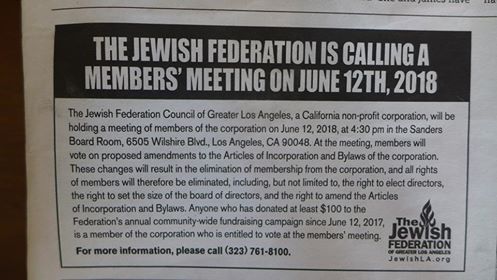
The Jewish Federation of Los Angeles Board of Directors is proposing to END pesky Jewish community member elections in a little publicized election (Jewish Journal 4/20, p.39) it is proposed that the largest group comprising the Jewish Federation, it’s membership, be disenfranchised, a result which is anti-democratic. Once the the public is removed from the discussion, it leaves a much smaller group of people with power and with fewer mechanisms of communal oversight.

Help organize Jewish Federation member voting on June 12. Contact Pini Herman at [email protected].

The essential small print reads:

“At the meeting, members will vote on proposed amendments to the Articles of Incorporation and Bylaws of the corporation. These changes will result in the elimination of membership from the corporation, and all rights of members will therefore be eliminated, including, but not limited to, the rights to elect directors, set the size of the board of directors, and amend the Articles of Incorporation and Bylaws.”

Please share this outrageous attempt to separate the LA Jewish community from it’s donated resources.

Posted in Jewish Federation | Comments Off on Jewish Federation To Jewish Community Member Elections?

Interview with Heather Mac Donald

John Derbyshire wrote in 2006 for National Review’s The Corner:

This is 3 years old but I hadn’t seen it before. It’s an interview that blogger Luke Ford had with one of my favorite conservatives, and one of the most interesting people around, Heather Mac Donald. Samples:

[On being a California girl]

Luke: “Did you like Los Angeles growing up?”

Heather: “I loved it. I spent a lot of time in the Santa Monica Mountains. The smell of the dry chaparral in the summer time and the eucalyptus and the wild mustard plants and the light… There are so many smells that I associate with the land around here, from both the natural Southern California environment and the urban forest that has been brought in over the century.”

[On being an automobile-phobe]

Heather: “Here the car culture is a big challenge for me.”

Luke: “Did you ever find your right-hand view mirror?”

Heather: “Yes, the Captain of the Ramparts Division adjusted it for me. I realized that part of the reason I haven’t been able to use it was that I had completely maladjusted it. I would look in it and see the side of my car…”

[On Hollywood]

Luke: “How has the dream factory, Hollywood, affected you?”

Heather: “Not at all. A lot of Hollywood kids went to my grammar school growing up. I’m completely unmoved by it. I don’t have a fondness for movies, which leaves me stranded when it comes to cocktail party chat, but I prefer language and books. Growing up in LA inoculated me against any sense that it is glamorous or special.”

[On being a Gentile in the world of American letters]

Luke: “Has anyone called you a shicksa and has it offended you?”

Heather: “It hasn’t offended me. I assume it was said affectionately.”

[On being irreligious]

“I don’t understand how people of intelligence can reconcile what I see as constant proof of divine indifference to human outcomes with a reverence for God. To me it’s a mystery.”

[On liberalism]

“Unless you think hard about political questions in our culture, you are liberal by default. You have to think your way out of liberalism.”

COMMENTS
[On her explorations in the underclass]

“I was in Watts the other night at an outreach by various ministers, lay people and police who were trying to create a political backlash against gang violence. … We went to recent homicide sites. The people I were with were chanting and preaching and trying to get people to join them. I walked around the housing project talking to people. They were very hostile. Obviously some white girl coming up to talk to them, I don’t expect them to greet me with open arms, or even welcoming. They seemed untouched by civilization. It was disturbing.”

Posted in Heather Mac Donald | Comments Off on Interview with Heather Mac Donald

What’s Good For The Jews?

An Orthodox rabbi friend who’s been studying the Alt Right for a couple of years says to me: “I now notice that all Jewish arguments revolve around what is good for the Jews. More or less secular education? What is good for the Jews. Jews in positions of political power? What is good for the Jews? West bank settlements? What is good for the Jews. These arguments are not about abstract principles of right and wrong. They all boil down to different perspectives on group interests. My job as an Orthodox rabbi is to deepen Jews’ in-group identity. When I hear anti-semites such as Patrick Little and Tanstaafl, I’m now sympathetic to them because they are looking out for the interests of their group as I look out for my group. I never thought I’d be here. It’s weird.”

Posted in Alt Right, Jews | Comments Off on What’s Good For The Jews?

Stereotypes Are Usually Accurate

Comments at Steve Sailer:

* I wonder if any of my fellow Unzions harbor nasty and unacceptable stereotypes about particular groups of people?

Well, if you do, chances are those stereotypes are accurate.

But, please, don’t take my word for it.

Stereotype accuracy is one of the largest and most replicable effects in all social psychology.

Don’t believe me? Read all about it here and here.

The hilarious part here is that actual research on stereotypes have found that they are true much more often than they are untrue, that they are very useful tools for understanding the world when you have limited information, and that when new information is obtained people cheerfully abandon the stereotype.

* Many years ago, as a first year student at a certain New England Ivy League professional school, the more senior student appointed to be the sort-of residence hall proctor in my part of the residence hall was an gentleman of African American heritage. I therefore assumed he was likely to be below-par academically, due to affirmative action, and an above-average risk for committing criminal mischief, due to ‘that’s how things are’ in the African American community.

I was not entirely shocked, therefore, when he suddenly disappeared from the residence hall mid-year — apparently stripped of his role after being arrested for beating his girlfriend, or something like that.

I must therefore admit that I never gathered enough evidence to validate or disprove the assumption I made about his academic record. Clearly, that makes me a terrible Racist or something.

One of my few black classmates at the same institution turned out to be the marijuana supplier to virtually the entire part of the student body that was into such things, so there’s that as well.

* The problem with trying to convince people that they need to discard their stereotypes is that eventually they get slapped good and hard with reality. So instead of learning to determine which people of a certain group clearly fit the stereotype and who the outliers are, we have too many people in active denial of reality who dismiss the utility of stereotypes and when that gets shattered they end up angry, bewildered, and ashamed.

I grew up going to schools with plenty of class and racial diversity in a large city, so by the time I was an adult I had no illusions about how different groups were likely to act, particularly lower class whites and blacks. In contrast, many of my coworkers – mostly liberals who had grown up in lily-white environments who had been raised to believe ‘we’ are all the same – after several years of living in DC would dispairingly admit after a few beers that they felt like after living there they had become incredibly racist after living up close and personal with the people they had been told were just oppressed versions of themselves. To once again recover their sympathies, they basically had to move back to places where they didn’t have to interact with the people they were supposed to care so much about.

Posted in PC | Comments Off on Stereotypes Are Usually Accurate

5 Tips for Recovering Without a 12-Step Program

Beth Leipholtz writes:

Here are a few pieces of advice for recovering without a 12-step program.

1. Find your tribe. I can’t stress enough how important it is to find peers who understand the journey you are on and who have been where you are. When you are feeling down or as if your sobriety is in jeopardy, you need to have people you can reach out to and talk it through with. These can be people you know in real life or online. There are so many resources on the internet and on social media for connecting with other people in recovery…

2. Use technology. Embracing technology is incredibly beneficial when it comes to recovery. Simply googling recovery resources turns up many results, including groups to join or blogs to read. There are various smartphone apps that can track your sober time, connect you to other people in recovery, and provide other helpful information. Many even deliver an inspirational quote each day. There are newsletters you can sign up for, readings you can relate to and learn from, chat rooms to talk with other sober people…the list goes on. The internet and technology in general are fantastic resources for those of us in recovery.

3. Have an outlet. It’s important for everyone to have a way to burn off steam, but it’s especially important for those in recovery. Chances are that if you are sober, you probably relied on a substance as a way of letting go, escaping, and as a place to channel negative feelings. In recovery, that is no longer an option. However, there are plenty of healthy outlets to choose from. Two of the ones I have found most helpful are writing and working out.

4. Find another program. Believe it or not, 12-step programs are not the only recovery programs out there for people struggling with substance misuse.

5. Share your story. This has been the best tool for my own recovery. There is something about telling your story to other people — and them telling their story in return — that makes you feel like you are holding one another accountable and sharing in both the successes and the struggles.

Posted in Addiction | Comments Off on 5 Tips for Recovering Without a 12-Step Program