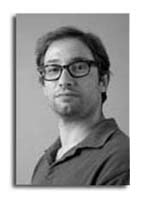
The studio audience has come to judge a mother. Ayelet Waldman (b. December 11, 1964) steps onto the set of The Oprah Winfrey Show in the spring of 2005, and before she reaches her chair a woman rises in the seats and calls out, “Let me at her.”
The offense is an essay. Weeks earlier the New York Times had run a piece of hers in its Modern Love column under the headline “Truly, Madly, Guiltily.” In it Waldman wrote that she loved her husband more than she loved their four children. One sentence traveled faster than the argument around it: “I love my husband more than I love my children.” Strangers wrote to call her unfit. A few threatened to report her to child welfare. Now she sits under the lights in Chicago with a representative of the National Fatherhood Initiative across from her and a host who has called her brave, and she does the thing the room cannot forgive. She holds the position. She explains that a marriage outlasts the years of small children, that a mother who pours herself into her children and leaves nothing for her husband mistakes martyrdom for love, that she will not pretend otherwise to soothe an audience. Oprah Winfrey (b. 1954) treats her as courageous. The audience treats her as a confession in need of a verdict.
Waldman takes the private material other writers hide, marriage, maternal ambivalence, mental illness, drug use, political shame, and sets it on the page as the door into a public question. The method earns her readers and enemies in the same motion.
She was born in Jerusalem to North American Jewish parents and spent her early childhood in Israel. After the Six-Day War the family moved to Montreal, then to Rhode Island, and settled in Ridgewood, New Jersey. The household was secular and Labor Zionist. It taught Jewish culture and social justice more than Jewish observance, and both halves of that inheritance surface later, in her fiction and in her politics. She attended Hebrew school and Jewish summer camps and spent a year on a kibbutz in tenth grade.
She took degrees in psychology and government from Wesleyan University in 1986, with a year of study in Israel, and a law degree from Harvard in 1991, where she and Barack Obama (b. 1961) were classmates. She clerked for Judge Albert J. Engel on the United States Court of Appeals for the Sixth Circuit, practiced corporate law in New York for a year, and then moved to California and became a federal public defender. For three years she represented poor defendants in federal court. The drug cases marked her. Mandatory minimums sent the people she defended to prison for terms out of all proportion to what they had done, and the arithmetic of that stayed with her. From 1997 to 2003 she taught at the law school at Berkeley, where she built courses on drug policy and criminal justice, and she consulted for the Drug Policy Alliance, a group that argues for drug law grounded in harm reduction.
She left the public defender’s office to stay home with her first child. The suburbs isolated her. A woman who had argued in federal court now spent her days on playgrounds, and she found the scholarly writing open to a law professor dull and the domestic role a poor fit for her temperament. She turned the problem into comedy. The result was the Mommy-Track Mysteries, a series whose heroine, Juliet Applebaum, is a former public defender turned stay-at-home mother who solves murders between school runs. Nursery Crimes (2000) opened the series, and The Big Nap, A Playdate with Death, Death Gets a Time-Out, Murder Plays House, The Cradle Robbers, and Bye-Bye, Black Sheep followed through 2006. The books wear the mystery genre lightly. Underneath they work the same ground as her essays: marriage, female friendship, professional identity, and the gap between what a mother feels and what a mother is permitted to say she feels. Applebaum shares Waldman’s law degree, her Judaism, and her impatience with the rules of suburban motherhood.
Her standalone novels widened the range. Daughter’s Keeper (2003) drew on her years defending drug offenders and followed a young woman caught in the federal narcotics system. Love and Other Impossible Pursuits (2006) told the story of a lawyer undone by the death of her infant daughter and the stepmother she struggles to become; the film adaptation, The Other Woman (2009), starred Natalie Portman (b. 1981). Red Hook Road (2010) traced two families through the years after a wedding-day catastrophe on the coast of Maine. Love and Treasure (2014) braided the history of the Hungarian Gold Train into a contemporary family story and turned her toward inherited memory and the long reach of the Holocaust. In May 2026 she returned to fiction with A Perfect Hand, a Victorian upstairs-downstairs novel. Alice Lockey, a tenant farmer’s daughter who has climbed to the rank of lady’s maid at a great estate, falls for Charlie Wells, a valet in another house. The two can be together only if their employers marry, so they set out to push two people who despise each other into love. The title carries the double sense Waldman intended: a hand offered in marriage, and the Victorian ideal of a lady’s hand, white and soft and innocent of labor. Reviewers read the book as a send-up of the marriage plot with a suffragist turn, a comedy of manners that hides a purpose under its crinolines.
The Modern Love essay began as “Motherlove,” written for an anthology she expected almost no one to read. Reprinted in the Times, it drew vitriol, threats, and the summons to Oprah’s couch. Rather than retreat, Waldman expanded the argument into a memoir, Bad Mother: A Chronicle of Maternal Crimes, Minor Calamities, and Occasional Moments of Grace (2009), a Times bestseller and a defining book of the mommy wars of the late 2000s. The memoir takes apart maternal guilt, the cult of perfection, miscarriage, sex, work, and the standards women hold against themselves and each other. It made her one of the essayists people argued about at the school gate.
She has also written about her own mind. Diagnosed with bipolar II disorder in 2002, an illness that runs in her family, she has described the work of holding a career and a household together while managing her moods. A Really Good Day: How Microdosing Made a Mega Difference in My Mood (2017) records a month she spent taking tiny doses of LSD to treat depression and anxiety. She wove the personal diary together with the science of psychedelics and the legal history that made the drug illegal. She did not present her month as evidence and argued instead for the research that might produce it. The book helped move microdosing from the margins into ordinary conversation and arrived as the broader reassessment of psychedelic medicine was gathering force.
Her work as an editor points in one direction: the people the law forgets. With Robin Levi she edited Inside Inside This Place, Not of It: Narratives from Women’s Prisons (2011), an oral history of incarcerated women. With her husband, the novelist Michael Chabon (b. 1963), she edited Kingdom of Olives and Ash: Writers Confront the Occupation (2017), an anthology of international writers who toured the West Bank with the Israeli veterans’ group Breaking the Silence. The two went on to edit Fight of the Century (2020). Civil liberties and human rights run through the editing the way harm reduction runs through the early law career.
Television became a second career. She co-developed and produced the Netflix limited series Unbelievable (2019), drawn from the Pulitzer-winning investigation into a serial rapist and the police failures that let him go. The series won a Peabody and gathered Emmy, Golden Globe, and Critics Choice nominations. She and Chabon also worked on the first season of Star Trek: Picard, where she served as a producer and co-wrote an episode. On the strength of that work the couple signed an overall deal with CBS Television Studios in 2019 through their company, Treehouse Pictures, and turned to adapting Chabon’s own novels for the screen.
Jewish identity sits at the center of the writing, approached from the secular and liberal side of the tradition she was raised in. Her protagonists negotiate history, memory, and belonging without the anchor of religious practice. Her relationship to Israel is personal and loud. She was born there, and she has spent years on the dovish edge of the argument about the country, pressing for Palestinian rights and against the occupation.
On a Friday morning during Passover in 2024, that argument put her on a road near the Erez Crossing at the northern edge of Gaza. She wears white. She carries a white flag in one hand and a bag of rice on her shoulder. Around her a group of American and Israeli rabbis sing in Hebrew. They have come with Rabbis for Ceasefire, and they know the crossing is shut to them. They have come to be seen. The banner among them carries a line from the Passover Haggadah, the one that runs let all who are hungry come and eat. A police officer steps into her path and tells her to stop. She moves around him. He blocks her again. She keeps walking. Somewhere with a phone in his hand her husband films and posts the video, and writes that this is what Judaism teaches. By Shabbat the police have released two of the Americans. Waldman is still in a cell in Ashkelon. The state of her birth has arrested her for carrying rice toward a famine while singing its scripture back at it.
The two scenes rhyme. In 2005 she said a thing mothers are not supposed to say and did not take it back. In 2024 she carried rice toward a closed border and did not turn around. The subject changes from a marriage to a war. The posture holds.
She lives in a 1907 Craftsman house in the Elmwood district of Berkeley with Chabon, whom she married in 1993, and they raised four children there. They work from one office in the backyard, edit each other’s pages, and walk the neighborhood to talk through plots. His fiction reaches for myth and genre. Hers stays close to the autobiographical, the legal, the clinical, the political. Together they form one of the more visible literary partnerships in the country. What unites the lawyer, the novelist, the memoirist, and the woman with the bag of rice is a single conviction worked out over thirty years: that the suffering of strangers, the prisoner under a mandatory minimum, the mother no one will let speak, the child in Gaza, is a private person’s business, and that saying so out loud is worth the cost it brings.
The Confessor: Ayelet Waldman and the Many Meanings of Honest
The house is a 1907 Craftsman in the Elmwood district of Berkeley, and in the first years there is a baby in it and a woman who used to argue in federal court. The law degree sits in a box. The diaper bag waits by the door. At the playground the other mothers ask her what she does, and she says she is home with the baby, and she hears the sentence close over her. She is a good mother. By the measure she has lived by, she is also no longer there.
Ernest Becker (1924-1974) argued in The Denial of Death (1973) that a person builds a hero system to stand against two terrors, the terror of death and the terror of counting for nothing. The hero system is the set of beliefs and tasks that lets a person feel he has earned a place in a scheme larger than his own short life, that his days leave a mark the grave does not erase. Most of the time the second terror hides inside the first. We fear death, and under that fear we fear we will have been nothing. For the woman in the Berkeley house the terror comes early and wears a particular face. Not the body’s end. The self’s. The dread of dissolving into the role, of waking one morning to find the person gone and only the mother left, fed and competent and erased.
Her hero system answers that dread with one instrument. Honesty as exposure, the public naming of the true thing the tribe has agreed to leave unsaid. To be seen, in the shameful particular, is to survive the role. The witnessed self does not vanish. This is the engine under everything Ayelet Waldman has written.
She came to it by subtraction. The household she grew up in had already taken God out of Judaism and kept the rest, the peoplehood and the social justice and the holidays drained of the supernatural. Truth in that house was not handed down from Sinai. It was argued toward, secular and moral and human. Waldman took the subtraction further. She removed the maternal ideal, the image of the mother whose love is total and self-erasing, and named it a confinement. She removed the shame around the broken mind and the illegal drug. What she kept was the conviction that a person earns her existence by telling the truth that costs her something.
The founding act came in 2005. She wrote that she loved her husband more than she loved their four children, and that the mother who disappears into her children has mistaken a kind of death for a kind of love. “I love my husband more than I love my children.” The sentence traveled faster than the argument. Strangers called her unfit. A few threatened to report her to the authorities. She did not take it back. She walked onto a talk-show set and held the line while a woman in the audience rose and offered to get at her. Then she did it again, at length, in the memoir Bad Mother (2009), and again with her diagnosis of bipolar disorder, and again in A Really Good Day (2017), the record of a month she spent microdosing LSD against her own depression. Each book is the same act. She takes the private fact the room has agreed to hide, sets it on the table, and takes the blow, and the blow is the proof that she is still there.
So honesty, for Waldman, is heroism. It is how a person refuses the extinction of the role and earns a self that outlives her, in the work and in the widened permission she leaves behind, the next woman who now gets to say the thing.
Here is the trouble. The word she has built her life on is sacred in a hundred other hero systems, and in most of them it means something she would not recognize, and in several it names the opposite of what she does.
Walk onto the oncology ward where a palliative physician keeps her rounds. She knows the chart to the week. In the corridor a daughter takes her sleeve and asks how long, and the physician gives a true range and leaves the worst number in her pocket, because the patient cannot carry it today and tomorrow there will be a better hour to set it down. Her honesty is calibration. She meters the truth to what a dying man can hold, and the withholding is the care, not a lapse in it. Her significance comes from standing steady at the edge and easing the passage. To her, a writer who empties the whole truth onto whoever is in the room has confused honesty with appetite.
Cross the city to a study hall where a rosh yeshiva bends over a page of Gemara with two students, working a line that men have argued for fifteen hundred years. For him truth, emet, is the seal of God, and the honest man is the one who carries what he received without bending it to his own vanity, who adds his small link to a chain that runs back past memory and forward past his death. His immortality is the chain. He beats the grave by faithful carrying. The self is not the subject. The self that pushes forward to be seen is a distraction, at the edge of a sin. To him a woman who sells the inside of her marriage to strangers for the price of a byline has taken something holy and made it cheap, and has called the cheapening honesty. The charge is serious, and it is not stupid, and Waldman’s hero system gives her no good way to hear it.
Sit across from a case officer in a safe house with the blinds drawn. He has lied to his neighbors for thirty years about what he does. He has run sources who could die if he ever said the true thing to the wrong man. His honesty is loyalty, reliability inside the service, the kept secret, the promise to the agent that he will not give him up. In the only court he answers to, he is an honest man, and the confession Waldman treats as courage is to him the one unforgivable act, the leak that gets people killed. He earns his place by guarding what must never be said.
Stand at the back of a morbidity and mortality conference where a trauma surgeon walks his peers through the night he lost a man on the table. The room is merciless. Nobody saves anybody’s face. Show us the decision, they say, and he shows them, every wrong turn, because the honesty owed to the others who hold the knife is total and cold. Two hours later he stands in a waiting room with a different family and a different voice, composed, reassuring, holding back what they cannot use. Two honesties in one man, divided by a door. He earns his significance by mastery and by the judgment of those who can judge the work. The public confession might strike him as spilling the candor of the conference onto people who have no use for it and no way to bear it.
And there is the old judge who keeps the robe and the kept word and the level face, who holds that the honest man is the constant one, whose outside can be relied on and whose inner weather is nobody’s business. To parade the private turmoil is to him a loss of the composure the office demands, a small surrender of dignity. He beats death by leaving a name no one can stain.
Five rooms, five honesties, and the word names a different duty in each. For the physician it is mercy in the dosing of fact. For the scholar it is humility before what was received. For the officer it is the secret kept. For the surgeon it is candor gated to those who can use it. For the judge it is constancy of mask. Waldman’s honesty, exposure as the path to a self that survives, makes sense only inside a hero system where the self is the sacred thing, the role is the enemy, and a person stays alive by being seen. Carry that honesty into the study hall or the safe house and it reads as vanity, or betrayal, or cruelty. Becker’s point was that each hero system looks, from the inside, like plain reality, and the others look like illusion or vice. The sacred word does not settle the argument. It tells you which room you are standing in.
Waldman knows part of this. Her clarity about what her honesty costs her runs high. She named herself the bad mother before anyone else could. She courts the blow and counts it as the price of staying real. What her system hides from her is the honesty of the rooms that hold their tongues. She tends to read the keeper of the necessary silence as a coward or a hypocrite, the mother who will not say the forbidden thing as repressed, the community that will not take the Gaza claim inside itself as morally asleep. The frame that saves her cannot register that a silence might be a discipline, a mercy, a fidelity, its own kind of true. That is the blind spot built into the gift. The instrument that keeps her from vanishing also keeps her from hearing the people for whom vanishing into something larger is the whole point.
The hero is the confessor, the woman who keeps the self from dissolving by saying out loud the thing the room has agreed to bury, and by standing in the blast that follows, because the blast is the proof that she is still here.
The rival she fights without naming is not one person but a crowd of them, the keepers of the necessary silence, every hero system for which honesty means knowing the true thing and holding it: the physician, the scholar, the officer, the surgeon, the judge. She has spent her life arguing against silence, and she has never quite conceded that some of the silences are honest too.
The cost the ledger cannot price is the people she loves did not all agree to be material. She stays a person by making them visible, the husband, the children, the marriage, set on the table so the woman in the Berkeley house will not disappear. The privacy she spends to keep her self is not only hers to spend. She earned her existence by telling the truth. The truth was, in part, theirs.
If John J. Mearsheimer is right in his anthropology, the literary and essayistic project of Ayelet Waldman undergoes a major shift from a narrative of progressive individual liberation to a case study in institutional compliance and tribal policing.
Waldman built her public profile as an essayist and novelist by challenging the social boundaries of marriage, mental health, and motherhood. In her essay collection Bad Mother and her memoir A Really Good Day, she relies on a model of radical honesty and individualistic therapeutic exploration. She treats the self as an independent agent that can dismantle artificial social expectations through sheer transparency, public discourse, and personal experimentation.
Mearsheimer’s realism suggests that this framework misses the actual logic governing her work. If humans are social beings shaped entirely by early socialization for the sake of survival, Waldman’s writing does not liberate her from her group’s constraints; it is an artifact of her specific tribe’s internal enforcement mechanism.
First, the “mommy wars” and competitive parenting cultures Waldman critiques in Bad Mother are not random, neurotic choices made by isolated women. They represent the fierce, protective logic of the tribe. Mearsheimer emphasizes that the primary reason for our social nature is survival, and that socialization matters because humans have a long childhood requiring intense protection and value infusion. The rigid social codes governing modern motherhood—and the intense peer pressure Waldman calls the “Bad Mother police”—are simply the mechanisms a group uses to ensure its young are properly socialized into the tribe’s values. When Waldman rebels against these standards in print, she is not operating as a lone wolf; she is playing a predefined role within a highly articulate, self-reflective professional class that uses public confession as a tool to establish its own status.
Second, Waldman’s advocacy and legal writing—informed by her background as a public defender and her critique of the War on Drugs in books like Daughter’s Keeper—assume a liberal universalist framework. Her writing often appeals to individual human rights and systemic reform. Under Mearsheimer’s framework, political liberalism and its obsession with inalienable rights are ideologies that downplay human tribalism. The laws, mandatory minimum sentences, and state policies Waldman fights against are not mere logical errors that can be solved with better arguments. They are the instruments used by dominant social coalitions to maintain order and protect their own group interests. By framing these struggles around individual rights rather than competing group power, her work obscures the raw clash of tribal interests inherent in the justice system.
Third, the therapeutic individualization found in A Really Good Day—where personal mood, marriage, and well-being are managed through precise, self-directed intervention—collapses under a realist lens. If a person’s moral code and identity are pre-loaded during childhood, a man cannot achieve autonomy through a change in internal chemistry or personal perspective. Meaning and stability remain tethered to one’s position within the social group. The relief readers feel when Waldman expresses taboo thoughts is not an act of individual liberation. It is the relief of discovering a sub-tribe of like-minded peers, reinforcing group solidarity rather than achieving individual autonomy.
If Mearsheimer is right, Waldman is not an independent iconoclast breaking free from societal chains. She is an eloquent chronicler of the intense friction that occurs when an individual attempts to negotiate his place within a highly demanding social structure, demonstrating that even our most intimate rebellions are bounded by the logic of the group that produced us.
If David Pinsof is right, the work of essayist and novelist Ayelet Waldman explores evolutionary strategy masked as honesty. In her essays on marriage and motherhood, such as Bad Mother: A Chronicle of Maternal Crimes, Minor Misdemeanors, and Occasional Moments of Grace, Waldman shocks the public by confessing that she loves her husband more than her children, and by detailing her domestic frustrations. Literary critics view these confessions as an attempt to shatter taboos and relieve mothers of societal expectations.
Pinsof’s thesis suggests that Waldman does not reveal a psychological flaw. She navigates a competitive landscape. In elite circles, public vulnerability and shocking confessions function as a path to status. By subverting the traditional maternal script, Waldman differentiates herself from ordinary mothers. Her self-deprecation serves as a signal of her position. She possesses the social security to flag her deviations from conventional norms without risking social exile.
In her memoir A Really Good Day, Waldman details her use of substances to manage her mood. Under Pinsof’s framework, the focus on fixing internal chemistry to achieve domestic harmony obscures Darwinian logic. The pursuit of a stable mood serves as a tool to maximize fitness and sustain her position within a demanding social marketplace. Her writing converts self-serving domestic negotiations into a project of self-improvement, providing intellectuals with a vocabulary to justify their behavior.
The logic of Pinsof’s essay reconfigures the entire ecosystem of elite literary confession. When writers like Waldman and Weber peel back the curtain on family pathologies, domestic misery, or personal failures, mainstream culture celebrates them for their courage and radical honesty. The assumption is that by exposing these dark corners, they help dismantle oppressive social expectations and heal collective wounds.
If Pinsof is right, this transparency is a competitive maneuver within an elite peer group.
In high-status creative and academic circles, standard moral signaling—pretending to be a perfect parent, a flawless spouse, or a perfectly balanced person—carries little currency because it is common. True elite status requires a more sophisticated play. By publicly declaring her maternal transgressions or marital resentments, Waldman establishes a monopoly on authenticity. She gains status not by being good, but by being the most willing to weaponize her own vulnerability.
This strategy relies on a secure position within the hierarchy. A low-status woman cannot publish an essay confessing she loves her husband more than her children, or detailing her domestic rage, without risking actual social exile, investigation, or community shunning. Waldman can execute this strategy because her Harvard law degree and her marriage to a Pulitzer Prize-winning novelist provide immense structural security. Her confessions do not challenge her status; they certify it. The act of self-deprecation becomes an aristocratic luxury, a way of signaling that she is so secure in her social tier that the standard rules of respectable presentation do not apply to her.
The primary misunderstanding of the confessional memoir is that it aims to liberate the reader or heal the writer. Under the evolutionary frame, the confessional memoir is a weapon used to outmaneuver rivals in the attention economy. It converts private domestic transactions into public intellectual authority, proving that in elite hierarchies, even our flaws can be leveraged for dominance.
Sacred value. A cover story for status-seeking designed to prevent a status game from collapsing. We deny we’re seeking dominance or superiority and instead pretend that we’re seeking honor, wisdom, beauty, authenticity, self-actualization, equality, morality, or the betterment of humankind.
Waldman builds her most influential work by exposing how intensive parenting functions as a cover story for status competition. Pinsof defines a sacred value as a narrative used to deny that people seek dominance, allowing them to pretend they only seek authenticity, morality, or the betterment of humankind.
This mechanism is the core target of her nonfiction. In her essay collection, Bad Mother, she deconstructs the ideal of the perfect, self-sacrificing mother. She argues that modern parenting standards are not about the welfare of children. Instead, these standards serve as a competitive arena where parents judge each other to secure moral superiority. By admitting public taboos, such as loving her husband more than her children, she forces the hidden status game into the open.
Her fiction operates on a similar logic. In her Mommy-Track mystery series, including Nursery Crimes, the humor and conflict come from the contrast between progressive, elite ideals and the raw anxieties of the characters. The mothers in her stories use hyper-vigilant parenting to signal their class position and intelligence. When a community treats parenting as a sacred duty rather than a practical task, it transforms cooperation into a fierce, unacknowledged hierarchy. Waldman uses her prose to strip away the noble justifications, revealing the status anxiety that drives domestic life.
Waldman relies on the disruption of sacred values to create her best work. In the elite literary and professional circles she inhabits, certain topics are treated as beyond critique. By targeting these areas, she exposes the status games underneath.
Her memoir A Really Good Day applies this method to the War on Drugs. Waldman, a former federal public defender and law professor, uses her experience to examine the legal and social hypocrisy surrounding controlled substances. The legal framework treats drug prohibition as a sacred moral crusade to protect society. Waldman strips away that narrative by detailing her own use of microdosed LSD to treat her mood disorder. She shows how class position protects elite professionals who use illegal substances while the legal system prosecutes poor and minority communities for the same behavior. The book works by showing that the sacred value of drug prohibition is a tool for maintaining social hierarchies.
Her fiction shows this same preoccupation with status anxiety masked as virtue. In her novel Love and Other Impossible Pursuits, she tracks a woman navigating the social landscape of Manhattan stepmothers and ex-wives. The conflict comes from the way the characters use progressive ideals and psychological jargon to justify petty social warfare and secure dominance.
By forcing status games into the open, Waldman often triggers a status game collapse among her readers. When she publicly declared her preferences, she anticipated that people would view her as self-absorbed. Her career demonstrates that exposing a sacred value is an effective way to generate narrative tension, even if it makes the author a target for collective outrage.
Watergate as Democratic Ritual & Cultural Trauma
In the spring of 2005 a woman rises in the audience of a Chicago talk show and calls out that she wants to get at Ayelet Waldman. The cause is a sentence. Waldman had written in the New York Times that she loved her husband more than she loved their four children, and that a mother who pours herself into her children until nothing is left mistakes martyrdom for love. The room has come for a verdict. Oprah Winfrey calls her brave. A representative of the National Fatherhood Initiative sits across from her with the case for the other side. The audience treats the woman under the lights as a confession in need of judgment.
Yale sociologist Jeffrey C. Alexander (b. 1947) gives us the tools to see what the room is doing. In his reading of public life, a society runs on a code, a structured set of oppositions that sorts people, motives, relations, and institutions into the pure and the impure, the sacred and the profane. The pure motive is autonomous, rational, calm, realistic, self-governing. The impure motive is dependent, irrational, hysterical, distorted, mad. Pure relations are open, truthful, deliberative, trusting. Impure relations are secret, calculating, deceitful, conspiratorial. Pure institutions run on law, office, and equality. Impure ones run on arbitrary power, personal loyalty, and faction. The civil sphere is the place where these codes get applied, where solidarity widens to take in a new group or narrows to cast one out. Alexander showed in his study of Watergate that the facts of an event do not announce their own meaning. The break-in sat inert for two years, just politics, until the context shifted and the same facts turned sacred. Watergate had to be told by society before it could pollute a president. Scandal, and standing, come from symbolic work.
This is the engine that runs under Waldman’s career. She specializes in one operation. She takes a person the code has placed on the impure side, the ambivalent mother, the woman with a mood disorder, the drug user, the disbelieved rape victim, the prisoner, the Palestinian under siege, and she does the symbolic work to move that person toward the pure side, to widen the circle of who counts. The method draws the counter-move every time. The side she challenges recodes her as the threat, and the candor that is her instrument reads, to that side, as the impure motive: exhibitionist, selfish, unstable, disloyal. She lives on the boundary she keeps trying to move.
The good mother is a sacred civil category, and Waldman knew it when she profaned it. Her claim was not careless. She offered the all-consuming mother, the woman whose self dissolves into her children, as the distorted figure, the one who has lost her autonomy and calls the loss virtue. She placed her own marriage, her own preserved self, on the side of the realistic and the alive. The backlash answered in the grammar Alexander describes. Strangers coded her as the impure motive, unnatural, mad, a danger to her own children. Some threatened to report her to child welfare, which is the move to bring institutional social control down on a polluted actor. The talk show is the ritual arena where the community examines the deviant in public, and the woman who stands and shouts is the community policing its own sacred edge. Waldman’s counter-coding ran along the relational axis. She cast herself as truthful and straightforward against a culture she charged with performance and pretense, mothers saying the sanctioned thing while feeling the forbidden one. The mommy wars of the late 2000s were a civil-sphere contest over which maternal motive gets to be pure.
She turned the single essay into a campaign. The memoir Bad Mother made her a carrier group of one for a recoding of motherhood, an agent trying to broadcast a claim to a wider public and pull other women inside it, the ones who felt what they had learned not to say. The argument climbed the levels Alexander lays out. It began as a goal, defend the essay. It rose to a norm, mothers should be allowed candor about ambivalence. It reached for a value, the autonomous self stays sacred even inside the mother. That climb, from interest to norm to ultimate commitment, is what Alexander calls generalization, and it is the move that turns a private quarrel into a public morality.
Her own mind became another field for the same work. Waldman has written about her bipolar II disorder, diagnosed in 2002, and in A Really Good Day she recorded a month of taking tiny doses of LSD against depression and anxiety. The code places the mentally ill and the drug user on the impure side, irrational, dependent, out of control. Waldman wrote to move them. She presented herself as the governed and the rational one, a person managing her illness with evidence and care, and she wove the personal diary together with the science and the legal history so that the reader met a competent self where the code expects a damaged one. She did not call her month proof. She argued for the research that might produce it. The book is civil repair of a stigmatized identity, an attempt to bring the medicated and the diagnosed into the circle of the trustworthy.
The thread runs back to the law. For three years she was a federal public defender, and the drug cases marked her. The prisoner under a mandatory minimum is coded a criminal, placed outside, and Waldman spent her early career arguing that the disproportion was the impure thing, that arbitrary power and not the defendant was the offense against civil order. Her work as an editor carries the same intent. With Robin Levi she edited Inside This Place, Not of It (2011), which gives the polluted figure of the female prisoner a voice the code denies her. With her husband, the novelist Michael Chabon, she edited Kingdom of Olives, in which international writers report from the West Bank, and Fight of the Century (2020), essays on the Trump presidency and the rights it tested. Each book is an attempt to make a marginalized group’s injury legible as a civil injury, to widen the boundary of the we.
Unbelievable is her case of civil repair. The Netflix series she co-developed and produced draws on the reported investigation into a young woman whose account of rape the police disbelieved. The first act pollutes the victim. She is coded along the impure motive axis, inconsistent, unreliable, hysterical, a liar, and the institution that doubts her, the police, enacts the pollution by charging her with false reporting. The series reverses the coding. It restores the victim to the pure side, truthful, sane, wronged, and it moves the failure onto the institution, careless and arbitrary where it should have been impartial and competent. The two female detectives who solve the case embody the pure institutional code, office exercised under rule and evidence rather than hunch and prejudice. In Alexander’s terms the series is a trauma claim that lands. The wider audience comes to identify with the woman it had been taught to doubt, and the Peabody and the Emmy nominations are the civil sphere ratifying the repair. The aesthetic arena, the place Alexander says trauma gets channeled into genres that produce identification and catharsis, did the work that the courtroom had refused.
The protest at the Erez Crossing is the hardest case. On a Friday morning during Passover in 2024 Waldman walked toward the crossing on the northern edge of Gaza dressed in white, a white flag in one hand and a bag of rice on her shoulder, while a group of American and Israeli rabbis sang in Hebrew around her. They came with Rabbis for Ceasefire. They knew the border was shut. They came to be seen. The banner carried the line from the Haggadah, let all who are hungry come and eat. An officer stepped into her path and told her to stop. She moved around him and kept walking. The police held her overnight in a cell in Ashkelon and then released her. Chabon posted the video and wrote that this was what Judaism teaches, justice and mercy and liberation.
Read through Alexander, the protest is a trauma claim staged in symbols and addressed to a fragmented public, and it can be tracked through the four representations his account requires. The nature of the pain is the famine pressing on Gaza. The nature of the victim is the Palestinian population the group named in the millions. The attribution of responsibility falls on the Israeli state. The fourth representation, the relation of the victim to the wider audience, is where everything turns, and where the work is hardest. Alexander writes that an audience will only take a distant group’s suffering inside its own identity if the victim is shown in terms the audience already holds sacred. So Waldman and the rabbis reached for the most sacred resources their own community owns. The white, the rice, the Passover text, the vocabulary of liberation. They tried to code the protest with the purest terms in Jewish life and to push the siege onto the impure side, starvation as a weapon, power without restraint. The Israeli state coded back. It placed her on the impure side, the lawbreaker, the naive sympathizer, and it brought institutional social control to bear, the officer, the arrest, the night in Ashkelon, all of it the apparatus a center uses against an actor it has marked as polluting.
Alexander insists that these processes are contingent and never automatic, that ritual and repair succeed only when consensus, carrier groups, and persuasive broadcast align, and that the alignment is rare. The Erez claim ran straight into the most defended boundary in Waldman’s own community, the line that separates the Jewish-Israeli survival group from those it treats as enemies. To widen the circle across that line, she had to ask an audience to take the suffering of the enemy inside its own identity at the moment the audience felt most under threat. Most of that audience refused, and read the recoding as pollution of the self. The same act that Waldman framed as the purest expression of her tradition struck much of her tradition as betrayal. A carrier group cannot broadcast a claim that the audience experiences as an attack on its own existence. The protest reached the smaller public already disposed to hear it and bounced off the larger one. Alexander would not call this a failure of the cause. He would call it the ordinary fate of repair work attempted against a boundary the audience guards with its life.
One operation, then, across thirty years and every arena. The mother, the patient, the addict, the prisoner, the disbelieved woman, the people behind the wall. Waldman finds the figure the code has cast out and performs the symbolic work to bring it back in, and each time the boundary she pushes pushes back and marks her. Her standing in any one of these fights has never come from the brute facts of what she wrote or carried. It came from the contest over how those facts would be told, who would be placed on which side, whose suffering the audience would agree to share. Alexander ended his account of Watergate with a line that fits her life: scandals are not born, they are made. So are reputations, and so is solidarity. Waldman has spent her career trying to make the circle of the we a little larger, and paying, each time, the price the code exacts from anyone who moves its lines.
The Advocate: A Reading of Ayelet Waldman
It looked like a confession. In 2005 Ayelet Waldman told the readers of the New York Times that she loved her husband more than she loved her children, and the country read it as a woman blurting a shameful private fact and then refusing to be sorry. It was an opening statement. Waldman trained as a lawyer, and she has never left the courtroom. She works by the rules of advocacy, and her lifelong subject, under the marriages and the mothers and the murders, is one question. Who gets believed.
Before the books there was the work. For three years Waldman was a federal public defender in California, which made her job to stand next to people the system had already discredited and force a jury to hear them. The drug cases taught the lesson that runs through everything after. The law had decided in advance what her clients were worth and how much of their account it would credit, and the mandatory minimums made the verdict before the trial. She spent her twenties learning that credibility is distributed before the facts arrive, that some witnesses start at zero, and that the work of the advocate is to move a discredited person back toward the benefit of the doubt. She left the office to raise a child and carried the training with her to the page.
Look at what she writes about. The first novels gave her Juliet Applebaum, the discounted suburban mother whom everyone underestimates and who turns out to be right, who sees what the police miss. Daughter’s Keeper (2003) put a young woman inside the drug machine that refuses to hear her. Inside This Place, Not of It (2011), the oral history she edited with Robin Levi, hands the microphone to incarcerated women, the most thoroughly disbelieved witnesses in the country. A Really Good Day (2017) took up two figures whose testimony about their own minds gets thrown out before it is heard, the woman with a mood disorder and the user of an illegal drug, and built a careful evidentiary case that this particular witness should be trusted about her own experience. And the clearest instance is the one she chose rather than wrote. Unbelievable (2019), the series she developed and produced, tells the story of a young woman who reports a rape, is disbelieved by the police, is charged with lying, and is vindicated only when a detective in another state catches the man. The discredited witness, restored. Of all the stories Waldman might have brought to television, she reached for that one. The selection is the tell.
Her own books work the same brief on her own behalf. The 2005 essay and the memoir that grew from it, Bad Mother (2009), put Waldman herself in the dock as a witness whose testimony the culture refuses to admit. The charge is that no real mother feels what she says she feels, that she is therefore either lying or unfit, and the threats to report her to child welfare were an attempt to strip her of standing as a mother in the most literal way the law allows. Her answer is the answer of a defense attorney who has decided the best defense is to take the stand. She insists on the truth of her own interior account against a jury primed to rule it impossible.
The method is courtroom method. A trial lawyer learns to draw the sting, to front the damaging fact before the other side can wield it, to say the worst thing about your client first and in your own framing. Waldman names herself the bad mother before anyone else can pin the label. She concedes the LSD in the title. She states the ranking of husband over children flat, in the first lines, so that the rest of the piece argues the mitigation and the context. The reader is the jury. The shock is the opening move that seizes the frame. What reads as a woman unable to keep a secret is a litigator who has decided which facts to stipulate and which to contest, and who knows that the side that defines the question usually wins it.
Lionel Trilling (1905-1975) drew a line, in Sincerity and Authenticity (1972), between two virtues that look alike. Sincerity is the match between what you say and what you feel, a public good, the avoidance of the lie. Authenticity is the harder thing, fidelity to a self that lies beneath the roles society hands you, the self that the role of mother or wife or patient threatens to bury. Waldman’s whole project is a bid for authenticity, the person held up against the role, and her instrument is radical sincerity, the refusal to soften the avowal. But Trilling saw the trap, and Waldman is caught in it. Authenticity, once it is performed in public and rewarded, becomes a role of its own. The bad mother hardens into a brand, a position she must keep occupying, a persona with a market. The self advertised as unmasked puts on a new mask, the mask of the woman who has no mask. The advocate for her own inner life ends up representing a client who is partly a construction, the public Ayelet Waldman, and the line between the witness and the character she plays on the stand grows hard to find.
This is where the formation that gave her everything also costs her. Three things follow from running your life as a case.
An advocate needs evidence, and the evidence is the people she loves. The husband, the children, the marriage, the miscarriage, the moods, all of it gets entered into the record because the brief requires it. They did not all agree to be exhibits. She stays a visible self by making them visible, and the privacy she spends to win her verdict is not only hers to spend.
The adversarial frame manufactures opponents. A courtroom has two sides, and a writer who casts the reader as a jury casts the culture as opposing counsel. That guarantees the backlash she then treats as proof she struck a nerve. It also tempts her to read every disagreement as the prosecution, to flatten the mother who simply feels differently into a hostile witness, to hear the community that will not accept her claim about Gaza as a jury that has been tampered with rather than one that holds another view in good faith. The lawyer’s gift for building a case can dull the ear for the case on the other side.
And the deepest cost is the hunger for a verdict. A trial ends in a finding. Life mostly does not. Some of the questions Waldman litigates have no judgment to hand down. Whether a mother should rank her husband first, whether the self survives the role, what a Jew owes to the suffering on the far side of a wall, these are conditions to be lived inside, not cases to be won. The training that lets her seize a frame and press it to a conclusion can crowd out the other thing a writer can do, which is to sit in the question without arguing, to be uncertain in public, to let a contradiction stand. Waldman is superb at making the case. She is less practiced at the harder art of having no case to make.
Waldman is an advocate, formed in the years she spent moving discredited people back toward belief, who turned the courtroom into a method and her life into a file. She has spent thirty years asking a single question on behalf of the underestimated mother, the doubted patient, the disbelieved victim, the prisoner, and herself. Who gets believed. The question that remains, the one her training gives her the most trouble with, is what she is like in the rare hour when there is no jury in the room and nothing to win.
Novelist Ayelet Waldman – Daughter's Keeper, Love and Other Impossible Pursuits
* Do you ever struggle with the constraints of monogamy? Do your happily married friends? Is monogamy a precondition for a happy marriage? Can one or both parties screw around and the marriage still be good? Even if one is honest, can one, married or single, screw around without wreaking damage? Is there a cosmic significance to intercourse?
No, I don't. I'm in love with my husband, he's in love with me, and neither of us has any interest in a relationship with anyone else. That's what works for us, I imagine any number of different rules might apply to other people's marriages.
* What were your keenest dreams for your life when you were a kid? How many of them have you fulfilled?
I wanted to be an actress. A Broadway star. I would say that that has not worked out at all.
* What crowd did you hang out with in highschool?
Mostly, I had no crowd. I was one of those girls huddled alone in the lunchroom picking spinach out of their braces. Then, once I reached a certain age, I got involved with the theater company, and found a home in that particular group of delightful misfits.
* Do you find your work therapeutic? If so, which part of your work?
When work is going well, it is the most exciting, fun thing in my life. It makes me happy. When it's not going well, but I still manage to get 1000 or 1500 words in a day, I feel a sense of accomplishment that eases my day. When I don't work, I'm a nightmare to be around.
* Do you ever feel keen jealousy of other writers, including your husband? If so, who? Why?
Of other writers, sure. Writers are a squirrely lot who generally endorse the Oscar Wilde prescription for happiness. It is not enough that I succeed, my friends must also fail. So sure, I get jealous when some hot new writer sells a million copies of a book or debuts on the front cover of the book review. I feel absolutely no jealousy toward my husband. It would be ludicrious to. He is one of the finest writers in the English language of the last hundred years. People will be reading Michael long after the rest of his contemporaries have moldered into dust on the shelves of the library of Congress. If I'm jealous of anything, it's only of his genious.
* What's the story of you and God? What role does Judaism play in your life? Do you believe yourself chosen by God for something? If so, what? What do you find inspiring/depressing about Jewish life?
I don't spend much time thinking about God.Judaism permeates my life, but not necessarily religiously, more because of family, tradition, etc. What depresses me? Opening the newspaper. Israel depresses me.
* Which is more important to you? Writing a great novel or having a great marriage? (Many of the single female writers I interviewed got angry at that question.)
Blech.
* 'Literary' often seems to be a code word for the genre of despair. Are there forces that push our best writers to despair as their theme? Is it cool (among literary writers) to be alienated and despairing? If a despairing book contributes to somebody's suicide, is the author partially on the hook? Do you ever view books as moral or immoral (DeSade or Nabokov's Lolita)?
Sure a book can be immoral — certainly not Lolita, and probably not DeSade ( haven't read him) — but if a book, say, contains specific instructions on how to lure small children to their death, then it would be immoral. Despair is just another aspect of the human condition, and more importantly for writers, it's a hell of a lot more interesting than happiness. A book in which someone is perfectly content, there's no conflict, is a dull book indead. The story is always about conflict. Otherwise, what's there to write about?
* How have your social/political views changed since becoming a wife and mother?
Very little. I've always been a liberal with a strong libertarian bent. I feel the same way. I still, despite having children, believe, for example, that the use, possession and sale of drugs — all drugs from marijuana to methamphetamine — should be decriminalized.
* Have your boundaries changed about what you will reveal in an interview or a non-fiction piece since you gave up blogging?
I'm more circumspect since my piece in the New York Times. I'll always be candid about most things — my bipolar disorder, my maternal ambivalence — but there are intimate things I'm not interested in talking about.
Fascinated By Novelist Ayelet Waldman
I just finished her book Daughter's Keeper. It was the most fun I've had reading a novel in two months — since Robert Siegal's All the Money in the World.
I Googled Ayelet and found on Wikipedia:
Waldman's essay "Motherlove" was published in Because I Said So: 33 Mothers Write About Children, Sex, Men, Aging, Faith, Race and Themselves (ISBN 0-06-059879-4, edited by Kate Moses and Camille Peri), and reprinted in the New York Times under the headline "Truly, Madly, Guiltily."
The essay explores her conviction that a woman should consider her spousal relationship more important than her relationships with her children. She writes that a clear hierarchy of love is essential to a stable and healthy marriage. Waldman summarizes her ideal family dynamic: "[W]e, [husband Michael Chabon] and I, are the core of what he cherishes… the children are satellites, beloved but tangential."
Waldman posits that children who are made aware of their secondary rank in their parents' affections "are more successful, happier, live longer and have healthier lives" than those who grow up with different expectations.
After Because I Said So was published, The Oprah Winfrey Show invited Waldman to discuss her views on love, marriage, and motherhood.
As a kid, I was taken aback when my mother said she loved my dad more than me. Then she explained that was the nature of the universe. I accepted it.
Then, over the past few weeks, I spoke to novelists who freely admitted that they loved their kids more than their spouse. I found that disconcerting. I want my wife to love me more than she loves the kids.
Jim Jones emails:
As you're discovering in your talks with others, your mother's behavior is not the nature of the universe…
The likely explanation for dear mater's feelings is that she recognized early what a wretched excuse for a human being she had spawned and decided to cut her losses. Who wouldn't? What's hilarious is that her obvious dislike for you compelled her to actually tell you how she felt.
/PICT0008.JPG)
/PICT0009.JPG)