LATEST POSTS:
- What Neither Side Can Say About Harvard
- Strange Bedfellows in Cambridge and Ghent
- fordy, no
- The Nathan Cofnas Suspension Letter
- Amy Wax, Behavior Genetics, and the Origins Question
- Who Repeals a Tradition: Status Hierarchy and the Selection of Normative Regimes
- The Moral Economy of Contemporary Social Science
- Ten Years of Talmud Postings: What the Job Market Bought, 2016 to 2026
- Cofnas, Lynn, and the Control Case
- The Arday Affair and the Coalition Test
- What the Arday Coverage Established: A First Claim-Level Audit, Including the Results That Cut Against My Own Thesis
- Two Carrier Groups and a Market in Testimony: Cultural Trauma Theory and the Arday Affair
- What the Institutions Were Buying: A Demand-Side Account of the Jason Arday Appointments
- Who Is Cheap to Threaten: Legal Deterrence and the Selection of Publishers
- ‘Jason Arday: The Most Extreme Academic Plagiarism Case in Modern History | Nathan Cofnas’
- The Vanishing Author: First-Person Density in Luke Ford’s Archive, 2007 to 2026
- Four Dates and No Cause: What Changed Luke Ford’s Blogging Between Late 2023 and Late 2025
- Two Defensible Denominators: What a Standard Accusation Dictionary Says About Luke Ford’s Archive, and Why It Says the Opposite Thing Twice
- The Second Collapse: Twenty Years of Luke Ford’s Publication Threshold, Measured
- Luke Ford and the E-Personality: Twenty-Nine Years of Disinhibition, Self-Regulation, and the Price of Friction
BEST POSTS:
- * The Enlightenment Wasn’t Enlightened (6-23-26)
* Mr. Burge Draws The Line (6-23-26)
* 'Improving on Democracy' (6-17-26)
* People Leak To People Who Are Fun (6-11-26)
* Why Does Australia Produce So Many Great Journalists? (6-11-26)
* Steve Wynn and the Press: Power, Litigation, and the Contest Over Las Vegas (6-3-26)
* Sheldon Adelson and the Journalists (6-3-26)
* The Vigilant Animal: Thinkers Who Reject the Myth of Human Gullibility (6-2-26)
* The Cost of Refusing the Misunderstanding Myth (6-2-26)
* Show Me How It Travels (6-2-26)
* The Norm Explainers (6-2-26)
* Centering Marginalized Voices (6-1-26)
* What would it look like if the Washington Post put its reader first? (6-1-26)
* What would it look like if the Financial Times put its reader first? (6-1-26)
* What It Would Mean for the Los Angeles Times to Put the Reader First? (6-1-26)
* What It Would Mean for The New York Times to Put the Reader First? (6-1-26)
* Why Wembanyama Lives on the Perimeter (5-31-26)
* The Emotional Palettes Of San Diego, Los Angeles, San Francisco & Sacramento (5-27-26)
* The Administrative Capital: Sacramento Legal Culture (5-27-26)
* San Diego - The Quiet Republic (5-27-26)
* The Quiet Bar: San Diego Legal Culture (5-27-26)
* SF v LA Legal Culture (5-27-26)
* Why Talent Travels Poorly Between San Francisco and Los Angeles (5-27-26)
* San Francisco and Los Angeles as Rival Models of Urban Access (5-27-26)
* Social Cliques in New York, 2026 (5-25-26)
* Social Cliques in San Francisco, 2026 (5-25-26)
* The Rival Courts of Washington (5-25-26)
* The City of Private Rooms (5-25-26)
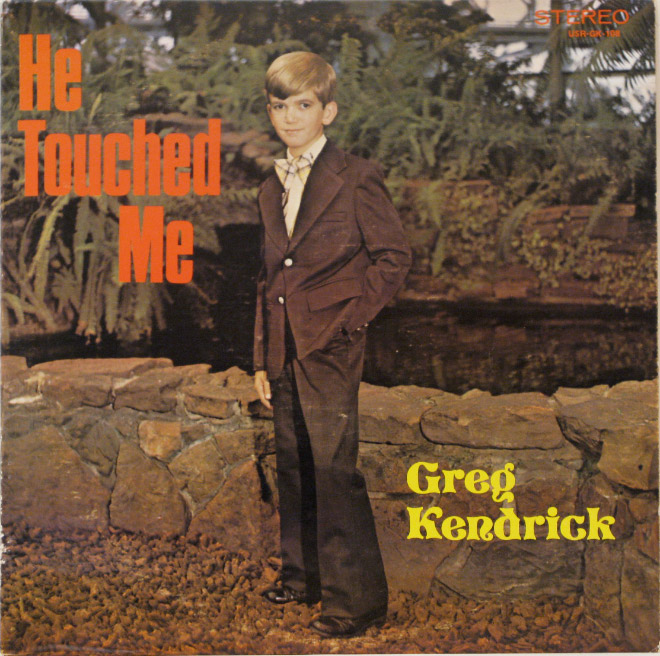
Awkward Christian Albums
Posted in Christianity
Comments Off on Awkward Christian Albums
LAT: In ultra-Orthodox Israeli city, a new coffee chain fuels price war
“The arrival of Cofix is a very good thing for the Orthodox,” Asher said. “The Orthodox study religion and don’t work, so the only thing that matters is the price…. Orthodox don’t care about the taste, they care about how much they have to pay.”
Yitzhak Avrahami, 17, is among those who are grateful for Cofix, even though he spends more of his money at Shloimale.
“Part of me wants to support Cofix,” he said, “because if they close the prices will rise again.”
It’s not the art of drinking coffee that has pervaded Bnei Brak, but the desire for fast, cheap fuel between studying the Torah and praying. This isn’t Paris; no one sits for hours over a cup.
A collective of Bnei Brak’s rabbis have lashed out at this, issuing a signed leaflet and poster calling for a blanket ban on eating and drinking on the run — adding a spiritual dimension to the coffee and pastry price war.
According to the five signatories — Rabbis Yehuda Siliman, Moshe Shaul Klein, Sriel Rosenberg, Menachem Mendel HaCohen Shpern and Masoud Ben-Shimon — eating and drinking on the street is against the Torah.
“We have a duty to warn and alert the public to the phenomenon which has spread in our city: the cheap culture of eating while walking in the street,” the signed notice reads.
The notice condemns such consumption, and the placement of tables outside fast-food chains, equating it to “swindling the public into common behavior” and detracting from “self-respect and the respect of families.”
…Standing outside Shloimale, Rabbi Samuel Weiss said he agreed with the (widely ignored) rabbinic ban on the coffee spots.
“There is a Talmudic saying: He who eats food at market is like a dog,” he said.
Posted in Israel
Comments Off on LAT: In ultra-Orthodox Israeli city, a new coffee chain fuels price war
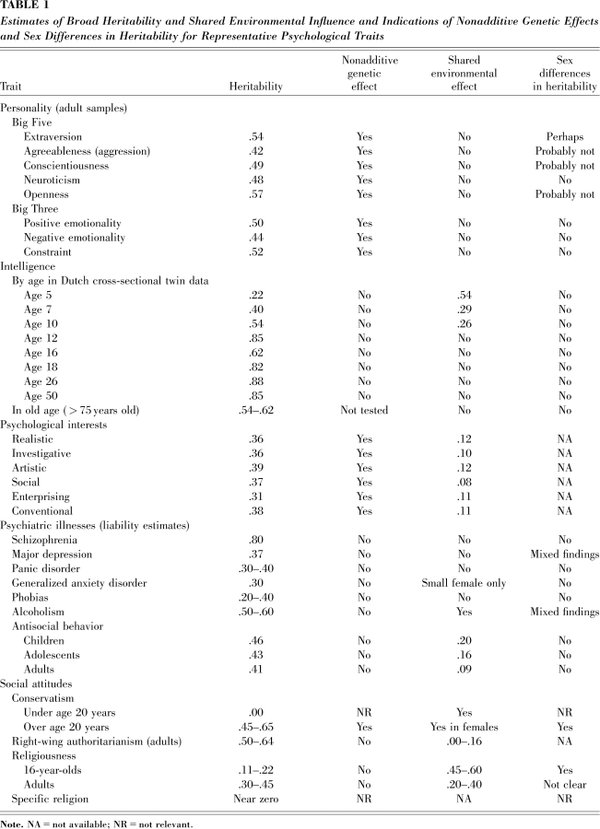
‘All character traits are heritable, especially IQ.’
* Ethnocentrism is biological in origin and a superior evolutionary strategy to altruism.
* In Sweden, Muslim males make up 2% of the population but commit 77% of rapes.
* Black women are more than twice as likely as White women to abuse their husbands.
* Liberal Nightmare: Processes that regulate thought and action are 99% genetically determined.
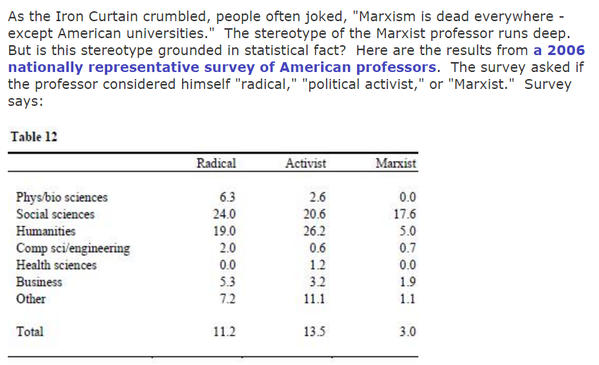
* Of the hundreds of assaults committed by #antifa, 80% were against police, and just 15% against right wingers. Seem like criminals to me.
* The most common crimes committed by left wing extremists are burning cars and general vandalism. I don’t think that’s “making a difference”.
* A stunning 33% of left wing radicals in Germany are unemployed. The overall unemployment rate, by the way, is less that 5%.
* Only 29% of left-wing extremists in Germany have graduated from high school.
* 9 out of 10 left wing extremists in Germany are single. Sucks to be #Antifa!
* 92% of radical leftist criminals in Germany still live at home, with their parents.
Boyd Cathey: Why I Support Donald Trump and Not Ted Cruz
According to the Southern Poverty Law Center:
Born 1950
Group Institute for Historical Review
Location Wendell, NC
Ideology Neo-Confederate
About Boyd CatheyBoyd Cathey has been involved in several extremist movements, including “radical traditionalist Catholicism,” Holocaust denial and the neo-Confederate movement. In the late 1970s, an extremist Catholic sect ordained Cathey, but he didn’t maintain the faith and became a North Carolina state archivist shortly thereafter. In the first years of the 21st century, Cathey aided an extremist takeover attempt aimed at the Sons of Confederate Veterans, a Southern heritage group.
In His Own Words
“I fully recognize that anything I might say on this subject, at least dealing with Wagner, Judaism and Germany, whether reasonable or not, would probably get me exiled even deeper into the realms of the prejudiced unwashed. … [L]et me only recommend … a scholarly trilogy written by Professor Kevin Macdonald … A PEOPLE WHO SHALL DWELL APART, SEPARATION AND ITS DISCONTENTS, and THE CULTURE OF CRITIQUE, which deals with historic Judaism.”
— An April 1999 posting to a CUNY listserv defending German composer Richard Wagner from charges of anti-Semitism and recommending the anti-Semitic works of Kevin MacDonald“For over one hundred years the SCV [Sons of Confederate Veterans] has honored both the memory AND the ideals of the Confederate soldier, but historical memory alone is NOT the SCV’s only role or that of other heritage organizations. The heritage movement is not just a ‘civil war roundtable’ or a ‘history club.’ It is rather a movement… . Like their forbears of 1860-1861, those engaged in the heritage struggle today see themselves in a direct line from Washington, Madison, Jefferson, and so many others, defending the same principles and the same inherited cultural legacy. They want only to live those same principles… .”
— 2004 article in the white supremacist Council of Conservative Citizens’ Citizens Informer newsletter, defending racist SCV leadersBackground
For three decades, radical right-wing activist and author Boyd Cathey has worked to bridge mainstream conservative politics and the far-right fringe worlds of Holocaust denial, extremist Catholicism, and racially tinged neo-Confederate causes.
As a young man, Cathey studied in Argentina, Spain and Switzerland at institutions run by the Society of St. Pius X (SSPX), a “radical traditionalist Catholic” sect that was censured by the Vatican for refusing to comply with modern theological reforms (including reconciliation with Jews and other faiths), and Opus Dei, a far-right Catholic organization that long supported Spanish dictator Francisco Franco.
According to an SSPX newsletter, Cathey was ordained in 1979 and went on to teach at the society’s seminary in Ridgefield, Conn. Two years later, he landed a job at the North Carolina Department of Cultural Resources, where he has worked ever since as an archivist in the Resource Management branch.
After taking his job as a state archivist, Cathey began cultivating ties to far-right journals and groups, starting with Southern Partisan magazine. Based in Columbia, S.C., Southern Partisan is effectively the journal of the hard-core neo-Confederate movement, a magazine once described by The New Republic as a “gumbo of racist apologias.” It regularly publishes rants against homosexuality, feminism, affirmative action and multiculturalism, all while painting a rosy picture of the quality of life for African-American slaves in the pre-Civil War South.
Cathey’s first article appeared in Southern Partisan in 1984 and was a lengthy profile of a Confederate war veteran who rebelled against industrialization in the post-bellum South. The same issue carried a column by another writer that read, “Negroes, Asians, and Orientals (is Japan the exception?); Hispanics, Latins, and Eastern Europeans; have no temperament for democracy, never had, and probably never will. … It may be impolite and unpolitic to bring the subject up, but can our democratic system endure unless we close the frontiers to people who are not culturally and racially predisposed to honor its assumptions?”
The mastheads of subsequent issues of Southern Partisan — from 1984 to 1999 — variously identified Cathey as a contributor, editor, or senior adviser.
In 1988, Cathey was named North Carolina co-chair for the presidential campaign of anti-gay televangelist and Christian Coalition founder Pat Robertson, who is known for espousing conspiracy theories involving Jewish bankers and Freemasons. Four years later, he became state campaign manager for white nationalist commentator Pat Buchanan’s presidential campaign.
During the 1992 Buchanan campaign, Cathey was exposed for having joined the editorial advisory committee of the Journal of Historical Review in 1989. That journal is published by the notorious Newport, Calif.-based Institute for Historical Review (IHR), arguably the world’s leading Holocaust denial organization. IHR was founded by well-known anti-Semitic publisher Willis Carto. (At a July 2002 IHR conference, one of Cathey’s fellow advisory committee members, French “researcher” Robert Faurisson, opened his lecture by decrying “the lie of the alleged Holocaust and the alleged gas chambers.”)
As early as 1996, Cathey claimed that he had quit his IHR position. But seven years later, in 2003, the group’s leader was still saying that Cathey was on IHR’s advisory committee, and Cathey’s name remained on IHR’s website.
More recently, Cathey became a key player in the multi-year attempt by racist extremists to assume control of the Sons of Confederate Veterans heritage group. The takeover began when controversial neo-Confederate leader Ron Wilson was elected commander in chief of the SCV in August 2002. Following his election, Wilson purged some 300 members who criticized racism within the group, including the SCV’s North Carolina public information officer. Wilson replaced that officer with Cathey, whom Wilson had earlier appointed to the SCV’s executive council.
In June 2003, Cathey, propagandizing for extremist SCV members in the continuing internal battle for control of the organization, called for increased activism from its members. He also complained bitterly of the “immense numbers of ‘Yankees’ and ‘Latinos'” who have moved to the South and “change[d] our society.”
Though he appears to have been less active than in previous years, Cathey was listed online in 2011 as a member of the “academic board” of the neo-Confederate League of the South’s North Carolina War Between the States Sesquicentennial Commission. The Commission purported to remind North Carolinians that their state had been “forced out of the Union” to fight not for slavery but for “the American principle of self-government.”
Boyd Cathey writes for Unz.com:
Why I Support Donald Trump and Not Ted Cruz
It was my mentor and friend, the late Dr. Russell Kirk, whose volume The Conservative Mind actually initiated what became the older, scholarly “conservatism” in the 1950s. “Conservatism,” as Kirk explained it, encompassed an inherent distrust of liberal democracy, staunch opposition to egalitarianism, and an extreme reluctance to commit the United States to global “crusades” to impose American “values” on “unenlightened” countries around the world. Conservatives should celebrate local traditions, customs, and the inherited legacies of other peoples, and not attempt to destroy them. America, Kirk insisted, was not founded on a democratic, hegemonic ideology, but as an expression and continuation of European traditions and strong localist, familial and religious belief. Indeed, Kirk authored a profound biography of Senator Robert Taft, “Mr. Conservative,” who embodied those principles.
Beginning in the 1970s into the 1980s there was an influx of former Leftist and ex-Trotskyite intellectuals and writers, who had become anti-Communists and who began to move to the right into the older conservative movement. These were denominated the Neoconservatives, or Neocons. At first the Neocons were welcomed as ex-Marxists “coming in from the cold.” The problem was, and still is, that the Neocons brought with them not only their welcomed and spirited anti-Communism, but also their intellectual template of across-the-board egalitarianism, internationalism, and an a priori liberal and global interventionist foreign policy, which has, as its underlying principle, an almost chiliastic belief in imposed “liberal democracy” as the “final stage” of human (and secular) progress. And it is that Idea of (irreversible) Progress, which means the destruction of older traditions, customs, and those things considered “reactionary” that stand in the way of Progress, that characterizes most of Neocon thinking. Such ideas, needless to say, run counter to traditional conservative principles.
With strong academic connections and financial sources, the Neocons soon took control of most of the older conservative foundations, think tanks, and publications, and they did so with an iron hand, reminiscent of older days, when their Marxism was readily visible. And, more significantly, through this control of most “conservative” institutions, especially those centered in Washington, D. C., they very soon began to provide experts and advisors to the national Republican Party and its candidates. Their dominance manifested itself in organs such as the Ethics and Public Policy Center, the American Enterprise Institute (AEI), and in publications like Commentary, The Public Interest, and National Review (which shed its previous attachments to the older conservatism). The advent of the Rupert Murdoch media empire, with Fox News television, The Wall Street Journal, The Weekly Standard, and the New York Post as its notable voices, cemented this influence, which manifested itself abundantly in post-Reagan GOP policies and prescriptions.
With the triumph of the Neocons, conservatism soon no longer resembled what it once was. The principles which so characterized the Old Right were replaced with an ideological zeal for the very opposite of those principles. Older conservative icons such as John Randolph and John C. Calhoun, included prominently in Kirk’s pantheon of great conservatives, were, due to their opposition to egalitarianism, expelled from the Neoconservative lexicon, to be replaced by Abraham Lincoln, and later figures such as Gandhi and Martin Luther King. (And Southerners like Sam Ervin, Harry Byrd Sr., Robert E. Lee, Wade Hampton, etc., were now uniformly condemned and rejected by the new “mainstream conservatives.”)
Lincoln, who was not included in Kirk’s pantheon, became the new and real “Founder” of the American republic, as the editor of the post-William Buckley National Review, Rich Lowry, contends. The civil rights revolution of the 1950s and 1960s, with its far-reaching and radical court decisions, was pronounced to be “conservative,” and, at the same time, Southern conservatives, such as the brilliant Mel Bradford, and anti-egalitarians, such as Dr. Samuel Francis, were purged out of the “movement.” Scholars such as Bradford, Joseph Sobran, and the internationally-recognized political scientist/historian, Paul Gottfried, had their careers attacked, were denied well-deserved professional positions, and were banished from formerly conservative publications and access to the largesse of formerly conservative foundations.
Libertarians, too, were shown the door. Never a good fit within the older conservative movement of the 1960s, their exit began long before the triumph of Neoconservatism, with prominent advocates associating at such foundations as the Ludwig von Mises Institute or congregating in certain college economics departments, writing via sites such as LewRockwell.com, and publishing scholarly works by the Liberty Fund. Politically, their most significant leader in recent years has been Ron Paul, but his prescriptions and views were dismissed just as firmly as were those of the Old Right, or paleoconservatives, as they were sometimes called.
No one was allowed to violate the new orthodoxy without severe consequences. But more revolutionary, the logic of Neoconservative egalitarianism, when carried out to its fullest extent, has meant that very many of those now-termed Mainstream Conservatives presently endorse, either openly (e.g., Jonah Goldberg, the National Review magazine, etc.), or tacitly (e.g. George Will, Charles Krauthammer at Fox, and a majority of national mainstream conservative “opinion leaders”), such aberrations as same sex marriage and feminism, and various absurdities under the rubric of civil rights. And at the same time they push zealously for “regime change” internationally everywhere (which also means eventual control by Wall Street). This has meant American misadventures in Bosnia, Kosovo, Iraq, Libya, Egypt, and elsewhere.
Thus, in a very real sense, what is commonly termed “conservatism” today has not been truly conservative in the traditional sense for probably three or four decades, at least. Indeed, political scientists and historians such as Gottfried, Claes Ryn (at Catholic Univ), Gary Dorrien (in his study, The Neoconservative Mind), and others have examined this transition in some detail.
Turning to current Republican politics, for the first time since 1992 and the Pat Buchanan campaign, there is actual opposition, if a bit amorphous, this year to the reigning Neoconservative template that has dominated Republican policy thinking. The campaign rhetoric and views of Donald Trump, I would suggest, represent a potential break with the regnant Neoconservative orthodoxy. Perhaps more importantly, none of the GOP candidates, save Trump, is really capable of challenging the Neoconservative template, and this is precisely why most of the GOP and Neocon elites despise him so much. Thus, while the Neocon and GOP Establishment heartily dislike Ted Cruz, they actually fear and loathe Trump. Trump, is not a “movement conservative,” that is, he is not a Republican candidate schooled in the narrative of Neoconservatism (while Marco Rubio wallows in it). In the current political context, the term “conservative” is used so cavalierly that every GOP candidate now claims the mantel: Jeb, Kasich, Christie, Rubio, and so on: all claim to be “movement (or mainstream) conservatives.”
Trump is the candidate who has been bold and farsighted enough to raise the real issues that are affecting every day Americans, not just “movement conservatives.” Most importantly, there is the supremely significant issue of illegal immigration. Consider, for example, what has happened to California, that up to the 1980s was considered a reliably “conservative” state, but after the 1986 Immigration Act, and three-to-four million new immigrants from Latin America, most illegal, will no longer ever vote for a Republican, much less any kind of conservative. The question is: do we want this to continue to happen? Who will be the candidate who will actually stop—and reverse—this?
Then, there is the issue of Muslims coming to America. Trump’s plan to temporarily bar them coming in until a proper and secure screening system is put into place, is not only logical, it is completely constitutional and legal. Various legal experts and historical and judicial precedents confirm Trump’s proposal; indeed, Professor Jan Ting has mined the archives to discover ample support for Trump’s pledge, including rulings by the Supreme Court, the Immigration and Citizenship Act of 1952 (U.S.C. Title 8, Section 1182), and actions by Presidents Jimmy Carter, Franklin Roosevelt, Harry Truman, and others; also, No other candidate, including Ted Cruz, has advocated the same program, and several have mindlessly attacked him for it. But does anyone doubt that Trump would do it?
It is Trump who, on the issue of militant Islam, inspires both the hatred and fear of politically-correct multiculturalists, not just in this country, but around the world. In Britain a petition has been pushed by the political Left to ban Trump’s entry into the United Kingdom. Signed by more than a half-million people and endorsed by the usual assortment of far left and communist organizations, it has actually been debated in the English parliament (January 18, 2016). And although the Conservative Party Prime Minister David Cameron has condemned Trump’s proposal as “divisive, stupid and wrong,” he has stopped short of endorsing a ban of Trump’s entry; Ted Cruz has not been the object of similar attacks. The internationalist politically-correct elites recognize their primary foe.
And the Leftist Hollywood elites are lining up against Trump. Notorious Vietcong supporter Jane Fonda has organized a committee to “Stop hate dump Trump.” Including such old school pro-communists as Harry Belafonte and leftists like Jonathan Demme, the committee has boasted that it has 1,200 supporters, and has condemned Trump, declaring: “We are offering Americans a chance to be heard and engage in action, as Trump’s campaign gains momentum even as he increases his hateful and divisive rhetoric.”
At almost every Trump rally there are demonstrators, from Black Lives Matter, from various pro-illegal immigration groups, and those representing an assortment of Marxist organizations. After recent protests in North and South Carolina, immigration lawyer, Marty Rosenbluth, speaking for a network of such groups, declared: “Let’s just say if Mr. Trump comes back to our neighborhood, we might pay him a visit… He is the real enemy of progressives this year.” [http://www.aol.com/article/2016/01/11/muslim-womans-silent-trump-protest-was-far-from-spontaneous/21295624/?icid=maing-grid7%7Chtmlws-main-bb%7Cdl21%7Csec1_lnk3%26pLid%3D-1343401184] It is clear that the Left and the Establishment know who is their real enemy in 2016…
Neoconservative publicists and thought-shapers, like Bill Kristol and George Will, literally hate Donald Trump. Will, especially, has written with a venom and unrestrained passion that even for him is unaccustomed. His latest anti-Trump philippic appeared in the National Review on December 23, 2015. [http://www.nationalreview.com/article/428906/donald-trump-threat-republican-party]. Weekly Standard editor Kristol has suggested that if Trump were the GOP standard bearer in 2016, the Establishment might launch a third party effort. As the editor of the Neocon organ tweeted out on December 21, 2016, “Crowd-sourcing: Name of the new party we’ll have to start if Trump wins the GOP nomination? Suggestions welcome at [email protected].”
Trump has continued to lead the Republican pack, even pad his lead in the polls. Thus, one of the latest desperation tactics in this power politics game on the part of a few members of the GOP Establishment was evident on Fox News’s “Special Report with Bret Baier,” Thursday night, January 21, as panelists, including Charles Krauthammer and Nina Easton of Fortune magazine whose utter contempt for Trump was so readily visible recently, now appear to want to cozy up to the New York billionaire, and criticize Cruz. The immediate hope was clearly to rattle some hard core, anti-Establishment Trump supporters, cast some doubts, and peel them away over to Cruz, and thus strengthen the second-place Cruz to the point that he could neutralize Trump’s strong lead. The strategy here was simple: destroy your real enemy by appearing to embrace that enemy. That way, a Marco Rubio, or perhaps a Chris Christie, or even Jeb or Kasich, might slip through and become a real player. After all, these latter four are their real candidates.
But just as this strategy seemed to blossom, Rich Lowry’s National Review assembled a group of twenty-two Neocons/GOP Establishment writers to launch a massive, multi-focused, and vicious attack on Trump and his lack of what they termed “conservative” credentials, at least as they see it. Among the writers we find the usual zealous globalist and egalitarian advocates, including Bill Kristol, John Podhoretz (these two, sons of two of the ex-Marxist founders of neoconservatism), Andrew McCarthy, Cal Thomas (the Neocon Evangelical), and the George Soros-supported Southern Baptist Russell Moore. Each author penned a short assault on Trump and his lack of “conservative” orthodoxy, reading him out of “movement conservatism.” Moore summed up much of their charges, condemning “Trump’s vitriolic–and often racist and sexist–language about immigrants, women, the disabled, and others…” (January 21, 2016). That such leftist-sounding language should appear in what was once considered the premiere conservative magazine in the United States, should come as no surprise. After all, under Lowry and his team at National Review has endorsed same sex marriage as “conservative” and no longer resembles the journal began by William F. Buckley. Clearly, the strategy to stop Trump involves both attacks by some neocon thought-leaders on his conservative bona fides, while others seem to accept his inevitability. And, equally evident is that the real intended recipient of these double-edged initiatives would be a Marco Rubio, or perhaps a Christie or even Jeb Bush.
In some ways, their attempt to expel and silence Trump is reminiscent of earlier efforts to rid their movement of any elements that they deemed undesirable or that dared suggest that Neocon dogma is the only acceptable version. It is exactly what they did to members of the older conservatism. They continue to fail miserably to understand Donald Trump’s strong appeal, not just to those who think of themselves as grass roots conservatives, but to a broader, more populist and nationalist cross-section of Americans.
COMMENTS:
* I had to laugh at how Mr. Cathey carefully avoids mentioning the ethnic origin of the Neoconservatives.
I have to wonder whether he thinks that we really are under attack from “radical Islam”. Or is he just pretending to believe that?
The problem is: how can you be opposed to the neocons if you accept the central myth that those self-same neocons have constructed?
How do you oppose the neocons if you’re terrified of pointing out that they are Jews whose primary loyalty is to international Jewry and the state of Israel?
* Presumably you would accept that people tend to seek to avoid cognitive dissonance and that the American Jews you anathematise presumably regard themselves as loyal patriotic Americans. Is it not plausible to see most of the Jewish neo-cons as people who maintain mental comfort with some such general prima facie belief as “what’s good for Israel is generally good for the USA”? It may have been urban myth that he said it but no one seems to have rejected as absurd the “what’s good for General Motors is good for the USA” of “Engine Charlie” Wilson when Secretary of Defense.
People like to feel that their ideas fit together consistently, do they not?
* The history of the postwar conservative movement is indeed a legacy of failure. But the failure begins not with the neoconservatives claiming to be “mugged by reality”, it begins with the very real personal failings of William F. Buckley Jr.
The man regarded as the movement’s founder, was the descendant of oil money who lived as an Long Island version of the Beverly Hillbillies. In addition to his time in the CIA, and their likely funding of NR as they did Partisan Review, he was always motivated to keep the ‘movement’ on an internationalist track. Others were tolerated until their foundations could be rotted, and then subsequently demolished.
If indeed as it appears, Trump wins the nomination, the GOP elected officeholders will almost certainly grovel toward his position. The neoconservatives will face a starker quandry, they depend almost entirely on the generosity of two men: Murdoch and Anschutz. This funding is dependent on their ability to be ideological gatekeepers. If they can’t do that, they will retreat back to the center-left that their fathers left with the death of Henry Jackson. They have regressed to the mean.
Posted in America, Donald Trump
Comments Off on Boyd Cathey: Why I Support Donald Trump and Not Ted Cruz
Will Peyton Manning Go Out On Top?
* A very satisfying and well-played game. Both defenses were stellar, Denver’s seemed to be dominating Brady more than New England was stopping Manning but it came down to the last few seconds anyway because Brady somehow always finds another level when he absolutely must. The only reason the Patriots lost was that Gostkowski’s missed PAT early on forced them to go for 2 at the end of the game and the pass was tipped (a superb defensive play, the pass was on target and without the tip the game would have gone to overtime).
Brady threw one bad INT but he was under extreme pressure the whole game and took many hits without ever losing his poise. Those two 4th down conversions on the final drive were awesomely well executed against irreproachable defense. And Gronkowski is looking like the greatest tight end ever and the best non-QB in the NFL by a wide margin, there has never been a player like him.
Manning played very well and I hope he wins the Super Bowl so he can retire on top.
* My Patriots didn’t get it done. I don’t know why they lost those last two games of the season to mediocre teams, but Belichick has some explaining to do. Denver is a hard place to win and the Patriots had no business losing home field in the first place. If this game was in Foxboro New England would have won.
I’m rooting now for Peyton to ride into the sunset with his second Super Bowl win. Fascinating matchup – good ole boy at almost 40 versus the young, black and brash Cam Newton.
* Brady’s offensive line was a sieve against a great Broncos defensive effort, and so his numbers look awful (3INTs, a QB rating of 54.something, final INT on the 2-point conversion at the end that cost them the game).
Yet stepping back, you realize Brady’s performance wasn’t his fault (for the most part) and the loss wasn’t on him. His O-line let in so many rushers he started trying to rush plays and got happy feet, which caused a lot of bad throws and the INTs. He got cracked more than once HARD and didn’t have much time at all to make a pass (generally speaking, the more time in the pocket a QB has to make a decision, the better).
And his kicker blew that game. A missed extra point forced the going-for-2. Brady made a risky play on the 2-point conversion because if he didn’t release then the game was lost anyway.
And the running game was nonexistent—their best runner was done for the season, and they had to hire a joker off the scrap heap just to fill the space that the Orange Crush D just stonewalled. So that explains why Brady was throwing so much despite the handicaps and he racked up 300 yards—the Pats simply had no options besides Brady getting the ball at shotgun (to give him an extra second to survey the field) and releasing quickly.
All this is to say that “Player A v. Player B” doesn’t work in football and can’t be judged under most circumstances unless the two players are a DB and a WR and the D is playing 1-on-1 the entire game and said DB is ALWAYS on said WR man-to-man. And that never happens.
* I can remember back in the 2000 Republican primary, Bush was the non-intervention candidate, while McCain was the intervention candidate. Bush explicitly ran on non-intervention and campaigned against nation-building.
Do these primary campaigns really tell us much?
* Cruz now has a better rating than Trump from NumbersUSA.
I much prefer Trump on the issues (and not just immigration), but I’m starting to think Cruz is a safer bet. He’s beating Hillary in the polls while Trump’s getting slaughtered. I’m not super optimistic that either would actually do anything about immigration, but in any event you have to actually win the election first.
And if (when) Trump loses, it will be universally blamed on his immigration stance, whereas if Cruz loses they’ll still blame immigration but also the gold standard, the abortion/rape thing, and so on. So it would be a lot less damaging.
* 23% of today’s NYT wedding announcements are men marrying men.
* There’s a saying, “Africa always wins,” which means that incompetence, violence, corruption, etc. , will defeat any effort to change Africa for the better. The same can be said about Atlantic City or any other city in America with too small a white percentage of the population.Whites accounted for 16 percent of the city’s population in 2010.
So, “Casino Has Great Night,” but last year Bally’s Atlantic City closed its doors. In the end, Atlantic City always wins.
* The EMH is somewhat on the right track but errant because it is not just information that points to the future value of a stock, but the correct analysis of that information. It would be a lot better if weasel words such as “tend to be” could replace “is”.
For a given stock or asset, there is a limited set of people interested in that particular stock, with different information that they are privy to and different biases and analytic ability to operate on that information. For a particular asset, it may be that the information is sitting there staring everyone in the face, but no one has the intelligence or experience to analyse it the correct way. Or they do analyse it correctly but second-guess themselves and follow the herd. Or maybe Buffett in his prime has found the stock, but has his broker nibble away at it to avoid adjusting the price much. In any of those situations, an astute person who looks at the information correctly will be able to earn a good return.
I half wonder if EMH gets so much traction because it teaches otherwise smart people that “these are not the droids you’re looking for”. Although for the average Joe the EMH is a great rule.
* A finance professor of mine in college was fond of saying, “There are always more Cadillacs parked behind the casinos than in front.”
* “The Big Short” as the anti-EMH book/movie.
RABBI NACHUM SHIFREN – “The Surfing Rabbi”
“When Rabbi Shifren recounts his life journey he takes one both on an adventure and a path of inspiration. It is refreshing to hear about how one discovers G-d in unexpected places. His life’s experiences and humor make him uniquely able to present an empowering message of hope and purpose.”
Rabbi Eliezer Wolf, Chabad of Aventura, Florida, November, 2015
Controversial rabbi to speak at Republican meeting
Rabbi Nachum Shifren holds contentious views, and he does not deny it.
The orthodox Jew spoke out against the hostile Muslim state, at a counter-sharia demonstration in Dearborn, Michigan — known as the Muslim capitol of America — a half decade ago. He said he was speaking to the jihadist community and believes he would have been harmed had it not been for the police.
He also authored a book published in 2001 about his tenure as a school teacher within the Los Angeles Unified School District. It was there he saw constant death threats from students, along with other professional adversity.
“I am obviously a controversial figure,” Shifren said. “I get the message out.”
On Wednesday, he will be in Angels Camp — to speak about jihad in the schools.
Shifren is also known as the “Surfing Rabbi,” a nickname that stuck after he got his ordination from a seminary in Jerusalem in 1991.
“It’s an education thing,” said Shifren, who ran for the California U.S. Senate seat as a member of the Tea Party in 2012.
The point of his presentation, set at 7 p.m. in the Fireside Room at the Greenhorn Creek Resort, is to raise awareness about a subject that might be neglected in the region. Shifren said that a jihad attack is not likely to occur in rural location.
“Calaveras County is not a place they’ll be active,” Shifren said. “Jihad states are more active in the main cities of America.”
Shifren said that the subject could be relevant to the acommunity though threat levels are virtually nonexistent. He believes that since the country is at war with what he considers the radical Islam, they should understand what is going on just as the youth understood the concepts of World War II in the early 1940s.
Shifren was invited to speak by the Republican Party of Calaveras County. Vicky Reinke, chairwoman of the organization, said the rabbi was recommended by the chair of the Amador Republicans.
He is a good friend of the chairperson, Reinke said. And he was in town.
Reinke said that the subject does not apply locally, and she is not worried about the schools locally. But, because it is such a prominent national and international topic, they decided to invite the rabbi.
“We try to bring in things to help. So many people come into our meetings and want to talk about what is happening in Washington, D.C.,” Reinke said. “I’ve never met him. He’s never met me. I think the topic is very pertinent. I’m anxious to meet him. It will be a different perspective. I think it’s good for people to understand.”
Posted in Islam, R. Nachum Shifren
Comments Off on RABBI NACHUM SHIFREN – “The Surfing Rabbi”
Transgender Man Gives Birth to Baby — Embraces Life as ‘Abba’
I don’t think she/he’ll get an aliyah at an Orthodox shul.
(JTA) — When Rafi Daugherty went to the hospital for the birth of his first child, he posted a sign on the delivery room door.
“I am a single transgender man having my first baby,” it read. “I use he/him/his pronouns and will be called ‘Abba’ (Hebrew for father) by the baby. Papa, Dad, Daddy, Father … are also ok.”
Rafi, 33, wanted hospital staff to be prepared for what they were about to see: a man laboring in bed.
“I didn’t want them to assume that I identified as female because I was having a baby,” he said.
After eight hours of labor, Rafi was holding his 7-pound, 10-ounce daughter: Ettie Rose, named, in the Jewish tradition, for Rafi’s maternal grandmother and great-grandmother.
Since bringing Ettie home from the hospital, Rafi’s days have been filled with frequent feedings — unable to nurse, he gives his daughter donor breast milk — and diaper changes and stroller walks around his Denver neighborhood.
Nearly five months on, Ettie is a thriving infant with an impressive collection of plush seahorses.
Posted in Trans
Comments Off on Transgender Man Gives Birth to Baby — Embraces Life as ‘Abba’
Think You’ve Got A Tough Job?
Back in 2003, I wrote about Dildos of Shame.
Posted in Humor
Comments Off on Think You’ve Got A Tough Job?
Us & Them: The Enduring Power of Ethnic Nationalism
By Jerry Z. Muller for Foreign Affairs, March 2008:
PROJECTING THEIR own experience onto the rest of the world, Americans generally belittle the role of ethnic nationalism in politics. After all, in the United States people of varying ethnic origins live cheek by jowl in relative peace. Within two or three generations of immigration, their ethnic identities are attenuated by cultural assimilation and intermarriage. Surely, things cannot be so different elsewhere.
Americans also find ethnonationalism discomfiting both intellectually and morally. Social scientists go to great lengths to demonstrate that it is a product not of nature but of culture, often deliberately constructed. And ethicists scorn value systems based on narrow group identities rather than cosmopolitanism.
But none of this will make ethnonationalism go away. Immigrants to the United States usually arrive with a willingness to fit into their new country and reshape their identities accordingly. But for those who remain behind in lands where their ancestors have lived for generations, if not centuries, political identities often take ethnic form, producing competing communal claims to political power. The creation of a peaceful regional order of nation-states has usually been the product of a violent process of ethnic separation. In areas where that separation has not yet occurred, politics is apt to remain ugly.
A familiar and influential narrative of twentieth-century European history argues that nationalism twice led to war, in 1914 and then again in 1939. Thereafter, the story goes, Europeans concluded that nationalism was a danger and gradually abandoned it. In the postwar decades, western Europeans enmeshed themselves in a web of transnational institutions, culminating in the European Union (EU).
After the fall of the Soviet empire, that transnational framework spread eastward to encompass most of the continent. Europeans entered a postnational era, which was not only a good thing in itself but also a model for other regions. Nationalism, in this view, had been a tragic detour on the road to a peaceful liberal democratic order.
This story is widely believed by educated Europeans and even more so, perhaps, by educated Americans. Recently, for example, in the course of arguing that Israel ought to give up its claim to be a Jewish state and dissolve itself into some sort ofbinational entitywith the Palestinians, the prominent historian Tony Judt informed the readers of The New York Review of Books that “the problem with Israel … [is that] it has imported a characteristically late-nineteenth-century separatist project into a world that has moved on, a world of individual rights, open frontiers, and international law. The very idea of a ‘Jewish state’… is an anachronism.”
Yet the experience of the hundreds of Africans and Asians who perish each year trying to get into Europe by landing on the coast of Spain or Italy reveals that Europe’s frontiers are not so open. And a survey would show that whereas in 19oo there were many states in Europe without a single overwhelmingly dominant nationality, by 2007 there were only two, and one of those, Belgium, was close to breaking up. Aside from Switzerland, in other words-where the domestic ethnic balance of power is protected by strict citizenship laws-in Europe the “separatist project” has not so much vanished as triumphed.
Far from having been superannuated in 1945, in many respects ethnonationalism was at its apogee in the years immediately after World War II. European stability during the Cold War era was in fact due partly to the widespread fulfillment of the ethnonationalist project.
And since the end of the Cold War, ethnonationalism has continued to reshape European borders. In short, ethnonationalism has played a more profound and lasting role in modern history than is commonly understood, and the processes that led to the dominance of the ethnonational state and the separation of ethnic groups in Europe are likely to reoccur elsewhere. Increased urbanization, literacy, and political mobilization; differences in the fertility rates and economic performance of various ethnic groups; and immigration will challenge the internal structure of states as well as their borders. Whether politically correct or not, ethnonationalism will continue to shape the world in the twenty-first century.
THERE ARE two major ways of thinking about national identity. One is that all people who live within a country’s borders are part of the nation, regardless of their ethnic, racial, or religious origins. This liberal or civic nationalism is the conception with which contemporary Americans are most likely to identify. But the liberal view has competed with and often lost out to a different view, that of ethnonationalism. The core of the ethnonationalist idea is that nations are defined by a shared heritage, which usually includes a common language, a common faith, and a common ethnic ancestry.
The ethnonationalist view has traditionally dominated through much of Europe and has held its own even in the United States until recently. For substantial stretches of U.S. history, it was believed that only the people of English origin, or those who were Protestant, or white, or hailed from northern Europe were real Americans. It was only in 1965 that the reform of U.S. immigration law abolished the system of national-origin quotas that had been in place for several decades. This system had excluded Asians entirely and radically restricted immigration from southern and eastern Europe.
Ethnonationalism draws much of its emotive power from the notion that the members of a nation are part of an extended family, ultimately united by ties of blood. It is the subjective belief in the reality of a common “we” that counts. The markers that distinguish the in-group vary from case to case and time to time, and the subjective nature of the communal boundaries has led some to discount their practical significance. But as Walker Connor, an astute student of nationalism, has noted, “It is not what is, but what people believe is that has behavioral consequences.” And the central tenets of ethnonationalist belief are that nations exist, that each nation ought to have its own state, and that each state should be made up of the members of a single nation.
The conventional narrative of European history asserts that nationalism was primarily liberal in the western part of the continent and that it became more ethnically oriented as one moved east. There is some truth to this, but it disguises a good deal as well. It is more accurate to say that when modern states began to form, political boundaries and ethnolinguistic boundaries largely coincided in the areas along Europe’s Atlantic coast. Liberal nationalism, that is, was most apt to emerge in states that already possessed a high degree of ethnic homogeneity. Long before the nineteenth century, countries such as England, France, Portugal, Spain, and Sweden emerged as nation-states in polities where ethnic divisions had been softened by a long history of cultural and social homogenization…
TODAY, PEOPLE tend to take the nation-state for granted as the natural form of political association and regard empires as anomalies.
But over the broad sweep of recorded history, the opposite is closer to the truth. Most people at most times have lived in empires, with the nation-state the exception rather than the rule. So what triggered the change?
The rise of ethnonationalism, as the sociologist Ernest Gellner has explained, was not some strange historical mistake; rather, it was propelled by some of the deepest currents of modernity. Military competition between states created a demand for expanded state resources and hence continual economic growth. Economic growth, in
turn, depended on mass literacy and easy communication, spurring policies to promote education and a common language-which led directly to conflicts over language and communal opportunities.Modern societies are premised on the egalitarian notion that in theory, at least, anyone can aspire to any economic position. But in practice, everyone does not have an equal likelihood of upward economic mobility, and not simply because individuals have different innate capabilities. For such advances depend in part on what economists call “cultural capital,” the skills and behavioral patterns that help individuals and groups succeed. Groups with traditions of literacy and engagement in commerce tend to excel, for example, whereas those without such traditions tend to lag behind.
As they moved into cities and got more education during the nineteenth and early twentieth centuries, ethnic groups with largely peasant backgrounds, such as the Czechs, the Poles, the Slovaks, and the Ukrainians found that key positions in the government and the economy were already occupied-often by ethnic Armenians, Germans,
Greeks, or Jews. Speakers of the same language came to share a sense that they belonged together and to define themselves in contrast to other communities. And eventually they came to demand a nationstate of their own, in which they would be the masters, dominating politics, staffing the civil service, and controlling commerce.Ethnonationalism had a psychological basis as well as an economic one. By creating a new and direct relationship between individuals and the government, the rise of the modern state weakened individuals’ traditional bonds to intermediate social units, such as the family, the clan, the guild, and the church. And by spurring social and geographic mobility and a self-help mentality, the rise of market-based economies did the same. The result was an emotional vacuum that was often filled by new forms of identification, often along ethnic lines.
Ethnonationalist ideology called for a congruence between the state and the ethnically defined nation, with explosive results. As Lord Acton recognized in 1862, “By making the state and the nation commensurate with each other in theory, [nationalism] reduces practically to a subject condition all other nationalities that may be within the boundary. … According, therefore, to the degree of humanity and civilization in that dominant body which claims all the rights of the community, the inferior races are exterminated, or reduced to servitude, or outlawed, or put in a condition of dependence.” And that is just what happened.
NINETEENTH-CENTURY LIBERALS, like many proponents of globalization today, believed that the spread of international commerce would lead people to recognize the mutual benefits that could come from peace and trade, both within polities and between them.
Socialists agreed, although they believed that harmony would come only after the arrival of socialism. Yet that was not the course that twentieth century history was destined to follow. The process of “making the state and the nation commensurate” took a variety of forms, from voluntary emigration (often motivated by governmental
discrimination against minority ethnicities) to forced deportation (also known as “population transfer”) to genocide. Although the term “ethnic cleansing” has come into English usage only recently, its verbal correlates in Czech, French, German, and Polish go back much further. Much of the history of twentieth-century Europe, in fact, has been a painful, drawn-out process of ethnic disaggregation.Massive ethnic disaggregation began on Europe’s frontiers. In the ethnically mixed Balkans, wars to expand the nation-states of Bulgaria, Greece, and Serbia at the expense of the ailing Ottoman Empire were accompanied by ferocious interethnic violence. During the Balkan Wars of 1912-13, almost half a million people left their traditional homelands, either voluntarily or by force. Muslims left regions under the control of Bulgarians, Greeks, and Serbs; Bulgarians abandoned Greek-controlled areas of Macedonia; Greeks fled from regions of Macedonia ceded to Bulgaria and Serbia.
World War I led to the demise of the three great turn-of-the century empires, unleashing an explosion of ethnonationalism in the process. In the Ottoman Empire, mass deportations and murder during the war took the lives of a million members of the local Armenian minority in an early attempt at ethnic cleansing, if not genocide. In 1919, the Greek government invaded the area that would become Turkey, seeking to carve out a “greater Greece” stretching all the way to Constantinople. Meeting with initial success, the Greek forces
looted and burned villages in an effort to drive out the region’s ethnic Turks. But Turkish forces eventually regrouped and pushed the Greek army back, engaging in their own ethnic cleansing against local Greeks along the way. Then the process of population transfers was formalized in the 1923 Treaty of Lausanne: all ethnic Greeks were to go to Greece, all Greek Muslims to Turkey. In the end, Turkey expelled almost 1.5 million people, and Greece expelled almost 400,000.Out of the breakup of the Hapsburg and Romanov empires emerged a multitude of new countries. Many conceived of themselves as ethnonational polities, in which the state existed to protect and promote the dominant ethnic group. Yet of central and eastern Europe’s roughly 6o million people, 25 million continued to be part of ethnic minorities in the countries in which they lived. In most cases, the ethnic majority did not believe in trying to help minorities assimilate, nor were the minorities always eager to do so themselves.
Nationalist governments openly discriminated in favor of the dominant community. Government activities were conducted solely in the language of the majority, and the civil service was reserved for those who spoke it.
In much of central and eastern Europe, Jews had long played an important role in trade and commerce. When they were given civil rights in the late nineteenth century, they tended to excel in professions requiring higher education, such as medicine and law, and soon Jews or people of Jewish descent made up almost half the doctors and lawyers in cities such as Budapest, Vienna, and Warsaw. By the 1930s, many governments adopted policies to try to check and reverse these advances, denying Jews credit and limiting their access to higher education. In other words, the National Socialists who came to power in Germany in 1933 and based their movement around a “Germanness” they defined in contrast to “Jewishness” were an extreme version of a more common ethnonationalist trend.
The politics of ethnonationalism took an even deadlier turn during World War II. The Nazi regime tried to reorder the ethnic map of the continent by force. Its most radical act was an attempt to rid Europe of Jews by killing them all-an attempt that largely succeeded. The Nazis also used ethnic German minorities in Czechoslovakia, Poland, and elsewhere to enforce Nazi domination, and many of the regimes allied with Germany engaged in their own campaigns against internal ethnic enemies. The Romanian regime, for example, murdered hundreds of thousands of Jews on its own, without orders from Germany, and the government of Croatia murdered not only its Jews but hundreds of thousands of Serbs and Romany as well.
ONE MIGHT have expected that the Nazi regime’s deadly policies and crushing defeat would mark the end of the ethnonationalist era. But in fact they set the stage for another massive round of ethnonational transformation. The political settlement in central Europe after World War I had been achieved primarily by moving borders to align them with populations. After World War II, it was the populations that moved instead. Millions of people were expelled from their homes and countries, with at least the tacit support of the victorious Allies.
Winston Churchill, Franklin Roosevelt, and Joseph Stalin all concluded that the expulsion of ethnic Germans from non-German countries was a prerequisite to a stable postwar order. As Churchill put it in a speech to the British parliament in December 1944, “Expulsion is the method which, so far as we have been able to see, will be the most satisfactory and lasting. There will be no mixture of populations to cause endless trouble. … A clean sweep will be made. I am not alarmed at the prospect of the disentanglement of population, nor am I alarmed by these large transferences.” He cited the Treaty of Lausanne as a precedent, showing how even the leaders of liberal democracies had concluded that only radically illiberal measures would eliminate the causes of ethnonational aspirations and aggression.
Between 1944 and 1945, five million ethnic Germans from the eastern parts of the German Reich fled westward to escape the conquering Red Army, which was energetically raping and massacring its way to Berlin. Then, between 1945 and 1947, the new postliberation regimes in Czechoslovakia, Hungary, Poland, and Yugoslavia expelled another seven million Germans in response to their collaboration with the Nazis. Together, these measures constituted the largest forced population movement in European history, with hundreds of thousands of people dying along the way.
The handful of Jews who survived the war and returned to their homes in eastern Europe met with so much anti-Semitism that most chose to leave for good. About 220,000 of them made their way into the American-occupied zone of Germany, from which most eventually went to Israel or the United States. Jews thus essentially vanished
from central and eastern Europe, which had been the center of Jewish life since the sixteenth century.Millions of refugees from other ethnic groups were also evicted from their homes and resettled after the war. This was due partly to the fact that the borders of the Soviet Union had moved westward, into what had once been Poland, while the borders of Poland also moved westward, into what had once been Germany. To make populations
correspond to the new borders, 1.5 million Poles living in areas that were now part of the Soviet Union were deported to Poland, and 5oo,ooo ethnic Ukrainians who had been living in Poland were sent to the Ukrainian Soviet Socialist Republic. Yet another exchange of populations took place between Czechoslovakia and Hungary, with Slovaks transferred out of Hungary and Magyars sent away from Czechoslovakia. A smaller number of Magyars also moved to Hungary from Yugoslavia, with Serbs and Croats moving in the opposite direction.As a result of this massive process of ethnic unmixing, the ethnonationalist ideal was largely realized: for the most part, each nation in Europe had its own state, and each state was made up almost exclusively of a single ethnic nationality. During the Cold War, the few exceptions to this rule included Czechoslovakia, the Soviet Union, and Yugoslavia. But these countries’ subsequent fate only demonstrated the ongoing vitality of ethnonationalism. After the fall of communism, East and West Germany were unified with remarkable rapidity, Czechoslovakia split peacefully into Czech and Slovak republics, and the Soviet Union broke apart into a variety
of different national units. Since then, ethnic Russian minorities in many of the post-Soviet states have gradually immigrated to Russia, Magyars in Romania have moved to Hungary, and the few remaining ethnic Germans in Russia have largely gone to Germany. A million people ofJewish origin from the former Soviet Union have
made their way to Israel. Yugoslavia saw the secession of Croatia and Slovenia and then descended into ethnonational wars over Bosnia and Kosovo.The breakup of Yugoslavia was simply the last act of a long play. But the plot of that play-the disaggregation of peoples and the triumph of ethnonationalism in modern Europe-is rarely recognized, and so a story whose significance is comparable to the spread of democracy or capitalism remains largely unknown and unappreciated.
THE EFFECTS of ethnonationalism, of course, have hardly been confined to Europe. For much of the developing world, decolonization has meant ethnic disaggregation through the exchange or expulsion of local minorities.
The end of the British Raj in 1947 brought about the partition of the subcontinent into India and Pakistan, along with an orgy of violence that took hundreds of thousands of lives. Fifteen million people became refugees, including Muslims who went to Pakistan and Hindus who went to India. Then, in 1971, Pakistan itself, originally unified on the basis of religion, dissolved into Urdu-speaking Pakistan and Bengali-speaking Bangladesh.
In the former British mandate of Palestine, a jewish state was established in 1948 and was promptly greeted by the revolt of the indigenous Arab community and an invasion from the surrounding Arab states. In the war that resulted, regions that fell under Arab control were cleansed of their Jewish populations, and Arabs fled or were forced out of areas that came under Jewish control. Some 750,000 Arabs left, primarily for the surrounding Arab countries, and the remaining 15o,ooo constituted only about a sixth of the population of the new Jewish state. In the years afterward, nationalist-inspired violence against Jews in Arab countries propelled almost all of the more than 5oo,ooo Jews there to leave their lands of origin and immigrate to Israel. Likewise, in 1962 the end of French control in Algeria led to the forced emigration of Algerians of European origin (the so-called pieds-noirs), most of whom immigrated to France. Shortly thereafter, ethnic minorities of Asian origin were forced out of postcolonial Uganda. The legacy of the colonial era, moreover, is hardly finished. When the European overseas empires dissolved, they left behind a patchwork of states whose boundaries often cut across ethnic patterns of settlement and whose internal populations were ethnically mixed. It is wishful thinking to suppose that these boundaries will be permanent.
As societies in the former colonial world modernize, becoming more urban, literate, and politically mobilized, the forces that gave rise to ethnonationalism and ethnic disaggregation in Europe are apt to drive events there, too.
ANALYSTS OF ethnic disaggregation typically focus on its destructive effects, which is understandable given the direct human suffering it has often entailed. But such attitudes can yield a distorted perspective by overlooking the less obvious costs and also the important benefits that ethnic separation has brought.
Economists from Adam Smith onward, for example, have argued that the efficiencies of competitive markets tend to increase with the markets’ size. The dissolution of the Austro-Hungarian Empire into smaller nation-states, each with its own barriers to trade, was thus economically irrational and contributed to the region’s travails in the interwar period. Much of subsequent European history has involved attempts to overcome this and other economic fragmentation, culminating in the EU.
Ethnic disaggregation also seems to have deleterious effects on cultural vitality. Precisely because most of their citizens share a common cultural and linguistic heritage, the homogenized states of postwar Europe have tended to be more culturally insular than their demographically diverse predecessors. With few Jews in Europe
and few Germans in Prague, that is, there are fewer Franz Kafkas.Forced migrations generally penalize the expelling countries and reward the receiving ones. Expulsion is often driven by a majority group’s resentment of a minority group’s success, on the mistaken assumption that achievement is a zero-sum game. But countries that got rid of their Armenians, Germans, Greeks, Jews, and other successful minorities deprived themselves of some of their most talented citizens, who simply took their skills and knowledge elsewhere. And in many places, the triumph of ethnonational politics has meant the victory of traditionally rural groups over more urbanized ones, which possess just those skills desirable in an advanced industrial economy.
But if ethnonationalism has frequently led to tension and conflict, it has also proved to be a source of cohesion and stability. When French textbooks began with “Our ancestors the Gauls” or when Churchill spoke to wartime audiences of”this island race,” they appealed to ethnonationalist sensibilities as a source of mutual trust and sacrifice.
Liberal democracy and ethnic homogeneity are not only compatible; they can be complementary. One could argue that Europe has been so harmonious since World War II not because of the failure of ethnic nationalism but because of its success, which removed some of the greatest sources of conflict both within and between countries. The fact that ethnic and state boundaries now largely coincide has meant that there are fewer disputes over borders or expatriate communities, leading to the most stable territorial configuration in European history.
These ethnically homogeneous polities have displayed a great deal of internal solidarity, moreover, facilitating government programs, including domestic transfer payments, of various kinds. When the Swedish Social Democrats were developing plans for Europe’s most extensive welfare state during the interwar period, the political scientist Sheri Berman has noted, they conceived of and sold them as the construction of afolkhemmet, or “people’s home.”
Several decades of life in consolidated, ethnically homogeneous states may even have worked to sap ethnonationalism’s own emotional power. Many Europeans are now prepared, and even eager, to participate in transnational frameworks such as the EU, in part because their perceived need for collective self-determination has largely been satisfied.
ALONG WITH the process of forced ethnic disaggregation over the last two centuries, there has also been a process of ethnic mixing brought about by voluntary emigration. The general pattern has been one of emigration from poor, stagnant areas to richer and more dynamic ones.
In Europe, this has meant primarily movement west and north, leading above all to France and the United Kingdom. This pattern has continued into the present: as a result of recent migration, for example, there are now half a million Poles in the Great Britain and 2oo,ooo in Ireland. Immigrants from one part of Europe who have moved to another and ended up staying there have tended to assimilate and, despite some grumbling about a supposed invasion of “Polish plumbers,” have created few significant problems.
The most dramatic transformation of European ethnic balances in recent decades has come from the immigration of people of Asian, African, and Middle Eastern origin, and here the results have been mixed. Some of these groups have achieved remarkable success, such as the Indian Hindus who have come to the United Kingdom. But in
Belgium, France, Germany, the Netherlands, Sweden, the United Kingdom, and elsewhere, on balance the educational and economic progress of Muslim immigrants has been more limited and their cultural alienation greater.How much of the problem can be traced to discrimination, how much to the cultural patterns of the immigrants themselves, and how much to the policies of European governments is difficult to determine. But a number of factors, from official multiculturalism to generous welfare states to the ease of contact with ethnic homelands, seem to have made it possible to create ethnic islands where assimilation into the larger culture and economy is limited. As a result, some of the traditional contours of European politics have been upended. The left, for example, has tended to embrace immigration in the name of egalitarianism and multiculturalism. But if there is indeed a link between ethnic homogeneity and a population’s willingness to support generous income-redistribution programs, the encouragement of a more heterogeneous society may end up undermining the left’s broader political agenda. And some of Europe’s libertarian cultural propensities have already clashed with the cultural illiberalism of some of the new immigrant communities.
Should Muslim immigrants not assimilate and instead develop a strong communal identification along religious lines, one consequence might be a resurgence of traditional ethnonational identities in some states-or the development of a new European identity defined partly in contradistinction to Islam (with the widespread resistance to the extension of fill EU membership to Turkey being a possible harbinger of such a shift).
FUTURE IMPLICATIONS
SINCE ETHNONATIONALISM is a direct consequence of key elements of modernization, it is likely to gain ground in societies undergoing such a process. It is hardly surprising, therefore, that it remains among the most vital-and most disruptive-forces in many parts of the contemporary world.
More or less subtle forms of ethnonationalism, for example, are ubiquitous in immigration policy around the globe. Many countries including Armenia, Bulgaria, Croatia, Finland, Germany, Hungary, Ireland, Israel, Serbia, and Turkey-provide automatic or rapid citizenship to the members of diasporas of their own dominant ethnic group, if desired. Chinese immigration law gives priority and benefits to overseas Chinese. Portugal and Spain have immigration policies that favor applicants from their former colonies in the New World.
Still other states, such as Japan and Slovakia, provide official forms of identification to members of the dominant national ethnic group who are noncitizens that permit them to live and work in the country.
Americans, accustomed by the U.S. government’s official practices to regard differential treatment on the basis of ethnicity to be a violation of universalist norms, often consider such policies exceptional, if not abhorrent. Yet in a global context, it is the insistence on universalist criteria that seems provincial.
Increasing communal consciousness and shifting ethnic balances are bound to have a variety of consequences, both within and between states, in the years to come. As economic globalization brings more states into the global economy, for example, the first fruits of that process will often fall to those ethnic groups best positioned by history or culture to take advantage of the new opportunities for enrichment, deepening social cleavages rather than filling them in. Wealthier and higher-achieving regions might try to separate themselves from poorer and lower-achieving ones, and distinctive homogeneous areas might try to acquire sovereignty — courses of action that might provoke violent responses from defenders of the status quo.
Of course, there are multiethnic societies in which ethnic consciousness remains weak, and even a more strongly developed sense of ethnicity may lead to political claims short of sovereignty.
Sometimes, demands for ethnic autonomy or self-determination can be met within an existing state. The claims of the Catalans in Spain, the Flemish in Belgium, and the Scots in the United Kingdom have been met in this manner, at least for now. But such arrangements remain precarious and are subject to recurrent renegotiation.
In the developing world, accordingly, where states are more recent creations and where the borders often cut across ethnic boundaries, there is likely to be further ethnic disaggregation and communal conflict. And as scholars such as Chaim Kaufmann have noted, once ethnic antagonism has crossed a certain threshold of violence, maintaining the rival groups within a single polity becomes far more difficult.
This unfortunate reality creates dilemmas for advocates of humanitarian intervention in such conflicts, because making and keeping peace between groups that have come to hate and fear one another is likely to require costly ongoing military missions rather than relatively cheap temporary ones. When communal violence escalates to ethnic cleansing, moreover, the return of large numbers of refugees to their place of origin after a cease-fire has been reached is often impractical and even undesirable, for it merely sets the stage for a further round of conflict down the road.
Partition may thus be the most humane lasting solution to such intense communal conflicts. It inevitably creates new flows of refugees, but at least it deals with the problem at issue. The challenge for the international community in such cases is to separate communities in the most humane manner possible: by aiding in transport, assuring citizenship rights in the new homeland, and providing financial aid for resettlement and economic absorption. The bill for all of this will be huge, but it will rarely be greater than the material costs of interjecting and maintaining a foreign military presence large enough to pacify the rival ethnic combatants or the moral cost of doing nothing.
Contemporary social scientists who write about nationalism tend to stress the contingent elements of group identity-the extent to which national consciousness is culturally and politically manufactured by ideologists and politicians. They regularly invoke Benedict Anderson’s concept of “imagined communities,” as if demonstrating that nationalism is constructed will rob the concept of its power. It is true, of course, that ethnonational identity is never as natural or ineluctable as nationalists claim. Yet it would be a mistake to think that because nationalism is partly constructed it is therefore fragile or infinitely malleable.
Ethnonationalism was not a chance detour in European history: it corresponds to some enduring propensities of the human spirit that are heightened by the process of modern state creation, it is a crucial source of both solidarity and enmity, and in one form or another, it will remain for many generations to come. One can only profit from facing it directly.

Posted in Europe, Germany, Immigration, Israel, Jerry Z. Muller, Jews, Nationalism
Comments Off on Us & Them: The Enduring Power of Ethnic Nationalism
Richard Cohen: Angela Merkel is a better leader for America than Donald Trump
Steve Sailer writes: I wanted to go back to a Washington Post piece from last September 14th by veteran Washington Post columnist Richard Cohen, who more or less represents Washington centrism. I think it’s kind of revealing about some of the reasons of rhetorical momentum why the globalist establishment can’t restrain its drift toward extremism on Open Borders:
Angela Merkel is a better leader for America than Donald Trump
By Richard Cohen Opinion writer September 14, 2015
It has come to this: The leading Republican presidential candidate struts like a martinet and has taken on the persona, if not the rhetoric, of a hater, while the leader of Germany, an altogether humble woman of clear moral vision, is performing in the Western tradition of enlightened tolerance. How did we lose this war? …
You can imagine — or can you? — what the world would be like if German Chancellor Angela Merkel talked like Trump. Instead of leading her country in a righteous humanitarian cause, instead of assuring Germans that they really have the wherewithal to take in anywhere from 800,000 to 1 million migrants, what if she had seized the political opening? What if she denounced the migrants as rapists and criminals — concluding, of course, with the oily lie that, as harsh it may sound, it is the truth?
Or maybe Merkel would promise to build a wall — as impregnable as the one Trump promises for Mexico — across Germany’s eastern borders. Look, she could say, it has been done — a wall down the middle of Berlin, separating east from west, and it worked. …
At bottom, the difference between the leading Republican candidate and the leading German is an appreciation of history. Merkel knows that the new Europe skates on the thinnest of ice. She knows that Europe is awful at dealing with minorities. She knows that ethnic peace has been achieved by ethnic cleansing and population transfers that the Nazis and the Soviets initiated and the World War II victors continued. Winston Churchill had it about right when he told the House of Commons in 1944 that “expulsion is the method which, insofar as we have been able to see, will be the most satisfactory and lasting. There will be no mixture of populations to cause endless trouble. . . . A clean sweep will be made.”
That clean sweep is now being unmade. France is anywhere from 8 to 10 percent Muslim; for Austria, Belgium and Germany, the figure is upward of 5 percent. In France, the large numbers of Muslims (and black Africans) live in the banlieues, suburban slums where radicalism and crime fester. Germany has a substantial Turkish community. With more Muslims on the way, the ethnic equilibrium of Europe will be tested. Some politicians will no doubt take advantage. Viktor Orban, the Hungarian prime minister, is building a fence topped with razor wire in an effort “to keep Europe Christian.” As any forlorn village priest can attest, it is far too late for that.
Merkel understands what Trump does not: that to pander to prejudice is to reap the whirlwind. His scapegoating of immigrants is playing with fire. We are a tolerant nation, but our better angels have sometimes flown the coop. We incarcerated Japanese Americans during World War II, locked our doors to desperate European Jews running from Hitler, enslaved black people and held them in peonage, and nearly eradicated the Native Americans. Unlike Germany, which unflinchingly stares at a history both repellent and frightening, for the longest time we either shamelessly ignored our history or rewrote it to conform to myth. On an airplane recently, I watched a bit of “Gone With the Wind.” Its depiction of slavery made me retch.
Donald Trump is rebuked by Angela Merkel. She has the political gravitas that he lacks and the respect for history that he disdains. It has indeed come to this: A German leader is showing American politicians how to be an American.
Okay, well, obviously Cohen was motivated by the common It’s Always 1933 in Europe fetish, but I want to focus on Cohen’s focus upon the winners’ actions in 1944-1946 to remake the map of Eastern Europe: the ethnic cleansing of about 12 million of the German losers from Eastern Europe:
She knows that Europe is awful at dealing with minorities. She knows that ethnic peace has been achieved by ethnic cleansing and population transfers that the Nazis and the Soviets initiated and the World War II victors continued. Winston Churchill had it about right when he told the House of Commons in 1944 that “expulsion is the method which, insofar as we have been able to see, will be the most satisfactory and lasting. There will be no mixture of populations to cause endless trouble. . . . A clean sweep will be made.”
That clean sweep is now being unmade. France is anywhere from 8 to 10 percent Muslim; for Austria, Belgium and Germany, the figure is upward of 5 percent.
Inviting in million of Muslims into northern Europe will right the wrongs committed by Europeans against each other 70 years ago in the formation of contemporary Poland, that repulsively non-diverse country. You see, to not want to invite in Muslims is not only to endorse Hitler, but also to endorse Stalin.
Or something like that.
There seems to be a growing urge among Establishment voices to demonize as immoral the desire to let sleeping dogs lie.
For example, the ethnic cleansing of Germans at the end of World War II is one of the sleepiest sleeping dogs of them all.
If you asked me, I’d say, Well, throwing all the Germans out of Poland and moving the Polish border 200 miles into Germany was bad, and I’m against it being done back then and all that, but, holy cow, let’s not get into that now. What’s done is done and Eastern Europe is settled.
But that kind of prudence is increasingly out of fashion.
Maybe we should call it the Inglourious Basterdization of elite opinion: the urge is growing to go back into the past and Kill Hitler (and, okay, to be fair about it, Stalin, too). Granted, advances in time machine technology haven’t been wholly satisfactory yet, so therefore we should give anybody who shows up claiming to have some analogy to being like Jews in Hitler’s Europe, well, we should give them Europe … even if they are anti-Semites who would consider it disgusting to claim to be kind of like Jews.
Because Hitler.
By the way, I know race does not exist genetically and all that because race is a social construction, but the socially constructed current border between Poland and German is a racial/genetic border, too, because race can be socially constructed if you have enough T-34s.
Hum Genet. 2005 Sep;117(5):428-43. Epub 2005 Jun 16.
Abstract
To test for human population substructure and to investigate human population history we have analysed Y-chromosome diversity using seven microsatellites (Y-STRs) and ten binary markers (Y-SNPs) in samples from eight regionally distributed populations from Poland (n = 913) and 11 from Germany (n = 1,215). Based on data from both Y-chromosome marker systems, which we found to be highly correlated (r = 0.96), and using spatial analysis of the molecular variance (SAMOVA), we revealed statistically significant support for two groups of populations: (1) all Polish populations and (2) all German populations. By means of analysis of the molecular variance (AMOVA) we observed a large and statistically significant proportion of 14% (for Y-SNPs) and 15% (for Y-STRs) of the respective total genetic variation being explained between both countries. The same population differentiation was detected using Monmonier’s algorithm, with a resulting genetic border between Poland and Germany that closely resembles the course of the political border between both countries. The observed genetic differentiation was mainly, but not exclusively, due to the frequency distribution of two Y-SNP haplogroups and their associated Y-STR haplotypes: R1a1*, most frequent in Poland, and R1*(xR1a1), most frequent in Germany. We suggest here that the pronounced population differentiation between the two geographically neighbouring countries, Poland and Germany, is the consequence of very recent events in human population history, namely the forced human resettlement of many millions of Germans and Poles during and, especially, shortly after World War II. …
Comments to Steve Sailer:
* Should Europe be Jordanized?
Jordanian population is 80% Palestinian because of the Nakba.
Cohen-ian logic applied to history goes as follows.
Jewish policy driving out 800,00o Palestinians: necessary and progressive.
But….
suppose Jordan had refused to take in Palestinian refugees caused by Zionist policy.
Why, Jordanians would have been like the Nazis.
Jordan had to pay the demographic price for Zionist actions.
And how does Cohenian logic work today?
Zionist-Globalist foreign policy messes up Iraq, Afghanistan, Libya, & Syria and leads to the deaths of 100,00os and the displacement of millions of people: No Problem! It’s just spreading democracy and western values.
But…
If Europeans say NO to this deluge? They are like Nazis.
Cohenian logic in action.
If Cohen takes over someone’s house, steals all the property, and kicks him out into the cold, that is not a problem. If anything, we should praise Cohen and defend his action.
But if you won’t take in this homeless victim of Cohen, YOU are the Nazi.
What a truly vile son of a bitch.
I wonder if he’s just morally blind or sociopathic in his lies and hypocrisy.
————-
What should recent Western policy toward the Middle East be called?
Mega-nakba, affecting pretty much all Arabs and Muslims in the region.
* Cohen has also been vehemently advocating for starting a humanitarian war in Syria.
* So with France at 10 percent muslim; and Austria, Belgium and Germany at 5 percent, it’s far too late to keep Europe Christian? Does that mean they should all just give up? It sounds like more of that theory of inevitability crap the Left is always pushing down our throats to get us to submit and stop resisting. It’s inevitable after all so stop wasting your time and get on the right side of history.
I wonder if Mr. Cohen thinks that it’s far too late to keep Israel a Jewish state since the muslim population is about 18 percent? If so he ought to tell the Israelis, I don’t think they feel it’s too late.
* Here’s a recent BBC interview with Marion Maréchal Le Pen which, you guessed it, spends lots of time fretting about the legacy of WW2 and anti-Semitism.
She describes her grandfather as a “not a conservative but a right-wing anarchist” which sounds right.
* I have watched the movie “Ex Machina” 6 times. It is great in every way. I know what happens at the end, yet still, I cannot quit rooting for the robots. I feel it is the same for people who cannot quit rooting for “immigrants” illegal and legal. It is self defeating in the extreme, but some people are hardwired for it.
* Mr. Cohen’s “respect for history” seems to lack so much as a scintilla of grasp of fourteen centuries of Islam’s bloody aggressive wars of conquest, Islam’s genocide of Armenians and other races, and Islam’s still-imposed slavery, intolerance, stigmatization, humiliation and extortion of other faiths in Moslem lands. Perhaps by attempting to enter Saudi Arabia while wearing a kippah and Star of David pendant Mr. Cohen might test Islamic “tolerance”?
* From Philly.com, Jan 21, 2016:
Philadelphia City Council returned Thursday for its first meeting of the new term. […] [A] nonbinding resolution was offered suggesting that two Muslim holidays become official city and School District holidays.
Speaking before a chamber packed with men wearing Muslim prayer caps and women wearing hijabs, Councilman Curtis Jones Jr. said an acquaintance had questioned his timing, considering the recent shooting of a Philadelphia police officer by a man who said he was acting on behalf of Islam and the tension surrounding calls for Muslims to be banned from entry to the United States.
After Council passed the resolution on a voice vote with no dissent, many of those supporters celebrated by saying, “Allahu akbar,” Arabic for “God is the greatest.”
The resolution urges the city and the School District to make the holidays official.
It received initial support from Mayor Kenney.
The two holidays in question are Eid al-Fitr, celebrated after the monthlong observance of Ramadan, and Eid al-Adha, celebrated at the conclusion of the annual Hajj pilgrimage.
Philadelphia, which has an estimated 200,000 Muslims, would not be the first city to add the holidays to the official calendar. Schools in New York City added them to the academic calendar last year.