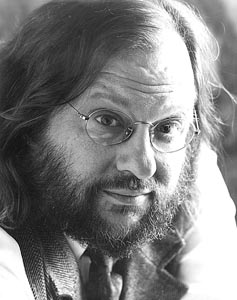
Dr. Alan Horowitz became a rabbi after he became a convicted sex offender. As part of rehabilitation and while on probation, Alan Horowitz was court ordered to attended classes at Ohr Somayach Yeshiva in Monsey, NY.
It is not known at this time if Alan Horowitz received his rabbinic ordination while in Monsey (1983-1985) or after he fled the United States in violation of his parole, and made aliyah to Israel. If you have any information relating to Rabbi Horowitz’s rabbinic ordination please contact The Awareness Center at: 443-857-5560.
During Alan Horowitz’s reign of terror (against children) he wrote the following article for NAMBLA (North American Man/Boy Love Association). The article is being provided by The Awareness Center in hopes that rabbis around the world will see the importance of finding a way to revoke Alan J. Horowitz’s rabbinic ordination.
The Awareness Center is also asking that all rabbinical organization publicly denounce Rabbi Alan Horowitz’s criminal behavior.
Please read and respond to the call for action posted after the NAMBLA article.
————————–
WARNING: This article was published in NAMBLA (North American Man/Boy Love Association). It is quite disturbing, yet offers the public an opportunity to look inside the mind of a convicted sex offender.
The Prison Experience: Some Psychosocial Comments
By A. Shneur Horowitz (AKA: Dr. Rabbi Alan Horowitz)
After graduating magna cum laude from Harvard College, A. Shneur Horowitz received the M.D. and Ph.D. degrees from Duke University, and is an orthodox rabbi. After twenty years of following these professional interests, Horowitz is now a political prisoner in the United States.
Did you ever have a dream where everything seemed quite logical, and yet even at the time a part of your mind knew that when you awoke, the sense would be completely lost? Not only would you be unable to make a reasonable recounting to anyone else, but even to yourself the dream-events would appear disconnected and the logic bizarre. Talking about prison to those who have not been there, and for whom incarceration is not part of their culture, is very much like that. Both dreaming and imprisonment are alternate realities in which the usual checks and controls have been removed and replaced with other rules for which our normal experiences have left us unprepared.
This severe culture shock applies to all prisoners who have lived their lives in the middle class or mainstream society. We child-lovers, however, suffer a more profound and pervasive psychosocial disintegration because of circumstances relatively specific to us. Personal accounts serve an important purpose, helping those who are not here to appreciate our experiences. However, I would like to use this space to comment on just what it is that makes incarceration different, and worse, for child-lovers than for virtually anyone else. The first section discusses the psychosocial impact of imprisonment with reference to child-lovers. The second deals with special factors which impede our adjustment to incarceration. The third section introduces ideas relating to the possibilities for growth and positive outcome.
It should be noted that much of the material in this article is not relevant to all persons jailed for participating in intergenerational sex. Four exclusionary criteria are evident:
1. short sentence – "Short" is subjective, but many individuals with sentences of five years or less engage in what I call a "count-down" technique. They handle their imprisonment by maintaining and emphasizing a psychological continuity between a remembered Before and an anticipated After. The incarceration can then be endured as an unpleasant interim/interruption/interregnum within an ongoing life.
2. strong outside support – Those who have frequent visits, telephone calls, and exchange of letters with family and continuing friends who encourage and support them may be spared the crises described here. Their psychic reality remains Outside, even over a long period of time, and their personal identity is stabilized and reinforced.
3. prior economic/social poverty – For some, prison represents only slight decrement, or even actual improvement in living conditions and/or social opportunities. For such persons, the culture shock mentioned above is minimal or absent.
4. low intelligence – Some of the processes discussed below entail ability to introspect and conceptualize that may be poorly elaborated in persons of very low intelligence.
Being Imprisoned
How we perceive and react to imprisonment derives from our previous self-image and lifestyle. For almost all of us, being "outted" is a concomitant of our arrest and prosecution. This in itself precipitates a personal crisis of the greatest magnitude. We must face, perhaps for the first time, our identity as pedophiles. It may seem strange to say that a person who has lived many years as an active lover of children can suddenly realize that he is a pedophile, and I don’t mean that he has been exactly lying to himself up to now. Nevertheless, there is a strong tendency to wall off or encapsulate the child-lover part of our identity, except when we actually are engaged with children. After all, it sadly cannot quite be integrated into a typical home or professional life in this society. This type of ignoring, or "selective inattention" is a common means of handling perceptions, about ourselves or others, that don’t fit into overall conceptions of who and what we are. It is so much easier to think of oneself as "teacher," "carpenter," or "executive," than to label oneself with the most hated characterization in the culture. Parenthetically, I think this may contribute to why we are now being "caught" in such prodigious numbers. Because we have assigned "child-lover" a subsidiary place in our own self-image, compared with "husband," "coach," "doctor," and so on, we assume unconsciously that others view us the same way. Actually, our loving manner and ability to bond with children is as obvious to our enemies, when they choose to attune themselves, as it is to the kids themselves.(1) Being a lover of children is the defining characteristic of our identities, whatever we previously may have thought. It is a beacon which shines from us, for better or for worse, and by which the responses of others to us are illuminated.(2) What has changed in recent years is the motivation of our enemies to tune in to us, and the threshold for their turning suspicion into persecutory behavior.
If the positive part of our internal crisis is confronting and integrating our child-lover identity, then the negative side is facing the realization that we have "lived a lie" for all or most of our adult lives. We built a house of cards right there on Main Street, and then moved in lock, stock, and barrel, papering the inside walls with hypocrisy and the outside with deceptions. We did this so we could live in comfort and ease, so we could "pass," so we could eat our cake and have it too. We did not hold sit-ins or vigils or freedom rides. We did not engage in letter-writing campaigns or in civil disobedience. We attended PTA meetings where our brothers and sisters were vilified, and perhaps even made "appropriate" comments to our neighbors about the danger of "child molesters." We lied to our parents and spouses. We were cowards.
So what goes on internally is a major re-alignment, in today’s terms re-formatting, of our whole personality structure. This includes not only re-arrangement of our hierarchy of self-definitions, but also acceptance of some stark and not very favorable truths about our character. This tidal wave of realizations is even more devastating than that during puberty, because the identity crisis of adolescence brings with it the unveiling of seemingly unlimited potentials and possibilities for the future, whereas the identity crisis of outing implies the closing off of possibilities and a confrontation with what we already are.
A third aspect of imprisonment is its interpersonal/social impact. The concurrence of incarceration and outing often triggers abrupt and total disappearance of our support system. Well socialized, middle class individuals build strong social linkages, and depend on them not only for self-validation, but for the communication and clarification of emotions. Nowadays, even males are adapted to "sharing feelings" rather than suppressing or denying them. While there are exceptions, it is not at all unusual for a child-lover to lose all of his significant relationships simultaneously when he is outted and arrested. Of course, for us, our most significant and invigorating relationships are those we have with children, be they overtly intimate or not. These are annihilated, with traumatic and tragic consequences both for us and for our young friends. We confront the knowledge that not only have our tenderest bonds been torn cruelly asunder, but that, using modern psycho-technology, even our partners’ memories of us will likely be revised, perverted, and turned into their opposites. This loss not only of the present and future, but of the past as well, defies description. Furthermore, we find that families of orientation and of procreation, colleagues, confidants and lifelong friends either turn on us, or turn from us. We have become non-persons, anathema. Distinct from other middle class prisoners, who often are sustained by their successful social networks, we, in our time of greatest need, find ourselves utterly alone.
A flowing river can appear quite serene, but if all its effluent channels were blocked at once, the weight and force of water turned back from its natural outlets would convert it quickly to a churning maelstrom. Thus it is with our psychological energy when all our relationships are suddenly cut off– a cataclysmic emotional implosion, flooding back against the damaged bulwarks of our much-weakened selves. The effect is overwhelming, and depression is very severe at this time; the risk of suicide is proportionately great.(3) Depression and identity dissolution combine to make us vulnerable also to the manipulations of prosecutors, unscrupulous "defense" lawyers,(4) and soon-to-be ex-spouses, among others. It is well known that mid-adolescents, whose identities are in flux, are susceptible to the lure of demagoguery and fanaticism. Likewise, after outing and prosecution, many of us leap into the clutches of therapists and re-programmers, who offer a shred of substitute identity, even be it that of "interminably recovering pervert."
Being In Prison
Having passed through the transition to incarceration, there continue to operate factors which make our physical and emotional survival particularly difficult in our new status and environment. The most widely known of these is that we are social pariahs within the prison population. A child-lover is known politely as a "molester," but more frequently and pointedly as a "baby raper," or "tree jumper."(5) In an environment where violence is never far from the surface, this appellation hangs like Damocles’ sword over the child-lover’s head. Chronic anxiety interferes with concentration and judgment, and probably contributes to physical stress-related disorders over the long run. Because of the danger, most "brothers" whose identity as child-lovers is not generally known, go to great lengths to avoid being "re-outted" within the prison population. While one hardly can blame them for wanting to protect themselves, this results in there never being a mutually supportive network Inside to substitute even partially for the lost relationships Outside. While some states have special facilities, units, or "treatment" programs, most of these are generally for "sex offenders." Ironically, there child-lovers, more often than not the gentlest of souls, find themselves sequestered with brutal rapists and sex-murderers, who may be even more dangerous to them than run-of-the-mill prison inmates.
A second factor, less immediately apparent, is that we are the only prisoners not to utilize two of the three primary mediators of group formation within the prison social system, viz. sexual orientation and type of conviction. (The third is ethnicity, and we frequently will be in a small minority there too, or be excluded on the basis of middle class traits of speech, manners, etc.) Talking about sex, real or imagined, is an immediate common ground for both heterosexuals and homosexuals everywhere. In prison, where many individuals’ social development is that of delinquent early adolescents, it forms the stock-in-trade of most conversation. Both ambivalence and fear contribute to child-lovers being unable or unwilling to seek each other out on the basis of our common orientation. Aside from sexuality, there often is affiliation among those with similar reasons for their incarceration, e.g. drug dealers, murderers, or those involved in organized crime. For us, of course, our "crime" and our sexual orientation are one and the same.
Faced with the absence of our own group, many of us choose to lie, i.e. to create an ersatz sexual or criminal history. Not only does this run the risk of violent or even fatal consequences if discovered, but it also feeds into and exacerbates the "living a lie" problem discussed earlier. The other choice readily available is to remain a permanent loner. Loners are not all that uncommon in prison, and generally fall into two categories. There are those with fairly short sentences who are putting up with incarceration while remaining basically aloof and as untarnished by it as possible. We seldom fall into that category, and do so less and less as sentences for child-lovers become increasingly outrageous. Then there are those individuals whose self-imposed isolation causes them to drift ever further into idiosyncratic and impoverished mental states. Appearing far older than their years, they resemble patients with chronic schizophrenia or organic brain syndromes. This is not an attractive prospect.
Aggravating our sense of isolation is the fact that we are the only prisoners denied access to what might be called "non-interpersonal" reinforcers of our identity. Inmates have the opportunity to view television, individually or communally, and most facilities show movies weekly or more often. Heterosexual bonded relationships are displayed frequently, and homosexual ones occasionally. Murder, assault, fraud, drug use and sale, theft, espionage, exploitative sex and rape all are common entertainment fare. Moreover, the perpetrators of these crimes often are portrayed in a sympathetic if not approving manner. There is ample opportunity to watch men or women scantily dressed and in erotic situations. Also, on prison staffs, both male and female adults are present "in the flesh" and have at least superficial real relationships with prisoners, as well as supplying a framework for their fantasies. Over and above this, one may obtain books and magazines dealing with crime and/or with sexual behavior. In many places, one may post even erotically stimulating nude pictures on the walls of one’s cell or cubicle. All of that applies to everyone except us. All forms of visual or literary art dealing with adult-child intimacy either are unavailable or are specifically and systematically censored. Even depictions of children which are neither erotic nor intimate could be risky to display or even to possess. Thus, the child-lover, now in a state where he should, and must, develop a newly honest, mature, and profound self-concept, finds himself totally lacking in "props," cues, test-objects, and feedback to use as tools in this monumental task.
A fourth, and perhaps ultimately the most important factor that militates against both our adjustment in prison and our making positive use of our prison time, is that we are unacknowledged political prisoners. Our enemies assert that because physical expressions of love between an adult and a child are defined as illegal, we are criminals. Further, they would rebut that political prisoners are only those incarcerated for speech and writing, not for behavior. Historically, both of these arguments are incorrect. One hundred fifty years ago, an African-American who fled the site of his involuntary servitude was defined by law as a criminal. We, however, view his behavior, correctly I believe, as a political act. Eighteen hundred years earlier, a Judean who circumcised his son was defined by Roman law as having committed an act of bloody child abuse. We, however, term his act religious and political (whether or not we agree with the practice). I aver that a political prisoner is one who is incarcerated for an act which he, in good conscience, believes to be right and good. Moreover, his belief is not idiosyncratic, but is shared by a number of other persons who consider themselves united in part by this belief. This still is short of civil disobedience, as that would require conscious political intent. Most political prisoners, here and elsewhere, are those whose "crime" is no more than living their lives as persons of conscience, according to their best judgment of what is right and good, and without necessarily intending their behavior as a political statement or even considering themselves as politically "involved."(6)
Political prisoners differ fundamentally from other prisoners in being, not only well-socialized, but in fact extraordinarily ethical. At the very least, this is because as members of a persecuted political minority, they have been forced to consider matters of right and wrong more consciously than the average citizen. Such persons tend intrinsically to be rule-followers because, although they think certain rules should be different, they believe in the concept of rules, i.e. that there are aspects of right and wrong, good and bad, which override one’s personal desires. Contrariwise, the great majority of prisoners at the penitentiary level, are "antisocial," or "sociopathic." Studies indicate that as many as 80-90% of inmates are intrinsic rule-breakers and lack either an ethic that transcends their own needs and impulses, or the ability to modify their behavior in conformity with such an ethic. The child-lover placed in such a milieu faces a dilemma: to be honest and forthright and persistently exploited, or to compromise his own values in order to make his way in prison.(7)
In some societies, political prisoners have been segregated from criminals, and this ofttimes meant that they received harsher treatment. However, two advantages that almost always accrued are solidarity and support. Even where they were termed criminals, and even where they were confined along with criminals, they were acknowledged as political, both inside and outside of the prison system. Although their handling might be severe, they were accorded a certain respect as being prisoners of conscience. Further, they had automatic alliance with their fellows in the penal system, and received support from unimprisoned members of their group or movement, even when such communication was officially interdicted. Thus, while not minimizing their suffering, their basic identities, both personal and political, were not weakened. In fact there could be a buttressing and encouraging sense of furthering The Cause by one’s very presence in prison. Recent examples could be drawn from among incarcerated dissidents in South Africa, the former Soviet Union, and at this very moment in China.
As imprisoned child-lovers, we experience the worst of both worlds. North American and some other governments go to great lengths to define the love of children as a serious felony. In doing so, they have created and financed the development of an entire pseudo-science, "victimology," which has co-opted and corrupted the mental health professions to a degree unimaginable twenty-five years ago.(8) Once arrested, we, like political prisoners everywhere, are subjected to a travesty of the criminal justice system. Usual guarantees are explicitly or implicitly suspended, e.g. the right to confront one’s accuser, the inadmissibility of hearsay evidence, and the presumption of innocence. As mentioned elsewhere, the "defense" counsel often supports and surreptitiously cooperates with the State to produce a "show-trial," the outcome of which is indisputably pre-determined.
Once incarcerated, the child-lover is told that he is "just like any other inmate," and that "no one cares why you’re here." As far as not receiving special privileges, or any attention to the special needs engendered by total lack of experience with a criminal sub-culture, that is true indeed. However, one may soon find that in order to gain parole, one must complete a "treatment" program, and be certified as being "in recovery," as I have discussed elsewhere.(9) This sounds quite a bit like the "political re-education" programs of other oppressive societies. Then, one finds that access to writings, even scholarly literature, on the subject of intergenerational love, is forbidden; this in an environment saturated with stories of murder and mayhem, and where racist publications advocating hatred and violence are freely available. One may find that requests for inmate-to-inmate correspondence are routinely denied– only when both parties are child-lovers.
So it seems that while labeled as felons, child-lovers are in fact treated in very significant ways as political prisoners. That in itself is not unique. It is characteristic of regimes dependent upon fanatical elements to criminalize the essential behaviors or rituals of groups whose philosophy and lifestyle are perceived as potentially subversive to the existing order.(10) What is different here is that child-lovers themselves appear to accept and internalize the cultural opprobrium, at least to the extent of deep ambivalence, and frequently to the extent of denial and self-hatred. No unbiased test can demonstrate intergenerational love to be anything worse than politically incorrect, and yet the widespread emotional reaction to it is as though it really were the violent crime it arbitrarily is labeled. In an horrific extension of this phenomenon, child-lovers, who are in the best position to know the reality of adult-child bonded relationships, begin to view themselves through the eyes of the professional "victimologists."(11) This ambivalence also explains the failure of unimprisoned child-lovers to form an effective support network for their incarcerated brethren and "sistren." The analogy comes to mind of a boy, perhaps a generation or two past, whose brother gets caught masturbating. He wants to say, "Leave him alone, there’s nothing wrong with it– even scientists say so!" However, he says nothing, not only because he fears that he will be found out himself, but also because there lurks still at the back of his mind the nagging thought that maybe it really is dirty and nasty and makes you go blind.(12) Surely, "un-outted" members of other movements for social reform also have feared for their own security and safety. However, they always found means to help imprisoned colleagues locate each other; if necessary to smuggle food, literature and encouragement to them; and to re-integrate them upon release, or arrange for them to continue their work in exile.
Being
The abrupt collapse of one’s personal psychological identity, all or most of one’s interpersonal relationships, and all of one’s social and cultural roles, precipitates a state of inner chaos that some will not survive. It is akin to traumatic amputation of all four limbs; the bleeding and shock will be fatal to many. Beyond the acute phase, however, living or dying becomes a process in which we may participate. We are confronted, for the first time in most cases, with having only ourselves for company. What kind of companions do we make for ourselves? To what extent can we take over the complementary functions which others, particularly children, have performed for us? How well do we know ourselves? The substitution will always be poor and incomplete. You can’t tickle yourself. You can’t be your own sex partner. However, that is not really the point. The question is whether or not we can provide ourselves with the bare minimum requisites for making the decision to live and remain sane.
Possibly the most important task in working through our relationship with our self is resolving the negative aspects of our self-image. First, we must understand and eliminate traces of self-hatred caused by identification with the culture’s rejection of us. This already has been discussed. Second is coming to terms with negative events in our own psychosexual history. Many if not most people have sexual fantasies and experiences, especially during adolescence and young adulthood, which they later regret. That is normal. All adolescents are dealing with greatly heightened sexual and aggressive drives, and doing so with the handicaps of neuropsychological immaturity and social inexperience. It is no wonder that they often blunder, injuring their own feelings, and sometimes bodies, and those of their partners. Most people eventually forgive themselves their youthful mistakes, or just forget about them. For child-lovers, however, the part of us that is prone to accept society’s labels can seize on these shameful memories to "prove" that we really are despicable. Instead of self-acceptance, we wind up with self-loathing. Now that all outward channels are closed, can we focus the tremendous love and compassion we have poured into others on ourselves? Can we regard our past and present selves with the lavish forbearance and instant forgiveness we once bestowed upon the children we cared for? Can we come to see the essential goodness of our nature, and the essential falsehood of our enemies’ calumnies? If so, then we will accept ourselves as less than perfect. We will be able finally to integrate and move beyond the memories of those times when, for whatever reasons, we hurt the ones we loved.
If one gets to this point, one has survived the catastrophic centripetal reversal of energy flow, i.e. one has avoided psychic meltdown. The quadruple amputee who has not died from shock can now begin to figure out how it might be possible to control a computer, or a paintbrush. For us, part of our energy should continue to go into self-exploration and development. Many of us are so "other-oriented," such great givers, that we have not sufficiently come to know ourselves. Working toward knowledge of ourselves and our place in the universe, through religion, meditation, or other means, is a lifelong task. Planning for the future after release also can play a role in the process of renewal. However, we must guard against excessive preoccupation with fantasy, and there is a tragically large number of us who cannot count on release in this lifetime. Substantial progress in personal development may be necessary before one can achieve sufficient equanimity to emerge from the contracted or imploded state mentioned earlier.
Concomitant with increased self-acceptance, there develops a desire to re-establish communication with others. One basic fulfillment of this is through correspondence and visitation. Some individuals may be able to re-contact family members or friends. With the passage of time, and finding the prisoner "sadder but wiser," one or more of these may choose to renew their support. Other prisoners may find new associations through their religious or philosophical alignments. However, there is no doubt that the most important contacts for the incarcerated child-lover are with others of his orientation. Only these can provide opportunities not only for relating with our evolving self, but for corroboration and validation of our most essential identity. This of course requires that there be numbers of child-lovers outside of prison who also are working on development of their own positive identities and resolution of their own ambivalences.
Another mode of communication is through creative expression. For some, it may take considerable effort and re-training to direct the love energy we previously have expressed in our thoughts, words and actions directly with children, into "media." Words that we write, images that we paint or carve, cannot become real children, but they can provide us with an outlet for our caring and passion, as well as our yearning and grief. Creative media include fiction and non-fiction such as this article (I hope).
This leads to a third means of establishing relationship between the revised self and the outside world, viz. working for The Cause. Engagement in such work requires further solidification of a positive personal identity and also firm commitment to the role of political prisoner. Can we resist all systematic attempts to brainwash us and break our spirits? Can we, in the absence of internal network or external support, come to view ourselves as members of a persecuted minority? Well, we can, but as the old song says, "Don’cha know it ain’ easy." Our success, and indeed our survival, depends not only upon our own work, but also upon parallel maturational work, both individually and organizationally, of child-lovers on the Outside.
Impediments to survival of outting and incarceration alive and sane are daunting. Subsequently, obstacles to continued personal growth and re-emergence as productive human beings are formidable. As in any popularly sanctioned and governmentally executed genocide, there will be countless direct and indirect casualties. History will not ask us why we died, but it will ask us why we died cowering. It will not question why our enemies did not help us, but it will demand to know why we did not help each other.
Notes:
1. Recently, I showed a friend a photograph of myself and a twelve-year-old boy with whom I was bonded years ago. We are standing side by side with my arm around his shoulder, in what I would consider a typical adult-child pose. My friend took one look at the picture and said, "You were lovers." To my surprise, he pointed out that there was absolutely no space between us. The boy had molded his body so that he was in continuous contact with me from his ankle to where his shoulder fit into my armpit.
2. This is true in the same manner that being Jewish was the defining characteristic of European Jews during the Nazi reign, whether or not they themselves previously had thought about it that way.
3. One can see here clearly the confluence of various models of suicide, including Durkheim’s original anomie, the psychodynamic rage turned against the self, and the cognitive psychologists’ helplessness/hopelessness paradigm.
4. I have heard so many accounts, besides my own, of defense attorneys cooperating, either actively or passively, with the prosecution, that I must conclude there is some truth to them beyond "sour grapes." The hatred of child-lovers in this culture is so deeply ingrained, and so irrational, that it operates substantially at a subconscious level, and biases the actions even of professionals who have trained themselves ordinarily to separate their personal feelings from their work.
5. I’m not really sure of the origin of this term, but assume it is some obscure reference to hiding in trees or bushes and then jumping out to attack hapless children.
6. I know that I have defined at least some Nazis and other war criminals as "political prisoners." Fortunately, I am not the first to have done so. Although their politics may be abhorrent to me, I believe that if they acted subjectively in good conscience and their values were shared by their group, then the definition must stand.
7. The "sociopathic society" of prison includes both staff and inmates and is beyond the scope of this article. I ask the reader to "take my word for it" that any adjustment to prison life demands at least some degree of lying, stealing, and other behaviors which on the Outside we would reject as unethical.
8. The author is classified as a violent felon, and so housed and treated, because the law defines sexual contact with a child less than eleven as a violent crime. The irony is profound. The child in question once had to go find his brother to help him remove a bothersome loose tooth because the author couldn’t bear to cause him even momentary pain.
9. [Horowitz, A.] Shneur. "And If The Twig Be Broken…," in Gayme, Vol. 1 No. 2 (January 1994), pp. 20-28.
10. The question of why pedophilia is perceived as subversive in contemporary "Western" societies is beyond the scope of this article. Let it be said that this culture is both child-hating and erotophobic. Consequently those who love children receive the proverbial double whammy.
11. Psychologically, this is the mechanism of identification with the aggressor described in classic works by Anna Freud and Bruno Bettelheim.
12. The reasons for Americans being especially susceptible to this kind of pernicious double-think are beyond the scope of this article. Briefly, however, I believe they stem significantly from early and persistent conditioning by the mass media to place conventional, externally imposed labels on experiences, overruling individual instincts, perceptions, and judgments.
This article appears in NAMBLA’s Criminal Justice, whose editor estimates there are 25,000 to 30,000 boy-lovers caught up in the American criminal justice system. Criminal Justice? contains other writings by prisoners about their prison experiences, another article by A. Shneur Horowitz about the growing numbers of adolescent boys imprisoned for loving other boys (many housed in a special unit of the New York State prison system), an article from the NAMBLA Bulletin about the Crime Bill of 1994, and a short story by Russell Kinkade.
——————————————-
CALL TO ACTION:
"Defrock" Rabbi Alan J. Horowitz – Convicted Sex Offender
The Awareness Center, Inc. is demanding that the Orthodox Union (OU), the Rabbinic Council of America (RCA) and Agudath Israel of America make a public statements denouncing the actions and behavior of Rabbi Alan J. Horowitz. By not doing so is condoning this serial child molesters criminal behavior.
The Awareness Center, Inc. is also demanding that rabbis around the world find a way to remove Alan Horowitz’s rabbinical ordination and that of other known sexual predators (who are ordained rabbis).
After Rabbi Alan Horwitz’s 1983 conviction for child molestation he was placed on probation. Arrangements were made for him to live on the Ohr Somayach campus in Monsey, NY. Ohr Somayach is a Yeshiva serving young male students. Horowitz was treated by Dr. Joseph F. Chambers MD (Maryland) and Dr. Yitzhak Twersky (Monsey, NY).
At this time we are unaware where Rabbi Horowitz received his rabbinic ordination, yet it is known that it was from an orthodox source. The only way to revoke an ordination is for the rabbi who granted the title to revoke it. In some circles they see ordination as a degree that can never be taken away. According to Jewish tradition once an individual becomes a rabbi, halachicly he/she can ordain another individual.
In the past both the RCA (Rabbinical Council of America), Orthodox Union and Agudath Israel of America have stated that there is nothing they could do regarding Rabbi Horowitz since was he not a member of their organization.
Rabbi Horowitz is a convicted sex offender. Be aware that it takes a village to raise a sex offender and to enable them to continue molesting children or raping adults. Rabbi Horowitz is everyone’s responsibility, including all rabbinical organizations, rabbis and Jewish communities.
It is time for all of us to stop passing the buck. Do the right thing, publicly denounce this man and remove his rabbinic ordination!
Contact Information:
Rabbinical Council of America (RCA)
Rabbi Marc Dratch – Chairman of the RCA’s Task Force on Rabbinic Improprieties
Phone: 203-858-9691
[email protected]
Rabbi Basil Herring, Executive Vice President
Phone: 212-807-7888 x 5
[email protected]
_____________________________
Orthodox Union
Rabbi Hershy (Tzvi) Weinreb
[email protected]
_____________________________
Agudath Israel of America
Rabbi Shmuel Bloom, Executive Vice President
Rabbi Avi Shafran,
(212) 797-9000
[email protected]
_____________________________
Background Information
Updated Background Information on Rabbi Alan J. Horowitz
© (2007) The Awareness Center, Inc.
Rabbi Alan J. Horowitz, MD, is a convicted sex offender who is also an ordained Orthodox rabbi. As a psychiatrist, Horowitz specialized in working with adolescents. His resume also includes volunteering time as a Boy Scout leader and being a writer for NAMBLA (North American Man/Boy Love Association) publications. He graduated magna cum laude from Harvard University; and received his Ph.D. and medical degree from Duke University.
Alan Horowitz was married with one child of his own and seven stepchildren.
In the past Horowitz was licensed to practice medicine in North Carolina and Maryland. He never obtained a license to practice in the state of New York.
Alan Horowitz was first convicted back in 1983 in Maryland of performing an unnatural sexual act on the 12-year-old boy who was his patient and his eight year-old little brother. At the time Horowitz was sentenced to five-year probation.
The probation agreement included allowing Alan Horowitz to move to New York so that he could live study Torah at Ohr Somayach, Monsey, NY. He was court ordered to live on campus. Ohr Somayach is a Yeshiva serving young male students.
Dr. Horowitz was also court ordered to be in counseling under the care of Dr. Joseph F. Chambers (Maryland) and Dr. Issac Twersky (Monsey, NY). As like many others who thirst in learning Torah, Alan Horowitz ultimately ending up studying abroad in Israel.
Alan Horowitz twice violated his probation from the sentencing in 1983. There is no documentation of how he violated it the first time, yet the second time was in November 1985, was when he made aliyah and moved to Israel. He returned to the United States in November, 1990 when he learned new charges were being investigated relating to him allegedly molesting children in the West Bank (Israel).
Past newspaper accounts stated Rabbi Alan Horowitz picked Schenectady in hopes of securing a rabbinical appointment. Apparently each time Horowitz moved he changed his name, using the alias Shneor Altar in Israel, Alan Horowitz in New York and Mike Sonkin in Iowa.
Not much time pasted for there to be new allegations made of child sexual abuse. In 1991, allegations were made that Horowitz molested three boys under the age of fourteen and a 14-year-old girl in Eastern Parkway and Niskayuna, New York. It was around this time that authorities in New York contacted Interpol and learned that the investigation in the West Bank (Israel) was still being investigated.
Upon Horowitz learning that new charges in the US were being made against him, he attempted to elude the authorities by moving. This time to Woodward, Iowa. Once located he was extradited back to New York.
During the new police investigation, the New York officials found a trail of sexual abuse of patients dating back to the late 1960s when Horowitz worked for a community organization that helped impoverished, inner-city children.
On August 27, 1991, Rabbi Alan J. Horowitz, MD was charged in the Supreme Court in the state of New York on 34 counts of sodomy in the 1st degree. He was also charged with two counts of Sodomy in the 2nd degree, one count of sexual abuse in the 3rd degree, and 4 counts of endangering the welfare of a child. During these court procedures a North Carolina man showed up during the court proceedings claiming he was sexually abused by Horowitz as a child. It is also mentioned that Horowitz molested children in the state of Arizona, yet no more information about those allegations is known.
On June 29, 1992 , Rabbi Alan Jay Horowitz, MD pled guilty to one count of 1st degree sodomy.
In a county Probation Department report Horowitz admitted that he was a pedophile, but a "normal pedophile," which Horowitz defined as someone who has consensual sex with children.
During August, 1992, Alan Horowitz made the news one more time. This time was regarding a complaint that the county jail diet did not provide for his religious needs. He asked a state Supreme Court judge to direct the sheriff to provide more kosher food.
There were many attempts to stop Rabbi Horowitz being released on conditional parole on November 1, 2004 (Oneida Prison, NY), yet these attempts failed. At the time of his release he was Designation: Sexually Violent Offender and Predicate Sex Offender level three sex offender).
In 2006, Horowitz illegally left the United States violating his probation. At first it was believed he was in Israel, yet instead flew to Japan and on to Hong Kong, Thailand, Sri Lanka and India — leaving a trail of newly sexually victimized children along the way.
In India he used his title of "rabbi" in his attempt to give himself credibility This is one of the reasons why The Awareness Center implemented it’s "CALL TO ACTION" to have his rabbinic ordination revoked.
On May 22, 2007, Rabbi Alan Horowitz was caught in India. Horowitz was in violation of his parole since June, 2006. He will be extradited back to the US soon.