
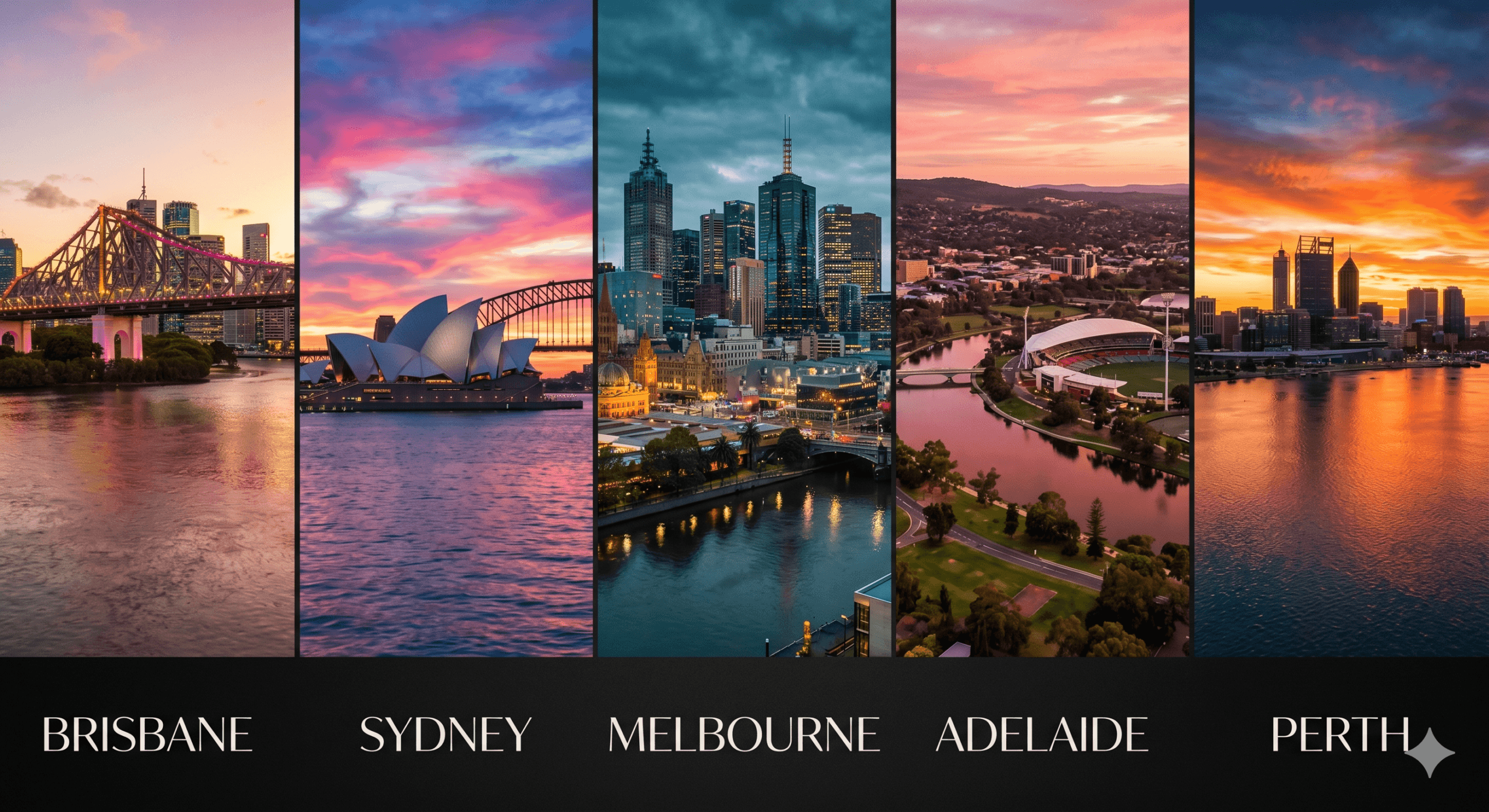
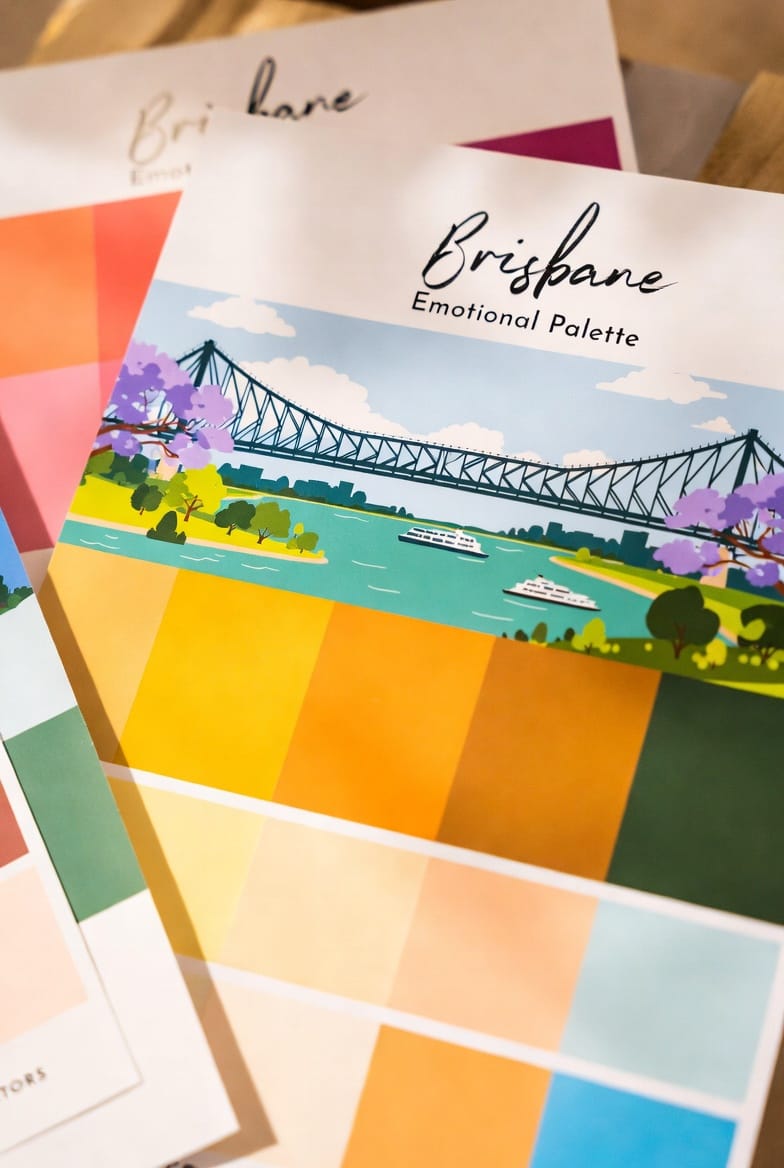
Brisbane carries the mood of a slow Sunday in the subtropics. Heat and humidity slow a man down and loosen his hurry. The brown river bends through the center and sets the pace. Colors run warm: jacaranda purple, river water turned gold in the late afternoon, fig-tree green after rain, the faded terracotta of old Queenslander roofs. The feeling is prosperous confidence without display. Brisbane spent decades as the younger sibling to Sydney and Melbourne, and that memory still shapes its temper. It stays friendlier than Sydney because it has not forgotten when it needed friends. Status comes through land, construction, medicine, sport, and stable family life. Ambition has to look casual here. Beneath the ease runs a quiet worry that the city depends on forces elsewhere: commodity cycles, southern money, migration, the weather itself. The optimism has a defensive edge. Brisbane looks most like itself when people leave work, not when they arrive.
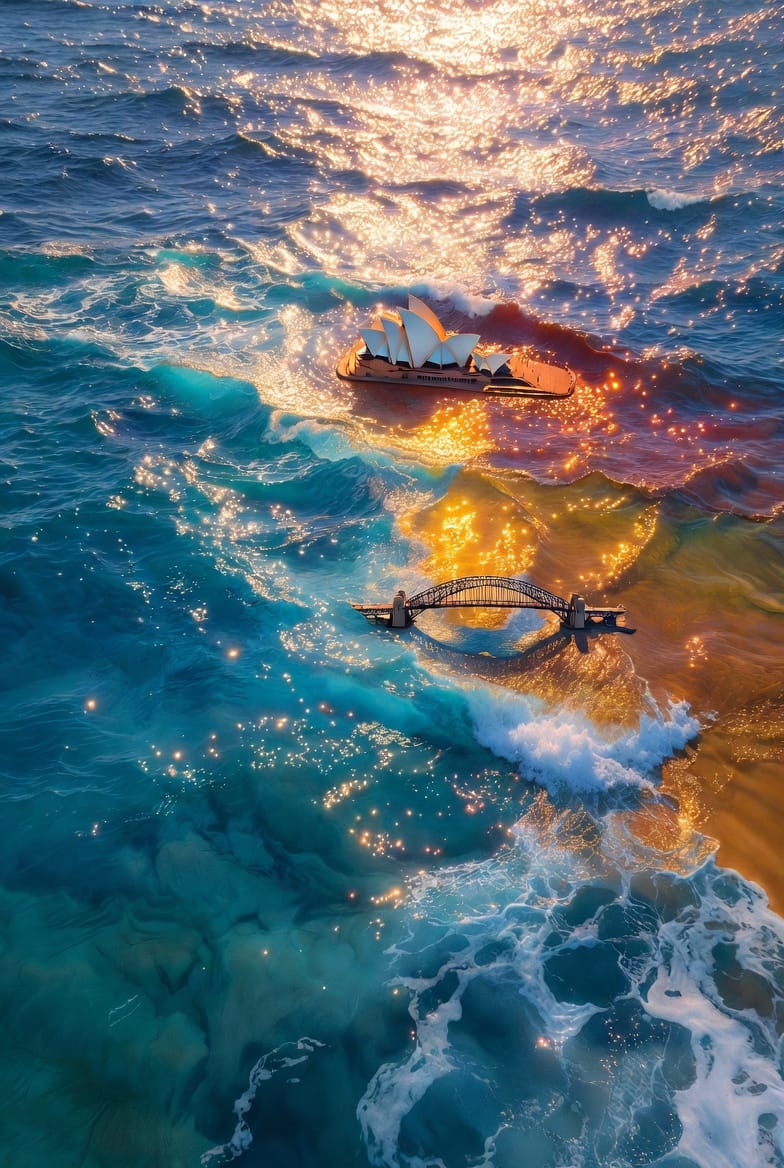
Sydney paints in hard coastal contrast. Sapphire harbor, white stone, dark glass towers, the green-black of expensive eucalyptus above the sea. The light clarifies and exposes. This is the capital of competitive prestige, and wealth here wants recognition. A harbor view ranks a man almost the way a title once did. Geography becomes social order. The eastern suburbs run like an aristocratic belt where beauty, money, and schooling fuse into one system. The mood is evaluative, not relaxed, despite the beaches. The model Sydneysider wakes early, exercises where others can see, speaks fast, and guards his position. Fitness and property carry moral weight. Even leisure competes. The colors stay brighter and colder than Brisbane’s: more blue, white, steel, reflected glare. At night the harbor lights suggest one grand city, but underneath sit guarded enclaves of finance, law, media, and medicine. Sydney projects confidence to the world because it fears decline, and it knows the financial centers of Asia now dwarf it.
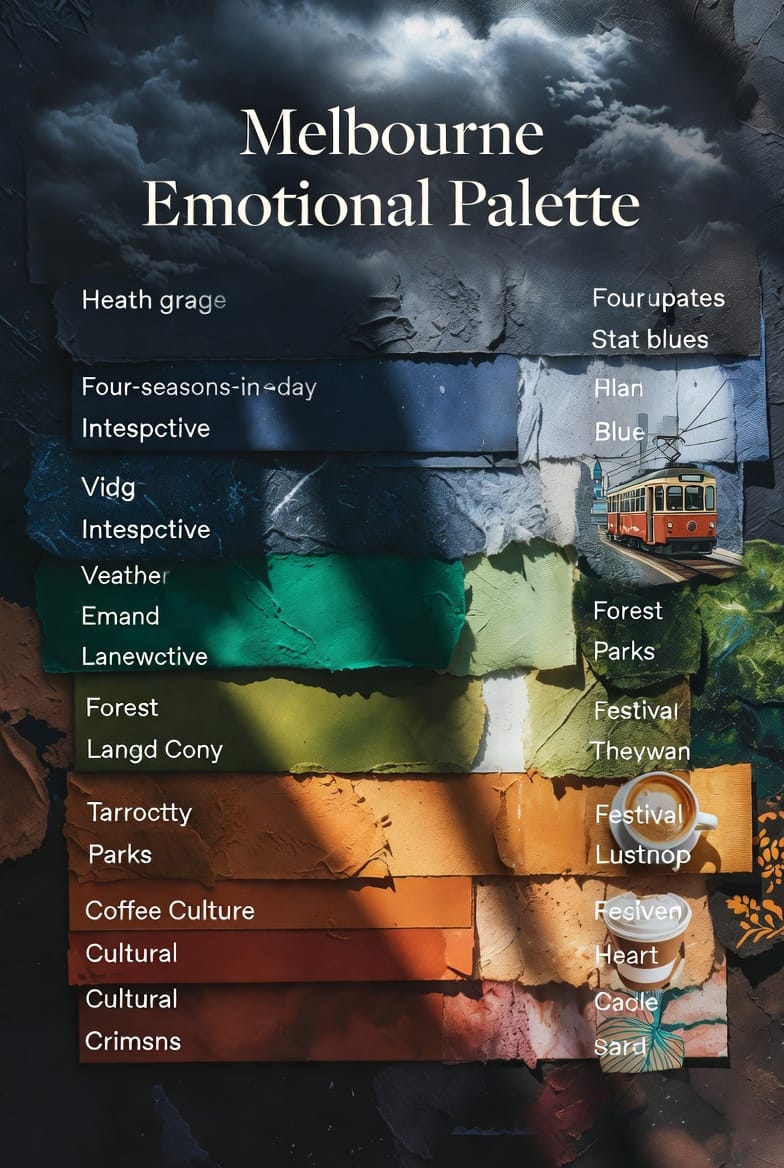
Melbourne paints in intellectual gray. Wet asphalt, dark coffee, old sandstone, tram green, black winter coats, gallery white. The atmosphere feels autumnal even in spring. Status here runs through cultural fluency rather than visible money. Sydney asks how much a man has. Melbourne asks what his taste reveals about his inner life. The city romanticizes difficulty and turns weather, laneways, and coffee into identity. It admires people who seem coherent more than people who seem rich. Writers, architects, academics, musicians, and barristers hold high symbolic rank, though property developers and mining money still pay for much of it underneath. Prestige hides itself: an old school name, plain clothing, a reference few will catch. Yet the refinement sits on anxiety. Melbourne fears provincialism and measures itself against London, Berlin, and New York because the comparison sustains its sense of self. The city looks most like itself at dusk in winter, trams moving through drizzle, bars full of men arguing about politics, literature, football, and house prices as if these belonged to one conversation.
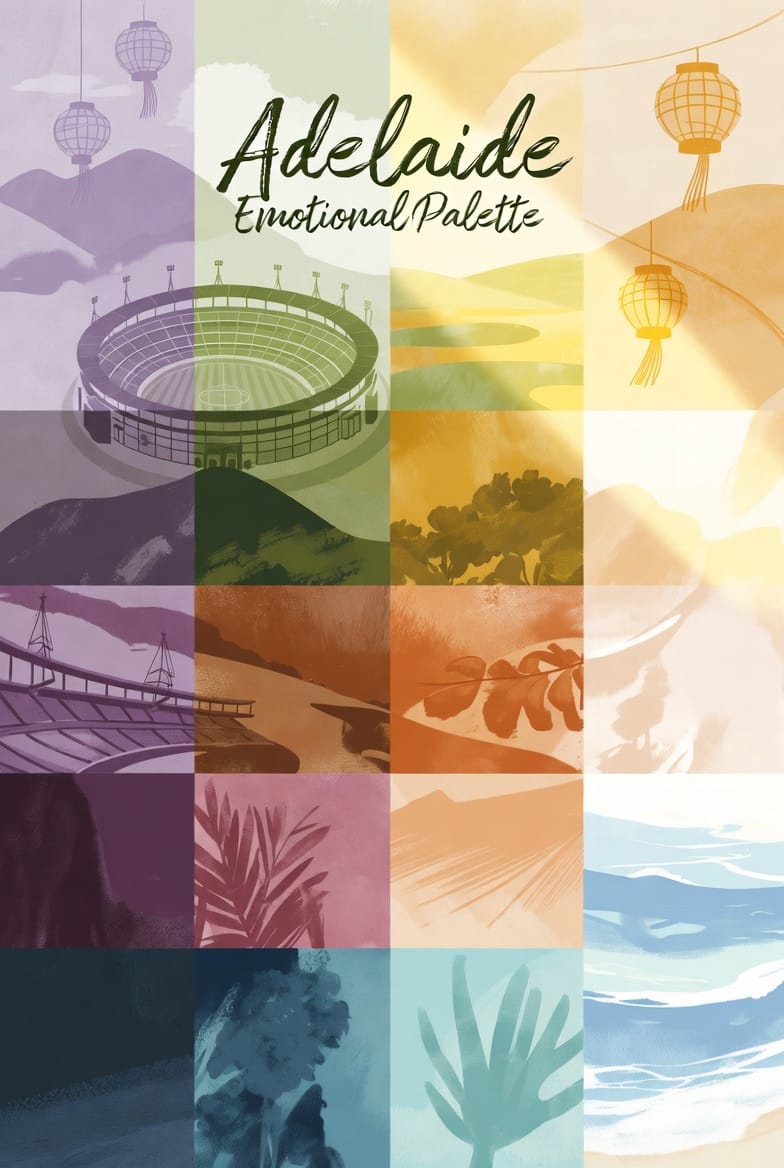
Adelaide paints in restrained elegance. Dusty green, vineyard gold, limestone cream, muted navy, dry summer earth. The mood stays controlled and quietly defensive. The city remembers itself as a colonial administrative town that never grew imperial, and it values steadiness over speed. Striving has to stay socially manageable. Status comes from continuity. Family names last longer here, schools matter, and reputation moves through small networks where everyone knows everyone at one remove. Wine works as both industry and identity. Adelaide admires competence that keeps quiet about itself and reads flamboyance as insecurity. The city feels enclosed, bounded by dry hills and distance from the eastern capitals. Because it is small, a reputational wound lasts a long time. Ambitious young men often leave for Sydney or Melbourne, and the fear of stagnation returns again and again. Adelaide answers by turning quality of life into a civic philosophy and insisting that smaller scale produces deeper living. Often it is right.
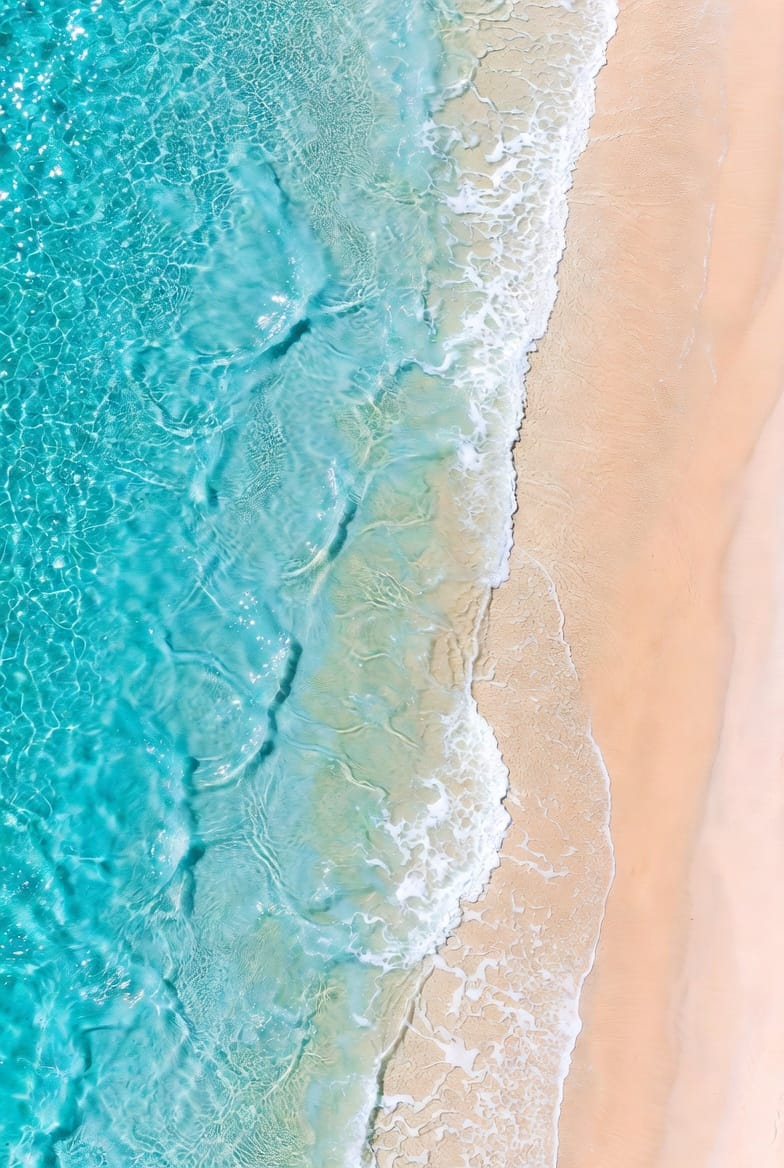
Perth paints in mineral light. Bleached white, deep ocean blue, ochre, dry scrub green, copper at sunset. Few wealthy cities sit this far from anywhere, and the isolation shapes everything. Perth projects self-sufficiency. Its money came from extraction: mining, energy, engineering, land. So the city respects men who build, finance, or pull things out of the ground more than men who refine their taste. Sunlight rules the mood. The place spreads outward rather than up, with wide roads, large homes, and beaches that run for miles. Success means space. The isolation breeds two opposite feelings at once. One is independence, a habit of seeing Sydney and Melbourne as overcomplicated and performative. The other is a worry about being forgotten by national institutions, which feeds a fierce local patriotism. Western Australians often talk about the eastern states as foreign powers. Perth turns contemplative at sunset over the Indian Ocean, when the heat drops and the sky widens, and it feels less like a city inside Australia than a coastal civilization attached to the edge of it.
