
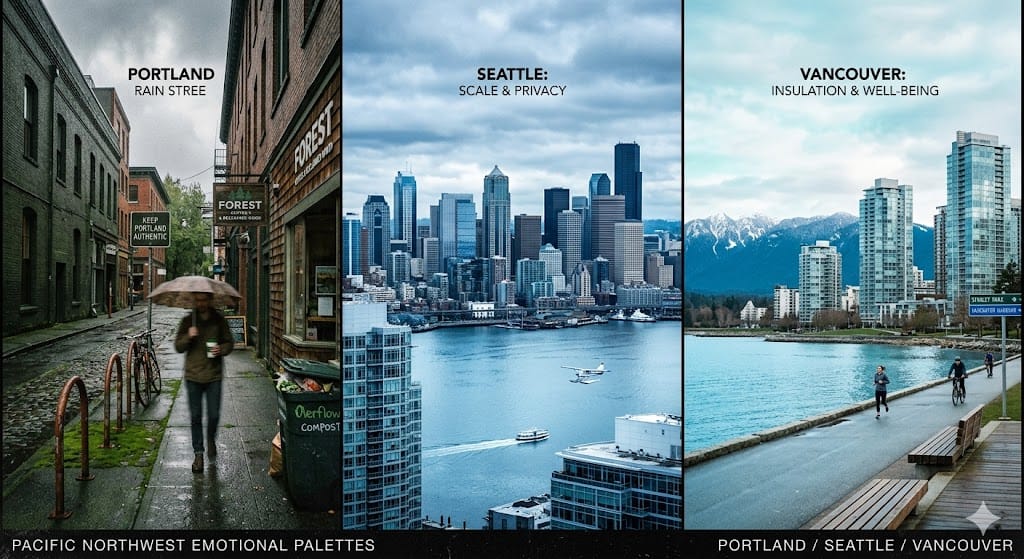
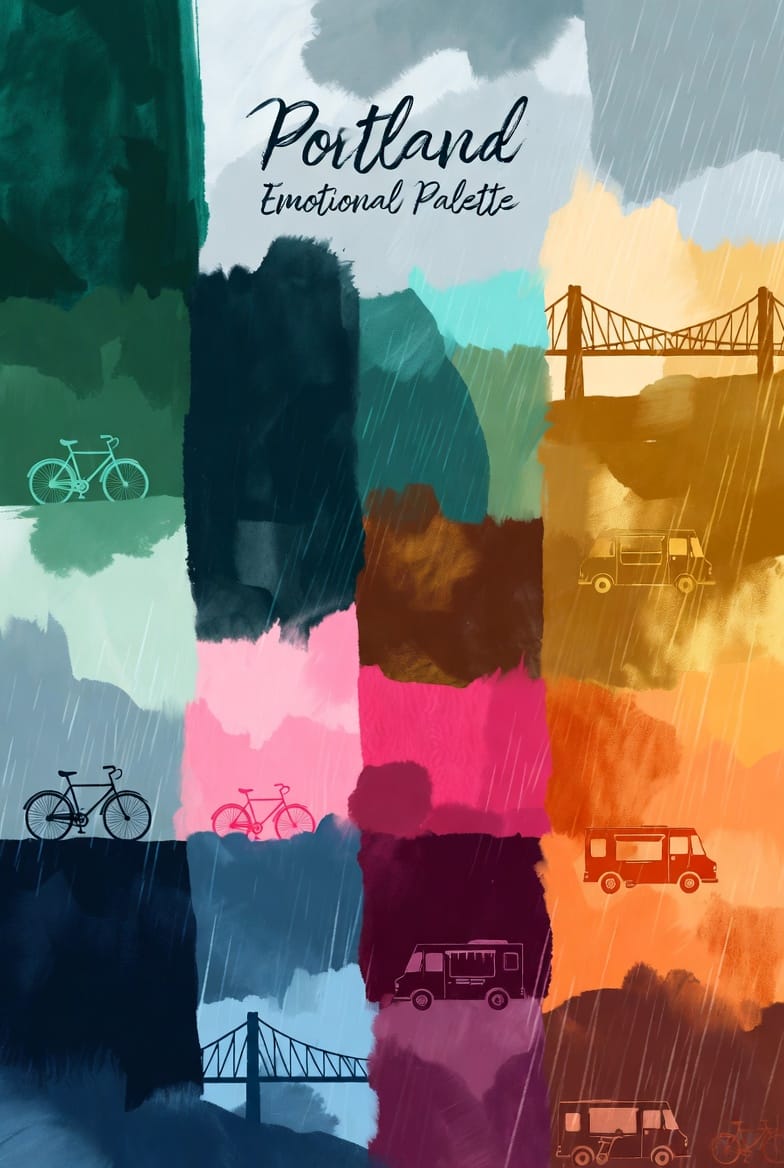
Portland runs in moss green and rust. Wet cedar, coffee black, the brown of secondhand wool, the gray-blue of rain pooling on the Willamette, the pale amber of a bar lamp seen through a fogged window. Light comes down through a low cloud and flattens the city to one soft register, so even the loud parts sound tired. Men argue in the key of apology. They say sorry before they tell you that you are wrong.
The city distrusts winning. A man earns standing by what he refuses. He refuses the corporate job, refuses the new car, refuses to sound like a man closing a sale. Taste outranks money so long as the money stays out of sight. The software engineer pulling four hundred thousand a year dresses to look poorer than the bartender with the good record collection. The fear here is not failure. The fear is complicity, the worry that a man has sold something he should have kept. Portland watches Seattle the way a small congregation watches a rich neighbor who left the faith.
Underneath the warmth sits a permanent fatigue. The place keeps the nervous system of a college town that woke up one morning as a city and never forgave itself. It rewards feeling and struggles with closure. Meetings run long. Consensus turns into a sacrament. The city greets you well and disappoints you slowly.
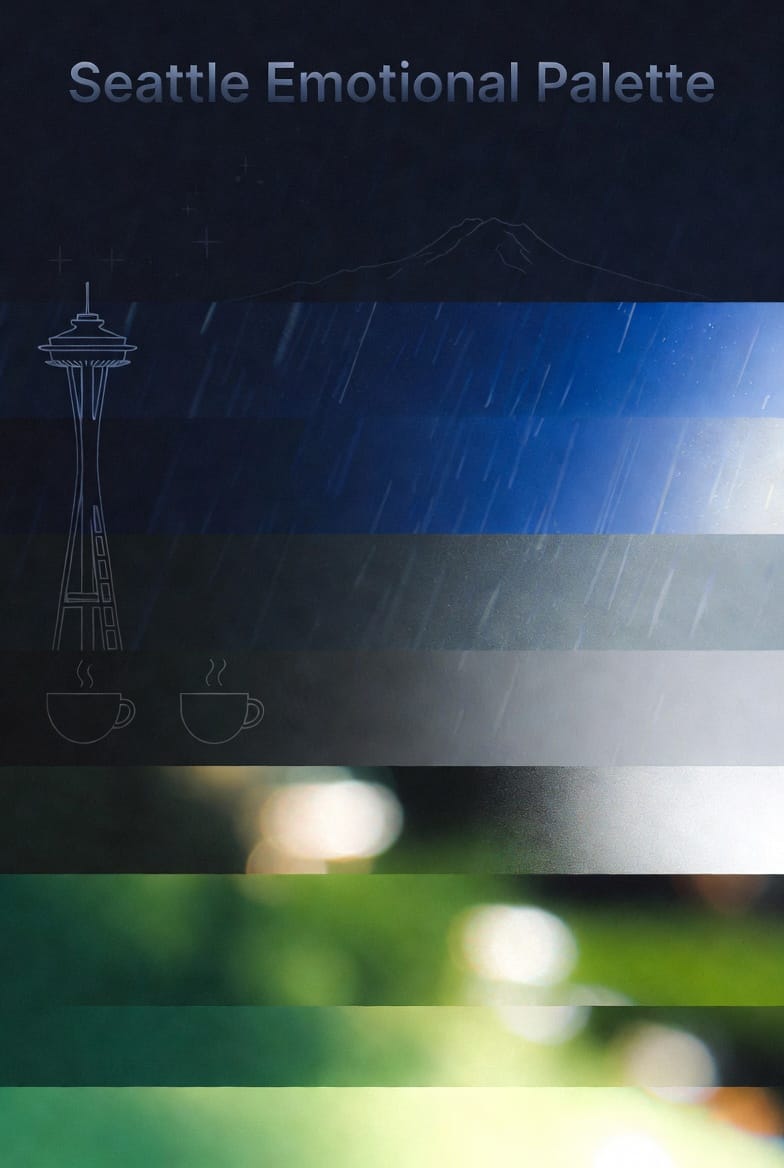
Seattle runs in cold blue and machine silver. Dark water, fir green, brushed aluminum, white cloud, the orange sodium light of a ferry crossing the sound at dusk. The light cuts sharper than Portland’s. Mountains stand at the edge of every view like men waiting to be impressed. People speak with care, work past reason, and give themselves away by inches. Emotion read aloud counts as waste.
Where Portland moralizes taste, Seattle moralizes competence. The high-status man climbs Rainier on Saturday, builds systems at Amazon by Monday, and keeps a home spare enough to pass for a clean codebase. Wealth shows in the rain shell, the Scandinavian chair, the espresso machine, the ultralight pack. The city has no patience for theater. To Seattle, Los Angeles looks like a man crying in public.
The contradiction comes from frontier myth crashing into the spreadsheet. The old picture held the lone engineer and the mountaineer facing the weather alone. The city now turns on enormous firms that count everything. So even the rebellion gets managed. Radical politics start to sound like a project plan. The dread beneath the reserve is redundancy. These men build the machines that make men obsolete, and they suspect their own turn might come in the next reorganization. The coldness outsiders feel is partly that suspicion, a refusal to invest too much in a self that the next quarter might retire.
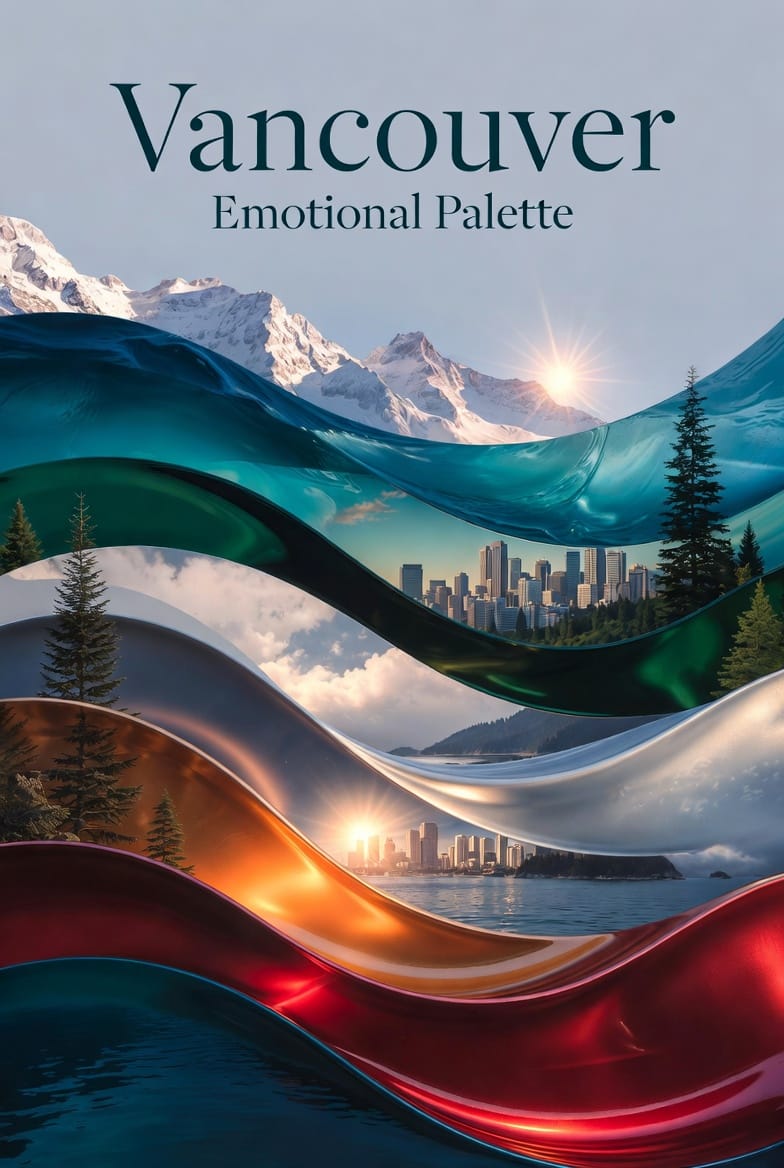
Vancouver runs in glass and snowlight. Blue rain, evergreen near black, white peaks, smoked charcoal, the green tint of condo towers along the harbor. The city looks placed more than built, set down between water and cliff. Light arrives bent through cloud and reflected off ten thousand windows. Even the rich streets feel hushed. Few cities in North America look this calm, and the calm covers a hard tension.
People speak low and move politely. Anger comes out as withdrawal, not as a raised voice. The city prizes a smooth surface over almost anything. Money moves quietly through real estate and trans-Pacific finance, and status comes from composure, health, and a good view. The hedge fund manager and the yoga teacher trade the same words about wellness and balance. Vancouver turns wealth into weather rather than display. The best blocks do not feel like victory. They feel sealed off.
The fear here is hollowness. The city knows it is beautiful and worries the beauty might be the whole story. Housing turned into both the engine of wealth and the source of despair, and a generation now stands outside the gate of ordinary adult life. Downtown empties early. Many describe a quiet loneliness that comes from living inside a place built for scenery. Vancouver has solved livability and cannot manufacture weight.
Three cities, one rain. Portland answers to conscience and asks whether a life feels honest. Seattle answers to competence and asks whether a life works. Vancouver answers to calm and asks whether a life stays smooth. A man tuned for one breaks down in the others. The Portland maker reads as a child in a Bellevue boardroom. The Seattle engineer reads as armored at a dinner table off Alberta Street. The Vancouver financier glides through both and leaves no mark on either.
