Ellen Alperstein: Why Don’t You Get It?

Ellen Alperstein writes:

If they can get past Rupert Murdoch’s lovely parting gift of $40 million, a lot of people will revel in the denouement of Roger Ailes’ Fox News career. But just because the hens at Fox might be safer from some predators, it’s a limited victory. Sexual harassment remains a seemingly intractable problem in the U.S. workplace because a lot of fully civilized people don’t know what it is….

Until I told him, he hadn’t heard that Fox had dumped Ailes after investigating harassment allegations by Gretchen Carlson and apparently finding that she wasn’t singing solo. Alluding to the generally blond, youthful good looks of the women he supposedly harassed, my friend commented, “Why would he ever think women like that would be attracted to him?”

I was stunned. How could someone so smart be so ignorant? Was his disconnect just a momentary departure from humanity? Could someone I know so well be a misogynist?

Nah. Some white people just don’t get that virtually all black people, at some time in their lives, have been treated differently just because they aren’t white and, more important, that even if that unfairness was unconscious, it’s still racist. Reflexive treatment based on someone’s immutable traits is insidious, and it won’t stop until empathy is a default response to human pain.

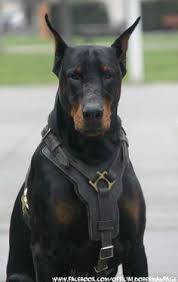
Trying to follow Ellen Alperstein’s argument means makes my head hurt, but as for her anti-discrimination point — do you approach pitbulls the same way you approach cockerspaniels? Do approach dobermans the same way you approach pomeranians?


Pomeranian-1

download

Human breeds are different just as dog breeds are different. I suspect that Ellen Alperstein is more concerned about her personal safety in black and latino parts of town as compared to the white areas of Beverly Hills and Bel Air.

small-fluffy-dog-breeds

download (1)

Posted in Race | Comments Off on Ellen Alperstein: Why Don’t You Get It?

Blacks & Crime

People with high IQs commit fewer crimes than people with low IQs. They have more empathy (which depends on the ability for abstract thought to put yourself in the place of others) and they see the future more clearly.

Joe Domanick wrote two books about the LAPD: “To Protect and to Serve” and “Blue: The LAPD and the Battle to Redeem American Policing.”

Rob Eshman of the Jewish Journal conducts the following interview:

Rob Eshman: What was your reaction as the events of last week unfolded?
Joe Domanick: I wasn’t at all surprised about either one of the two killings by the officers, because [each is] just one of the string of shootings that have come to public attention, really, ever since Ferguson [Mo.], because of cameras and other technologies.
And then when the five officers were killed in Dallas, that made me very anxious because, No. 1, we had a chief of police in Dallas who was really doing all of the right things to alleviate these kinds of situations.
RE: You’ve said there were 900 officer-involved shootings that led to fatalities in 2015, and 2016 is on track to have even more. Why? Iceland has one in 71 years. Germany has six.
JD: An even better comparison is Canada, which per capita has more guns than the United States, but has very few shootings.
I just think that America is a very, very violent country. It was born in violence. It started with genocide. Then it followed up with the most brutal, dehumanizing kind of slavery, which was enforced strictly through brutality. Then you had the Fugitive Slave Law in 1850, when it really became the job of the police to closely monitor African-Americans, and that became a tradition. And the whole country, of course, was racist — it wasn’t just the South.
So I think that this is a very violent country. We worship violence. We see it everywhere in our advertisements. It’s hard for me to think of a movie star, man or woman, who I haven’t seen on a billboard off Sunset Boulevard holding a gun, holding a .45, wearing a police badge. So I think that we worship violence, we do, and I think that’s a big part of it.
RE: You really can draw a direct connection from the Fugitive Slave Law to what’s going on now in these communities?
JD: You had decades of people living in very violent communities, and the violence becoming almost a norm. And the African-American people that could get out of the ghettos got out, but what you had left was a kind of social pathology that imploded. That’s what’s made our ghettos so dangerous. We refuse as a society to do anything about it, to take the steps to alleviate, to change the values in that subculture.

Posted in Africa, Blacks, BLM, Crime, Police | Comments Off on Blacks & Crime

Liberalism and Group Identity

A Jew can be a leftist, but leftism does not mesh easily with Judaism. Leftism does not accept race and religion as valid ways of organizing people. The essence of Judaism is separation — separation between Jews and non-Jews, between men and women, adults and children, the Sabbath and the other days of the week, etc.

The Hebrew word for holiness — “Kadosh” — literally means “separate.” Judaism conceives of Jews as a people who dwell apart.

If you are a normal Orthodox Jew, you put your Jewish identity first before all other identities. You see what is going on in the world in terms of whether or not it is good for the Jews. One of the major advantages in being an Orthodox Jew is that you know who you are. Your choices in life are simplified.

The stronger your in-group identity, be it as Jewish or black or Muslim, the less likely you are to be liberal (to live and let live and to be ok with diversity) and the more likely you are to have negative views of outsiders.

Shmuel Rosner writes:

The more liberal they are, the less their tendency to be actively “Jewish.” The level of liberalism is high among those who raise non-Jewish children “or who are married to non-Jews.” Liberal Jews feel less responsible for other Jews. They have a somewhat lesser sense of belonging to the Jewish people. Only a third of the “very liberal” (34%) feel that “being Jewish is very important” – compared to 54% of “right of center” non-Orthodox Jews. The “very liberal” don’t belong to synagogues (18%), have less Jewish friends, and tend less than others to fast on Yom Kippur or light Shabbat candles. Their attachment to Israel is markedly lower than the attachment of less liberal Jews.
That is to say: all across the board – feelings, activities, traditions, and affiliations – the liberals show a lesser level of engagement. The correlation between liberalism and disengagement is “modest” when it comes to “feelings” (Feel responsible for Jews in need, Feel a sense of belonging to the Jewish people, Feel being Jewish is very important). It is “strong” when it comes to “religious engagement” (Being religious very important, Kosher home, Shabbat candles usually+, Attends services monthly). It is also “strong” when it comes to “Israel attachment” (Israel essential to being Jewish, Feel very attached to Israel). In other words: liberal Jews feel moderately passionate about being Jewish; but they do not appreciate religion and do not appreciate Israel, and they especially do not appreciate hawkish views on Israel…

Why is it so difficult to seriously discusses these numbers and this reality? That’s simple: because often times liberal Jews tend to value their “liberalism” more than they value their “Jewishness” (this is me speaking, not Cohen. I am not sure he’d agree). If the numbers tell a story from which one learns that liberalism and Judaism cannot go hand in hand, the liberals will choose liberalism. So the obvious policy of Jewish leaders and institutions is to avoid this seeming contradiction – to hide it for as long as possible and thus not force the choice on a growing group of Jewish liberals…

These numbers have meaning. They have implications, and these implications could be of three possible types:
– Judaism and liberalism cannot go hand in hand, and we ought to understand that some Jewish Americans are lost to us, Jews.
– There is a need to make Jews slightly less liberal – at least when it comes to the kind of liberalism that seems to make it difficult for them to be actively Jewish.
– There is a need to make Jewish Americanism more adaptable to the priorities of liberal Americanism.
In all likelihood, to succeed in an enterprise whose aim is to strengthen the active Jewishness of American Jewish liberals, it will have to be a combination of both points two and three (that is, if you do not accept point one). But the exact prescription will not be easy, as the numbers – while telling us a story – do not reveal its source. As Cohen framed it: “What about being liberal makes them ‘less Jewish?’”
In other words: as hard as it is to spell it out with such bluntness, as a general rule, liberal American Jews seem to be less Jewish.

Posted in Jews | Comments Off on Liberalism and Group Identity

‘Fear Fades With Repetition’

In talk 50 of the Beginners Talks at Underearners Anonymous, the founder of the program, Andrew says:

* Underearning is a disease of hiding. In terms of visibility, fear fades with prayer. Fear fades with action. Fear fades with repetition.

* For many years, I went through attempts to have a better life. At age 16, I had my first go round with magical thinking. I was thinking about being a photographer, a professional guitarist, and I couldn’t commit to preparing myself. I couldn’t commit to doing the work. Success and failure have one word in common — process.

* I had no idea how sick I was. I had no idea how much of an addict I was. Most people I know in recovery are multiply-addicted people. Three or four fellowships is the norm.

* I remember going to a Broadway play and I said to the guitar player and said, ‘I would like to sub for you.’ Who would go into a Broadway pit and say they would like to sub unless they could do it? But I couldn’t do it. I didn’t have the sanity to know what was required to do that. Why did I go? Because I was sick and I didn’t care. One of the things about underearners is that we don’t really care about serving the community. We don’t equip ourselves to want to do a good job. Why? Because we’re sick. I just wanted to be in the cave. This is a disease of experiential isolation, where I choose to hide in a substandard life because I am under the illusion that I am being safe.

For many years, I would go from one vision to another. Whether it was studying guitar or studying acting or writing or comedy, I didn’t know that I was under the bondage of self. This manifested itself a total cutoff of energy for anything my soul wanted to do.

The disease of underearning will not tolerate visibility, risk, criticism, praise.

I had a desire to do voiceovers. I got hired for my first voiceover and I looked in the control room and one of the guys was shaking his head, as they often do, and I couldn’t tolerate being visible. I got my first check and never did a voiceover again.

Over and over again for 20 years, the energy for the vision was cut off like electricity for a house. The energy goes and you don’t know why and you don’t care why because I was deep in this addiction.

I would always try to spin relatives. I would BS. But all I wanted to do was hide. The disease would always cut off the energy for my vision…and the visions I had were always blurry.

I was powerless over this cutoff of energy, just like an alcoholic is powerless over alcohol.

I learned to come up with excuses. All I wanted to do was go home and I didn’t know why I was terrified of visibility.

We have five character defects — fear, self-seeking, selfishness, inconsideration and dishonesty. We have three healthy instincts — social, sexual and survival. Those five defects will trample on those three instincts over and over again.

My character defects were part of my childhood. I could not control them but I was responsible for them.

I worked the 12 Steps. I was able to get the fog out of my head so that I was able to commit to time accountability with my action partner.

Posted in Addiction | Comments Off on ‘Fear Fades With Repetition’

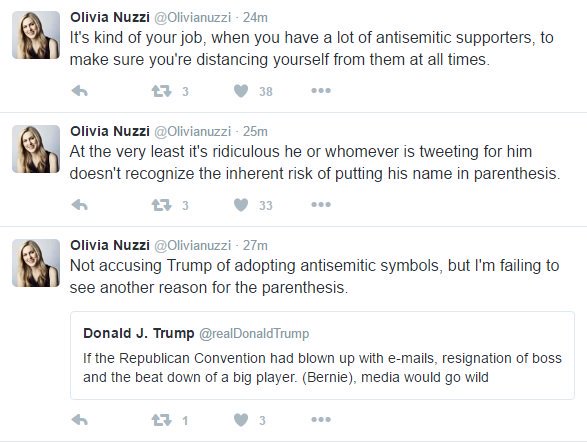
Please Be Careful Where You Put Your Parentheses

CoKr7waVYAA1H2o

Posted in Anti-Semitism | Comments Off on Please Be Careful Where You Put Your Parentheses

PHOTOS: DNC erects four-mile eight-foot tall fence around Philly convention site

Walls are not for little people. Only the elites get to protect themselves.

REPORT: To the Democratic National Committee elites, keeping average Americans away from their convention is a good idea, while protecting the southern border from intruding terrorists, rapists and murderers is a bad one.

The DNC has erected a four-mile fence around its convention site at Philadelphia’s Wells Fargo Center. (Isn’t it ironic they’re doing so much to protect a site named after a bank?)

The fence, which appears to be about 8 feet tall, is intended to keep out any individuals with whom Democratic Party leaders, delegates and other liberal elites would rather not mingle.

Fox 29’s Steve Keeley shared a picture of a portion of the fence he said was erected near the intersection of Pattison and Broad.

Here’s another shot from a CNN Headline News report:

Twitter user @brokencarpenter visited the DNC border wall and noted there was “acres and acres and acres of fence.”

Posted in America | Comments Off on PHOTOS: DNC erects four-mile eight-foot tall fence around Philly convention site

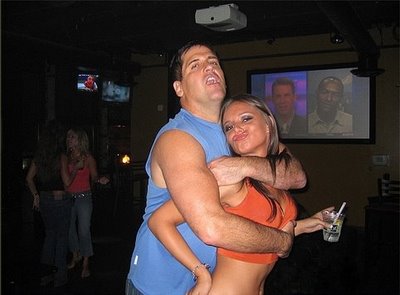
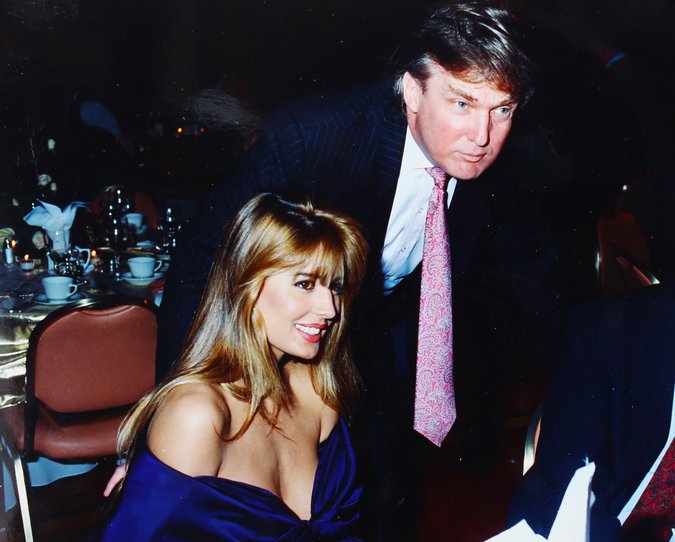
Mark Cuban Vs Donald Trump

CoKjw_xW8AA7uzw

CoKjxsHWcAE6xi0

Posted in Donald Trump | Comments Off on Mark Cuban Vs Donald Trump

‘At least 9 casualties reported from German restaurant [suicide] blast’

REPORT:

A man has been been killed and up to 11 others injured – some seriously – after the blast ripped through the Eugens Weinstube wine bar at about 10pm on Sunday local time (8pm British time).

The incident is believed to have been a suicide bombing – and the man killed was the attacker.

The wine bar is just yards from a concert venue where 2,500 were enjoying the Ansbach Open Music Festival.

It appears the festival was the bomber’s intended target.

Posted in Germany, Turkey | Comments Off on ‘At least 9 casualties reported from German restaurant [suicide] blast’

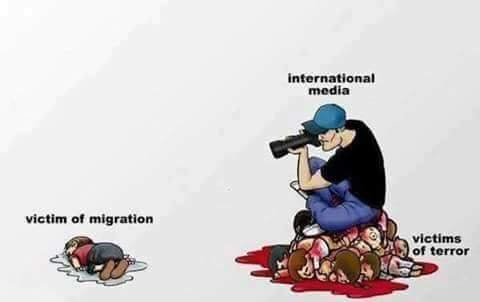
Journalism

CoJTDjNWcAA9rSM

Posted in Journalism | Comments Off on Journalism

The Gottfredson Bell Curve

Dr. James Thompson writes: If, despite her having made so may contributions to intelligence research, Linda Gottfredson had to be remembered for only one thing, I think it would be for her exposition of the meaning of intelligence in everyday life.

Whereas most previous researchers talked about the abstract concept of intellectual power, and gave examples only in terms of academic qualifications, Linda looked at the practical impacts of ability on trainability and the successful completion of everyday tasks. Even among my clinical psychology colleagues, most of whom who had done lots of intelligence testing, her papers were received with enthusiasm and some amazement. She explained what people could do at all levels of intelligence, in a way that made sense to patients and clinicians alike.

Some people are brighter than others. This is the finding which has emerged from intelligence research over a century. Read Linda Gottfredson “Why g Matters: The Complexity of Everyday Life” (1997) if only just page 117 for an explanation of the relationship between literacy, learning and intelligence.

The video below shows David Lubinski talking to Linda for her Distinguished Contributor Interview.

At 14 minutes she talks about the meaning of g, general intelligence. She recalls the three things that are required to detect g, according to Hunter and Schmidt: reliable measures, no restriction in the range of intelligence, and no sampling errors.

As a consequence of some people being brighter than others, and some jobs being more complex than others “You cannot have equality and excellence too”.

At 24 minutes she talks about the real tasks that people can or cannot do according to their intelligence levels.

At 35 minutes she describes how she came to write the statement on intelligence for the Wall Street Journal that was signed by 50 leading intelligence researchers in 1994. She said she kept it simple, and just summarised the main findings in the literature, and asked them to sign or not, not allowing them to change a word.

At 42 minutes she explains why intelligence is so important in health care: prevention requires a high level of self-care, and in the case of modern medicine, that turns out to be complicated. The dull are dying before their time, because the cannot follow the instructions for self-care.

At 57 minutes she mentions The Mind’s Eye: the capacity of intelligent people to imagine to imagine hypotheticals, and evaluate them.

At 1:07 why g matters, at 1.12 her admiration for Arthur Jensen, at 1.31 the contortions that some test creators have got into when trying to build a valid test which also annuls racial differences, mostly by complicated cheating (for example, restricting the cognitive elements of the test to being able to read at the 1st percentile).

A summary of a lifetime’s contribution, gracefully done by a researcher who suffered harassment for daring to talk about intelligence.

Posted in IQ, Linda Gottfredson | Comments Off on The Gottfredson Bell Curve