Simon Wiesenthal Center will monitor the PS as one of ten parties for spreading xenophobia and anti-Semitism

This pro-migrant site writes: After being named one of the nine scariest parties to be elected to the European parliament by Huffington Post, the Simon Wiesenthal Center, the global Jewish human rights organization that challenges anti-Semitism, issued a statement where it names the Perussuomalaiset (PS) as one of ten parties it will monitor closely for spreading xenophobia, nativist nationalism, anti-immigration rhetoric and anti-Semitism.

Placing the PS in the political company of France’s National Front, the neo-Nazi and far-right NPD of Germany, Greece’s Golden Dawn and Jobbik of Hungary, shouldn’t come to a surprise. What is, however, surprising how uncritically the Finnish media has treated the PS, especially when it comes to its anti-immigration and anti-Islam views.

Concerned by the rise of xenophobia and anti-Semitism in Europe, the Simon Wiesenthal Center called on in early May EU Vice President Catherine Ashton to condemn the entry of “hatemongers into the European Parliament, launch an investigation into their source of funding” and “urge the parliamentary faction blocs to ostracize them.”

Posted in Immigration, Simon Wiesenthal | Comments Off on Simon Wiesenthal Center will monitor the PS as one of ten parties for spreading xenophobia and anti-Semitism

Max Blumenthal: How the Israel Lobby Protected Ukrainian Neo-Nazis

Max Blumenthal, a journalist of the left who opposes all ethno-nationalisms including the Israel expression, writes:

AlterNet has learned that an amendment to the 2015 National Defense Authorization Act (NDAA) that would have forbidden US assistance, training and weapons to neo-Nazis and other extremists in Ukraine was kept out of the final bill by the Republican-led House Rules Committee. Introduced by Democratic Representative John Conyers, the amendment was intended to help tamp down on violent confrontations between Ukrainian forces and Russian separatists. (Full text of the amendment embedded at the end of this article).

A USA Today/Pew poll conducted in April while the NDAA was being debated found that Americans opposed by more than 2 to 1 providing the Ukrainian government with arms or other forms of military assistance.

If passed, Conyers’ amendment would have explicitly barred those found to have offered “praise or glorification of Nazism or its collaborators, including through the use of white supremacist, neo-Nazi, or other similar symbols” from receiving any form of support from the US Department of Defense.

The amendment was presented by congressional staffers to lobbyists from Anti-Defamation League (ADL) and the Simon Wiesenthal Center, two of the country’s largest established Jewish pressure groups. Despite their stated mission to combat anti-Semitism and violent extremism, the ADL and Wiesenthal Center refused to support Jeffries and Conyers’ proposal.

According to Democratic sources in Congress, staffers from the ADL’s Washington office and the Simon Wiesenthal Center rejected the amendment on the grounds that right-wing Ukrainian parties like Svoboda with documented records of racist extremism had “moderated their rhetoric.” An ADL lobbyist insisted that “the focus should be on Russia,” while the Wiesenthal Center pointed to meetings between far-right political leaders in Ukraine and the Israeli embassy as evidence that groups like Svoboda and Right Sector had shed their extremism.

Posted in ADL, Nationalism, Simon Wiesenthal | Comments Off on Max Blumenthal: How the Israel Lobby Protected Ukrainian Neo-Nazis

Mondoweiss: The Simon Wiesenthal Center’s perverted stance on ‘tolerance’

From Mondoweiss in 2010: Why does the Los Angeles-based Simon Wiesenthal Center (SWC) have nothing to say about the rabbinical edict circulating in Israel—currently signed by more than four dozen rabbis—forbidding the sale or rental of homes to non-Jews?

Or, why has the Center not applauded the dissenting view of Israel’s leading Haredi rabbi, Aaron Leib Steinman, who said, “there are things that should not be done; what if there would be a similar call in Berlin against renting properties to Jews? Where is the public conscience?”

Israel is lurching toward ever-more extreme expressions of religious-nationalism, electing leaders who publicly profess anti-Arab and anti-immigrant views—and legislate accordingly. Israelis increasingly favor gagging their own country’s human rights organizations, journalists, and activists. This swelling anti-democratic impulse is directed toward non-Jews—whose status is necessarily ambiguous in the “Jewish state”—but even toward some who self-identify as Jews.

Meanwhile, the Simon Wiesenthal Center is in “business-as-usual” mode, issuing stern rebukes to those it deems anti-Semites—i.e., those who criticize Israeli policy and advocate equality for all who inhabit the borderless space of Israel/Palestine.

Last week, SWC Rabbis Marvin Hier and Abraham Cooper took the Presbyterian Church (U.S.A.) to task in an over-the-top op-ed in the Wall Street Journal. A sharp correction to Rabbis Hier and Cooper came in a statement issued by the Israel/Palestine Mission Network of the PC(USA), which noted that “this is not the first time [SWC rabbis] have wrongly accused Christian traditions that are committed to overcoming injustice in the Holy Land of demonizing the Jewish people.”

So, while ignoring the fact that many of Israel’s religious and secular leaders are fomenting rabid, tribal attitudes, what does the Simon Wiesenthal Center deem worth of attention in its quest for “tolerance”? A visit to the organization’s website lists their current preoccupations:

• Slamming UNESCO for its declaration that the “Haram al-Ibrahim/the Cave of the Patriarchs and Bilal bin Rabah Mosque/Rachel’s Tomb” are “an integral part of the occupied Palestinian territories” and “that any unilateral action by the Israeli authorities is to be considered a violation of international law.” Despite the location of these sites in Hebron/Al Khalil, deep within the Palestinian occupied territories, the Simon Wiesenthal Center characterizes UNESCO’s statement as a move to “steal from the Jewish people one of its most sacred religious sites.” [No mention on the Center’s site of Israel’s state-sponsored stealing from the Palestinian people in establishing settlements for half a million Israelis on occupied and expropriated Palestinian land, in Hebron and elsewhere, in violation of international law.]

• Calling on the Japanese discount retail chain, Don Quixote, to remove a “Nazi” uniform adult costume from its stores throughout Japan and Hawaii.

• Slamming as “anti-Semitic scapegoating” an event in Dublin, Ireland, featuring David Cronin, author of a new book titled Europe’s Alliance with Israel: Aiding the Occupation.

Meanwhile, the Simon Wiesenthal Center is moving ahead on the planning phase of a “Museum of Tolerance” in Jerusalem, incredibly situated atop a Muslim cemetery. The project, a “partnership with the Jerusalem municipality and the Israeli government,” has been condemned by numerous entities, including an Israeli Jewish-Muslim initiativeAmericans for Peace Now, the Center for Constitutional Rights, and, of course, descendents of the Palestinians buried there.

In its scorched-earth campaign to deflect appropriate criticism of Israeli policy by smearing advocates of equal rights for Israelis and Palestinians, the Simon Wiesenthal Center fails abjectly in key elements of its stated agenda: to “promote human rights and dignity” and “confront bigotry and racism.” It’s a patent double standard: the Wiesenthal Center’s misguided notion of what it means to “stand with Israel” trumps universal human rights regardless of religion and ethnicity.

The Simon Wiesenthal Center has amassed a substantial track-record of self-righteous finger-pointing. It’s time to point the finger back.

Posted in Israel, Simon Wiesenthal | Comments Off on Mondoweiss: The Simon Wiesenthal Center’s perverted stance on ‘tolerance’

The Holocaust in American Life by Peter Novick

This looks like a fascinating book.

Here are excerpts of some reviews:

* Prize-winning historian Peter Novick illuminates the reasons Americans ignored the Holocaust for so long — how dwelling on German crimes interfered with Cold War mobilization; how American Jews, not wanting to be thought of as victims, avoided the subject. He explores in absorbing detail the decisions that later moved the Holocaust to the center of American life: Jewish leaders invoking its memory to muster support for Israel and to come out on top in a sordid competition over what group had suffered most; politicians using it to score points with Jewish voters. With insight and sensitivity, Novick raises searching questions about these developments. Have American Jews, by making the Holocaust the emblematic Jewish experience, given Hitler a posthumous victory, tacitly endorsing his definition of Jews as despised pariahs? Does the Holocaust really teach useful lessons and sensitize us to atrocities, or, by making the Holocaust the measure, does it make lesser crimes seem “not so bad”? What are we to make of the fact that while Americans spend hundreds of millions of dollars for museums recording a European crime, there is no museum of American slavery?

* In the first decades following World War II, Americans rarely discussed the Holocaust. Now, remembering the Holocaust has become a fundamental part of Jewish identity; gentiles, too, view the Holocaust as a touchstone of moral solemnity. In The Holocaust and American Life, Peter Novick asks why, and his answers are both sensible and shocking. He explains the immediate postwar silence about the Holocaust by reviewing the basics of cold war politics: just after the liberation of the concentration camps, Americans were called upon to sympathize with “gallant Berliners” who resisted the Soviets and built a wall against Communism–an “enormous shift from one set of alignments to another,” Novick notes. Novick then leads readers through the series of events that brought the Holocaust to the forefront of American consciousness–the trial of Adolph Eichmann, the Six-Day War, the Carter administration’s Israel policy, and the construction of the Holocaust Museum in Washington, D.C.

Among Novick’s most controversial ideas is his assertion that American Jews spoke softly of the Holocaust at first because they didn’t want to be seen as victims; later, Jews decided that victim status would work in their best political interest. Or, as Novick puts it, “Jews were intent on permanent possession of the gold medal in the Victimization Olympics.” The Holocaust in American Life is as carefully researched and argued as it is polemical and probing. Novick does not suffer Holocaust deniers lightly, and he is empathic toward victims and survivors, but he has no tolerance for false sentiment. One wishes that more people would ask, as Novick does, what kind of a country would spend millions of dollars on a museum honoring European Jewish Holocaust victims instead of a monument to its own shameful history of black slavery.

* Why has the Holocaust, five decades after its conclusion, remained such a burning issue in the consciousness of Americans, both Jews and Gentiles? After all, most historical events fade from memory with the passage of time and the deaths of those who directly experienced the events. Yet, despite the occurrence of more recent and certainly quite horrific mass atrocities, from Cambodia to Rowanda, the Holocaust continues to play a central role in American public discourse. In this unsettling and fascinating work, Novick, a Jew and a professor of history at the University of Chicago, examines how a variety of domestic and foreign events have moved Holocaust consciousness to the center of American life and kept it there. The author unhesitatingly probes touchy subjects, including the role of Holocaust consciousness in cold war politics, the “uniqueness” of the Holocaust, and even the supposed “obsession” of American Jews (few of whom are Holocaust survivors) with the Holocaust. This is an important work that is bound to irritate, even outrage, many readers.

* This is one of the most intellectually stimulating books I have ever encountered. While few people with probably agree with everything the author has to say, he has written a thoughtful, thoroughly researched examination of how the idea of the Holocaust–and popular thinking about that tragedy among both Jewish and Gentile Americans–has evolved over the 60 years since the outbreak of World War II. He also has the courage to challenge conventional thinking as well as the beliefs of generally revered leaders like David Ben Gurion and Elie Wiesel.
The book does an excellent job of linking popular thinking about the Holocaust with concurrent historical trends and developments, including the more intense American focus on the Pacific as opposed to the European theatre for much of the war, the lack of appreciation during and immediately after the war for the immensity of the Jewish genocide, the emergence of the Cold War (together with the “discovery” of common totalitarian threads between Nazism and Stalinism), the “rehabilitation” of Germany after Stalin took over Eastern Europe, changing views about “victimization” in American popular culture, the Eichmann trial in Jerusalem and Hannah Arendt’s controversial analysis of it, the Arab-Israeli Wars of 1967 and 1973, as well as the decline in American anti-semitism in general at the same time that radical black activists were employing anti-Jewish rhetoric.
One of the most important contributions of the book is its discussion of the alleged “uniqueness” of the Holocaust, which the author shows to be both historically inaccurate and dangerous in leading down the slippery slope where any other more recent catastrophes and disasters are minimized in comparison. Rich with example and documentation–the footnotes and endnotes should be read, too–the book is one I expect to return to in the future. Broad in its scope and well-written, it is generally quite persuasive in the arguments it advances.

* Professor Novick has written a superb critique of the extent to which an preoccupation with the Holocaust dominates American-Jewish organizational agendas and priorities, along with a rigorous historical account of how we got here. This is really a book which should be read by all Jews who care at all about the activities of those organizations that purport to speak for the American Jewish community–and indeed, by all Jews who are concerned about American Jewish culture and society.
I’m afraid that Jew haters will find a certain amount here that will be useful to their cause.
A determination not to write anything that might potentially provide ammunition to Jew haters would only lead to a paralysis that prevented one from writing anything about Jews. Rest assured that Novick, a secularist Jew and University of Chicago historian, is the farthest thing one could imagine from a Holocaust denier. He quite properly dismisses them as “a tiny band of cranks, kooks, and misfits”. Historians do not need to concern themselves with refuting Holocaust deniers any more than they would need to concern themselves with refuting Civil War deniers, slavery deniers, Roman Empire deniers, or flat-earthers.

Posted in America, Holocaust | Comments Off on The Holocaust in American Life by Peter Novick

Talking about Immigration with Youth: Ethics, Equity and Empathy

* Link:

Talking about Immigration with Youth: Ethics, Equity and Empathy

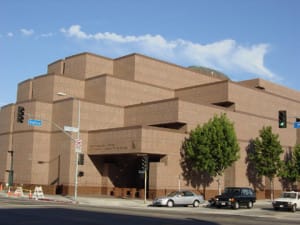
Simon_Wiesenthal_Center-300x225

By Linda S. Blanshay

Director, Program Development, Museum of Tolerance

This 2014, each of the participating sites in the National Dialogues on Immigration project will be contributing to our blog post series, “Immigration: Our Stories.”

I’m an immigrant—a white one from Canada. When I tell this to people in California they find it interesting or quaint. With that kind of reaction it’s easy for me to discuss my native land: the cold, the healthcare system, or a favorite singer that Americans have never heard of. I have the privilege to discuss this aspect of my identity freely. The racialized tenor of immigration debates gives me a pass.

Los Angeles is one of the most diverse cities in the country with a high number of immigrants, and a higher number of undocumented immigrants than other areas. Biased and dehumanizing messages in the media about migration are heard by immigrant and non-immigrant children loud and clear. Many children do not know the full story of their status and most do not fully understand the political layers of the contemporary debates. Yet they are keenly aware of legal barriers and that it is not a safe topic for them or their families. They do not talk about immigration as freely as I do.

As part of the International Coalition of Sites of Conscience National Dialogues on Immigration project the Museum of Tolerance wanted to be part of a better conversation on immigration that helps to normalize and contextualize immigration for children. We created a new program aligned with 4th and 5th grade history curriculum based around the museum’s interactive Finding Our Families Finding Ourselves exhibit. The goal is to support classroom discussions on immigration applying an anti-bias approach. The program had to attend to the diverse experiences children have of immigration while challenging them to think critically about the subject. I will share a few of my reflections on the process of program development through the lenses of ethics, equity, and empathy.

The program begins with icebreakers, anonymous voting, and prediction activities to set the context and invite participation. The students then explore the exhibit which features sets and dioramas depicting a turn of the century immigrant experience, with artifacts loaned from the Ellis Island Museum in New York. Following this ‘journey,’ students enter beautifully designed rooms each one showcasing the personal story of a noted American, including: poet, best-selling author, historian and educator Dr. Maya Angelou; award-winning actor, comedian and director Billy Crystal; multiple Grammy winner and Rock and Roll Hall of Famer Carlos Santana; and National League MVP and former Manager of the four-time World Series Champions, the New York Yankees, Joe Torre. Their individual stories illuminate the history of migration that shaped their lives and the family members who inspired them. The program ends with art activities for self and group reflection.

Before students meet the celebrities in the exhibit, they encounter some more in the introductory anonymous voting activity. Students view the photos of a series of young pop stars and actors from their favorite movies to guess which one is an immigrant. They are surprised to learn that some of their favorite stars are immigrants. The discussion on young celebrities (and their varied immigration statuses) and older ones help connect past and present and explore the many reasons why people migrate. Later in the exhibit, the historical sets open up conversations on the differences between immigration then and now, underlining that immigration is a perennial aspect of the human condition and always will be.

The initial thinking about the celebrity stories was that they offered a compelling opportunity for students to reflect on the windows and mirrors to their own lives. It seemed a safe enough way to talk about immigration. It is for some, not all. In “Our Roots, Our Future” published by California Tomorrow, teachers working with diverse youths were provided a Tool for Self Reflection. Drawing on that tool the following questions come to mind for museum educators to ask themselves as they discuss the topic of immigration with children and youths:

• Do I know how the children identify culturally or which national origin is most comfortable to them?

• Do I know what parents want for children to know and discuss about immigration?

• Do I know if the youths are feeling any pressures that may contribute to anxiety over telling their family’s immigration story or cultural background?

Classroom educators have the chance to learn this over time and hopefully do. At museums, we typically don’t know these answers. We have learned from students (and their heartbreaking body language when a subject is too close to home) that no icebreaker or fancy exhibit will erase anxieties over immigration status and somehow make this a safe topic when it’s not. We resolved never to ask students the seemingly innocent question: “Is anyone here an immigrant?” Other people’s stories, in this case the celebrities, became a key focus.

Proceeding with caution cannot mean silencing the conversation. Equity based education requires that we not only make room for difficult conversations of contemporary significance but that we boldly advance alternative messages and realities. In this program, we built into the interpretation plan the overturning of specific ‘myths’ or assumptions that students often have. The exhibit presents opportunities to rethink these assumptions without naming them overtly. The point is not to plant them if they aren’t already there but rather to subvert them if they are. The assumptions the program addressed include:

1) Immigrants are less than or not ‘real’ Americans;
2) Immigrants take jobs from Americans;
3) The majority of immigrants in US are Mexican;
4) Latinos are mostly undocumented.

(Maureen Costello’s article “The Human Face of Immigration” and the related hand-out “10 Myths about Immigration” are important resources.)

Most importantly, the program strives to model appropriate language for positive conversations. Facilitators are mindful about using inclusive and expansive language such as referring to immigrants as “new Americans” and “neighbors” and point out the problems inherent in terms like “illegal aliens.” The subject is reframed for students in terms of family histories, opportunities, economic growth, fairness, and contributions.

We can make the experience about ‘just the facts’- even correct, assumption-reversing facts, to stay away from personal revelations. But my privilege comes to mind again. As a White lady from Canada with a green card I have the privilege to make immigration an academic discussion and can safely make bold activist assertions. But the fears and anxieties over documents and deportations, as well as the stories of triumph, are extremely personal for many.

The authority to interpret history means that museums have the ethical responsibility to humanize the people whose stories they tell. Immigrants are more than statistics, maps, and “workers” (as the textbooks emphasize so well). They are people with families, hopes, regrets, hardships, accomplishments, and senses of humor. The children and youths wading into these stories have their own stories too.

Although many students don’t recognize the older celebrities showcased, that’s okay! Their rich stories of journeys, love, longing, fame and success are suitably dramatic, and embody both the particular and universal. Through the Finding Our Families, Finding Ourselves exhibit, students realize that that there is no single story and there are many ways to think about what an immigrant looks like and acts like. Through the celebrity dramatizations children receive permission and affirmation to delight in those stories and in their diverse identities.

Strangely, the Museum of Tolerance and the Simon Wiesenthal Center have no such program in Israel dedicated at weakening the core Jewish majority while empowering the Arab minority. They seem to seek the opposite for the goyim that they seek for themselves. For Gentiles, they should have multi-culturalism while we Jews get to enjoy cohesion.

Posted in America, Immigration, Israel, Museum of Tolerance, Simon Wiesenthal | Comments Off on Talking about Immigration with Youth: Ethics, Equity and Empathy

Louisiana teen in bikini attacked by catcallers with pipe

From the New York Daily News: A Louisiana teen said she has to relearn to smile after her top lip was nearly ripped from her face while wearing a bikini in an attack by catcallers.

After a day of swimming, Jessica Byrnes-Laird, 18, sat in a car in her bathing suit outside a Shreveport convenience store Sunday night.

A group of men began harassing her as her boyfriend was in the store, the couple said. When her beau came outside, he and the men fought, KTSB reported.

As the boyfriend broke away from the scuffle, one of the four men threw a brass pipe through the open passenger door window, striking Byrnes-Laird right in the mouth, she said.

“I looked down and saw my teeth in my hand and I immediately gushed blood,” she told NBC 6.

Between 10 and 12 teeth were knocked out of her mouth, which is completely stitched up, her grandpa Earl Byrnes told the Daily News.

“Right now, she’s real sore and can’t eat or nothing,” he said.

bikini2n-5-web

Posted in Crime | Comments Off on Louisiana teen in bikini attacked by catcallers with pipe

Saudis In Town

Friend: Hollywood Reporter had an article last year about how Gulf royals and Chinese now account for something like 60% of consumer spending in BH, where the dept. stores hire Mandarin speakers (with no shortage of those in SW L.A. County of course). It had a great quote from some local realtor/restaurateur/hype artist: “The Saudis I know complain now about how many other Saudis there are in town.”

Accusations against Arab royalty are the talk of Beverly Hills

…Jimmy Delshad, former mayor of Beverly Hills, says his friends are asking: “Who the hell do they think they are, coming here and behaving like that?”

But Delshad, who emigrated in 1959 from Iran, is also quick to point out that these incidents are anomalies and that the strength of his city’s economy increasingly relies on the largesse of these elite Arab visitors.

They’re certainly spending with abandon — renting lavish beach pads for $100,000 a month and buying furnished penthouse condos along the Wilshire Corridor for their children at UCLA and USC, according to real estate brokers.

“Many Middle Easterners are low profile,” said Jeff Hyland, an agent who works with wealthy clients. “The ones we’re hearing about are the royals who splash the flash and have the Lamborghinis.”

Visitors from the Middle East — particularly Saudi Arabia — have long boosted the bottom lines of luxury boutiques and hotels in Beverly Hills, said Julie Wagner, chief executive of the city’s Conference and Visitors Bureau. In recent years, Beverly Hills has also seen tremendous growth in tourists from the United Arab Emirates, Kuwait and Qatar, who find Arabic-speaking staff members to serve them in upscale shops.

Emirates and Etihad airlines have direct flights to Los Angeles from Dubai and Abu Dhabi, and Qatar Airways plans to begin service in January.

Middle Easterners, Wagner said, spend the most on Beverly Hills-area hotels among international travelers, and they are second to Chinese visitors in retail spending. Muslim women in head scarves dine in large numbers at the high-end Ivy restaurant and Urth Caffe, two popular people-watching spots.

The Peninsula Beverly Hills on Santa Monica Boulevard is one of many opulent hotels offering amenities such as prayer rugs, arrows pointing toward Mecca and pillowcases monogrammed in Arabic. “We have had repeat guests that have come to visit us year after year,” said Offer Nissenbaum, the hotel’s managing director.

Posted in Arabs, Beverly Hills | Comments Off on Saudis In Town

The Gifts Of The Somalis

I ran into a Jew from Minnesota. “How are the Somalis?” I asked him. “Lots of opportunities to make money,” he replied, “with building Section Eight housing, social work, etc.”

Posted in Immigration | Comments Off on The Gifts Of The Somalis

Crime Wave Through 90035

Black and latino criminals are becoming more aggressive in 90035. Why?

Benny Forer wrote Oct. 27, 2014:

I am a Deputy District Attorney in Los Angeles County. I specialize in prosecuting Cyber Crime, including identity theft and credit card fraud.

Deceptively called “The Safe Neighborhoods and Schools Act,” Prop 47 is anything but good for the community and the neighborhood. Over the past few years, my community has seen an increase in “petty” crime. If this law passes, I fully predict an exponential increase starting in 2015.

The following are several points regarding the shortsightedness of this Proposition:

– Redefines the term burglary. (Burglary is a specific term, and because of its complexities, I’m not explaining it here). By redefining Burglary, it reclassifies crime, which would appear as a non-crime, or low level crime – allowing politicians to claim crime was reduced; but in reality, society will be harmed.

– Redefines identity theft and check fraud. Until now, law enforcement had the option of charging a misdemeanor or a felony for these crimes. This ability allowed us to take prior criminal history into account in order to properly protect the public (e.g., someone has a prior history of robbery and kidnapping that now commits identity theft. Usually, this is a person we want to get off the streets more than a first time offender). Importantly, judges also have the ability to turn these felonies into misdemeanors, keeping prosecutorial zealousness in check. This law will remove the filter and the ability of those in criminal justice to regulate bad social actions.

– The law removes the ability to charge ID theft and Fraud as felonies unless they hit a specific monetary value. The problem with that is we get cases with individuals in possession of large amounts of personal information who haven’t yet sold or used the info. I’ve had cases where defendants had thousands of identities, and we were unable to track down many of the victims. Or, where victims live in other parts of the country/world and it is too costly to fly them in to testify about for 5 minutes. Now, those in possession of a large amount of data and/or the manufacturers and/or those that recently skimmed the data, etc, will ALL get minimal to no punishment. This law makes it the cost of doing business.

– Possession with intent to use an access card/credit card will no longer be a felony, unless we can prove a particular loss amount. Consequently, if we stop a skimming operation, where someone puts a skimming device on a bank machine, will result in no punishment. In order to have the ability to control this conduct, we will have to wait for the person to steal your money.

– Theft of a gun, or a car, or anything else will require us to prove loss value. So, if a gun was reported stolen in another part of the country and we catch the guy, if we can’t prove the gun was worth $950, the case will be a misdemeanor. (Or, if we can’t get the witness in, or the person doesn’t know its value, etc).

– This law pretends that its purpose is to alleviate prison-overcrowding by presenting a compassionate method toward prosecution – rehabilitation. It claims that the prisons are full of drug offenders and that this is needed to prevent DA’s and Judges from sending users to prison.

Here is a reality check: NO ONE in CA goes to prison for a first time drug offense. PC 1000 provides a mandatory drug program (over mine or the judge’s objection – we don’t object in actuality) for any drug possession. I.e., I cannot send someone to prison for a 1st time drug offense.

Prop36-the Substance Abuse and Crime Prevention Act of 2000-prohibits sending a drug user to prison on a second conviction. It requires us to provide a drug treatment program. Penal Code section 1210 requires a treatment program for a third conviction!!! After that, you get judicial discretion (to give another chance) or drug court (which can put a defendant into a more secure and serious program).

Suffice to say, that NO drug offender on a first, second, or third conviction, goes to prison. So, the prop is misleading and a lie.

Backers of this prop? 1 DA in the State (San Francisco…was that a surprise?) and 1 former chief of SD police. Also, backers include the state Democratic Party and Jay Z (ya know, cause he’s so aware of crime related stuff). Over 11 million was raised to support this….I wonder why.

This isn’t compassion. Every DA needs to be aware of compassion. This is pity (aka misplaced sympathy). When decriminalizing crime causes a greater harm to those we seek to protect, the law will be a failure.

Proposition 47 passed. State bill AB 109 also increases crime. “Realignment AB 109 transfers responsibility for supervising certain kinds of felony offenders and state prison parolees from state prisons and state parole agents to county jails and probation officers. Realignment came about in early 2011 through enactment of California Assembly Bill 109.”

How come Culver City and Beverly Hills don’t have the homeless problems of Los Angeles? You can thank the ACLU’s 2006 victory over the City of Los Angeles:

LOS ANGELES — The Ninth Circuit Court of Appeals issued a historic decision today in a case filed by the American Civil Liberties Union of Southern California and the National Lawyers Guild seeking an end to the criminalization of people who sleep on the streets when no shelter is available.

The decision in the case, Jones v. City of Los Angeles, marks the first time in a decade that a court has struck down an ordinance that criminalizes the lack of shelter.

“Anyone who cares about homelessness and finding positive solutions to this serious issue in our community will be delighted and encouraged by this decision,” said Ramona Ripston, Executive Director of the ACLU of Southern California. “The ACLU has always maintained that police should target serious crime like rape and drug trafficking and not criminalize people for sleeping on the street when there is nowhere else to go.”

Writing for the majority, Judge Kim M. Wardlaw ordered the District Court to stop enforcement of a Los Angeles city code that allows police to arrest people for sleeping on the street when there are no available shelter beds. Judge Wardlaw’s opinion cited news articles about the issue from The New York Times and the Los Angeles Times, including a recent front-page series on homelessness on Skid Row by columnist Steve Lopez.

“The Eighth Amendment prohibits the City from punishing involuntary sitting, lying, or sleeping on public sidewalks that is an unavoidable consequence of being human and homeless without shelter in the City of Los Angeles,” Judge Wardlaw wrote.

ACLU of Southern California Legal Director Mark Rosenbaum, who argued the case in December, called the decision “brave.”

“This decision is the most significant judicial opinion involving homelessness in the history of the nation,” Rosenbaum said. “The decision means in Los Angeles it is no longer a crime to be homeless. The homeless in our community, twenty percent of whom are veterans and nearly a quarter of whom are children, can no longer be treated as criminals because of involuntary acts like sleeping and sitting where there are not available shelter beds to take them off the mean streets of the city. My hope is that the city will now treat homelessness as a social problem affecting all of us, not as a crime.”

I suspect that if Los Angeles had groups of concerned citizens beating up the homeless and telling them not to come back to Los Angeles if they knew what was good for them, Los Angeles would have fewer homeless.

Posted in Homeless, Los Angeles | Comments Off on Crime Wave Through 90035

Love and Mercy

I’m watching this 2014 movie Love and Mercy about Brian Wilson. Half of it takes place in the 1960s and the California beaches seem so white. There’s not a Mexican in sight. Today you go to the Santa Monica beach and it seems like it is mostly Mexican.

According to the movie summary on IMDB.com: “In the 1960s, Beach Boys leader Brian Wilson struggles with emerging psychosis as he attempts to craft his avant-garde pop masterpiece. In the 1980s, he is a broken, confused man under the 24-hour watch of shady therapist Dr. Eugene Landy.”

Dr. Eugene Landy reminds me of those radical Jewish nationalists at the ADL, SPLC and SWC pushing the West to weaken its racial, religious and national ties.

Rabbi Mayer Schiller said in 1999: “The State of Israel poses a problem for Jews living in the diaspora. A Jew living in America, France or England but yet somehow says I am an Israeli or a Zionist, that creates a tremendous amount of tension. Herzl envisioned Zionism as Jews leaving Gentile nations and going to live in Israel, not staying in France and England and saying I am a Zionist. Jews living in America, England, France, etc, have three moral possibilities: They can be loyal citizens, they can be Zionists which means to leave [for Israel] or they can adopt the Neterui Karta position of non-involvement in the affairs of the nations.”

Just as the Jewish nation has no obligation to become less Jewish and Japan has no obligation to become less Japanese and Mexico has no obligation to become less Mexican, so too white nations have no obligation to become less white and Christian nations have no obligation to become less Christian.

Steve Sailer writes in 2015:

Two of the better movies of 2015 are weirdly similar musical biopics about bands from Los Angeles’ south suburbs. Last June’s Love & Mercy profiled Brian Wilson of the Beach Boys, who came from Hawthorne, Calif., while gangsta rappers N.W.A, who helped spread the South Central L.A. crack-dealer lifestyle nationally in the late 1980s, are lauded in the overly long but still entertaining Straight Outta Compton. Paul Giamatti even plays virtually identical roles in each movie as the crooked Jewish manager.

Straight Outta Compton is watchable enough, but it could be funnier if the filmmakers hadn’t played down the inherent dark comedy. For example, the movie only passingly alludes to how each of the three main ex-members went to war with one another aligned with their own paramilitary bullyboys. Ice Cube employed Minister Farrakhan’s bow-tied Fruit of Islam, while Dr. Dre used Knight’s Maxi-Me’s: several Suge look-alike 300-pounders. But, sadly, we never quite get to see the muscle employed by Eazy-E and his partner Heller: right-wing Rabbi Meir Kahane’s Jewish Defense League.

Fortunately, Straight Outta Compton has one spectacularly funny scene in which Giamatti is finally allowed to cut loose. After almost two full movies of deftly underplaying corrupt Svengali roles, he’s given an unexpected rant.

After Ice Cube goes solo because he’s tired of being ripped off by the Eazy-E/Heller axis, N.W.A’s rump disses Ice Cube with a rap calling him a “Benedict Arnold.” Ice Cube furiously responds with “No Vaseline,” a remarkably antigay denunciation of his ex-friends.

You might expect that the cunning Heller, who had blithely facilitated the Compton youth’s manifold antisocial messages, would encourage this profitable feud to continue. But instead, upon hearing Ice Cube complaining that “You let a Jew break up my crew” and that blacks shouldn’t put up with “a white Jew tellin’ you what to do,” an outraged Heller switches off the stereo and denounces black anti-Semitism for several increasingly hilarious minutes.

Sure, rappers encouraging impressionable youths to deal crack, beat women, battle the police, and murder other blacks is just entertainment, Heller seems to imply. But a rapper protesting the venerable tradition of Jewish agents cheating musicians, black or white, well, that’s beyond the pale!

In 2005, Steve Sailer wrote:

Over the last 150 years, secular Jewish intellectuals have repeatedly reproduced the traditional brilliant rabbi-student relationship in launching powerful cults. Among the more recent examples have been Ayn Rand (see Murray N. Rothbard’s hilarious 1972 article “The Sociology of the Ayn Rand Cult“), Susan Sontag (see Terry Castle’s hilarious 2005 article “Desperately Seeking Susan“), and Leo Strauss (see the unintentionally hilarious 2003 article “What Leo Strauss Was Up To” by two true believers, William Kristol and Steven Lenzer).

Said another Gentile observer:

So you had all these wild-eyed, charismatic, brilliant people, suddenly without the compression of traditional life. What to do with all that fire and brilliance? Answer: Marx, Freud, civil rights, etc…

All of which does make me ever-so-slightly sympathetic to the idea that these brilliant Jews give out advice that’s almost designed to cripple the people it’s given to. All the while claiming it’s for everyone’s good, and charging a pretty penny for doing so. I could never accuse them of being anything but well-meaning. But I had to learn to see through the posing, the fiery eyes, and the preaching….

Many of the Jewish radical kids went on to do very well for themselves.

The documentary Hollywoodism concludes with a rant by Douglas Rushkoff, author of Nothing Sacred: The Truth About Judaism: “The thing that makes Judaism dangerous to everybody, to every race, to every nation, to every idea, is that we smash things that aren’t true. We don’t believe in the boundaries of nation states, we don’t believe in these ideas of individual gods that protect individual people, these are all artificial constructions and Judaism really teaches us how to see that. In a sense, our detractors have us right in that we are a corrosive force, we’re breaking down the false gods of all nations and all people because they’re not real and that’s very upsetting to people.”

Orthodox Jews don’t tend to have these attitudes as much as secular left-wing Jews.

Orthodox Jew Robert J. Avrech, a Hollywood screenwriter with many credits, writes for Jewish Action magazine:

Hollywood movies are the most powerful tools of social and political propaganda the world has ever known. Think about it: America wins wars only when Hollywood believes in them and puts itself squarely behind America’s war effort. During World War II, every studio in Hollywood backed the Allied effort against the Axis. Hollywood stars raised money for war bonds, and studios produced films that went all out for freedom and liberty against the tyranny of Nazi Germany and Imperial Japan. Hollywood played a huge role in America’s victory.

In another essay for Jewish Action, Robert J. Avrech recalls doing battle for his script with a feminist Hollywood executive.

I hope Douglas Rushkoff’s sentiments are more about leftism than Judaism. Here is an excellent essay (by Nochum Mangel and Shmuel Klatzkin) on Judaism’s attitude towards national borders and it is almost the opposite of what Rushkoff espouses.

For example, there are these classic pro-borders Jewish teachings presented in the essay:

* In Deut. 32:8, Moses says: “When the Most High gave nations their lot, when He separated the sons of man, He set up the boundaries of peoples according to the number of the children of Israel.”

* “Every nation differs from every other nation absolutely in several aspects: its land, its language, its clans and its peoples.” (Rabbi Menachem M. Schneerson (the Lubavitcher Rebbe), Likkutei Sichot, vol. 8, p. 45. See also Genesis 10:20, 31.)

* “The mighty men of Israel would dwell in the border towns and lock the frontier so no enemies could enter; it was as if it were closed with locks and bars of iron and brass.” (Rashi)

* “In a border city, even if the non-Jews approach you [ostensibly] regarding straw and hay, one must violate the Shabbat to repel them, lest they take over the city and proceed from there to conquer the land.” (R. Joseph Caro, Shulchan Aruch, Orach Chaim 229:6.)

* “When Israel [meets the conditions for observing the Jubilee], it is forbidden for us to allow an idolater among us. Even a temporary resident or a merchant who travels from place to place should not be allowed to pass through our land until he accepts the seven universal laws commanded to Noah and his descendants, as the verse states: “They shall not dwell in your land”9—i.e., even temporarily. A person who accepts these seven mitzvot is a ger toshav, “resident alien.”” (Maimonides, Mishneh Torah, Laws Regarding Idol Worship 10:6. Some, however, (see for example R. Joshua Falk, Pnei Yehoshua to Talmud, Gittin 45a) disagree, and deny that the acceptance of the seven mitzvot is a requirement. All agree, however, that renouncing of idolatry is essential.)

* “Rav Huna the son of Rav Yehoshua said: It is quite clear to me that the residents of one town can prevent the resident of another town [from setting up in competition in this town], but not, however, if he pays taxes to that town; and that the resident of an alley cannot prevent another resident of the same alley [from setting up in competition in his alley].” (Talmud, Bava Batra 21b.)

* “Also, seek the peace and prosperity of the city to which I have carried you into exile. Pray to G‑d for it, because if it prospers, you too will prosper.” (Jeremiah 29:7)

* “Since the prophet commanded us to pray to G‑d for the place to which we were exiled, how could we ordain something the opposite of that, G‑d forbid, thereby transgressing the prophet’s words? To the contrary: the sages warned us to accept the sovereignty and the rule of the nations. After G‑d decreed that we should be under their authority, it is proper for us to accept their rule, and not to act as if the decree were void.” (R. Judah Loew, Be’er Hagolah 7:6.)

Rabbis Abraham Cooper and Yitzhok Adlerstein write Sept. 21, 2015 for The Jerusalem Post: “There is no wiggle-room concerning the consequences of a one-state solution. Combined with a right of return for millions of Palestinians living for decades in Muslim countries, Jews would quickly become a minority in their own land. The lone Jewish state would cease to exist, its inhabitants left as secure as the Yazidis or Christians in Iraq.”

It’s a shame they aren’t similarly dedicated to protecting the borders of their host nation, the United States of America. Instead, the Simon Wiesenthal Center is dedicated to making whites a minority in America and for the United States of America to cease to exist.

As Samuel Francis said: “The civilization that we as whites created in Europe and America could not have developed apart from the genetic endowments of the creating people, nor is there any reason to believe that the civilization can be successfully transmitted to a different people.”

April 23, 2010:

The Simon Wiesenthal Center expressed disappointment that Arizona Governor Jan Brewer signed into law a bill that among other things makes it a state crime to be in the country illegally and requires local law enforcement to determine an individual’s legal status and arrest without warrant a person if there is “reasonable suspicion” that he or she is in the U.S. illegally.

“This isn’t about immigration, it’s about discrimination,” said Rabbi Marvin Hier, founder and dean of the Wiesenthal Center. “We should not forget that we’re a nation of immigrants. This law makes no sense– it guarantees and stigmatizes people of color as second-class citizens and exposes them to intimidation and the use of racial profiling as a weapon of bias,” he concluded.

As part of its Tools for Tolerance® diversity programs, the Wiesenthal Center’s Museum of Tolerance in Los Angeles and New York Tolerance Center in Manhattan include training law enforcement professionals across the country to address difficult questions and concerns over racial profiling.

* Link:

In response to the overwhelming concern and fear generated in France by far-right leader Jean-Marie Le Pen and his National Front party’s victory in the first-round presidential vote, the Simon Wiesenthal Center is releasing its newest report, How Le Pen’s National Front Party Would Change France.

Compiled and written by Center researchers in France, the report touches on the changes the National Front would like to institute if it were to come to power. Topics addressed include immigration, health, crime and safety, and information.

* From Constructing Immigrant ‘Illegality’: Critiques, Experiences, and Responses:

Most of the work with and on behalf of unauthorized immigrants has been undertaken by Christian FBOs. However, some Jewish and Muslim organizations have also been involved. For instance, the Anti-Defamation League (ADL) has called for comprehensive immigration reform, including a path to legalization and citizenship. Rabbi David Saperstein, Director of the Religious Action Center of Reform Judaism, echoed the ADL’s call, drawing parallels between the Jewish history of immigration and the situation of unauthorized immigrants today.

“For over 350 years, our Jewish ancestors have immigrated to this country is search of a more hopeful life, a life free of religious persecution and economic hardship, a life where family members have a chance to be reunited and have a chance to contribute to their adopted home. Today’s immigrants come here for the same reasons as our Jewish ancestors… Who are we to say now that we are here, now that the courage and the hopes of our parents and grandparents in this nation of immigrants have been so richly vindicated, now the door must be closed?”

Jewish FBOs, including ADL, the Hebrew Immigrant Aid Society, the American Jewish Committee, and the Simon Wiesenthal Center have also been highly critical of SB1070 in Arizona. In the words of Rabbi Hier, founder of the Simon Wiesenthal Center, “This isn’t about immigration, it’s about discrimination. We must not forget that we’re a nation of immigrants. This law makes no sense — it guarantees and stigmatizes people of color as second-class citizens and exposes them to intimidation, and the use of racial profiling as a weapon of bias.”

* From Mondoweiss in 2010:

Why does the Los Angeles-based Simon Wiesenthal Center (SWC) have nothing to say about the rabbinical edict circulating in Israel—currently signed by more than four dozen rabbis—forbidding the sale or rental of homes to non-Jews?

Or, why has the Center not applauded the dissenting view of Israel’s leading Haredi rabbi, Aaron Leib Steinman, who said, “there are things that should not be done; what if there would be a similar call in Berlin against renting properties to Jews? Where is the public conscience?”

Israel is lurching toward ever-more extreme expressions of religious-nationalism, electing leaders who publicly profess anti-Arab and anti-immigrant views—and legislate accordingly. Israelis increasingly favor gagging their own country’s human rights organizations, journalists, and activists. This swelling anti-democratic impulse is directed toward non-Jews—whose status is necessarily ambiguous in the “Jewish state”—but even toward some who self-identify as Jews.

Meanwhile, the Simon Wiesenthal Center is in “business-as-usual” mode, issuing stern rebukes to those it deems anti-Semites—i.e., those who criticize Israeli policy and advocate equality for all who inhabit the borderless space of Israel/Palestine.

Last week, SWC Rabbis Marvin Hier and Abraham Cooper took the Presbyterian Church (U.S.A.) to task in an over-the-top op-ed in the Wall Street Journal. A sharp correction to Rabbis Hier and Cooper came in a statement issued by the Israel/Palestine Mission Network of the PC(USA), which noted that “this is not the first time [SWC rabbis] have wrongly accused Christian traditions that are committed to overcoming injustice in the Holy Land of demonizing the Jewish people.”

So, while ignoring the fact that many of Israel’s religious and secular leaders are fomenting rabid, tribal attitudes, what does the Simon Wiesenthal Center deem worth of attention in its quest for “tolerance”? A visit to the organization’s website lists their current preoccupations:

• Slamming UNESCO for its declaration that the “Haram al-Ibrahim/the Cave of the Patriarchs and Bilal bin Rabah Mosque/Rachel’s Tomb” are “an integral part of the occupied Palestinian territories” and “that any unilateral action by the Israeli authorities is to be considered a violation of international law.” Despite the location of these sites in Hebron/Al Khalil, deep within the Palestinian occupied territories, the Simon Wiesenthal Center characterizes UNESCO’s statement as a move to “steal from the Jewish people one of its most sacred religious sites.” [No mention on the Center’s site of Israel’s state-sponsored stealing from the Palestinian people in establishing settlements for half a million Israelis on occupied and expropriated Palestinian land, in Hebron and elsewhere, in violation of international law.]

• Calling on the Japanese discount retail chain, Don Quixote, to remove a “Nazi” uniform adult costume from its stores throughout Japan and Hawaii.

• Slamming as “anti-Semitic scapegoating” an event in Dublin, Ireland, featuring David Cronin, author of a new book titled Europe’s Alliance with Israel: Aiding the Occupation.

Meanwhile, the Simon Wiesenthal Center is moving ahead on the planning phase of a “Museum of Tolerance” in Jerusalem, incredibly situated atop a Muslim cemetery. The project, a “partnership with the Jerusalem municipality and the Israeli government,” has been condemned by numerous entities, including an Israeli Jewish-Muslim initiativeAmericans for Peace Now, the Center for Constitutional Rights, and, of course, descendents of the Palestinians buried there.

In its scorched-earth campaign to deflect appropriate criticism of Israeli policy by smearing advocates of equal rights for Israelis and Palestinians, the Simon Wiesenthal Center fails abjectly in key elements of its stated agenda: to “promote human rights and dignity” and “confront bigotry and racism.” It’s a patent double standard: the Wiesenthal Center’s misguided notion of what it means to “stand with Israel” trumps universal human rights regardless of religion and ethnicity.

The Simon Wiesenthal Center has amassed a substantial track-record of self-righteous finger-pointing. It’s time to point the finger back.

I want to start an organization called “Jews for Consistency.” We’ll monitor Jewish organizations to make sure that they seek the same things for Jews that they push on non-Jews, and if they don’t, we’ll point it out.

If Jews want to call anti-Semitism a mental illness, we’ll demand that they apply the same label to Jews who dislike Gentiles.

The philo-Semitic blog Gates of Vienna contained a killer rejoinder in June of 2009 from Avery Bullard. I’ll present it with some context:

But they are never over-represented in organisations or movements that represent the interests of the ethnic majority, only those that weaken that majority. That is why they’ve been expelled from so many very different countries over so many centuries. Yet with the possible exception of Albert Lindemann (Esau’s Tears) they never want to know the reasons why they’ve been so disliked in order to prevent more tragedies in the future. Instead they dismiss all anti-Semitism as scapegoating…

If they are over-represented in the intelligentsia then they had disproportionate influence in the direction the intelligentsia took. Many Russian intellectuals were Slavo-philes. Before Jews could access the most important U.S. universities the old WASP intelligentsia in the U.S. was much more traditionalist.

I’m fine with Jews staying within the Torah Corral. It’s when they leave it and start pushing for rights for blacks, sodomites and the transgendered that I get nervous.

Posted in America, Israel, Jews, Museum of Tolerance, Simon Wiesenthal | Comments Off on Love and Mercy