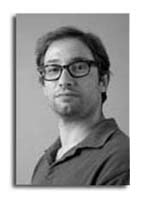
Andrea Seigel: The Sideways Career

A Google alert lands in Andrea Seigel‘s (b. October 28, 1979) inbox one morning in 2008. She keeps the alert running on her own name and defends the habit with a joke about being a Kardashian. The alert carries a paparazzi photo. Britney Spears (b. December 2, 1981) walks out the back of a Malibu restaurant. Photographers ring her on three sides, the way they work a star, so that a face turned from one lens swings toward another. Spears wears a white dress. She carries a pack of cigarettes, a phone pressed to the pack, and a paperback. The paperback is To Feel Stuff, Seigel’s second novel, a book the market has all but ignored. Seigel sees the photo and loses her composure. She starts emailing everyone she knows.

That morning exemplifies her working life. The front door of literary fame stays shut. Her books reach the world through side entrances, carried by a pop star, a public-radio confession, a detective podcast, a sensation that has no name yet. She writes about people stalled on the edge of adulthood, and her career keeps her on an edge of its own.

Seigel is born in Anaheim and grows up a few miles south in Irvine, a master-planned city of cul-de-sacs and ranked schools in Orange County. That suburb becomes the ground of her early fiction, the place her characters want to flee. She graduates from Woodbridge High School, goes east to Brown University, and takes a master of fine arts at Bennington College in Vermont. The training is literary. The appetite is for popular culture. The two never separate in her work.

Her first novel, Like the Red Panda, appears in 2004, when she is twenty-four. The narrator, Stella Parrish, is seventeen, smart, alienated, two weeks from graduation and from a place at Princeton. Her parents died of a drug overdose at her eleventh birthday party. She lives with foster parents she cannot reach and visits a grandfather who plots his own exits from a retirement home. Across two weeks of final exams and senior rituals, Stella plans her suicide and narrates the approach in a cool, watchful voice. The book offers no endorsement. It records a mind talking its way toward a door. Reviewers reach for Holden Caulfield. The Salon critic confesses that he opened the novel hoping to hate one more teenage lament and closed it won over by Stella’s company. Amazon lists the book among its debut novels of the year. Booklist marks it for adult readers and teenagers alike. A studio options the film. No film follows.

To Feel Stuff arrives in 2006. Elodie Harrington lives in the infirmary at Brown, sick in ways the doctors cannot chart, and the novel folds a ghost story, a campus romance, and a medical mystery into one frame. The haunting carries grief and the distance young adults keep from their own lives. The book earns respect and sells almost nothing. Its Amazon rank settles in the three millions. This is the paperback in Britney Spears’s hand.

The Kid Table follows in 2010. Seigel takes the idea from the children seated together at a family wedding, the table set apart from the adults. The novel gathers a cluster of cousins across a single wedding weekend and moves among them as they negotiate family rank, friendship, and first romance. Ivan Reitman (1946-2022) options it for Paramount. No film follows that one either.

In 2015 she writes Everybody Knows Your Name with Brent Bradshaw, a young-adult novel about fame, social media, and the teenage hunt for a self. It is her last novel to date. The work moves toward screens.

The sideways pattern reaches its clearest form in a feeling she carries from childhood. In the fourth grade a friend named Mindy comes to the house and asks to see Seigel’s things. She works through a shell collection one shell at a time and murmurs what she likes about each. A warmth opens at the crown of Seigel’s skull and runs down to the nape. Seigel is seven when she starts hunting the sensation. She sits in the library to hear pages turn. For years she assumes she is a tribe of one.

In March 2013 she carries the feeling onto This American Life, in an hour built around the idea of tribes. She describes the tingle and the loneliness of believing no one else feels it. Then she finds the videos, the strangers online who feel what she feels, the whisperers and the show-and-tell channels. The label for the sensation, autonomous sensory meridian response, sits at the clinical edge of the language, a term coined to sound neutral. Her segment is the first time the phenomenon reaches a mass audience. She later makes the videos herself.

The household scene catches her at her funniest and most exact. She and her husband Brent watch a Twilight film, his pick, and she uses Bella’s turn to vampire, the new ear for every small sound, to explain the tingle to him. He never buys it. He cannot feel it. The gap between them holds the comedy and the loneliness at once.

Her move into film starts on a Los Angeles street. Seigel drives past a sign twirler on a corner, a woman dancing hard and throwing herself into the work, and a song on the radio moves her in the same minute. The two things meet. She begins inventing an inner life for a woman who cannot make herself step forward. She develops the script.

The film, Laggies, opens in 2014. Megan, played by Keira Knightley (b. March 26, 1985), is twenty-eight and stuck in a quarter-life crisis. When her boyfriend proposes, she bolts and hides out in the home of a sixteen-year-old, Annika, played by Chlo\u00eb Grace Moretz (b. February 10, 1997), and the girl’s single father, played by Sam Rockwell (b. November 5, 1968). Anne Hathaway (b. November 12, 1981) holds the lead first and leaves for Interstellar. Lynn Shelton (1965-2020) directs, her first feature from a script she did not write.

The title starts a small war. Seigel insists that everyone knows what a laggie is, a word she and her high-school friends used for a person who lags behind. Shelton has never heard it. Shelton runs the word past focus groups and keeps waiting for recognition. The recognition never comes. The word turns out to be Seigel’s invention, common only inside one teenage circle in Irvine. The title stays. British distributors release the film as Say When. Shelton moves the Orange County story to Seattle and shoots at real addresses, the Northgate Nordstrom, an actual police precinct with its own sign on the wall. The reviews land in the mixed-to-warm range. Shelton says the script let a woman be flawed and fumble her way toward herself, the territory studios usually hand to men.

Seigel keeps writing for the screen. She joins the room for Pen15, the comedy that stages middle-school humiliation with adult actors playing thirteen, a register close to the one her novels work. She writes for Handsome: A Netflix Mystery Movie in 2017 and contributes to The Silent Twins in 2022. She keeps a low profile in literary circles and a steadier presence in film and television.

The Britney photo gets its answer in 2015, on a podcast called Mystery Show. The host, Starlee Kine, takes the case Seigel hands her: how did a book no one read end up in the hands of the most photographed woman alive. Kine calls bookstores. None of the clerks have heard of To Feel Stuff. She meets a bookseller whose parents won the lottery before she meets one who knows the novel, and the odds tell her how far the book has sunk. She studies the photo for clues, the paparazzi triangle, the white dress Spears wore through a pregnancy though she carries no pregnancy in the frame. The answer, when Kine reaches it, is the plainest one. A fan gave Spears the book, and a camera caught her carrying it to a pool. The episode sends a new audience back to a novel the market had filed away.

Seigel writes the people caught on the inside edge of growing up, the ones who can see the next room and will not walk into it. Her narrators watch more than they move. Her comedy runs cool and her sympathy runs warm, and she declines the redemption a softer writer might grant. Stella plans her exit in good prose. Megan hides in a teenager’s house. Elodie haunts an infirmary she cannot leave.

Seigel writes about the wish to stay on the threshold, and the world keeps meeting her at thresholds, the glancing contact rather than the full embrace. A pop star at a pool. A radio audience learning the name of a feeling they thought private. A detective working the phones to solve the mystery of who read her. The discovery always comes sideways. It comes anyway.

The Great Delusion

If John J. Mearsheimer is right in his anthropology, the individualist premise of self-authorship is an illusion.

For a novelist and screenwriter like Andrea Seigel, whose work explores the hyper-individualized, anxious subcultures of modern Southern California, this structural reality reshapes how her stories and characters operate.

If Mearsheimer is right, the intense psychological isolation, alienation, and personal identity crises Seigel depicts are not failures of individual willpower or unique psychological flaws. They are the predictable consequences of a liberal culture that tries to strip away tribal attachments. Her characters, adrift in an atomistic world, are not self-actualizing; they are suffering from the absence of the thick social group that human biology requires for survival.

The tribalism Mearsheimer describes does not disappear in a liberal society. It merely finds new, more fragile channels. In a world stripped of traditional structures like nation, religion, or extended family, people seek solidarity in lifestyle enclaves, subcultures, and aesthetic groupings. The characters in Seigel’s fiction grasp for identity through these alternative groups because the innate need for socialization remains constant. Their anxieties reflect the logic of a system that promises total autonomy but delivers isolation.

Reason remains subordinate to socialization in this framework. The moral codes and political leanings of the secular, educated cohorts Seigel observes are not the result of independent critical thought. They are the result of intense group conditioning within elite academic and cultural circles. The hyper-individualism they celebrate is itself a dogmatic conformity, an enforced value infusion from their specific tribe.

If human rights and individual autonomy are secondary to group survival, then the elevated moral language used by modern cultural elites is an instrument of status and coalition-building. The political and social stances of her characters serve as signaling devices to maintain standing within their peer group. What looks like deep personal introspection in a contemporary drama is the operation of an individual trying to navigate the unspoken rules of his tribe.

‘A Big Misunderstanding’

If David Pinsof is right, the teenage alienation and existential dread in the novels of Andrea Seigel, such as Like the Red Panda, are not tragedies of miscommunication. They are strategies.
In Like the Red Panda, the main character Stella looks at the world and sees empty posturing. She claims that nothing means anything until a person decides to hold nothing next to something and declare a difference. She views romance and social conventions as blank concepts that people fill with arbitrary objects to make them real. She chooses isolation because she finds the world shallow.
Pinsof argues that nothing is broken. Humans are savvy primates who perform tasks that serve their Darwinian interests. Under this view, Stella is not a victim of a cold universe or a society that fails to understand her. Her alienation is a high-status signal. It is a way to look down on her peers and assert moral superiority over people who play ordinary social games. The sadness she feels is not a structural glitch. It is a tool. It allows her to reject the hierarchy while trying to place herself above it.
If Pinsof is right, the search for authentic connection in Seigel’s stories is a front. The characters do not suffer because people fail to understand them. They suffer because they understand the social game all too well and choose a cynical posture to win a different kind of status. Their angst is an instrument to dominate rivals under a pretext of deep sensitivity. The hole they find themselves in is a hole they dig themselves, because living in the hole makes them look more interesting than the people standing on the grass.

Novelist Andrea Seigel

We did this via email (Andrea returned the answers Sept 23, 2006).

* To what extent do you identify with your protagonists in your two novels?

they're all, at the very least, slivers of me. so if i didn't identify with them, then i'd be someone completely alienated from herself.

* How did your friends and families react to your novels? Particularly the first one?

everybody was congratulatory. they expect this kind of shit from me.

* How long have you had this cynical persona? What things are you naive about?

i've had it internally since, probably fifth grade. externally since, probably, ninth grade. i'm naive about what "being in love" means to other people.

* You signed your email "andreaa." Why the extra "a" at the end?

that's kind of a long, boring story, but it's partly because 1. when typed, i dislike the visual symmetry of my name (starts low, swoops up, returns with an equal and constant lowness on the other side) and 2. because in the days before the internet i used to be a bbs'er, and my handle was "andreaa," so i got really used to signing off that way.

* How do you feel about the work of Brett Easton Ellis?

i think it's genius, and not in the empty way that a lot of people throw around genius. i literally think what he's doing with his endless combinations of various levels of assholes are evidence of an extraordinary intelligence.

* What causes your right eye to twitch? I have the same thing. For me it is lack of sleep.

i have no idea, but it hasn't been twitching since i returned from new york.

* How do you feel about your author photos and how do you choose them?

i'm pretty indifferent toward the first one. i'm living with the second. i chose the first because i had this look on my face like, "what can you possibly want from me?" which i thought was appropriate. when 'panda' came out, this girl in a book club called to tell me that the members of her club had spent a half-hour discussing how bad that author photo was. they thought i looked like an unattractive slob. they wondered why i "hadn't done more with myself." i chose the second because it was one in a set of ten that all looked almost exactly identical, so there wasn't all that much of a choice. i wore a smocked strapless romper-type thing that i liked because it reminded me of my childhood, but my publisher cropped out my clothing. i generally don't like any photos of myself.

* In your blog, you say looking sad is your nature. Is that true? Do you struggle with depression?

yes. this is true. i have a naturally sad face when it's at rest. some people confuse sad with mean. i would say that i struggle with manic-depression, minus the bouts of stealing.

* How did you like Catcher in the Rye?

i liked it fine. it's not one of my favorite books. it was one of the smoother reads on my sophomore year a.p. english syllabus.

* When you were a kid, what did you want to be when you grew up?

a lawyer.

* What did your parents want most for you and from you?

what they want most for me: stable success from me: a softer nature

* What's the story of you and God and Judaism?

oh my god, this is like writing my torah portion speech. i can't do it again. the short story: i was bat mitzvahed right around the time i became an atheist. when i get on a plane, i talk to something and say, "please, please, please let this be okay." i think that if there's any sort of power capable of hearing those kinds of thoughts coming from all people, then that power doesn't give a shit about who's following what kinds of rules or rituals, since it can obviously see straight into people's psyches and figure out the truth of that person's beliefs within a nanosecond.

* What are the juiciest things your peers say about writing and their careers as writers?

they say nothing juicy. i'm serious. i mean, we often talk shit on specific people, but there's nothing particularly scandalous to be said about writing. it's one of the unsexiest endeavors ever.

* In what ways are your perceptions of life keener than other people's?

i can't answer this question without sounding like an asshole, and while i often sound like an asshole– i'm just not there tonight.

* How has your choice of vocation affected you, relationships?

it has nurtured already overwhelming loner tendencies in my personality. it has, i'm sure, prevented a lot of relationships and damaged some, too. it has been good for my thinking and bad for pretty much everything else in my life.

* How do you know when you've done good work?

a little voice in my head says, "good girl." i'm not kidding.

* What have you sacrificed to be a writer?

the excellent health coverage i was getting at the disney channel.

* What do you do best and worst as a writer?

best: voice. worst: plot.

* Why do you write what you write?

why do you rent the movies you rent?

* Were there any events in childhood that prefigured your adult work?

i think pretty much every single social gathering i encountered past the age where i was allowed to just sit in the corner and drool and talk to my stuffed dog went into making my adult work what it is.

* What do your books say that has not been said before?

again, another question requiring an assholic response that i just don't have the heart for tonight.

* Surely you feel that your view of life that is unique? How so? How do you find your understanding of life differs from everyone else?

i do. but you can't talk about these things. because supposedly everyone is a huge, fucking mess inside. that's what i hear. all i know is that while everyone may secretly be struggling in the room at a party, i'm repeatedly the only one in the room incapable of even attempting a public fake-out.

* How important is it that your reader sympathizes with your characters or likes them?

well if people are capable of simultaneously hating and loving themselves, then i'm fine with them hating my characters, too, since that doesn't preclude the love.

* How has your writing affected your life?

it's both sustained and wrecked it.

* Do you like your protagonists?

they have their moments.

I Love Novelist Andrea Seigel

Here are some excerpts from her blog:

June 15, 2004

I just got back from my first ever TV interview, and I'm still unsure what this was in reference to, but the first thing Connie Martinson said to me was, "Well, I don't know if you knew this interview was going to be for TV, but if you're fine with that, then I am too." You might be thinking that the "fine" talk was in reference to the taping of the interview, but it was actually directed more, as far as I can tell, at what I was wearing. I think Connie was dissing my threads.

More.

September 5, 2006

"When are you getting off?" someone suddenly yelled. There was a teenage girl standing directly at my right, bouncing breast and she was staring up at me without any self-consciousness, so I understood right away that she was mentally disabled. "Give me fifteen minutes." She gave me two, and then came back to my boob again. "Are you getting off now?" she asked. "It hasn't been fifteen minutes," I said. "Now?" she asked. I believe that it's condescending to treat people with mental or physical handicaps or ailments any differently than you would were they without these handicaps or ailments. This is why, even though my mom sometimes tries to pull the cancer card with me– "Andrea, I cannot argue with you right now. Not when I'm going through all of this"– I proceed to argue with her anyway, because if I didn't treat her like I always treat her, what would that say about the power of the cancer? (Incidentally, her cancer numbers are dramatically lower and I wanted to put up these cancer numbers to illustrate, but my mom bitched me out on the phone yesterday saying that that information was personal, that I should just let everyone know she's doing well, and I argued, "How can those numbers possibly be personal?") I thought to myself, "This girl seems to be around five-years-old mentally. And would I get openly annoyed with a five-year-old had she been asking me basically the same thing every two minutes?"

Posted in Jewish Literature | Comments Off on Andrea Seigel: The Sideways Career

Laurie Gwen Shapiro

Laurie Gwen Shapiro (b. 1966) keeps a list of strangers.

The list is a spreadsheet of Gawronskis up and down the East Coast, names and numbers she pulled from public records. She has found a newspaper item from 1928 about a Polish American teenager who swam the Hudson River at night to stow away on Richard E. Byrd’s ship to Antarctica. The boy was Billy Gawronski. She wants to know what became of him, and the trail runs cold in the archive, so she does the unglamorous thing. She dials.

Most calls end fast. People hang up. She asks each one a version of the same question and waits for the click. “Did you have an ancestor that jumped in the Hudson and stowed away to the Antarctic in 1928?” A lot of hang-ups.

On the nineteenth call, to a number in Cape Elizabeth, Maine, an elderly woman with a Polish accent answers. She is Gizela Gawronski, Billy’s widow. From that one phone call comes a book, and from the book comes a second career.

This is the work, and the method. Shapiro recovers forgotten lives from the paper record and tells them as stories without making anything up. The phone call to Maine is the whole approach in miniature: the cold case, the long odds, the patience, and the moment a real person on the other end turns dust back into a life.

She was born and raised in New York City and went to Stuyvesant High School, then to the S. I. Newhouse School at Syracuse University, where she took a degree in 1988. The city’s layered past, its immigrant streets and demolished buildings, runs under everything she writes. After college she went into independent film, and that is where she learned to build a story scene by scene, to interview, to find the picture that carries a moment. The instincts came before the prose did.

Her first real attention came through a documentary. In 2000 she and her brother, the artist David Shapiro, co-directed Keep the River on Your Right: A Modern Cannibal Tale. The film follows Tobias Schneebaum (1922-2005), a gentle painter from Brooklyn who walked into the Peruvian jungle in the 1950s, lived among Indigenous people, and came home saying he had taken part in a ritual act of cannibalism. The Shapiros took the old man back to find the men he had lived with. The film won festival honors and the Truer Than Fiction Award at the 2001 Independent Spirit Awards. She later produced an HBO documentary, Finishing Heaven, that drew an Emmy nomination.

She came to books as a novelist first, and the novels were comic. The Unexpected Salami arrived in 1998 and earned an American Library Association Notable Book nod. Then came The Anglophile, The Matzo Ball Heiress, and Brand X: The Boyfriend Account. She has described The Matzo Ball Heiress as the first work of Jewish chick lit, and she says it with a straight face and a small grin. The novels turned on family, romance, and modern Jewish life. They sold. They were not the thing she was built to do, and she seems to have known it. The documentarian and the novelist were waiting to merge, and the stowaway gave them the chance.

Consider the night the boy went into the water.

It is August 24, 1928, on the Hoboken piers. The sun goes down at six forty-five. A baby-faced seventeen-year-old with soft gray eyes stands and watches the City of New York, moored and guarded, and waits for true dark. The next afternoon she will sail nine thousand miles for the last unexplored place on earth. Byrd (1888-1957) is a household name, a rock star to a boy who keeps a scrapbook of him. Rockefellers and Vanderbilts have begged for berths as mess boys. Billy Gawronski, son of a Lower East Side upholsterer, has no berth and no chance of one. So he swims.

They catch him and send him home. He tries again. He hitchhikes to Norfolk, Virginia, to reach the second ship, the Eleanor Bolling, and stows away there. Four attempts in all. Somewhere in the middle of this the press falls for him, and then Byrd does too, amused by the nerve of the kid, and gives him a job as a mess boy. The Polish boy from the tenements ships out for Antarctica beside the heirs to American fortunes.

Shapiro found the documents that make the story human. Byrd’s expedition records gave her each man’s age and hometown, even where they carried scars. Better than that, she found letters. Billy’s immigrant mother, Francesca, wrote to the most famous explorer in America and begged him not to take her only son a second time. And Byrd, a man of his word, secretly promised her he would not, even if the boy stowed away again. A meddling mother, in writing, ninety years on. Shapiro called the widow in Maine to tell her the answer to a question the family had carried for decades. Why was Billy never asked back for the second expedition. Now they knew.

The Stowaway: A Young Man’s Extraordinary Adventure to Antarctica came out in 2018, a bestseller and an Indie Next pick, and it set her reputation. She had found the seam between the archive and the yarn and learned to work it.

The magazine work runs alongside the books and sometimes feeds them. Her byline has appeared in The New Yorker, The Atlantic, The New York Times, New York, Slate, The Daily Beast, Aeon, Lapham’s Quarterly, The Forward, and the Los Angeles Review of Books. She helped found The Faster Times, an online newspaper launched in 2009 during the worst of the print collapse. She wrote for years about the city’s hidden corners at Untapped New York, the old streets and the forgotten piers.

Her best-known essay tracks a dead woman’s ashes.

Dorothy Parker (1893-1967) died in New York with no husband and no children. Lillian Hellman made the arrangements and never told the crematory what to do with the remains. So the ashes of the sharpest wit of the Algonquin Round Table sat on a shelf at Ferncliff Crematory in Westchester. Years passed. The storage fee went unpaid. A clerk, out of patience, mailed the urn to the address on the paperwork, a law office downtown. There the box sat on a desk, then in a filing cabinet, for fifteen years. Parker had left her literary estate to Martin Luther King, Jr., and after his murder it passed to the N.A.A.C.P., which built her a small memorial garden behind its Baltimore headquarters, a circle of brick laid to recall the Round Table, under the epitaph she chose for herself: “Excuse my dust.” In 2020 the ashes were exhumed and moved again, to Woodlawn Cemetery in the Bronx, near the city she never really left.

“The Improbable Journey of Dorothy Parker’s Ashes” ran in The New Yorker and won the 2021 Damn History Award. The piece does what the books do. It takes a person flattened into a coffee-mug quotation and follows the physical fact of her, the literal box, through fifty years of misplacement, and on the way it asks who tends the dead and who forgets them.

She did the same service for a living man. Her New York Times profile of the World War II pilot Si Spiegel pulled a decorated airman out of obscurity and won the Silurians Press Club gold medallion for people profiles. The pattern holds across her work. Find someone the record dropped. Pick him up.

Her biggest book turns the method on a face everyone thinks they know.

The Aviator and the Showman: Amelia Earhart, George Putnam, and the Marriage That Made an American Icon came out in 2025. Amelia Earhart (1897-1937) has carried a century of other people’s meanings, and Shapiro set out to give her back her own. She does it by putting a second figure in the frame: George Palmer Putnam (1887-1950), publisher, promoter, the self-styled P. T. Barnum of the book trade, who once staged his own kidnapping for press. In 1928 Putnam went looking for the right woman to fly the Atlantic as a passenger and sell the book about it. He found a social worker and weekend pilot with cropped hair and an easy way with a camera. He made her famous. Then he pushed her, flight by riskier flight, to keep the fame fed.

Shapiro drew on diaries, archives, and audio interviews nobody had used. The portrait that comes out is double. Earhart is brave, curious, vain, careless, kind, shrewd, a real woman and not a saint. Putnam built the icon and may have helped kill the woman, urging her into stunts and weather she could not handle, up to the last flight that killed her. Shapiro lets Earhart speak for herself where the record allows. In a letter before the wedding the pilot warns Putnam that marriage may cost her the work that means most to her. When the ceremony finally happens, after one wedding day she abandoned in tears, she wires her sister four words: “BREAK NEWS GENTLY TO MOTHER.” The book landed on year-end best lists at NPR, The New Yorker, Smithsonian, Amazon, and HISTORY.com, and was named a 2026 Kansas Notable Book.

A thread runs through the documentary, the magazine pieces, and the books. Shapiro studies how myths get built. She is less drawn to the hero than to the people behind the hero, the publishers and publicists and reporters who turn a brave or stubborn human being into a legend the public can buy. Byrd had his press operation and his radio men at Little America. Putnam had his blockbuster machine. Parker became a brand of quips long after the woman went quiet. Shapiro keeps asking the same question of each. How does a real life become a public story, and what gets lost in the trade.

She is strict about the cost of getting it wrong. Years in documentary taught her to build a scene, to pace it, to find the dramatic turn, but she draws a hard line at invention. She reconstructs from what the record proves and refuses to put words in dead mouths. The discipline is the point. The drama has to come from the documents or it does not count.

She teaches the craft now. As an adjunct professor in the graduate program at New York University‘s Arthur L. Carter Journalism Institute, she runs feature writing and works with younger nonfiction writers. She speaks at universities, museums, historical societies, and journalism conferences about archives, biography, and the building of a true story, and she keeps a working author site that gathers the books, the essays, and the talks.

Shapiro went from the cutting room to the novel to the archive and found, in the third place, the form that used everything the first two had taught her. She picks a name the record almost lost. She dials the strangers. She waits for the nineteenth call. Then she gives the dead back their lives, and the living back a truer version of the famous, and she shows the reader the machinery of fame in the act of running.

The Great Delusion

If John J. Mearsheimer is right in his anthropology, the foundations of Shapiro’s individualist narratives crack. The lone-wolf explorer or the daring aviator ceases to be an atomistic actor driven by autonomous reason. Instead, these historical figures become products of their tribe and their socialization.

Mearsheimer argues that society shapes identity before a person can assert individualism. Under this framework, the desire to sneak onto a ship or fly solo across an ocean is not a pure expression of personal choice. It is a manifestation of a value infusion from a Jazz Age American culture that celebrated celebrity and physical exploration. The stowaway craze of the 1920s was a collective social phenomenon, a tribal ritual of its day, rather than an accumulation of independent choices.

The creation of an icon like Earhart requires a showman like George Putnam and a public eager to consume a specific image. The icon functions as a tool for the group. The community uses the individualist hero to reinforce its own collective myths. Shapiro tracks the structure of fame, but a Mearsheimer lens reveals that the engine of that fame is the social group. The individualist remains embedded in the tribe, serving its collective needs even while pretending to fly away from it.

‘A Big Misunderstanding’

If David Pinsof is right, Laurie Gwen Shapiro has written a textbook case study in evolutionary status-climbing rather than a mere biography of an American icon. Her 2025 book, The Aviator and the Showman: Amelia Earhart, George Putnam, and the Marriage that Made an American Icon, tracks the relationship between a record-setting pilot and her mastermind promoter husband. From a Pinsofian perspective, the alliance between Earhart and Putnam is not a story of romantic idealism or the tragic distortion of an authentic soul by a greedy media culture. It is an example of two rational animals executing a flawless strategy to dominate the attention economy.
Putnam functions exactly like the corporate PR departments Pinsof describes. He understood that the public does not invest in raw utility or naked ambition. People invest in stories. Earhart’s stated motives of modest heroism and pure feminist trailblazing served as the high-status mission statement. This statement hid the actual machinery of the operation, which focused on securing resources, maximizing fame, and outcompeting rivals for elite social standing. Her overconfidence was not a cognitive glitch. It was a necessary tool to convince the public that she could achieve the impossible, a trait that generated immense wealth and status.
The media culture that Shapiro describes was also acting rationally. Newspapers and publishers did not misunderstand Earhart or fall prey to misinformation. They ran her stories because doing so increased their market share in a competitive ecosystem.
If Pinsof is right, the myth of Amelia Earhart is not a misunderstanding to be corrected by digging through archives. The myth was the point. The deliberate crafting of her image was a savvy adaptation to a human environment that rewards moralistic and heroic signaling. Shapiro’s book exposes the exact type of calculated, self-serving behavior that Pinsof argues drives human history, proving that when the stakes are high, human beings use every weapon available to win.

Pierre Bourdieu (1930-2002)

A career, in the account Bourdieu built, is a trajectory through fields, and each field runs on its own currency. Move from one field to the next and you must convert what you hold into what the new field will accept. A festival prize buys little at a bank and a great deal at a publishing house. Laurie Gwen Shapiro’s life reads as a chain of such conversions, and her subjects, the people she chooses to recover, run on the same conversions she does. The work and the worker share a logic. That is the case for the frame.

Start with her trajectory, the path Bourdieu would track across positions.

She trains in the field of independent documentary. There she banks two assets. The first is symbolic capital, the recognition the field confers on its own: the Truer Than Fiction Award at the 2001 Independent Spirit Awards for Keep the River on Your Right, later an Emmy nomination for the HBO film Finishing Heaven. The second asset has no certificate. It is the cutting-room eye, the feel for a scene and a cut and a turn, lodged in the body through years of practice. Bourdieu calls this embodied cultural capital, and he calls the durable set of dispositions it forms a habitus. Stuyvesant, the Newhouse School at Syracuse, a childhood in the immigrant city, then the editing bay: these lay down a way of seeing that structures everything she makes afterward.

She converts next into trade publishing, and the first conversions are partial. The comic novels sell and earn a notice or two, an American Library Association Notable Book for The Unexpected Salami, but they sit at the commercial pole of the literary field, the zone Bourdieu names large-scale production, where the reward is sales and the prestige is thin. The Matzo Ball Heiress is good fun and low in the field’s symbolic hierarchy. She has economic capital and a foothold. She does not yet hold the consecrated kind.

The Stowaway changes the rate of exchange. Here the documentary capital pays out at last. The archive work, the cold calls, the reconstructed scenes built from letters and ship records, these convert her embodied film capital into a form the book field rewards: narrative nonfiction with an evidentiary spine. The book becomes a bestseller and an Indie Next selection. She has now bridged the two poles, the commercial and the prestigious, in a single object.

Then comes the move that lifts her position. She converts into literary journalism, the consecrated air of The New Yorker, The Atlantic, and the Times, and the field rewards the move with its own rites. The Damn History Award for “The Improbable Journey of Dorothy Parker’s Ashes.” The Silurians Press Club gold medallion for the Si Spiegel profile. These are acts of consecration, the term Bourdieu reserves for the moments a field’s authorities certify value and, in certifying it, manufacture it. An award does not find worth lying in the work. It confers worth, and the conferral is the point.

The last conversion to date is institutional. She takes a post as an adjunct professor in the graduate program at New York University’s Arthur L. Carter Journalism Institute. The academy is the consecrating body par excellence in Bourdieu’s account, the place that turns a practitioner’s accumulated capital into a credential it can pass down. She now stands on both sides of the transaction: a writer the field has consecrated, and an agent of consecration for the next cohort.

So much for her path. The deeper claim of the frame is that her subjects move the same way, and that she has chosen, perhaps without naming it, the conversion process as her standing theme.

Take Billy Gawronski on the Hoboken pier. Byrd’s expedition is a field with a wall around it. The berths go to men with capital Billy lacks: the right name, the right schools, the social ties that put a Rockefeller or a Vanderbilt on a list of seventy thousand and a tenement boy nowhere near it. Billy cannot enter the field by its rules, so he forces the gate. He swims, four times, and the swimming converts into press attention, and the press attention converts into Byrd’s amused favor, and the favor converts into a mess-boy berth. The conversion does not stop at the ice. Byrd writes him a letter to Nicholas Murray Butler at Columbia. That letter is social capital transferred from a famous man to an unknown boy, and the boy converts it into a seat at the university, institutional cultural capital that a Polish upholsterer’s son could not have reached by any straight path. The whole arc is a sequence of exchanges across fields that were closed to him at the start. Shapiro found the documents that show each trade.

Take Putnam and Earhart. Putnam inherits a position at the prestige pole of publishing, the genteel house of Putnam & Sons, and he drags it toward the commercial pole, toward the blockbuster, the stunt, the staged kidnapping, the manufactured star. Earhart is the star he manufactures. In Bourdieu’s terms she is symbolic capital under production. Putnam meters her, releasing her into the public in measured doses, each flight a fresh issue of the currency, each book the conversion of that symbolic capital into the economic kind. He pushes her into worse weather and longer odds because the engine needs feeding. Shapiro’s argument, restored to the frame, is that the icon is a produced good, and that the producer’s commercial logic shaped the recklessness that killed the product. The marriage is a coalition for the manufacture and sale of a name.

Take Parker’s ashes, which dramatize the afterlife of symbolic capital. A name like Dorothy Parker is capital that outlives the body, and the body’s literal remains become the contested object of custody. The crematory shelf, the law-office filing cabinet, the memorial garden behind the N.A.A.C.P. in Baltimore, the move to Woodlawn: this is a half-century fight over who holds the relic of a consecrated name and who tends it. The estate ran to Martin Luther King, Jr., and then to the N.A.A.C.P., so even the inheritance is a transfer of capital across fields, from the literary to the political. Shapiro tracks the relic because the relic is the symbolic capital made solid, a box you can lose in a drawer.

Her recovery project, seen through the frame, is a position-taking. The field of biography is crowded at its center, around the consecrated names that every writer already works. Shapiro stakes out the margin. She recovers the unconsecrated, the forgotten boy and the lost airman, low-competition ground where she faces no rivals and can import a subject the field has not yet valued. She then performs the consecration herself, and the value she confers on the subject accrues to her as its discoverer. The strategy is differentiation, the move by which a newcomer carves a distinct position rather than fighting for a saturated one. Her turn on Earhart is the same move at higher stakes. By dragging Putnam back into the frame and stripping the saint down to an ambitious, careless, shrewd woman, she takes a position against the settled doxa of Earhart biography, the received account that every prior book has shared. To contest the doxa is to bid for a position above the writers who merely repeated it.

One refusal of hers reads, in this light, as a claim staked at the prestige pole. She will build a scene and pace it and find its turn, but she will not invent dialogue or fictionalize an event. The trade’s autonomous pole, the zone of craft answerable to its own internal law, prizes exactly this restraint, the documented reconstruction over the novelist’s license. The commercial pole would tempt her to juice the story. Her line against invention is a bid for the autonomous kind of legitimacy, the respect of the practitioners who decide what counts as serious nonfiction. The illusio of her trade, the shared belief that makes the game worth playing, is that the archive yields a recoverable truth. She subscribes to it and turns the subscription into a mark of rank.

Bourdieu reads every move as accumulation and position, and the reading cannot see motive. A writer who follows a single newspaper clipping down nineteen phone calls might be chasing capital, or might be chasing a story she cannot put down, and the frame has no instrument that tells the two apart. It maps the positions a life occupies and stays silent on the hunger that drove the choosing. That silence is the price of the method’s reach. The frame also flattens the difference between a calculated career and a curious one, since both leave the same trace on the field map. Read Shapiro this way and you learn a great deal about the structure of her rise and almost nothing about the woman on the phone in the dark, waiting for someone in Maine to pick up.

Shapiro built a career by converting capital across fields, from film to fiction to nonfiction to the academy. Her subjects rose, or were raised, by the same conversions, the stowaway trading nerve for a Columbia seat, the publisher trading a wife’s courage for sales, the dead wit’s name passing from estate to estate. And the subject she returns to, book after book, is the conversion process: how a private life becomes public capital, who runs the exchange, and what the rate costs the person being sold. She is a student of capital conversion who is also, in her own trajectory, a case of it. The frame does not have to reach for that. She hands it over.

Hero System

For fifteen years a cardboard box of Dorothy Parker sits in a filing cabinet in a downtown law office. No one paid the crematory, so a clerk lost patience and mailed the ashes to the address on the paperwork, and there they stay, in a drawer, behind hanging folders, while the woman’s quips ride the rims of coffee mugs in gift shops two miles north. The wit of an age, unclaimed. The name floats free of the person and sells. The person lies in a drawer and dies a second time.

This is the thing Laurie Gwen Shapiro cannot abide, and the thing she has built a working life against.

Ernest Becker (1924-1974) argued that every culture hands its members a hero system, a set of sacred values by which a person earns the sense of cosmic worth that holds off the knowledge of death. Under the system sit two terrors. The first is the body’s end. The second runs deeper and frightens more, the dread that the life signified nothing, that it might close without a trace, as if it had never happened at all. Shapiro lives close to the second terror and has refined it to a single point. Call it the second death, the day the last rememberer dies and the person goes out like a pilot light. The box in the drawer is that death caught in the act. Her sacred value, the one her whole craft serves, is the recovered trace, the name hauled back into the light before the last witness goes.

Say the word out loud, though, and it splinters. Remembrance is a sacred value for almost everyone and means a different thing in each hero system that prizes it. Walk it across a gallery of the living and the dead and watch the word changes in their hands.

A carver of ancestral panels on the Norwegian coast, or his cousin working a Maori meeting house, does not recover the dead at all. He houses them. The ancestor stands in the worked wood, present, addressed, fed with attention. Remembrance for him is not retrieval from an archive. The dead never left. To carve the face is to keep the line breathing in the room, and an archive would be a strange and bloodless thing, a way of admitting the ancestor had gone somewhere he could be lost.

A Carthusian in his cell flips the value over. He wants the world to forget him. He takes a new name, eats in silence, will be buried in the cloister garth under no stone, a mound and a wooden cross that rots. Remembrance by men is a snare. He labors to be remembered by God alone, and God needs no paper. To be recovered by a journalist in two hundred years, written up, quoted, given a second public life, would strike him as a small damnation, the ego dragged back from the peace of being nothing to anyone but Him.

A renunciate on the Ganges has performed his own funeral rites while still breathing. He stood over the fire that burned an effigy of himself and walked away dead to his family, dead to his name, the household tablet turned to the wall. For him the surviving self is the disease. To be remembered is to stay chained to the wheel, to keep the small hungry I that the whole discipline exists to dissolve. Shapiro’s gift, the second life, is to him a sentence.

A Norse settler in tenth-century Iceland would understand Shapiro better than any of them, and still not quite. His remembrance is word-fame, the deed cut into the saga and the verse. Cattle die and kinsmen die and the man dies too, the old poem runs, and the one thing that outlasts the grave is the report of what he did. He does not want to be recovered. He wants to have done the thing worth telling, the voyage, the killing, the law spoken at the Thing, so the line about him survives on its own legs. The deed earns the memory. Shapiro’s stowaways and lost pilots often did the deed and lost the line anyway, and she supplies the missing verse. The Icelander would thank her and find it odd that the deed alone no longer keeps a man’s name.

A son sweeping a grave at Qingming holds remembrance as debt. The tablet on the home shrine carries the name; the spring rite carries the food and the swept stone and the burned paper money the dead need where they are. Forget the rite and the ancestor goes hungry and the household sours. Remembrance here is filial maintenance, a standing account between the living and their dead, and it runs through the blood line, not through strangers. A writer who recovers an unrelated dead man does a kind thing and an unintelligible one. The dead belong to their own.

A family in Kumasi spends a year’s wages on a funeral, hires the dancers, prints the cloth, sets the body in state for the whole town to file past, because the size of the send-off is the measure of the honor and the door through which the dead becomes an ancestor who can be poured a drink and asked for help. Remembrance is the rite performed loud and in public, the opposite of a quiet box in a drawer, and the worst fate is the pauper’s burial no one attends, which Shapiro’s Parker in fact received and which Shapiro’s essay, decades late, tries to reverse.

The modern systems crowd in too, hungrier and stranger.

A founder in a Bay Area longevity lab wants none of this. He wants the backup. Remembrance for him is continuity of pattern, the self preserved as data and restored to a new substrate, death a bug awaiting the patch. He loves an archive the way Shapiro loves one and means the reverse by it. She wants the dead recovered as a story other people can read. He wants himself recovered as himself, running again, and a story about him would be a consolation prize for a project that failed.

A girl optimizing a feed lives by a remembrance that lasts a day. The name trends and the name is gone, and oblivion is the algorithm losing interest by tomorrow afternoon. She would grasp at once what Shapiro’s George Putnam understood before the tools existed, that fame is a product you manufacture and meter and sell, that you build the icon and release her in doses. Putnam ran Earhart that way, each flight a fresh issue of the name, and a reviewer of Shapiro’s book reached for the only word that fit and called the result a modern influencer. The girl and the dead publisher share a hero system across a century. Remembrance, to both, is reach. Shapiro studies that system from outside it, and her interest is the cost the product pays.

Then the inversion that makes the whole gallery sharp.

A man in witness protection sits in a strip-mall town under a name the state printed for him last year. The marshal told him the first rule the day they moved him, that the old man is dead and must stay dead, no calls home, no posts, no trace. His salvation is to be in no archive. The document Shapiro hunts for love, the ship’s manifest, the cold-call hit, the diary in a relative’s attic, is the document he prays no one ever pulls. A woman who crossed a border and burned her papers at the crossing lives the same truth. To be recoverable is to be deportable. For these two the trace is not resurrection. The trace is the hand that finds you.

So the sacred value turns on its head depending on the system that holds it. The carver keeps the dead present. The monk and the renunciate work to vanish. The Icelander wants the deed, not the rescue. The son pays a debt down the blood line. The town honors with noise. The founder wants himself restored as code. The girl wants reach that lasts a day. The hunted want no trace at all. Shapiro wants the stranger’s life pulled whole from the paper before the last witness dies. The same word, remembrance, and nine different gods behind it.

Her own formula has a date of birth, which is the freshest thing to notice about it. Her hero system could not have existed before the documents did. The recovered trace becomes a road to immortality only once a society keeps newspapers and ship logs and passenger lists and photographs and, later, searchable everything. Her terror, the second death, and her remedy, the recoverable record, are twins born of the same machinery. The Carthusian’s God needed no files and the Icelander’s saga lived in a memorized verse, but Shapiro’s resurrection runs on the filing cabinet, the same drawer that holds the horror and the cure. She is a creature of the archival age and her sacred value is its native faith, the belief that nothing documented is ever truly lost, only misfiled.

Watch what she does and a stranger thing surfaces. Her subjects each ran a hero system, and hers is to be the one who carries theirs. Byrd wanted the deed and the flag at the bottom of the world, word-fame in the Norse key, the name kept by the act. Billy wanted off the Lower East Side and into the adventure tale he had read a hundred times, then, when the Depression came, into respectability, a Columbia seat, a captain’s bars. Putnam wanted to mint fame and sell it. Parker, the wit who fed the Round Table its best lines, left her estate to Martin Luther King and after him to the N.A.A.C.P., as if she trusted the deed of justice to carry her further than the jokes, and the jokes carried her instead while the justice went to a memorial garden behind an office in Baltimore. Each of them bet on a different door out of death. Shapiro bets on none of theirs. She stands one floor up, the custodian of other people’s immortality projects, the rememberer of the rememberers, and her own bid for cosmic worth is to be the keeper of the keepers, the one who holds the names that held names.

She comes from a people who made remembrance a commandment. The tradition behind her tells the living to remember, to say the name of the dead and add that the memory should be a blessing, to light a candle once a year and read the roll, to give a newborn the name of someone gone so the name walks on in a child. Zachor, the imperative, remember. She secularized it and aimed it at strangers. The candle became a New Yorker essay and the roll of the dead became a spreadsheet of Gawronskis up the East Coast, dialed one by one until an old woman with a Polish accent picked up on the nineteenth call and a name came back from the drawer. The covenant changed its object. She remembers people who are not hers, which her ancestors would find either a betrayal or the highest form of the thing, and might argue about for a long evening.

Her one inflexible rule belongs to the terror, not to the craft. She builds a scene and paces it and finds its turn, all of it learned in a cutting room, and she will not invent a line of dialogue or stage an event the record cannot prove. The rule reads like fussiness and runs much deeper. A resurrection that lies is no resurrection. If she fills the gaps with a novelist’s guesses she has not recovered the dead man, she has replaced him with a flattering double, which is a second erasure wearing the first one’s face. The dread under the work is precise, and the discipline answers it precisely. She would rather leave a birth date blank than carve a wrong one, because a wrong date is the second death dressed as the cure.

A few coordinates, then.

The value to track is not truth and not story but the place where they fuse, the recovered trace that can be proved, because that fusion is where her dread and her hope meet and where the whole career sits. Watch the documents she leans on hardest, the letters and the manifests, since those are the relics her faith treats as load-bearing, the bones the resurrection needs.

Watch, too, whom she chooses. She skips the famous and goes for the dropped, the tenement boy beside the Rockefellers, the airman the record let slip, the box in the drawer. A democratic instinct runs through the selection, the claim that the second death is a wrong owed to anyone, not a privilege of the great, and that a clerk and a stowaway deserve the candle as much as a king. That instinct is the moral center of her hero system and the part of it most worth defending.

A limit. Becker can read every act as a flinch from death, and a writer who follows one newspaper clipping down nineteen phone calls might be fleeing oblivion or might be a person who cannot put a good story down, and the frame owns no instrument that tells the two apart. It explains the hunger and stays silent on whether the hunger feels like dread or like joy from the inside. Shapiro on the phone in the dark, waiting for Maine to pick up, may be holding off her own erasure or may be having the best afternoon of her year, and the only honest thing to report is that the frame cannot see her face. What it sees, and sees better than any rival, is why the box in the drawer made her a writer, and why she keeps reaching into drawers.

Watergate as Democratic Ritual & Cultural Trauma

A society decides whom it counts as its own. Jeffrey Alexander (b. 1947) gave that decision a structure and a name. In The Civil Sphere he describes a zone of social life where strangers extend solidarity to one another on the strength of shared values, and he shows that the zone runs on a hard binary. Civil actors come coded as rational, autonomous, candid, capable of self-rule, fit for the company of equals. Their opposites come coded as irrational, dependent, secretive, driven by private appetite, unfit. The sphere sorts people and groups onto the pure side or the polluted side of that line, and the line is the boundary of the word we. The sphere can also move the line. It repairs itself by reaching across the border and pulling in those it once left out, recoding them from unfit to fit, widening the circle of who belongs. Alexander calls that work civil repair.

Read Laurie Gwen Shapiro through this frame and her whole project resolves into a single act repeated. She is a carrier of the sphere’s values, in the sense Max Weber (1864-1920) and after him Alexander gave the term, an agent who carries a moral claim into public and works to make it stick. Her claim is always the same. The person you forgot belongs inside the we. The frame does something the other frames cannot. It explains the guest list. It tells us why these names and not others.

Look at whom she chooses. A Polish upholsterer’s son from the Lower East Side, swimming the Hudson to a berth the Rockefellers and Vanderbilts begged for. A woman who flew the Atlantic and built a public life when the public life of women ran narrow. A wit who left her whole estate to Martin Luther King and after him to the N.A.A.C.P. The selection is not random and not merely a hunt for good stories, though the stories are good. Each subject can be incorporated. Each can be re-narrated as a bearer of the qualities the civil core already honors, courage, self-command, candor, the refusal to stay in an assigned place. The tenement boy beside the heirs is an argument that the national we should have had room for him all along. Earhart the feminist trailblazer is the same argument. Parker the civil donor is an argument that the sphere already owes her, that her name belongs on the honor side of the ledger and was filed on the wrong side by neglect. Shapiro recovers the forgotten, and the forgotten she recovers are candidates for the pantheon. The recovery is the repair.

Alexander’s trauma theory names the obstacle she has to clear, and her craft is the tool that clears it. In the essay on cultural trauma he sets out the conditions under which a wider public will take a victim’s suffering as its own, and the third condition is the hard one. The audience must see the victim as sharing the qualities the audience values in itself. Strangers do not extend the we to a sufferer they cannot recognize. Central Europeans grant that the Roma suffered and decline to carry that suffering as part of their own identity, because they have coded the Roma as alien. Distance defeats solidarity. The whole problem of civil repair sits in that gap between the victim on the page and the reader in the chair.

Shapiro’s method is a solution to that gap. The scene built from a ship’s manifest, the status detail pulled from an expedition record, the documented intimacy of a mother’s letter to an admiral, these are the techniques that close the distance and make a dead stranger feel like one of us. The cutting-room eye she carried out of documentary does civil work. When she dials nineteen Gawronskis and reaches an old woman with a Polish accent in Maine, she is gathering the material that will let a reader in 2018 recognize a teenager from 1928 as kin. Identification is the bottleneck of incorporation, and her sentences are engineered to break it. The aesthetic arena, in Alexander’s terms, is where genres and narratives produce the imaginative identification that lets a public participate in another’s experience, and she works that arena with a documentarian’s discipline. The Diary of Anne Frank did this for one trauma and survivor literature for a later phase of the same one. Shapiro does it one recovered life at a time.

Her Earhart book runs Alexander’s binary so cleanly it could serve as an illustration of the discourse. George Putnam arrives coded for the profane side, the showman, the manipulator, the man who staged his own kidnapping for press, the promoter who meters his wife into riskier and riskier stunts to feed the machine. Calculation, secrecy, private appetite, the whole polluted register. Earhart stands on the pure side, the social worker with public feeling, the brave self-determining woman, the flyer who insists on a hand at the controls. Shapiro purifies the heroine in part by polluting the promoter, which is the move the civil discourse makes by reflex, the good guy and the bad guy sorted onto the two faces of the code. A reviewer found the portrait of Putnam close to a villain’s, a Svengali and a stinkard, and that reading is the discourse working as designed.

What lifts the book above a morality play is a refinement the frame can register but does not require. Shapiro admits Earhart’s polluted traits and incorporates her anyway. She lists her subject as ambitious and careless, courageous and lazy, kindhearted and shrewd and overconfident, a flyer whose limits at the radio helped kill her. The civil sphere often demands a saint before it will widen the we, a victim scrubbed clean enough to recognize. Shapiro performs a harder incorporation, the admission of a flawed adult into the company of the honored without first laundering her. That is civil repair grown up. It widens the we without pretending the new member is spotless, and it suggests a sphere mature enough to hold an icon and her faults in the same hand.

The Parker essay is civil repair in a single gesture, and it shows the routinization Alexander describes, the stage where a trauma cools into monuments and sacred ground. Parker dies and her ashes go unclaimed, sit on a crematory shelf, get mailed to a law office, wait fifteen years in a filing cabinet. Read through the frame, that neglect is a civil failure, solidarity withdrawn from a member who earned it, the we contracting around a woman it should have kept. Then the slow repair. The N.A.A.C.P. builds her a memorial garden behind its Baltimore headquarters, a circle of brick laid to recall the Round Table, a sacred place with an inscription, and decades later a proper tombstone and a move to Woodlawn. Alexander watches traumas settle into museums and markers and swept stones, the lessons set in ritual routine. Parker’s afterlife followed that arc, and Shapiro’s New Yorker piece is a late intervention in it, a re-narration that names the neglect as a wrong owed and restores the donor to the honor side of the ledger. The civil-rights bequest, the support for the Scottsboro defendants and the protest over Sacco and Vanzetti, all of it returns to the record as the civil credential it was, against the coffee-mug version that kept the quips and dropped the citizen.

Notice where she launches from. The New Yorker, the Times, The Atlantic. These are the organs of the civil sphere, the institutional arenas where its discourse gets performed for the largest audience, and her standing in them is the sphere certifying her as a legitimate carrier of its values. The Damn History Award and the Silurian medallion are acts of civil recognition, the sphere honoring the work that honors its members. Alexander would read her byline in those outlets as a license, the boundary-keepers handing a writer the authority to revise the guest list in the sphere’s name. She holds that license and uses it on the dead who cannot lobby for themselves.

A few coordinates, then.

Watch whom she admits and ask what civil quality the admission turns on, because that quality is the membership test the sphere is applying through her. Watch how she codes the antagonist, since the purity she grants the subject often comes paired with the pollution she pours on a Putnam, and the pairing is the discourse, not the woman. Watch the arenas, the flagship magazine and the memorial garden and the new tombstone, because those are where the sphere performs its repairs and stores them once the feeling cools.

And watch the edge of her sympathy. The names she cannot recover tell you where the present draws its line, and a writer who spends a career enlarging the we is also, in every choice of subject, marking the place the we still ends. Shapiro reaches across that line for a living and pulls the recoverable dead through it. The frame’s last word is that the reaching is generous and the line does not move far. It moves one rescued life at a time, and only for the lives a reader can be brought to love.

Novelist Laurie Gwen Shapiro

9/8/06

* You did not disguise Sheila Nevins much. What's your relationship with her and HBO?

She can talk in a loopy grandmotherly way, but damn she is a sharp businesswoman. I coproduced two low budget docs that she bought for HBO about Frank McCourt and his brothers. She did put in a respectable bid for a feature doc (Keep the River on the Right) that my brother David and I ultimately sold to IFC for a theatrical release. But I do place a small bet with my film pals exactly how many minutes into the Oscar documentary section she will get a brown-nosed call-out as a saint. Hilarious. Documentary makers know how hard it is to get films commissioned.

* What did you learn from writing your first novel, Salami? Your style seemed to change after it.

I had ever so much fun writing Unexpected Salami. I wrote in six weeks during my lunch hour at an evil company simply to entertain myself. A top agent took it right away and sold it in a week. Seriously. I then labored for two years over a novel that was thoughtful and "well-written" but didn’t sell. So I’ve learned to keep pushing motivation on my characters (This comes naturally though as I get older) – but not to chuck light sentences that come to your fingers instantly.

* Anglophile was so much fun to read. Was it fun to write? Where did that book come from?

I think Matzo Ball Heiress is easier to like – Food, Dynasty Jews, Sex, Jokes. I have old and young fans for that. Unexpected Salami I’ve heard described as Seinfeld meets Spinal Tap (lots of male reader emails for that one). But The Anglophile, while humorous, it got into sexual fetishes and is a bit sadder. Not as wide a net. Attracts a little more intense quirky people. But that’s okay. Let me be the first to say nearly all of my favorite people are intense and quirky. It came from my completely indulging myself. I love all things British, except Chinese food in Liverpool.

* Does it matter that your books move from being fun to read to being literature? The writers I love to read for relaxation are fun but literary. Ben Elton. Hanif Kureshi. TC Boyle. Bill Bryson. Lorrie Moore. (Okay Ben Elton is not always literary, but when he is on, which is not always, no one is funnier. I embarrassed myself on a Manhattan subway when reading a passage in Stark that featured an elegant French Canadian cursing all wrong in English. ) The reason that I’m (for the time being) stopping adult fiction is that at Random House I have an amazing editor for my young adult novels who is pummeling me daily into not sailing on my natural comic ability but to delve deeper and deeper. I’m kind of shocked that she even talks seriously to me like this. Frankly, I’m taking less money for Young Adult simply because that’s all I ever wanted as a writer. Someone who believes in me in a big way. I think my other editors were simply amused by my quirkiness and could maybe get lucky on a breakout book.

* When you were a kid, what were your ambitions for your life?

I wanted to first be a magician, then a writer. My 4th Grade teacher, Miss Hayeem, an intense Jew from India told she had a dream I would be a writer, and I utterly believed her. My parents also thought I would be a writer. At my summer camp Camp Tranquility I never learned to swim, but I was the editor of the camp paper from the age of 10.

* Was there a point when you realized you would be a writer?

When I sold my first novel. I can never recapture the utter glee in that moment. Second only to the birth of my kid. My agent said, before she announced the amount, "keep your day job." But I didn’t. I hated it. Money went down, but happiness ensued.

* What crowd did you hang out with in high school?

I went to Stuyvesant, a math and science high school in NYC. It really wasn’t a pocket protector place you might imagine. It was in downtown Manhattan, at the time in the East Village. Lucy Liu and Tim Robbins went there other years, and if you can imagine them young, that’s what most of the people would be like. No mall rats or pom-pom girls, thankfully. Ultimate Frisbee much more important than football. Girls wore sexy short black dresses to the prom, which was an ironic affair. My brother’s year was even at the Playboy Club – mine was at the World Trade Center, RIP. I had friends, but I dated out of school. I had a thing for a guy much older than me, though we always stopped short before actual sex. Thinking I was ultra mature was in retrospect idiotic. He was just immature. What kind of 30-year-old man dates a 17 year old. A wanker. A near pedophile. When I reached 30 I couldn’t dream of being involved with a 17 year old. Shudder. My first teen novel will be published in October 2006 by Random House. (Brand X ) It explores this time.

I hung around with the people who hung around with English teacher Frank McCourt, that is to say the creative ones who somehow got into this hallowed math school despite a lean towards verbal over math ability. They were going to make their parents happy (the school is not just prestigious, it’s free) but miserable by the rigidity. I am really shocked that the talented creatives from my gang hardly followed though on creative careers. My reunion was lawyer after lawyer. They are well off though! (My husband and I have fantasy counterparts living in genteel rusticity in rural France with no bills. We took early retirement after a corporate lawyer life.)

* What do you love and hate about the writing life?

Love that I get the publicity off my own creative ideas. Hate that when I occasionally fall flat, get the publicity too. Love staying at home. I have nasty PMS and by I hated to go to work on those days. I once saw a long check list for PMS and I had everything on it (highlights on the list — PMS dandruff, dizziness, paranoia and hunger). Luke, I mean I had every symptom on that effing list except suicidal thoughts. Now I can work extra hard on the days I am functioning and eat a steak and down three homemade screwdrivers during the worst of my hormonal cycle. I can blub at the drop of a hat with no one in the next cubicle to pity me, and once my daughter is in school I can go back to bed at 9:30 a.m. The other day was a bad PMS day and I caught the tail end of American Iron Chef’s "Battle Pea" –and watching the unthinkable chocolate-coated pea popsicle being considered by wary judges was my sole semi-intellectual activity for the day. Screw regular work. This week is good hormonally and I have huge productivity.

* What role has Judaism/god played in your life? Did you feel called by God to write novels and produce docs on gay cannibals?

I would say my morality is derived from an intensely questioning Jewish background. There are a lot of famous rabbis a few generations back. My family were Religious Zionists to Jerusalem in the 1890’s. We’re talking Mea Shearim, the most orthodox area. My atheist grandfather, son of a rabbi, came to America partly to get out of this lifestyle. My parents are not religious, but I went to Hebrew School twice a week after school, like many Americans. I was Bat Mitzvahed. I also was the first girl at my Conservative synagogue to read from the Torah. Then I went to Israel and was really turned off by the fact that women couldn’t be next to their son during their bar mitzvahs at the wall. My mother said I was a mini-suffragette for a year. I never went to Shabbat service again unless for a family thing. Maybe because of this Hebrew schooling, when I was younger, before Israel, I believed in God. My parents never talked about God. Later I found out they were agnostic, my father more so. I am agnostic though, not atheist. Who am I to know what everything means? Science is more of a God for me than a traditional God. I am baffled what I should teach. My daughter knows what a synagogue is, and that she is a Jew with a Christian father, but I have not yet brought the concept of God up yet. I wonder what to do all the time. I look to Alduous Huxley as a role model. He spent a lifetime searching, and all he could come up with a the end of his hardcore delving was "Be Kind." I think that is where I am now too. My religion in 2006 is that I don’t shit on people if I can help it, and I mean that figuratively by the way before you crack a joke.

So no, I am not a practicing Jew. But I happily identify myself as a secular Jew. For one, I was born and still live on the Lower East Side. I mean give me a pickle and I can immediately tell you if it is quarter sour, or three quarters sour. I knew in a millisecond when word came that Monica Lewinsky said "Schmucko" that she was not merely of Polish heritage like Tara Liapinski. I love Old School Lower east Side Yiddish, which my Dad can speak. The newer take in Hasidic Brooklyn is not salty as the old Socialist Yiddish. I love visiting old synagogues when I travel. But I don’t want to be kosher. Or go to synagogue other than the occasional special event. A little bit of synagogue is just right for me. I enjoy myself when I do go once or twice a year.

* Did you take your husband's last name? Any qualms?

Why should I take his name? He had his life, I have mine. Also, I didn’t want to be a Jew with the name O’Leary. My husband loves my last name so we briefly considered sharing the O . Laurie and Paul Shapir O’Leary looked weird though. My daughter took her father’s surname—although she has my "religion" and two Hebrew names to honor her great grandmas.

* What are the juiciest things your peers say about writing and their careers as writers (that they don't reveal in interviews)?

How obsessively they read Publishers Marketplace online for lowdown on advances. Jealousy is weird emotion to control. I suffer too. I finally canceled my internet subscription to get away from that place.

* In what ways are your perceptions of life keener than other people's?

Honestly I have decided that I have a very light form of ADHD which allows me to hyperfocus on what keenly interests me. (Never diagnosed.) I feel a little like my eye is akin to Glenn Gould’s ear – except instead of teeny rhythms all around me, I remember odd details. I can still tell you what color the piping on the tube socks this hot guy in my calculus class in 11th Grade had on. (Teal.)

* How has your choice of vocation affected you, relationships?

Pisses off some people. My family says, "Watch what you say around Laurie." Also it’s weird what people will read as themselves. I had three guys who I used to date all contact me and say hey so weird you put me in a book as the ex-boyfriend in your book. One was a Type A luging sex-obsessed Mayflower descendant, one was a hilarious perpetually-broke Jersey shore type, and one was pretty darn effete writer though 100 percent straight, like Lyle the Effeminate Heterosexual from SNL. All saw themselves.

* How do you know when you've done good work?

You feel it in your bones. I love my essay in the Modern Jewish Girl’s Guide to Guilt. It was short. But I knew when it was done. On the other hand I chucked half a novel once because when I thought about it – it was crap. And this was a contracted novel with a deadline. I started over with a new plot, The Anglophile, which I raced to get in on time. If I could I would rewrite the end of the book. The last three chapters were rushed.

* What have you sacrificed to be a writer?

Not much except a regular bankable income. Everything now comes once a year or every to years. I was due to get half a million for a film deal, but that crumbled on the last day of an option after nine years. That stung. I’m not really stuck in a solitary situation as I make films too. No one who says they made a doc by themselves is telling the truth – even our small documentary had 80 people involved.

* What do you do best and worst as a writer?

I think I am on paper as least a reasonably funny woman. I think more men than women risk humor, but that may be changing. Sarah Silverman and Samantha Bee from John Stewart are fearless. Worst – I like my digressions, but often I go overboard. I fight for some though even if an editor begs me to take them out. Digressions are in my brain, and I think people my age and younger deal better with them and often they work. But a big red pen is a good thing for an editor assigned to me, whatever her age.

* Why do you write what you write?

I can’t do much else except talk on the phone rally well. I use to think I was someone really special. Did you feel that way as a kid? A sense of "I’m different." But again now I think I have a mild form of ADHD that would be different in a girl that gifted me with an intense creativity and a different nature from most. I was given an award by the Soros Foundation for being the most creative on a campus of 50,000. But they could have also given me an award for most things lost while enrolled. If you are a ditzy smartish woman with really bad handwriting – I think you have to look up ADHD. What has convinced me is that many ADHD women have a fear of escalators. I read that and I was like. WHOA. That is my exact phobia. I will take an elevator if there is one even a mile down a hall. I read girls almost never get diagnosed, and can achieve in a big way in what they like. Two highly successful creative women I hang out with have just been diagnosed and are taking action so they don’t throw out the baby with the bathwater. They have stains all over their shirt and glowing press for their journalism and fiction. And hate escalators.

* Were there any events in childhood that prefigured your adult work?

I was quite popular in elementary school — happy girl. I was just fine in high school, not an A lister but okay. But I have a scarring memory of being ostracized at the end of 8th grade. Partly because I wouldn't do drugs, partly because the last place pollyannas are appreciated is in eighth grade. It was brutal, and just a handful of people caused the torment, the rest were sheep. Sometime when I write, I simply really want to show those motherfu**ers. Revenge if channeled well, is a good tool to get you to write. But I’m sure none of the ringleaders give a shit about whether I sell a book or that I won the Spirit Award. But in my fantasy they do care, and I get my writing quota done. Whatever works.

* How has marriage/motherhood affected your philosophizing and writing?

Motherhood rocks, although I think I need another one. I obsess over her so much that she may hate me soon if I don’t bring another in to balance out my love. I write during the time she is in school. So in that way she has focused my writing more. No more dilly-dallying. Except during PMS days.

* What do you want from your kids aside from their happiness?

I want my daughter (so far only one kid) to have a sense of humor. Because when life is sucking, you need one. Thankfully she does. She is a cute funny little blonde without a traditional girly girly nature. She reminds me of a teeny Amy Sedaris. Also a sense of heritage. I want her to travel to Vilnius, Lithuania and Mea Shearim, and when she is older to Auschwitz, even though my family were in America before the war. She can already tell you every Aussie animal, and one day I want to take her to Cork, where the O’Learys once ruled. She listens to the usual Disney Channel music dreck, but she is very musical via her dad and we sneak in traditional Celtic music and Yiddish music on occasion, as well as alternative rock.

* What does philosophy teach you about dealing with a man with an angry erection?

All I can remember from Philosophy 101 is that Sartre thought lust was ill-fated. Indeed: all of my early experiences with angry erections, while memorable, led to nasty breakups. My husband and I started out as friends who slept together, and there have been far too many bungled sexual encounters that stem from excessive wisecracking in our bedroom, but we’ve lasted a long time.

* How often do you experience the consolation of philosophy? At moments of crisis since you became an adult, how often has it been as genuinely useful as a sympathetic friend?

Rarely. However. I do have two brilliant philosopher friends who comfort me during crisis – I figure they have done all the deep reading I could never slog through. During crisis I read humorous nonfiction. Bill Bryson saved me this year during a family crisis that has eased (someone close was very sick.) Jeffrey Steingarten too. I can never read fiction during crisis.

* Your husband and your writing. Does he read it in advance? Is he allowed to critique it?

My husband is an Aussie musician and by this very background finds it distasteful when I use a big vocabulary word. His idea of a perfect book is Catcher in the Rye – "Unpretentious." As I pointed out to him recently – that was also Mark David Chapman’s idea of a perfect book. I find not using a juicy vocabulary ridiculous if the word is used well. I like words. Not just fancy ones, but ones with good sounds which includes all words that start with P. I try to steer clear from him when writing: One bad look and I’m done for the day. Likewise, I am banned from his live performances. He says I am the pits as far as a live audience goes. Apparently when I went to his Melbourne gigs I would cross my arms and cringe even when I liked something very much. We are not a good collaborative unit. Stupidly, we are working on an experiment now – a bildungsroman (a word he of course abhors) of his life in Australia and after two weeks of collaboration I am ready to drop it. He wants everything to stay exactly the same, and I am all for combining events and characters. And I would safely say he hates me right now. I work much better with my brother. But my husband makes me laugh much harder. My brother and I produce good work but we are forever bickering over sibling crap.

* As you travel, what depresses you and what inspires you about Jewish life?

I was in Paris this spring working on a novel involving Jews, and it was an eye-opener to say the least. I keep forgetting that in NYC I live in a bubble, thinking there is no anti-Semitism. Even in Australia, I’ve heard quite a few people who are otherwise educated use Jew as a verb. They didn’t even realize what they were saying to me. What inspires me is history. Remembering occasionally that NYC is not center of universe. Jews can exist in China, and have no idea what a bialy is, but damn is their story interesting.

* Which contemporary writer is the biggest wanker?

I hate to slam people in public, I really do. I have two in mind though in a big way, both blog.

* Are there any exhortations or questions you repeat to yourself on a daily basis?

Two pages. That is the way to write any big thing. Break it down. I thank a post-college writing mentor Abigail Thomas for that wisdom. She used to say that if you simply wrote two pages a day for a year you’d have over 700 pages, so you can miss quite a few days and still have a novel’s worth in a year.

* What left you unsatisfied when you read Jewish-American literature?

It is almost impossible to write about intermarriage without hearing about it. Secular Judaism topics are thought of as immature and lesser. But the reality is that most American Jews are secular, and these lives are real. I don’t feel I have to have my Jewish characters apologize for not keeping kosher. I wouldn’t even though my great grandfather determined that he was the final word in Jerusalem for Ashkenazi Jews on what was kosher. I don’t hate my heritage because I love lobster. Nor do I think of myself as self-loathing simply because I love a man who is not Jewish. I truly love him. My grandmother, born Orthodox, fell in love with an agnostic Jew. She kept Shabbos more as a reminder of her youth, and she’d let me roll out the balls of ball of challah dough. Her dinners start with the cliché: chicken soup. We had jars of the stuff in our freezer. I loved her, and the smell of Jewish food is still blissful. How could anyone say I hate Jews in a review? Idiotic.

* Has the Holocaust changed literary structure so that the traditional linear narrative is no longer appropriate?

Interesting, and people gasp for air when I tell them this as I am known for light comic fiction, I am 2/3rds through a Holocaust novel that I just sold to Random House. My husband who has not read a word calls it my "Chick Lit meets Holocaust" novel to piss me off. But it is not that. I am simply stretching my skill set, challenging myself to go to a darker place, learn things I don’t know. I have been doing a lot of research, and conducted some harrowing interviews. But I still want to be entertaining in a noble way. I would imagine that even in the camps people would try to stay sane by looking for even the smallest shred of entertainment. Mainly I am reaching inside me to my sense of self as a Jew. I am confident I have found the voice I need, the language – but it is precisely the sinew of the novel that is still baffling me. Can I get back to you on the structure question in 2007 when the book is due?

Posted in Jewish Literature | Comments Off on Laurie Gwen Shapiro

Robert Anthony Siegel: The Education of a Criminal’s Son

In the winter of 1972 a New York family drives through Italy. The father has come to settle a small legal matter for a client named Basil, a marijuana dealer, and the job takes a few days. Then the mother takes over the trip. She wants her children in front of the masters while the light moves across the canvas. In the title essay of his memoir Criminals, Robert Anthony Siegel (b. 1960) returns to the Uffizi at the height of a ten-year-old. The walls climb past him, packed top to bottom with dark paintings in gold frames, more than a boy can hold, and his chest tightens. His mother leans close and tells him they stand inside one of the great museums on earth. She means it as a gift. He wants to be down in the café with his father, his brother David, and his sister Perrin, eating a cannoli. He keeps the wish to himself.

The family runs along two lines that never meet. The father, Stanley, defends criminals in Manhattan and loves them more than the work allows. He wears cowboy boots and a beard and rides a motorcycle to court. His clients run to killers, drug dealers, and the Hells Angels, and he brings the boy along to meet them. The mother, Frances, trained for the law too, then walked away from it for symphonies, ballet, and good restaurants. She came out of Brooklyn and meant to leave it behind. She wants her children refined, fluent in the larger world, everything the father is not. The home holds together on the gap between these projects, and on the jokes that cover it.

The Angels give the father what the law cannot. They offer escape from middle-class routine, from fatherhood and appetite and his own Judaism, a borrowed wildness he can drive home at night. The family manages the danger with comedy. At the dinner table they turn the clients into harmless characters, silly men, a performance no one need answer for. When a neighbor confronts the father for defending killers, he answers by twisting the famous warning of Pastor Martin Niemöller (1892–1984). He recites it with the drug addict, the streetwalker, and the thief in the place of the persecuted, so that no one remains to speak when they come for him. The boy laughs along. Only as a grown man does he weigh the rest of it, that some of the men his father reveres ride through the city in Nazi insignia, that the Angels carry White-nationalist ties the jokes at home never named.

The contradiction collapses. Stanley goes to prison for crossing the line with the clients he cannot stop loving, for conduct bound up with representing them. The sentence runs short. It marks the family for good. He comes out diminished in reputation and income, sinks into depression, and tries to rebuild a practice while age and money close in. Years on, Alzheimer’s takes hold, long after the behavior has already turned strange. At the funeral the grown son meets Sandy Alexander, once president of the New York chapter of the Angels, a figure of fear from childhood, and finds a broken man across the room. The son reads the brokenness as a fair response to a life.

Long before the prison and the funeral, the boy looks for a way out, and he finds judo. In the essay “Choke” he sets the scene in the dojo of his sensei, the one adult in his world who carries no fear and no sadness. The man stands by the table where he eats, a glass of whiskey in his hand and a Soviet fur hat on his head, his six-foot black canvases stacked around him like characters written at speed. A friend of the boy’s mother once called him the most handsome man she had seen. The boy dreams of Tokyo as a return to a home he has never visited, a place where a truer self, a Japanese self, waits for him, where the big shaved-head fighters from the judo books take him in. He chokes a training partner named Brian into the dark and feels no blame for it. He studies Japanese and judo through high school, and becomes fluent in the first and a champion in the second.

He carries that hunger into his education. At Harvard he majors in East Asian studies and spends his junior year in Tokyo. He goes back to Japan on a fellowship from the Japanese Ministry of Education, from 1983 to 1985, and studies comparative literature at the University of Tokyo while he works on the side as a translator and a copywriter. He reads deep into Japanese literature and absorbs its restraint and its attention to small things. He earns a Master of Fine Arts from the Iowa Writers’ Workshop and holds a writing fellowship at the Fine Arts Work Center in Provincetown. The discipline of the mat and the discipline of the Japanese sentence both find their way into his prose.

He publishes his first novel, All the Money in the World, in 1997. A wealthy defense attorney and his Harvard-age son sit at the center, and a client’s false accusation pulls the father’s life apart. The book reads the family from the inside, the private bargaining over ambition and loyalty rather than the noise of the case. He returns to faith, memory, and self-invention in his second novel, All Will Be Revealed, in 2007, a blend of comedy, mystery, and family drama. In both books the inner reckoning outweighs the plot, and ambiguity does the work that resolution does in other writers.

Then, in July 2018, he turns the method on his own family in Criminals: My Family’s Life on Both Sides of the Law. He builds the book from linked essays rather than a straight chronology, and he treats memory as an act of imagination, a search for a story in material that refuses one. He will not sort his parents into heroes and villains. He loves them too much for revenge and sees them too clearly for myth. Reviewers reach for Geoffrey Wolff’s (b. 1937) The Duke of Deception and praise the spare sentences, set one at a time, and the comedy that carries the grief without softening it. Siegel says the first surprise was writing a memoir at all, since he had always counted himself a private man, and the second came fast behind it, that he had no more to hide than anyone else, only more shame.

His stories and essays run in the New York Times, the Los Angeles Times, Smithsonian, The Paris Review, The Drift, The Oxford American, Ploughshares, Tin House, Bookforum, and the Los Angeles Review of Books. “Sean” wins a Pushcart Prize. “The Right Imaginary Person” wins an O. Henry. “Thirteen Ways of Listening to the Rain” lands in The Best American Essays 2023, and his story “Ten Variations on a Staircase” runs in Five Points in the winter of 2024. The judo essays, “Choke” among them, turn the mat into a study of fear, endurance, and attention. He teaches creative writing at the University of North Carolina Wilmington for more than two decades and mentors a long line of first books, and he also teaches at Tunghai University in Taiwan on a Fulbright, at Hollins, at Catapult, and at the Center for Fiction in Brooklyn. He marries the novelist Karen E. Bender, and they raise two children, Jonah and Maia. After the long Wilmington years he moves back toward New York and keeps teaching workshops and coaching writers.

The same self stands in the Uffizi at ten and sits later at the writing desk. One subject holds the work together: the stories a family tells to survive itself, the line between knowing who you are and fooling yourself about it, the house where love and deceit live under one roof. Siegel does not settle the contradiction his parents handed him. He writes from inside it, and treats honest life within the ambiguity as the closest thing to self-knowledge a man gets.

The Vital Lie of the Honest Son

The Siegels eat out because home has turned to acid, and in a good restaurant they treat one another with a care they cannot manage at the kitchen table. Picture a night in Manhattan in the middle of the Seventies. The father takes them to a French place with white cloth and a captain who knows his name. He orders escargot for the table and tells the children which fork to take. He wears a good suit and Italian shoes, and on a lean month the jacket will not close over him, so tonight he sits large and content inside the cloth that still fits. Money from his clients buys the wine. His clients run to drug dealers and the Hells Angels and now and then a man who has killed. None of that reaches the table. At the table the father plays the host, generous, loud, loved. The mother watches the room and the children at once. She came out of Brooklyn and means for her son to leave it further behind than she did. She leans toward Robert and names what he should notice, the sauce, the painting on the far wall, the way a cultivated man carries an evening. His brother David wants the bread. His sister Perrin, who is four, wants to go home. The boy of ten sits between his parents and reads both of them, and keeps the reading to himself.

Two answers to the same fear sit at that table.

Ernest Becker (1924–1974) set the fear down in two parts in The Denial of Death (1973). A man knows he will die. Beneath that he suspects something worse, that he might not count even while he lives, that he is an animal who feeds and fails and rots and leaves no mark. The hero system answers both terrors with one move. It tells a man what significance looks like and promises the significance will outlast the body. A culture hands out many such scripts. A family hands out fewer, and the Siegels handed Robert two, at war across the bread basket. The interest of his life, and the reason he becomes a writer rather than a casualty, lies in his refusal to simply take one. He builds a third.

Begin with love, because the family runs on a surplus of it and cannot agree on what it is.

For the father, to be loved means to be needed by men the law hunts. The client’s devotion proves he counts. He drives a motorcycle to court and wears the beard and the boots, and he carries the boy into the clubhouse so the boy can see him welcomed there, where the danger lives. Love, in his system, is the wild thing that chooses you and lets you near. For the mother, love means rescue by elevation. She gave up the law for museums and concerts and the conviction that a child set in front of the masters will join their permanence and never be small. Love, in her system, is the gift of the eternal, handed down. For Robert the writer, much later, love becomes attention. To love a man is to set him down in sentences exact enough to survive him. One reviewer of the memoir describes its prose as hammered into place by love, and the phrase reads as a fair account of the method: the care is in the precision.

Three Siegels, one word, three meanings that do not overlap. Push past the family and the word splits further, because the world holds many hero systems and not one. For the hospice nurse, love is presence at the threshold, the easing of a death she has no power to stop, significance earned at the bedside. For the founder who stakes a fund on a stranger with a notebook, love is belief past the evidence, capital as faith. For the Mande griot, love is the keeping of names in song so the lineage does not fully die, the dead held in the mouth of the living. Each of them says love and means a sacrament the others would not recognize. Becker’s point arrives here with force. The sacred word is shared. The thing it names is local to the system that needs it.

Truth runs the same way, and the Siegel home shows why a man might fear it.

The household survives on a lie that is also the love. To say the true thing, that the clients are killers, that the money is dirty, that the father is sinking, would end the family in an afternoon. So the loving act is the joke that turns killers into bumbling characters, and truth becomes the threat the comedy holds off. The father trades on a second kind of truth at work, the account a jury will buy. He sells persuasion for a living and knows that the usable story and the accurate one part ways more often than the law admits. Robert grows up between these and arrives at a third truth, the story that refuses to lie. He will not hand his parents the redemption a tidy ending would give them. He looks for some semblance of truth in the memory of them and stops there.

Carry the word outward and watch it break apart again. For the forensic accountant, truth is the ledger that survives audit, the column that reconciles to the penny. For the field biologist, truth is the observation another worker can repeat. For the Talmudic student, truth is the disagreement preserved, the dissenting rabbi kept on the page beside the one who carried the ruling, machloket, the argument built to outlast the men who had it. Each of them serves truth. None would accept the others’ definition as the real one. The word is a flag many armies carry, and each marches under it toward a different permanence.

Then there is discipline, the value Robert builds himself out of when the two inherited systems fail him.

He finds judo as a boy and finds on the mat a way to become a body that does not fear. His sensei carries no fear and no sadness, the only adult in his world who seems unbroken, and the boy studies him the way an apprentice studies a master, wanting the stillness as much as the throws. The work is shugyō, the slow making of a self by repetition, and it is the same labor he will later bring to the sentence, set down one at a time, refined by the thousandth attempt. The dojo and the desk run on a single article of faith, that practice can build a man who lasts. Discipline, for Robert, is self-cultivation as a bid against death.

The word does not hold still for others either. For the dancer in the corps de ballet, discipline erases the single body into the line, and the immortality on offer is the perfected ensemble in which no one stands out. For the free-solo climber, discipline is the margin that keeps him on the rock, mastery counted in survival itself. For the violinist raised under the daily Suzuki regime, discipline is the thousand cold mornings that buy a single tone. Each bows to discipline. Each means a different rescue from the same animal fact, that the body fails and time runs out.

Beneath love and truth and discipline sits the value that organizes all of them, and that Becker treats as the root. Shame.

Shame is the body’s verdict, the felt sense of creatureliness, the animal that fouls itself and gets seen doing it. The Siegels carry a heavy load of it. The father grows too large for the suits. He goes to prison for crossing the line with the clients he cannot stop loving, and comes home smaller in standing and in money. The family answers shame with the performance of decency in public, the good manners and the escargot laid over the rot at home, so they can hold themselves the normal ones. Robert inherits the load. Then, writing the memoir, he reports a discovery that turns the system over. He learns he is no more private than any other man, only more ashamed. So he publishes the shame. He names the creatureliness in print and survives the naming, and the survival is the victory. Exposure becomes the hero-act.

Once more the word travels and changes. For the penitent in the box, shame discharges through the priest and converts to grace. For the witness at a truth commission, shame and testimony braid into a public record that lets a nation go on living. For the man who films his own breakdown for a following, shame converts to intimacy and intimacy to reach. Each meets the same animal verdict. Each routes it toward a different kind of lasting.

The memoir reveals Siegel’s hero system.

Alzheimer’s takes the father before death does. The man dissolves while the body remains, significance leaking out of him in front of his son, and this is the terror at its worst, not only the end but the erasure that comes ahead of the end. Robert answers with authorship. He writes the father back. Criminals re-fathers the father, sets him down in language exact enough that the disease does not get the last word. The son becomes the author of the man who authored him. Becker called the deepest human wish the causa sui project, the dream of fathering oneself, of owing one’s being to no one. Robert performs a version more literal than Becker described. He gives birth to his own father, in sentences, after the father can no longer hold himself together.

Honesty is also a hero system. Siegel asks for some semblance of truth and not the truth. He refuses the moral redemption that would expose the book as a lie. His sacred value, in the end, is honesty about the limits of honesty, and that is the most a man gets while the body lasts. He takes it and builds a life on it.

Three places to watch. First, the love that he learned as attention he now turns on strangers, in workshops and on the page, and the open question is whether attention with no blood behind it still reads to him as love, or whether the work has become the only family that holds still. Second, he built the system on his father’s dying, and with the father gone the engine needs new fuel; the late essays on judo and on the aging body suggest he has found it in his own approaching creatureliness, which the frame predicts and the work confirms. Third, he has made honesty his immortality, which leaves one exposure he has not yet risked, the account in which he is not the gentle witness but the implicated son, the boy who also wanted the dangerous men to love him, and who got, from their money and their menace, everything that made his family feel chosen.

The Great Delusion

If John J. Mearsheimer is right in his anthropology, Siegel’s writing undergoes a major shift in interpretation. Siegel’s 2018 memoir, Criminals, looks at a family structure caught between legal enforcement and criminal activity. Mearsheimer’s assertion that individuals are profoundly social beings shaped by an enormous value infusion long before their critical faculties develop provides a strong framework for reading this kind of family history.
In Criminals, the standard liberal view might see individual actors making personal, rational choices to either uphold the law or break it, operating as autonomous agents responsible for their own moral calculus. Under Mearsheimer’s logic, however, these choices are largely illusions of autonomy. The individual members of the family are born into a highly specific micro-society—the family unit—that imposes its own intense socialization during a long, vulnerable childhood.
Mearsheimer argues that by the time an individual can reason effectively, his group has already instilled a foundational worldview. For Siegel’s subjects, the conventional societal boundary between legal and illegal behavior is subordinate to the internal logic, loyalty, and survival strategies of the immediate tribe. The family functions as the primary social group that dictates identity.
What looks like individual criminal defiance or individual ethical rebellion is instead a reflection of inborn attitudes and early socialization. The moral code is not chosen through independent reason; it is inherited from the surrounding structure. If Mearsheimer is right, the core of Siegel’s exploration is not a collection of personal moral failures or triumphs, but an illustration of how completely an individual remains embedded in, and shaped by, his primary tribe.
This tribal logic extends deeply into Siegel’s essays and his relationship with Japan, a culture he has spent decades studying and writing about. In a liberal framework, an American writer immersing himself in Japanese literature and expatriate life is an act of ultimate cosmopolitan individualism. It looks like a lone actor choosing his own intellectual path, free from the constraints of his birth culture.
Mearsheimer’s anthropology suggests something different. The impulse to look outward, to seek refuge or meaning in a foreign culture, is itself a reaction to the primary tribe. When the family structure or the native society infuses a young person with conflicting values, the individual does not escape into pure autonomy. He searches for an established social structure that might resolve those conflicts.
Japan operates as a society famously structured around collective obligation, where the social group explicitly takes precedence over the individual. For a writer shaped by the internal contradictions of an American household, the appeal of such a structure is not found through abstract reason. It is found through an innate sentiment, a search for a coherent tribe where the rules of belonging are clear.
Even the act of writing a memoir fits this pattern. Memoir writing appears to be the most individualistic project possible, an exercise in solitary self-examination and personal expression. Yet Mearsheimer notes that reason and individual choice are secondary to socialization. The memoirist is not an atomistic actor looking inward at a vacuum; he is a chronicler of his attachments. He writes to map the social groups that formed him, using the language, tools, and literary traditions handed down by his society.
The narrative engine in Siegel’s work is the tension between the myth of the independent self and the gravity of the group. If Mearsheimer is right, the independent self loses the argument every time. The writer remains a product of his early value infusion, and his work is an artifact of that socialization, rather than a departure from it.

‘A Big Misunderstanding’

If David Pinsof is right, the family history in Criminals is not a story of tragic dysfunction or a search for emotional truth. The book becomes a chronicle of two distinct strategies for status and survival.
The father, a criminal defense lawyer who goes to prison for his ties to drug dealers, does not suffer from a moral misunderstanding. He operates in a high-stakes environment where people fight dirty against the coercive apparatus of the state. He uses self-serving bias to justify his choices and maintain his alliances with the underground economy.
The mother pursues an opposite but equally rational strategy. She reacts to the threat of low social status by pushing her children toward high culture, fine dining, and international refinement. This choice is a weapon to outcompete rivals and secure a place among the cultural elite.
The memoirist himself acts as a rational animal within the attention marketplace. By framing this family history as an exploration of memory and ethics, he converts raw family scandal into literary prestige. The pursuit of artistic truth serves as the high-status mission statement. It hides the underlying logic of the project, which secures elite standing in the literary hierarchy. The book functions as a savvy instrument to gain reputation and outcompete other writers for prestige.

Confabulation

David Pinsof writes:

Confabulation. A bullshit explanation for our behavior. When we don’t know why we did something, instead of saying “I don’t know why I did that,” we say we were following our hearts or expressing ourselves or venting or whatever. Much of who we are is a tapestry of confabulations.

As a novelist and professor of creative writing, Siegel spends his life examining why people act and how they justify those choices through speech. Pinsof defines confabulation as the false explanations people invent for their behavior when they do not understand their own true motives.
This concept serves as the engine for narrative voice and character development. In his novel All Will Be Revealed, a nineteenth-century spiritual medium fakes her trances and begins to wonder if her entire talent is a self-delusion. His memoir Criminals and his first novel All the Money in the World both deal with the fictions family members construct to live with crime and greed. Writers create compelling narrators by capturing the way human beings invent stories to hide real impulses from themselves. Confabulation is not just a psychological error. It is the core of fiction and the foundation of human voice.
The utility of confabulation for Robert Anthony Siegel shows in how he structures the internal lives of his characters. In a literary context, confabulation is the link between a character’s hidden desire and his spoken rationale. When a character lacks self-knowledge, he does not remain silent; instead, he constructs an elaborate, elegant justification. This justification forms the prose style of the narrator.
In All Will Be Revealed, the plot turns on spiritualism and early photography in the late nineteenth century. Both fields relied on a willing vulnerability to deception. A medium who produces fake ectoplasm or a photographer who captures ghostly silhouettes must provide a narrative that satisfies the client and preserves his own self-regard. The characters do not view themselves as simple con men. They invent a higher purpose, telling themselves they provide comfort to the grieving. The narrative tension arises because the reader sees the material greed while the character listens to his own noble explanation.
This logic extends to his memoir Criminals, which examines his father, a defense attorney who fell into illegal financial schemes. In families where illegal behavior occurs, members rarely acknowledge the raw facts. They construct a domestic folklore. They frame greed as survival, or rule-breaking as a sign of superior intelligence. The family members use these stories to protect their social standing and internal peace.
For a writer, tracking these social paradoxes is essential. A narrator who fully understands himself is flat; he leaves no room for subtext. The prose becomes sharp and lifelike only when the character tells a story about his life, and the reader must look through the cracks of that story to see the actual choices being made. Confabulation provides the specific material that a novelist uses to build a voice.

What the Money Became

A client hands the father a stack of cash and tells him to run, money enough to leave the country and vanish ahead of the trouble closing in. The father keeps the cash and stays. He spends it on junk food and good clothes. Siegel, looking back, guesses the man had grown too broken to go. Read the scene for what the money is and what becomes of it, and the arc of the family comes into view. The cash sits there in its rawest form, liquid, anonymous, dangerous, worth in the long run far less than the thing it can be turned into. The father turns it into appetite and into objects he can wear. Two generations on, the same stream of money becomes a degree from Harvard and an essay in The Paris Review. The distance between those two fates is the subject.

Pierre Bourdieu (1930–2002) read a society as a set of fields, each one a game with its own stakes and its own rules, and he held that players carry capital in several currencies at once. Economic capital is money and property. Cultural capital is taste, credentials, the trained eye and ear, the educated body. Social capital is the network, the men who take your call. Symbolic capital is honor, the recognition the other players grant. The drama of a life often sits in the exchange rate between these currencies, in the labor of turning one into another, and in the losses taken at the counter. The Siegel home runs as a small factory for such conversion, and the work divides along clear lines. The father accumulates. The mother converts. The son banks the result in the most legitimate and least liquid form a man can hold.

Place the father in his fields first, because he occupies two at once and they pay him in opposite directions. Within the legitimate field of the law he holds a dominated position. He defends drug dealers and the Hells Angels and now and then a killer, the bottom of the profession’s order, far from the white-shoe firms that set the field’s idea of honor. His cultural capital there runs thin. He wears the beard and the boots, rides the motorcycle to court, carries the outer-borough body and the Depression-bred hunger, and none of it reads as distinction to the men who run the bar association. Within the other field, the demimonde of his clients, he stands near the top. The Angels welcome him. The clients love him and need him, and he loves and needs them back, and that mutual hold is social capital of a high order in a world the law despises. He lives on the gap between his two standings, and the gap holds until the law collapses it. Prison destroys his symbolic capital in the legitimate field at a stroke. He comes home smaller in reputation and in income, tries to rebuild a practice that no longer commands what it did, and sinks. His habitus formed in one arrangement of the world and the world moved under him. Bourdieu gave that lag a name, hysteresis, the disposition stranded after the field that made it has changed. The father keeps playing a hand the table no longer honors.

The mother runs the conversion. She came out of Brooklyn, which she names to her children as parochial, airless, a place that does not read books and resents the people who do. She trained as a lawyer because her parents pushed her toward it, loathed the work, and gave it up. Hold that for a moment, because she discards institutionalized cultural capital, a law degree, the kind of credential most climbers would kill to hold, and trades it for a different currency she rates higher. She pours herself into legitimate culture, the museum, the symphony, the ballet, the long lunch where a child learns which fork and how a cultivated man carries an evening. She tells Robert that a truly educated man needs an afternoon in front of a Titian while the light changes across the canvas. She runs the household as a strategy of reproduction, and she would not have flinched at the word distinction, because she chose it on purpose and worked at it harder than the father worked at anything legal. The family already sees this much about itself. What the mother cannot see sits one level down. Her taste is a currency whose value she does not set. The field of legitimate culture fixes the rate, consecrates the Titian and not the comic book, and her refinement is as borrowed as the money that buys the museum memberships. She cannot see that the laundering she runs needs the dirt to launder, that her ascent and the father’s clients draw on a single account. The escargot and the manners lie over the source the way good cloth lies over a body that has grown too large for it.

The son walks the three states of cultural capital in order, and the order tells the story. Bourdieu separated cultural capital into the embodied, the objectified, and the institutionalized. The embodied state comes first, instilled in the body of the child, slow, intimate, paid for in a parent’s time. The mother does this work at the Uffizi and the dinner table, building into the boy the taste that will later read as nature and not as labor. The objectified state surrounds him, the paintings on the walls he visits, the books, the good suit, the props of a cultured life. The institutionalized state arrives last and converts the rest into something the world will certify. He goes to Collegiate, then to Harvard, where he takes a degree in East Asian studies, then to the Iowa Writers’ Workshop for the M.F.A. that consecrates a writer inside the field. The prizes follow, the O. Henry, the Pushcart, the place in The Best American Essays. A chair at the University of North Carolina Wilmington turns the writer’s precarious holdings into a salary and a title. The dirty cash has become, by the end of this passage, the cleanest capital a family can own, a credential no one can spend and no one can confiscate, the kind that passes for merit because the labor that built it has been forgotten.

Japan belongs to the same logic, read as a flight. Robert finds judo as a boy and finds in the dojo a field where his American class position carries no weight, where rank comes from the throw and the choke and the years on the mat, and where a new currency, fluency and the sempai-kohai order, can be earned by a man with no inherited place in it. He goes to Tokyo for his junior year, then back on a fellowship from the Japanese Ministry of Education from 1983 to 1985 to study comparative literature, and he works on the side as a translator. He looks, in Bourdieu’s terms, for a field with a friendlier exchange rate, one where the family’s stain does not price his every move. Then he brings the foreign capital home. The essays on Japan and on judo, the story translated into Japanese, the Fulbright that later sends him to teach in Taiwan, all of it converts in the American field, where the cross-cultural memoir reads as a rare and legitimate distinction. The escape becomes another deposit.

The literary field gives the trajectory its last and strangest turn, because its economy runs upside down. Bourdieu argued in The Rules of Art that the field of cultural production rewards the disavowal of the economic, that the writer wins symbolic capital by appearing to want none of the other kind, that the loser in the market can be the winner in the game. A man enters this field and must perform indifference to money as the price of admission, must treat the work as love and truth and craft rather than as a bid. Into this field walks the son of a criminal, carrying the one set of materials the field can transmute into pure gold. He writes Criminals. He takes the family’s lowest holdings, the father’s crime, the prison, the shame, the dirty money, and turns them into literary capital of the highest grade, prizes and standing and the praise of his peers. The conversion completes itself in front of the reader. A reviewer calls the prose hammered into place by love. Another calls the book compassionate, clear-eyed, brave. Read the praise as the field doing its proper work, which is to consecrate by denying the economy, to certify the book as love so that no one need notice it as the terminal conversion of three generations of capital. Bourdieu called the denial misrecognition. The field cannot run without it, and neither can the memoir.

The split that powers the work is the same split the conversion left in the man. Bourdieu, who climbed from a village in the Béarn to the Collège de France, wrote about the cleft habitus, the divided disposition of the man who rises far enough that his body carries two worlds at odds, the origin he left and the height he reached, neither fully his. Robert carries the clubhouse and the Uffizi in one frame, the father’s demimonde and the mother’s high culture, and the split never closes. It becomes his subject. The families that cannot tell love from deceit, the line between knowing yourself and fooling yourself, the boy who reads both parents and trusts neither, these are the cleft habitus turned into art. The wound the ascent opened is the vein the work mines. He does not write in spite of the division. He writes because of it, and the day it healed the writing might lose its source.

Three places to watch. First, the reconversion problem. His children inherit the institutionalized capital, the educated home, the writer-parents, but they do not inherit the hunger, because the dirt and the climb that fed it are two generations gone. The third generation often cannot reproduce the ascent, since the engine has been removed in the name of giving the children a better start. Watch whether his material thins as the cleft heals in his heirs. Second, the autonomy question. A chair, the workshops, the weekend novel bootcamp, the private coaching, all of it pulls him toward the heteronomous pole of the field, the writer as service provider paid by the hour. Watch whether the late work holds the autonomous pole, where standing comes from peers and not from customers, or bends toward the market it once had to disavow. Third, the foreign vein. Japan and Taiwan gave him a capital that priced well in the American field for decades, the exotic distinction of the man who crossed over. Field tastes move. Watch whether the appetite for the cross-cultural memoir holds, or whether it shifts under him and strands the very capital that once paid best, the way it stranded his father when the field he had mastered stopped honoring his hand.

Watergate as Democratic Ritual & Cultural Trauma

A neighbor stops the father in the lobby of their Manhattan building and asks how he sleeps, defending the men he defends, the killers and the dealers and the rest. The father does not flinch. He answers with a borrowed sermon. He recites his own version of Pastor Niemöller’s warning, the one about the silence that lets them come for one group and then the next, except he sets the drug addict in the first line, and the streetwalker, and the thief, so that he stands at the end as the last honest man who still speaks while someone remains to speak for. The neighbor has no answer and goes up in the elevator. Siegel tells the scene in Criminals. Some of the men his father speaks for ride through the city in Nazi insignia, the emblem the real Niemöller stood against.

The scene is a quarrel over a code. Yale sociologist Jeffrey C. Alexander (b. 1947) argues that a society holds itself together on one, a sorting of the world into the sacred and the profane, the pure and the polluted, and that civil life runs on a particular version of this division. On one side the code sets law, honesty, responsibility, the universal rule that binds every man alike, the open hand of citizen solidarity. On the other it sets crime, corruption, personalism, the loyalty a man owes to his own faction over the loyalty he owes to all. The code runs older than any case and tells each case what it means. Émile Durkheim (1858–1917) gave the sacred and the profane. Mary Douglas (1921–2007). gave pollution as matter out of place, the dirt that threatens because it has crossed a line it should not cross. Alexander builds the civil sphere on both. The Siegels live across the line the code draws, and the boy grows up reading it from the middle.

Place the father on the polluted side, because that is where he chooses to stand and where he finds his joy. His value is loyalty to particular men, and his clients are the most particular men a city holds, drug dealers, the Hells Angels, now and then a man who has killed. He loves them and needs their love, and he raises personal loyalty above the impersonal law he was trained to serve. Read him through the Watergate hearings that Alexander anatomizes and his position comes clear. He is the administration witness, the one who pleads loyalty and family and the practical necessity of the thing, not the senator who speaks for the law that holds high and low to one standard. He even brings the boy to the clubhouse, where the pollution lives, and lets the child stand among the men the code marks as profane. Matter crosses into the home, and the father carries it in himself.

The mother runs the purification. She came out of Brooklyn and means to leave it behind, and her instrument is civility. She fills the children with museums and concerts and the long, correct dinner, and she codes the family, through this work, back onto the sacred side of the line. The family eats out because home has turned to acid, and in public they treat one another with a care the kitchen cannot hold, and the public care is the point. The manners are a rite. The escargot is a rite. The Uffizi is a rite. Through them she keeps the dirt in its place and presents the Siegels to the world as the decent ones, the middle-class family that happens to live among lowlifes and remains untouched by them. Douglas would name the labor at once. The mother spends her days keeping matter from showing where it should not show.

The prison ends the performance. The law reasserts the universal rule the father set below his clients, and the reassertion is a public rite of its own, a degradation that strips a man of standing in front of everyone who knows him. He is polluted now in the open, not by a neighbor’s question but by the state, and the legitimate sphere expels him. He comes home reduced, smaller in name and in money, a man the decent world has marked and set aside. The purification the mother ran for years cannot reach this. The dirt has been certified.

For a long time after, the family declines to make the crime mean what it might mean. Alexander insists that trauma is built and not born, that an event does not carry its own wound, that some group must do the work of telling a society it has been injured before the injury becomes real to the society at large. The Siegels do the opposite work. They metabolize the father’s crime as comedy. At the table they turn the killers into bumbling characters and their own place beside them into a joke played with the tongue in the cheek, a performance that can never leave a mark. No one in the family rises as what Alexander, after Weber (1864–1920), calls a carrier group, the agent who broadcasts the claim that a wound has been dealt. The humor holds the wound off. The pollution stays deferred, laughed into harmlessness, the way larger societies have looked at their own atrocities and agreed not to see.

The memoir is the work the family refused, done late and done alone. Decades on, Siegel becomes a carrier group of one and builds the trauma he would not build as a boy. He walks, in his own quiet way, the four representations that Alexander says every successful trauma claim must answer. He sets down the nature of the pain, the shame and the secrecy and the long childhood spent reading two parents and trusting neither. He sets down the victim, and here the claim strains, because the Siegels suffered the crime and lived on its proceeds at once, victim and beneficiary in one house, a victim the code does not quite know how to honor. He makes the bid for identification, the move Alexander calls expanding the circle of the we, when he tells the reader he is no more private than any other man, only more ashamed, so that a stranger reads the book and sees his own family’s lies in the Siegels’ lies. Then he comes to the attribution of responsibility, the naming of the antagonist, and there he stops. He will not fully pollute his father. He will not hand the reader the villain the code wants.

Alexander notes that when the trauma process enters the aesthetic arena it gets channeled by form toward catharsis and identification, and the memoir of family disgrace has a form it wants to take, the arc that names the guilty party, expels him, and leaves the survivor cleansed. Siegel withholds the arc. He refuses the redemption that would let the reader close the book purified. The refusal is itself a move inside the civil sphere, not a retreat from it. By holding his father as loved and culpable at the same time, he argues, under the surface of the prose, for a wider civil discourse, one that can carry a polluted man without either washing him or casting him out. Alexander describes how the years after Watergate brought the once-persecuted, the old communists and the antiwar fugitives, back into a sympathetic and familiar light, a retrospective refiguring of who belonged inside the community. Siegel performs that refiguring on his own father, and reaches toward the Angels.

Truth carries the same charge for him that it carries in the code. The Watergate senators built their case on the civic faith that a citizen who knows the truth acts justly, that the truth, once told, sorts the pure from the impure on its own. Siegel holds truth sacred too. He looks for some semblance of it in the memory of his parents and refuses to claim more. Yet his book shows the civic faith its limit. The truth he finds does not deliver the verdict the binary wants. He is the truth-seeker the code reveres, the figure Alexander finds in the Watergate witness who pursues the facts without vanity, except Siegel turns the figure around. He pursues the truth to understand, and the understanding leaves the pollution standing, unresolved, a man and not a monster on the page. Alexander writes that scandals are not born, they are made. So are the traumas a family carries, and Siegel makes his on purpose, knowing the making will not close the wound.

In the end the constructed trauma cools. The spiral of signification flattens. The vivid pollution that drove the book settles into an object, a volume on a shelf, a case discussed in a seminar, a craft talk on the method of making a dead man present on the page. The affect detaches from the meaning under the desiccating attention of the specialist, and the specialist, now, is Siegel himself, teaching the construction of the very wound he spent a career constructing. The fire becomes technique. The man who told the society of letters that his family was injured now teaches the telling.

Three places to watch. First, the circle of the we depends on an audience willing to grant a polluted man their sympathy, and that willingness moves with the climate. A civil sphere more alert to the Angels’ White-nationalist coding might refuse the identification Siegel asks for and recode the memoir as an apology for criminals, which tests whether his widening holds or shrinks back to the binary it tried to soften. Second, he remains a carrier group of one, and the trauma he built is a private one; watch whether he generalizes it, whether the family disgrace becomes a public claim about crime and decency and the American household, the move from his family to the family that lets a small trauma reach a wide audience. Third, watch the routinization. The teaching and the coaching and the craft talks might desiccate the affect for good, or he might keep finding fresh matter out of place to construct, the aging body and the judo essays suggesting a new boundary to police, the creature that fails set against the civility that denies it.

Robert Anthony Siegel's Literary Novel – All the Money in the World

Robert Anthony Siegel's website.

I sat down one Friday night and zipped through this novel in three hours. It's linear, realistic and fun — a welcome change from the many writing-exercises-packaged-as-novels I've endured the past three months.

What's wrong with writing scenes that lead into the next scene and propelling the reader along?

I also enjoyed Like Normal People, the novel by Robert's wife's Karen Bender, but its nonlinear structure made me work harder than I wanted. I almost gave up on the book after 40 pages.

I wonder if reading a book should be like watching cricket or baseball — you can fall asleep for an hour and not miss anything?

Time frame shifts don't allow your mind to wander for a page and then know where you are when you return your attention.

When I read a book, a dull book anyway, I like to skip every other page (or every other 50 pages). That way I can read twice as many books and sound twice as smart as the next blogger.

I've been rereading Tom Wolfe over the past few months (some pleasure amidst the work I'm doing for my project on American Jewish Lit) and Robert's book melded with Wolfe as pure pleasure with its scene-by-scene construction, close attention to status details and its unashamed fascination with the way life is lived in our fascinating country.

I call Robert (the eldest child of four kids) Wednesday, August 16, 2006.

Luke: "When you were a kid, what did you want to be when you grew up?"

Robert: "I was grandiose. I wanted to be important. It had something to do with writing. I was a heavy reader."

Luke: "There are fewer better platforms for a grandiose life than writing."

Robert: "You're wrapped up in what you think about things. Part of the experience of writing a novel is putting yourself at the center of the world. When you come in contact with the real world that grandiosity is a problem. You have to let go of it.

"In many ways, being a writer is humbling. There's almost no readership left for literary fiction. There's little chance to be noticed and to gratify those urges. My first book disappeared almost immediately. It had that classic 90-day shelf cycle. It had a silver lining. It kept me focused on my own writing. There wasn't a lot happening in the outside world. I had to focus in on my inner experience as a writer."

Luke: "Your dust jacket photo and the photo on your professor's page are very different."

Robert: "Two children in between those."

Luke: "What crowd did you hang out with in highschool?"

Robert: "I went to a small private school in Manhattan. Everybody inevitably circulated together. I didn't have many close friends. I was shy. I lived downtown. I was a commuter in a neighborhood school.

"Like many shy people, I've learned to compensate. I teach, which is a branch of performance."

At Harvard, Siegel got a BA in East Asian Studies (Japanese).

Luke: "What makes All the Money in the World literary as opposed to a John Grisham-style law-drama genre?"

Robert: "It was a difficult first publishing experience. It didn't get any support from the publisher, which is part of the reason it disappeared so quickly. In so far as they tried to tried to do anything, they tried to represent it as something it wasn't — as a crime novel. It was the heyday (1997) of the legal thriller.

"People who bought it by mistake were unhappy. When the book got reviewed, it often went to a crime reviewer who was also unhappy because the expectations were so different.

"The book's plot was straightforward. It wasn't a point of interest for me. The focus was on character and the language that carries that experience. That makes it literary."

Luke: "Who's the protagonist of the book?"

Robert: "It's hard to say. The point of view switches between the attorney, Louis Glasser, and his son Jason. Louis is a more interesting character. He's the one who undergoes the drastic life change. It's his book. But Jason stands at the periphery and gives it meaning as an observer.

"That question is unresolved. It might've been a stronger book if it had been resolved."

Luke: "Isn't there a rule against that? It seemed like the protagonist changed 75% of the way through the book."

Robert: "I'm very aware of it as a first book. I'm struggling with so many personal issues and craft issues and my relationship to the material. I was learning as I went."

Luke: "How does Louis change? I know he loses weight and regains the will to live."

Robert: "Losing weight for him is a tremendous thing. If character is destiny, the fault in his character is appetite.

"And yet [the book] doesn't end with a grand pronouncement. That's another thing that marks the book as literary. I was trying to hold within the bounds of normal human experience rather than trying to create a neat dramatic arc. It's true to life. People go through terrible things and sometimes the one reward is having survived.

"Plot was such a struggle for me. It was the last thing I thought about. I was working hard making a plot that runs like a train, from station to station, going somewhere."

Luke: "Have you read John Grisham?"

Robert: "I haven't. I don't want to. For me to read something, there has to be something interesting going on. I don't play videogames either.

"It was pure coincidence that the world of my novel happened to invade their terrain.

"My father was a criminal defense lawyer. I knew that world intimately from childhood on, of small single practitioners with an office near the court buildings in downtown New York. They made good livings but everything was fragile. They worked out of phone booths in the court building and it wasn't clear if they had an office. Some of them worked out of their cars.

"It was my vision of adulthood.

"After college, I worked for my father as a paralegal for a year and a half. That was frustrating. Never work for your father."

Luke: "Did your father bring these crooks home, like Louis Glasser?"

Robert: "In that way, he was like Glasser. He didn't have clear boundaries between work and home, in part because the hours are so strange. When someone gets arrested, you have to go bail them out. It drove my mother wild. I could often hang out at his office. It was a relaxed place. There would be some toys for me. I'd sit there and watch the show (from age six on).

"My dad's clients were always friendly but they were also scary. Kids are learning the difference between what's allowed and what isn't allowed and there's something fascinating and scary about adults who don't follow those rules."

Luke: "How did your father like your book?"

Robert: "He liked it. When he went into criminal defense, that was the least prestigious rung on the legal ladder. He had done extremely well in law school but I think he went in this direction because there was a personal affinity and he lacked a certain comfort with a tonier environment. Like Louis Glasser, he'd grown up poor on the Lower Eastside. He felt he fit in better."

Luke: "How did the publication of your book affect you?"

Robert: "Because nothing happened, it affected me powerfully. These fantasies of literary self-transformation are common among writers. I expected to be changed, whether rich or famous. I thought I'd feel different, that I'd be more confident, that I'd writer better and faster. I would stop having bad days and anxieties. None of that happened. It was a difficult lesson to absorb, but a valuable one."

Luke: "If you would've turned your first novel in to a genre legal-thriller, the primary emphasis would've had to have been on the plot?"

Robert: "Yes. Character must serve plot instead of exploring the ambiguities of what Glasser's guilt is and what it means to him and his family. As one reader put it, Glasser is innocent enough not to deserve his fate but not innocent enough to avoid it. One way to have made it a genre novel would've been to stack the deck, to make him innocent but appear guilty. Then most of the novel would've been about his fight to prove his innocence."

Luke: "Do they give teaching positions to people who write genre novels?"

Robert: "It's a good question. There are literary writers who take a vacation and do genre stuff. Most MFA programs tend to be dominated by literary writers. Literature needs help. Genre work can support itself in the marketplace.

"When I was trying to figure out what plot is, I read some genre books. I really like Elmore Leonard. The plots are fun but mechanical. I picked up on old Elmore Leonard book for a buck on the street. I read it and then realized I had already read it. They tend to be formulaic. There are a bunch of people who transcend genre such as Raymond Chandler."

Luke: "What's your relationship to Judaism?"

Robert: "It's complicated. My father grew up Orthodox but was disillusioned. He said he went to Hebrew school and all the rabbi did was hit all the kids. We had no religious education in the house. I was not bar mitzvahed. But the cultural milieu was Jewish. My grandmother on my father's side was still kosher and yiddish speaking."

Luke: "Do you teach class on Rosh Hashanah and Yom Kippur?"

Robert: "Don't. Those are not holidays here. I have to take off specially. My undergrads are fascinated. For some of them, I'm the first Jew they've ever met. I take that as a pleasure and responsibility. I tell them what it is like to be a Jew."

Luke: "Was there a time in your life when you realized you were going to be a writer?"

Robert: "It's a continuing anxiety. That first book was so hard to write… I wanted to solve the question of whether I was a writer. The reaction was so thunderously silent that there was no strong affirmation. It's not a question you can look to the outside world to solve. If it hadn't gotten published at all, would that have made it less of a book?

"The book sold so poorly that when I finished the second (two years ago, it is tentatively titled All Will Be Revealed, due out in March 2007), I couldn't sell it. I recently sold it to MacAdam/Cage. It was an enormous relief because it coincided with the tenure process. I had to publish a second book to qualify for tenure."

Luke: "Tell me about your second book."

Robert: "It's set in 19th Century New York."

Luke: "Are there a lot of Jews in it?"

Robert: "None, but in a way, the whole western world is Jewish after Freud.

"It's about a crippled pornographer who makes erotic stereographs (which give a three-D immediacy) and spiritualism.

"I give the pornographer in this book the same last name as the pornographer in my first book – Auerbach."

12/26/06

All Will Be Revealed by Robert A. Siegel

According to the publisher:

A [porn] photographer [Augustus Auerbach] is drawn to a beautiful psychic in a turn-of-the-century novel about love, possession, adventure, and greed. At the close of the nineteenth century, wheelchair-bound Augustus Auerbach's only interest is his extraordinarily lucrative business: the manufacture and marketing of "exotic" photographs. His outlook is forever altered, however, when one of his models pressures him to attend a seance.

From page 10: "In the rush to shape the landscape, the interior life of ht enation had been forgotten — had been, in effect, left with Auerbach. Fortunately, he had accepted the task with a sense of high purpose. Whatever bridges were needed to reach our secret desires, whatever canals were necessary for the shipment of our darkest wishes, whatever railroads were required to transport our most powerful cravings — he would build them. He would build the tunnels and corridors, the dungeons and pleasure domes of our yearnings."

All Will Be Revealed was the opposite reading experience for me compared to Siegel's first book, All the Money in the World. I loved Money from the start but was disappointed by the ending. Revealed bored me for the first half of the book and then thrilled me towards the end.

Money started with one main character and proceeded in a linear manner. It sucked me in right away. Then, in the second half, the protagonist changed and I was disappointed by the lack of a thrilling denoument.

Revealed begins with five separate stories and jumps around in time. I wouldn't have put up with that except I liked the author and was going to give him every chance in the world for all to be revealed.

I just watched The Rock for the second time. That's how you tell a story — with lots of cool explosions.

Posted in Jewish Literature | Comments Off on Robert Anthony Siegel: The Education of a Criminal’s Son

The Basement and the Birthing Room: A Life of Ilana Stanger-Ross

Go down the stairs of a two-story brick house in Boro Park, Brooklyn, and you reach a room that does not exist. A seamstress keeps it. She is sixty, childless, married a long time to a retired schoolteacher who lives at the top of the same stairs and rarely comes down. Women come instead. They come for a bra that will not leave red marks, and they stay for the talk. The seamstress measures a back with a tape and a glance and names a size before the customer has unbuttoned her blouse. She knows the brides by the green-strapped demi-cup they choose and the widows by the white they no longer bother to replace. She fits the body and reads the life. Upstairs her husband calls down that he did not notice she had gone.

The room is the lingerie shop in Ilana Stanger-Ross‘s first novel, Sima’s Undergarments for Women, and it is the best way into her work, because everything she has written since happens in a version of it: a small space, run by a woman, where strangers undress and confess, and where the labor of care goes on below the line of sight. Stanger-Ross (b. 1975) built her career in that basement and then walked up the stairs and out the door into a second vocation that turns out to be the same one. She delivers babies. She has spent two decades attending women at the threshold the seamstress can only mourn.

She was born in Brooklyn and raised inside its Jewish world. She took a bachelor’s degree at Barnard College, then a master’s in fiction at Temple University in Philadelphia, where she held a University Fellowship. The early grants came in a steady line, the kind that mark a young writer the field has decided to watch: the Leeway Foundation, the Toronto Arts Council, the Ontario Arts Council, the Barbara Deming Memorial Fund, a residency at Ragdale, a Timothy Findley Fellowship. Her short fiction appeared in The Bellevue Literary Review and Lilith. Her essays and journalism ran in The Globe and Mail, The Walrus, The Literary Review of Canada, and the online magazine Killing the Buddha. She married the historian Jordan Stanger-Ross, moved north, and settled in Victoria, British Columbia, the small capital city on Vancouver Island where she still lives.

The marriage put two writers under one roof who study the same thing from opposite ends. Jordan Stanger-Ross teaches history at the University of Victoria and works on migration, race, and what governments take from people. In 2009, the year his wife published her novel about a woman’s private loss, he published Staying Italian with the University of Chicago Press, a study of immigrant neighborhoods in Toronto and Philadelphia. He went on to direct Landscapes of Injustice, the large public project on the dispossession of Japanese Canadians during the Second World War, and the Crown honored him in the House of Commons with a national research award. He writes about loss as a matter of record, deeds and seized property and the apology that comes too late. She writes about loss as a matter of the body, a child who never arrives, a marriage that goes quiet. The same grief, told from the archive and from the bed.

Sima’s Undergarments for Women came out in hardcover from the Overlook Press in 2009, with the Penguin paperback close behind. The launch happened at Dale’s Gallery on Fisgard Street, in the few blocks of Victoria’s Chinatown. The bookseller from Cadboro Bay Books, Amber Rider, made the introduction. The crowd filled the gallery and bought every copy on the table before the reading was through, and the store ran out. Stanger-Ross was thirty-three. She had written, at that age, a sixty-year-old woman so complete that reviewers reached for Amy Bloom (b. 1953) and Alice McDermott (b. 1953) to place her.

The novel earns those names through patience. It runs a little past three hundred pages and almost nothing happens, by the standards of plot. Sima Goldner fits bras. Her oldest friend Connie, loud and married to a lawyer named Art who keeps his own secrets, cannot understand why Sima has stayed sad so long. Then a young Israeli woman, Timna, walks in looking for a demi-cup, takes the job of seamstress, and stays. Sima falls into something close to love. Not romance, though the feeling carries romance’s weather, the fascination and the jealousy and the storing up of a smile to keep for later. Timna becomes the daughter Sima could not have. The reader sits inside Sima’s head the entire time, in a close third person so tight it reads like confession, and watches her see herself the way the customers see her and the way she fears they do. Stanger-Ross cooks the small scenes at full heat. Sima makes a Rosh Hashanah dinner large enough to feed an army for one young guest, and Lev teases her for it, and the over-cooking says more about her hunger than any speech could.

The critics split. Publishers Weekly called the book more than a novel of female friendship and praised its verve. Booklist and Library Journal went warm. Kirkus admired the texture of the shop and then said the quiet part, that a heroine this sorry for herself is hard to like. Entertainment Weekly loved the character and felt cheated by the ending, which withholds the revelation about Timna that the reader has been trained to expect. Both complaints point at the same choice. Stanger-Ross refuses the payoff. She keeps the camera on Sima and lets Timna stay a partial figure, because the book is about the woman who watches, not the woman watched. A reader who wants a secret unsealed will close the book unsatisfied. A reader who wants to understand how a person survives her own disappointment will find few debuts that go deeper.

The same year and the years just after, Stanger-Ross trained as a midwife, taking a degree in the subject from the University of British Columbia. She did not leave writing for medicine. She carried one into the other. Her short fiction kept appearing; she contributed a story, “Anna & Patrick,” to a limited-edition anthology the Strand bookstore commissioned with Kate Spade New York, seven women asked to fold a single line into a story of their own. But the center of her life moved to the birthing room.

Consider a scene she would know in her hands. A first-time mother labors in her own bedroom in Victoria, the lamp low, the partner useless and trying, the hours stacking up past the point where fear arrives. The midwife sits on the floor. She does not rush the room. She checks the heartbeat, names what the body is doing in simple words, tells the mother that the pain has a use, that the work is normal even when it does not feel survivable. This is the part of medicine the textbooks rank below the clinical readings, and it is the part Stanger-Ross treats as the craft. One of her husband’s doctoral students, thanking his advisor in a dissertation, recorded that the historian’s partner, Ilana, a midwife, delivered the student’s first child, a service he noted the acceptance letter had not promised. The detail is small and tells the truth of the household. The work crosses the desk and the kitchen and the birthing room without changing its nature.

That synthesis became a book. A Is for Advice (The Reassuring Kind): Wisdom for Pregnancy appeared in 2019, a small illustrated gift volume organized through the alphabet, C for Control, F for Fear, W for Water. The guide makes one argument against its genre. The pregnancy shelf runs on fear and on the worst-case search at two in the morning. Stanger-Ross writes the opposite. She treats birth as a normal event of the body, asks the expectant mother to trust herself, and stays out of the wars between the home birth and the scheduled cesarean, the epidural and the unmedicated labor, the breast and the bottle. She takes no side in those fights and hands the woman the authority to choose. The physician and author Gabor Maté (b. 1944) blessed it in a blurb. Readers who wished they had read it during their own first weeks said so in the reviews. The tone is the best-friend blogger; the spine underneath is clinical and feminist.

Stanger-Ross writes about care, the work mostly done by women and mostly unseen, and about the rooms where it happens. Her Jewish material comes through community and family custom and the obligations one person owes another, not through theology argued from a podium. Her people stand between independence and duty, the life they wanted and the family they have, the tradition they keep and the modern world that keeps pulling. She holds the camera close and lets the large questions rise out of the small ones, a woman’s body, a friendship, a fitting in a basement, a heartbeat found again on the monitor.

Her published output stays slim. One novel, one pregnancy guide, a scatter of stories and essays across two decades, set beside a full clinical practice with The Midwives Collective in Victoria and the raising of two daughters, Eva and Tillie. She keeps a website that introduces her as both novelist and midwife and refuses to rank the two. As of 2026 she still attends births and still writes, and treats each calling as the other’s teacher.

She sits in the line of contemporary Canadian Jewish letters, and she sits outside the usual literary economy, a working clinician who publishes when the work demands it rather than when the market does. The basement shop and the birthing room turn out to be one room seen twice. A woman comes in frightened of her own body. Someone who has done this many times sits down beside her, takes a measure with a tape or a hand, names the thing without flinching, and stays until the worst of it passes. Stanger-Ross built that room in fiction first, then spent her life walking into the real one.

Reassurance: The Hero System of Ilana Stanger-Ross

A first labor goes long past the hour when courage runs out. The bedroom in Victoria holds a lamp turned low, a partner who keeps offering water no one wants, and a woman on her hands and knees who has stopped believing the night will end. The midwife sits on the floor beside her. She does not stand over the bed. She finds the heartbeat, counts it, and reports the number in the flat voice a person uses for good news she wants believed. She names what the body is doing. She says the pain has a use even when it feels like dying. The room calms a degree, then another. Nothing has changed in the cervix or the chart. What has changed is that someone in the room is not afraid, and the fear in the others now has a place to drain.

This is the heroic act in the world Ilana Stanger-Ross has built, in fiction and then in flesh. To be the calm one at the gate. The work, the novel about a Brooklyn seamstress and the small alphabet book that tells expectant mothers to stop being afraid, runs on a single sacred word, and the word is reassurance. Around it sit a few others such as trust, normal, the body, presence, care. Set them down and her values stand up.

Ernest Becker (1924-1974) gives the reason a word can carry that much weight. A person faces two terrors. The first is death, the plain fact of annihilation. The second is insignificance, the suspicion that a life leaves no mark on a universe that will not notice it go. A culture answers both with a hero system, a scheme that tells a person how to earn a place in a meaning that outlasts him. Sacred values are the local currency of that scheme. They feel holy because spending them is how a person buys his way out of nothingness. A value makes sense only inside the system that issues it. Carry the same coin into a foreign country and it buys something else, or nothing.

Stanger-Ross answers both terrors at the one door where they stand closest together. Birth is the event that refutes death, the arrival that says the line continues, and birth is also the event most shadowed by death, the hour when both lives ride on the next twenty minutes. She stations herself there. She defeats annihilation not by conquering it, which no one can, but by attending the one moment that talks back to it, and by holding the terror of the woman in front of her so the woman need not hold all of it alone. Against insignificance she has a harder fight, and she knows it, because she chose the most invisible labor there is. The midwife builds no monument. She leaves the room and the family forgets her name inside a year. Her answer is generativity by proxy. The children belong to other people; she has a hand in every one of them. And she keeps a second account open, the writing, a slower bid for the kind of permanence the room cannot give. Her first novel grieves exactly this through Sima Goldner, the childless seamstress at whose table no one gathers, whose husband climbs down the stairs to say he had not noticed she was gone. The terror of leaving nothing behind is the engine under the comedy of the bra shop.

Now turn her sacred words over and watch them change face in other hands. The new ground is not that her values meet opposing values. It is that the opposition hides inside shared words. People believe they disagree about birth. They disagree about what safe means, what trust names, what counts as care, and each meaning is minted in a different system of significance.

Take trust the body, the first article of her creed. The body is competent. Birth is a normal physiological event. Trust means yield to it, get out of its way, let it do the old work it knows.

A maternal-fetal medicine specialist hears that sentence as negligence dressed up as wisdom. He runs the high-risk unit on the third floor, and he keeps a private ledger of the catastrophes that arrived wearing the word normal. The placenta that tore at minute forty. The cord around the neck. For him the body is the thing that fails, and the heroic act is vigilance, the monitor that never blinks, the section called one decision early. His significance comes from the saves, the children alive in the world who would not be, and from the nights he carries afterward. Tell him to trust the body and you have asked him to put down the only weapon his hero system gives him against the terror he meets every shift. In his country, calm is the thing that gets people killed.

A different reading again from the ultrarunner who has not slept on a bed in three days of racing. He says trust your body too, and means the reverse. He means override it. The body is a liar that begs to quit at mile sixty with eighty still to go, and the will that overrules it is the self worth having. Pain is information he files and ignores. His heroism is transcendence through suffering, the proof that the man is not the meat. Yield to the body, in his system, and you are a coward with a quitter’s nervous system. The word she uses to mean surrender, he uses to mean conquest.

Carry care into the glass tower where a founder is shipping a product at two in the morning. He uses her other verb without knowing it. He talks about delivery, about what his team will deliver by the quarter’s end, and he believes, with the certainty of a man whose hero system has paid out, that work no one can see did not happen. Significance for him is scale, the metric on the wall, the name on the building, the dent left in a market that will remember the company after he is gone. The unseen labor she treats as the highest thing, the floor-sitting, the hand on a back, reads to him as a rounding error, love that failed to scale. He would ask her how many. She delivers, at most, a couple of hundred a year, by hand, one room at a time, and keeps no growth curve. By his lights she has wasted a good mind on a craft that cannot compound.

Then walk her words back into the neighborhood where her novel lives, Boro Park, and into the kitchen of a Haredi mother of nine. She blesses the same arrivals, but the meaning sits in another universe. The child is not a private joy or a woman’s choice. The child is a commandment kept, a soul brought down, a brick in the rebuilding of a people that was nearly erased. Fruitfulness is obedience to Him, and barrenness is not a wound to be soothed with talk of a full life elsewhere. To this mother the gentle line in the alphabet book, the suggestion that a woman might find her meaning in many rooms and not only the nursery, sounds close to a small heresy, a comfort that talks a woman out of the one work that counts before God. She would not be unkind about it. She would light the candles and pray the comfort did no lasting harm.

And there are more. The trial lawyer for whom reassurance is a soft lie and truth the only honest gift. The actuary who hears comfort as sentiment until someone hands him a real probability. The drill instructor who keeps young men alive by feeding their fear rather than draining it, because in his country fear is the asset and calm is the luxury of people who have never been ambushed. Each of them is a serious person inside a coherent scheme. None of them is simply wrong. They mean different things by the same handful of syllables because each word is a passport stamped by a different authority.

A subtraction story always sounds like maturity. Becker’s reply is that the heroic layer is not a gloss you can scrape off to reach the real thing underneath. The bra-fitting and the floor-sitting are the life’s bid against death and obscurity, and a person without such a bid does not exist, only a person whose bid you have failed to find.

Three places will tell whether the hero system holds. The first is the bad outcome, the birth that goes wrong, because a system built on reassurance meets its test the day reassurance turns out to have been false, and the calm voice has to find something to say that is both true and survivable. The second is the thin shelf. The writing is her one route to a permanence the delivery room cannot grant, and a single novel leaves that account underfunded; what she does with the second half of a working life will settle whether the literary bid was a youth’s ambition or a standing vow. The third is the inheritance. The daughters carry her name and her example, and generativity by proxy resolves, in the end, into generativity proper, the question of what passes down the stairs to the next women in the home.

A hospice nurse, two thousand miles away, sits on the floor of another low-lit room and does the same work at the opposite gate. She finds no heartbeat to count. She names what the body is doing, she holds the fear of the people in the room. She has never read the novel or the alphabet book and she keeps the same creed. That is the test of whether a hero system is real. You find it standing in a stranger who arrived at it alone. Stanger-Ross imagined the room first, in a Brooklyn basement that does not exist, and then spent her life walking into the ones that do.

March 20, 2009

I read this new novel straight through last Shabbat.

I loved its story about an old life redeemed by a beautiful girl.

I interviewed the author, Ilana Stanger-Ross, on March 19.

Luke: "When you were a child, what did you want to be when you grew up?"

Ilana: "In what point in childhood would that be? I remember wanting to be a secretary, pretty terrible career ambitions for the daughter of a feminist. At some point, I wanted to be a writer. So there you go."

Luke: "About what age?"

Ilana: "I remember being in sixth grade when I was eleven years old, and my teacher had a recorder and she just played a tape and the tape was the sound of falling rain. She had us write. I wrote a truly ridiculous piece looking back. I wrote from the perspective of an old homeless man. I was an eleven-year-old upper-middle-class kid. But I thought it was pretty fabulous. More than that, I was enchanted by writing. From that point on, I took that as part of my identity."

Luke: "Where were you in the social pecking order in high school?"

Ilana: "It’s funny. I saw that you had asked that to a few people. I was trying to think how I would describe myself. I wasn’t particularly cool. It’s pretty weird though. If you had asked me a year ago, I would’ve said, oh, I was totally uncool in high school. I kinda wanted to be a rebel. I didn’t do anything rebellious, but I just had the attitude, ‘I’m too smart for this. These people are all idiots. I’m really the cool one even though socially I feel totally awkward day to day.’

"But then the strange thing is Facebook, right? Now I have all these high school friends on Facebook and it makes me rethink who I was in high school. I feel like so many people remember me from high school that I seem to have way more friends in high school than I remembered. I kinda left high school and thought, ‘I’m never thinking about that period of my life every again.’ And really didn’t. Now all of a sudden, high school has a totally different feeling to me because all of these very friendly people are friends with me on Facebook. I don’t really know any more what I was like in high school. Trying to be the rebel but not really succeeding."

Luke: "Has your place in the social pecking order changed over time?"

Ilana: "I’m a lot more confident than I was back then. I went to a big public school in Brooklyn, Midwood. I’m surrounded by such different people now. It’s a whole different culture."

Luke: "I was the class clown, an anarchic influence. And that hasn’t changed. Are you more of an observer? A participant? An organizer? Do you put people together? I’m trying to picture you in a group of people."

Ilana: "In those ways, I’m similar. I’m an organizer. I take a lot on. I talk out of turn a fair bit. I’m pretty nerdy. I’ve always done my homework and couldn’t resist answering questions if I knew the answer."

Luke: "Has your happiness level been pretty constant over the span of your life?"

Ilana: "Yes. I’m a pretty stable, pretty happy, person. I’ve had it pretty easy. I haven’t had to face any kind of crisis situation. I was raised by parents who made me feel loved. Anyone who does art has that kind of darkness that they go to but my darkness is pretty tame."

Luke: "Where does the publication of your book rank among the things you are happiest and proudest of?"

Ilana: "I worked on that novel for years. I began it seven years ago. I am sure I am not along here — there’s ambivalence with publication. It can be almost difficult to return to it and to see it out there. I like looking at it in a book store but then opening it and reading it, I find quite difficult.

"You’re always looking up to the next level. I’m looking at your website at some of those writers and I don’t feel at all that I’ve arrived.

"The flip side of that is that I have two young daughters. For them I’m proud and happy every day. That’s much more tangible."

Luke: "I’ve been struck in my interviews how for those who’ve never married, publication of their book tends to be the greatest thing they’ve ever done. For those who have married, let alone have children, it ranks down there."

Ilana: "A book doesn’t hug you at the end of the day, right?

"I’m a fulltime student midwife. Some of the people who know me from that have no idea that I’ve written anything."

"I’m able to compartmentalize pretty well. I’m so busy, [a bad review] doesn’t ruin things. I don’t have the time to think about that."

"Every book has its weaknesses and authors are more aware of its weaknesses than anybody else."

Luke: "What have you found most interesting about the reactions you’ve received to the book?"

Ilana: "The whole time I was writing this novel, the whole time I felt I was writing a fairly depressing, fairly dark book. The one perspective we get is Sima. Most of it takes place in a basement bra shop, so it’s a bit claustrophobic. And sad. I thought it was this dark sad book about this woman who was quite alienated from her needs and desires. She’d experienced infertility. She had never forgiven herself. Then this very strange relationship with this young woman. It has aspects of mother-love and aspects of lust and desire and obsession. To me it is a strange sad book. For me, the strength of it was that it was very internal. For a reader who enjoys that, we don’t always get books that are so internal with the way our minds really work, with all the things we wouldn’t really admit.

"Certainly trying to get it published was difficult. I kept hearing from publishers, well, I loved it but I can’t sell it. It’s not enough of a page turner.

"What’s been interesting to me has been things like Entertainment Weekly. Getting a few of these reviews where I’ve written a page turner. People I’m not close to writing to me, ‘I loved your book! It was so fun! I zipped right through it! I couldn’t put it down!’

"It’s just so odd to me. Really, was it fun? It’s got the pink cover. Because of the bra shop, there’s been an attempt to market it as chick-lit. I’ve done a lot of radio where it is said, ‘It is a book about women’s friendships set in a bra shop.’

"To some extent, I’ve played into that. Certainly I have because you want your book to sell. You want readers. On the other hand, are you compromising yourself? Can women’s fiction not be taken seriously? What does this mean?

"Just that disconnect for me between what I thought I was writing and what has been received has been fascinating."

Luke: "What did happen to Timna? Did she have an abortion?"

Ilana: "I will honestly tell you that I don’t know."

Luke: "I love that theme about how people can come into your life and play a redemptive role but you can’t idealize them as redeemers. That’s not all they are."

Ilana: "That’s right."

Luke: "I’m sure the desire to be rescued or turned around or changed or reborn or reinvigorated is certainly one that I experience. How did that theme of redemption come to you?"

Ilana: "I had the setting of the bra shop before I had the characters. I pictured a couple both falling in love with this young assistant and then that changing their relationship."

"Casting Timna as an Israeli was interesting for me. I am an American Jew. I grew up in the Zionist youth movement (the left-wing socialist segment). I went to summer camp and learned all about Israel and did activities about when you make aliyah, where will you move to.

"When I was 18, I moved to Israel and lived on a kibbutz. Israel was the playground for American Jews. For right-wing American Jews, Israel is filled with machisimo, it’s where you get to fulfill aggressive fantasies through visions of the Palestinian-Israeli conflict. For the 18-year old American Jew, they’re going there and they’re looking to have sex, right? Especially if you are a woman, the Israeli army guys.

"I was curious too about the way that Americans sexualize Israelis. For American Jews, Israel is our sexy other.

"Once Timna really became a character, I stopped thinking about that."

Luke: "What’s the story of you and God?"

Ilana: "I don’t know. That one’s still being written. For a long time, I said I didn’t believe in God and I don’t really believe in God, but I do think that there is something worth honoring beyond ourself. I’m at births all the time. Miracle is such a cliche, but you are the first hands touching a baby being born. It’s an incredible place to be.

"Now that I’m a mother… It’s one thing to grow up Jewish and to take that thing for granted, but when you have kids, you have to figure out what is Judaism going to look like for our family. We don’t live in a Jewish place. I live in Victoria, British Columbia. So it’s not like it is in the air here the way it would be if I were raising my kids in New York. I feel like I have to think quite consciously about it. If they are going to think of themselves as Jewish, then that has to come from my husband and I. So we’re still figuring all of this out."

"I was flying from Victoria to New York There are no direct flights of course. We landed in Toronto and then we got on the plane to go to New York. I got on the plane and I looked down the aisle of the airplane and I thought, ‘People on this plane look like me.’

"It was so strange. It was just one of these visceral things that come to you. I hadn’t realized I was missing that."

"I grew up in Flatbush. I grew up going to stores with my mom where she knew the owners. She cashed her checks at the grocery store where they would pinch my cheeks and they’d give me cookies. I miss having something like that. It’s quite anonymous where I am. I miss that culture. At the same time, I don’t want to live in New York City. I love where we live. It’s fun to feel exotic."

Luke: "How do you feel about the Orthodox? Did you feel like they were constantly judging your Jewishness?"

Ilana: "I didn’t grow up in Borough Park. I grew up in Flatbush. The street I grew up on was not at all Orthodox. There were a bunch of Jews on my street but also a bunch of African-American families. It was a block away from Ocean Avenue, which was mostly African-American. The first black family to move on to my family’s block was in the 1970s, shortly after we arrived. That was fine. It wasn’t like there any kind of neighborhood scene over that. But they moved away a few years ago and there was a rumor that a Hasidic family was moving in. My parents and other people on the street were really upset. ‘They’re going to put a shul in the basement! And then it is going to be crowded. And they’re going to be running businesses. There’s going to be no parking.’

"That was hilarious to see all these Jews, many non-Jews, getting upset because the black family was leaving and possibly Hasids were moving in.

"Growing up, I went to public school. I went to Hebrew school after school at a Conservative synagogue near us that had its own day school. Going to Hebrew school three days a week beginning when I was five and up until I got bat mitzvahed, it did feel like, here we were at their Hebrew school and yet always being made to feel that we weren’t quite with the righteous kids because we weren’t the day school kids.

"My father grew up Orthodox. He had left that. He sometimes would despair over how little we knew at the same time he had made that choice not to raise us Orthodox."

Luke: "How did college, particularly the MFA, affect your writing?"

Ilana: "I went to Barnard. I studied History. I assumed I’d be an English major and do all sorts of creative writing and it didn’t happen. I think I purposefully didn’t want to be in a creative writing class with a lot of other young women who I felt would be a lot like me. Looking back, I was probably wrong to feel that way. But that’s where I was coming from at that time. I took one writing class and I took it at the School of General Studies. It was a much more diverse group of people.

"The MFA I did at Temple University. It was the time to write. It was pretty huge. I was fully funded there. I didn’t want to go into debt for an MFA. I didn’t trust that that was a responsible position.

"I started working one-on-one with a professor there. I was developing this as a short story. He was the one who said to me, ‘Why isn’t this a novel?’ I’m not convinced that I would’ve written this as a novel if I hadn’t had that support. Having a deadline. Handing in work every week. Having someone challenge you. That was wonderful.

"I’m really removed from a writer community right now."

"I knew, I can’t work in a coffee shop and make writing the center of my world. That goes back to the nerd I was in high school. I didn’t trust enough in my writing. I needed to feel that I had something else. I just couldn’t do it. I know that [poverty] is one way to be an artist and probably the truest way today. If you are going to be begin, you are going to put everything you can into your art and you will support yourself however you can. But no, I’m too much of a nerd. I can’t do that. I need a real job. I did the publishing, writing, editing thing and that wasn’t for me. When I was at Temple, I thought, ‘Oh God, I don’t want to teach writing.’

"Before that, I felt the goal was to teach writing. And all the professors seemed so miserable so I thought, I don’t want to do that. I realized I wanted something quite removed from that. Also, I wanted to feel that I was really making a difference. I wanted to know at the end of the day that my work had value. There’s absolute value in working in writing but there are so many people doing it and I guess I wanted something more concrete."

Luke: In the social group you have known, is it embarrassing for a woman to want a man to come along to marry her and take care of the finances?

Ilana: "Very embarrassing, sure, and unrealistic too, right? Just look at the divorce rate. Maybe that would work, but longterm it might not work for you. Lots of men are also looking to pursue their art. The majority of my old friends aren’t married. Now that I’m married and I have kids, everyone I know has kids. That’s what happens when you have kids.

"When I grew up, my friends were hardcore feminists and would never say something like that.

"I had the opposite embarrassment where I struggled with not making a living… It’s incredibly indulgent to take hours to write a novel that you don’t know will be published. And even if it is published, does that ever translate into earning money for those hours? It takes a lot of chutzpah to do that. It wasn’t always easy for me. That’s why I couldn’t work in a coffee shop. I do feel a need to make a living and to prove myself. At times, I’ve really struggled with the fact that I haven’t made money. Right now I’m a student. Even though I’m working fulltime hardcore hours, I’m not making money and I’m paying money to my university. I pay money for childcare. It’s hard to carve out that time to do art because it is very difficult. Realistically and in terms of identity, it’s hard for smart young women to say, this matters even though I can’t show that it matters in terms of income."

"When I was in high school, I started a ‘Women’s Issues club.’ It’s an awkward word but I didn’t know what to call it when I was 16. The idea was that we get together and talk about healthcare for women, talked about abortion rights, went to the abortion rally in D.C. I remember my sister who’s seven years older than me said, ‘You shouldn’t do that because guys aren’t going to like it.’ I was raging. Of course I wasn’t doing it to meet guys.

"I depend upon my husband in every way, including as a writer because he’s an amazing reader and because through these times when I’m struggling and thinking, what’s the point? This is indulgent, he never said that. He said, ‘You’re writing this novel. This novel’s good. You need to give time to this novel.’

"Somebody else might’ve said, ‘You want me to watch the kids while you write this damn novel of yours? Are you crazy?’"

Luke: "Could you have written this book without the wisdom that comes from marriage and motherhood?"

Ilana: "Yeah. These things happened as I was writing the book. I don’t know that wisdom necessarily comes from marriage. I do think wisdom comes from motherhood but I don’t think you need to have motherhood to have wisdom. I’m sure those experiences impacted me and therefore the book in all sorts of ways but I guess your question makes me nervous, makes me worried that women need that, that classic this is the environment in which women thrive. It is the environment in which I thrive but I certainly don’t think it is necessary."

Posted in Jewish Literature | Comments Off on The Basement and the Birthing Room: A Life of Ilana Stanger-Ross

Elizabeth Rosner

In Schenectady the General Electric works runs its shifts and the town carries the company’s name in the air. Inside a house there, a girl listens to what her parents do not say. Six languages move through the rooms. German stays out of the family’s mouth at home, though both parents carry it from the old country. The girl is Elizabeth Rosner (b. 1959). Her father survived Buchenwald. Her mother survived the war hidden in the Polish countryside.

Her parents met after the war, married, and crossed to America. Her father reached Buchenwald at fifteen and came out at sixteen, he and a brother the last of their family left alive. Her mother fled the Vilna ghetto at twelve and hid in the countryside for two years, until the Russians drove the Germans out of Poland. The two of them brought that arithmetic of loss into a postwar American town built on turbines and electric light. Rosner grows up among neighbors whose fathers punch a clock at GE and come home to ordinary supper. Her own supper holds a war nobody will name. She watches her parents the way a child watches weather, reading pressure she cannot yet measure.

She leaves for Stanford, then takes a Master of Fine Arts at the University of California, Irvine, and studies further at the University of Queensland in Brisbane. She writes poems first. The poems teach her a discipline of rhythm and compression she never sets down, and her prose keeps the habit. She teaches. She publishes essays. Fiction comes later, and when it comes it carries the poet’s ear.

Her first novel, The Speed of Light (2001), reaches readers in nine languages. Julian, son of survivors, lives a contained life until a German photographer enters it, a woman shadowed by her own family’s part in the Nazi years. Rosner sets the children of victims and the children of perpetrators in the same frame and asks what passes between them. She does not hand down guilt as a fixed inheritance. She tests whether speech can cross the line that history drew. The book takes the Harold U. Ribalow Prize, lands on the American Library Association‘s Notable list, and reaches the shortlist for the French Prix Femina étranger. It marks her as a novelist who comes at the Holocaust through one room and two faces rather than through the machinery of historical reconstruction.

Blue Nude (2006) reveals an American painter in Paris who befriends an undocumented African immigrant, and the novel moves through displacement, race, and the duties of an artist toward a living model and a living man. The San Francisco Chronicle names it among the year’s best. Trauma still organizes the book, though it wears different clothes.

She comes home to her family’s ground in Electric City (2014), set in Schenectady. She braids family history into the town’s history, the immigrant labor and the postwar identity and the current that runs under all of it, visible and not. NPR lists it among its best books of the year. The same year she publishes Gravity, a collection built over some twenty years, poems that read the body as a place where grief is stored and sometimes, without warning, lifted.

Then she sets down a book that gathers everything.

The first trip is 1983. She travels with her father to Weimar, the cultured town a short distance from the camp, the town of Goethe and Schiller and Bach. Her father knows the German he refused at home, and here it comes back to him. He faints on arrival. The body keeps its own record. They go up to the beech forest the camp was named for, Buchenwald, and the gray of the place settles over the gray of memory. He shows her where a boy of fifteen learned what men can do to men.

The second trip is 1995. The Germans hold a commemoration, and former prisoners, their liberators, and the town’s residents come together at a gathering the organizers call the Survivors’ Café. The name gives Rosner her title and her image: the long tables, the coffee, the old men who were once starved boys, the children and grandchildren of every party to the thing. At one of these tables her father falls into conversation with a German woman, a therapist, granddaughter of a Nazi officer. She counsels the descendants of perpetrators and carries a guilt she has not laid down. He answers her in the German he had buried. Rosner watches her father and the German woman find the same wound from opposite sides, the inheritance of the killers and the inheritance of the killed meeting over a cup at a folding table in Thuringia. On this trip he passes a kidney stone. On the last trip, in 2015, he loses a tooth. Three journeys, three small surrenders of the body, each one the war collecting a late installment.

Out of these trips comes Survivor Café: The Legacy of Trauma and the Labyrinth of Memory (2017). The book is more than memoir. Rosner reads deep in the literature of atrocity and in the new science of epigenetics, the study of changes the environment writes into us and passes forward. She wants to know how a daughter inherits a wound she never received, and she finds language for what she has felt since the silent suppers in Schenectady. She opens with what she names the Alphabet of Inadequate Language, an acrostic that runs from A for Auschwitz to Z for Zyklon B, a confession that words come up short before they begin. She holds two truths at once. The cycle of trauma asks to be interrupted through care and therapy. The stories ask to be carried forward so the past survives the death of the last witness. She quotes a survivor who predicts the Holocaust will die with its survivors, and she sets her hope against him: that the generations after will keep individual losses as singular, a man, a child, a name, and not let them dissolve into the round numbers of mass death.

She does not keep the inquiry inside the Holocaust. She moves to the descendants of American slaves, to the children of the Cambodian killing fields, to Hiroshima and Nagasaki, to the population marked by September 11. Reviewers split on the reach. Some find the gathering of catastrophes too wide for one book. Others find in the synthesis a true advance, clinicians among them who had waited for a book that puts the research on intergenerational trauma beside a daughter’s account. The work reaches the finalist round for the National Jewish Book Award in Contemporary Jewish Life and Practice. Viet Thanh Nguyen (b. 1971) calls it powerful.

Her father, near ninety, tells her that she is almost lucky to have this to write about. He means the Holocaust. He means the material of her life’s work. He says it the way a survivor says a hard thing, and she carries the line as she carries the rest. In 2017 she brings him an early copy at his home in Schenectady. He is eighty-eight. He holds the book. She had wanted him to hold it before the threshold arrived, the day when no survivor is left to hold anything. Her mother does not see the book. She died in 2000, the girl who hid in the forest for two years now gone the quiet way.

Third Ear: Reflections on the Art and Science of Listening (2024) widens the project. Rosner grew up in a house of six languages, and she turns that childhood into an inquiry about listening as a discipline and an ethic. She braids memoir with neuroscience, psychology, multilingual experience, animal communication, music, and philosophy. She argues that attention is a skill a person can train, that deep listening builds empathy, and that empathy might begin to mend what violence breaks. The book reads as the natural sum of the earlier ones. She had spent decades on the transmission of memory. Here she studies the act that receives it.

Her nonfiction reaches into craft as well. She contributed to The House on Via Gombito: Writing Tutorials from the Center for Writers (2014), with reflections on structure and the writing process, work that fits a long practice of mentoring. Her essays and criticism appear in the New York Times Magazine, Elle, and the San Francisco Chronicle. She lectures on trauma, remembrance, creativity, listening, and the ethics of storytelling, and she crosses freely between literature and psychology and history and neuroscience rather than speaking only as a novelist.

She teaches creative writing for years, at the University of California, Berkeley Extension and at conferences across the country, and she works as an editor and manuscript consultant and writing coach. Writers come to her for the craft and for the harder thing under it, the vision a book needs before its sentences can find their order.

Rosner refuses to sentimentalize the suffering or the recovery. Trauma in her pages is neither a permanent name a person wears nor an obstacle a person clears and forgets. Healing is an ongoing labor of witness, conversation, and attention, never finished and never guaranteed. Her novels rarely stage the historical horror at the center of the frame. They watch the horror keep working in ordinary lives decades on, in a marriage, a studio, a kitchen, a body that faints in Weimar.

She is rooted in Jewish history and she keeps reaching past it, to genocide and displacement and racial violence and migration and inherited grief, holding the universal and the particular in the same hand. Memory means listening and answering, the present taking responsibility for the dead.

Rosner lives in Berkeley, California, and goes on writing fiction, poetry, essays, and nonfiction while she lectures here and abroad on memory and resilience and the art of listening.

She carries the words. She passes them on.

The Carrier

At a folding table at Buchenwald in 1995, three people drink coffee and listen, and each one listens for a different thing.

The first is a man who came into the camp at fifteen and came out at sixteen, one of two from his family left alive. He has not spoken German at home in America for half a century. Here the language returns to his mouth like a tooth he thought he had lost. He listens the way a man listens at the edge of a grave he climbed out of once. Across the table sits a German woman, a therapist, granddaughter of a Nazi officer. She counsels other grandchildren of the men who ran places like this. She listens for absolution, or for the nearest thing to it that a survivor might hand a German across a cup of coffee. Beside her father sits Elizabeth Rosner. She listens to both of them, and under both of them, for the dead who are not at the table and who will never be at the table, the family subtracted before she was born.

The organizers call the gathering a Survivors’ Café. The name is gentle and the place is not. Beech trees stand around the cleared ground the way beech trees stand around any clearing in Thuringia, indifferent, German, old. The coffee is hot. The talk is quiet. And the single act these people share, listening, means something different in each chair.

Ernest Becker (1924-1974) argued in The Denial of Death (1973) that a human being lives under two terrors and builds a life to manage them. The first terror is the body’s, the knowledge that the animal dies and rots and ends. The second terror is the meaning’s, the suspicion that the life counted for nothing, that the cosmos will not notice the going. Becker said we answer both with what he called a hero system, a scheme of value that tells a man what counts as significance and hands him a part to play in it. Inside the system he earns a symbolic life that outlasts the physical one. The lawyer wins. The mother raises sons. The scientist publishes. The monk dissolves into God. Each buys the same thing with different coin: the sense that he will not, finally, be erased.

A hero system assigns meanings. The same word changes its content as it crosses from one system to the next, and a man can hear his own sacred word in another’s mouth and not recognize it. Sacred values are local. They earn their force inside a particular scheme of significance and lose it when carried out.

Take Rosner’s sacred word. Listening.

Walk it through a few hero systems and watch it change.

A trial lawyer listens. He listens across a courtroom to a witness he means to break, and his listening is a held breath waiting for the seam in a story, the date that shifts, the verb that hedges. He earns his standing in an order built on combat, and a good ear is a weapon there. He listens to win. When he hears a man falter, his pulse lifts. Listening, in his system, is predation with manners.

A Carthusian listens too, in a stone cell above a valley, under a rule of silence that runs for most of his waking life. He listens for God, which means he listens against himself, against the chatter that proves he is still a separate man with wants. His hero system rewards erasure. The more of him goes quiet, the closer he comes to the thing he wants, which is to stop wanting. Listening, for him, is self-subtraction offered up as worship. Set him beside the lawyer and the word will not hold its meaning across the gap. One listens to assert. The other listens to vanish.

A sonar operator in the sail of a submarine wears headphones in the dark and listens to the sea. He sorts shrimp from screw, biologic from a contact that should not be there. His listening guards the tribe inside the hull. A missed sound is a hundred dead men. He earns his place by vigilance, and the sea answers him with threat or with nothing. His ear serves fear. Listening, in his system, is the body of the watch standing between the crew and the deep.

A simultaneous interpreter sits in a glass booth above a hall and listens in one language while speaking in another, three seconds behind the man at the rostrum, never her own words, always his. Her hero system prizes the vanishing act. The better she works, the less anyone knows she is there. A diplomat hears his counterpart and forgets that a woman in a booth lifted the meaning across the chasm and set it down on the far side. She earns significance by erasing her own trace. Listening, for her, is carriage. She is a channel and takes pride in leaving the water clear.

A hospice nurse listens at a bedside to a man with days left, and she listens for what he needs said before he cannot say it. She does not listen to win or to vanish or to guard. She listens to accompany. Her system rewards presence at the one door no one walks through twice with company. Listening, in her chair, is the refusal to let a man die unheard.

Five chairs, five sacred ears, five meanings. The word travels and the content does not. Becker would say each ear earns a different immortality, and he would be right.

Now set Rosner in a sixth chair and the word changes again.

Her listening braids several of these and belongs to none. She listens like the interpreter, to carry meaning across a gulf, but the gulf she works is death, and the speakers on the far side cannot lean toward her. She listens like the hospice nurse, in the presence of the dying, but her dying came two generations back and reach her as silence and as the look on a father’s face. She listens like the Carthusian, against the noise of her own life, to hear a register most people screen out. She does not listen like the lawyer, for the crack she can exploit, and she does not listen like the sonar man, for the threat she can sink. Her ear serves transmission, and what it carries is the named dead.

This is where the inheritance shows. Rosner took her title, Third Ear (2024), from a line that runs back through Theodor Reik (1888-1969) to Friedrich Nietzsche (1844-1900). Nietzsche used the phrase in Beyond Good and Evil (1886) to mock readers who could not hear the music inside German prose, the ones who lacked, he said, a third ear. Reik, a Viennese analyst and an early student of Freud, lifted the phrase for Listening with the Third Ear (1948) and turned it toward the consulting room. The third ear, for Reik, hears what the patient does not say, the meaning that moves under the words and arrives through a gesture, a pause, a tightening of the hand. Rosner inherits the term and turns it again. Her third ear hears the dead. It is an organ for picking up the frequency that silence carries, the register her parents broadcast at the supper table in Schenectady without ever choosing a word.

That table is the subtraction story. Most hero systems answer a loss. Rosner’s answers a loss she never witnessed. Her family in Europe was taken before her birth. Her father came out of Buchenwald with a brother and almost no one else. Her mother fled the Vilna ghetto at twelve and hid in the Polish countryside for two years. They married, crossed to America, and built a house in a General Electric town, and inside that house they spoke six languages and refused the seventh, German, the language of the killing. Their daughter grew up reading pressure she could not measure. She inherited a wound with no memory of the wounding. The thing was subtracted before she could lose it, and her listening became the search for an event she did not attend.

Becker helps name the two terrors that drive her.

The first is the camps, the ash, the body burned into the round number. The second is harder, and it is the one she works. Becker called significance the deeper hunger, and Rosner found the form of insignificance she fears most. She fears the second death, the one that comes when the last witness dies and the story goes with him, when the individual loss dissolves into the statistic and a man who had a name and a knife and a brother becomes a fraction of six million. She says it plainly in Survivor Café: The Legacy of Trauma and the Labyrinth of Memory (2017). A survivor she interviews predicts the Holocaust will die with the survivors. She sets her hope against him, that the generations after will keep the dead singular, a man, a child, a name, against the gravity that pulls every atrocity toward arithmetic.

Her hero system answers both terrors at once. If she carries the words, the dead are not finally dead. And if she is the carrier, she is not finally insignificant. She has a cosmic job. The role solves her death and her meaning in a single move, which is what a hero system does when it works.

She reaches for biology to seal the claim. In Survivor Café she takes up epigenetics, the study of changes the environment writes into the body and passes forward, and she finds in it a proof that the wound lives in her, that she carries the parents’ trauma in her own wiring, in mother’s milk drenched in sadness. The science does identity work here. It tells her she is not separate from the dead. The murdered run in her chemistry, which means she is already what she wants to be, a vessel, a continuation, a place where the lost keep going. A reader can grant the feeling and still notice the load the science is asked to bear. The research on intergenerational transmission is young and contested, and studies out of Israel cut both ways. Rosner needs it to mean more than it has shown, because her hero system needs the wound to live in the body and not only in the telling.

Watch what the system costs her, because the cost is the honest part.

A carrier needs cargo, and the cargo is grief. Her hero role asks the wound to stay open. Transmission and healing pull in opposite directions, and she knows it. She writes that the culture must interrupt the cycle of trauma through care, and in the same book she writes that the culture needs the stories kept alive so the past is not forgotten. A healed wound transmits nothing. An open wound transmits forever. She holds both and cannot fully reconcile them, and the strain shows in the work, which circles the camps and returns and circles again. The third ear that hears the dead must keep the channel open, and an open channel is another name for a wound that will not close.

There is a second cost. The carrier’s claim can crowd the carried. To make oneself the vessel of the dead is to stand between the dead and everyone else, and the posture can shade from service into ownership. Her father felt the edge of it and named it. Near ninety, he told her she was almost lucky to have this to write about. He meant the Holocaust. He meant that his catastrophe had become her material, her standing, her subject. He said it the way a survivor says a hard thing, and she kept the line, which is to her credit, since it indicts the very role she has chosen. The man who lived it hands the daughter who inherited it a small, exact warning about the trade she has made.

A third cost shows in the reach. Survivor Café moves from Buchenwald to the descendants of American slaves, to the Cambodian killing fields, to Hiroshima, to the population marked by September 11. The move is generous and it adds value, because it offers the carrier’s gift to others and refuses to hoard the wound as Jewish property alone. It also dilutes. A book that holds every atrocity holds each one more loosely, and reviewers split on the reach for that reason. The hero system wants to be universal, because a universal carrier is a larger hero, and the universalizing pull works against the singular naming the same book defends. She wants the dead kept singular and she wants the form of inheritance kept universal, and those two wants do not sit easy together.

None of this unmakes the work. It locates it. Rosner is not a chronicler of the camps, which she did not see, and she is not a survivor, which she says clearly. She is a carrier, and the carrier is a real and old office, older than the term, the one the tribe assigns to the person who keeps the names. The Alphabet of Inadequate Language that opens Survivor Café, running from A for Auschwitz to Z for Zyklon B, is the carrier’s confession that the freight exceeds the cart, that words come up short and remain the only thing she was handed. She carries them anyway. That is the part she will not put down.

So three coordinates, for the reader who wants to know where to watch.

Watch the open wound. Her hero system runs on transmission, and transmission needs the cut to stay fresh, so look for the moments when healing and remembering pull against each other and she chooses remembering. She will keep the channel open because the role requires it, and the cost lands on her own body, which is the body she says the dead already inhabit.

Watch the science. When she reaches for epigenetics, she is reaching for proof that she is not separate from the lost. The reach tells you less about the research than about the need, which is the need to belong to the dead by blood and not only by love.

And watch the father’s warning. He gave her the truest line in her own book, the one about luck, and it cuts at the office she holds. A carrier earns significance by standing close to the dead, and the man who climbed out of the grave once told her, across the distance between the one who lived it and the one who tells it, what that closeness can become. She wrote it down. She listened with the third ear, and what it heard, that time, was the cost of listening.

The Great Delusion

If John J. Mearsheimer is right in his anthropology, Rosner’s work serves as an illustrative case study for how the social group shapes human identity. Rosner’s nonfiction, including Survivor Café and her poetry collection Gravity, focuses on inherited grief and intergenerational trauma. Her writing tracks the deep, lasting imprint of a history that her family carried into her youth in Schenectady, New York.
Under a liberal framework, an individual is an atomistic actor who constructs his own identity through independent reason, unburdened by past generations. In that view, a writer like Rosner might be seen as a lone agent choosing to examine history objectively, or choosing how to react to her parents’ past through autonomous moral calculus.
Mearsheimer’s logic alters this interpretation. He argues that individuals are born into social groups that shape their identities long before they can assert individualism. For Rosner, the primary group is a family home defined by the memory of mass tragedy. According to Mearsheimer, the long childhood ensures that an individual is exposed to intense socialization when his critical faculties are not yet equipped to think independently. By the time an individual develops reasoning skills, the family and society have already imposed a massive value infusion.
Rosner’s work explicitly describes this exact structure—the “gravitational pull” of a family’s history and traditional upbringing. What a liberal viewpoint sees as an independent search for identity, Mearsheimer’s anthropology views as the inevitable reality of a deeply social being trying to process the value infusion of his primary tribe. The individual does not formulate a moral code or an identity in isolation.
The focus of Rosner’s examination—how mass trauma impacts people on a cultural and personal scale across generations—aligns with Mearsheimer’s view that human nature is tribal at its core. Survival and identity are embedded within the collective experience of the group. If Mearsheimer is right, Rosner’s writing is not a product of autonomous individual expression, but an exploration of how the group imprints its history onto the individual, leaving him permanently linked to the collective memory of his tribe.

‘A Big Misunderstanding’

If David Pinsof reasons correctly, the books of Elizabeth Rosner rest on the central illusion of the intellectual class. Her non-fiction works, Third Ear: Reflections on the Art and Science of Listening and Survivor Café: The Legacy of Trauma and the Labyrinth of Memory, treat historical trauma and social division as problems that people can solve through deep listening and empathy. She frames memory as an instrument for social transformation.

A Pinsofian analysis strips away this idealism. Wars and atrocities do not occur because human beings misunderstand each other. Groups destroy one another because they compete for power, territory, and status. They understand their incentives. They fight to win.

Her focus on healing and empathy provides a high-status mission statement. This statement hides the competitive logic of the literary world. Cultivating awareness of inherited grief allows a writer to signal moral superiority and claim a high position in the cultural hierarchy. The work functions as a tool to outcompete rivals for prestige. People praise books about empathy to signal their own goodness. If Pinsof speaks the truth, her call for connection might represent a strategy to secure status in a marketplace that rewards idealistic signaling.

Novelist Elizabeth Rosner Blue Nude, The Speed of Light

I call her Tuesday, September 12, 2006.

She's the middle child. "My parents were Holocaust survivors and that found its way into everything. They wanted us to be able to take care of ourselves. That I wanted to become an artist made them nervous."

"My father was from Hamburg, Germany, and my mother was from Vilna, Lithuania.

"My father was a research scientist and then an entrepreneur. My mother was a homemaker and then an interpreter."

"They were big on education. My boyfriend calls me an overachiever. It was instilled in all of us."

Luke: "What you found that children of Holocaust survivors have in common?"

Elizabeth: "We feel that we're carrying our parents' histories. We want to compensate our parents for what they endured. Sometimes this is imposed by the parents — when kids are named after the dead, after lost children. Some children resent this and leave their parents.

"There's an unusually high frequency of artists and psychotherapists. We want to express ourselves and to heal."

Luke: "How do you react to the rampant victimology in our society? How do you ration your compassion?"

Elizabeth: "I want to say that compassion should never be rationed. It should be infinite."

Luke: "Do you ever tell anyone, 'Buck up! I'm a child of Holocaust survivors!'"

Elizabeth laughs. "No. People feel equally strongly about their own drama. I have a hierarchy about which dramas are more deserving of empathy.

"I grew up in an environment in which my suffering was never counted as legitimate. It was measured against something so extreme, so incomparably excruciating… I was denied a sensibility about my suffering."

Luke: "Should survivors of great evil and their children be held to the same standards of moral accountability as anyone else or do they deserve a break?"

Elizabeth: "That question comes up around Israel. In some ways, people who've suffered should be held to a higher moral standard."

"I was always infuriated and saddened when I'd hear anything that sounded like racism from my parents or from other survivors. You of all people should know that that is completely unacceptable under any circumstances."

Luke: "What crowd did you hang out with in highschool?"

Elizabeth: "I was somewhere between the nerds and the cool people. I never felt like I belonged to any of the crowds."

Luke: "What attitude were you raised with vis-à-vis God and Judaism?"

Elizabeth: "It was complicated. We were Modern Orthodox in our affiliation. My parents had huge disagreements about how to observe [Jewish law]. We kept kosher. We kept the Sabbath. My father and the kids would walk to synagogue on Saturday mornings and my mother would go shopping. We went out to dinner, we'd eat fish and vegetables and she'd have a shrimp cocktail. It'd piss my father off. My mother's way of being Jewish was internal, how she felt and identified. My father was more about observance and rules and affiliations. Yet, it was shocking to me to find out in my early teens that my father did not believe in God. It wasn't a theology for him but a way of life.

"It was a brutal way to grow up. I became a feminist at a young age because I felt so pissed off about being a second class citizen. My father and I had fight after fight about it. He blamed my mother for setting a bad example.

"I went to a public school and then to Hebrew school in the afternoons.

"When I became an adult, I rejected [Judaism and God]. I became a kosher vegetarian. It was a way of retaining a tribal identity. I searched in vain for a Jewish community but I'm not much of a joiner. I was looking for a place with more liberal interpretations of love and no longer referring to God with male pronouns, but even that didn't do it for me. I had mixed feelings about declaring myself as part of us vs. them.

"I feel a lot more drawn to Buddhist and other Asian notions of God that are more abstract and less patriarchal and domineering, more god in the self, god in the collective, god in oneness."

Luke: "That picture of you on the dust jacket of Blue Nude. Is it just me or is that a very sensual photo?"

Elizabeth: "It is. The photos for Speed of Light and Blue Nude were taken on the same day by the same photographer. It was a five hour session. I hadn't written Blue Nude yet. I decided to use that photo for that book because I felt it went with the book. A lot of the themes in Blue Nude are reflected in that photograph."

Luke: "How important is it to you to look good?"

Elizabeth: "That's a loaded question. In our culture there's so much emphasis on appearance. We respond to beauty. That was reinforced by my mother. The theme in Blue Nude — can beauty save your life? That has a literal association for me with the Holocaust. I did hear stories from my mother that implied or even stated explicitly that a particular kind of non-ethnic beauty saved her life.

"One of the reasons that I chose writing over other art forms was that it wasn't going to be about me and what I looked like."

"The things that writers do to get their books read and how willing they have to be to put themselves out there. John Updike wrote recently that in the early stages of his career, he never went on the road. He never put himself out there. It was just the books went out. Now there's so much emphasis on book tours and interviews and making sure your name is on everybody's internet site.

"I was dumbstruck by how many people asked me if they were going to turn my book into a movie. I'm asked if I'm going on a book tour and how many cities I'll be going to. Everybody knows the marketing lingo now."

Luke: "How necessary were the science definitions in The Speed of Light?"

Elizabeth: "To whom?"

Luke: "To you."

Elizabeth: "I loved them as metaphor.They were useful to me as a fourth voice in the novel, as a way for Julian's inner voice to become visible to the reader. Structurally they were important for transitions and framing.

"There were times when I thought that if some readers skip these, I'd be OK with that. They were there for people who wanted to make use of them.

"I had a lot more in my draft than my editor allowed me to keep. He was right.

"Did you not like them?"

Luke: "I started skipping them."

"Do you write your books so that they are a pleasure to read or is there something more important to you than the reader's pleasure?"

Elizabeth: "I'm not thinking about pleasure, either my own or the reader's. I'm trying to get at some emotional honesty. I want the reader to feel met in some deep place."

"I have a short attention span. I watched a lot of television as a kid. I can be focused but for a short period. So I listen for the sound of one of my characters and that would last as long as it lasted [even if just for two paragraphs in the case of The Speed of Light]. For a while, I just wrote in pieces thinking I'd assemble them and they'd be longer but it felt more mosaic and I just had to surrender to telling the novel as a braid of three overlapping interweaving narrations. Any number of readers said that was challenging for them. Most people who talked to me said that once they got used to it, they loved it.

"When I started working on Blue Nude, I knew I did not want to repeat that structure. It felt right to linger longer with each character [there are two main characters, a German artist and an Israeli model]."

Luke: "How has your choice of vocation affected you?"

Elizabeth: "I have a lot of freedom. I'm free of the day-to-day grind. I choose my own schedule. I have a more insecure life, wondering when my next check is going to come. I feel that I use my best self when I write.

"I felt the same way about teaching, which I did for 20 years at the college level [Elizabeth graduated with her MFA from U.C. Irvine in 1985].

"When I get up on stage or at a book store to talk about my work, I feel lucky to do that. Having this conversation with you feels like a great privilege to me. There was a lot about my childhood that made me feel I wasn't being listened to. Now I feel seen and I feel listened to."

Luke: "If a reader feels that Julian and Paula [two of the three main characters in Light] are self-absorbed spoiled brats, is that a legitimate interpretation?"

Elizabeth: "Are you speaking personally?"

Luke: Yes. I wanted to say to them, "If you had to work for a living, you wouldn't have this privilege of self-absorption." Did you have sense of them?

Elizabeth: "I saw them as damaged and needing to grow. I was more empathetic towards them and less judgmental. I feel that's my job as a writer. If I had those judgments, I wouldn't have been able to keep going.

"I had more critical feelings about [the German artist] Danzig in Blue Nude than I did about either Julian or Paula. Danzig's more narcissistic.

"Writing for me is an exercise in compassion."

Luke: "You love that word 'compassion.'"

"How has your choice of vocation affected your relationships?"

Elizabeth: "It matters what people close to me think of my work and their willingness to read my work and talk about it with me and respond to it, preferably positively. I remember having a brief involvement with someone who was dismissive of my writing, and that was completely unacceptable. When I write, it's on my mind all the time and I want to be able to talk about it."

"It's heightened my sensitivity. I'm more easily affected by other people."

Elizabeth Rosner writes in The New York Times Sunday Magazine May 28, 2006:

Twenty-five years ago, while an undergraduate at Stanford, I got a job on campus as a lifeguard, deepening a love of swimming and water that has lasted throughout my life. I took the duties seriously and studied the swimmers with professional vigilance, relieved at the end of each day that no emergency rescue had been required. But the greatest challenge of the job was standing poolside in a bathing suit with my body on display.

Work began in the locker room, where I changed into my Speedo and surveyed my reflection, assessing what would be on view for the next few hours. I was plagued by self-criticism. I imagined the swimmers judging my shape, until I made myself remember that I was there to guard their lives, not their fantasies. Later I performed my variation of the same ablutions everyone else did, showering and hair washing, the application of lotion and makeup — preparations for re-entering the other world of walking upright on solid land.

I call her Thursday afternoon, Sept 14, 2006.

Luke: "When did you first attempt a novel?"

Elizabeth: "When I was in graduate school in my early twenties, I was supposed to be writing fiction. I kept on feeling pulled toward memoir, so I wrote a pretend fictionalized memoir that felt like a deformed baby. I got my degree but I wasn't happy with the writing outcome. I gave the narrator the name Irene so I could trick myself that I was still writing in first person. As someone pointed out, every time I inserted an ellipse, I was hiding something, which was a good point that I did not take kindly to at the time.

"I ended up discovering that it was a [free verse] poetry collection in disguise.

"All my poetry is free verse.

"My prose has always been lyrical and my poetry prosaic.

"In my new novel, I'm working in autobiographical territory. I'm expecting it to become more fictionalized as I work with it. It might end up a memoir."

Luke: "How do you know that people are engaging with your poetry when the audience for poetry is so tiny?"

Elizabeth: "That's the truth. I don't know. I imagined that more people would find my poetry after I became published as a novelist but I'm not sure that has happened. I have this collection of poems that I sell when I do readings and speaking engagements. It is the autobiographical companion to my novels."

Luke: "How did your life change after you published a novel?"

Elizabeth: "I felt legitimized. Even so, there was something about the publication of the second novel that really affirmed that. Several people said to me after the second book came out, 'Now you're a real novelist.' As though the one book was a fluke.

"I left my teaching job when my first book was bought. That was a leap to full-time writing that I wouldn't have made [without a book contract]."

"For a long time as a kid, I was aware of being different from my peers. I grew up in a WASPy part of upstate New York (Schenectady). I was an Orthodox Jew with parents who survived the Holocaust. I was odd. When people would talk about WWII, it was so abstract, and I would think, 'My parents were there.'

"A lot of my parents closest friends were also European Jews but most of my friends were not Jewish.

"I graduated highschool at 16 and went to live in the Philippines for a year by way of a scholarship from Rotary International, who, many years later, sponsored me to live in Australia for a year.

"That (the Philippines) added a bizarre layer to my life, living in this Catholic and exotic landscape, where, again, I was a complete freak."

Luke: "Have you sought out situations where you would be isolated?"

Elizabeth: "It's starting to sound like that. I know I've sought out experiences where I would be challenged. My father turned 16 in Buchenwald. I had a profound realization of how different my life was from his, and at some level, I wanted to test myself in a difficult place. I don't have anything like a death wish. I don't choose life endangering things."

"I lived in Israel for three months in 1980. I was 20. I stayed on a radical kibbutz in defiance of my father. It was about experiencing Israel through my own awareness, not as it was imposed upon me by my family.

"I was with Israelis who were communists. They were Zionists in a completely different way.

"I had an Israeli boyfriend but it never occurred to me to imagine my life there. I never felt like I belonged there. I have mixed feelings about even traveling there now."

Luke: "Did you find teaching enervating?"

Elizabeth: "Yeah. I love teaching, but to teach well, you have to draw from the same sources as writing. You have to be present and spontaneous and attentive. I use that up in the classroom and when I get home, I'm empty."

Posted in Jewish Literature | Comments Off on Elizabeth Rosner

‘Restoring Truth and Sanity to American History’

Here’s an excerpt from the new book, Regime Change:

On March 27, 2025, the White House website had announced a new executive order titled “Restoring Truth and Sanity to American History.” In the order, Trump took aim at federally funded cultural institutions for being beholden to “a divisive race-centered ideology” that portrayed “American and Western values as inherently harmful and oppressive.” Executive Order 14253 targeted several individual museums in the Smithsonian complex, as well as the Smithsonian Institution itself, as examples.

Lindsey Halligan, a former insurance lawyer who had served on Trump’s legal team between his terms, had come to the President early in the second term after visiting some of the Smithsonian museums. Halligan had told Trump she was horrified by what she would describe as “wokeness.” Trump would charge Halligan and Vice President Vance with enforcing the executive order to remove “improper ideology” from the Smithsonian. Programs that degraded “American values” or that “divided Americans based on race” would be prohibited. Vance and Halligan would further be responsible for appointing new citizen members to the top Smithsonian board who were committed to the President’s view.

The term “improper ideology” was alien to many Americans’ ears, and redolent of notions of state censorship. The government would attempt to impose a new standard of art and scholarship, though in reality this was an amorphous notion, dependent on the whims of one man. The scene was now set for an extraordinary pitched battle, both inside and outside the Castle (as the Smithsonian’s main building was known), as a microscope hovered over all federally funded institutions, on the lookout for violations of the new aesthetic…

Was there a process for reviewing exhibits? The answer was complicated. Potential exhibitions had traditionally been assessed through a committee system to ensure accuracy, that the subject matter was appropriate and the content unbiased. These committee reviews were driven by scholarly research and peer review from experts in relevant fields. Major decisions were finalized by the secretary of the Smithsonian and the Board of Regents rather than federal agencies. In recent years, as the process began to incorporate more data on visitor experience, the Smithsonian had developed additional reviews taking into account visitor preferences. But even as the system evolved to better engage audiences, there were still differences in how they were conducted.

The institutional sprawl of the Smithsonian—twenty-one museums, the National Zoo, and fourteen research and education centers—meant that there was no flowchart or standard process for reviewing exhibits, but rather a patchwork of different applications. One museum might take a completely different approach from another. If someone was searching for a crack in the system to rein in the Smithsonian, this was it.

As Giménez pressed the other board members for details of how exhibitions were assessed and what filters they went through, it was clear the White House had found its opening. The regents assembled around the board table would soon realize it, too. Bunch told the group he was already trying to refine the existing process. But some would leave the room that day with a deep sense of unease about what might come next from the President’s allies…

The thirty-one-year-old Moss promptly pulled up an image on an iPad of the Statue of Liberty depicted as a Black transgender woman holding aloft a lamp filled with flowers. It was a painting by the artist Amy Sherald and was set to be shown at the National Portrait Gallery in September as part of a major exhibition of her work. “This image,” Moss declared, “is also a problem.”

Sherald was one of America’s foremost contemporary artists, whose iconic 2018 official portrait of former First Lady Michelle Obama had made her a household name. Her upcoming National Portrait Gallery exhibition was titled American Sublime and comprised dozens of paintings in her traditional oeuvre: everyday portraits of Black Americans. The show had already been on display at the San Francisco Museum of Modern Art and the Whitney Museum of American Art in New York. The D.C. art world was eagerly awaiting its transfer to Washington.

Moss held up the digital image of Trans Forming Liberty. “This,” he said, “is not what Americans want to see.”

A stunned silence descended. Was this what the White House meant by “improper ideology”? John Roberts, who was known as “the Chief” to his fellow regents, seemed caught off guard by the sudden shift in the meeting’s topic. But Bunch’s team and Roberts’s advisors had anticipated a moment like this, where the Trump administration would challenge artistic content.

Under the framework of John J. Mearsheimer (b. 1947), the battle over the Smithsonian represents a collision between two distinct tribes competing for control over national socialization.

The author of Regime Change describes the committee system of the museum as a process driven by scholarly research and peer review. Mearsheimer’s anthropology reveals this description as a classic liberal illusion. The experts and administrators within the twenty-one museums do not operate as atomistic, rational actors who discover objective truth. They are members of an elite cultural tribe. This group undergoes intense socialization during years of higher education. Their critical faculties develop within institutions that instill a specific moral code. The peer review process is the internal agreement of a socialized group protecting its tribal identity.

The executive order from Donald Trump (b. 1946) targets a race-centered ideology. In the vocabulary of The Great Delusion, this ideology is a variant of universalist liberalism that fractures national cohesion. The Trump administration views this framework as a hostile value infusion that replaces traditional Western values.

The struggle inside the Castle is a contest over the instruments of cultural transmission. Because humans are tribal and rely on a group for survival, the control of national institutions determines group survival. The White House uses its authority to reshape the Board of Regents and alter the patchwork process of exhibit reviews. This intervention aims to replace the liberal value infusion with a nationalist value infusion.

Reason remains subordinate to socialization. Whoever controls the museum exhibits controls the narratives that shape the identities of citizens before they develop critical faculties. The unease among the board members stems from the realization that their tribe faces a challenge to its monopoly on the power to socialize the American public.

The work of Stephen P. Turner (b. 1954) on the tension between expertise and democracy shifts the focus from Mearsheimer’s tribal anthropology to the structure of the administrative state. Turner examines how the rise of specialized expert institutions creates a problem for democratic accountability.

In Turner’s framework, the patchwork of committee reviews and expert peer reviews inside the Smithsonian is an example of an administrative buffer. Over decades, democratic societies delegate authority to experts to manage complex cultural and scientific decisions. This process adds layers of administrative protection between the public and the state. The experts within the Smithsonian Castle use these reviews to form an autonomous enclave. They claim cognitive authority, meaning their decisions are legitimate because they possess specialized knowledge that the public lacks.

The conflict in Regime Change arises because this expert autonomy creates a democratic deficit. From a strict democratic perspective, a state funded by the public should be accountable to the public through its elected representatives. When Lindsey Halligan and Vice President Vance seek to dismantle the committee system, they use the raw legal instrument of an executive order to pierce the administrative buffer. They assert that the expert class has insulated itself from democratic control to promote an ideology that lacks majoritarian support.

Turner’s work shows that this clash is a structural feature of modern liberal democracy. The administrative state creates independent expert bodies to ensure unbiased research, but these bodies inevitably drift away from direct democratic accountability. The White House recognizes the amorphous, non-standardized review process as a vulnerability. By appointing new board members who share the president’s views, the administration attempts to replace administrative autonomy with political control, forcing a specialized institution back into the arena of democratic contention.

The essay by David Pinsof dismantles the language used in Regime Change to describe the Smithsonian’s committee system. The author of the book presents the conflict as a defense of “scholarly research,” “peer review,” and “accuracy” against “improper ideology” and “state censorship.” Under Pinsof’s analysis, this presentation is a self-serving myth used by intellectuals to justify their own authority.

Pinsof argues that intellectuals view the world through the lens of the “misunderstanding myth.” They claim that institutional processes exist to keep exhibitions “appropriate” and “unbiased,” as if elite curators are merely objective mechanics correcting the ignorance of the public. In reality, these committees are not engaged in an un-biased search for truth. They are maintaining elite status and control over a key cultural apparatus.

When Lindsey Halligan and Vice President Vance move to enforce the executive order, they are not suffering from a “brain-fart” or a primitive misunderstanding of art and history. They are engaged in a conscious, zero-sum competition over the coercive apparatus of the state. The Smithsonian is funded by federal dollars, and the Trump administration seeks to use that state leverage to advance its own political coalition and derogate its rivals.

The “deep sense of unease” felt by the board members at the end of the passage is not a concern about scholarship or accuracy. It is the anxiety of an elite tribe realizing that its closest rivals in the social hierarchy are stripping away their power. The patchwork system of different museum applications is not a technical flaw waiting to be refined; it is a defensive fortification that has been breached.

Pinsof’s framework shows that both sides understand exactly what they are doing. The White House found its opening because it wants to control the narratives that confer status and power. The regents are resistant because they wish to maintain their monopoly. The stated motives of “truth” and “values” are simply the moralistic pretexts used by both factions to wage a high-stakes political war.

Posted in America | Comments Off on ‘Restoring Truth and Sanity to American History’

Rachel Resnick

Rachel Resnick (b. 1961) comes home to a drowned hard drive.

An ex-boyfriend has broken into her cottage and soaked the machine that holds her work, her drafts, her record of herself. She is past forty. She is single, broke, and childless. She has wanted the marriage and the baby and the house for as long as she can remember, and she has none of them. She stands over the ruined computer and asks the question that opens her memoir, Love Junkie (2008): what is wrong with me.

That scene sits at the front of the book that made her name, and it tells you how she works. She takes the worst hour of a bad year and puts it on the page first, then walks backward to find the road that led there.

Resnick was born in Jerusalem and moved between Israel, New York, and Los Angeles as a girl. Her father, Henry, a librarian, left home when she was four. He stayed in her life without ever holding her close. Her mother, Jane, carried her own addictions and took her own life when Rachel was fourteen. By then the children had already been moved from house to house, mother and daughter living apart, the custody lost years before. Resnick has written that the abandonment did not end with her mother’s death. It changed form.

Out of that she got to Yale. The distance from a girlhood of shifting addresses to a Yale degree measures the engine that runs through her life: she turns wreckage into narrative and the narrative into a way up. She studied literature. She read closely. She learned the craft that later let her turn her own disorder into books people could not put down.

Her first novel, Go West Young Fcked-Up Chick: A Novel of Separation, came out from St. Martin’s Press in 1997 and became a Los Angeles Times bestseller. The book wore the label fiction and drew its blood from her life. A young woman runs from a ruined childhood through bad men, drugs, and a Los Angeles that promises reinvention and delivers isolation. The themes she returns to are all there: the hunger for closeness, the pull toward the partner who recreates the old pain.

Between the novel and the memoir she worked. She wrote celebrity profiles and essays for the Los Angeles Times, Marie Claire, Women’s Health, and BlackBook. She became a contributing editor at Tin House. She worked a stretch as a private investigator, a fit for a writer who watches people for a living and takes notes. Her relationships kept costing her the work. Once she rear-ended a family van on the freeway while speed-dialing a lover. The phone won. The deadline lost.

Love Junkie names the pattern. Resnick calls herself addicted to the fantasy of romance, marriage, and children, and addicted in practice to men who carry her away from all three. She abstained from sex for more than two years as part of her recovery. She worked the Twelve Steps. The book alternates the childhood scenes with the adult affairs, and each adult affair repeats the childhood. Reviewers praised the candor and the prose. Jerry Stahl (b. 1953), who wrote his own addiction memoir, called it a Valentine from hell. Elizabeth Wurtzel (1967-2020) called it great fun and finally redemptive. Janet Fitch (b. 1955) compared reading it to watching a sleepwalker stroll on a freeway.

Kirkus praised the prose and raised a fair question. Resnick never tells the reader whether the names are real, whether the people are composites, whether she checked her memories against anyone else’s. In an age that had learned to distrust the memoir, that silence is a gap, and it points at the central problem of the confessional form. The writer who turns her life into a book also turns the people in her life into characters. They did not sign the contract. Resnick built a career and a teaching practice on the power of telling the story you are most afraid to tell. The cost of that power lands partly on other people, and the honest reader keeps both halves in view.

Then comes the second act, and it is the part of her life that repays study, because it shows a literary insider walking out of the literary world and into another one.

Resnick had taught since the mid-1990s, at UCLA Extension, USC, Cal Arts, Antioch, and others. In 2007 she founded Writers on Fire and ran luxury writing retreats in France, Hawaii, and Uruguay. From the outside the life looked finished and glamorous. She has described the truth of it without flinching. One week she ran a retreat at a chateau in France. The next she was back in her Topanga Canyon cottage scrambling for rent and borrowing money. She felt she was living a double life. She felt like a loser. The bestseller, the chateau, and the empty bank account belonged to the same woman in the same month.

So she changed the offer. In 2012 she moved into business coaching and online courses. She trained under marketing teachers, Ali Brown and Marie Forleo among them, and she rebuilt Writers on Fire around the claim that a strong personal story sells. The literary titles fell away and new ones arrived. She began calling herself a Literary Alchemist, a Book Wrangler, a Personal Story Samurai. The website language shifted from craft toward income and impact, money-making stories and signature stories and morning rituals. She later named the method DeepStory and pitched it to entrepreneurs, executives, and speakers as well as to memoirists.

A reader can hear the two registers fighting. The Tin House contributing editor and the Yale graduate wrote one kind of sentence. The coach who promises a money-making story writes another. The same woman writes both. The thread that holds them together is her oldest conviction, the one she built her childhood escape on and her recovery on and her business on: that a person survives by shaping what happened into a story she can stand behind. Tell your story, she tells her clients. You must bleed. Cut to the bone.

Her most repeated note to students is one word. Specific. She marks it on their pages again and again. Agents and readers go numb at authenticity and healing and spirituality, she argues, and wake up at the concrete noun and the verb that earns its place. It is good advice, and it describes her own best pages, where the drowned hard drive and the freeway crash do the work no abstraction could.

Resnick left Topanga after eighteen years and now lives near Joshua Tree. She still runs workshops, retreats, and memoir classes. She still coaches private clients toward their books and their public stories. Slake nominated her for a James Beard food-writing award in 2011, the M.F.K. Fisher (1908-1992) honor, a reminder that her range runs past addiction and recovery into food and travel and the profile. She has said she keeps adding urgency to her life so she can stay alive and keep growing. She moved from the home she loved, she says, because part of staying gutsy is refusing to fall into the role of victim. She is at work on a new book.

Set the arc in one line and it holds. A girl loses both parents to addiction and death, gets herself to Yale, turns her ruin into a bestseller, hits bottom again past forty, names the pattern in a memoir, then sells the lesson of that memoir to people who will never write one. The risk in the late work is the risk in all self-help, that the story hardens into product and the specific gives way to the slogan. The strength in it is the strength that runs through the early work. Resnick has tested, on her own life, the claim she sells. She knows what it costs to put the worst scene first. She has done it, and the hard drive is still drowned on page one.

Rachel Resnick and the Religion of Story

The webcam light is on in Joshua Tree. Rachel Resnick leans toward the lens and tells a room she cannot see to open a vein.

You must bleed, she says. Cut to the bone.

On the far side of the glass sit the people who paid for the challenge. A life coach in Scottsdale. A man with a supplement line. A woman who has a logo for the memoir she has not written and a working title for the divorce she has not finished leaving. They lean in. They copy the line into their notebooks. Bleed. Cut to the bone. They believe it because she believes it, that under the day job and the debt, each of them carries a story, and that the story, told right, will save them. It will get them seen. It will get them paid. Some part of them will outlast the afternoon.

Twenty years before, in a cottage in Topanga Canyon, Resnick came home to a drowned hard drive. A man she had loved had broken in and soaked the machine that held her drafts, her letters, the record of who she had been. She was past forty, broke, unmarried, without the child she wanted. She stood over the dead computer and felt the floor of her life drop. That scene opens her memoir, Love Junkie (2008), and it holds the two fears that run under everything she has made. One fear is the man who leaves. The other is the page that disappears. Her mother carried the first one into the house early and left it there. Jane was an addict who took her own life when Rachel was fourteen, after the custody was already lost and the daughter already moving from one address to the next. To be left. To be unrecorded. Resnick has spent a life building a defense against both.

Ernest Becker (1924-1974) gave the defense a name. In The Denial of Death (1973) he argued that a man cannot live with the knowledge that he is an animal who dies, so he enrolls in a hero system, a scheme of meaning that lets him believe he counts in some order larger and longer than his body. The scheme is the immortality project. It might be a church, a nation, a fortune, a book. Becker saw the modern problem with a cold eye. After the gods went quiet, the West handed the weight of cosmic significance to romantic love. The lover became the place a man went to learn he counted in the universe. No lover can hold that. Becker said the partner buckles under the freight of a god, and the romance that promised eternity turns into the sharpest reminder of death.

Read Resnick’s first forty years against that page and they snap into focus. She loved the way an addict loves, chasing the man who might certify her, choosing the ones who recreated the first abandonment so the certification kept failing and the chase never had to stop. The freeway crash belongs here. She rear-ended a family van because she was speed-dialing a lover. The lover was the immortality project, and she drove into a minivan trying to reach him. The men were her religion, and the religion kept collapsing, because she had built it on creatures who could leave, and they left.

So she changed gods. When the lover failed as the thing that saves, she moved the weight onto the story. The book lives on forever, she tells her clients now, and the sentence carries more than sales advice. The man walks out. The mother dies. The page, if you get it right, stays. Subtract the boyfriends one by one, which is what the memoir does chapter by chapter, and the residue is the story, the one lover that cannot abandon her, because she writes it herself and her name sits on the cover. Story is her causa sui. It is the word she has made sacred, and like every sacred word it means one thing inside her temple and other things in everyone else’s.

Carry the word into other rooms and watch it change.

In a church annex on a Tuesday night the folding chairs make a circle and the coffee is bad and a woman stands and tells the worst of her life to strangers. This is a story too. The room calls it qualifying, or sharing. Its rules run opposite to Resnick’s. The teller gives no last name. The story ends in surrender. It asks for no byline. She tells it to dissolve the I into the we, to go anonymous and therefore safe, to lay the self down so the self might keep living another day. The point of the telling is to be forgotten as a name and held as a member. Resnick learned to tell her story in such a room. Then she carried it out the door, attached her name, sold it to Bloomsbury, and put it on the front table at the bookstore. She took the one practice built on anonymity and made it a marquee. The same act of telling, and the relationship to the surviving self turned inside out.

Carry the word into a study where an old man reads a tale to a boy. In this house the story is a maaseh, a tale handed down so the covenant holds, and the teller works to vanish inside it. He wants the boy to remember the tale and forget the mouth that spoke it. Immortality runs through the people, generation to generation, and the individual voice is the toll paid, the surviving tale the prize. Resnick’s craft runs the other way. She teaches the voice as the thing to find and keep and brand. The tradition-bearer survives by disappearing into the chain. She survives by signing.

Carry the word into a glass conference room where a founder pitches three partners in fleece vests. What’s the story here, one of them says, and he means the arc that closes the round, the traction drawn as a rising line, the self repackaged as a brand asset with a moat. Resnick crossed into this room on purpose. She studied the online-marketing teachers, sat through the seminars, came out calling herself a Literary Alchemist and a Book Wrangler and a Personal Story Samurai, and rebuilt her company around the signature story and the money-making story. Here the word means conversion. The tale exists to move the prospect to the cart. The strange thing is how close this sits to the church annex. Both rooms promise that telling the story will transform you. One measures the transformation in surrender and the other in revenue.

She chose samurai for her own title. Stay on that. The samurai’s cut erases the self into the lord’s name and into silence. Seppuku is the death that refuses to explain. Her cut, bleed and cut to the bone, is the wound that explains everything, opened on a webcam for people who paid to watch. The borrowed word arrives meaning its opposite.

The fracture runs through her own pages. A reporter’s story survives by being true about other people, names checked, the writer kept out of the frame. When Love Junkie came out, Kirkus praised the prose and asked the question the book never answers, whether the lovers and the family carry real names or invented ones, whether anyone but the author was consulted about how they appear. The confessional saves the confessor by turning everyone she loved into a character, and the characters did not sign. That is the standing cost of her hero system. She buys her immortality partly with other people’s privacy, and she keeps the wound open on purpose, because a healed story stops selling tickets.

Set the strength and the cost side by side and the woman holds together.

She tested the doctrine on her own body before she sold it. The worst scene of her life sits on page one of her book, and she put it there. A man can say bleed and mean a marketing tactic. She says it and means a thing she has done. That earns the line.

The cost is the company the word keeps now. Story carried her out of the church annex into the conference room, and in the conference room the sacred word becomes a product, sold by the seat, and the specific gives way to the slogan she warns her own students against. She knows the difference. She marks one word on their pages over and over. Specific. She knows that authenticity and healing and spirituality go numb on the tongue, and she sells a challenge stocked with those same words.

Becker holds the last coordinate. A hero system works only for the man standing inside it. It saves him because it is his, the particular wager his particular terror requires. Resnick found the wager that answers her two fears, the leaving and the erasure, and the wager is sound for her. The book will outlast the men. What she sells in Joshua Tree is the wager wholesale, a causa sui for anyone with a credit card and a half-built memoir, and that is the oldest trade conducted in any temple. The priest believes. The priest has bled. The collection plate still goes around.

Illusory Hedonism

David Pinsof writes:

Illusory hedonism. The intuition that what we want is inside our heads (happiness, inner peace) instead of out there in the world (high status, good relationships). Since getting what we want often feels good, we confuse correlation with causation: we mistakenly think that all we want is to feel good.

Because achieving an external target can cause a temporary good feeling, people confuse correlation with causation and mistakenly believe they only want to feel good.
This concept explains the core struggle in her memoir, Love Junkie. In the book, Resnick tracks her compulsive chase for romantic bliss and attachment. She spent decades believing she was simply seeking love, intimacy, and internal fulfillment. By reconstructing her romantic history, she reveals that she was chasing an external fantasy of marriage, family, and a specific partner to solve her underlying emptiness. She mistook the temporary high of romantic obsession for a pursuit of happiness. Her narrative works by breaking down this illusion, showing how a person can ruin deadlines and risk safety while convinced they are only following a desire for emotional connection.

September 24, 2008

Here’s Rachel’s new book on Amazon.com and here is her website.

I interview her at her home Sept. 24.

She says she’d rather interview than be interviewed.

Rachel: "I teach a lot. One of the things that gives me huge pleasure is drawing people out or letting them have breakthroughs and revealing things about themselves.

"Now I am going to give you all these. There’s nothing left for me to reveal after spilling my guts on the page with this book… Because people do get defensive when being interviewed and aren’t used to be listened to, particularly in this city."

Luke: "Nice place you got here."

Rachel: "When I was a kid, I read Magic Mountain. I always wanted to be sent away to a place like that."

Luke: "How long have you been here?"

Rachel: "Eleven years."

Luke: "I was scared to death driving up here. It was frightening."

Rachel: "Aside from being a love junkie, I’m sure I’m an adrenalin junkie. I like driving fast on curves…"

Luke: "Along mountain roads next to the edge."

Rachel: "Huhhmm."

We talk about sex addiction.

Rachel: "[Singer] Alanis Morriset, her name album Flavors of Entanglement, she proclaimed that she was a love addict. This whole album sprang from a breakup with an actor. She came up with her own cure for being a love addict — have no-strings attached sex for a year… So maybe she’ll start a new rehab center that has that featured…"

Luke: "It’s interesting that in all the people you talked about, it is the men with the sex addiction and the women with the love addiction."

Rachel: "It’s a new addiction that’s coming to light… It’s talked about as a brain disease, which I concur with.

"Women need to have an emotional component, to make it hot, to kick this whole thing into gear."

Luke: "When you were a kid, what did you want to be when you grew up?"

Rachel: "When I was four, I was on the Upper West Side of Manhattan and a fortune teller asked me that and I said, ‘Brain surgeon.’ She said, ‘Great. If you stay on that path, you’ll be successful. If you don’t, you won’t.’

"I’ve never gotten over that…until I thought, ‘Maybe a writer could be considered a brain surgeon.’

"I’m very superstitious.

"The other thing I’ve always wanted to be is a writer.

"My father says that when I was four, I pointed my finger at my father and said, ‘I’m going to write about all of this one day.’

"I was pissed. The opening word for my essay to get into the MFA program was, ‘Revenge. That’s why I write.’

"That’s not why I write now but it was then, 1991."

Luke: "Anger is great fuel for writing."

Rachel: "It can be but not for what I just wrote."

Luke: "What did your parents expect from you?"

Rachel: "Perfection. They were so young. They met in a Shakespeare class. He was at Columbia. She was at Barnard. She got pregnant. They were in their early twenties when they had me. They were not well matched."

Rachel’s parents split when she was four.

Her father makes his living teaching Talmud in New York City. He never completed his PhD at Columbia.

Luke: "Before I read your memoir, I read all of your fiction. When I read your memoir, I was struck by the similarities with your fiction."

Rachel: "There’s no question there are similarities because I write close to the bone. That’s something that fuels my writing also — scraping away all the bulls—. Go for the jugular. I’ve always admired poets the most of all the writers because they just cut through everything. Growing up, everyone was lying… Why was everyone drinking in the morning? I hated denial.

"One of the things I loved about poets was that they were flaying their psyches, they were stripping everything away, they were using themselves, which I think is fair, other people is a whole other question… I felt there were a lot of layers I could draw from that could bring some pulse and beat to what I was writing."

Luke: "In all your stories I read, all the leading female protagonists were love addicts."

Rachel: "Yeah, but I didn’t know that. I didn’t know there was such a thing. One reason that the memoir came into being, it was a door of perception that opened. It opened when I used the word addict for myself, when I felt it, when I walked into one of the rooms for 12 step programs, where they gather people who have issues with sex, distorting it, using it, getting high from it, it’s not about relating to another person. It’s that element of brain disease. A complete distortion.

"I never even recognized the chemicals, the rush that I would get when I was around someone who would resonate, another damaged soul. Yeah! We can really destroy each other. Those ecstatic flames. You recognize that. But I didn’t until I walked into those rooms and identified with everyone who was talking. Goddamnit, I thought it was them. There was that victim thing for years. I would be involved with people who were addicts, alcoholics. Hey, they’re shooting up! It’s not me. I just love them. I’m sticking it out.

"And I was getting off on the whole thing. They’re obsessed. They’re in love. They’re having a relationship with the bottle or with heroin or hookers. I’m focused, addicted and obsessed with the relationship, with the high I’m getting from how twisted it is. I never recognized that. That gets into the distinction between substance abuse and addiction."

Luke: "Why did you keep switching voices in your novel Go West?"

Rachel: "Sometimes you do something instinctively and you look back and go ‘Whoa. A therapist would have a field day with that.’ If you come from a background of trauma, which I never wanted to acknowledge, but that’s one of the reasons writing the memoir has been useful. I’ve flayed my psyche in search of some answers to give to other people. Part of it had to do with realizing that childhood trauma was fueling this addiction… My parents weren’t capable of giving that early attachment thing and if you don’t get that, it does something funky to your brain. You don’t develop right. When I would get that high from falling in love, that brought me up to normal. I had a depressive, alienated ongoing state of being. The cool thing is you can rejigger your brain. You can create new grooves."

"What happens when you have that kind of trauma is that you fragment. The first, second and third person was an illustration. It was unconscious but it felt right. I would break into different pieces. I wasn’t integrated."

Luke: "If a genie said, I’ll give you a lifelong happy stable relationship but you have to become Mormon?"

Rachel: "No."

Luke: "Orthodox Jew."

Rachel: "No."

Posted in Addiction, Jewish Journalism, Jewish Literature | Comments Off on Rachel Resnick

Jon Papernick

Jon Papernick (b. 1970) keeps a bookstore in his memory the way other men keep a first house. He grew up in Toronto, across a wide road from a shopping mall, and the mall held a bookstore, and the bookstore held the only quiet he wanted. He went there when he had nowhere else to be. He read the spines. He wondered what waited inside each one. A boy who treats a chain store at the edge of a parking lot as a sanctuary tends to become a writer, and Papernick did.

His family belonged to Holy Blossom Temple, the flagship congregation of Canadian Reform Judaism. His childhood rabbi, W. Gunther Plaut (1912–2012), wrote the Torah commentary that sat open on Reform pulpits across the continent. Papernick grew up inside a confident liberal Judaism, the kind that trusts reason and history and the slow improvement of the world. That inheritance gave him a frame to argue with for the rest of his life.

The first quarrel arrived in first grade. His parents sent him to a Hebrew day school, and the Hebrew teacher, an Israeli, ran her room by force. She brought down a ruler on a desk when a child drifted. The crack of it carried down the hall. One day the boy raised his hand and asked to leave for the bathroom. He failed the Hebrew side of the school that year. The episode reads now like a small parable of the man he became. He wanted the tradition. He could not abide the ruler. He spent six books circling that exact pressure point, where reverence meets coercion and a person has to decide how much of himself he will surrender to a cause.

He took a degree at York University and then a Master of Fine Arts at Sarah Lawrence College, where he wrote the stories that became his first book. Between the classroom and the book came Jerusalem.

He went in the mid-1990s and worked as a reporter of sorts for a wire service. He arrived in the weeks after the assassination of Yitzhak Rabin (1922–1995), shot by a young religious Jew who believed the prime minister had betrayed the land. The Oslo peace process was dying. Extremism rose on the Israeli side and the Palestinian side at once, and a foreign reporter in his twenties could feel it the way you feel weather. He stood at checkpoints. He filed copy. He listened to men explain, in calm voices, why other men deserved to die. He came home with the raw material for a career, and with a conviction that fanaticism is not exotic. It grows in ordinary soil, from fear and wounded pride and the wish for certainty.

That conviction shapes The Ascent of Eli Israel, his 2002 debut from Arcade. The seven stories sit inside the collapsing peace, among settlers, soldiers, immigrants, and Palestinians caught in the cycle of fear and reprisal. He refuses the slogans of either side. He watches what prolonged violence does to a single soul. Ghosts and visions and scraps of Jewish folklore drift through the realism, and they read less as fantasy than as trauma wearing a costume. The New York Times gave the book a full-page review and described a muscular certainty in his best work. Publishers Weekly starred it. A first collection rarely lands that way. His did.

He kept teaching while he wrote. He held workshops at Pratt Institute, Brandeis University, Bar-Ilan University in Israel, and GrubStreet in Boston, and he joined the low-residency MFA faculty at Albertus Magnus College. In 2007 he came to Emerson College, where he has stayed as Writer-in-Residence, Senior Writer-in-Residence, and Assistant Professor in the Department of Writing, Literature and Publishing. He chairs theses. He sits with graduate students. He has built a second working life inside the New England literary world.

His second collection, There Is No Other, came from Exile Editions in 2010 and widened the map. The stories move from Israel to Brooklyn to the cul-de-sacs of suburban America and the apartments of the working poor. Iraq War veterans, Holocaust survivors, addicts, lonely adolescents, and the disabled move through them. Judaism stays at the center, yet he treats it now as one of several rooms a wounded person might enter looking for grace. Dara Horn (b. 1977) wrote that each story lands a punch that leaves the reader revising what he thought love and life meant.

The summer the second book appeared, Papernick did something a tenured-track novelist seldom does. He built a pushcart and sold his own books from it.

He wheeled it through farmers’ markets across New England and New York. Tomatoes on one table, peaches on the next, and a writer beside the radishes handing a stranger a hardcover and saying a few words about it. He called himself Papernick the Book Peddler, an homage to the Yiddish master Sholem Yankev Abramovich, who wrote as Mendele Mocher Sforim (1835–1917), Mendele the Book Peddler. The motto promised market-fresh fiction brought to the people. The performance carried an argument inside it. Literature lives in the meeting of a writer and a reader, not in the conference panel or the prize committee. He would rather sell one book by hand to a man buying corn than wait for a system to anoint him.

His first novel, The Book of Stone, arrived from Fig Tree Books in 2015 and remains his darkest sustained work. He sets it in Brooklyn in 1998, the city he chose as a canvas the way he once used Jerusalem, because Brooklyn produced its own Jewish extremists and he knew their world. Matthew Stone is twenty-five, jobless, self-harming, alone. His grandfather was a gangster. His father was a judge who fixed a trial to free a Jew who killed an Arab shopkeeper, and who then died, leaving the son with a robe, a library, and a wound. Matthew puts on the robe. He reads the underlined passages in his dead father’s books and takes them for a map. A charismatic rabbi who splits his time between a West Bank settlement and Brooklyn draws the boy toward a bank account and a bombing. The FBI wants him as an informant. His mother, who left him at twelve, returns to warn him off.

The novel asks who falls for terror, and it refuses the easy answers our media keep in stock. Papernick stands in the tradition of Robert Stone and Ian McEwan here, writing a man who tries to save himself by redeeming history and confuses the two tasks until the border between justice and slaughter dissolves under his feet. Critics noticed. The book drew starred reviews and the praise of novelists who do not hand out blurbs cheaply. Some readers found Matthew too far gone to love, which may be the point. Papernick has never written a fanatic from the outside. He writes him from within, close enough that the reader feels the pull.

Then he turned, hard, toward home.

I Am My Beloveds came from The Story Plant in 2022, and Papernick said it was his first book without a dead body in it. An Orthodox couple tries to save a marriage by opening it. They face infertility, jealousy, and rival ideas of what love requires of a believer. The title drops the apostrophe from the Song of Songs, from “I am my beloved’s,” and the missing mark carries the theme. A self might form through many loves rather than one possession. He wrote the book out of his own life. He has spoken about loving two women at once in his twenties, about a first marriage he kept traditional, about an anxious attachment style that drove him to the page. The novel reaches for attachment theory and the new vocabularies of consensual non-monogamy without abandoning his old subject, the moral cost of any arrangement a person makes with his own desires.

His third collection, Gallery of the Disappeared Men, followed in 2024. The stories range across decades and continents, from Israel to New England, and turn on disappearance in every register: lost fathers, vanished communities, fading faces, eroding certainty. The voice has aged into restraint. The early work hunts for the punch. This work makes room for reconciliation beside the conflict. He also published XYXX, a limited-edition book of erotic fiction, off to the side of the commercial machine, and he has written his first stage play, Honor Walk, pushing into forms a story writer does not need to attempt.

He names his ancestors when asked. Franz Kafka (1883–1924), Bernard Malamud (1914–1986), Philip Roth (1933–2018), Nathan Englander (b. 1970). He likes to repeat a line of Kafka’s, that a book should serve as an axe for the frozen sea inside us, and he means it as a working rule, not a decoration. His own method blends hard realism with the uncanny. A vision, a ghost, a folk demon rises out of a character’s grief and feels earned because the grief is real first.

The latest turn came on October 7, 2023, and it came at him through his students.

Picture the scene he has described and the one he has now turned into fiction. A professor walks onto his own campus on the first morning of Passover and passes an encampment. Signs call for intifada. Chalk on the sidewalk names the Jews and the Zionists. He had spent years as a man of the liberal arts, at ease among progressive colleagues, and that spring he watched some of them and many of their students cheer the thing that horrified him. Jewish students came to his office near the end of the term and told him how classmates and professors had hounded them. Several left the school. He felt betrayed by the movement he was raised inside, the confident liberalism of Holy Blossom carried into an American faculty lounge. His son finished high school and chose the IDF over an American college. The father feared what waited and said he had never been prouder.

Out of that grief comes The Oppressor Professor: A Novel of the Tentifada, due from The Story Plant in 2026, with excerpts already in print. One of them sets a department meeting in a basement lecture hall in a brutalist building, sunloved enough that someone planted evergreens to hide it and left it in permanent shade. The protagonist, Jake, climbs the walk past the smell of wet leaves and mildew, hoping for a private word with his chair about a colleague whose behavior has slipped its tracks. Inside, the meeting moves toward a statement the department wants to send the administration, and Jake keeps rising to speak, and a colleague with a slogan pinned to her door keeps talking past him, and one man answers his question with a contemptuous noise while another flashes a wink of support. Jake sits in the question that runs under the book. If the world divides into oppressor and oppressed, and his colleagues read him as the oppressor, what has happened to the Judaism he thought reason would protect? The novel moves his lifelong subject off the West Bank and out of the Brooklyn warehouse and into the American seminar room, where the fanatic now wears a lanyard and quotes a theory.

Read across the six books, the pattern holds. Papernick writes about the moment an inherited moral system meets the pressure of the present and bends or breaks. He writes settlers and adjuncts, judges and adulterers, the devout and the indifferent, and he grants none of them the comfort of a clean side. He came up inside a Judaism that promised the world could be argued into improvement, and he has spent his working life testing that promise against violence, desire, grief, and the human appetite for certainty. He keeps the test honest by refusing to resolve it. Belief survives or it does not. Love holds or it shatters. The reader decides what he has seen.

Readers can find his fiction, essays, and current projects at jonpapernick.com.

The Ruler and the Book

A first-grade classroom in a Toronto Hebrew day school. The teacher is Israeli. She came up in a country where childhood ends early and the price of softness is a grave, and she runs her room the way she was run. She keeps a ruler. When a boy drifts, she brings it down on the desk, and the crack travels the length of the hall. The children flinch as one. They are soft Canadian children, raised inside a confident liberal Judaism that trusts reason and the slow repair of the world, and she has been sent to make Hebrews of them before the world teaches them the hard way.

One boy likes the bookstore across from the shopping mall better than any room with a ruler in it. He raises his hand and asks to leave for the bathroom. He fails the Hebrew side of the year. He has already learned the lesson the school never meant to teach. The tradition wants him. The ruler comes with it. A man can spend a life on the inch of ground between those two facts, and this boy does.

Ernest Becker (1924–1974) gives us the frame to read what the boy felt in that room. In The Denial of Death he argued that a man knows he will die, cannot live with the knowing, and builds his days as a denial of it. The denial takes on a hero system, a project that promises his life will count and outlast his body, by faith, by works, by blood, by nation, by the made thing. Self-worth is the sense that he stands near the center of something that will not perish. Cruelty arrives when one such project meets another, because another man’s road past death reads as a verdict on yours.

Jon Papernick runs from two deaths at once.

The first death is erasure. He titled a collection Gallery of the Disappeared Men, and disappearance is the fear under all of it: the Jew unwritten, the village emptied, the face that no one carries forward. He grew up among people who keep a long ledger of the vanished, and he has spent a career afraid of joining them in the dark.

The second death is the opposite, and worse, because it wears the face of belonging. It is dissolution into the cause. The ruler on the desk, the dead father’s robe a son puts on before he reaches for a bomb, the chant that turns a crowd into one animal. To beat erasure a man wants to belong to something larger than his life. The cause offers exactly that and asks only that he hand over the divided, doubting self that makes him a man and not a weapon.

His hero system answers both. He becomes the witness. He writes the fanatic from the inside, close enough to feel the pull, and he refuses the clean side that the fanatic demands. The witness beats erasure because the book records, and the book outlives him. The witness beats dissolution because the divided self is his subject and his discipline; the moment he resolves the tension and picks the pure team, the work dies and the propagandist is born. He likes a line of Kafka’s, that a book should be an axe for the frozen sea inside us. He means it as a job description. He stood at checkpoints in Jerusalem in the mid-1990s, after Rabin’s killing, and listened to calm men explain who deserved to die, and he came home certain that fanaticism grows in ordinary soil. He has been writing that soil ever since.

The word that organizes the book shelf is loyalty. It is the most sacred word in his world and the most contested, and Becker explains why. Loyalty is sacred in every hero system and means a different rescue in each. Carry the word out of Papernick’s books and into other men’s lives and watch it change under your hand.

The Marine staff sergeant says loyalty and means the man on his left. He will carry a body out through fire, because the unit keeps its dead and a Marine lives forever in that keeping. To leave a man behind is the one death that counts. You hear it in how he talks. We do not leave him. Not the mission, not the medal. Him.

The Trappist takes a vow of stability and says loyalty and means the abbot, the Rule, the few acres he will never leave, and the God he will not outlive but might join. His cheat against the grave is union with the eternal, and disobedience is the single theft that empties the account.

The defense lawyer says loyalty and means the client, guilty or innocent, because a man’s right to a defender who does not flinch holds up the only thing that survives any one trial, the procedure. Ask him how he sleeps and he tells you the question is childish. Everybody gets a defense or nobody does. His salvation is the system, and the system needs him to mean it.

The Calabrian under omertà says loyalty and means blood and silence. The family does not die. The debt does not lapse. A man collects it in the next generation if he cannot collect it in this one, and that long memory is his way of living past his own funeral.

The founder, pitching for money in a glass room, says loyalty and means the mission, and his sin runs the other way, loyalty to a dead idea past the hour it should have been buried. He buys his immortality at scale, a thing that runs in the world long after the man who started it has gone to ground.

The hospice nurse says loyalty and means the bed she will not leave, the hand she holds while the breathing turns ragged and slows. She cannot save the man under the blanket. She can refuse to let him go out alone, and the dignity she lays on a dying stranger is her one mark on a universe that erases everyone.

Each man uses the single word. Each means a different country, and each is sure his country owns the word. Becker’s world is not two camps but a crowded room of immortality projects, every one certain that the others have the word wrong. The Marine’s loyalty might read as cowardice to the whistleblower, whose loyalty to the true mission of his agency drives him to betray the officers who run it. The lawyer’s devotion to a killer might sicken the nurse. The Calabrian’s silence might damn them all. They cannot all be right, and none can stand to be wrong, because to lose the word is to lose the road past death, and a man defends that road harder than he defends his body.

Papernick’s loyalty makes sense only inside his own hero system, and from the others it looks like a vice. Before October 7 his loyalty ran to none of these worlds and to all of them at once, to the divided human soul under every uniform, the settler and the soldier and the Palestinian and the lost American boy, each granted the dignity of his contradictions and none granted the clean side. To the Marine that is a man who will not pick up a rifle. To the Calabrian it is a man with no family. To the activist with a slogan on her door it is complicity, the worst word she owns. Papernick wears their contempt as proof he is doing the work. The writer who refuses to resolve looks like a coward to everyone who has already resolved.

Then the ground moved.

A man walks onto his own campus on the first morning of Passover and finds an encampment across the quad. Signs call for intifada. Chalk on the sidewalk names the Jews and the Zionists. He had spent decades as a man of the liberal arts, easy among progressive colleagues, raised in the same confident faith that reason bends the world toward repair. Now he watches some of those colleagues and many of their students cheer the thing that has hollowed him out. Jewish students come to his office near the end of term and tell him how classmates and professors hunted them. Several are leaving. He feels the floor of his old hero system give way, the universal soul he had served, and beneath it he finds an older floor he did not know he still stood on. He is a Jew, and the Jew is hunted, and the long ledger of the vanished is open again. His son finishes high school and chooses the army of the Jewish state over an American college, and the father, afraid of what waits, says he has never been prouder.

This is the subtraction. October 7 took away the liberal confidence and left the tribe. The man who built a life on refusing the clean side felt, for the first time, the pull of a side, and he has been at war with himself over it since.

The new novel is the war set down on paper. The Oppressor Professor: A Novel of the Tentifada comes from The Story Plant in 2026, and the excerpts already in print put a professor named Jake in a basement department meeting in a brutalist building the campus hid behind a stand of evergreens, banished to permanent shade. The room debates a statement it wants to send the administration. Jake keeps rising to speak. A colleague with a slogan pinned to her door talks past him. One man answers his question with a contemptuous noise; another flashes him a private wink. Jake sits inside the question the book turns on. If the world divides into oppressor and oppressed, and the room reads him as the oppressor, what has become of the reasonable Judaism he was promised would hold? The fanatic Papernick once tracked through a Brooklyn warehouse in The Book of Stone now wears a lanyard and quotes a theory, and the man tracking him is no longer sure he stands outside the hunt.

That is the danger and the engine. His sympathy for the extremist has always been self-recognition. He fears the fanatic because the fanatic is the version of himself that took the easy exit, that traded the divided soul for the clean side and called the trade peace. As long as he can hold both terrors at once, erasure on one hand and the cause on the other, the work stays alive and honest. The hour he resolves it, the hour loyalty to the tribe swallows loyalty to the soul or the other way around, the writer becomes a man with a flag, and the axe goes blunt.

So three fixed points locate him. He will keep writing the fanatic from the inside, because the inside is a room he has stood in and walked out of, and he wants to remember the door. His loyalty will keep warring with itself, the hunted Jew against the universal witness, and the refusal to declare a winner is the price of staying a writer rather than a recruiter. And the book will stay his road past both deaths, the pushcart its purest form, one man handing another a true sentence at a folding table between the tomatoes and the peaches, market-fresh, by hand, because that meeting of two souls is the only immortality he trusts and the only loyalty he never has to choose against.

The Great Delusion

If John J. Mearsheimer is right in his anthropology, Papernick’s characters are not lone wolves making individual choices. They are social beings driven by a deep tribal logic.
In The Book of Stone, Matthew Stone inherits a heavy family legacy. He has a gangster grandfather and a disgraced judge father. When his father dies, Matthew turns to religious extremists for comfort. A standard reading might focus on Matthew’s personal moral failure or his individual path toward radicalization. Mearsheimer’s logic suggests a different engine. Matthew does not choose extremism in a vacuum of pure reason. His long childhood and early family life impose a specific value infusion. When his family structure collapses, his innate social nature forces him to seek a new tribe. He needs a group to survive. The religious extremists provide that structure.
This logic applies to the characters in The Ascent of Eli Israel as well. These stories feature individuals caught in the collapse of the Oslo Peace Accords. They play deadly games and commit violent acts. Under Mearsheimer’s framework, their actions reflect intense socialization rather than independent ethical choice. The surrounding society shapes their identity long before they can develop critical faculties. They do not operate as lone actors. Their intense attachments to their group motivate great sacrifices and terrible violence.
If Mearsheimer is right, Papernick does not write about individual moral corruption. He chronicles the power of the tribe. His characters cannot easily formulate an independent moral code because their thinking about right and wrong comes from early socialization and inborn attitudes. The tragic nature of Papernick’s world stems from this reality. The individual remains trapped within the group, and reason remains the least important tool for determining human preferences.

‘A Big Misunderstanding’

If David Pinsof is right, the fiction and institutional battles of Jon Papernick are not driven by simple misunderstandings, nor can they be resolved by dialogue.
In his fiction, Papernick frequently maps high-stakes conflicts, such as the religious extremism in The Book of Stone or the fallout of the Oslo Accords in The Ascent of Eli Israel.
From a Pinsofian view, the characters in these stories are not suffering from a “brain-fart” or a failure to comprehend the pointlessness of violence. They are rational actors operating within intense zero-sum competitions over status, sacred territory, and the coercive power of the state. They use their beliefs as tools to solidifying alliances, signal absolute commitment, and outcompete rivals.
This logic extends directly to institutional conflicts, such as the real-world clashes over pro-Palestine student and faculty protests at Emerson College. If an intellectual analyzes this campus friction as a breakdown in communication or a lack of mutual understanding, he misses the reality. Pinsof argues that partisan warfare is a calculated competition. When Papernick uses digital spaces to document and report protesting students and fellow faculty members to the police and administration, he acts as a rational agent in a high-stakes arena. He is not trying to clear up a misunderstanding; he is seeking to bring the coercive authority of the institution down upon ideological adversaries.
Both sides in these conflicts know exactly what they have an incentive to know. They fight to win, use every strategic lever available, and understand their own motivations perfectly.

Dark Morality

Pinsof defines dark morality as the heartfelt conviction that one is doing the right thing, which then fuels tribalism, hatred, terrorism, and violence. As a fiction writer who focuses on faith and religious extremism, Papernick centers his narratives on characters who commit dangerous acts while convinced of their own righteousness.
This engine drives his novel The Book of Stone. The story examines the development of a terrorist mentality and shows how easily a vulnerable mind is exploited for violent purposes under the guise of holy duty. The characters do not act out of simple malice. They operate from a deep, twisted moral certainty. Papernick uses his prose to explore how religious devotion can transform into a tool for destruction, stripping away the comfort of easy answers to look directly at the reality of fanaticism.
He returns to these themes in his debut short story collection, The Ascent of Eli Israel. Set during the collapse of the Oslo Peace Accords, the book tracks individuals caught in the grip of political and religious conflict. The tension in his work relies on the logic of dark morality. By rendering his characters with empathy, he shows that the most terrifying violence comes not from a lack of morals, but from a heartfelt conviction that allows a person to view his actions as pure and his enemies as subhuman.

Author Jon Papernick

I call Jon Papernick (JonPapernick.com) in Waltham, Massachusetts Sunday afternoon, July 2, 2006.

Jon: "Last time I was interviewed, I mentioned that Henry Miller was one of my influences and the person wrote 'Henry James.' Maybe you want to run it by me…"

Luke: "When you were a kid, what did you want to be when you grew up?"

Jon: "I did want to be a writer but I didn't think I'd be good enough. I took a creative writing class in eleventh grade, and my teacher (Mrs. Gerard) told me I was not a good writer. She died before my book came out.

"As someone who's been a teacher for the past six years, it's been my primary mode of income, I would never say that to anybody. What we write is always a work in progress."

Luke: "You'd never say that to anybody? Even if their work sucked?"

Jon: "Not as a teacher. I'd say they hadn't fulfilled the ambitions of the story.

"When I was 18, I wrote and self-published a novel (Turned Into Earth) that was an absolute piece of junk. I sensed a lot of resentment from my friends. In a sense, everybody wants to be a writer. They all want to publish a book. Here I am calling myself a writer… If they're not doing any writing themselves, in a sense they feel like they're wasting their lives.

"You've got to play being a writer before you are a writer. You've got to convince yourself that you are one before you have the chutzpah to do it."

I tell Jon that I've made my living from blogging for nine years but I've never made more than $50,000 in a year.

Jon: "Wow. I've never made close to that and I've never blogged."

Luke: "Whenever I come out with a book, half the people I mention this to respond, 'How are you going to market it?' I find that annoying."

Jon: "I didn't get that question. When my first book (The Ascent of Eli Israel and Other Stories) came out, I wish I'd gotten that question. I got a great review in The New York Times when the book first came out, and I assumed it'd just go from there. I didn't do any marketing. Nobody said anything. I wish people had. I would've gotten a website way back then, and made phone calls to independent bookstores, made postcards and bookmarks, had friends write reviews on Amazon… Whatever it takes.

"As far as marketing, the best thing is to just get your writing out there. I'm going to write a weekly column for Jewcy.com called 'The Perfect Jew.' That should get some attention. I have to go out and do things to make myself a better Jew."

Luke: "How were you raised Jewishly and where are you today?"

Jon: "I went to synagogue twice a year and hated it. The biggest and oldest Reform temple in Canada – Holy Blossom. It was really Reform. I was the third generation of my family to have gone there. It wasn't for me. My parents didn't practice. They sent me to Hebrew school in first grade and I failed.

"I grew up with any antipathy for Judaism. I had a bar mitzvah. I crammed for it for six months in the rabbi's basement.

"I did it in Hebrew but I didn't know what it meant.

"A lot of your education comes from home, so if you're not getting the support, you don't follow through with it. Through my early twenties, I had a real antipathy towards Judaism. It wasn't until I went to Israel at age 22 (in 1993) that I got a sense of pride about being Jewish. It was the turning point in my life.

"I don't practice at all, that's why I'm doing The Perfect Jew column. It springs out of a quote from Leon Wieseltier. He said that people from my generation don't know what they're rejecting. They're slackers. Eighty percent of my religious education comes from the writing of my stories.

"Writing is a spiritual act. It's a meditative prayer-like act, trying to drag creation out of the darkness of your subconscious. I'm interested intellectually but I don't enjoy going to synagogue. We go a couple of times a year. Part of the reason I don't enjoy it is that I don't know the songs. You go there and they start singing and I have a mental block and can't remember them. For The Perfect Jew, I'm going to try to learn some of these prayers.

"If you sit in a classroom and don't speak, it's boring, but if you're involved in the conversation, it's great.

"We just had a son seven weeks ago. He's my first kid. We want to bring him up with a strong sense of Jewish identity.

"My wife is the daughter of a Reform rabbi."

Jon spent his first 22 years in Canada (getting a B.A. in Creative Writing from York University) and a couple of years after returning from Israel in 1997 while he saved up for graduate school (converting his Canadian dollars at the rate of 62 U.S. cents per, he got an MFA in Fiction from Sarah Lawrence College).

Luke: "Did you get your money's worth from Sarah Lawrence?"

Jon: "Yeah. It was great. I can't tell you what I learned except that I think I learned everything. It's osmosis. You're reading stories, writing stories, critiquing stories. You're living it 24 hours a day. Almost immediately upon arriving in graduate school, my writing went from good to very good."

Luke: "What crowd did you hang out with in highschool?"

Jon: "We were into punk music. We rode skateboards. We drank a lot. We had a lot of fun. But we were nice. We didn't get into fights. We weren't bad kids. We enjoyed hanging out. I'd sit by the convenience store drinking a slurpee, getting drunk, watching TV."

Luke: "At what age did you become interested in girls?"

Jon: "Twelve."

Luke: "At what age did you become a man?"

Jon: "Seventeen."

Luke: "Is there any non-sexual event you'd describe as the demarcation point of when you became a man?"

Jon: "Maybe it was seven weeks ago when I had my baby. There are many times that you think you've reached it but then you have another point… Maybe I won't reach it until I don't have a father."

Luke: "Tell me about you and God."

Jon: "Growing up, I was definitely a nonbeliever. Listening to punk music, I questioned everything. Nothing made any sense. I believe in God the Creator. A God who created the earth and then absented himself. I have a sense that God left an imprint on our DNA which acts as a representative of him or herself, meaning guilt. Guilt is a representation of God. It keeps us from doing things we should not do. There's a certain code we have to live by and that's God."

Luke: "What did you love and hate about the practice of journalism?"

Jon: "I liked doing it in Israel because it was an interesting subject. What I hated is that when I came back to Canada, I was only able to land a job on the financial desk doing gold price and pork futures, which was boring. I liked how dynamic journalism can be, but it can also be crushingly boring. Ultimately, it was disappointing. I thought journalism would be a way for me to make a living while I wrote my fiction but I realized that it exhausts you. It takes all your energy away from you that you could be using for writing. When you're a journalist, you work all year round, and long hours. When you're a teacher, you get Christmas off, March break, and summer. When I worked as a journalist [in Canada], I had six off days in a year and a half.

"I'm doing more personal journalism now. Things I care about. I'm less interested in going out to a fire house and asking, 'Why did city hall burn down?' I'm a little self-centered in my journalistic desires now, but I've earned that right.

"I use my fiction tools when I write my journalism now.

"I like to craft my stories. When you write for a wire service, you have to bang those stories out.

"But I did get to meet Yassir Arafat, which was bizarre."

Luke: "Other things you loved about it?"

Jon: "Not really, otherwise I'd still be doing it."

Luke: "What do you love about writing fiction?"

Jon: "I love the way it makes me feel when I am on the ball, in the zone, when I'm writing something that is working. That is the best feeling in the world. It's totally self-contained. You're not relying on anybody else for this happiness. You don't rely on your wife. You don't rely on your parents. You're all alone in the room and making this incredible act of creation.

"What I don't like is when I'm not writing. I have this terrible feeling that I should be writing. I don't write every day. I haven't written any fiction since my baby was born. There's this terrible feeling that life is passing you by."

Luke: "What kind of sexual wattage has your writing created in women?"

Jon: "Some when I was an undergraduate. When I was 21, I had two girlfriends at the same time. That didn't work out, but for about a year and a half, it seemed to excite people. And I wasn't even any good at the time. My wife will say that when she read my story, The Ascent of Eli Israel, that was when she realized she wanted to marry me. She thought it was the best story she'd ever read.

"Sometimes I think I can count all the people who've ever hit on me with two hands."

Luke: "What do you love and hate about teaching?"

Jon: "I love teaching. You do get to use your writing skills. It takes [away] the solitariness of being a writer. What I don't like is grading. That is why I don't teach composition. At Boston University, I had to grade 60 essays every two weeks."

Luke: "What's the situation with your novel, Who by Fire, Who by Blood?"

Jon: "This is a problem. It's novel that took me four years to finish. It makes my collection of short stories look like Disneyland, and those stories were disturbing. I can't get it published. My agent sent it around and he couldn't sell it. I fired him and sent it around to a bunch of publishers and couldn't sell it. Then I went back to my agent, revised the novel, threw out 65 pages, and he sent it out to various publishers who like it better, but I think they're afraid of it. It has the emotional sensibility of Richard Wright's Native Son and Camus' The Stranger.

"The other Jewish writers who came up at the same time as me are writing things that are friendlier. This is an unfriendly book."

Luke: "Is your book linear [and realistic]?"

Jon: "Yes. These days, publishers seem to want to have novels set in two to three different times or places. Mine is set in one place and goes from point A to point Z. It's a traditionally told story. Publishers today like to see narratives chopped up, which often makes up for writers not knowing how to tell a story. I liked Everything is Illuminated, but there's not a story there. It's a short story that's been expanded to 300 pages."

Luke: "How much research do you do for your fiction?"

Jon: "It depends. I never do research for three months and then write. I write and then research as necessary. As I need things, I read things."

Luke: "At what stage does your wife [of four years] read your work?"

Jon: "Sometimes every page, which drives her crazy. When I have a draft, she'll always read it. She's my built-in bulls— detector. She's not a writer. She's not a major reader. But she's one of the smartest people I know and she'll keep me on track."

Jon Papernick's The Ascent of Eli Israel Makes Me Want To Vomit

The last time I was this upset was when Italy beat Australia 1-0 (or when my ex posed nude or when I got thrown out of a shul).

I got nauseated reading this collection of short stories. My stomach knotted up and I could barely swallow my dinner. Almost every story delivered at least one punch to the stomach. Almost every story made me fear that something horrible was going to happen (and I was usually right).

I call Jon Wednesday morning, July 12.

Luke: "I could barely eat my dinner last night. I was wondering why and then I realized it was because I had just finished your book."

Jon: "That's great. Can I get it in writing?

"There's a great quote from Franz Kafka that literature should serve as a pickax that shatters the frozen sea within. I aspire to that. I think I did my job in your case."

Luke: "My stomach wrenched up from the time the old man molested the boy in the first story."

Jon: "And that's one of the nicer stories."

Luke: "Why do you choose the material you choose?"

Jon: "If you were watching the news today, what's happening in Israel is insane. They have a war on two fronts. Israel is intense. Have you been to Jerusalem?"

Luke: "Yes."

Jon: "There are a lot of disturbed people in that city.

"The first story I wrote was An Unwelcomed Guest about the backgammon game. It puts the conflict into a nutshell and sets it in a kitchen.

"I just turned it into a one-act play.

"I try not to point fingers. I've got my own bias. In my fiction, I try to keep it [pure of ideology]. I've had people say I'm anti-Jewish, that I'm anti-Arab, that I'm pro-Jewish, pro-Arab. Married couples have had those feuds. I tried to paint the picture as clearly as I could and show the complexity of the situation. It's not open to a solution. There's no peace in the Middle East because people wait for the only possible solution — the Messiah.

"I don't why the stories are so dark. I could've written humorous stories. The King of the King of Falafel is a light story."

I groan.

Jon: "I must be a dark person. I close my eyes and I start writing and my subconscious starts to spew things out.

"I try for a blend of darkness and humor. I'm influenced by [William] Faulkner. There's visually dramatic scenes and the mix of race and religion. There's bitter acidic humor.

"You mentioned in your email that you are horrified that my novel is darker than this. That might explain why I've had some difficulty getting it published."

Luke: "I had an invite to see a film [Factotum] about Charles Bukowski this week and I said, 'No! I hate those type of films.' I've never read Bukowski."

Jon: "He's mildly amusing. I heard him speak on poetry. 'Writing a good poem is like taking a good s—. It's painful. It kills you. And then you feel great.'"

I dislike profanity but I hate the s-word (and toilet humor).

Luke: "Isn't a dark belief in life the logical result of no belief in God?"

Jon: "I'd say yes but I don't think that applies to me. While the stories are dark, there's truth to them."

Jon's a deist. "Somebody said, 'Suicidal people don't write novels because hopeless people don't create.'

"The act of writing and creating a world is taking the mantle of God on our shoulders. We all have the urge to create. It's the destroyers who really don't believe in God."

Luke: With what emotion did you write your stories?

Jon: "I came back home after I ran out of opportunities [in Israel]. I remember thinking, 'I have to find a way to get over Israel.' It'd gotten under my skin. I couldn't stay there because I didn't speak Hebrew well enough to get a job. I didn't want to drift around forever.

"I wrote the stories to get Israel out of my system, to work things out, to make sense of what I saw there. I did witness the aftermath of a suicide bombing. I did see charred bodies on the street. In my own mind, I did see a woman [without her upper torso]. I did see an untouched apple on the ground. It may or may not be true, but I do recall seeing that."

Luke: "This book gives reasons for why you don't live in Israel. Nobody would want to live here."

Jon: "That's weird because I do consider myself a Zionist. I do feel strongly about Israel. When I'm there, I feel like a better person. I feel like I'm a part of something vital.

"There are other sides of Israel. I could write a book about Tel Aviv, about hanging out at the cafes and going to the beach. [Ascent] is about my experience of working as a journalist in Jerusalem. It's not exactly an advertisement for living there."

Luke: "I can't imagine any sane person wanting to live in the world of this book."

Jon: "I guess you're right.

"Maybe there's a touch of madness in me?"

Luke: "As a journalist, you have to seek out these aberrant characters?"

Jon: "As a fiction writer, even more so. As a journalist, whoever is there to speak to you, you take.

"I am drawn to madness in my writing, to the clash of religions with a tinge of madness.

"I haven't been able to write fiction [since his baby was born eight weeks ago]. I've got my baby with me. I'm feeding him with my other hand now.

"A lot of Flannery O'Connor's characters are clearly mad."

Luke: "When you write about the religious, you're like a scientist poking at insects in a cage and saying, 'You are all very interesting' but you'd never become one."

Jon: "You're half-right. 'You are all very interesting and there but for the grace of God…' I spent five weeks at Aish HaTorah in 1993. I said I was leaving. The rosh yeshiva (head of the yeshiva) pulled me into his office and said, 'I want you to stay for a year. Give me a year and you'll thank me for it.' I said no. 'I'm a writer. I need to go back to Canada where people speak in my language. I can't be around Hebrew all the time. My craft is suffering.'

"He said, 'We've got a guy at the yeshiva who studied under Bernard Malamud. You want to meet him.' I met him. He said, yeah, if I want to go home, I should.

"I do feel that if I had stayed for a year, who knows? There are aspects of that madness that got under my skin. I can imagine drinking that kool-aid and thinking more extreme thoughts. Every person has mad aspects. Those mad people are unlived parts of myself.

"It was the same yeshiva David Koresh went to."

Luke: "I didn't know David Koresh went to Aish HaTorah."

Jon: "They won't admit it, but it's true. There's a Koresh street in the old city. That's where he took his last name.

"I just like that I did it [Aish]. I came from such an atheistic place. As a teenager, I was so against all religion.

"I did get in a debate [with Aish founder] Noach Weinberg and I pissed him off. He gave a lecture on the five levels of knowledge. He said that Judaism was superior to Christianity because Judaism was based on knowledge. His father told him we were at Sinai, and his father, and his father, and would your father lie to you? Whereas Christianity is based on faith.

"The next day he came in and gave a lecture on the five reasons there is a soul. And all five reasons were based on faith. I called him out on that. He stormed out of the room and slammed the door.

"I like to question and questioning was not really acceptable in that milieu.

"There was a gay Irish Jew there who wanted to be a part of Aish but they were keeping him at arm's length.

"There was another guy who had a Christian girlfriend. They said, 'If you don't get rid of the girlfriend, you'll have to leave.'"

Luke: "I don't think you could've read this book if you had your baby by your side?"

Jon: "Probably true. Four of the seven stories have young people brutally abused.

"I do have a different take on the world with Zev next to me. I finally understand selflessness. I understood how one would give one's own life to save one's child. I imagine my writing will change dramatically."

Luke: "This book seems to be very much the product of a single man."

Jon: "Are you talking about the anger?"

Luke: "I don't picture a happily married man writing this book."

Jon: "I think you're right.

"The novel I'm writing now is a lot lighter — it's about a guy who fell off the Brooklyn bridge. But I've had trouble getting to it over the past year. I've been afraid to look at it. Maybe I'm afraid of my own success.

"I just wrote an article for an online parenting magazine called 'I'm hot, my wife's not.' It was her idea. It was the idea that a father's stock seems to rise in the world and a mother's stock seems to drop. People will come up to my wife and say, 'Are your nipples hurting? Are you still pumping? You look tired. Did you have hemorrhoids?'

"I can walk around like the biggest schlep but with a baby strapped to my chest, women look at me in a different way."

We chat about MFAs.

Jon: "We're seeing a lot more middle-of-the-road competent writing. But is competent what we're looking for in our fiction writers? I'd rather see a little bit of madness than this controlled New Yorker type of short story that don't seem to have a resolution. I don't understand why people would sit down to write one of them. My impulse is the opposite — lots of plot and drama. So many of these books are just veiled autobiographies, which I don't find interesting.

"I remember giving my book to someone's mother in Israel. She's like, 'I'm probably going to hate this. You're probably one of those ironic twenty-something writers.' First, I'm thirty something. Second, I'm not ironic."

We chat about Nathan Englander and his new novel.

Jon: "I do wish him success though every writer's success kills a little bit of me.

"He's a slow writer. It took him about six years to write those eight stories in his first collection.

"I met him at a memorial service in New York last month. He seems shy. You expect him to be larger than life.

"So did you like my stories?"

Luke: "I just found them very upsetting. It was like the movie Pulp Fiction with people getting sodomized and shot and overdosing but you can't tear your eyes away and everything comes full circle.

"It's not what I'd choose to read on Shabbos."

Jon: "I warn people it's not bedtime reading."

Posted in Jewish Literature | Comments Off on Jon Papernick

Belonging Without Believing: A Life of Tova Mirvis

Tova Mirvis (b. 1972) does not think of herself as a true-crime reader. Then, in the summer of 2014, a man her ex-husband knows is shot to death outside his home in Tallahassee, and she cannot stop reading about it. The dead man is Dan Markel (1972-2014), a law professor at Florida State. He and his former wife, both lawyers from close Jewish families, had fought over custody of their two boys. A court had barred her from carrying the children five hundred miles south to her parents. Soon after, someone killed him. Over the next eight years the police charge the former wife’s brother and three other men. The former mother-in-law goes to trial years after that.

Mirvis reads each article as it appears. She does this at the hours when she should be working. She has a memoir in progress, the hardest thing she has tried to write, an account of leaving her marriage and the Orthodox Judaism she was raised in, and the murder gives her somewhere to put her attention that is not her own life. She tells one interviewer the case became her form of procrastination. It does not stay procrastination. She finishes the memoir, starts a novel, sets that novel aside, and writes the murder instead.

This is the spot she has stood on for a quarter century. A family looks settled from the street. Inside, the order cracks. She watches the crack open and writes down what comes through.

She is born in Bethesda, Maryland, and raised in Memphis, Tennessee, in a Modern Orthodox family whose Memphis roots reach back into the nineteenth century. The Jewish community there is small and close and Southern, a place where the women know each other’s kitchens and each other’s children and each other’s failings. That community gives her both her first material and her ear. She will spend years rendering the texture of it: the casseroles, the gossip traded as care, the hierarchy of the synagogue’s women’s section, the affection that doubles as surveillance.

After high school she goes to Israel for a year, as the daughters of such families do, and immerses herself in the study of sacred texts. She arrives wanting to be remade. She had thought of herself as a little bad, she writes later, and in Jerusalem she set out to become good. She prays to be forgiven her own willfulness. The willful self does not leave. It goes quiet and waits.

She enters Columbia, takes her degree from Columbia College in 1995, and stays for a Master of Fine Arts in fiction at the School of the Arts, finishing in 1998. At Columbia she makes few friends outside the Orthodox world. By the end of her senior year she marries a man from inside it, a man without the hard edges of the boys she had once been drawn to. She means to be a model Orthodox wife. She keeps a kosher home, keeps Shabbat, covers her hair. She also begins writing characters who doubt and stray, and the writing turns out to be the place the waiting self speaks.

Her first novel, The Ladies Auxiliary, appears in 1999 and becomes a national bestseller. She sets it among the Orthodox women of Memphis and tells it in a first-person plural, a chorus of “we” that judges and absorbs and finally cannot hold its own line. A young widow and convert arrives in the community, beautiful and ungoverned, and the women’s certainties bend around her. Mirvis does not present Orthodoxy as a prison or as a paradise. She presents it as a place where people live, governed by love and obligation and the fear of being talked about. Critics praise the warmth and the wit.

The Outside World follows in 2004. It moves among Memphis, New York, and Jerusalem and turns on arranged courtship, family expectation, and the gap between two households that both call themselves observant. Some characters reach toward stricter practice. Others quiet their questions and stay. She writes faith as a thing lived rather than a thing argued.

That year a critic comes at her. Wendy Shalit (b. 1975) argues in a widely read essay that novelists raised Orthodox, Mirvis among them, write the community from the outside, as hostile witnesses dressed as insiders. The charge stings because it asks for papers. Mirvis answers it in an interview in Los Angeles on January 30, 2005, and the transcript catches a woman whose doubt is already twelve years ahead of her public account of it.

The interviewer asks whether she believes God gave the Torah. She says she does, then complicates it at once. She does not hold the literalist notion of a text handed down word for word, she says; she holds to an evolving chain of tradition that has shaped her life.

He presses. He asks about the eighth of Maimonides‘s (1138-1204) thirteen principles, the one that calls every word of the Torah divine and puts anyone who denies a single word outside permitted belief.

“Remind me,” she says.

He recites it.

“I don’t know,” she answers. “That’s a good question. Part of my Orthodoxy is that you don’t have to know all the answers. I don’t know. It’s a good question.”

He tries another door. Would it be truer, he asks, to call her Orthoprax than Orthodox, correct in practice rather than in belief.

“I don’t even know where to begin,” she says, and then she takes the terms apart. The man who drives to an Orthodox synagogue, the man who prays three times a day and eats in non-kosher restaurants, which of them is Orthodox. She does not know. She does not think the words carry the weight he wants them to carry. What does any of it have to do with her right to write fiction, she asks. To live in the Orthodox world is to wrestle with these questions and stay inside the conversation. It is not to have the answers. She does not believe anyone has them.

Hours after the interview she writes to him, still arguing. She asks whether his questions about the principles of faith were meant for thought or meant to test whether she is the insider she claims to be. If the first, she is glad of the conversation. If the second, she resents it, the way she resents the critic. She reaches for Philip Roth (1933-2018) and The Ghost Writer, for Judge Wapter’s demand to know what qualifies a Jew to write about Jews for the national magazines. She feels too much of Wapter in the air.

He asks her later, by email, why she has stayed. Her answer is the most exact thing in the exchange. She has stayed because it is who she is, her childhood and her parents and her children and all her memories. She loves the ritual and the texts and the chain of ideas passed down with one more link added each generation. She loves that the week’s chaos goes still for the hours of Shabbat. A cantorial line catches her off guard and moves her toward something higher. She has stayed even though much of it angers her and feels unresolvable. She stays because the Orthodox world is wider than outsiders think, wide enough to hold one who doubts and wrestles and observes and believes, all at once.

She holds that position for seven more years. Around the time she turns forty it gives way. The doubt grows louder than the faith, and the marriage and the religion come apart together, each making the other impossible. She has said she could not leave Orthodoxy while staying in a marriage built on it. Leaving the marriage opened the room for other ways to be.

Visible City arrives in 2014, written across the years of the break, and the move shows on the page. She leaves the Orthodox setting and crosses Manhattan to the Upper West Side. A young mother watches her neighbors through their lit windows and builds lives for them out of what she can see, and the watching exposes the distance between the surface of a marriage and its floor. The subject holds even when the religion drops away. She still writes the gap between what a home shows and what it contains.

The memoir comes in 2017. She calls it The Book of Separation, after the bill of divorce, the sefer kritut, the book of rending, and she knows the title from the first page, which she rarely does. The book opens on a Rosh Hashanah, the first after she has left, and she sits among the congregation and looks at the faces and wonders how many of them carry the same fire of doubt she does. She writes the loss without pretending it is only freedom. She loses friends, a community, the certainty of belonging, a share of her family. The community mostly turns from her. She keeps raising her three children in Judaism. She marries again, a secular Jewish man. She knows that belonging without believing is a thing many people in the Orthodox world and far past it understand, and she knows what it costs to walk out of the belonging once the believing is gone.

The reviews are strong and the comparisons quick, to Shulem Deen and Leah Vincent and the run of departure memoirs out of the strict communities. Mirvis sits apart from most of them. She did not come out of a sealed ultra-Orthodox world where the outside was forbidden. She came out of a Modern Orthodoxy that had told her the worlds could be one, and her leaving is the long failure of that promise, not a jailbreak. She declines to indict. She lets a reader see why a woman might love a community and still have to go. There is a detail she shares about the writing of the book that holds the method: she had a scene of climbing Monument Mountain in the Berkshires, and her editor cut it, telling her enough with the Berkshires, we understand. She works by accumulation, by the small recurring pressure, not by the grand gesture, and she trusts an editor to tell her when the pressure has done its work.

Then the murder she could not stop reading about becomes the book she could not stop writing. We Would Never appears on February 11, 2025. She moves the real Tallahassee case to a secular Jewish family in Florida and changes the names, the jobs, the inner lives. A contentious divorce, a custody fight, a court order against the move, a husband shot, a family that closes ranks around the words everyone offers the police: no one I know would do such a thing. She alternates the wrecked present with the marriage’s slow collapse and works through the mother, the father sidelined by Parkinson’s, the dutiful eldest son, the estranged one. She sets herself the hard task of making the murderers people a reader can feel for, and she runs it past the Jewish question she has carried since Memphis. At Yom Kippur the matriarch searches the liturgy. Can a good person kill. Can a killer be forgiven, by man or by God. Critics call it a whydunit more than a whodunit and credit her with keeping the suspense from swamping the people. She guards the line between the victim and her invention.

She names her models when asked, and they are Jane Austen (1775-1817) and Edith Wharton (1862-1937). Like them she writes the novel of manners, the unwritten rules and the soft hierarchies of a tight community, the cost of stepping wrong. Her prose holds back. She builds character through observation and dialogue and the ordinary furniture of holiday and synagogue and family table, and she lets those gatherings carry the shifting loyalties. She revises for years, chasing the precision she wants before she lets a book go. She has taught at GrubStreet in Boston and spoken at universities and synagogues and festivals about fiction and memoir and the work of remaking a life. She held a scholar’s post at the Hadassah-Brandeis Institute in 2009 and took a Massachusetts Cultural Council fellowship in 2010. She lives in Newton, Massachusetts, with her family.

More than twenty-five years past her debut, the arc holds. She began inside the Orthodox community, writing its inner life with affection and a clear eye. She wrote her way out of it. Now she writes secular families who break in the same places the Orthodox ones did, over loyalty and custody and the lengths love reaches when it turns. The community changes across the books. The subject does not. Mirvis writes the moment the ordered life cracks, and she writes it from inside the crack, where the person standing there still loves the order she can no longer keep.

Set Apart: The Hero System of Tova Mirvis

On the first Rosh Hashanah after she leaves, Tova Mirvis comes back to a synagogue she no longer belongs to. She knows the room. She knows the women’s section, the hats and the hairpieces, the machzor open to the right page before the page is called, the small choreography of when to rise and when to sit that a body learns before it learns the words. She stands when they stand. She looks down the row at the faces she has prayed beside for years, and she wonders how many of them carry the fire she carries, the doubt that does not put itself out. Surely, she thinks, inside some of these minds burns this same strange fire. She is a woman attending her own funeral and finding the mourners distracted.

That morning holds both of the terrors her life runs on, and they pull against each other. Ernest Becker (1924-1974) built a psychology on the claim that a man cannot live with the plain fact of his own death, so he builds a hero system, a scheme of rules by which he earns the sense that his life counts for something that outlasts him. The Denial of Death names the general dread. Mirvis gives it a place. Her first terror is not the grave. It is the living death of staying, the years she spent keeping a faith she had stopped holding, until, as she puts it, the soul goes calloused and a hole opens where belief used to sit. Her second terror is the social death of leaving, the shunning, the loss of friends and family and the ready-made belonging, the mapless country on the far side of the door. To escape the first death she has to walk into the second. That is the engine. Every choice she makes turns on it.

Her hero system before the door is the one she was born into, and it denies death by continuity. You do not live forever as yourself. You live forever as a link. The chain of tradition runs from Sinai through your grandparents through you to your children, and your part is to receive the practice intact and hand it on intact, one more link added, the metal sound. To be a good Orthodox woman is to be a faithful conductor of something that does not end. She wanted this. She has said so plainly. She loved the texts and the ritual and the quieting of the week’s chaos into the stillness of Shabbat, loved a cantorial line that caught her off guard and moved her toward something higher. The system gave her a way to count. It asked one price, and for a long time she paid it. To observe was to be accepted, she writes, and to be accepted was to be loved.

The price was subtraction. Becker’s hero is not assembled by addition; he is carved, made by what gets cut away. Mirvis was carved early. At eighteen she went to Israel for the year that the daughters of such families give, and she went to be remade. She had thought of herself as a little bad. In Jerusalem she set out to become good, and becoming good meant removing the willful self, the one that asked the wrong questions, the one that wanted. She prayed to be forgiven her own wanting. The self did not leave. It went under and waited. The rest of the subtraction came later and in the other direction, and this is her life. First she subtracted the self to keep the belonging. Then, at forty, she subtracted the belonging to recover the self. She took off the hairpiece. She took off the hat. She took off the marriage. She took off the community, or the community took itself off her, which from the inside feels the same. A life lived as a long removal, first of one death and then of the other, with no year in the middle when both terrors slept.

Now look at the word she chose for the book that tells it. She called the memoir The Book of Separation, after the sefer kritut, the bill of cutting that a Jewish divorce requires, the document that severs a marriage with a clean legal stroke. She knew the title from the first page, which she says rarely happens. She knew it because separation is the word her world is built on, and she had been speaking it her entire life without hearing how much weight it carried.

Holiness, in the tradition that made her, is separation. Kadosh, the word for holy, means set apart. The week is profane and the Sabbath is holy, and the line between them gets drawn each Saturday night by havdalah, the rite of separation, a candle and a cup and a box of spices, a blessing that thanks God for dividing the sacred from the ordinary. Meat is separated from milk. The clean is separated from the unclean. A married woman is separated from other men by the rules of her hair and her body. Even the marriage that began it all is an act of separation: kiddushin, betrothal, from the same root as kadosh, the bride set apart for this man and no other, sanctified by being reserved. To be holy is to be cut out from the common stock and kept. Mirvis learned the grammar of separation in the cradle. She learned that the way you make a thing sacred is to set it apart.

So when she finally saves her own soul, she does it with the community’s own instrument. She separates. The get, the bill of divorce, is the most Orthodox act in her story. She does not smash the system. She conjugates it. She takes the verb the tradition gave her for making things holy and she turns it on her own life, and the community reads the same act as the opposite of holiness, as profanation, as a woman cutting herself off from the source of meaning. One word, one root, and it splits down the middle. To her it is the path back to a self worth keeping. To them it is abandonment.

This is where the word goes strange, because it does not split only two ways. It splits across every hero system that uses it, and each system means something different by it, and each meaning denies a different death.

Stand the mohel at the eighth-day bris. For him separation is entry. The cut is how the boy joins the covenant. A blade removes a small thing and a child becomes a link in the chain, and the family weeps with joy at a wound. Separation here is not loss. It is membership purchased in blood, the oldest dues in the world.

Move to the operating theater where a surgeon parts conjoined twins. For her separation is salvation bought at terrible risk. She has studied the shared vessels for a year. She knows that to leave the two joined is to let one drag the other down, and she knows that the cut might kill them both. Separation is the only road to two lives and the road runs past the grave. “We give them a chance to be themselves,” she tells the parents, and she means a chance that could end in a single coffin.

Move to the border station at dawn. For the officer there, separation is procedure. A mother goes through one door and a child through another, and a stamp does the cutting. He does not hate them. He is denying a different death, the death of the orderly nation, the fear that without the line drawn hard the thing he serves dissolves. To him the word means the integrity of the system. To the mother on the far side of the door it means the end of the world.

Move to the launch pad. For the flight engineer separation is the only way up. The first stage burns out and falls into the sea, and the spacecraft cannot reach orbit until it sheds the very thing that lifted it. “Stage separation confirmed,” the voice says, and the room exhales, because the discarded booster is not a tragedy, it is the price of altitude. You cannot rise while you carry what raised you.

Now bring the word home to the case that haunts her, the one she could not stop reading about while she wrote the memoir, the murder of a law professor in Tallahassee whose marriage had ended and whose custody fight had not. There, separation is the thing worth killing over. He won a court order against his former wife’s plan to move the boys five hundred miles south, an order that fixed the geography of the separation, who keeps the children and on whose street they sleep. Someone answered the order with a gun. In We Would Never she moves the story to a secular Florida family and asks the question at Yom Kippur, the day of separation between the inscribed and the blotted out: can a good man kill, and can a killer be forgiven, by man or by God. The novel turns the word inside out. Mirvis separated and survived it. She builds a family that would rather commit murder than let the separation stand, a family for whom the cut is unthinkable and the corpse is not. The woman who walked out of her belonging writes people who would burn down the earth before they would walk out of theirs, and she gives them enough inner life that the reader, against his will, understands.

She did not arrive at this by accident. She had been writing the gap for twenty years before she lived it. In The Ladies Auxiliary the Memphis women narrate as a single voice, a chorus that sets itself apart from the unconventional widow who unsettles them, and the chorus cannot hold its line. In Visible City a woman on the Upper West Side watches her neighbors through lit windows and builds lives from what she can see, separated from them by glass and joined to them by longing. The subject was always the membrane between belonging and the self, the thin wall that the holy is supposed to keep standing and that keeps coming down.

What did she trade her old immortality for. This is the part the door opens onto, and it is not free. The chain offered her one kind of forever: you vanish as a person and persist as a link, carried by the people, who outlive any of their members. She gave that up. In its place she took the immortality the novel offers, which runs the other way. You do not vanish into the people. You persist as yourself, your name on a spine, the made thing standing after you. She has said that fiction is freedom, that a character faces no world she must accept and no answer she must reach, while religion has an outcome it wants and the wanting kills the exploration. The novel denies death by the permanence of the true thing said once and kept. That is a hero system too. It has its own dues. She named them when she named the cost of leaving: the belonging does not come ready-made on the far side, you build it by hand, out of a children’s school and a writers’ group, and it is thinner and it takes more work and some nights it does not keep out the cold.

Three fixes, then, on where she stands.

She kept the grammar and changed the God. She still makes things holy the only way her tradition taught her, by setting them apart, and the separations have only grown more total, from the hairpiece to the marriage to the people. The most religious thing about her is the act that put her outside religion.

She swapped a collective forever for a private one, the link in the chain for the name on the book, and she paid the exchange rate in loneliness and in the labor of building belonging from nothing. She knows the price. She does not pretend the new system is free, which is the one move her old community could never make about its own.

And she writes from inside the crack, because it is the last honest place for a woman who loves an order she can no longer keep. Her old congregation could not hold her. The new one is the reader, anyone in any hero system who has stood in a room he no longer believes in and felt the strange fire and looked down the row to see who else was burning. To them she is legible, across every scheme of meaning, for one reason. She no longer belongs to a single one.

The Great Delusion

If John J. Mearsheimer is right in his anthropology, the entire body of work by Mirvis shifts from a story of individual liberation into a study of tribal gravity. Mirvis has built her career writing about the tight-knit world of Orthodox Judaism, first in novels like The Ladies’ Auxiliary and The Outside World, and later in her 2017 memoir, The Book of Separation, which chronicles her decision to leave her marriage and her religious community.

A standard liberal reading of Mirvis’s life and work celebrates the ultimate triumph of the individual. In that view, her memoir is a classic story of autonomy: a woman uses independent reason to evaluate her life, rejects the suffocating constraints of her community, and steps out as an atomistic actor to forge her own authentic path.

Mearsheimer’s framework punctures this individualist narrative. He argues that humans are tribal at their core and that socialization heavily outweighs independent reason. For Mirvis, her long childhood was spent inside an intense, totalizing social structure designed to protect, nurture, and pass down a massive value infusion before her critical faculties could fully form. Her early worldview, her concept of right and wrong, and her very identity were constructed by the group.

When Mirvis decides to leave, a liberal perspective sees a clean break based on personal choice. Mearsheimer’s anthropology suggests that a clean break from the primary tribe is an illusion. The separation is not a departure into a vacuum of pure independence; it is a painful, disorienting tear precisely because human beings are profoundly social from start to finish. The “separation” she writes about is a struggle against innate sentiments and decades of intense socialization that remain embedded inside her, regardless of her outward choices.

Moreover, the act of leaving one community forces an individual to seek another. The human need to be embedded in a society for survival and identity means that an exile does not remain a lone wolf for long. If Mearsheimer is right, Mirvis’s post-Orthodox life is not a journey into absolute individualism, but a search for a different collective structure—a new tribe of secular writers, thinkers, or peers—where she can find safety and cooperation. Her work does not prove that the individual can exist outside the group; it documents the immense, agonizing leverage the group holds over the individual.

‘A Big Misunderstanding’

If David Pinsof is right, the novels and personal narrative of Tova Mirvis do not represent a journey toward personal truth or a struggle with religious misunderstanding. They reflect a recalculation of social incentives and an evolutionary shift in status strategy.
In her novels, such as The Ladies Auxiliary and The Outside World, Mirvis depicts tight-knit communities policing their boundaries and reacting to outsiders. From a Pinsofian perspective, the insular community is not acting out of blind bigotry or a lack of enlightenment. The group is using strict adherence to rules and rituals as an honest signal of commitment. This structure allows members to maintain internal alliances and outcompete external rivals for status and resources.
Her memoir, The Book of Separation, details her decision to leave her marriage and her religious community. A Pinsofian analysis strips away the stated motives of self-discovery, liberation, and the pursuit of happiness. Happiness, as Pinsof notes, is a cover story for the ugly things humans actually pursue. Leaving a community is not a brain-fart; it is a high-stakes calculation.
When Mirvis abandons the local hierarchy of her community, she replaces it with a new one. By framing her exit as a brave tale of individual autonomy, she adopts the high-status mission statement of the secular intellectual elite. The memoir converts a personal and social rupture into literary prestige. This allows the writer to signal moral superiority and claim a high position in the cultural marketplace, successfully outcompeting secular rivals by selling an elite narrative of departure.

Sacred Value

David Pinsof writes:

Sacred value. A cover story for status-seeking designed to prevent a status game from collapsing. We deny we’re seeking dominance or superiority and instead pretend that we’re seeking honor, wisdom, beauty, authenticity, self-actualization, equality, morality, or the betterment of humankind.

Pinsof defines a sacred value as a cover story for status-seeking that allows people to deny they are competing for dominance, pretending instead that they are solely pursuing morality, community, or religious truth. For Mirvis, this concept forms the structural foundation of both her fiction and her memoir.
In her national bestseller The Ladies Auxiliary and her follow-up novel The Outside World, Mirvis tracks the social terrain of tight-knit, insular Orthodox communities. Within these settings, strict adherence to religious ritual and community rules is framed as a pure devotion to holy law and tradition. Mirvis exposes the social paradox underneath: the pursuit of religious piety frequently functions as a fierce, unacknowledged hierarchy. To observe the rules perfectly is to secure moral status and acceptance within the group; to deviate is to face social exclusion.
The tension surrounding sacred values is the central focus of her memoir, The Book of Separation. In it, she chronicles her decision at age forty to leave her marriage and her Orthodox faith. Mirvis describes the internal and external cost of challenging the community narrative, noting that she had long operated under the rule that “to observe was to be good, and to be good was to be loved.” By choosing to step outside the prescribed boundary, she forced a status game collapse in her personal life, shedding the collective protection of the community to establish an independent identity. Her work shows how institutions use sacred values to enforce conformity and how individual liberation requires a person to look past those noble cover stories.

Reading in Community: The Social World of Tova Mirvis

Every other month a group gathers at Hummingbird Books in Newton, Massachusetts, and Tova Mirvis runs the room. The club has a name, Nu Reads, and a sponsor, the Jewish Book Council, which made her its writer-in-residence and built the series around her taste. She picks new and new-ish Jewish fiction. People come, buy the book, drink the wine, and talk. She has said she wanted a PJ Library for grown-ups, a way to put a Jewish book in the hands of adults the way the children’s program puts one in a crib. This is the habitat. To map her social world, start in that bookstore and widen the lens.

The innermost ring is Greater Boston, the suburbs west of the city where literary Jews of a certain education settle. Newton, Brookline, Chestnut Hill, Cambridge. She belongs to a writing group there that The Boston Globe once profiled. She has shared a stage with the novelist Elizabeth Graver (b. 1964), whose Kantika mines Sephardic family history, and with Anita Diamant (b. 1951), whose The Red Tent sold by the millions and who founded the Newton mikveh where Mirvis once spoke alongside the feminist rabbi Haviva Ner-David. She taught at GrubStreet, the Boston writing center that trains much of the region’s literary class. She has led discussions for parents at Gann Academy, the pluralist Jewish high school, working through Philip Roth‘s “Eli, the Fanatic” until the talk turned from Roth to what it costs to be visibly Jewish now. The bookstores recur in the record like stations of a route: Newtonville Books, Brookline Booksmith, the JCCs from La Jolla to Beachwood.

The second ring is the national world of American Jewish letters, the writers a reviewer reaches for when placing her. Dani Shapiro (b. 1962), whose own memoirs of family secret and religious searching run parallel to hers, blurbed The Book of Separation, as did Ann Hood, Joanna Rakoff, Jessica Shattuck, and Heidi Pitlor, Boston-adjacent novelists who trade endorsements the way neighbors trade casseroles. Critics file her beside Allegra Goodman (b. 1967), Nicole Krauss (b. 1974), Nathan Englander (b. 1970), and Dara Horn (b. 1977), the cohort that writes Jewishness as literary fiction rather than ethnic memorabilia. She has appeared in conversation with Marjorie Ingall, Alyson Richman, and Lara Vapnyar (b. 1971). The reviewer Adam Rovner places her in the Jewish Book Council’s pages. The institutions that host and consecrate her are a circuit unto themselves: Hadassah and the Hadassah-Brandeis Institute, the Jewish Women’s Archive under Judith Rosenbaum, the Boston Book Festival, Hebrew College, the Sisterhood pages of The Forward, the desks at Tablet, Lilith, Moment, and Hadassah Magazine, and above them the New York Times Book Review, whose notice still ranks as the coin of the realm.

A third ring stands at an angle to the others, the writers who left strict Jewish worlds and wrote the leaving: Shulem Deen (b. 1974), Deborah Feldman (b. 1986), Leah Vincent, Angela Himsel, who came out of an apocalyptic Christian sect into Modern Orthodoxy and shared a platform with Mirvis. The reviewers shelve her with them, and she resists the shelving. She did not flee a sealed world that forbade the outside. She left a Modern Orthodoxy that promised the outside and the inside could be one. She keeps a foot in the Jewish world her children still inhabit. The departure writers interest her and do not contain her, and the distance she keeps from them is one of the truest things about her position.

What does this world value. It values the well-made sentence and the refusal of the easy answer. It prizes complexity, doubt, and restraint, and it distrusts the writer who arrives at the page already certain. Mirvis says she does not think writing from certainty makes for good fiction, and the room nods, because the room agrees. It values empathy raised nearly to a creed, the capacity to inhabit a character you might despise and make a reader feel for him. The praise her last novel drew named this directly, the feat of building murderers a reader pities. It values story as the way into hard things. She tells people that if she had begun a discussion by asking them to share their feelings, they would have closed up, and that the Roth story gave them a door. The book is the door. Reading together is the room behind it. The set holds that fiction does work that argument cannot, that it carries truth past the guard that argument trips.

Their hero system, the scheme by which a member earns the sense that her life counts and leaves a mark that outlasts her, runs on the made book and the honest self. You matter here by writing something true and durable, and by living in accordance with the voice inside even when the cost is high. The departure is not a fall in this world. It is a credential. To leave a marriage and a religion and to write the loss without flinching is the heroic act the set was built to honor, the proof that you chose the real over the comfortable. Where her old world offered immortality through the chain, the people carried forward by their children and their observance, this world offers immortality through the spine on the shelf and the reader who feels less alone. Both are ways of not vanishing. She traded one for the other and her set applauds the trade, because making that trade is the form of heroism they recognize.

The status games follow from this. The highest rank goes to literary seriousness, and the deepest anxiety is the suspicion of being merely commercial. When her publisher framed her last novel as a thriller, with the hope of a streaming deal in the air, the reviewers in her own world worried at the label, insisting the book was a steady-pulse novel wearing a thriller’s coat. The bestseller list is prized and never quite admitted as a prize. A second game runs along the line between particular and universal. To be called a Jewish writer can shelve you in a smaller room, and the move up is to be read as a writer who happens to be Jewish, the way the culture reads the canonical men. Mirvis played this when she wrote Visible City and told an interviewer she had not set out to leave Jewish subjects behind, the questions she was chasing simply did not arrive in a Jewish form. The credentialing tokens are the familiar ones: the Columbia degree, the residencies, the fellowship from the state arts council, the festival invitation, the blurb from the right name, the review in the right paper. The currency moves in endorsements, and the endorsements bind the set together.

This world had a heretic once, and the episode shows the boundary. In 2005 Wendy Shalit charged in the New York Times Book Review that novelists raised Orthodox, Mirvis among them, wrote the community as hostile outsiders dressed in insider clothes. Mirvis answered that the charge was a tzitzit-check, a sheitel-check, a demand to see a writer’s credentials of belief before granting her the right to write. She refused the audit. The set closed around her, because the principle she defended, that no test of faith may gate the freedom to imagine, is the article on which the guild stands. Shalit asked for orthodoxy. Mirvis answered with autonomy, and autonomy won, because in this world it always does.

Now the claims they treat as simply true. The normative ones, the oughts, sit close to the surface. One ought to tell the truth about one’s own life. One ought to render the other person’s humanity even when it is inconvenient. One ought to respect difference, and Mirvis is praised for modeling respect across intra-Jewish lines, for treating her ex-husband’s continuing Orthodoxy with care in front of their children. One ought not to coerce belief, and one ought not to shun. The cardinal virtue is empathy and the cardinal sin is judgment, and here the grammar strains, because the set judges hard. It judges the community that shuns. It judges the enforcer who demands the credential. The non-judgment is real toward the doubter and the leaver and thins toward the gatekeeper. The truth worth stating plainly is that this is a morality of non-judgment that keeps one strong judgment in reserve, against those who judge.

The essentialist claims, the things treated as fixed in the nature of a person, cluster around two ideas. The first is the authentic self. This world holds that a true self lives inside a man or a woman, that it can be silenced but not erased, and that a life lived against it becomes a lie that calluses the soul. Mirvis’s account turns on a voice she could not quiet, a self that went under in Jerusalem and waited and rose at forty. The set does not argue for this self. It assumes it, the way the Orthodox world assumes the soul. The second fixed thing is Jewishness as a substrate that survives the loss of belief and practice. You can stop keeping Shabbat and stop believing God gave the Torah and remain, without strain, a Jewish writer at a Jewish book club sponsored by a Jewish council. Mirvis raises her children in the faith she left. The identity persists under the lapsed observance like a watermark, and the set treats this persistence as a fact of nature rather than a choice remade each morning.

Their moral grammar, the deep structure under the particular judgments, keeps the old religious forms and pours new content into them. The vocabulary is covenantal. Separation, the bill of divorce, atonement, return, forgiveness, the Day of Judgment. The authority has moved. In the tradition that raised them, the court sits with God and the community. In this world it has shifted inward, toward conscience, with the community demoted to a thing one builds by hand and may outgrow. Sin becomes self-betrayal. Atonement becomes honesty. Teshuva, return, stops meaning return to observance and starts meaning return to the self. When Mirvis sets the climax of her last novel at Yom Kippur and asks whether a killer can be forgiven by man or by God, she keeps the ancient question and leaves the bench half empty, because in her world the human heart now shares the seat that once held only the divine. The forms are Sinai. The content is the examined life. The set lives in the space between, fluent in a liturgy it no longer takes on the old terms, and it has made that fluency, the love of the texts without the submission to them, into a way of staying Jewish that the texts never named and the community cannot quite forgive.

Covered and Exposed: The Voice and Rhetoric of Tova Mirvis

The memoir opens on a sentence with no fat on it. “I stood before a panel of rabbis.” Then she dresses the scene before she dresses the argument: a navy skirt below the knee, a cardigan buttoned over a short-sleeved shirt that without the sweater the community counts as immodest. The clothing is the case. “But no matter how covered I was, I felt exposed.” Tova Mirvis builds her voice on that antithesis and works it for three hundred pages. The more she follows the rules, the more naked she feels. She states the contradiction and declines to solve it, and the refusal to solve it is the engine of her prose.

Her manner begins there, in a comfort with contradiction that other writers reach for and rarely hold. Asked in 2005 whether a Jew can be at once modern and Orthodox, she says yes, then spends the next minutes taking apart the words the question used. The terms do not mean what the questioner wants them to mean. She lives with the complication every day and says so without strain. This is the temperament under the technique. She distrusts the clean answer in the pew and on the page, and she has trained a voice to keep two opposed things alive at once. The gift that let her stay in a marriage and a faith past her own belief is the same gift that makes the leaving honest, because she grants the world she left its beauty in the act of walking out of it.

The voice is first person and close, a woman watching herself from a half step back, and the watching is her oldest habit. At her own wedding she stands inside the ceremony and outside it at the same time, naming the younger self both bridled and bridal, the pun carrying the trap, and she borrows a Sharon Olds poem about a doomed marriage to plead with that girl across twenty years. Please, she says to her, you know so little of yourself. She narrates a life the way her novels watch their people, through glass. Visible City made the watching its subject, a woman at the window assembling the lives of her neighbors out of what she can see, and Mirvis has said the novelist and the voyeur work the same nerve. The eye that judges her own past is the eye she trained on her characters first.

Her diction runs plain and short at the floor, Anglo-Saxon and unshowy, and then three habits sit on top of it. She borrows the language of contracts and institutions for the things of the soul, so that belief shrinks to a line of fine print on a membership form, and faith becomes a clause one signs without reading. She takes the words that belong to God, all-seeing and all-knowing, and hands them to the neighbors, so the community becomes the deity that watches, and the prayer in her head reduces to a single refrain, what will they think. And she trusts the body to carry what the mind will not say. The conflict arrives as a headache that gathers along the line where the hat meets the head, a pain that lifts the moment she steps outside and lifts the hat. It arrives at the ritual bath as a comb, an attendant who sends her back to comb again, and something inside her that breaks open over a demand that small. The theology never announces itself. It hides in a hemline and a hairbrush, which is the close attention to status detail that a reporter brings to a room, turned inward on a life.

The syntax favors the short declarative that turns on a hinge, and it favors the linked chain where each clause hands the next its final word. To observe was to be good, and to be good was to be loved. The story is a syllogism and the content is a snare, and she lets the tidy logic convict the world it describes. She runs the same figure to map the closed loop she grew up inside, where the text could not be wrong and the rabbis could not be wrong, so a reader who found sexism in the verse was reading it wrong or feeling it wrong, and the fault came home to her every time. Restraint governs the rest. She withholds. The reviewers keep reaching for the same three words, elegant, wry, unflinching, and they note what is absent, the self-pity and the saccharine she refuses. She trusts a detail to land the blow and declines to announce the bruise. When she wants a hard word she takes one and stops. The house empties of children and goes desiccated, and she leaves the adjective standing alone.

She has a gift for the cold irony that needs no comment. The rabbis who married her wish her mazel tov, and the rabbis who grant her the bill of divorce wish her mazel tov again, the same blessing at the building up and the tearing down, and she sets the two scenes side by side and says nothing. In her first novel she found the form for this watching before she had lived its full cost. The Ladies Auxiliary speaks in a first-person plural, a chorus of Memphis women who narrate as one body and cannot hold their own line against the stranger who unsettles them. The communal we that judges the outsider is the same we whose eyes she later calls all-seeing. She wrote the surveillance from inside the watchers before she wrote it from inside the watched.

Her rhetoric persuades by scene and not by argument, and she has explained the method out loud. Open a room by asking people to talk about their feelings and they shut. Hand them a story and they open. So she leads the book with the panel of rabbis and the navy skirt, withholds the thesis about women and authority, and lets the reader arrive at it alone and believe he found it himself. The body stands as her evidence, the headache and the held breath doing the work a polemic might botch. When she defends her right to write the Orthodox world, she refuses the terms of the attack rather than meeting them. The demand that a novelist prove her belief before she may imagine is a tzitzit-check, a sheitel-check, and she will not sit for the audit. She reaches for Philip Roth and Judge Wapter and moves the fight onto literary ground, where she holds the higher cards. The persuasion runs quiet and sideways. A reviewer for the Jewish Book Council wanted freedom for her and then turned and wanted it for herself, which is the exact effect the prose is built to produce.

The concessive clause is the tell, the even though that lets her hold the love and the anger in one breath. In the letter where she once explained why she stayed, before she left, the reasons climb by repetition, because she loves the ritual, because she loves the texts, because she loves the chain of ideas with one link added each generation, and then a cantorial line catches her off guard and moves her toward something higher, and then the turn arrives, the even though, and the anger enters without canceling a word of the love. She can write the both-and as well as anyone in her cohort. The capacity is older than any craft she learned at Columbia.

What binds the voice is negative capability, the willingness to sit inside doubt without snatching at a fact to end it. She kept the cadence of the liturgy after she dropped its claims, the rhythm of a people who argue with God for sport, and the manner became the message. Here is a woman fluent in a faith she no longer holds, telling the truth in its own music. The risk in the voice is the risk in the life. Restraint can slide into a reluctance to render the verdict, and non-judgment can harden into its own evasion, a way of declining to say the community was wrong when she means that it was. Her strongest pages keep the tension taut and let the reader feel both the love and the indictment at full strength. Her weaker ones let it dissolve into a warm haze where everyone did his best and no one is to blame. She is at her height in the cold scenes, the rabbis and the comb and the doubled blessing, where she trusts the facts to speak and keeps her own thumb off the scale.

1/30/05

Wendy Shalit Says Authors Tova Mirvis, Nathan Englander, Jonathan Rosen Don't Get Orthodox Judaism

Wendy Shalit writes in The New York Times Book Review:

Authors who have renounced Orthodox Judaism — or those who were never really exposed to it to begin with — have often portrayed deeply observant Jews in an unflattering or ridiculous light. Admittedly, some of this has produced first-rate literature or, at the least, great entertainment, but it has left many people thinking traditional Jews actually live like Tevye in the musical ''Fiddler on the Roof'' or, at the opposite extreme, like the violent, vicious rabbi in Henry Roth's novel ''Call It Sleep.'' Not long ago, I did too.

Wendy implicitly says she understands Orthodox Judaism better than such authors as Tova Mirvis, Nathan Englander and Jonathan Rosen and that she sees Orthodox Judaism as something wonderful.
This is an interesting claim, one common with converts to a cause (I felt similarly during my early years in Judaism). I suspect that Englander and Mirvis have spent more years in Orthodox Judaism and have deeper learning in Jewish text than Wendy as they were raised in Orthodox Judaism and given a day-school education in that faith (and consequently must be literate in Hebrew). Mirvis still belongs to an Orthodox Judaism. I think she has been Orthodox all her life. Who is Wendy to say, on the basis of six years of observance and study of Orthodox Judaism, that she knows better than someone who has spent a lifetime in the faith?
Three generations ago, most Jews in the world were Orthodox. Now they are not. As soon as Jews had a choice to leave Orthodox Judaism, most of them did. They did so for rational reasons. They may have been wrong. They may have betrayed their God and their heritage. But they acted, in part, out of the reasons Shalit ridicules in her essay.
Forward literary editor Alana Newhouse replies to my email:

Ruchama King and Risa Miller are good writers, but, based on artistic merit alone, they are not in the same league as Englander, Rosen, Mirvis and Reich. So what Shalit is essentially asking us to do is to lower our artistic standards in order to accomodate a better message, which feels rather Soviet to me; as someone who values art, I simply can't countenance that. Moreover, Shalit criticizes those writers for not giving Orthodoxy its due but it is she who underestimates it, by presenting it as so fragile that it cannot withstand criticism. Those of us who truly know Orthodoxy — yes, even those of us who may have at one time or another strayed from it — understand that it is held up by a much stronger foundation than she allows, one based on intellectual, emotional and social legitimacy. What I think may be at work here is a bit of misplaced jeaolusy: Shalit, who came to Orthodoxy later in life and probably had to undergo a good deal of personal change and intellectual work to join it, is envious of those of us who had it all along. She cannot fathom how anyone could take for granted what she labored so hard to acquire; then, on top of "abandoning" it, these writers went and criticized it, which must feel like just too much ingratitude for her to tolerate. But, like your friend with the fabulous family that you would have given anything to trade for your own, these authors have the right to their experiences as well. That they could make from them art that is, by the highest standards, both good and important, is a blessing to readers and, dare I say, a gift from God.

Miriam comments.

From the Forward:
Judging a Book By Its Head Covering
By Tova Mirvis
February 4, 2005

But the fact that we are insiders to the Orthodox world is irrelevant. Since when must a fiction writer actually have lived the life he or she writes about? Since when must one be a murderer to write "Crime and Punishment," a pedophile to write "Lolita," a hermaphrodite to write "Middlesex," a boy on a boat with a tiger to write "Life of Pi"? Yes, it seems, Shalit has outed the whole tawdry lot of us. She's revealed to the public the terrible truth: Fiction writers make up things.

What is true is that these portrayals apparently don't capture Shalit's experience of being a baal teshuvah, or to use her definition, "a deeply observant Jew who did not grow up as one," they aren't consistent with the personal fulfillment she's found recently. And this, I suspect, is what bothers Shalit most. But instead of being able to allow for that difference of experience, she labels these other portrayals as false. If someone doesn't see Orthodoxy as she does, then he or she must not really understand it. Englander has said that he experienced his upbringing as "anti-intellectual." But she doesn't think it was, so what right does he have to say this, least of all publicly? It's this discounting and de-legitimizing of any individual experience other than her own that is so troubling.

It's bad enough she does this to people. What's worse is that she does it to fictional characters. She attacks books for depicting characters who deviate from communal norms. Englander besmirches Judaism by depicting a fight in a synagogue. Rosen creates a character, an unmarried Orthodox man who sleeps with a female Reform rabbi. Reich imagines an overweight dietician who gorges on Yom Kippur. People like Shalit attack a story by saying, "But not everyone is like this." Of course not. But the fiction writer is saying, "Let's imagine one person who is."

I call Tova Mirvis Tuesday morning, February 1, 2005: "Could you tell me about your background in Orthodox Judaism?"

Tova: "Contrary to what Wendy Shalit might believe, I am an Orthodox Jew. I've been part of a Modern Orthodox community my entire life. I went to [Jewish] day school, yeshiva high school [Orthodox], spent a year studying in a yeshiva in Israel. I've davened every week in an Orthodox shul and I send my kids to an Orthodox day school."

Luke: "Do you read Hebrew?"

Tova: "I read Hebrew. I can read Jewish texts. I have studied Talmud. Credentials? I keep kosher. I don't turn the light switch on [on Shabbat and festivals]."

Luke: "Where did you go to college?"

Tova: "Columbia [with a degree in English literature]. Then I went to the Columbia MFA (Masters of Fine Arts) program."

Tova studied seven years at Columbia.

Luke: "You spent your entire life in Orthodox Judaism."

Tova: "Right. It's funny to find out from The Times that apparently I didn't. I thought I did."

Luke: "Have you ever spoken to Wendy Shalit?"

Tova: "No. I must confess to firing off a pissed-off email in the middle of the night."

Luke: "Did you have any inkling that this article was coming down mentioning you?"

Tova: "No, not at all. It was surprising, to say the least. I was home in a crazy Boston blizzard [Tova lived in New York for 13 years until moving to Newton, Massachusetts in the summer of 2004] with my children and some neighborhood children and my agent called me…"

Luke: "Were you a rebel vis-à-vis Orthodox Judaism in your childhood or college?"

Tova: "I wish I was. No. I was the quintessential good girl. My big rebellion was to go to Columbia.

"My relationship to Orthodox Judaism is not uncomplicated. I struggle with issues of feminism and egalitarianism in the Orthodox world. I observe but I question. Questioning is part of what it means to belong to the community. The notion that one is either in or out of a community is not true. Insiders of this world know it's not true. A little hug on a back porch is not outside the experience of day-to-day lived [Orthodox Judaism]."

Wendy Shalit writes in The NYT:

Another character, Bryan, is a 19-year-old who returns home from Israel as a deeply religious radical, renamed Baruch. Yet at his engagement party, he's suddenly starring in a Harlequin romance: out on the porch, Baruch embraces his fiancee and she leans ''in close, their bodies gently pressing against each other.'' It's bad enough that a yeshiva student would embrace a woman not related or married to him, but to do so in public is even worse. Yet Baruch's younger sister isn't surprised: ''They who pretended to be so holy in public were just like everyone else in private. It confirmed what she had suspected: that it was all pretense.''

Here is the scene in question by Tova Mirvis. The young couple are alone, "as alone as they'd ever been," out back on a dark porch. They're engaged and have never touched each other before.

They sat next to each other, on chairs whose legs were touching. Tzippy's and Baruch's arms almost touched as well. She was scared of what she would feel and scared of how he would react, scared that he would pull away in horror and scared that he wouldn't. But she couldn't stop herself. She leaned toward him and grazed his hand with two of his fingers. It was so ligght, so soft, that it could have been imagined or wished. she did it again, to be sure it had really happened. She ran her fingers across his hand, and her body tingled with the shock and pleasure of actually touching. Too thrileld and scared to move her hand, she waited to see what would happen next.

He held her hand. He gently stroked her fingers. he wantged to touch her face which he had stared at these past few months. He wanted to kiss her mouth, which had distracted him when he learned, when he davened, when he slept. He put his arms around her and she leaned in clsoe, their bodies gently pressing against each other.

Just as his lips were about to find hers, a looming figure appeared in Baruch's head. It was the face of his rabbi who whispered in his ear, "So you haven't changed at all." If he leaned any closer to Tzippy, these words would come true. One kiss and he would disappear. Guilt outpaced desire and he pulled away. He was surpised at her and surprised at himself. His married friends had warned him of the pitfalls of engagement. The knowledge of what you would one day be able to do threatened to overepower even the strongest self-control. It was dangerous to walk the edges. That was where people got lost. Baruch stood up and turned around. They both tried to pretend that it hadn't happened.

As they went inside though, the initial touch replayed itself in their heads, mirrored back from every angle. A hundred hands reached for each other. A thousand fingers intertwined.

Luke: "What about the hug being at a party and in front of people and that that is unlikely?"

Tova: "That is not uncommon. I went back and looked at that section [and asked herself], did they hug? It's a debatable point. It was a slight hug. It was not in front of people. [Wendy] doesn't mention that the hug was immediately ended because Baruch feels intense guilt about it. He has Wendy Shalit's mindset."

Tova repeatedly pronounces Wendy's last name as "SHALL-it," though I believe she knows the correct pronunciation is "Shuh-LEET."

Tova: "The scene is about the struggle between [divine ideals] and physical desire. To say that no unmarried people [of the opposite sex not related to each other] in the Orthodox world touch each other is a stretch, to put it mildly. Her comment afterwards: "It's bad enough that a yeshiva student would embrace a woman not related or married to him, but to do so in public is even worse." That misses the experience of being in that moment, which fiction does. Fiction is not shaking your finger at someone and saying, 'Naughty!' It's about what does it feel like to want this hug, to touch somebody you want to touch."

Luke: "Have you spent a significant period of your life completely outside of Orthodox Judaism?"

Tova: "No. Maybe according to Wendy Shalit, I have, if mild transgressions put one outside."

Luke: "You haven't gone six months without going to shul?"

Tova: "No."

Luke: "Do you know anything about Haredi [fervent Orthodoxy] Judaism?"

Tova: "One of the weird things about the piece is the notion that Modern Orthodoxy is somehow invalid. She says that to be Modern Orthodox is to be familiar with 'some traditional customs.' That's an odd thing to say about Modern Orthodoxy. There are numerous differences between Haredi Judaism and Modern Orthodoxy but they share a lot more than what separates them, certainly in the experience of day-to-day life, particularly in how human emotions reconcile with religious law.

"I do have a lot of experience with ultra-Orthodox Judaism with close family members who are part of the ultra-Orthodox world. I have family members who are part of the Haredi world."

Luke: "Do you hate the ultra-Orthodox world?"

Tova: "No."

She laughs. "I don't even think in those terms. How do you hate worlds? I'm so closely interwoven into it. I'm not sure my characters are ultra-Orthodox, maybe yeshivish or right-wing. I think my books are more about Modern Orthodoxy.

"That hug, which seems to have drawn her greatest irritation… Because a character succumbs to a moment of desire and therefore I hate the ultra-Orthodox world? It's outrageous. I disagree with her characterization of my novels as portraying the Orthodox world as 'contemptible.' I've heard a lot about my novels. I've never heard that before. I think it is not true."

Luke: "That charge has not appeared in reviews of your work?"

Tova: "Not once. I've been faulted for portraying it [Orthodox Judaism] with too much love…for not pushing my characters hard enough, for not having any of the characters leave Orthodoxy. At readings for The Ladies Auxiliary, I was asked if community was good or bad. Fiction doesn't deal with those terms. I don't even think in those terms."

Luke: "Are your novels good or bad for the Jews?"

Tova: "I don't even think about it."

We laugh.

Tova: "I've been on a Philip Roth reading binge. It brings to mind the questions Judge Leopold Wapter asks [of the Philip Roth character in the book The Ghost Writer]. I've just finished my piece for the Forward where I say that Wendy Shalit is a modern-day Leopold Wapter.

"I'll disagree with the premise of your question and answer it anyway. I don't know what we gain by presenting hagiography: 'We don't struggle. We don't question. Maybe we have a small moment of pettiness, but we are happy here. You might have issues in your life, but not here.' I'm not sure that benefits the Orthodox world."

Luke: "How accurate a reading of you and the things you struggle with and the things you observe are your novels?"

Tova: "They are not autobiographical but I'm in there all over the pages. The Ladies Auxiliary, ironically, is very much about what it means to be an insider or outsider. I am a sixth generation Memphian. I grew up as an insider in that world but at the same time feeling outside for not always agreeing with the community. There was the sense that if you deviated in the smallest way you would find yourself on the outside. I am certainly not Batsheva [the convert to Judaism in the novel]. I am not even any of the high school girls.

"I grew up with such a strong sense of being from somewhere, and I think about how you hold on to that desire without it becoming suffocating and requiring conformity. The Outside World is about how people wrestle with this question of tradition and modernity, how people make those tabulations in their life."

Wendy Shalit writes: "Mirvis hones in on hypocrisy…"

Tova: "I have no problem with hypocrisy [as Wendy defines it]. If Baruch believes in this strict interpretation of Orthodoxy yet he hugs his fiancee on the back porch, is he a hypocrite? Is that the best word we have for that? I think it's about human failings and the tension between divine ideals and human needs. The whole notion of hypocrisy is so baffling to me. I almost want to write against the idea that you are either this or that.

"I was interested in what happens to the dreams and desires that are not kosher. What happens when people belong to communities and their private feelings do not always match that. What is that individual's experience? In the Modern Orthodox family [in Tova's novel The Outside World], I wanted to write about the father Joel who describes himself as an observant agnostic. It's not about whether it is good to be that or bad to be that, but what does it feel like to be that. That's what fiction does. Her piece has nothing to do with fiction."

Luke: "I find it hard to believe that the things your characters saw and did are foreign to you. This all comes from a world of possibilities you are familiar with."

Tova: "Very much so. Their struggles are very much my own struggles. To hear that those are not authentic is, what polite word can I use, surprising."

Luke: "Do you known anyone in Orthodoxy who keeps shrimp in the freezer?"

Tova: "I had a friend in college who told me this story. I've always had this uncomfortable feeling that someone in Memphis thinks I am on to them, but I have no idea who it is.

"I think Shalit's piece loses any notion of humor. There's no possibility for humor in Wendy's worldview.

"Whether someone actually keeps shrimp salad in her fridge isn't important [in determining the veracity of a novel]… It's the metaphorical shrimp salad, the things that people do that don't fit in. Everyone has them. I suspect Wendy Shalit has her own metaphorical shrimp salads in her freezer and it doesn't make her hypocritical or an outsider. It just makes her a normal person."

Wendy criticizes you for writing that a group of neighbors smuggled televisions into their homes in airconditioner boxes.

Tova: "I'm guilty of the crime as a fiction writer of making something up."

Luke: "But this isn't unknown in the Orthodox world?"

Tova: "It's an urban legend in the Orthodox world. The air conditioner box has become a catch phrase. It signifies for insiders about what one is doing in private. If you go from door-to-door in Borough Park, will you find that all of them have done that? Of course not."

Luke: "Do you think your novels inform your reader why people would want to be part of Orthodox Judaism?"

Tova: "They might. It's certainly not what they set out to be. I've heard from a few people that they've had to read my novels in their conversion classes. That's nice and funny but not my goal. I hope that what they [Tova's novels] do is ask questions about what it means to live inside a world. What is the experience of living with rules?"

Wendy Shalit writes: "The novel's jacket copy announces that ''The Outside World'' is meant to explain ''the retreat into traditionalism that has become a worldwide phenomenon among young people,'' but the uninformed reader might wonder why any young person would want to be part of such a contemptible community."

Tova: "Her use of the word 'contemptible' is outrageous. Do shrimp salad, a hug and bride magazines add up to a contemptible portrayal, so that one would think, 'I could never live in that contemptible world.' I'm not sure what she is referring to.

"She used to think that Hasidim were all bad, all mean."

Wendy writes:

At 21, I was on the outside looking in, on my first trip to Israel with a friend who was, like me, a Reform Jew. One day, we wandered into a religious neighborhood in Jerusalem, and suddenly there were black hats and side curls everywhere. My friend pointed out a group of men wearing odd fur hats. ''Those,'' he explained, ''are the really mean ones.'' I never questioned our snap judgment of these people until, a few years later, I returned to study at an all-girls seminary and was surprised to discover that my teachers, whom I adored, were men and women from this same community.

Tova: "Now they're all good. It's a black-and-white way of looking at the world on both counts.

"I don't feel that it is portrayed as contemptible. It's my world. I live in it every single day. Often there's this notion that Orthodoxy is swallowed whole. People will say, 'Oh, but she's Orthodox." As though I am not a thinking wrestling person. That, to me, is the biggest problem with her interpretation of Orthodoxy. There's no room to question. I hope that my books portray that tension.

"I remember from my book tour with The Ladies Auxiliary, one lady would raise her hand and say, I could just kill that Mrs. Levy. Those women were the most narrow petty bitches I've ever seen in my life. And another person would say, 'I love that book because it has such a warm sense of community. They care about one another.'

"Ultimately, that difference of opinion is not about the book. It's about the reader. It has to do with where they are coming from and what they want to see represented. Someone who wants to kill Mrs. Levy has her own experience of being inside or outside.

"I want to write books that press buttons. I'm not interested in writing parve [a kashrut term that refers to food that is neither meat nor dairy] fiction.

"I found with The Ladies Auxiliary, the farther someone was from Orthodoxy, the warmer they felt the portrayal was.

"I go home to Memphis all the time. I live in that world. I'm the one who wrote that book. I understand the feeling that I've aired the dirty laundry… 'Will people want to move to Memphis still?'"

Luke: "What have you had to deal with in the Memphis community?"

Tova: "It's a mixed reception. It divided along the lines of insiders versus outsiders. People who felt themselves deeply inside that world were very upset about the book. Either it was nothing like Memphis or it was exactly like Memphis. People told me that they didn't read the book but a copy of all the negative passages had been passed around. People were busy trying to play who's who. They wanted to crack my code.

"At the beginning, it was upsetting. It became funny. Apparently there were five candidates for Mrs. Levy including one man. People who did not feel like insiders loved the book. One person said that it felt like I had explained her life to her. She always wondered why she hadn't felt accepted here.

"When I go back there, I watch my back."

Luke: "But it's not so bad you can't go back."

Tova: "It's also the Southern thing. People will never say anything to your face. People will give me this smile and say, 'I read your book.' That's it."

Luke: "How did your parents feel about the book?"

Tova: "They were great despite that my mom heard a comment about it every day, every time she left her house. They loved the book and felt like it spoke to a truth for them and their experiences. When I was writing the book, my mom would say, 'You're not really going to do this, are you?' I had to promise that not only would I not use any Memphis names, they couldn't even sound anything like Memphis names."

Wendy Shalit writes: "But before there can be hypocrisy, there must be real idealism; in fiction that lacks idealistic characters, even the hypocrite's place can't be properly understood."

Tova: "My idea of idealistic characters is characters who hold ideals and struggle to realize them. I think Baruch is idealistic. He aspires to something higher than himself. He doesn't always reach it.

"What Shalit is really asking for is idealized characters. She praises books, not on whether the characters are fully realized, but do they promote ideals."

Luke: "Did you write or approve the jacket copy for The Outside World?"

Tova: "I approved it. Writers get very little say over book jackets. It's the publisher's job. But it was not my favorite line in the jacket copy."

Luke: "Yes. I would not think that The Outside World was primarily a way to explain a retreat into traditionalism."

Tova: "I agree."

Luke: "Do your novels indulge the baser instincts, such as the desire to eavesdrop on a closed world?"

Tova: "I don't know that eavesdropping is so base. All of our lives are closed to some degree. The act of reading is a form of eavesdropping on other people's lives."

Luke: "Did you consider when you were writing that you would be feeding a wanted belief among many of your readers that the ultra-Orthodox are crooked and hypocritical and lacking any competing claim to the truth?"

Tova: "No. I might be feeding the notion that they are also human."

Luke: "Have you read Ruchama King?"

Tova: "I blurbed her novel [Seven Blessings]. I think it has many nice things about it. I would praise her for the intimacy of her moments, her details, and the delicacy of her language."

Luke: "Eve Grubin?"

Tova: "I'm friendly with Eve Grubin as is Wendy Shalit. I haven't read Eve's book but will once it is published. I think she's a nice person. I think it's odd to have someone in The Times Book Review when their book hasn't been published. I think Eve was praised for becoming Orthodoxy, not for her poetry."

Luke: "Allegra Goodman?"

Tova: "I love her work. I love Kaaterskill Falls. Paradise Park is a riot. I would contest [Wendy's] characterization of Allegra as a 'sympathetic outsider.' It doesn't do her work justice. And it isn't so sympathetic. If you talked to people from the community that Kaaterskill Falls is based on, I don't think they would agree with Shalit that it was so sympathetic. And I don't mean that as a charge against Allegra. I mean it as a compliment. I think her work is funny, sharp, and pointed."

Luke: "I find it hard to believe that Allegra is an outsider to Orthodox Judaism."

Tova: "It depends on your definitions."

Luke: "I am sure Allegra has spent time in Orthodox Judaism."

Tova: "The whole notion of a classification system [of outsider/insider] is highly offensive. Who's deciding which of us is in or out? I would argue that Nathan Englander is an insider too. Wendy doesn't take into account that there are many ways to be insiders. When you grow up in a world, you know a world. Nathan knows this world deeply and fully. Just because he doesn't believe in it now doesn't remove that. It's a matter of knowing his stuff whether he practices it or not."

Luke: "Is it unbelievable to think that an Orthodox rabbi would write a dispensation for a man to see a prostitute?"

That is the key story in Englander's collection of short stories and also occurs at the beginning of the Israeli film The Holy Land.

Tova: "It's a Talmudic story. I bet that Wendy, with all her claims to be an insider, did not know that it's a Talmudic story. That's what is so disturbing about the way his work is treated [by Wendy].

"I think the single most outrageous line in the piece was: 'Englander's sketches were fictional, but did most people realize this?' Well, they're called fiction. It's not about whether it does happen in life. It's a story."

Luke: "Tova Reich?"

Tova: "I haven't read her. I know her brother is an Orthodox rabbi."

Luke: "If so, then it is hard to believe she's an outsider to Orthodox Judaism."

Tova: "Apparently one becomes an insider by feeling the way Wendy does about the world. By her logic, if you know the world, you must love it. And if you don't love it, you don't know it.

"Pearl Abraham is not mentioned in the piece because she disproves the thesis. Pearl Abraham grew up in the ultra-Orthodox community. The Romance Reader is about her rejection of that world. She certainly knows the world."

Luke: "Did you read Chaim Potok's novels?"

Tova: "I did growing up. I saw the movie The Chosen and read it. My Name is Asher Lev. Davita's Harp."

Luke: "I read all of Chaim Potok's novels when I was a kid and reread them during my conversion to Judaism. Now I gorge on Jewish fiction. I'm struck the difference in the intellectual caliber of the characters between Potok's characters who are obsessed with intellectual questions such as Biblical Criticism and other questions about texts, and the lack of that contemporary Jewish fiction."

Tova: "I disagree with that. For Baruch, it's a text-based struggle. In Orthodox Judaism, sociological details are not separate from theological ones. Halacha [Jewish law] is so minute. That characterizes that world. In the discussion of domestic details, there are large theological questions. It's the way ideology is lived through sociology. In a world where clothing and every gesture matter so much, The difference between seamed stockings and unseamed stockings can speak volumes about who a person is as an Orthodox woman."

Luke: "To me the primary question one would ask in determining whether or not to lead an Orthodox life is does one truly believe that God gave the Torah. That question does not seem to be present."

Tova: "Because it is taken for granted. It is taken as a given. If they are arguing about putting dish racks in a sink to make it kosher, God is implicit in that conversation."

Luke: "Do you believe in God?"

Tova: "Yes."

Luke: "Do you believe God gave the Torah?"

Tova: "I do. I think it's more complicated… I don't believe in the fundamentalist notion that he wrote it down and handed it off but I believe in an evolving dynamic chain of tradition. It has formed my life. It is complicated. I would guess that I don't believe in it in the same terms that Wendy Shalit does."

Luke: "How about in the terms that Maimonidies formulates in his eighth of thirteen required beliefs [the Jewish prayer Yigdal, which translated into English reads: 'I believe with complete faith that the entire Torah now in our hands is the same one that was given to Moses, our teacher, peace be upon him.']"

Tova: "Remind me."

Luke: "That the Torah is divine. That every word of it is divine. And if a person was to say that a single word in the Torah is not divine, that that is outside permitted belief."

Tova: "I don't know. That's a good question. Part of my Orthodoxy is that you don't have to know all the answers. I don't know. It's a good question."

Luke: "This was a question that obsessed the characters of Chaim Potok novels and it obsesses me."

Tova: "What's interesting about Orthodoxy is does the term mean sameness of belief? There's little sameness of belief in Orthodoxy. There are basic tenets. I don't think one could articulate an Orthodox theology that would apply across the board. It's complicated and I live with that complication every day."

Luke: "Orthoprax means correct practice. Orthodox means correct belief. Sorry to hone in on this, but would it be more accurate to call you Orthoprax than Orthodox?"

Tova pauses: "I don't even know where to begin. No, I have no idea. I don't know what those words mean. Is someone who belongs to an Orthodox synagogue and drives there [on Shabbat and festivals], is he Orthodox? I don't know. Is one who davens three times a day but eats out [in non-kosher restaurants], is he Orthodox? I don't do that, before that gets tagged on to me, but I don't know. I don't know what these terms mean. I don't really think about them. I don't know that there's a need to define in that way.

"I am Modern Orthodox. I am liberal Orthodox. I am feminist Orthodox. But what does that have to do with my right to write fiction? The whole question of where writers are coming from is problematic and the least interesting way of looking at novels. I don't know what my own personal beliefs have to do with it. Is it a credential test?

"People ask [a prominent Jewish author] if he believes in God. They want a yes or no answer. He thinks it's not a yes-or-no answer but a discussion. To live in the Orthodox world is to be engaged in these questions and discussions and to wrestle with them and to be part of a conversation. It's not to have all the answers. I just don't believe that anyone does."

Luke: "Are you familiar with Louis Jacobs?"

Tova: "Vaguely."

Luke: "He was on the way to becoming Chief Rabbi of England in the early 1960s. They found a book he wrote in 1957 called We Have Reason To Believe where he accepted what is the universally held view in academic study of sacred text that the Torah is composed of different strands composed in different centuries and woven together over centuries. Because of that, he was thrown out of Orthodox Judaism.

"I bring that up because with your vast secular education, I am sure you are familiar with literary criticism and the asking of three basic questions: When was something written? Who wrote it? For what purpose was it written? If you apply those three basic questions to sacred text, you would come up with an answer completely different from that of traditional Judaism to its sacred texts. Do you wrestle with this?"

Tova, pauses: "Sometimes, but not to where I need to have the answer, to resolve it in my head. I think the same applies to issues of Orthodoxy and science."

Luke: "Is Jewish Orthodoxy compatible with Modernity?"

Tova: "Yes."

Luke: "So one can be authentically Orthodox and authentically Modern?"

Tova: "That's what the Modern Orthodox movement is about. Modern Orthodoxy was founded on the principle that one doesn't live in separate worlds where we do our Orthodox thing and then we do our Modern thing. We integrate them."

Luke: "Do you think it is true?"

Tova: "Do I think that it is true?"

Luke: "Ontologically, ultimately? That you can be authentically Modern and authentically Orthodox and integrated?"

Tova: "I do."

Luke: "I'm sure that much of what you learned at Columbia ran completely counter to your Orthodox Judaism?"

Tova: "I don't know. It didn't."

Luke: "Did you ever take a class in Bible?"

Tova: "I didn't. I regret that.

"I think these are interesting questions but they don't have to do with fiction, with my fiction.

"I think of Wendy Shalit's piece as a tzitzit-check, a sheitel-check. What are your credentials for writing. As a writer, I don't pretend to have all the answers to the theological questions of Orthodoxy. I don't pretend it in my life and I don't pretend it in my fiction.

"I don't think that writing from a place of certainty makes for the best fiction.

"I can discuss with you my own doubts though I don't think that I need to. Orthodoxy is not always an easy package to hold together.

"I take issue with her argument that because characters struggle with communal norms and divine truths they are outsiders. I think she wants to do this to writers and to our characters. It is the second one that pisses me off more."

After the interview, I exchanged some emails with Tova.

Eighty minutes after the conclusion of our interview, Tova wrote me:

I must tell you as well, in hindsight, that I have an isssue with many of your questions. Upon thinking about it, I wondered whether questions such as whether I believe in the one of maimonides 13 principles of faith are intended for discussion and thought, or to determine whether I'm really the insider I claim to be. if the former, then I truly am interested in the conversation and the ongoing exploration. But if its the latter, then I'd make the same objection as I make to her piece. Must we believe in the 3rd principle of faith, for example, to write legitimately about the ortjodox world. What if someone only believed in numbers 1-11? Does that disqualify them? And since its so on point, I'd love to quote The Ghost Writer, which I mentioned: "Do you practice Judaism? If so, how? If not, what qualifies you to write about Judaism for national magazines?" I'm feeling a little too much of Judge Wapter in the air.

I replied:

That was my favorite section of the Ghostwriter. I do not believe that you need to believe in anything to write on Orthodox Judaism or any topic. My questions on your beliefs were to find out where you are coming from. I realize this is a very sensitive area for many people… I had a fascinating discussion along a similar line with Alana Newhouse…in my book on Jewish journalism.

Later, I emailed Tova: "Why have you stayed Orthodox?"

Tova wrote back: "I've stayed Orthodox because it's who I am, it's my childhood and its my family, my parents and my children, and it's part of all my memories. I'm Orthodox because I love ritual, because I love the texts, love the idea of a chain of ideas passed down from generation to generation, each one adding one more link. Because I love Shabbos, love that the chaos of my everyday life quiets down for those hours. Because sometimes when I least expect it, a cantorial tune, a word of a prayer will catch me off guard and move me, make me feel a longing for something deeper, fuller, higher. I've stayed Orthodox even though so many things about it anger me, so many things feel problematic and troubling and unresolvable. And I stay because the Orthodox world is so much wider than some people believe, because one can doubt and wrestle and observe and believe and that is all part of this tradition."

Orthodox Jews In Fiction

Letters to The New York Times Book Review take up a page of the Sunday 2/27/05 section:

In her essay ''The Observant Reader'' (Jan. 30), Wendy Shalit chastises several writers — myself included — for misrepresenting Orthodox Judaism and purporting to be insiders. But apparently the only true experience of Orthodoxy is her own — and any portrayal that doesn't confirm her newfound personal fulfillment is inauthentic. Shalit misrepresents my depiction of Orthodox Judaism, a world I know and live in every day. Evidently, in her divine scale of justice, one character's unhealthy obsession with bridal magazines and another character's forbidden hug add up to ''contemptible.''

The true sin seems to be portraying Orthodox Jews with any human failings, with having moments when they do not conform to the dictates of Jewish law. Shalit is not an observant reader but an ideological one. She's looking for public relations documents, kosher books by ''insiders' insiders'' that will ''convert'' even us ''outsider insiders.'' I didn't realize that despite spending my life as an Orthodox Jew, I'm in need of conversion. But then, I also didn't realize that novels were in the business of proselytizing.

TOVA MIRVIS
Newton, Mass.

• To the Editor:

I do not know if Wendy Shalit's inability to read my novel as a work of fiction stems from her anxiety about Orthodox stereotypes or from a simple failure of imagination, but it is necessary to point out an inaccuracy in her representation of my views in my novel ''Joy Comes in the Morning.'' Shalit writes that ''Rosen dismisses modern Orthodox men as 'macho sissies' and depicts 'pencilnecked' Orthodox boys.'' I do not dismiss Orthodox men as anything. Deborah, a character in my novel who has had an affair with an Orthodox man about whom she is still conflicted, entertains the ''macho sissies'' thought (along with many other, often contradictory thoughts). Lev, a young man awkwardly entering into a relationship with Deborah, who is a Reform rabbi, has an anxious association with thin yeshiva boys as he himself is about to embark on a session of Talmud study. The boundaries of Judaism are fluid for these characters, as they are in real life. Judaism, to its glory, has so far managed to avoid breaking down into ''denominations,'' but Shalit writes as if no complex web exists linking secular and observant, ancient and modern.

In her treatment of other Jewish writers, Shalit gathers up a few biographical scraps to determine whether these writers are ''outsiders'' or ''insiders'' — as if the authority of a literary work were a matter of birthright and not imaginative power. This is a sad diversion from all the truly interesting questions there are to be raised about religion and the imagination, about traditional Judaism and works of new creation, about honest exploration and communal anxiety. One wonders what Shalit would make of the story about the cunning ancestor who robs his brother and cheats his father — but then the Bible doesn't specify whether Jacob is Reform, Conservative, Orthodox or haredi.

Shalit's attack on the way contemporary Jewish novelists do — or do not — write about the haredi community put me in mind of Oscar Wilde's observation that the 19th-century dislike of realism is the rage of Caliban seeing his own face in a glass. Shalit's dislike seems to be for imaginative fiction itself — her prerogative, of course, but a strange attribute for someone writing seriously about it.

JONATHAN ROSEN
New York

Posted in Jewish Literature | Comments Off on Belonging Without Believing: A Life of Tova Mirvis

Adam Mansbach

The girl will not sleep.

It is past ten in Berkeley, and Adam Mansbach (b. 1976) has read the books, sung the songs, refilled the cup of water, and lain down on the floor beside the small bed, and risen, and lain down again. His daughter Vivien is two. She watches him from the pillow with the calm of someone who has all night and knows it. He backs out of the room. He sits at his desk in the dark of the next room and listens. Nothing yet. He opens his laptop and types a joke to his friends, a title for a book no house will print, the book every tired parent wants and no store can stock: Go the Fuck to Sleep.

The friends write back. They want the book. They have the same child in the same bed across the country, and the joke lands on all of them at once. So he writes it, a lullaby in the old cadence, the soft animal images of the nursery, the cats and the lambs and the wind in the trees, and then the line that breaks each verse like a man at the end of his patience. He sends it to Johnny Temple at Akashic Books in Brooklyn, a small house that prints crime novels and political tracts and has never sold a children’s book to anyone. Temple takes it.

Months before the print run, a galley leaks. Someone scans the pages, or forwards the file, and the book moves the way a joke moves, by email, parent to parent, the subject line a confession. By spring of 2011 the thing that does not yet exist as an object sits at number one on Amazon. When the hardcover arrives on June 14, 2011, it goes to the top of The New York Times list and stays. It sells more than three million copies and travels into more than forty languages. Samuel L. Jackson (b. 1948) reads the audiobook in a low and weary growl, a man addressing a child and a cosmos at the same time, and the recording becomes its own event, played at parties, quoted in offices, a small national release valve.

Mansbach is thirty-four that night at the desk. He has already lived a full writing life that almost no one in the bookstore lines knows about.

He grows up in Newton, Massachusetts, outside Boston, in a secular Jewish home that runs on words. His father edits. His mother reports. The house holds the assumption that language is work a person does for a living and also the medium in which a family argues, jokes, and remembers. He goes to Columbia and graduates from the college in 1998, then takes a Master of Fine Arts from the School of the Arts in 2000. In New York he walks into two cultures at once, the literary world uptown and the hip-hop world all around it, and he refuses to choose. He founds and edits Elementary, a journal of hip-hop criticism, at a moment when the academy has not yet decided the music deserves footnotes. He writes for The Source during the magazine’s years of reach, and he treats rappers as he treats novelists, as makers of form.

His first novel, Shackling Water (2003), follows a young jazz saxophonist through addiction and ambition and the long argument between jazz and the music that has come to replace it. The book finds a small readership. It sets the terms he keeps for twenty years. Music stands in his work for identity, for the thing a man inherits and then has to make his own or lose.

The breakthrough comes with Angry Black White Boy (2005). He takes the bones of George Schuyler’s (1895–1977) satire Black No More (1931) and builds a comedy of American racial bad faith. A White suburban kid wants so much to be Black that he becomes a public figure, an apostle of racial guilt, and the wanting exposes everyone it touches, the kid most of all. Universities put the novel on syllabi. A stage adaptation wins prizes in 2008. The book earns the cult status that follows work people feel they discovered.

He turns to his own inheritance in The End of the Jews (2008). The novel moves across generations of one gifted and wounded American Jewish family and asks what passes down and what breaks. Assimilation, grief, memory, the burden of talent, the comedy of intellect under pressure. He wins the California Book Award for fiction. He draws Jewish identity not from the synagogue but from history and family and humor and a restlessness of mind, the version of Jewishness a secular Boston childhood produces, carried in argument and joke rather than law.

He teaches while he writes. From 2009 to 2011 he holds the New Voices chair in fiction at Rutgers. He teaches later in the low-residency program at San Francisco State. He takes a fellowship at the Sundance Screenwriters Lab in 2012 and another at Berkeley Repertory Theatre in 2013. In lectures he keeps returning to the seam between the high literary tradition and the music of the street, and he keeps insisting there is no seam, that the division is a failure of attention.

Then the lullaby. The success of Go the Fuck to Sleep might have ended a serious writer, or freed him to stop. It does neither. He writes the sequels, You Have to Fucking Eat, Fuck, Now There Are Two of You, and Go the Fuck to College (2026), the last read on audio by Ted Danson (b. 1947). He keeps the franchise alive across a decade with anniversary editions and child-safe versions. He also goes back to the novel.

Rage Is Back (2013) gives New York’s graffiti writers an epic, a legendary artist and the son who inherits the spray can and the grudge. The comedy runs hot and the city changes underneath the family, and NPR and the San Francisco Chronicle name the book among the year’s best. The same year he publishes The Dead Run, a thriller that pulls Mexican folklore and border politics through horror and crime, and follows it with The Devil’s Bag Man (2015). He writes for children too. With the comedian Craig Robinson (b. 1971) he builds the Jake the Fake series, a Scholastic main selection that takes the 2021 Grand Canyon Readers Award. With Alan Zweibel (b. 1950) he writes Benjamin Franklin: Huge Pain in My Ass. With Zweibel and Dave Barry (b. 1947) he writes A Field Guide to the Jewish People and For This We Left Egypt?, a Thurber Prize finalist, both of them affectionate raids on Jewish custom that mock the Jews and the gentiles who watch them in equal measure.

He writes for the screen. In 2016 he co-writes Barry, a portrait of Barack Obama (b. 1961) as a young man at Columbia, navigating a campus and a country that cannot decide what to make of him. Netflix releases it. The Independent Spirit Awards and the NAACP Image Awards nominate the script. He writes political satire on demand. In the 2012 election he writes “Wake the Fuck Up,” again in Jackson’s voice, and in the pandemic spring of 2020 he writes “Stay the Fuck at Home,” and the videos move the way the first book moved, fast and far, and they bring him Reed and Webby and Gold Pollie awards.

Look at it from outside and a critic might call it scattered. A man cannot be the bestselling humorist in America and a serious novelist and a screenwriter and a hip-hop scholar and a children’s author and keep his name attached to any one thing. The market wants a brand. Mansbach refuses. He treats the comic and the literary as one practice, and he treats success as a tool rather than a destination, and the through-line holds across every form. He writes about people who build a self out of borrowed culture, and he uses laughter to walk up to the things that frighten him.

Then the thing he cannot laugh at.

His younger brother David takes his own life. For years Mansbach circles the loss and finds no form for it. The comedy will not hold it. The novel will not hold it. He has spent a writing life moving between registers at will, and now the subject sits in front of him and refuses every register he owns. He sits with it. He waits. The form that comes is verse.

I Had a Brother Once (2021) is a book-length poem about David’s death and the years after, about survivor’s guilt and the family’s silence and the way memory keeps a dead man present and unreachable at once. He has called it the most personal writing he has done. The book breaks from everything the public knows him for. There is no joke in it. The critics praise the honesty and the form, and readers who came for the lullaby find a man counting the cost of being the brother left alive.

He returns to the comic key, changed, with The Golem of Brooklyn (2023). He takes the old Prague legend, the clay man a rabbi builds to defend the Jews, and sets it loose in contemporary America. The golem becomes a screen for modern Jewish fear and modern Jewish nerve, a figure for trauma carried forward and for the responsibility a community owes itself. The Yiddish folklore is not a museum piece in his hands. It works. It speaks to the present, which is what he has wanted his whole writing life, for the inheritance to remain alive enough to argue with.

Across more than two decades he resists the category every gatekeeper offers him. His fiction draws on hip-hop, on Jewish thought, on the history of cities, on satire, on realism, and he sees no contradiction in the mix. He writes about graffiti writers and golems and race hustlers and exhausted parents and a dead brother, and the comic energy and the moral weight ride together in the same sentence. He moves between the prize jury and the bestseller list and gives up neither audience. He builds identities for his characters out of the cultures they are handed, and he uses comedy to face grief and prejudice and the contradictions of the country, which is the work he set himself at the desk in Berkeley, on the night the girl would not sleep, when he wrote a joke and found a vocation hiding inside it.

Adam Mansbach: What the Joke Is For

Ernest Becker (1924–1974) holds that a man builds a hero system to outrun two terrors at once. The first is the body that ends. The second is the life that does not count, the years that close over without a wake. The hero system hands a man a short list of sacred values and promises that if he earns them he joins something the grave cannot reach. Watch what a man treats as sacred and you read the fear.

Adam Mansbach builds his out of the joke.

A booth in 2011. The engineer rides the levels behind glass. Samuel L. Jackson (b. 1948) stands at the mic with a paperback in one hand, reading a lullaby. The cadence is the old nursery cadence, the cats and the lambs, the wind soft in the trees, and then at the close of each verse the line drops like a man at the end of his rope and tells the child to go the fuck to sleep. Jackson reads it low. He does not push. He gives the profanity the same tenderness he gives the lambs, and the room behind the glass loses its composure, the engineer’s shoulders going, the publicist with a hand over her mouth. Somewhere in the room Mansbach watches the thing he wrote at a desk in Berkeley travel out past anything he planned for it. The book reaches number one before it exists as an object. It sells past three million. It crosses forty languages. A joke he posted to friends becomes a rite that exhausted parents perform on each other, the file forwarded at midnight, the confession that the love and the rage live in the same body.

Under the laugh sits the first terror, and the joke is how Mansbach walks up to it. He has said the comedy lets him approach what he cannot face head on. The lullaby is about a father at the limit of his patience, and patience at the limit is a small rehearsal of the larger thing, the night that will not end, the child who outlives the parent or does not. The joke gets him to the edge and lets him look.

Then the second terror. He fears the file. He fears being named once and shelved, the bestselling humorist, the serious novelist, the hip-hop guy, the screenwriter, each label a small coffin sized to one body. A man whose self is movement reads fixity as death. So he keeps moving. He writes the franchise and the literary novel and the children’s series and the political video and the verse memoir, and he treats every category that reaches for him as a thing to slip. The refusal looks like ambition from outside. From inside it is the second terror handled the only way he knows, by never holding still long enough to be buried alive.

Now the sacred values. The same word sits at the center of many hero systems and means a different thing in each. A man’s sacred terms are not shared property. They are local currency, and they spend only inside the system that mints them.

Take the joke, which Mansbach treats as the vehicle that gets him near the unbearable. The word does not hold still across hero systems either.

The trauma surgeon uses the joke at two in the morning over an open chest. “You crack wise so your hands don’t crack,” she says. For her the joke is ballast, the thing that keeps the instrument steady. It is function, not approach. She does not want it to bring her closer to the thing. She wants it to hold the thing far enough away that the work continues.

The Hasidic rebbe tells a story that lands as a laugh and turns, on the second beat, into law. “The laugh is the spoonful of honey,” he says. “The child swallows the medicine because of the honey.” For him the joke is a vessel that carries transmission past a man’s defenses. The honey serves the medicine. Strip the medicine and the honey is waste.

The touring comic in the black tee under the brick wall has no medicine and wants none. “The laugh is the whole religion,” he says. “You get the laugh, you exist. You don’t, you’re dead up there.” For him the joke is not a road to anything. It is the cathedral and the altar and the proof of the soul, the immortality itself, and a man who points past the laugh to some deeper purpose has misunderstood the only purpose there is.

Four men, four sacred jokes, and no two of them mean the same word. Mansbach approaches the grave with his. The surgeon holds the grave off with hers. The rebbe smuggles the law in his. The comic worships at his. The joke is local currency.

Take movement, which Mansbach holds sacred above the rest, the freedom to cross from the lullaby to the literary novel to the verse memoir without asking permission at the border.

The career Marine officer hears this as the name of the enemy. “You hold the line,” he says. “The man who moves is the man who breaks.” His hero is the one who does not shift under fire, whose fixity is the virtue, who dies in his position rather than yield it. What Mansbach calls freedom the officer calls collapse.

The Benedictine takes a vow against it. Stability is his word, stabilitas, the promise to enter one house and die in it, to stay when staying is hard. His Rule names the wandering monk a gyrovague and counts him the lowest sort, a man who drifts house to house and serves his own appetite. Mansbach is the gyrovague raised to a virtue. The monk would pray for him.

The museum conservator holds movement sacred only as its opposite. “You leave no trace of yourself on the work,” she says. Her heroism is invisibility. She cleans the varnish and matches the loss and signs nothing, and the highest praise is that no one can find her hand. Mansbach signs everything and the signature is the point. To the conservator that is vandalism with a byline.

Take inheritance, the living past Mansbach argues with, the golem he wakes up in Brooklyn and walks through the present.

The Torah scribe copies letter for letter. “One wrong letter and the scroll is dead,” he says, and he means it without metaphor, the scroll is pasul, unfit, buried. For him inheritance is exactitude and zero invention. The hero changes nothing. Mansbach’s golem, reimagined and made to argue with the news, is to the scribe a beautiful corpse.

The startup founder calls inheritance technical debt. “The old code is a tax you pay until you kill it,” he says. The past exists to be deprecated. You inherit a system to disrupt it, and the man who reveres what came before has confused sentiment with strategy. Mansbach reveres the old forms and reanimates them. The founder buries them and ships.

The griot carries inheritance in his body, the genealogy of the line, the names of the dead kings in order. “I change nothing and I keep everyone alive by saying them,” he says. The voice is the archive. To improvise the lineage is to lose the dead. Mansbach treats inheritance as raw material to remake. The griot treats it as a charge he holds in trust, and the trust forbids the very freedom Mansbach calls sacred.

So Becker leaves us here. Mansbach’s sacred values are real and they organize a life, and they buy nothing outside the system that issues them. To the surgeon his joke is a luxury. To the monk his movement is a sin. To the scribe his inheritance is a desecration. The man is a hero inside his own walls and a cautionary tale in the next house over, and so is every one of us, which is the part Becker meant to leave under the skin.

Three coordinates fix him.

The first is where the joke points. Most comedy points at the audience and asks to be loved. Mansbach’s points at the grave and asks to be let near it. The lullaby is a father’s love and a father’s terror in one breath, and the franchise that made him rich is, read close, a long rehearsal for the night that does not end. The laugh is the honey on a darker spoon.

The second is the vow he never took. The monk swears stability and the soldier holds the line and the conservator erases her hand, and each buys a kind of peace by standing still. Mansbach buys his freedom by refusing the vow, and the price comes due once, at the desk, in the years when grief would not move and he had no register that could sit with a thing that stays. The man who can go anywhere found the one room he could not enter, and he had to build a new door to reach it.

The third is the place the joke cannot reach and what he made when he arrived. The hero system met its limit at his brother’s grave and did not pretend otherwise. He set down the honey. He wrote the poem. A lesser version of this man keeps cracking wise to the end and calls it courage. Mansbach let the system break, and the breaking is the most heroic thing in the record, because it is the one time he stopped moving long enough to be buried alive in the feeling, and lived, and wrote it down.

The Great Delusion

If John J. Mearsheimer is right in his anthropology, the work of author Adam Mansbach (b. 1976) moves from a series of highly individualistic artistic choices into an exploration of tribal belonging, subcultural immersion, and collective identity.

In a liberal framework, Mansbach’s career looks like the path of an autonomous, cosmopolitan actor. Mearsheimer’s logic alters this interpretation. He argues that individuals are profoundly social beings whose identities are shaped by intense socialization long before they can think for themselves. For Mansbach, his early value infusion takes place in an environment where cultural, musical, and subcultural groups possess immense gravity.

Under Mearsheimer’s framework, a young writer immersing himself in jazz or hip-hop culture is not operating as an isolated lone wolf choosing a personal aesthetic out of a vacuum. Instead, he is seeking cooperation and survival within specific micro-societies. Hip-hop and jazz are not just musical genres; they are distinct social groups with their own codes, rules of belonging, and intense group attachments. His creative focus on these communities reflects the innate human sentiment to embed oneself within a functional tribe.

Even Mansbach’s comedic and satiric work shifts under this lens. Angry Black White Boy examines the friction of an individual attempting to adopt the identity of a group to which he does not natively belong. Mearsheimer argues that humans are tribal at their core and that people have limited choice in formulating a moral or social code because so much of their thinking comes from their primary socialization. The satire in Mansbach’s work can be read as a demonstration of the failure of individual reason when it collides with the hard realities of tribal boundaries.

Finally, his parenting books—which became massive cultural phenomena—deal directly with the most fundamental site of Mearsheimer’s socialization: the family unit during the long childhood. Mearsheimer notes that the main reason socialization matters so much is that humans spend a prolonged period being protected, nurtured, and exposed to intense values by their families before their critical faculties develop. Mansbach’s comedic frustration in Go the Fuck to Sleep and You Have to Fucking Eat stems directly from the raw, exhausting labor required to maintain and manage this primary social group. If Mearsheimer is right, Mansbach’s entire body of work documents the impossibility of existing as an atomistic actor, showing instead that human life is defined entirely by the social structures that claim us.

‘A Big Misunderstanding’

If David Pinsof is right, the diverse career of Adam Mansbach (b. 1976) is not an exploration of cultural misunderstanding, nor is his satire a tool for social correction. His work represents a highly rational navigation of the attention marketplace, using distinct literary levers to secure high-status positioning across multiple cultural hierarchies.
Consider his massive breakout hit, Go the Fk to Sleep. Viewed through a Pinsofian lens, the cultural phenomenon of this book is not based on a misunderstanding of parenting, nor is it merely a lighthearted joke. It strips away the idealistic, high-status mission statements of traditional parenting guides, which pretend that child-rearing is a journey of pure harmony and universal love. Mansbach tapped into the actual, underlying reality of the evolutionary struggle: parents are locked in an exhausting, zero-sum battle for resources and control over a small, demanding animal who has its own self-serving incentives to stay awake. By exposing this raw tension through profane humor, the book offered an honest signal that resonated instantly, converting an everyday evolutionary grind into massive economic and status rewards.
This strategic logic extends to his socio-political fiction and satire, such as Angry Black White Boy, The Golem of Brooklyn, and The Wrong Body. In these works, Mansbach directly handles themes of ethnic friction, Zionism, and political tribalism. A traditional intellectual view might hold that his satire serves to expose the ignorance or cognitive biases of bigots and political extremists, hoping to educate the public and bridge social divides.
But if Pinsof speaks the truth, these deep social divides are not a product of a “brain-fart” or misinformation. The factions Mansbach satirizes—whether white nationalists or state actors—understand their incentives perfectly. They are engaged in a high-stakes competition over group status and the coercive power of the state.
By writing sharp, satirical critiques of these rival groups, Mansbach is not clearing up a misunderstanding. He is executing a highly effective strategy within the elite cultural marketplace. Aligning his narratives with progressive, secular intellectual values provides a powerful tool to signal moral superiority. The work functions as a device to outcompete cultural rivals for prestige, offering elite readers a sophisticated platform to look down upon the strategic stupidity of the masses while reinforcing their own high-status position in the social hierarchy.

Performative Apathy

Pinsof defines performative apathy as an attempt to gain anti-status by pretending you do not care what others think, creating a calculated posture of indifference. Mansbach uses this exact tool to build both his satirical fiction and his famous humor books.

This tool is the foundation of his breakthrough success, Go the Fuck to Sleep, and its sequels like Go the Fuck to College. The entire appeal of these books relies on a performance of parental exhaustion and a total rejection of traditional, performative parenting standards. By shouting a profanity that polite society says a parent should never say out loud, Mansbach strips away the standard “sacred value” of sweet, perfect parenting. This deliberate drop in traditional status functions as a powerful form of anti-status, making him appear far more authentic and relatable to weary parents than traditional experts.

The concept also drives his early literary fiction. In Angry Black White Boy, the protagonist is a white youth who is obsessed with hip-hop culture and performs a hyper-stylized version of urban alienation. The character uses a carefully crafted performance of cool indifference to secure a higher social position within his subculture. By weaponizing apathy, the character tries to prove he is more authentic and less vain than the people around him. Mansbach tracks how characters use subcultural rebellion and a posture of not caring to play a highly competitive game of social dominance.

Adam Mansbach’s Social Set: The High Thing and the Low Thing

Adam Mansbach (b. 1976) sits at a table that does not usually set itself. On one side are the comedy professionals who descend from the writers’ room and the Borscht Belt, Alan Zweibel (b. 1950), the original Saturday Night Live writer who gave him the parody Haggadah, Dave Barry (b. 1947), the syndicated humorist who co-wrote it, and the voices who read his work aloud, Samuel L. Jackson (b. 1948), Larry David (b. 1947), Bryan Cranston (b. 1956), Ted Danson (b. 1947). On a second side are the people of nineteen-nineties hip-hop who took the music as an art worth a footnote, the scholar Tricia Rose (b. 1962), whose NYU seminar he audited, the graffiti writer Alan Ket, the Antibalas founder Martín Perna, the record diggers Eugene Cho and Eli Epstein and Chiwale Shannon, the rapper Common (b. 1972), the rapper and organizer Killer Mike (b. 1975), the actor and rapper Daveed Diggs (b. 1982). On a third side are the Bay Area progressives of comment and comedy, W. Kamau Bell (b. 1973), Sarah Silverman (b. 1970), Sarah Cooper (b. 1977), Lewis Black (b. 1948), Andy Samberg (b. 1978). On a fourth are the collaborators of the page, the comedian Craig Robinson (b. 1971) and the cartoonist Keith Knight (b. 1966) on the children’s books, the illustrator Ricardo Cortés on the lullaby, the playwright Danny Hoch (b. 1970) and the comedian DL Hughley (b. 1963) on the screen. Behind them stand the gatekeepers and the houses, Johnny Temple at Akashic Books who took the joke no one else would print, the editors at The New Yorker and The Believer, the producers at This American Life and The Moth, and the political shop Colehouse Walker, where Mansbach writes ads for the Biden-Harris campaign and the New Georgia Project. He roadied as a kid for the drummer Elvin Jones (1927–2004). The set runs coastal, educated, left of center, secular or culturally Jewish, and bicoastal between New York and the Bay and Los Angeles.

What holds people this different at one table is a single conviction. They believe the wall between high culture and low culture is a fraud, and they treat the crossing of it as the proof of a serious person. The novelist who tops the bestseller list, the rapper who reads the academy, the comic who writes the campaign ad, the scholar who loves the mixtape, each one earns standing by refusing the border the gatekeepers drew. They value craft and they value reach, and the rare thing they prize above either is the man who has both at once. They value wit as the table’s hard currency, the fast line, the turned phrase, the joke that lands and then turns serious on the second beat. They hold a baseline politics, anti-racist, progressive, suspicious of propriety as a cover for power, and they treat profanity as a kind of honesty and decorum as a kind of lie. They love the cosign across a line, the White Jewish novelist with standing in a Black art form, the comedian trusted by the literary jury. They fear two things above the rest, irrelevance and phoniness, and a long career in this set is a long effort to stay loved by the crowd without losing the respect of the room.

Their hero system follows from that. The life that counts here is the life that reaches millions and keeps its craft, that does good with its platform and never goes precious. Jackson reading the lullaby in his weary growl is the set’s idea of heaven, the high gift and the mass audience folded into one performance. Mansbach writes a get-out-the-vote video and it moves voters, writes a pandemic public-service parody and Jackson reads it on Jimmy Kimmel, and the set counts this as the artist using his gift for the side of the good. The immortality they chase is cultural, the work taught in a hundred schools and quoted at a thousand midnight bedsides, the joke that outlives the joker. To matter to the culture and to the cause at the same time, that is the project. The man who reaches no one has wasted his gift. The man who reaches everyone and stands for nothing has sold it. The hero threads both.

The status games. Standing comes first from the double credential, the bestseller list and the prize together, and the harder trick of turning one into the other, which is the trick Mansbach has run for twenty years. It comes from the cosign, and the cosign is policed. Samuel L. Jackson reading your book, Killer Mike in your campaign video, Common in your film, these are not favors, they are transfers of standing from a figure the set reads as more authentic or more arrived. It comes from the room, from being the funniest man at the table, because wit here is the price of a seat and the slow man loses caste no matter his sales. It comes from the venue, the New Yorker byline, the Believer essay, the Moth stage, the Sundance fellowship, each a stamp the set recognizes. It comes from political use, the ad that worked, the Reed Award, the Gold Pollie. And it comes, more than the set likes to say aloud, from the race line and the right to stand on the far side of it. A White man who has earned a hearing in hip-hop holds a particular and fragile standing, and the set watches who claims that standing and how. Mansbach built his first novel, Angry Black White Boy (2005), out of that exact anxiety, the White kid who wants to be Black and exposes everyone by wanting it, and the set rewarded the book because it named the game the set itself plays.

Their normative claims come fast and firm. The artist should use his platform for justice. Profanity and irreverence tell the truth, and the institutions that frown on them deserve the mockery. Racism is the central American sin and fighting it is not optional. Humor that punches up is good and humor that punches down is bad, and the set enforces that rule with care. The personal should be told straight, grief and family and failure brought into the light rather than hidden, and the set holds Mansbach’s verse memoir about his brother’s suicide, I Had a Brother Once, as a high moral act for that reason, the man saying the worst true thing instead of joking past it.

Their essentialist claims sit underneath the normative ones and argue with them. The set’s stated creed is that race is a performance and identity a construction, the lesson of Mansbach’s own first novel. The set’s working practice rewards the opposite. Authenticity here is treated as a real property a man has or lacks, a thing in his blood and his ear and his block, and the cosign exists because the set believes some people carry the real connection and some only borrow it. They hold that talent is real and that the in-group can tell good art from hack on sight. They hold that the comic sensibility is a form of intelligence, not a knack. They hold, when pressed, that certain people have a truer claim on certain art forms, which is the claim their official anti-essentialism denies. The set preaches that race is made and lives as if authenticity is born, and Mansbach’s position, the Newton Jew with a hearing in the culture, sits on that fault line and pays rent to both sides.

The moral grammar runs on solidarity and complicity. Good means standing with the marginalized, spending your power on them, telling the truth, staying funny, refusing to take yourself too seriously. Bad means punching down, selling out, going silent when you might speak, hoarding the credit, or turning precious. The cardinal sins are phoniness, hypocrisy, and racism, and the set can forgive a weak book faster than it forgives a phony one. Grace arrives as the laugh and the cosign and the shared byline, the writers’-room habit of crediting the collaborator, Zweibel and Barry on the cover, Robinson and Knight on the cover, the refusal to claim the win alone. Confession arrives as the personal essay and the memoir, the painful true thing told in public, which the set reads as the highest proof of seriousness. A man redeems himself by being good, being real, and being funny, and he falls by being exposed as fake or caught punching down.

The contradiction. The anti-elitism gets performed from the Columbia MFA and the New Yorker and the Netflix deal. The irreverence stops at the edge of the set’s own politics, where you may mock anyone except your own side. The rule against punching down gets written and enforced by people standing at the top of the cultural ladder. And the celebration of crossing the race line runs alongside an anxious watch over who may cross it. None of this makes the set cynical. It makes the set human, a group of gifted people who believe their taste is a conscience and who have built a world where being loved by the crowd and respected by the room and useful to the cause feel like the same virtue. Mansbach is the set’s representative man because he has spent a career proving the three can be one, and his brother’s grave is the place where that proof ran out and he had to tell the truth without the joke.

Adam Mansbach’s Voice: The Sampler’s Ear

Adam Mansbach came up as an MC and a DJ before he came up as a novelist, and the order shows in every sentence. He builds prose the way a producer builds a track. He takes a high phrase and a low phrase, a line of Columbia diction and a line off the corner, and he lays them over the same beat until they sound like one thing. He has named the method himself. He calls his writing a kind of sampling, a borrowing of many styles to make his own beat. The voice is the crossing.

Hear the diction first, because the diction is where the crossing happens fastest. Open Angry Black White Boy (2005) and the hero “fisted the wheel and swung his new yellow cab downtown,” and within a breath the prose names the venerable voice on the radio and the huge nonexistent things the boy loves, truth and revolution and the rest. The sentence holds a literary register and a street register at once and refuses to rank them. Mansbach reaches for the elevated word and the obscene word in the same clause, and the profanity is not there for shock. It is there for percussion. He sets it on the downbeat. The lullaby that made him famous works on the same principle, the soft nursery cadence built verse after verse and then the hard word dropped at the turn, the way a producer drops the bass after eight bars. He spends proper nouns like a man proving membership, the radio host, the station, the station’s tagline, each name a small credential laid down for readers who can read it, and a texture for the ones who cannot.

The syntax runs long and then snaps. He favors the roving sentence that gathers clauses and detours and cultural asides and then lands a joke or a reversal at the end, and critics have heard the hip-hop in it without always naming the source. One called the prose jazzy and penetrating and provocative. One said he writes like firecrackers. One heard buoyant rhythm under dark material. The rhythm is the engine. Internal rhyme surfaces in the heated passages, the break and the return, a jittery forward push that a reader feels before he parses it. The architecture borrows on purpose too. The race novel divides into sections that answer Richard Wright and Ralph Ellison, the homage worn on the sleeve, the sample cleared and credited. Mansbach treats the American canon the way he treats a crate of records, as material to flip.

The range is the signature, and the memoir is the proof. A man can write hot and call it a voice when hot is all he has. Mansbach writes hot in the novels and clean in the essays and mock-solemn in the parodies and then, once, he writes cold. I Had a Brother Once sets down every device. The maximalism goes. The wordplay goes. He recounts his brother David’s suicide in long stanzas of free verse, anger and sorrow and confusion carried in flat declarative lines, and the flatness is the point. Listen to how he speaks about David and you hear the same instinct, the brother three years younger, the scientist in a family of word people, the man who wore shorts through the Boston winter and answered a feeling with a list of facts. Mansbach reports it. He does not perform it. The man whose gift is flash discovers that flash cannot carry the one thing, and he strips to the studs. The voice has a floor, and he found it once, and the finding is the most disciplined writing in the body of work.

The rhetoric serves a single conviction, that the joke can do moral work. He has said the conversation about race had stalled, that White people had stopped coming to the table, and that he built his satire to jumpstart the talk by force of humor and absurdity. Satire is his main instrument, and a reviewer caught the rule of it, that he is an equal-opportunity mocker, the blade swung at every side including his own. The comedy is a door. He gets a reader laughing so the reader walks in, and then he shuts the door and shows him the room. Direct address carries the load. The lullaby speaks to the child while the parent listens in. The campaign videos speak to the voter. The address presumes a shared exhaustion or a shared anger and folds the audience into it before the argument starts, so that agreement feels like recognition rather than persuasion. Under the laughter sits a moral claim, the one he states without a joke, that anger is attention.

His manner, the self he puts on the page and the stage, is fast and profane and learned. He will name a genre and wave it off in the same sentence, a postmodern race novel if you will, the term offered and then undercut. He wears the reading lightly. The record-collector’s precision is in him, the exact years, the good labels, the bad sign of a string section, the connoisseur’s fluency carried as ordinary talk. He shares credit by habit, the co-authors on the cover, the collaborators named, the producer’s ethic that a track is a room full of people. He teaches with the same clarity, the instinct to meet a writer at the theory of his own project and improve that rather than replace it. The bearing is generous and quick and a little armored by wit, a man who has learned that the joke gets him through the door of every room, the literary jury and the hip-hop cipher and the synagogue and the campaign, and who treats the moving between those rooms as the natural condition rather than a trick.

The cost is the showiness, and the better critics named it early, the youthful flash, the rhyming runs that call attention to the hand that made them. The flash can tip into performance. The voice that crosses every line can sound, in its weaker passages, like a man crossing lines to be seen crossing them. He knows it. The clean expository Mansbach exists alongside the pyrotechnic one, the essayist who can lay out the birth of hip-hop in the Bronx in flat historical prose when the subject asks for it, which tells you the flash is a setting and not the only gear. And the cold Mansbach of the memoir is the answer to the charge, the writer who proved he could put the toys down when the subject would not survive them. The career reads as a long argument with his own facility, a man born with too much range learning, book by book, when to use all of it and when to use none.

December 1, 2008

I was sucked right in by Adam Mansbach‘s provocative new novel, "The End of the Jews."

The beginning of the book is good ol’ fashioned storytelling. It has the making of an epic, an up from poverty all-American novel about individual triumph through hard work.

Then the book takes a disconcerting turn. It’s no Triumph of the Will. It’s something much more true to life. It’s literature, not genre fiction. It’s an independent production, not a studio film.

I call Adam in San Francisco Monday morning. We talk for 90 minutes.

Luke: "When you were a kid, what did you want to be when you grew up?"

Adam, the eldest of two kids: "I wanted to be a writer."

"It was always pretty clear to me. I was always making up stories, making people take dictation for me before I could write. I have writers in my family. Nobody seemed to think it was that strange. It wasn’t until I was in graduate school that I was surrounded by people who were like having phone calls every day with their parents, ‘Why don’t you go to law school?’ ‘What’s this bulls— you’re going to do?’"

"My grandmother (Felicia Lamport) was a poet. My grandfather (Ben Kaplan) was a judge but he seemed always to be writing. He was a law professor first. He was known as a pretty great legal writer. My father (Charles Mansbach) is a journalist. He works at the Boston Globe. My mother (Nancy Mansbach), when they met, was a reporter. Her brother is a sportswriter."

"My earliest trajectory as a writer was poetry and lyrics. I was pretty serious about hip hop. I was an MC. Probably the first thing my parents saw me doing circa junior high was writing a lot of rhymes and performing them and recording them. They were perplexed by that because hip hop was not something they were too familiar with. Nobody was in 1987 aside from those committed to it. They appreciated that I was doing something artistic… Hip hop was very political at the time and they were able to make those connections. My father, being a journalist, had a collection of sixties paperbacks on his shelf. I’d be listening to Public Enemy and they’d mention Bobby Seal or Eldridge Cleaver and those were books that were in my house. I was able to make those connections and my parents saw it happening.

"My grandmother’s poetry was analogous. Her s— was satirical and pointed and political and it rhymed. Her wordplay was fantastic. She had a weekly column that was syndicated in a number of newspapers called, ‘The Muse of the Week in Review.’ She’d take classical forms, rewrite them, remix them, about current events. She did a famous piece called ‘The Love Song of R. Millhouse Nixon.’ She took [T.S.] Elliott and turned it on its head. ‘Do I dare them to impeach?’

"In a funny way, my grandmother’s writing was very similar to hip hop. It was rhythmic, it was rhyming. My family was able to see what I was doing without freaking out too much."

"I grew up in Newton, Massachusetts. It’s a close suburb to Boston. It’s pretty white, about 40% Jewish. The schools that I went to were fairly diverse, public schools that were part of the bussing program, which was Boston’s unilateral form of school integration. Boston’s a pretty segregated and racist city and it took about 20 years after Brown vs. the Board of Education to desegregate their schools and the way they did it was by bussing black kids from the inner city to suburban schools."

Luke: "Do you have a black accent?"

Adam: "You mean like Barack Obama or Colin Powell?"

Luke: "Umm, I don’t know how to say it. I’m sure there are right and wrong ways how to say it. Has anyone ever? I guess the polite term is urban. Has anyone ever said that to you? Maybe I’m totally out in left field."

Adam: "Yeah, every time I do any kind of public event, to a mostly white or Jewish audience, somebody asks me some kinda questions about the way I speak. I always try to get them to think a little bit critically about what it might mean to sound black or to sound Jewish or to sound urban because we tend to think monolithically about these things. Like anyone else, the way I speak is the some of various experiences and travels. So people always want to ask me that and sometimes they don’t know how to say it. They talk around it. Sometimes they come right out and say, ‘You sound black.’ My impulse is always to f— with people when they ask me that. I don’t know exactly what sounding black means. Who sounds quintessentially black? Jay Zee or Bill Cosby? It’s not a question I have a particularly good answer for except to wonder what it means."

Chaim Amalek emails: "Now who would you rather sound like, James Earl Jones (the voice of Darth Vader), or Woody Allen?"

Josh:  he stresses certain consonants like the blacks do
Josh:  the hyPOCrisy

Luke: "Barack Obama sometimes speaks differently to a black audience than a white audience. The intonation and accent he uses will change."

Adam: "Yeah, that’s very true. I think there are occasions with all of us, there are infinite variations with the way we present ourselves and speak. The funny thing is I try to sound… I’ve been doing these Jewish book fairs the past couple of months, and I’m certainly trying to come off, I’d really like to avoid that question because I’d like to talk about other s— at these festivals. I try to come off as straight forward. I try to sound as vocally uninteresting and undifferent as possible. I still get this question so maybe there are limits to the amount of control I have over this."

Luke: "At what age did you fall in love with blacks? Or did you?"

Adam: "I don’t fall in love with blacks. I don’t think that ever happened. I got into hip hop when I was about eleven, largely because it was articulating realities that I wasn’t seeing personally but that I knew were out there. It was talking about subjects that were taboo such as racism, police brutality, the inequality in the school systems. These were things I had seen a little bit but nobody I knew was talking honestly about. I was moved by the world-expanding nature of the music. That led me to explore other black cultural forms. When I was 14, I became friends with Delfeayo Marsalis, Branford and Wynton’s younger brother and a trombone player, he was friends with a teacher at my school who was a mentor of mine. He would come to town and I would hang out with him for the week and he would put me on all kinds of jazz which led me to writers like [Ralph] Ellison, Amiri Baraka (formerly Leroi Jones), [James] Baldwin.

"I don’t think per se that I ever fell in love with black people. I found inspiration in the art produced under such duress, art made by people who were profoundly marginalized, whose humanity was called into question, and who in some cases responded with works of astounding beauty, honesty and humanism, particularly somebody like Baldwin who was doubly marginalized by being gay and black.

"I started to notice a certain kind of hypocrisy, complacency on the part of a lot of the white kids and families that I was around. That pissed me off and it was more a desire to distance myself or to be critical in some way of white privilege than  a desire to be black or falling in love with black people or black culture."

Luke: "Have you seen white people or Jews fall in love with blacks or black culture?"

Adam: "I don’t know. I don’t spend too much time ascribing motives to people for what they do. In the world of hip hop, there’s plenty of white people and there’s a predominant portion of them who are Jewish. Partly because hip hop is a New York-based form and partly because there are certain historical resonances between blacks and Jews that I try to explore in this book.

"The people I’m personally friends with who are white and are involved in some way with hip hop or black culture tend to have traveled a somewhat similar path where some form of black music and in this generation it’s generally going to be hip hop made them aware and critical of what it meant to be white in this country. It’s more of a critical response to whiteness than a falling in love with blackness.

"In this country there’s an enormous sense of voyeurism particularly around hip hop and the fetishization of black bodies, so on a larger level, there’s been a real split in this country where privilege is located. Traditional forms of privilege, economic privilege, has resided where it always has, but cultural privilege and cultural capital has increasingly been associated with blackness. There’s been a lot of confusion for young white kids in particular because they don’t understand that they’re still at the center. They turn on the TV and all of the most glamorous flashy conspicuous wealth they see is in rap videos. So they end up feeling like they don’t have a cultural identity and they’ve been marginalized and that black people are at the center of the universe. There’s a combination of desire and resentment that I’ve seen a lot when I’ve talked to some of these kids."

Adam graduated high school in 1994.

Luke: "What do Jews and blacks have in common in America?"

Adam: "Both groups are dealing with the after-effects of diaspora, whether in the case of blacks the legacy and horrors of slavery and in the case of Jews they kind of repeated banishments from the different countries in Europe. Both groups come to America under a kind of duress that I think is unique. In both groups there is a sense that identity is a multi-faceted and complicated thing. There are wide margins in both communities. For Jews it’s this conflation of ethnicity, religion, culture, history. There are many ways to feel Jewish and also many ways to feel marginal and push away from the core of the Jewish community. You’ve got Jews who say s— like, ‘I’m Jewish but I’m well Buddhist.’ Or people who connect ethnically but not religiously. There is a sense of double consciousness, a sense of being part of a community but also being distant or alienated.

"The same is true for blacks. There’s an essentialization of what it means to be black. An identity that doesn’t fit for a lot of people. There is also the double consciousness inherent to black life in America where you are aware of both yourself and the other, where you’re unseen in the white world and able to gain a certain perspective on it."

"There’s been a progressive alliance, a civil rights alliance, a lot of history of artistic interplay, whether it is jazz in the twenties where Fletcher Henderson is writing all of the arrangements for Benny Goodman’s band. In the 1930s, the Duke Ellington Band got pulled off a train in Germany and harassed by all these Nazi soldiers and they kept calling jazz ‘nigger Jew music.’

"There are great letters between [Ralph] Ellison and [Saul] Bellow. Some of this stuff Bernard Malamud said about wanting to be seen as a writer and not a Jewish writer, wanting to be allowed to speak universally instead of for his marginalized group. It was identical almost to the stuff Frederick Douglass was saying 90 years earlier. And then all the way up to the breakdown of that civil rights alliance in the 1980s. It’s been a subject of conversation even in this presidential race with Obama talking about how he wants to repair relationships in the black and Jewish communities. He was asked to distance himself from Louis Farrakhan. It’s a rich and interesting history, really collaborative at points and tense and fraught at others, particularly in the eighties. These comments that people like Farrakhan, Jackson, Sharpton made have been frozen in amber by the older Jewish generation as a reason for a pullback emotionally and practically from the civil rights alliance of the sixties.

"I think it has to do with Jewish assimilation, a desire to change bedfellows… If you ask a room full of Jewish people over 50 about Jesse Jackson, they’ll all go, ‘He called New York Hymietown in 1983.’ Well, what has he done since then, anything? I’m more disturbed that Jesse Jackson called New York ‘hymietown’ in 1983 is so fixed and central to Jewish memory than the fact that he said it. It implies a lot of things that I’m not too happy about."

"I’d like to be able to say that Jews have more progressive attitudes [than regular white folk] but I don’t know that that is the case. Certainly that was an issue in this election. The New York Times did a good job of going to Florida and finding Jews who were horrifyingly racist and saying ridiculous things. I’d like to think that that is out of the mainstream but it is hard for me to tell. It’s more of a generational thing than anything else."

I ask Adam if he thinks Barack Obama would’ve been elected president if he were white.

Adam: "I have no way of answering that question."

Luke: "How have blacks reacted to your interest in their culture?"

Adam: "Pretty well. I’ve never really had any problems doing what I do. The only people who seem to have a problem with it are white people."

"Anybody who navigates black culture with a sense of respect, a sense of the history, awareness of the tremendous legacies of exploitation and cooption, is usually welcomed. Expectations of white people in black culture are so low, there’s such an expectation that they will act like assholes, that anyone who doesn’t is welcomed probably more than they should be."

Luke emails: Pendergast seems to play for Tristan what Jews have done for blacks — blaze the trail, fund the NAACP, etc…and blacks resent Jews for this for the same reason Tristan resents Pendergast — not for doing too little but for doing too much.

It’s human nature to resent those who help us.

What do you think?

Adam replies:

Interesting. I think there’s some truth to the notion, in the abstract, that we resent those who help us – if the help is condescending, comes from self-interest, etc.  Not categorically.  In terms of blacks and Jews, it doesn’t ring particularly true to me. First of all, I question the assumption that blacks (who, of course, cannot be spoken of monolithically) resent Jews. What is the evidence of this as a tendency prevalent enough to dwell on?  In my personal life, in which I interact with blacks and Jews more than any other groups of people, I hardly ever see it; if anything, being Jewish gives you an alternate identity to being white, creates a point of connection: you know, bigots hate you both, that kind of thing.

Secondly, even if we do accept the notion, I don’t think the facts support it: what is the "too much" Jews have done?  How can anyone have done "too much" when structural racism remains a fact of American life, from judicial bias to the recent Princeton study indicating that a black job applicant has the same chances of being granted an interview as a white felon?  No, I think any resentment stems from the more obvious reasons: a Jewish pullback from the progressive alliance, and old resentments of the kinds created by proximity and changing group fortunes (like the notion of Jews as slumlords, in the first chapter of my book, when Tristan goes to Harlem).  I think that when you see conspiracy theories about the influence and power of Jews (in government, in the media) from segments of the black community, this is in large part code for "you assimilated into the mainstream and turned your backs on us – and your assimilation relied on your "otherness" playing off of ours, being more mutable than ours."  And I see some truth in that.  To connect to something I was saying earlier: 25 years after the "Hymietown" remark, for which he’s apologized repeatedly, after which he’s done major outreach to the Jewish community, Jesse Jackson remains a pariah to many Jews. Meanwhile, the ADL accepts Mel Gibson’s half-assed, incoherent apology, and rabbis line up to meet with him.  To me, the deeper story is that keeping Jesse or Sharpton or Farrakhan’s old comments alive well past their expiration date helps to creating excuses for a practical, financial, emotional connection to black people, through the whipped-up specter of black anti-Semitism.

As far as Pendergast, Tristan’s resentment is complicated, but he’s actually happy to accept the benefits of Pendergast’s meddling; it’s the reasons behind them, and the implicit acceptance of Pendergast as an artistic equal, that rankle him.  He’s pissed off, on some level, that this guy is even in a position to help him, is venerated as a writer, etc.  And he suspects impure, selfish motives for the help, suspects that Pendergast is really reinforcing the differences between them… which, again, I think is usually at the heart of resentments toward those who help us.

Luke: "How did your white peers react to your interest in black culture?"

Adam: "They were the ones who gave me s— about it. They were the ones who wanted to make fun of me and let me know that they thought this was strange. A lot of kids in junior high called me "Mansblack." When some of the black kids I was hanging out with, some of the black mentors I had in high school, heard that they called me that, they thought it was hilarious and they started calling me that. What started out as a derisive nickname became a symbol of acceptance by this other community.

"This abuse was pretty minor. I don’t want to give the impression that I suffered greatly from my junior high classmates. I was somebody who didn’t care much what they thought and I realized quickly that I’d be somebody who’d navigate different worlds. More often than anything else, I was asked to play the role of a cultural translator. There are a lot of white people who are intrigued by other cultures but don’t want to approach somebody from that culture and ask them but will approach this crossover white boy. I’ve become used to fielding questions from white people about black culture. Sometimes it would be ridiculous. ‘Adam, why is the black community so angry?’"

Luke: "What has been your attitude towards the Jewish tradition?"

Adam: "I was raised by very secular parents who were the children of very secular parents. We didn’t go to synagogue. Out of a vague feeling that I should know something about Judaism, they sent me to a Jewish Sunday school at a junior college. I got kicked out of that school because I had this overtly racist old teacher who I got into big confrontations with. It came to a head when I sang ‘Living on a Prayer’ into a microphone at a school assembly instead of the prayer I was supposed to read.

"Because the community I was growing up in was pretty Jewish, I conflated Jewish with white as a kid. I was very critical about what whiteness meant, the historic economic social and judicial privilege of whiteness. I didn’t want much to do with either one of those traditions. It wasn’t until I got to college that I started thinking more deeply about what it meant to be Jewish, what the unique strains of that tradition looked like in terms of religion and culture and also a tradition of progressiveness and social justice.

"It was in the course of writing ‘The End of the Jews’, I worked on the book for about seven years, that I started thinking more deeply and in a sustained way about Jewishness… How was I to understand my grandfather? Part of understanding him was understanding that religion. I set out to write a book about his generation and mine."

Luke: "One thing that struck me with your book. There’s the title ‘The End of the Jews.’ Then I read the book and none of the characters have much of an interest in the Jewish tradition."

Adam: "Yeah. That’s true. Everybody in the book is relatively secular… One of the things I tried to deal with in the book is how identity for all of these characters is constantly in flux. At times the characters wield Jewish identity as a weapon and at times they try to distance themselves from it. For Tristan, being Jewish is central to his life and writing, but in a way that is particular to him and doesn’t have much to do with religion. As he goes through various stages of being accepted and rejected by the Jewish community and is asked in various ways to adopt the mantle of a Jewish writer, it emerges as something important to him…"

Luke: "I was struck by how all the protagonists in the book work hard at their heart yet they expend no serious effort to grapple with their tradition. They don’t try to learn Hebrew or study Talmud or live in Israel. They don’t work at it one tenth as much as their art."

Adam: "Yeah… The people who live on the margins and who don’t want to come into the fold, those are the ones who become artists. The position engenders a lot of perspective and a lot of pain and it gets channeled into art. You look at the pantheon of 20th Century Jewish-American writers (Bernard Malamud, Alfred Kazin, Saul Bellow, Philip Roth, Woody Allen, Lenny Bruce), you see people who occupy those margins. It’s the tortured relationship to the religion and to everything else…that allows people the space and the energy to create art. It might be to work against the tradition, to define the tradition for themselves, but it’s probably not going to come from these traditional forms of identification."

Luke: "Do you feel obligations to the Jewish tradition?"

Adam: "What do you mean?"

Luke: "You may not eat shrimp because you feel obliged, you may have an instinctive protective reaction towards Israel, you may feel obliged to know some Yiddish or Hebrew, do you feel commanded in any way by any part of the Jewish tradition?"

Adam: "The way you phrase it is interesting and is making me unsure of how to answer it. I wouldn’t say that I feel commanded. I’m having trouble working out the idea of being commanded by a tradition as opposed to being commanded by something in yourself that seeks knowledge or inclusion or something. There are things I react to in a certain way because I’m Jewish, because my entire family is Jewish, because most of them got wiped out in the Holocaust, but the thing I connect to most strongly is not a prohibition against eating shrimp and certainly not a desire to protect Israel uncritically, to me the crux of the tradition, or the crux of what connect with, is the notion of questioning. The notion that the Jewish tradition is one of constantly discussing, arguing, trying to resolve the unresolvable."

Luke: "Challenging the status quo."

"What have you loved and hated dealing with the Jews once this book came out?"

Adam: "I feel most frustrated by the way most events are a smokescreen for getting young Jews together to marry each other and have Jewish babies…

"If you are convening a panel to talk about community service or Jewish books, those topics…shouldn’t be an excuse to get this population in a room to meet each other. It’s been frustrating for me to be invited to some of these events…

"Some of my frustrations mirror some of the characters frustrations in the book. The idea that one is always supposed to lead with religion and is reducible to it and should only be concerned with, ‘What’s good for the Jews?’

"I’ve been struck by the conservatism and defensiveness and skepticism of the older Jewish generation when the topic turns to things like black-Jewish relations. It’s probably stupid of me to go to a JCC and speak to a bunch of people in their seventies and eighties about Jewish disinvestment from the civil rights movement and how it is time to get over being mad at Farrakhan… Someone will raise their hand and say, ‘What about Jeremiah Wright?’ I will say, ‘What about Jeremiah Wright?’

"’Well, he said some anti-semitic things.’ I’ll be like, ‘What did he say?’ And no one would be able to answer. And I’d start to realize that in the imagination of this audience any black leader who said anything controversial and was in hot water must automatically be anti-semitic. You can feel frustrated when you put together a talk and people are only interested in finding out why you talk the way you do."

Luke: "How much of a driving force in your life is the desire to affect social change?"

Adam: "It’s a big desire. One of the struggles of writers is to justify what we do. Writing books take a lot of time, time spent in a room alone, and in a way it’s one of the most self-indulgent things you can do. If you care about social change, and you want to be a writer, you have to think that your books can play a role. It’s something I struggle with — should I be in this room writing this book or should I be knocking on doors and handing out flyers and organizing marches. The writing always wins out."

I read Adam these excerpts of an essay on blacks and Jews by an academic historian and Orthodox Jew, Edward S. Shapiro:

…If support for blacks is an ineluctable result of Jewish values, then one would expect that the most Jewish of American Jews — the Orthodox of Brooklyn — would be the most sympathetic towards blacks. The exact opposite, however, is true. Secure in their Jewish identity, they do not require close relations with blacks to define it. Their Jewishness rests on more substantial grounds.

…If the most Jewish of Jews are the least receptive to blacks, the Jews most supportive of blacks have often been alienated from Jewish culture and religion. (pg. 240)

…Jews needed blacks to authenticate their image of themselves as liberals, but blacks did not need Jews to authenticate their image of themselves as blacks. (Pg. 243)

Blacks have resented Jews not because they did not do enough for them but because they did too much. (Pg. 244)

In academia there is not one black scholar, apart from Julius Lester, a convert to Judaism, whose major field of interest is Jewish studies.

Adam: "I think it’s interesting. There are a couple of logical fallacies.The first is cause and effect. If the least Jewish of Jews are the most likely to be receptive to blacks, what is the cause and what is the effect?"

"The writer is defining Judaism as a matter of adherence to religion and to traditional ritual. It would not be a definition accepted by the people he’s talking about. He’s bringing a set of assumptions that the people he’s trying to analyze would object strongly to."

"What makes one group of Jews more Jewish than another group?"

Luke: "Do you think the Orthodox are more Jewish than you?"

Adam: "They’re certainly more religious than me. I couldn’t be less interested in deciding who’s more religious or claiming any level of Jewishness and asserting my right to be as Jewish as somebody else… Everybody in my family is Jewish and my blood is as Jewish as their’s. I’m not religious in the ways they would define it. They would probably view me as not Jewish.

"I can’t walk through an Orthodox neighborhood without thinking about whether I am being viewed as Jewish or not. Rather than think about the people I’m looking at, I’m thinking about what they would think of me. That’s the case for most secular Jews. Our judgments of the Orthodox end up getting deflected by our assumptions of their opinions of us."

Adam mentions his secular writer-friends such as Peter Orner, Sam Lipsyte, T Cooper, Keith Gessen, Darrin Strauss, Lauren Grodstein, Danny Hoch, Elisa Albert). "They are also publishing works considered Jewish literature. ‘The End of the Jews’ is my third novel but it is the first time somebody put me in the category of Jewish writer. I doubt that Sam Lipsyte does a lot of Jewish writer gigs."

"This time out of the box I’m doing these talks at synagogues. The Jewish community didn’t ask me to come talk about ‘Angry Black White Boy,’ my previous novel. Even though I’ve written a book on topics related to Judaism, I’m pretty sure they won’t invite me when my next book is published.

"A.J. Jacobs did a lot of Jewish-related stuff with The Year of Living Biblically, but I doubt he was doing it before that.

"Peter Orner did a bunch of [Jewish] stuff with his first book, but when his novel came out, his phone stopped ringing with Jewish programmers on the other end. T. Cooper did some Jewish book fairs for his last novel, but for his first one, nothing. T. and I co-edited a book of short stories, A Fictional History of the United States With Huge Chunks Missing (Akashic, 2006). That’s two Jewish writers co-editing a book of short stories with a decent number of Jewish writers in it but it wasn’t directed at or made visible to Jewish communities, so there was nothing.

"It seems to be on a book-by-book basis that the Jewish community on a formal level, the Jewish book circuit, the synagogues, the JCCs, there doesn’t seem to be a sustained interest in the careers of young Jewish writers except when those writers are talking about Jewish subjects."

Luke: "When you encounter somebody who says, ‘I’m a proud Jew,’ what do you think?"

Adam: "I don’t think I’ve encountered people who say that… I’m frustrated with the way that Judaism has been marketed. You go to these festivals marketed at young people and there’s all this ‘rah-rah, It’s cool to be Jewish’ stuff going on. ‘You should be proud to be Jewish. Jewish is cool.’ Why should it be cool? Cool shouldn’t enter into it. It’s a flimsy reason for wanting to do anything. If it’s cool this year, then almost by definition that means it is not cool next year. You’re talking about a fashion statement or an album. For me it would depend on what that pride is based on. If it is based on somebody telling you it is cool to be Jewish, then it is meaningless. If it is based on something more deeply felt, deeply understood, deeply studied connection with the religion or culture, then great. I’d also ask, is this the only thing you are proud of? Is it the only element of your identity?

"How does that pride translate? How does being Jewish inform the way you see yourself in the world?"

We talk about the absence of black scholar in Jewish Studies departments.

Adam: "The scholars I know who are black and do stuff that is totally unconnected to blackness are constantly having to answer for it. A good friend of mine is at Yale Divinity School. His work is on Kant and Erasmus. He constantly has to explain why a 38-year old black man studies those things."

Luke: "There seems to be much more of an eager need on the part of some Jews to be embraced by blacks than blacks feel to be embraced by Jews."

Adam: "Not necessarily."

"Jews are a sub-set of white people. They are seen in the world predominantly as white and have the privileges endemic to that. That has to do with validation that semantically divorces you from privilege so you don’t have to feel guilty. If black people accept you, then you don’t have to grapple with what it means to have all these unearned inherited privileges granted to you by society. That’s been the dynamic of my generation, the hip hop generation, that constant affirmation from black people…is a way to divorce yourself from privilege instead of confronting it and seeing how it might be dismantled."

"I can’t even tell you how many black Jew-aphiles I know, how many black friends I have who said, ‘I wanted to be Jewish when I grew up.’"

Luke: "Is there anything about your new book that I should’ve asked you and haven’t asked you?"

Adam: "Probably. It’s always interesting to me that any time I get talking to somebody ostensibly about my book, particularly someone smart and interesting like yourself, we always end up totally far afield. Sometimes I yearn to talk about craft and sentence structure and the book itself in some sustained way instead of using it as a point of departure for a whole other conversation."

Posted in Jewish Literature | Comments Off on Adam Mansbach