What Would A President Trump Mean For Israel?

Considering that America is dramatically over-involved in Israel against America’s own interests, what will happen when a nationalist and a populist takes control of the USA?

Contrary to myth, most Americans don’t give a damn about Israel.

If Trump wins by an overwhelming margin, he will have a free hand to shape American policy more in line with American interests.

Haaretz:

Because hell hath no fury like a Donald scorned and because his election could dismantle the pro-Israel bloc in Congress.

Trump has expressed general support for Israel but has steadfastly refused to join the pack of GOP candidates who routinely hand over the reins of America’s Middle East policies to Netanyahu. Even Israel-loving Evangelicals are flocking to his side, despite the fact that he hasn’t canonized Netanyahu as his patron saint. Trump hasn’t promised to call “my good friend” Netanyahu first thing when he gets into the White House, like Carly Fiorina; he hasn’t pledged to refrain from making peace or even “lecturing” Israelis, like Ted Cruz; he certainly hasn’t endorsed the annexation of the West Bank, like Mike Huckabee, or described the Palestinians as “an invented people” as Newt Gingrich did in 2012.  
Much has already been made of the fact that Trump isn’t beholden to “right wing Jewish money”, mainly that of Sheldon Adelson. He made that point rather rudely and crudely when he appeared before the RJC in December. “You’re not going to support me because I don’t want your money,” Trump said. “Isn’t it crazy?” He added, “You want to control your own politician.”

But Trump is not only debunking the myth that Jewish money or support for Israel is essential for any aspiring GOP candidate: he might actually break the pro-Israel coalition that has been the mainstay of Netanyahu’s support in Washington and has fueled Bibi’s desire to see Mitt Romney replace Obama in 2012 and see Marco Rubio, Ted Cruz or even Jeb Bush go to the White House in 2016.
Not only is Trump not an interventionist or neo-conservative Republican of the kind that adores Netanyahu, it is this group that opposes his rise most vehemently and most vocally. Some of the neocons most closely identified with Netanyahu and right wing Israel, such as Bill Kristol, Elliott Abrams, John Bolton and former CIA director James Woolsey, have been gravitating towards Ted Cruz; Kristol has even floated the idea of forming a third party if Trump wins. If Trump gets into the White House, you can rest assured that this wing of the Republican Party will be one of the last to get invited.

Posted in Israel | Comments Off on What Would A President Trump Mean For Israel?

What Drove Germany To Two World Wars?

There is nothing that is human that is foreign to me. There is nothing Hitler did that is not inside of everybody. For instance, most people wish that their enemies would simply disappear. Israelis wish that Palestinians would simply disappear, just as many Europeans for centuries have wished that Jews would simply disappear. Different groups have different interests, and there is no safe mid-way point between being a subject nation and being a growing empire.

The strong take what they can and the weak suffer what they must. (Thucydides)

Every victimology contains a nationalism, every nationalism a victimology, and every nationalism contains the capacity for genocide. If Israel needed to drop nuclear bombs on its enemies at the cost of 100 million Arab lives to preserve its Jewish state, it would do so, as would any other nuclear country under attack. There is no limit to the number of outsiders that any group will kill if it needs to do so to survive.

States and people will do whatever is necessary to survive.

I’m finishing off John J. Mearsheimer’s classic, The Tragedy of Great Power Politics:

* Germany’s aggressive foreign policy behavior was driven mainly by
strategic calculations. Security was always a burning issue for Germany because of geography: it is located in the center of Europe with few natural defensive barriers on either its eastern or its western flank, which makes it vulnerable to invasion. Consequently, German leaders were always on the lookout for opportunities to gain power and enhance the prospects for their country’s survival. This is not to deny that other factors influenced German foreign policy. Consider, for example, German behavior under its two most famous leaders, Otto von Bismarck and Adolf Hitler. Although Bismarck is usually considered an artful practitioner of realpolitik, he was motivated by nationalism as well as security concerns when he started and won wars in 1864, 1866, and 1870-71. Specifically,
he not only sought to expand Prussia’s borders and make it more secure, but also was determined to create a unified German state.

There is no doubt that Hitler’s aggression was motivated in good part by a deep-seated racist ideology. Nevertheless, straightforward power calculations were central to Hitler’s thinking about international politics. Since 1945, scholars have debated how much continuity links the Nazis and their predecessors. In the foreign policy realm, however, there is widespread agreement that Hitler did not represent a sharp break with the past but instead thought and behaved like German leaders before him. David
Calleo puts the point well: “In foreign policy, the similarities between imperial and Nazi Germany are manifest. Hitler shared the same geopolitical analysis: the same certainty about conflict among nations, the same craving and rationale for hegemony over Europe. The First World War, he could claim, only sharpened the validity of that geopolitical analysis.” Even without Hitler and his murderous ideology, Germany surely would have been an aggressive state by the late 1930s…

The best way to determine whether an aggressor such as Japan or
Germany was engaged in self-defeating behavior is to focus on the decisionmaking process that led it to initiate war, not the outcome of the conflict. A careful analysis of the Japanese and German cases reveals that. in each instance, the decision for war was a reasonable response to the particular circumstances each state faced. As the discussion below makes clear, these were not irrational decisions fueled by malign political forces on the
home front…

Furthermore, even though Napoleon, Kaiser Wilhelm, and Hitler all lost their bids to dominate Europe, each won major battlefield victories, conquered huge tracts of territory, and came close to achieving their goals. Only Japan stood little chance of winning hegemony on the battlefield. But as we shall see, Japanese policymakers knew that they would probably lose, and went to war only because the United States left them with no reasonable alternative…

The German decision to push for war in 1914 was not a case of wacky
strategic ideas pushing a state to start a war it was sure to lose. It was, as noted, a calculated risk motivated in large part by Germany’s desire to break its encirclement by the Triple Entente, prevent the growth of Russian power, and become Europe’s hegemon. The precipitating event was a crisis in the Balkans between Austria-Hungary and Serbia, in which Germany sided with the former and Russia with the latter.

German leaders clearly understood that they would have to fight a
two-front war and that the Schlieffen Plan did not guarantee victory. Nevertheless, they thought that the risk was worth taking, especially since Germany was so much more powerful than either France or Russia at the time, and there was good reason to think that the United Kingdom might remain on the sidelines. 121 They almost proved right. The Schlieffen Plan narrowly missed producing a quick and decisive victory in 1914.122 As political scientist Scott Sagan notes, it was for good reason that the French
referred to their last-second victory near Paris in September 1914 as “the Miracle of the Marne.”123 Moreover, Germany almost won the subsequent war of attrition between 1915 and 1918. The Kaiser’s armies knocked Russia out of the war in the fall of 1917, and they had the British and especially the French armies on the ropes in the spring of 1918. Had it not been for American intervention at the last moment, Germany might have won World War I.1 24

This discussion of German behavior before World War I points to an
anomaly for offensive realism. Germany had an excellent opportunity to gain hegemony in Europe in the summer of 1905. Not only was it a
potential hegemon, but Russia was reeling from its defeat in the Far East and was in no position to defend itself against a German attack. Also, the United Kingdom was not yet allied with France and Russia . So France stood virtually alone against the mighty Germans, who “had an opportunity without parallel to change the European balance in their favor.” Yet Germany did not seriously consider going to war in 1905 but instead waited until 1914, when Russia had recovered from its defeat and the United Kingdom had joined forces with France and Russia. 126 According to offensive realism, Germany should have gone to war in 1905, because it
almost surely would have won the conflict.

Nazi Germany (1933-41)

The charge against Hitler is that he should have learned from World War I that if Germany behaved aggressively, a balancing coalition would form and crush it once again in a bloody two-front war. The fact that Hitler ignored this obvious lesson and rushed headlong into the abyss, so the argument goes, must have been the result of a deeply irrational decisionmaking process.

This indictment does not hold up on close inspection. Although there is no question that Hitler deserves a special place in the pantheon of mass murderers, his evilness should not obscure his skill as an adroit strategist who had a long run of successes before he made the fatal mistake of invading the Soviet Union in the summer of 1941. Hitler did indeed learn from World War I. He concluded that Germany had to avoid fighting on two fronts at the same time, and that it needed a way to win quick and decisive military victories. He actually realized those goals in the early
years of World War II, which is why the Third Reich was able to wreak so much death and destruction across Europe . This case illustrates my earlier point about learning: defeated states usually do not conclude that war is a futile enterprise, but instead strive to make sure they do not repeat mistakes in the next war.

Hitler’s diplomacy was carefully calculated to keep his adversaries from forming a balancing coalition against Germany, so that the Wehrmacht could defeat them one at a time. 127 The key to success was preventing the Soviet Union from joining forces with the United Kingdom and France, thus recreating the Triple Entente. He succeeded. In fact, the Soviet Union helped the Wehrmacht carve up Poland in September 1939, even though the United Kingdom and France had declared war against Germany for having invaded Poland. During the following summer (1940), the Soviet Union stood on the sidelines while the German army overran France and pushed the British army off the continent at Dunkirk. When Hitler invaded the Soviet Union in 1941, France was out of the war, the United States was not yet in, and the United Kingdom was not a serious threat to
Germany. So the Wehrmacht was effectively able to fight a one-front war against the Red Army in 1941. 128

Much of Hitler’s success was due to the machinations of his rivals, but there is little doubt that Hitler acted skillfully. He not only played his adversaries off against one another, but he went to considerable lengths to convince them that Nazi Germany had benign intentions. As Norman Rich notes, “To conceal or obscure whatever his real intentions may have been, Hitler dedicated no small part of his diplomatic and propagandistic skill. In his public speeches and diplomatic conversations he monotonously intoned his desire for peace, he signed friendship treaties and nonaggression pacts, he was lavish with assurances of good will.”

Hitler surely understood that the blustery rhetoric of Kaiser Wilhelm and other German leaders before World War I had been a mistake. Hitler also recognized the need to fashion a military instrument that could win quick victories and avoid the bloody battles of World War 1. To that end he supported the building of panzer divisions and played an important role in designing the blitzkrieg strategy that helped Germany win one of the most stunning military victories of all time in France (1940).30 Hitler’s Wehrmacht also won stunning victories against minor
powers: Poland, Norway, Yugoslavia, and Greece. As Sebastian Haffner notes, “From 1930 until 1941 Hitler succeeded in practically everything he undertook, in domestic and foreign politics and eventually also in the military field, to the amazement of the world.” If Hitler had died in July 1940 after France capitulated, he probably would be considered “one of
the greatest of German statesmen.”

Fortunately, Hitler made a critical mistake that led to the destruction of the Third Reich. He unleashed the Wehrmacht against the Soviet Union in June 1941, and this time the German blitzkrieg failed to produce a quick and decisive victory. Instead, a savage war of attrition set in on the eastern front, which the Wehrmacht eventually lost to the Red Army. Compounding matters, the United States came into the war in December 1941 and, along with the United Kingdom, eventually opened up a second front in the west. Given the disastrous consequences of attacking the Soviet Union, one might think that there was abundant evidence beforehand that the Soviet Union would win the war, that Hitler was warned repeatedly that launching Operation Barbarossa was tantamount to committing national suicide, and that he did it anyway because he was not a rational calculator.

The evidence, however, does not support this interpretation. There was little resistance among the German elite to Hitler’s decision to invade the Soviet Union; in fact, there was considerable enthusiasm for the gambit. For sure, some German generals were dissatisfied with important aspects of the final plan, and a few planners and policymakers thought that the Red Army might not succumb to the German blitzkrieg. Nevertheless, there was a powerful consensus within the German elite that the Wehrmacht would quickly rout the Soviets, much the way it had defeated the British and French armies a year earlier. It was also widely believed in
both the United Kingdom and the United States that Germany would
defeat the Soviet Union in 1941. 134 Indeed, there were good reasons to think that the Red Army would collapse in the face of the German onslaught. Stalin’s massive purges of his army in the late 1930s had markedly reduced its fighting power, and almost as if to prove the point, the Red Army performed badly in its war against Finland (1939-40). Plus, the Wehrmacht was a finely tuned fighting force by June 1941. In the end, Hitler and his lieutenants simply miscalculated the outcome of Operation Barbarossa. They made a wrong decision, not an irrational one, and that sometimes happens in international politics.

A final point about Germany’s two failed attempts at hegemony. Haffner wrote during the Cold War of the wide belief that it was “a mistake from the very start” for Germany to have attempted to dominate Europe.136 He emphasized how members of “the younger generation” in what was then West Germany “often stare at their fathers and grandfathers as though they were lunatics ever to have set themselves such a goaL” He notes, however, that “it should be remembered that the majority of those fathers and grandfathers, i.e., the generation of the First and that of the Second World War, regarded the goal as reasonable and attainable. They were inspired by it and not infrequently died for it.”

Posted in Adolf Hitler, Germany, John J. Mearsheimer, Nationalism | Comments Off on What Drove Germany To Two World Wars?

Then Along Came Perry

I’m finishing off John J. Mearsheimer’s classic, The Tragedy of Great Power Politics.

* He quotes a Japanese general on trial for war crimes in 1946: “Haven’t you ever heard of Perry? Tokugawa Japan believed in isolation; it didn’t want to have any thing to do with other countries and had its doors locked tightly. Then along came Perry from your country in 1853 in his black ships to open those doors; he aimed his big guns at Japan and warned, if you don’t deal with us, look out for these; open your doors, and negotiate with other countries, it learned that all those countries were a fearfully aggressive lot. And so for its own defense it took your country as its teacher and set about learning how to be aggressive. You might say we became your disciples. Why don’t you subpoena Perry from the other world and try him as a war criminal?”

* Japan was principally concerned with controlling three areas on the Asian mainland: Korea, Manchuria, and China. Korea was the primary target because it is located a short distance from Japan (see Map 6.1 ). Most Japanese policymakers surely agreed with the German officer who described Korea as “a dagger thrust at the heart of Japan.” 14 Manchuria was number two on Japan’s target list, because it, too, is located just across the Sea of Japan. China was a more distant threat than either Korea or Manchuria, but it was still an important concern, because it had the potential to dominate all of Asia if it ever got its act together and modernized
its economic and political systems. At the very least, Japan wanted
to keep China weak and divided.

Japan was also interested at different times in acquiring territory in Outer Mongolia and Russia. Moreover, Japan sought to conquer large portions of Southeast Asia and, indeed, accomplished that goal in the early years of World War II. Furthermore, Japan had its sights on a number of islands that lie off the Asian continent. They included Formosa (now Taiwan), the Pescadores, Hainan, and the Ryukyus. The story of Japan’s efforts to achieve hegemony in Asia, however, unfolded largely on the Asian continent and involved Korea, Manchuria, and China. Finally, Japan conquered a large number of islands in the western Pacific Ocean when it went to war against Germany in 1914 and the United States in 1941…

In case anyone still had doubts about Japan’s intentions, its foreign ministry issued an important statement on April 18, 1934, proclaiming that East Asia was in Japan’s sphere of influence and warning the other great powers not to help China in its struggle with Japan. In effect, Japan fashioned its own version of the Monroe Doctrine for East Asia.

Posted in John J. Mearsheimer | Comments Off on Then Along Came Perry

Tinder = Nazism

On Tinder, every man is a Jew whose fate is determined in Mengele-like fashion by the choice of women to swipe right (to the hard labor of internet dating) or left (to the gas chamber of rejection). Tinder = Nazism.

Posted in Dating | Comments Off on Tinder = Nazism

Judge: Jackie Coakley not covered by patient-counselor privilege in ‘Rolling Stone’ defamation suit

The College Fix:

sabrina-erdely.kellywritershouse.flickr

Jackie Coakley can’t hide her secrets any longer.

The student at the heart of Rolling Stone‘s discredited gang-rape story has been ordered by a federal judge to turn over her communications with the magazine and author Sabrina Rubin Erdely, and even her counseling communications with the University of Virginia, though they won’t be made public.

UVA Associate Dean of Students Nicole Eramo is suing Rolling Stone for $7.5 million, claiming its portrayal of her and her interactions with Coakley are defamatory. Judge Glen Conrad earlier signaled he would force Coakley, who is not a party in the case, to turn over some communications that are relevant to Eramo’s claims against the magazine.

RELATED: Erdely’s UVA story written with ‘actual malice,’ dean says in defamation suit

(Though Coakley is still identified only as “Jackie” in the litigation and mainstream media coverage, her full identity has been public for months and her status as a gang-rape victim is in serious doubt, so The College Fix has decided to fully identify her going forward.)

Conrad wrote in his memorandum opinion that Coakley’s claimed privilege for being an alleged rape victim doesn’t protect her because federal restrictions only apply to the admissibility of sexual-behavior evidence at trial, not their relevance in discovery, which is what Eramo is seeking.

It is “reasonable and proportionate” for Eramo to obtain Coakley’s communications with Rolling Stone, Erdely and “Eramo/UVA” as evidence of defamation and negligence by the magazine, especially because it has already turned over its communications with Coakley, Conrad wrote.

RELATED: ‘Jackie’ must turn over communications with ‘Rolling Stone’ in suit over discredited rape story

Perhaps the most notable part of Conrad’s ruling is his dismissal of Coakley’s claim that her counseling sessions with Eramo and Emily Renda (another UVA employee) are protected by “patient-counselor privilege” – a legally dubious claim that nonetheless became a PR nightmare for the University of Oregon in a countersuit against an alleged rape victim suing that school.

Virginia law on the privacy of sexual-assault victims provides an explicit exemption for court orders, Conrad wrote:

The court is unaware of any authority that holds that [the relevant law] creates a patient-counselor privilege, and the court declines to do so in this case. In addition, the statutory language permits disclosure of protected information in response to a court mandate, which provides further support for the court’s finding that the statute does not establish an evidentiary privilege. Even assuming that the court could find that this statute establishes a patient-counselor privilege, it appears that Jackie may have waived such privilege by voluntarily disclosing the contents of her communications with Eramo and UVA to defendants.

RELATED: Rape accuser misuses federal privacy law to stop school from defending itself

Communications between Coakley’s pseudonym “Haven Monahan” and her friend Ryan Duffin, as well as Monahan’s communications with anyone else Coakley gave Rolling Stone before its article was published, must be turned over:

One of the main issues in the defamation action is defendants’ due diligence in relying on Jackie as a source for the Article. Plaintiff argues that defendants could have interviewed Ryan Duffin and others about Jackie’s story and her credibility as a witness, but failed to do so. As such, these communications are relevant and proportionate as they will help resolve the question of what the defendants could have discovered about Jackie’s story and credibility if they had interviewed Jackie’s friends.

Only Coakley’s communications about the Rolling Stone article before her last public comment to The Washington Post Dec. 5, and not the “details of her alleged assault,” must be turned over, Conrad ruled:

The crux of the dispute in the defamation action is defendants’ portrayal of Eramo and Jackie’s communications with Eramo/UVA . The specific, graphic details about what may or may not have occurred on the night of September 28, 2012 have no bearing on these issues.

Posted in Academia, Journalism, Rape | Comments Off on Judge: Jackie Coakley not covered by patient-counselor privilege in ‘Rolling Stone’ defamation suit

Marc B. Shapiro Interview

Alan Brill writes:

11) How was it working for Professor Twersky as an advisor?

As to how Twersky was as an advisor, I know that there are difficult stories from the decades before I was there, of students having to work for a decade or two before receiving the PhD. However, my experience with him was fantastic. In fact, right at the beginning it was made clear to me that my time there would be on the short side, and Twersky read my material fairly quickly. Unlike other students who went to Israel or other places in the summer, I didn’t go anywhere, so during the summer I got to spend quality time with him. He hired me to be his gofer, as it were. He had me retrieve books and articles for him and he also asked me to give him interesting things that I found. I was pleasantly surprised that one of the sources I showed him made it into the additional notes at the end of his Hebrew edition of Introduction to the Code of Maimonides, p. 400. In describing what I owe to him as an advisor, here is what I wrote in the preface to my dissertation.

“My debt to Professor Twersky is also enormous. From him, more than anyone else, I learned how difficult it is to produce even one sentence of original scholarship. I hope my work has lived up to the high expectations he always set for me, and encouraged me to set for myself. His tremendous learning and genuine humility are an example for all.”

I actually did have a couple of disputes with Prof. Twersky. After reading one of my essays, or it might have even been a chapter of my dissertation, he told me that I had a “chip on my shoulder” when it came to Hasidism. He obviously didn’t like something I wrote, but I was never able to understand what he found problematic, as he didn’t elaborate. Perhaps I shouldn’t call this a dispute, just a difference of opinion. However, we did have a real dispute during the writing of the dissertation and it had nothing to do with scholarship. To this day I find it very strange.

He told me that when I refer to great rabbis I should put an “R.” before their names. He said that it was jarring for him to read sentences such as “Weinberg wrote to Kook.” I was quite surprised by this, and I wasn’t sure if he was making a request of giving an order. I can’t imagine that in his younger years he would have raised this issue, but I knew that in an essay that appeared in 1987, focused on R. Yair Hayyim Bacharach, Twersky continuously refers to him as “R. Bacharach”.

I thought then, and I continue to think, that referring to someone by his last name, which is the academic convention, does not imply a lack of respect. I understand that in yeshiva circles they see things differently, but I was sitting in his office at Harvard University, not in a yeshiva, and I was writing an academic work, not an “Orthodox” work. I was relieved when after I expressed my disagreement he told me that he was not insisting on the point. Interestingly, I later heard from my other advisor, Prof. Jay Harris, that Twersky raised the issue with him as well. Harris replied that if I were to start putting “R.” before the names of rabbis then I would also have to write “R. Geiger”. Twersky had no reply to this and the matter was never again brought up.

Let me also note that for many years I have been working at a Catholic university. Before Pope Benedict assumed his office, the most conservative Catholics academics on campus had no hesitation in referring to him as “Ratzinger”, without prefacing his name with “Cardinal.” In other words, the notion that it is disrespectful to refer to someone by his last name is an Orthodox convention but it doesn’t have general applicability. In fact, in yeshiva circles it is seen as disrespectful to speak to a great Torah scholar in the second person, a convention that has fallen by the wayside among the Modern Orthodox, none of whom would see anything disrespectful in asking a great rabbi, “Do you think I was correct in my understanding?”, as opposed to asking, “Does the Rosh Yeshiva think I was correct in my understanding?”

12) How do you envision the Orthodox community will change in the next decade?

Predictions are always dangerous, which is one reason why I prefer to stick to studying the past. When it comes to Orthodoxy, changes are happening very quickly. I think it is obvious that we have now reached a point where women rabbis are a fait accompli. In the coming years synagogues and Hillels are going to have Orthodox women on the payroll serving as rabbis, even if not all of them go by that title. There already are OU synagogues with such women. It seems to me that it would be too difficult for the OU to take a stand on this and push out these synagogues. This means that, whether people like it or not, women rabbis are now an accepted feature of Orthodoxy. Just like some Orthodox synagogues will have women presidents while most others won’t, so too some Orthodox synagogues will have women rabbis even if the great majority will not. This is a development that no one could have predicted even fifteen years ago.

Posted in Marc B. Shapiro | Comments Off on Marc B. Shapiro Interview

What’s Wrong With Chicago?

Comments to Steve Sailer:

* So far this year Chicago has had 47 homicides, 45 by gun, and 221 gunshot woundings (don’t know how many non-fatal stabbings or serious assaults with blunt instruments). This will increase a bit since January is not yet over and the weekend is starting. About a quarter of it is Hispanic the rest black with perhaps one white in the mix. There’s been a number of police shootings that’ve created the usual ruckus and provided fodder for the professional demonstrators. The police used to be able to terrorize the criminal class using their own discretion. Now with everything on camera that’s over with. With people like the Baltimore mayor and Holder calling the shots those inclined towards criminality feel free to do whatever they please and aren’t afraid of any consequences. One look at the saggy-pants crowd and it’s obvious they’re a separate breed who are unemployable, mentally and psychologically. Look at all the blacks in the Chicago public school system who are in Special Ed for being mentally below par. They’re all on SSI for disability and all of them will go on to have children, the women as single parents on welfare, the men as baby daddy types who go in and out of jail. It’s the next generation of the underclass.

* The problems are the same as they are in the other big cities, eg Baltimore, Chicago, Detroit, Newark, East St. Louis, etc. Dummies stick around. Smarties leave. Collapse follows. I agree with your suggestions., however. You cannot get Smarties to return if they are expected to pay for a massive, broken infrastructure AND all the welfare cases and deadbeats that hung around. There needs to be a way to “deaccession” big chunks of Flint, Detroit, etc. and let urban pioneers move back.

Think of it this way. If the Puritans were obligated to give American aborigines welfare, free medical care, free schools, free fire protection, free policing, AND they were obligated to submit to aboriginal tribal courts and aboriginal chiefs, they NEVER would have settled in New England.

So why should anyone expect new white settlers in the Detroit wilderness to pay for and submit to the aborigines of Detroit?

* Flint is about 50% black and 40% white, although media coverage that mostly features black faces might leave you with a different impression. The liberal narrative, you know.

The full-size infrastructure is a huge burden and nobody wants to confront the two reasonable approaches, as noted below.

I’d answer my own question by saying that Flint has too many problems that are too new and too complicated to be solved by its cognitively challenged population. Frankly, I think that the population of Flint should be moved somewhere else, and the entire city should be either bulldozed and covered over and abandoned for human use, or it should be declared a Superfund site and remediated at a cost of many $billions.

In the meantime, we learn that the state government concluded that the water was unsafe at least ten months before the public was told, and even supplied bottle water for its own employees in Flint.

* Toronto and Chicago are comparable only in population numbers, and it is black crime we are discussing here. A trip to Toronto will show you that the city is trending toward less than 50% white with a recent influx of Southeast Asians and other “visible minorities” (Canadian Census term, really). Yet Toronto’s crime problem, especially violent crime, is the handiwork of their small black population, mostly from the West Indies. One of the Toronto newspapers called it the problem we don’t want to discus. I have stated this before, other than in colonial times, there was no slavery in Canada. The vast majority of Canadian blacks are there of their own volition. Canada was the preferred terminus of slaves fleeing on the Underground Railroad. Canada had no Jim Crow laws or segregation. Toronto has no area that you would refer to as the ghetto. Toronto is the perfect petri dish to research black criminality.

* A promising expat young man (last name Shomsky) from Cleveland, working in US government I think, was shot and killed in DC. He happened to be standing in the line of fire between two vibrants when they opened fire on each other. He was at a bus stop, near his gentrified residence. Tremont, the latest in-place in Cleveland, has been the scene of multiple violent car-jackings and armed robberies. In all cases the victims were white hipsters and the suspects black thugs. I can say that, right?

* This WaPo article may make you think the homicide spike will negatively affect gentrification, since the shiny infographic at the top of the page shows Minneapolis, Portland and Denver (America’s fastest gentrifying cities) alongside Baltimore and Cleveland (America’s Blackest cities) as being equally impacted by the murder wave. This is a good example of lying with statistics, both because comparing “percent change in homicide rate” makes cities with lower murder rates look worse and because the sample includes the convenient but not-so-pertinent set of 50 US cities with the largest populations, instead of the more relevant set of US cities with the highest murder rates in 2014.

The second infographic plots changes in absolute murder rates, the statistic we care about, but it’s too confusing to gain any insight. It’s very cluttered, hard to compare cities, and arbitrarily highlights the cities with large police clashes rather than those with the largest murder spikes, reinforcing the idea that “nobody knows what’s going.”

You are not totally off-base connecting gentrification with the murder spike. Gentrification is generally portrayed in the media as whites displacing Blacks, but in reality it’s a two step process in which low-crime Hispanics displace Blacks under the radar, and whites in turn displace those Hispanics. Ron Unz alludes to this in his articles on Hispanic and Black crime. Blacks either get pushed into public housing in the suburbs or into majority Black cities, which have gotten significantly blacker over the past 25 years. In short, gentrification and the “Black Death” are two sides of the same coin of the Hispanization of America. This bodes well for those in cities like NYC or Portland, but terribly for those in St. Louis or Cleveland.

* My local city, Sacramento, had a nice brisk increase of 54%. Here’s a little news clip explaining that part of the problem is, of course, white people. White cops cause an increase in homicides. Honestly, do these people have any shame at all?

Also robbery and assault are on the increase. In Citrus Heights I see an awful lot of transients roaming around and the cops I know tell me they steal constantly. Lovely, just lovely.

* Yes its the same guy Darnell Earley a black guy with a good appearance but not much of a record of accomplishment. He didn’t know much about water systems and now we’ll see how much he knows about education.

Flint is of course a failing city. It is in serious financial trouble. Early was the fourth emergency manager appointed in six years. He inherited a financial problem and also a water problem. Flint had had a corruption problem in the fifties with a new water source. A powerful local politician had tried to tried to maneuver Flint to buy Lake Huron facilities on land he had been buying up. Flint was repelled by this attempt and just bought their water from Detroit.

But of course Detroit had its own problems. Approximately half of Detroit’s remaining population doesn’t pay its water bill. They have been cutting off service to users in an attempt to become solvent once again. Detroit it seemed no longer valued the Flint business.

Flint made a deal with a new Huron water company in Genesee county. Detroit water learned of this and raised Flint’s rates. But Flint couldn’t use the new Huron water source for two years. So Early was confronted with two years of high rates – rates he did not want to pay.

The Emergency Manager overrides the local elected officials. The local officials approved of Earley’s plan to use water from the Flint River but it was his decision alone. There are pictures on the Web of the council happily celebrating the decision while raising glasses of the poisonous Flint River water.

The area of the water uptake is a former Buick facility. It is polluted. But that’s not the problem. The residents like to get their pictures taken holding a bottle of rusty brown water. That’s not the problem either. The rust and dirt in the water is generally harmless but the lead is deadly. lead is colorless and odorless in water.

The problem is that Flint has lead feeder pipes from the water mains. Here in Oakland California there are no lead feeder pipes. They all were taken out years ago but in the East many big and small cities still have lead pipes in their water distribution systems. Many of these cities now have big expensive projects under weigh to dig them all up. In one city this is a half billion dollar project.

Most of the time a city can tolerate lead pipes because an impervious lead oxide film forms on the inside of the pipes. This is why Rome could use lead pipes for centuries without bad effects. Their lead problem came from other areas – cooking vessels and wine.

Rome had alkali water but the Flint River is acidic. It quickly dissolved the protective lead coating in the Flint water system feeder pipes. One authority writes that the permissible level of lead is 10 parts per billion. Another says eleven. The federal government use fifteen as a limit. There have been some measurements from the Flint water system of over three thousand ppb. Bad water.

Darnell Earley was trying to save some money.

There are no lead feeder pipes in the EBMUD (East Bay Municipal Utilities District) but there may be lead pipes in my house. I had a new water heater installed last year it probably was soldered with the new no-lead solder. Apparently even brass faucets are made with a small amount of lead. But all these minor lead sources are under attack. In the near future nothing will be allowed to contain lead that might come in contact with human water consumption. Domestic lead will go the way of asbestos.

How is it that I know all this? I know this much and quite a bit more because I spent a couple hours this morning reading Wikipedia and some news articles. So I wonder why Earley who was made the head of a water department didn’t know any of it?

* Steve is widely read by members of the smart set. They don’t openly admit it but Coulter definitely reads this blog & she has Trump’s ear.

So if policy is not directly being influenced by this blog yet, it’s going to be.

* A hundred years ago, people had the right idea on how to handle this. But because someone twenty years later and six thousand miles away did things that were not very nice, we can’t even talk about it today.

* You need secure borders and you need eugenics. The rest takes care of itself over time.

* Sheriff Joe Arpaio knows colors and the macho male Mexican mind. When the prisoners in one of his lockups started complaining about something, he hit them right in their macho ‘nads and dyed all the men’s prison underwear pink.

* hen I lived in a pre-gentrification black neighborhood in DC, a lot of the older long time residents would complain about the generation that came after them – the proliferation of out of wedlock pregnancies, the crime, the indifference to the concept of working or earning an honest living. These were all working class people who had raised their kids in two parent homes and made an effort to keep up their homes and the neighborhood.

They also had low trust in the (majority black) police force, correctly noting that many of them were basically criminals themselves or related to them, and if a good citizen called the police because of a violent crime, more often than not the police would tell the perpetrator who had dropped a dime.

The area underwent a ton of violence during the crack epidemic and then a secondary wave right before the Great Recession as large numbers of previously-incarcerated people completed their sentences and came back home. When we discussed the surge in homicides, the response of one of my neighbors was that “it was just the trash taking out the trash.”

* It’s easier to blame your old historical enemies than your son who you’ve been trying to get to stop running around on the street with the wrong crowd for ten years now, and he looked like he had it down, but then he lost his job and had nothing else to do, and then he went off with a gang you told him not to hang around with and they shot someone, but he wasn’t the guy who pulled the trigger, just in the crowd, and the cops arrested everyone…and you remember the cute little kid who used to puke up his Similac, he wasn’t a bad guy…it was the bad company, it always is.

* … in the US that business and zoning are so heavily regulated that people cannot make a living in other manners, even if they are willing to do so.

For example, the guy I know in the Dominican Republic who has a tiny fruit stand outside a department store where he will sell you a peeled orange for a few cents, or the people with stands outside the US Embassy in Santo Domingo who will take care of your cell phone for a couple of hours while you go inside to deal with your visa application, or the guy who sold me my shoes off a little store on the back of his motor cycle, or the people I saw in Haiti the week after the earthquake who had little gasoline-powered electrical generators on the street hooked up to charge a dozen cell phones at once for a few gourdes so that homeless people could call their family members overseas to ask for help.

In the US it is extraordinarily difficult to set up a small business of one or two people–even if there is a need–without running into all kinds of licensing and regulatory problems. Small business properties also tend to be much larger than needed, with high rents, and it is difficult to rent a few square feet for a small business. Several years ago I was told that one of those barrows in an indoor shopping mall selling belts or cell phone covers had to pay a rent of $3000 per month. Now it is no doubt more.

In the city of Jacksonville where I spend some of my time, the whole of the northern part of the suburbs is the black “ghetto”. In this area there are miles and miles and miles of low rise housing, and very few businesses. In the day time traffic is usually light and there is no activity on the streets other than perhaps children returning from school in the afternoon. Once I saw a crowd of pedestrians assembling in the late morning, but on closer inspection the event in question was a free lunch distributed in the parking lot of a church.

Yet when I am in Haiti, the residential areas are always abuzz with people on foot (so it is not just the climate) and everyone has a hustle, something to sell, the street markets are crowded with people selling produce, clothing, shoes, toys, fast food, shampoo, beauty products, and everyone can shop within walking distance of their home for essentials like drinking water, eggs, and cans of milk.

It strikes me that in the US all of these areas of merchandising have been taken over by corporations.

We live in a society designed for nongregarious white people who want to commute to an air-conditioned office, drive home in an air-conditioned car, stop on the way home to buy supper in an air-conditioned supermarket or fast food outlet, and return to their air-conditioned homes in silent streets to watch a basketball game with black players played in an air-conditioned arena and broadcast on TV. (Put centrally-heated for air-conditioned if appropriate for your season and location.)

This model of society and the good life was not designed for black people or by black people. Many integrate into it perfectly well, but a significant minority don’t, never will and continue to exist in these soulless reservations where it is easy for young testosterone-fuelled men to drift into a life of crime due to boredom if nothing else–unless they are really, really good at basketball.

* Well, it’s not as if there aren’t people in positions of authority (many of whom they vote for) who are skilled at deflecting blame and pretending that the reason Jamal got caught up in a felony murder (or, for that matter the victim) was because of a dearth of programs and school funding (regardless of whether relative per pupil spending is greater than or equal to better performing schools). It’s an effectively unfalsifiable set of propositions – we’re murderously violent when not being self destructive because of, seriatim: slavery, the pillaging of Africa, Jim Crow, systemic racism, the Confederate Battle Flag, lack of programs, Rush Limbaugh, lack of school funding, lack of public benefits, over-policing, under-policing, the GOP, the Lindbergh baby, guns, CIA trafficking crack cocaine and inventing AIDS, global warming, white flight, white proximity, and under-representation among Oscar nominees and award winners. Since working class whites have become an ever diminishing share of the Democrat coalition, expect this tradition of deflections and denial to get more bizarre and outlandish rather than less.

* Portland’s “growth boundary”, Seattle’s minimum wage, and San Francisco’s rents all reek of white privilege.

A white judge imposing “same-sex marriage” on black South Africa sounds pretty white supremacist to me.

And how does Bernie Sanders segregate his rallies so well?

* Black thugs need to understand that their use of Glock pistols in the commission of their crimes is an appropriation of White culture & thus strictly verboten. Spears only, if you please.

* Arithmetic for Dummies: Black Americans minus appropriations of White culture equals Black Africans.

* Francis Fukuyama explained the psychology of the Iraq Attaq pretty well: it was Israel-admiring Washingtonians applying the style of Israeli policy but not the precise substance (Sharon, Netanyahu, etc. would have preferred America invading Iran rather than Iraq, although they didn’t object to Iraq).

* If Washington really admired Israel’s policies and wanted to follow its example, it would close the borders, repeal the 1965 Immigration Act and take no interest in any foreign events beyond Canada or Mexico.

* AIPAC lobbied for the invasion of Iraq. Obviously AIPAC and the Israeli government are not synonymous, but US politicians do have to pay considerable attention to the do’s and don’t’s of AIPAC.

I remember around the time of the invasion reading a comment made by an Israeli military officer to the effect that “we may come to miss Saddam Hussein.” I think there was a consensus that this would be de-stabilizing as hell (only Bush and Co. that were too stupid to grasp this) with opinions more mixed as to whether or not this would work out to Israel’s advantage in the long run.

* Part of the problem with sociopaths is that they don’t want a normal job. Normal work bores the hell out of them. They are drawn to dangerous jobs like drug dealing and robbery because they get a psychological kick out of dancing on the edge of danger. Starting a small business like a fruit stand is meaningless, boring drudgery to them. They really would rather deal drugs. There is a reason why the life of the ghetto hood is idolized by a huge number of blacks, and why black rappers keep trying to sell that lifestyle.

As for normal blacks, lack of opportunity to start a small business is not a barrier to their employment. They can simply get a job working for someone else.

Most whites work for someone else too, and they don’t start small businesses, and aren’t even interested in doing it. Lack of starting a small business is no barrier to a middle-class livelihood for whites, and most whites live a middle-class lifestyle without it.

* I wonder if the true reason blacks in Haiti are hustling hard to make a buck and blacks in Jacksonville (and presumably elsewhere in the USA) are slackers is due to the fact that blacks here are provided with welfare by a (largely) white tax-paying public and in Haiti it’s pretty much everybody for themselves.

* Yes, the US military flattening every state in SWANA except Israel – how could Israel possibly benefit? It’s a real mystery wrapped inside an enigma.

* With a few extremely rare exceptions, Blacks are terrible at business. The reason you only see black cottage businesses in places like Haiti is because there’s no other class there to outperform them – Chinese, Koreans, Arabs, Whites.

Blacks take too many shortcuts in business and don’t have patience for later gratification or investment. Even talented tenth blacks don’t bother to start their own black neighborhood businesses from the ground up. Plus, like in a lot of things, blacks encounter their biggest problems when they have to be around other blacks – who will all come into the store and either steal or think that everything should be a “hookup”. (for an example take a look Heisman Winner Jameis Winston still defending himself for stealing crablegs from Publix supermarket because the min wage deli counter guy told him “I got you” – implying that he didn’t have to pay)

A lot of small businesses in the USA (such as cleaners, corner restaurants, liquor stores, gas stations etc.) are able to prosper and find some profit margin only due to the use of family labor. The liquor store and gas station by me are owned by Paskistanis and Indians who have family members working every shift, every day, 365 days a year. Blacks can’t trust their own family nor do they have the orderly family structure it takes to exercise this sort of discipline.

It’s hilarious that blacks can’t even run businesses catering to the one thing they absolutely, positively love the most – their hair. The black beauty supply business is dominated by Koreans, while blacks are left running crappy, low margin barbers shops and hair braiding salons.

* Drug markets and homicide often go together. The looting of pharmacies may well have played a role. Or maybe there is something else going on involving drugs that is spreading intermittently across the country.

If you look at national homicide graphs going back to 1976, there were two peaks: one in 1980 that was almost certainly powder cocaine driven and a longer-lived one in the early 1990s that was crack cocaine.

* In SF, seemingly all water department employees are white. They’re very easy to spot, the only city employees driving bright green vehicles. I’ve yet to see anyone black in them. There must have been some kind of bargain made long ago – we’ll risk hiring blacks for other city departments, but not Water.

* At the time, William Kristol asserted that the only way to bring peace to Israel was to take down Iraq. He also asserted that the war could pay for itself and that French firms shouldn’t get any reconstruction contracts, since “to the victors go the spoils.”

* I had occasion to drive last August from Niagara Falls NY to Tonawanda NY about 10 miles away, and, man, you get about 1/2 mile from the border and you are in a multi cultural slum. Blacks, Hispanics, tattooed whites, cars double parked, grafitti, check cashing joints, guys loitering on the street, etc. I was glad it was day light.

* Alan Dershowitz, in contrast, was unrepentant. How is he portrayed in the mini-series?

* I can remember the trial, the riot and the aftermath. The MSM encouraged and excused the riots which occurred for no reason other than black people wanted free stuff.

Clark was given the case because she had won a previous case with black female jurors and played the same feminist trope. Darden was a dim bulb who was only there because he was black.

Did Steve mention pompous blowhard F.Lee Baily with his smarmy fake-friendly cross-exam of Furhman. “Marine to Marine” did you ever say the word N*****?

There was Jewish Judge on Larry King who throughout the trial kept saying the black jury would never convict. I thought he was crazy and tuned him out. I laughed at J. Cochran’s silly closing speech. When the jury had a quick deliberation, I thought “Of course, he’s guilty”. The Not guilty verdict was one the biggest surprises of my life. Changed my view of poor blacks forever.

* The other surprise of the trial – for me – was seeing how smart the LA Detectives were. Furhman, Van adder and Lang came off as very articulate on the stand. I didn’t realize that so many smart guys became Police Detectives.

* I was at a small gift shop when the verdict came down. Present were the white lady owner, me and my wife and the two sales clerks, middle-aged Tex-Mex ladies (they spoke English to one another – one with a slight accent, the other unaccented). Elizabeth the owner and my wife and I were surprised, no, amazed when Carole and Emilia let out whoops of approbation at the verdict:
OJ innocent. Sociologically, I should mention that Carole and Emilia were convinced that Obama was a Moslem and that Carole was a fanatical Elvis worshipper who had visited Elvis-land in Memphis more than once and spent her lunch breaks reading romance novels.


Posted in Blacks, Chicago, Crime | Comments Off on What’s Wrong With Chicago?

THE EFFECT OF URBAN FLIGHT ON IQ DISTRIBUTION

Steve Sailer writes April 29, 2015:

La Griffe du Lion has been one of the more stylish, audacious, and influential underground intellectuals of the 21st Century. No one wields a sharper Occam’s Razor than La Griffe.

His pseudonym is drawn from an anecdote about a set of cutting edge math problems proposed by Johann Bernoulli in 1696. An anonymous correspondent solved them in a single night. Bernoulli, however, had little doubt regarding the identity of this seemingly mysterious figure:

“tanquam ex ungue leonem” (we recognize the lion by his claw).

As with most people I come into contact with who participate in public discussions under a pseudonym, I’ve tried to remain fuzzy about who La Griffe really is.

Here’s a 2002 posting of his on test scores in Maryland that seems relevant this week.

THE EFFECT OF URBAN FLIGHT ON IQ DISTRIBUTION

A violation of the fundamental law of sociology is unearthed, pointing the way to an appraisal of inner-city and suburban IQs, and the characterization of cognitive discontinuities caused by urban migratory patterns.

“There are very few moments in a man’s existence when he experiences so much hostility, or meets with so little benevolence, as when he challenges fashionable perceptions of race.”
– La Griffe du Lion, 2002

The fundamental law of sociology

If, as he begins this essay, the reader finds himself unacquainted with the fundamental law of sociology, he should not be reproached, for the law is first about to be articulated. It is a difficult task that we undertake, though in fact it is undemanding and straightforward. It is difficult because those who will welcome our results eagerly are among the most perfidious of our species, while those who reject them will do so out of antipathy not discernment. Sandwiched between the devil and the fuzzy-minded are the learned and sagacious readers of La Griffe du Lion, to whom we address our remarks.

The fundamental law of sociology is a summary of hundreds of observations. It asserts that:

On large-scale tests of reasoning ability, the observed mean difference between non-Hispanic whites and African Americans is 1.1 + 0.2 standard deviation.

The observation is so unerringly reproducible, it justly earns the appellation, law. Appropriately, we call 1.1 SD the fundamental constant of sociology.

The anomaly

There being no more reliable indicator of racial cognitive differences than the standardized math exam, we were surprised recently by a puzzling anomaly — an apparent violation of the fundamental law. Anomalies are sometimes swept aside because, after all, they are just anomalies. Sometimes, however, they fit into another design not immediately apparent, in which they are not aberrations, but rather the norm. So it was with this exception. The irregularity turned up on Maryland’s usually reliable standardized 8th grade math test, part of the Maryland School Performance Assessment Program (MSPAP).

Like many standardized-exam programs, MSPAP is a huge repository of cognitive information waiting to be extracted. Each May, all Maryland public school 3rd, 5th and 8th graders take these tests. Results are reported in exceptional detail, fully disaggregated by race and ethnicity, and reported down to the level of individual school.

While browsing MSPAP pass rates looking for patterns, we happened upon something extraordinary — a black-white math gap of 0.55 SD, half that predicted by the fundamental law. The anomaly showed up in data from Baltimore, Maryland’s largest city. Almost seven-thousand Baltimore 8th graders contributed to this result, a sample too big to write off as a statistical aberration. There was, of course, the chance that pass rates were erroneously reported, so we went back and looked at results from each of the last nine administrations of this test (1993 to 2001). Over nine years we found an average gap of 0.61 + 0.07 SD. The anomaly was confirmed! We had found a reproducible violation of the fundamental law.

The irregularity was confined to Baltimore. Statewide, the gap on the same test over nine years was a remarkably constant 1.11 + 0.05 SD, in perfect accord with the fundamental law. What had Baltimore done to so reduce the racial gap? It was not education reform or inspired pedagogy that cut the gap. It was demography.

Urban migration in the twentieth century

When John and Mack Rust invented the first reliable cotton picking machine in 1936, they could not have imagined the sociological impact it was to have. Perfected in the 1940s, the machine could pick as much as fifty men at one-eighth the cost. It gradually replaced Southern, mostly black field hands. Out of work, they turned northward to earn a living. Three-quarters of the 6.5 million blacks who migrated north between 1910 and 1970 left the South after the cotton picking machine came into widespread use. Jim Crow may have started the great migration, but it was the emergence of this new technology that fueled it.

Black migrants settled mostly in Northern and Midwestern cities where they found work in low-skilled jobs. Barred from most residential areas, their neighborhoods hardened into overcrowded crime-plagued ghettos. Whites, facing an inhospitable intrusion into their lives, began a migration of their own to more remote parts of the city and eventually to the suburbs.

With the passage of civil rights legislation in 1964, new residential opportunities opened for blacks. They began their own urban exodus, following whites to the suburbs. By the end of the twentieth century, most whites with the means to leave the central city had already done so. Black flight, however, was alive and well. Starting from near zero in 1960, by 1990 32 percent of metro-area blacks lived in suburbia, 39 percent by 2000.

But escape from the inner city is a highly selective enterprise. It is an option open mostly to the right half of the bell curve. Consequently, urban flight creates a cognitive discontinuity where the city meets the suburbs. Left behind in the city is a human residue wanting in human capital.

Unemployment, welfare dependency, drug addiction, coarseness and incivility are its hallmarks, low IQ its nub. Below we characterize the discontinuity, closely estimating mean IQs of inner-city and suburban dwellers, black and white. …

Effects of urban flight on IQ distribution

Maryland’s big city, Baltimore, saw its population peak just short of a million in 1950. It has been declining for nearly half a century, 17% in the last twenty years alone. Today it numbers about 651,000. White flight followed by black has drained the city of inhabitants. As its population dwindled, Baltimore like many other Northern and Midwestern cities without significant recent foreign immigration became blacker. Today, Baltimore is 65% African American, and 32% non-Hispanic white.

Baltimoreans who fled the city moved mostly to neighboring Baltimore County. The County, which surrounds the city, is the first stop on the way out. Thirty years ago Baltimore County was lily white. Today, African Americans are 17 percent of its 726,000 inhabitants. And they keep coming. …

Baltimore is typical of many Midwestern and Northern cities, whose demographics were forever changed by the great black migration of the twentieth century. Not unexpectedly we found a cognitive discontinuity at the city line. Surprising, however, was its magnitude. Whereas suburban mean IQs (86 for blacks, 99 for whites) conform more or less to national norms, city IQs are dreadfully low. With a mean IQ of 76, inner-city blacks fall about 0.6 SD below the African American average nationally. More than a third have death-penalty immunity on grounds of mental retardation. The inner-city white mean of 86 is nearly a full standard deviation below the national white average. By this measure, whites fared worse than blacks. …

While we all are aware of the advantages that accrue to the brightest among us, we also know that other qualities carry with them inestimable benefits. Traits like honesty, reliability, perseverance and self-discipline, when cultivated contribute to employability and to a more productive life in general. Indeed, for low-skilled jobs these latter qualities are more important than intellect. Unfortunately, casual observation finds such virtues also wanting.

Finally, we note that a problem cannot be solved until it is defined. This we have done. But where we see cognitive inadequacy, some will find only abject, hopeless misery. As for our efforts, we can be certain of only one thing — vilification. It could drive a man to pseudonymity

Read the whole thing there.

Posted in Blacks, IQ | Comments Off on THE EFFECT OF URBAN FLIGHT ON IQ DISTRIBUTION

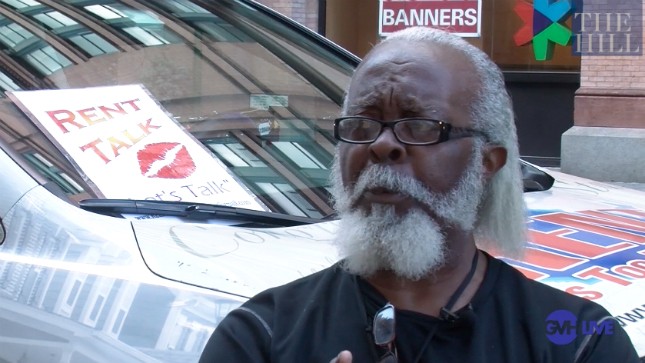
Rent Is Too Damn High Party founder endorses Trump

rent_too_high

REPORT: The founder of the Rent is Too Damn High Party is endorsing billionaire real estate mogul Donald Trump for president.

Jimmy McMillan, an advocate for affordable housing and a Vietnam veteran, told the New York Daily News that Trump’s support for veterans outweighs any negatives.
“He’s the only one who is supporting my brother veterans, which is good enough for me,” McMillan said of the Republican presidential front-runner.

“My main concern is helping my brother veterans get help,” he added. “America needs change.”

McMillan, who also ran for president in 2012, said he wanted Trump to be his vice president at the time.

“I’ve read up a lot on him,” he said.

McMillan rose to prominence in the 2010 New York gubernatorial race, where his unusual demeanor and statements drew attention at debates. Considered a protest candidate, he garnered just under 1 percent support.

Posted in Donald Trump | Comments Off on Rent Is Too Damn High Party founder endorses Trump

Welcome to Arcadia – The California Suburb Where Wealthy Chinese Criminals are Building Mansions to Stash Cash

Michael Krieger writes:

Screen Shot 2014-10-16 at 1.53.00 PMThe city, population 57,600, projects that about 150 older homes—53 percent more than normal—will be torn down this year and replaced with mansions. The deals happen fast and are rarely listed publicly. Often, the first indication that a megahouse is coming next door is when the lawn turns brown. That means the neighbor has stopped watering and green construction netting is about to go up.

Arcadia is a concentrated version of what’s happening across the U.S. The Hurun Report, a magazine in Shanghai about China’s wealthy elite, estimates that almost two-thirds of the country’s millionaires have already emigrated or plan to do so.

– From the Bloomberg article: Why Are Chinese Millionaires Buying Mansions in an L.A. Suburb?

The surge in foreigners buying up U.S. real estate has been well documented in recent years. Of all this buying, no nation has demonstrated a bigger increase in purchases than China. In fact, it is estimated that 24% of all foreign purchases of domestic real estate this year have come from China, up 72% from last year. In my post from July, Chinese Purchases of U.S. Real Estate hit $22 Billion as The Bank of China Facilitates Money Laundering, I noted that:

In some California communities, 90% of real estate buyers are from China. Yes, 90%. Naturally, many of them are buying multi-million dollar homes in “all cash” transactions.

Well it appears that one of those communities is the 57,000 person Los Angeles suburb known as Arcadia. The suburb had a relatively insignificant Asian population of 4% in 1980, but it is now 59%. Of course, I could care less what the ethnic mix of any particular suburb is, but what does concern me is that a lot of the recent money coming in seems to be from questionable characters. The buyers are getting access to U.S. real estate via the EB-5 visa program, and of the 10,000 of these given away this year, 85% went to the Chinese. Oh, and it’s estimated some 20% of these home sit vacant. A great use of resources.

Here are some excerpts from Bloomberg’s expose:

Ornelas is an informal broker in Arcadia, Calif., a Los Angeles suburb at the foot of the San Gabriel mountains. He’s been keeping an eye out for the builder, an Asian man with a slight comb-over who goes by Mark. Ornelas has found two older homeowners who’ve finally agreed to sell their properties, and he knows that Mark, like all developers here, needs land on which to build mansions for an influx of rich clients from mainland China.

Ornelas rattles off addresses on a nearby street. “Three-eleven, that guy, he’s wack,” he says, shaking his head. “He wants 2.8.” He means million dollars. “And then 354, they want $2 million.”The lot is 17,000 square feet. “Seventeen for 2 mil?” Mark asks, incredulous.“I know,” Ornelas says. “They’re going crazy.”A year ago the property would have gone for $1.3 million, but Arcadia is booming. Residents have become used to postcards offering immediate, all-cash deals for their property and watching as 8,000-square-foot homes go up next door to their modest split levels. For buyers from mainland China, Arcadia offers excellent schools, large lots with lenient building codes, and a place to park their money beyond the reach of the Chinese government.

The city, population 57,600, projects that about 150 older homes—53 percent more than normal—will be torn down this year and replaced with mansions. The deals happen fast and are rarely listed publicly. Often, the first indication that a megahouse is coming next door is when the lawn turns brown. That means the neighbor has stopped watering and green construction netting is about to go up.

Arcadia is a concentrated version of what’s happening across the U.S. The Hurun Report, a magazine in Shanghai about China’s wealthy elite, estimates that almost two-thirds of the country’s millionaires have already emigrated or plan to do so.

The city’s Asian population grew from 4 percent in 1980 to 59 percent in 2010.

Smith says many of the newest buyers in Arcadia don’t speak English. “They’ve just come here,” he says. “They’re on that EB—what’s it called?” He means the EB-5 visas that the U.S. grants to foreigners who plow at least $500,000 into American development projects. Congress created the program in 1990 to spur investment, and demand for the visas has grown recently. This year, for the first time, the government gave away the annual allocation of 10,000 visas before the year was over, with Chinese nationals snapping up 85 percent. Brokers in the area say it’s the most common way buyers are coming to town. “Once they obtain residency, they want to bring their family over and get the United States education,” says real estate agent Ricky Seow. “They can start a new life in California.”

In late 2013, Cheng and her mother, Wang Jun, bought a 9,000-square-foot house with a pool and spa in Arcadia for $6.5 million. According to an L.A. property filing, Wang’s husband is Cheng Qingtao. He’s CEO of China Huayang Economic & Trade Group, one of the first state-owned companies set up by the central government, which still owns a majority stake. Heli’s two-story chateau-style home is only a few miles from one owned by her aunt, who’s married to Cheng’s older brother, Cheng Qingbo. Qingbo was the first private owner of railroads in China and, by 2013, was the country’s 257th-richest person, worth an estimated $1.06 billion, Hurun says. In June, Shanghai police arrested Qingbo for allegedly duping people into investments, including a project that, China Business News says, didn’t exist.

Yep, the guy gets cuffed in China, but here in America we welcome him with open arms and he gets to buy a mansions.

For most Arcadians, it would be hard to know if Heli owned the house next door. A member of one homeowners association estimates that about 20 percent of the new purchases sit empty, and for those who don’t speak Mandarin, language barriers have made it hard to share more than a wave with neighbors. For many sales, public records provide no way to understand who the new owners are. A recorded deed may show just an English transliteration of a buyer’s name, with no signature. Some public documents provide small clues: a second address in a luxury condo near Tiananmen Square; a seal if a document has been notarized at the U.S. Embassy in Guangzhou; a husband who relinquishes rights to the land to his wife; or a signature in Chinese characters.

A few miles south, another new house, this one with Tuscan styling and Moorish window treatments, sold last year to a woman named Jin Liping. Her husband, Du Jianming, is the owner of one of China’s largest private builders of steel structures. His company has built bridges in Shanghai and connecting railways on the Tibetan Plateau. His wife bought the 8,000-square-foot house in Arcadia for $4.8 million in September 2013, around the same time the couple faced financial pressures at home. They lost three lawsuits in China related to unpaid loans, but their home in California looks in peak condition, with little red ribbons tied around the topiary by the front door.

Another criminal, welcome with open arms in America. Must be nice.

A goldenrod-yellow house on South 6th Avenue belongs to Tao Weisheng and Du Xiaojuan, who develop homes and run hotels in Chongqing. Tao is known in China for collecting calligraphy and paintings—and for reportedly paying bribes to bureaucrats. According to state-run media, in 2004, Tao and a business partner paid a local official’s gambling debt at a Macau casino. The official had given them a land certificate they needed for a loan. In 2010 the court found the official guilty of taking a bribe and gave him a suspended death sentence. The prosecutor didn’t charge Tao and his partner. The homeowners or their representatives declined to comment or did not respond to interview requests.

Lately, groups of Chinese investors have pooled their money to buy Arcadian homes, which often aren’t occupied. More than 400 residents showed up at a community meeting with the police department this spring, in part concerned about a spate of burglaries targeting empty mansions. When there are leaks or other problems with a property, even the city struggles to identify who’s responsible. “Who do we contact? Where do we contact them?” says Jim Kasama, the community development administrator for the city’s building department. “Sometimes it’s not that easy.”

With so many homes vacant and language barriers prevalent, distrust is building. There are strange rumors—local officials on the take; bridal studios as fronts for massage parlors—and stranger truths. Just steps from the Arcadia police station, a local TV news reporter uncovered a hotel being used for birth tourism. A member of one homeowners association says a developer told the local board at various meetings that three separate homes he was building were all for his own family. When the board called him on it, he said his wife couldn’t decide which one she wanted.

Well sure, when you allow corrupt Chinese billionaires in, what do you think is going to happen? They’re not used to playing by the rules.

Neighborhood disputes are getting intense. Dong Chang, a local dermatologist who told the Rotary Club that he left Taiwan in the early 1970s with “two bags of rice and a frying pan,” is suing the developer building a mansion next door for cutting down an old oak tree on his property. He’s seeking about $280,000, saying the harm was “intentional, fraudulent, oppressive, malicious, and despicably done.” It’s trickier for those without accounts in Hong Kong. Chen Ping, a local broker, says there’s a common workaround. “We call it ‘head-count wiring,’ ” she says. Buyers line up other people—friends, family, or, if need be, paid strangers—to each transfer a share. “I once had a customer who bought a $1.9 million house in Arcadia who said, ‘Not a problem. I have more than enough head counts,’ ” Chen says. Many buyers have legitimate ways to wire the funds, says broker Imy Dulake, but “there is no way we can have this much cash coming in legally.”

What’s happening in Arcadia is very similar to what I highlighted about Manhattan real estate in yesterday’s post: Meet the Pied-à-Terre Levy – The Proposed Tax that Could Crush High End NYC Real Estate.

Between private equity, hedge fund and foreign oligarchs buying, I’m surprised a single American citizen has purchased a home in the past five years.

Posted in California, China | Comments Off on Welcome to Arcadia – The California Suburb Where Wealthy Chinese Criminals are Building Mansions to Stash Cash