
What Do Doctor Visits Say About A Population?

I see a doctor about once every five years. So I was shocked to hear over coffee today that Australians visit a doctor an average of 11 times a year. When I Googled the matter, I found out the number was an OECD average of six times a year.

“The average number of doctor visits per year ranged from over 13 in Korea and Japan to less than four in Sweden, Mexico, South Africa and Brazil.”

The higher number in oriental countries makes sense as orientals tend to worry more than whites while whites tend to worry more than blacks.

J. Philippe Rushton found:

Studies find that Blacks are more aggressive and outgoing than Whites, while Whites are more aggressive and outgoing than Orientals. Blacks also have more mental instability than Whites. Black rates of drug and alcohol abuse are higher. Again, Orientals are under-represented in mental health statistics.

A study carried out in French-speaking Quebec looked at 825 four- to six-year-olds from 66 countries. The immigrant children were rated by 50 teachers in preschool classes. The teachers found more adjustment and less hostility among Oriental children than among White children, but they also saw more adjustment and less hostility among White children than among Black children.

Racial differences in personality are found using tests such as the Eysenck Personality Questionnaire and Cattell’s Sixteen Personality Factor Questionnaire. Orientals everywhere are less aggressive, dominant, and impulsive than Whites and Whites are less so than Blacks. Orientals are more cautious than either Whites or Blacks.

There are important race differences in time-orientation and motivation. One study asked Black children in the Caribbean to choose between a small candy bar now and a larger bar a week later. Most chose the small one now. A focus on the present moment as opposed to delayed gratification is a major theme in the research on Black psychology.

It may be surprising to learn that Blacks have higher self esteem than do Whites or Orientals. This is true even when Blacks are poorer and less educated. In one large study of 11- to 16-year-olds, Blacks rated themselves as more attractive than did Whites. Blacks also rated themselves higher in reading, science and social studies but not mathematics. The Blacks said this even though they knew they had lower actual academic achievement scores than White children.
Posted in Australia, Race | Comments Off on What Do Doctor Visits Say About A Population?

Schoolies Down Under

When you graduate from high school in Australia and your family has some money, you’ll typically go to a resort such as Surfers Paradise and party for a week. It’s called “Schoolies.”

I don’t remember this sort of thing 30 years ago.

If you don’t have air conditioning or a pool at home, your kids are likely to accuse you of owning a “pov house.”

When I lived in Australia in the 1970s, about 5% of the population went to university. Now it is about half, about the same rate as America.

From Brisbane’s Courier-Mail:

TENNIS wild child Bernard Tomic has been caught up in a major Gold Coast party drug investigation.

Tomic is believed to have been at a penthouse party in Surfers Paradise where two teenage girls were allegedly supplied cocaine by local nightclub king Jamie Pickering.

The Ferrari-driving Pickering, who owns prominent Surfers nightclubs SinCity and Vanity, was arrested in March as part of Operation Kilo Fraction, a 19-month police probe into bikie and organised crime links to the Glitter Strip’s party drug trade.

More than 150 people were arrested and tens of millions of dollars in drugs and alleged proceeds of crime, including luxury homes, were seized in the operation.

Pickering, the son of 1970s national political cartoonist Larry Pickering, was charged with five offences including supplying drugs to minors.

Posted in Australia | Comments Off on Schoolies Down Under

Using Aboriginee Status To Get Ahead In Australia

If you’ve got a drop of Aboriginee blood in you, you are allowed to claim yourself as an Aboriginee and get lots of government benefits and social status points in Australia.

I’m hoping to get hired as the multi-cultural officer in Gladstone.

Yin C. Paradies writes:

As Indigenous Australians, our health lags behind that of indigenous groups in other settler colonial nations such as the United States, Canada and New Zealand.1 Similarly, we are far behind these nations in relation to Indigenous participation in the health workforce and the professions generally. A compelling illustration of this is the fact that the first indigenous doctors in North America and New Zealand graduated in 1889 and 1899, respectively, while the first Indigenous doctor in Australia graduated almost a century later, in 1984.2,3

It is undeniable that our poor health and our low participation in the health workforce are related. Increasing recognition of this has led to a situation in which there are now over 80 qualified Indigenous doctors and almost 100 Indigenous medical students in Australia.4 This achievement has only been possible because we live in the era of “self-determination” that was born, as was I, during the 1970s. I am a multiracial Australian, with Aboriginal, Anglo and Asian ancestry. Because my grandmother (being my only Indigenous ancestor) was a member of the “stolen generations”, and because I am fair-skinned, I started life with an ambivalent Indigenous identity which has been profoundly shaped by the policies of affirmative action (or positive discrimination) that epitomise the era of self-determination.

My first experiences with affirmative action occurred in high school, when I was showcased as a role model for other Indigenous students. I went on to gain a degree in science and start a career in health research through an Indigenous cadetship. Affirmative action also provided me with the financial means to complete a Master of Medical Statistics — the first Indigenous Australian to do so — and with preferential access to scholarships, which allowed me to complete a Master of Public Health and to undertake a PhD. In return for this assistance, I have spoken at Indigenous youth summits and school career days, tutored, taught, and donated prize money to Indigenous tertiary students, and conducted research and teaching in Indigenous health on topics of importance to Indigenous people (such as the health effects of racism).5 In addition, I have brought an “Indigenous” perspective to a range of committees, forums, round tables, community groups, conferences, colleagues and students.

Posted in Australia, Race | Comments Off on Using Aboriginee Status To Get Ahead In Australia

Race & Obamacare

Obamacare is a massive transfer of wealth from whites and orientals to blacks and latinos. The middle and upper classes are worse off under Obamacare and poor people are better off. Whites and orientals are generally middle class and above while blacks and latinos are usually lower class. Therefore, generally speaking, whites are worse off under Obamacare and blacks and latinos are better off.

I wonder if white people will increasingly identify the Republican party as the white party just as the Democratic party is the black party?

According to Gallup: “Non-Hispanic white Americans are, by far, the least supportive of the law, with 35% approving. By contrast, 76% of black Americans approve of the law, while less than a fifth disapprove. Meanwhile, 57% of Hispanics–a group intently targeted by the law–approve, and one-third disapprove.”

“Black Americans are also most likely to see the law as making the healthcare situation in the U.S. better, with 64% saying so. Lesser shares of Hispanics (41%) and whites (31%) believe the law will improve the U.S. healthcare situation.”

Posted in Race | Comments Off on Race & Obamacare

Racism Down Under

I haven’t heard any Australian say anything racist in my week here. What happened to the country I knew and love? People are much more circumspect in their speech today than when I was growing up here.

Everyone I meet says racism is bad and that the White Australia policy was shameful but when I point out that everybody prefers those who are genetically similar to them, I get wide agreement. Australians have been cowed into abiding by the West’s new norms on race even though life as they experience it tells them there are significant differences between the white, black and Asian races and it is much more natural to trust your own kind.

Posted in Australia | Comments Off on Racism Down Under

Halloween Is Close To Australia’s Most Popular Holiday

When I lived in Tannum Sands 30 years ago, nobody celebrated Halloween. Now it is as celebrated in this part of Central Queensland as Christmas. Kids dress up in costumes and go around trick or treating. They’ll sometimes throw eggs, which are a great mess to clean up.

There are lots of naysayers against this new Australian custom, but American cultural hegemony rolls on.

Sydney’s Daily Telegraph says:

FOR a country that happily embraces images of a White Christmas amid sweltering humidity, and duly accepts the springtime symbolism of Easter even as we unpack the winter woolies, protesting against Halloween is as nonsensical as it is mean-spirited.

And yet every year the naysayers resume their paranoid bleating about the inherent dangers of children dressing up and eating lollies in the presence of carved-out pumpkins.

It’s the end of Australia as we know it! We’re becoming slaves to Americanisation! So wail the critics who blithely assume Halloween celebrations are the exclusive domain of sugar-laden citizens of US suburbia.

But it is of course a tradition with Celtic origins, and yet you don’t hear Americans whining about how their culture has been hijacked by medieval Europeans.

That’s because they are secure enough in their own national identity to acknowledge a foreign festival and proudly make it their own.

Rather than succumb to yet another insecure bout of parochialism, we’d do well to do the same.

Rampant anti-Americanism notwithstanding, what’s to fear about festivities that involve nothing more sinister than children donning costumes and spreading a little pre-Christmas cheer around the neighbourhood?

Posted in Australia | Comments Off on Halloween Is Close To Australia’s Most Popular Holiday

Muslims In Gladstone, QLD

I drove into Gladstone this morning (it is 20 minutes drive from Tannum Sands in Central Queensland) and met friends for coffee on Gondoon Street. I saw a Muslim woman walk by, completely covered except for her face. They’re not uncommon around town.

This is not how things were 30 years in Gladstone. Muslims were unknown. Today they walk around in Muslim regalia practicing Islam without interference or comment. Only the old folks will look at them a bit strange and ask you quietly, “What do you think of that?”

I’ve not heard a negative comment about the presence of Muslims in Gladstone, who have their own gathering site near where my late grandparents live. Nobody thinks there is any contradiction between Islam and the West.

An American Jew might say to a white Australian, “You know Islam stands for complete conquest of the world, through violence, and universal submission to Sharia (Islamic law)?”

The white Australian might reply: “Jews are the same way. They dominate parts of Melbourne.”

You won’t see any flaming homos in the Gladstone area. That wouldn’t fly. If you want to lead a gay life, you have to move. Other than that, multi-culturalism is alive and well in regional Australia.

Islam is booming down under. According to Wikipedia: “Islam in Australia is a minority religious group. According to the 2011 census, 476,291 people, or 2.2%[1] of the total Australian population were Muslims. This made Islam the fourth largest religious grouping, after all forms of Christianity (64%), no religion (22.9%) and Buddhism (2.5%). Demographers attribute Muslim community growth trends during the most recent census period to relatively high birth rates, and recent immigration patterns.”

Posted in Australia, Islam | Comments Off on Muslims In Gladstone, QLD

Seattle Gets Nation’s Highest Minimum Wage – $15

The minimum wage for adults in Australia is $16.37. For kids the minimum wage is about $15.

For most Australian workers, their wage is set by the government. It’s called an award wage. Employers are allowed to pay more but few do unless there are special circumstances. Advanced workers, workers with education and special skills, get paid far more than the award rate. Management get paid more than the award rate.

The Australian and American dollars are almost of equal value (92cUS buys $1 Aussie), but the cost of living here is almost twice that of America (though healthcare is free to the consumer). Gas and food are about twice as expensive down under.

Seattle just voted for a $15 minimum wage, the highest in America.

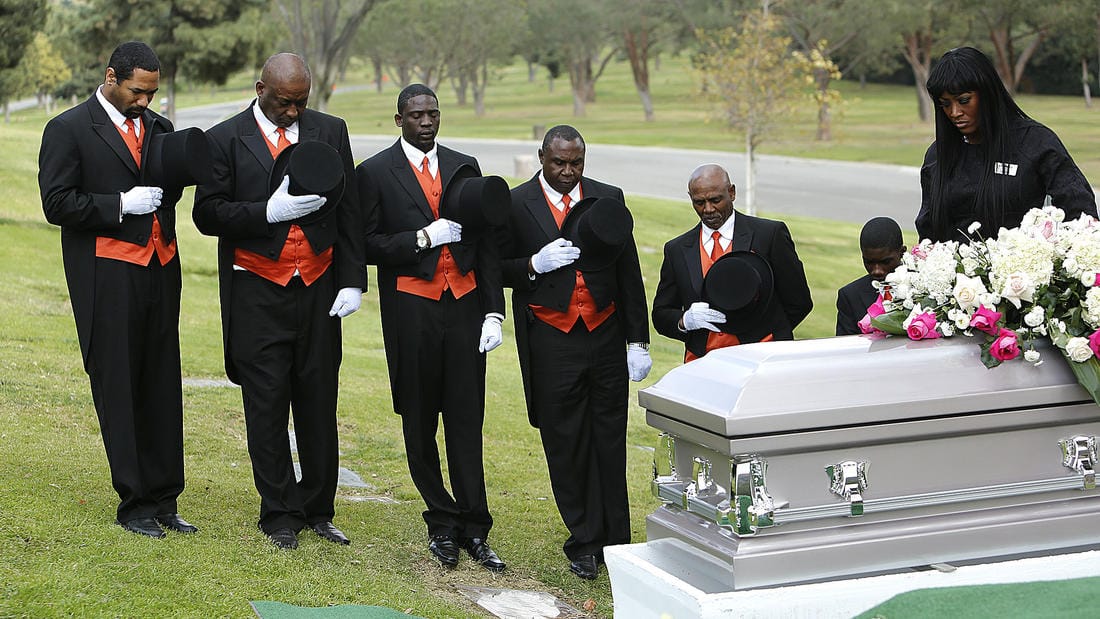
Los Angeles Professional Pallbearers Story

Posted in Australia | Comments Off on Seattle Gets Nation’s Highest Minimum Wage – $15

Topless Bathing Disappearing In Australia

Topless bathing was common on Australian beaches when I lived here 30 years ago but it has diminished, perhaps thanks to Asian and Muslim immigrants.

I used to see some lovely sights just off the main Tannum beach, sheilas just lying back in the sun on their towels without a care in the world, letting everything hang free. Nowadays however, one has to be grateful for the girls in bikinis.

Frankly, I blame the new prudishness on the Muslims.

Daniel says: “So the Muslims are cool with women in bikinis??? Why the hell do these people move to modern, western countries if they want to turn it into another Jihadstan, or wherever they’re from?!”

I assume they follow the dictates of their religion which aims to conquer the world, through violence if necessary, and rule everybody with Sharia (Islamic law). It seems to me that the West and Muslims are enemies and that the West admits Muslims and allows them to practice Islam to its destruction.

Sydney Morning Herald reports in 2008:

Conservative MP Fred Nile says he wants topless bathing banned in NSW to protect Sydney’s Muslim and Asian communities.

The Reverend Nile has rejected allegations that prudishness is behind a bill he has prepared to ban nudity, including topless sunbathing, on the state’s most popular beaches.

Australia’s reputation as a conservative but culturally inclusive sociery was at risk of erosion by more liberal overseas visitors, he said.

“Our beaches should be a place where no one is offended, whether it’s their religious or cultural views,” he said.

“If they’ve come from a Middle Eastern or Asian country where women never go topless – in fact they usually wear a lot of clothing – I think it’s important to respect all the different cultures that make up Australia.”

The practice was at risk of raising the ire of Muslim men in particular, Mr Nile said.

“I don’t want to have any provocations or disturbances on our public beaches,” he said.

REPORT:

A TOPLESS sunbather is being investigated by police after being accused of sensuously rubbing sun cream on herself on a public beach.

Police were called to a beach at Anzio south of Rome by a furious mother who said the way the “attractive” sunbather was rubbing lotion on her body had “troubled her sons aged 14 and 12.”

The mother said she had asked the 26-year-old woman, identified only as Luisa under Italian privacy laws, to cover herself up. But the woman, still topless, refused and an argument broke out and police were called.

“A patrol was stopped by a mother of two sons who was angry at a topless sunbather and the way she was applying suntan cream,” a police spokesman said…

The number of women sunbathing topless on beaches in Italy and France has dropped in recent years, Italian etiquette expert Countess Barbara Ronchi della Rocca told the UK’s Daily Mail.

Ms Rocca said the beach is no longer the place where you go to get a tan, as people spend the winter topping up their tan in salons.

FROM THE INDEPENDENT:

On any given day, acres of tanned flesh are on view at Bondi Beach: men wearing the briefest of briefs, women sunbathing topless. But it wasn’t always so. In the 1940s, a legendary beach inspector, Aub Laidlaw, patrolled the golden sands, ruler in hand, ensuring that men’s and women’s bathing costumes conformed to bylaws governing public decency.

Costumes had to cover at least three inches of thigh, as well as the entire front of the body, and wobbly bits had to be kept in place by robust straps. Mr Laidlaw frogmarched 50 or more people a week off the beach, including, in 1945, the first woman to brave Bondi in a bikini, and in 1961, a group of men wearing Speedo swimming trunks.

The fanatical Mr Laidlaw retired in 1969, eight years after the bikini was legalised, but now his ghost is once again stalking Sydney’s beaches. A Christian fundamentalist politician, the Rev Fred Nile, is calling for topless sunbathing to be outlawed, and he has received backing from several mainstream MPs.

Posted in Australia | Comments Off on Topless Bathing Disappearing In Australia

Is It Worth It?

The main question I get from Australians who knew me 30 years ago is, “Is it worth it?”

They’re referring to my choice to live in the United States.

I left Australia with my parents at age 11 in 1977 but came back for a year after high school to live with my brother in Tannum Sands, QLD. Everyone I knew then and then see today is in good financial shape. They’ve all married and had kids. They all own homes. They all have abundant resources set aside for retirement. They want to know, is it worth it to live in America?

Australia has the highest minimum wage in the world of about $16 an hour for adults. Every working Australian gets a minimum of four weeks holiday a year. The country has a generous welfare state and socialized medicine.

In regional Australia (as opposed to the big cities), people tend to trust each other. They leave their homes and cars unlocked. They do business on the assumption that their mates are telling them the truth. In other words, they enjoy high social capital because 98% of the people around them are white and most of the non-whites are Asians who are welcomed into their communities. Most of the Asians I see in regional Australia enjoy higher academic scores than the whites, higher incomes, and they tend to rise to the top, owning businesses and working in professional capacities.

Unlike my eight months in Australia in 1989-1990, I notice no anti-Asian sentiment today.

My answer to the question, “Is it worth it?”, is maybe. Los Angeles is an exciting city for me. I get to mix with outstanding people, leading writers, intellectuals, professors, etc, who I would rarely if ever meet in regional Australia. Regarding economic matters, while the Australian and American dollars are basically at parity, that dollar goes about twice as far in purchasing power in American than in Australia.

Posted in America, Australia | Comments Off on Is It Worth It?