Husband Of New Israel Fund Director Supports Boycotts Against Israel

Ronn Torosian writes:

Owning a PR firm, I know a tad about spin. The New Israel Fund (NIF) is facing an intense campaign which challenges their donors, and exposes their true intentions – and they are responding.

This weekend, Rachel Liel, Israel director of the NIF was featured in an article in YNET, the online version of Yediot Achronot. Using convenient half-truths, Liel discussed the importance of NIF projects which benefit minorities, benefits ultra-Orthodox women, and other fairly mainstream projects which few Israelis take offense at.

What was conveniently ignored was the fact that a significant portion of NIF’s $30 Million budget is spent on projects which directly harm the State of Israel. The New Israel Fund is a dangerous, radical organization which wraps their programs in a “respectable” package. They are rejected by the majority of Israelis across the political spectrum.

What has not yet been exposed is the fact that Rachel Liel’s husband, Alon is one of the world’s leading organizers of world boycotts against Israel. He is also a co-organizer of the campaign to call on European countries to undermine Israeli sovereignty by “recognizing” the “State of Palestine.” Alon Liel, Israel’s former ambassador to South Africa is a member of two organizations which receive large funding by NIF. He is on the management team of Ir Amin, which works against Jewish interests in Jerusalem, and is also a member of the B’Tselem Public Council.

Alon Liel supports a cultural boycott of Israel, having supported author Alice Walker’s Anti-Semitic refusal to allow a Hebrew translation of her bestseller “The Color Purple.” He works extensively worldwide on PR campaigns which harm Israel, working to generate headlines which read “Boycott My Country.”

He holds radical viewpoints which the majority of Israelis, even on the left oppose, from calling on High School trips to the Golan to be cancelled as they are “a provocation to peace”, to claiming that the boycott is a “more pressing issue than the Iran issue.” The man has endorsed an academic boycott against Israeli academic institutions, and has called Jonathan Pollard a traitor.

Liel noted, “The simple act of marking settlement products differently to Israeli products pulls the rug from under the refusal to declare a border. I buy Israeli products every day and do my best not to buy Israeli products from the Occupied Territories. I don’t see why you, living outside Israel, shouldn’t have the same choice.” Actress Scarlett Johansson was rightfully applauded across the Pro-Israel spectrum on this very issue – and the Liel’s must be condemned.
Yet, the Liel’s are two peas in a pod.

Last week Rachel Liel had an interview in Yedioth Achronot, where she referred to accusations that NIF organizations handed information to the Goldstone Commission by claiming that “The information was taken from publications and from websites and was not actively delivered to Goldstone.” At the same time, Adala, a major NIF organization claims the opposite on their website, as they note “This week, seven human rights organizations based in Israel presented a report to the UNFact-Finding team investigating allegations of war crimes during “Operation Cast Lead” in Gaza, led by Justice Richard Goldstone.”

With friends like these, who needs enemies?

The New Israel Fund must be ostracized and rejected by the Jewish community.

Posted in Israel | Comments Off on Husband Of New Israel Fund Director Supports Boycotts Against Israel

She Keeps Threatening To Leave

I took a walk on Shabbos with a distraught young black man in a tallis whose new live-in girlfriend had drained his bank account in a month from $5,000 to $2,000. “If I don’t keep giving her cash, she’ll leave me for guys who will,” he said. I told him he needed to leave her and be on his own for a while to detox. “I was alone for a year,” he said. “I hated it.” I suggested he go to a 12-step program for sex and love addiction.

Posted in Addiction | Comments Off on She Keeps Threatening To Leave

James Q. Wilson on race and violent crime

Steve Sailer writes: With federal judge Edith Jones being denounced for saying that blacks and Hispanics commit more violent crimes on average, it’s worth digging up an obscure but important 2002 book chapter written by the late James Q. Wilson, the leading social science expert on crime:
A central problem—perhaps the central problem—in improving the relationship between white and black Americans is the difference in racial crime rates. No matter how innocent or guilty a stranger may be, he carries with him in public the burdens or benefits of his group identity…
Estimating the crime rates of racial groups is, of course, difficult because we only know the arrest rate. If police are more (or less) likely to arrest a criminal of a given race, the arrest rate will overstate (or understate) the true crime rate. To examine this problem, researchers have compared the rate at which criminal victims report (in the National Crime Victimization Survey, or NCVS) the racial identity of whoever robbed or assaulted them with the rate at which the police arrest robbers or assaulters of different races. Regardless of whether the victim is black or white, there are no significant differences between victim reports and police arrests. This suggests that, though racism may exist in policing (as in all other aspects of American life), racism cannot explain the overall black arrest rate. The arrest rate, thus, is a reasonably good proxy for the crime rate.
Black men commit murders at a rate about eight times greater than that for white men. This disparity is not new; it has existed for well over a century. When historian Roger Lane studied murder rates in Philadelphia, he found that since 1839 the black rate has been much higher than the white rate. This gap existed long before the invention of television, the wide distribution of hand guns, or access to dangerous drugs (except for alcohol).
America is a violent nation. The estimated homicide rate in this country, excluding all those committed by blacks, is over three times higher than the homicide rate for the other six major industrial nations. But whatever causes white Americans to kill other people, it causes black Americans to kill others at a much higher rate.
Of course the average African American male is not likely to kill anybody.
During the 1980s and early 1990s, fewer than one out of every 2,000 black men would kill a person in any year, and most of their victims were other blacks.
Though for young black men homicide is the leading cause of death, the chances of the average white person’s being killed by a black are very small. But the chances of being hit by lightning are also very small, and yet we leave high ground during a thunderstorm. However low the absolute risk, the relative risk—relative, that is, to the chances of being killed by a white—is high, and this fact changes everything.
When whites walk down the street, they are more nervous when they encounter a black man than when they encounter a white one. When blacks walk down the street, they are more likely than whites to be stopped and questioned by a police officer…
The differences in the racial rates for property crimes, though smaller than those for violent offenses, are still substantial. The estimated rate at which black men commit burglary is three times higher than it is for white men; for rape, it is five times higher. The difference between blacks and whites with respect to crime, and especially violent crime, has, I think, done more to impede racial amity than any other factor. Pure racism—that is, a visceral dislike of another person because of his skin color—has always existed. It is less common today than it once was, but it persists and no doubt explains part of our racial standoff. But pure racism once stigmatized other racial minorities who have today largely overcome that burden. When I grew up in California, the Chinese and Japanese were not only physically distinctive, but they were also viewed with deep suspicion by whites.
For many decades, Chinese testimony was not accepted in California courts, an Alien Land Law discouraged Asian land purchases, the Chinese Exclusion Act (not repealed until 1943) prevented Chinese immigration, and a Gentlemen’s Agreement, signed in 1907, required Japan to cut back sharply on passports issued to Japanese who wished to emigrate to California. When World War II began, the Japanese were sent to relocation camps at great personal cost to them.
Yet today Californians of Asian ancestry are viewed by Caucasians with comfort and even pride. In spite of their distinctive physical features, no one crosses the street to avoid a Chinese or Japanese youth. One obvious reason is that they have remarkably low crime rates.
The black murder rate, though it is much higher than the rate for whites or Asians, does not always change in the same way as the white rate. Between 1976 and 1991, the murder arrest rate for black males aged twenty- five and older fell dramatically even though the murder arrest rate for the nation as a whole did not change at all. Apparently, adult black men were becoming less violent. But in some years, such as 1965 to the early 1970s, the black murder rate increased much faster than the white rate. By the late 1960s the black rate was over eighteen times higher than the white one. Then, beginning around 1975, the black rate declined while the white rate continued to increase, so that the ratio of black arrests to white arrests fell to around six to one. From 1980 until the present, the rate at which adult blacks and whites are arrested for murder dropped more or less steadily. By contrast, the rate at which black and white juveniles are arrested for murder increased sharply from 1985 to the early 1990s, with the white rate almost doubling and the black rate more than tripling. Starting in the mid- 1990s, the juvenile rate fell again, almost down to the level it was at in 1985.
In short, though the gap sometimes widens and sometimes narrows, white and black homicide rates tend to remain different.

Chaim Amalek writes: “Another neuro-normative, abled, western cultured, white, straight, cis-gendered, able-bodied male whose works we should not read.”

Posted in Blacks, Crime, Latino | Comments Off on James Q. Wilson on race and violent crime

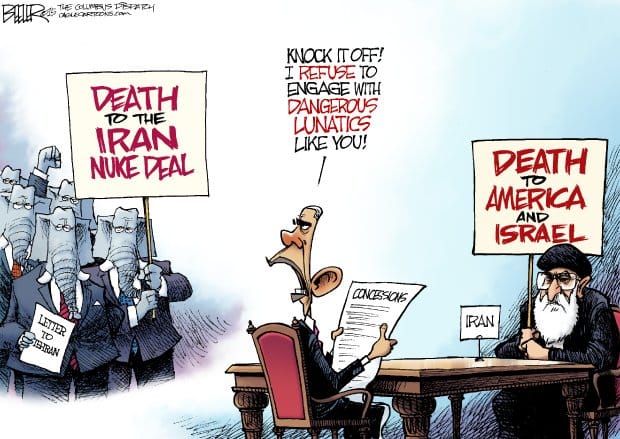
Death To The Iran Nuke Deal

iran

Posted in Iran, Israel | Comments Off on Death To The Iran Nuke Deal

Israel’s Electoral System

David Hazony writes on FB: Fact: Israel’s electoral system is actually one of the simplest in the democratic world. No multiple houses, no districts or run-off elections, no separate elected branches with voting at different times for different parts of it. So please stop using the word “complex” when what you mean is “different from ours.” The only thing complex is the negotiations that ensue to form a government after the voters have had their say–a process that reflects that complexity of the society itself.

Posted in Israel | Comments Off on Israel’s Electoral System

Torah Talks Returns – Parasha Vayikra (Leviticus)

I’ve got two Jewish female cohosts.

* Blood sacrifice was a big deal in the ancient world. Have we transcended this? Do you want the Third Temple built so we can offer sacrifices once again?

* This parashah is another example of how Judaism is a lot of work. There’s not a lot of time for lying around and meditating. The more religious the Jew, the more busy they are and the less likely they are to take time for hobbies. Jews are intense action-oriented people.

* Lev. 4:3. “If the anointed Kohen will sin, bringing guilt upon the people…” How much guilt have Jewish leaders brought on ordinary Jews who aren’t agitating for more gangster rap, pornography, miscegenation, hate speech laws, non-white immigration, more rights and benefits for minorities such as blacks, sodomites and trannies at the expense of the white majority?

* Lev. 4:13. “If the entire assembly of Israel shall err…” Every major Jewish group pushes for immigration amnesty. There’s never been a surplus of Jewish leaders fighting on the side of the white majority. Instead, they’re always pushing for multiracialism, multiculturalism, and a more divided West and Middle East. If what is good for the Jewish state of Israel is for Arabs to be at each other throats, then isn’t what is good for Israel bad for the Middle East and vice versa? So, in some instances, what is good for the Jews is bad for the goyim? Do we need to atone and how?

* If Israel is the Jewish state, does that make all Jewish institutions and synagogues around the world targets for those unhappy with the Jewish state? In the real world, that’s how things work out. There’s always increased security at synagogues around the world whenever Israel goes to war and an increased threat to individual Jews as they go about their lives.

There’s been no bigger critic of Jews than William Pierce and even he said that 999 Jews out of a thousand are no threat. It’s that exceptional and energetic radical Jew who poses a threat.

* I’m struck by how ordered and hierarchical is life as pictured by this Torah portion. It’s not like today’s Western world where everyone is free to choose his identity, sexual and otherwise.

* The Torah has no illusions about human nature. People are going to sin. They need a path back to God.

* “As I look ahead, I am filled with foreboding. Like the Roman, I seem to see “the River Tiber foaming with much blood”. That tragic and intractable phenomenon which we watch with horror on the other side of the Atlantic but which there is interwoven with the history and existence of the States itself, is coming upon us here by our own volition and our own neglect. Indeed, it has all but come. In numerical terms, it will be of American proportions long before the end of the century. Only resolute and urgent action will avert it even now. Whether there will be the public will to demand and obtain that action, I do not know. All I know is that to see, and not to speak, would be the great betrayal.”

jess

From the chat room:

One Man’s Chorus: Both girls are hot. Luke’s in heaven.

ThatWeirdPlaceInYT So nice to see Luke beaming with joy

Put the girls’ videos front and center. We do not want to look up your nose, Luke.

These girls are soooo cute.

For the good of the Race and the Tribe, they should make lots of babies.

Move to Minnesota.

Hot girls can really light up a room.

Look at that smile!

Age appropriate women just do not smile like that.

Those eyes! That mouth!

Age appropriate women never laugh.

Men are attracted to fertile young pretty white women.

Luke, being a socialist in 1950 not at all the same as being a communist.

Talk about the Torah Corral.

A Jew without a rebbe is like nitroglycerin without a stabilizing agent.

Jews are not passionate. At least Jewish women never were with me.

Posted in Torah | Comments Off on Torah Talks Returns – Parasha Vayikra (Leviticus)

Converting To Australianism

Darren writes: I’m wondering if you only became Jewish, so it is considered “legit” to make Jew jokes.

Cause if you did, I’m converting to Australianism!

Here’s my first attempt:

While waiting to finalize their Australian residental status, two Afghanistani men start chatting. As they part, they agree to meet in a years time and see who has adapted better to the Australian way of life.
True to their word, they meet after the year is up. The first says to the second, “We have integrated so well…yesterday, I ate a meat pie and drank a VB while watching my son play Aussie rules, and we own a Holden VK Commodore.”
The second man replies “F**k off, ya towelhead.”

Last one:

How do you know if you’re an Aussie?

You let your 15 year old daughter smoke at the dinner table in front of her kids.

Posted in Anti-Semitism, Australia | Comments Off on Converting To Australianism

What Choices Do You Have When Your Enemy Is Modern Culture?

Post: My enemy is modern (liberal Western) culture. It is pure evil, far worse than Communism or Nazism or any of the other recent evils in history. The enemy of my enemy is my friend. Who are the enemies of modern culture?

Not Christianity. Modern culture is a deviant form of Christianity, influenced by Plato and stripped of all good Christian values. Christianity today is either part of modern culture or is an empty shell of ritual. There is no significant opposition to modern culture in Christianity besides some obscure backward sects like the Amish.

Islam is a true enemy of modern culture, and therefore it is my friend. But unfortunately Islam is actually very similar to modern culture in many ways. It is quite intolerant, almost as intolerant as modern culture is. And it insists on imposing itself on the entire world, just as modern culture does. And it is fundamentally anti-intellectual just as modern culture is. Given these similarities, I cannot consider Islam as a good friend. I am just grateful whenever Islam attacks modern culture.

White nationalists are also true enemies of modern culture, and therefore my friends. Unfortunately they generally don’t consider me their friend because they are racist and I am ethnically Jewish. Racism is their big flaw, but otherwise they are reasonable. They aren’t anti-intellectual, aren’t intolerant, and don’t insist on imposing themselves on the world.

Orthodox Judaism is a true enemy of modern culture, even if they won’t openly admit it. They don’t admit it because they live within modern culture while rejecting modern culture internally. This works. Orthodox Judaism is somewhere in between Islam and white nationalism. Orthodox Judaism is racist and anti-intellectual, but is tolerant and doesn’t impose itself on others.

And that’s all. I can’t think of any other significant enemy of modern culture.

Unless one wants to be a hermit, one has to choose a culture to belong to. The choices today are horrible, but one has to choose the least bad of the horrible choices. And in my opinion, the least bad choice is Orthodox Judaism. Why Orthodox Judaism? Let’s consider the issues.

Of the choices, only white nationalists aren’t anti-intellectual. Modern culture, Islam, and Orthodox Judaism are all anti-intellectual. But unlike modern culture and Islam, Orthodox Judaism is tolerant. This means that while Orthodox Jews aren’t intellectual themselves, they will tolerate intellectuals. Modern culture and Islam cannot tolerate intellectuals. Therefore we can disqualify Islam.

The other big issue is racism which both white nationalism and Orthodox Judaism share. But unlike white nationalism, Orthodox Judaism provides a loophole with its Noahide concept. Someone who fails to meet the racial criteria of Orthodox Judaism can still be part of the community without having to obey the absurd rules of the Talmud by being a Noahide. There is nothing equivalent to this in white nationalism, so we can disqualify white nationalism for being racist without loopholes. I should note that the Noahide loophole only works for a minority of Orthodox synagogues since most Orthodox rabbis are too racist to tolerate Noahides. So this minority of Noahide tolerating Orthodox synagogues is the least horrible choice available in the modern world, and is the one that decent people (however few we are) should choose.

Posted in Orthodoxy | Comments Off on What Choices Do You Have When Your Enemy Is Modern Culture?

The 12 Tribes Had 12 Different Roles

The 12 different tribes of Israel had different tasks, different personalities, and different gifts. A model for humanity, no? Different peoples have different gifts. Jews, on average, are good at certain things, blacks at other things, goyim at other things, Orientals at other things. Together we make up the complete image of God.

Chaim Amalek: “This would be a great new game for Yidden to invent for some goyim to play: Which Lost Tribe are YOU?”

From Encyclopedia Judaica:

Modern scholarship does not generally accept the biblical notion that the twelve tribes are simply divisions of a larger unit which developed naturally from patriarchal roots. This simplistic scheme, it is felt, actually stems from later genealogical speculations which attempted to explain the history of the tribes in terms of familial relationships. The alliance of the twelve tribes is believed to have grown from the organization of independent tribes, or groups of tribes, forced together for historical reasons. Scholars differ as to when this union of twelve took place and when the tribes of Israel became one nation.

One school of thought holds that the confederation took place inside the country toward the end of the period of the Judges and the beginnings of the Monarchy. All of the traditions which see the twelve tribes as one nation as early as the enslavement in Egypt or the wanderings in the desert are regarded as having no basis in fact. This school recognizes in the names of some of the tribes the names of ancient sites in Canaan, such as the mountains of Naphtali, Ephraim, and Judah, the desert of Judah, and Gilead. With the passage of time, those who dwelt in these areas assumed the names of the localities.

Others feel that the tribes descended from the matriarch Leah – namely Reuben, Simeon, Levi, Judah, Zebulun and Issachar – existed at an earlier stage as a confederation of six tribes whose boundaries in Canaan were contiguous. Only at a later stage did other tribes penetrate the area, eventually expanding the confederation to twelve.

A second school grants that the union of twelve existed during the period of wanderings in the desert, but that Canaan was not conquered by an alliance of these at any one time. Rather, there were individual incursions into the land at widely separated periods. However, the covenant among the twelve tribes and their awareness of national unity flowing from ethnic kinship and common history, faith, and sacral practices had their source in the period prior to the conquest of the land.

The number twelve is neither fictitious nor the result of an actual genealogical development in patriarchal history. It is an institutionalized and conventionalized figure which is found among other tribes as well, such as the sons of Ishmael, of Nahor, of Joktan, and Esau. Similar organizational patterns built about groups of twelve, or even six, tribes, are known from Asia Minor, Greece and Italy. In Greece, such groupings were called amphictyony, meaning "to dwell about" a central sanctuary. Each tribe was assigned a prearranged turn in the provision and maintenance of the shrine. The amphictyonic members would make pilgrimages to the common religious center on festive occasions. The exact measure of correspondence between the amphictyony of the Hellenic world and the duodecimal structure of the tribes of Israel may be the subject of scholarly controversy, but there can be little doubt that this pattern of twelve attributed to the Hebrew tribes is very real and historically rooted. Thus, if one tribe were to withdraw from the union or to be absorbed into another, the number twelve would be preserved, either by splitting one of the remaining tribes into two or by accepting a new tribe into the union. For example, when the tribe of Levi is considered among the twelve tribes, the Joseph tribes are counted as one. However, when Levi is not mentioned, the Joseph tribes are counted separately as Manasseh and Ephraim. For the same duodecimal considerations, Simeon is counted as a tribe even after having been absorbed into Judah, and Manasseh even after having split in tw, is considered one.

The confederation of the twelve tribes was primarily religious, based upon belief in the one "God of Israel" with whom the tribes had made a covenant and whom they worshiped at a common sacral center as the "people of the Lord." The Tent of Meeting and the Ark of the Covenant were the most sacred objects of the tribal union and biblical tradition shows that many places served as religious centers in various periods. During the desert wanderings, "the mountain of God," that is, Sinai or Horeb, served as such a place, as did the great oasis at Kadesh-Barnea where the tribes remained for some time and from where the tribes attempted a conquest of the land. Many sites in Canaan are mentioned as having sacred associations or as being centers of pilgrimage. Some of these, such as Penuel, where Jacob received the name Israel, Beth-El, where the Ark rested, and Beer-Sheba, go back to patriarchal times. Jacob built an altar at Shechem and the tribes gathered there "before the Lord" and made a covenant with Him in Joshua's time. Shiloh enjoyed special importance as a central site for the tribes. There they gathered under Joshua to divide up the land by lot, and it was there that they placed the Tent of Meeting and the Ark of the Covenant. Eli's family, which traced its descent from Aaron, the high priest, served at Shiloh, and it was to Shiloh that the Israelites turned for festivals and sacrifices.

The multiplicity of cultic places raises the question of whether all twelve tribes were actually centered about one amphictyonic site. It may be that as a tribe's connections with the amphictyony were weakened for various reasons, the tribe began to worship at one or another of the sites. Possibly, different sites served the several subgroups among the tribes. Beer-Sheba and Hebron, for example, served the southern groups of tribes; Shechem, Shiloh, and Gilgal were revered by the tribes in the center of the country; and the shrine at Dan served the northern tribes. The likelihood of a multiplicity of shrines is strengthened by the fact that clusters of Canaanite settlements separated the southern and central tribes and divided the central tribes from those in Galilee. It is possible that various shrines served different tribes simultaneously, while the sanctuary which held the Ark of the Lord was revered as central to all twelve.

The changes which occurred in the structure of the twelve tribes and in their relative strengths, find expression in the biblical genealogies. The tribes are descended from four matriarchs, eight of them from the wives Leah and Rachel, and four from the handmaids Bilhah and Zilpah. It is a widely held view that attribution to the two wives is indicative of an early stage of tribal organization, the "tribes of Leah" and the "tribes of Rachel." The attribution of four tribes to handmaids may indicate either a lowered status or late entry into the confederation. In the list of the twelve tribes, Reuben is prominent as the firstborn, followed by Simeon, Levi, and Judah, the sons of Leah, who occupy primary positions.

Reuben stood at the head of a tribal league and had a position of central importance among his confederates prior to the conquest of the land. On the other hand, the same tribe is inactive during the period of the Judges – it did not provide any of the judges and during Deborah's war against Sisera, Reuben "sat among the sheepfolds" and did not render any aid. Possibly, because this tribe dwelt on the fringes of the land, its links with the others were weakened and its continued existence as one of the tribes of Israel was in jeopardy.

Simeon was absorbed by Judah. Levi spread throughout Israel as a result of its sacral duties. Judah was cut off from the rest of the tribes by a Canaanite land strip that separated the mountains of Judah and Ephraim. Reuben's place as head of the twelve tribes was taken by the house of Joseph which played a decisive and historic role during the periods of the settlement and the Judges. Joshua came from the tribe of Ephraim. Shechem and Shiloh were within the borders of the house of Joseph. Samuel came from the hill country of Ephraim. Ephraim led the tribes in the war against Benjamin over the incident of the concubine in Gibeah. At the beginning of the Monarchy, the leadership passed to Judah . The passage in I Chronicles 5:1–2 illustrates well how the dominant position among the tribes passed from Reuben to Ephraim and from Ephraim to Judah.

Each of the twelve tribes enjoyed a good deal of autonomy, ordering its own affairs after the patriarchal-tribal pattern. No doubt there were administrative institutions common to all the tribes, situated beside the central shrines, though information about them is exceedingly scanty. During the desert wanderings, leadership of the people was vested in the princes of each of the tribes and the elders who assisted Moses. They met and legislated for the entire people. There are references to meetings of tribal leaders and elders during the periods of the settlement and the Judges. "The princes of the congregation, the heads of the thousands of Israel" along with Phinehas the priest, conducted negotiations with the Transjordanian tribes, in the name of the entire nation. Joshua summoned "the elders, the heads, the judges, and the officers of Israel" to make a covenant in Shechem. The elders of Israel, speaking for the entire nation, requested Samuel to appoint a king. The incidents of the concubine in Gibeah and Saul's battle with Nahash the Ammonite are classic examples of joint action taken by the league of twelve tribes acting "as one man, from Dan even to Beer-Sheba, with the land of Gilead". In the one case, unified action was taken by the tribes against one of their members, Benjamin, for a breach of the terms of the covenant. The war against Nahash the Ammonite proves that the tribes were required to come to the aid of any one of the league that found itself in difficulty. Because of the sacral nature of the league, the wars of the tribes were considered "wars of the Lord". Nevertheless, the narratives in the Book of Judges regarding the battles which Israel waged against its enemies make it clear that the league must have been rather weak in those days.

The consciousness of national and religious unity had not yet led to a solid politico-military confederation. The Song of Deborah gives clear expression to the lack of solidarity among the tribes, for some of them did not come to the aid of the Galilean tribes. It is impossible to designate even one war against external enemies during the period of the Judges in which all the tribes acted in concert. Indeed, there are indications of intertribal quarrels and disputes. In this connection, there are scholars who hold that the judge-deliverers were not pantribal national leaders, but headed only individual tribes, or groups of them. It was only toward the end of the period of the Judges when the Philistine pressure on the Israelite tribes increased in the west and that of the Transjordanian peoples in the east, that the religionational tribal confederation assumed political and military dimensions. The Israelite tribes then consolidated as a crystallized national-territorial entity within the framework of a monarchical regime. David, Solomon, and afterward the kings of Israel and Judah tended to weaken tribal consciousness in favor of the territorial and monarchical organization. It is apparent, however, from Ezekiel's eschatological vision that the awareness of Israel as a people composed of twelve tribes had not, even then, become effaced.

Posted in Jews | Comments Off on The 12 Tribes Had 12 Different Roles

The Word For Today Is ‘Ethnogenesis’

Wikipedia: Ethnogenesis (from Greek ethnos ἔθνος, “group of people, nation”, and genesis γένεσις, “beginning, coming into being”; plural ethnogeneses) is a process in which a group of people acquire an ethnicity, that is, a group identity that identifies them as an ethnic group. This can originate through a process of self-identification as well as come about as the result of outside identification.

Posted in Whites | Comments Off on The Word For Today Is ‘Ethnogenesis’