Why the Brits do political satire so well — and Americans can barely do it at all

Michael Hiltzik writes: To serve this end, American producers become obsessed with making their characters lovable. The idea is to give the audiences characters they’re comfortable welcoming into their homes week after week, year after year. So the rough edges of even the nastiest roles, not to mention the merely offbeat, get sanded down over time. They lose their distinctiveness and become a collection of tics and catchphrases.

Jonathan Lynn, the co-creator and co-writer of “Yes, Minister” and “Yes, Prime Minister” (and director of “My Cousin Vinny”), understood this very well.

“American TV comedy nowadays tends not to be ironic or satirical,” he related. “There is a wish to make it homey and cozy. When I was talking to a network about turning [“Yes, Minister”] into an American series, I was asked if I could put a kid into it — or failing that, a dog. I decided that life is too short.”…

The finite lifespan of British programming gives producers the luxury of retaining and enriching the qualities that make their characters so distinctive without turning them insipid. John Cleese’s Basil Fawlty may occasionally inspire our sympathy, but never do we lose the feeling that it’s Basil’s actions that make things go from bad to worse. When Viacom tried to turn the show into an American sitcom named “Amanda’s” with Beatrice Arthur in the title role, they allowed her to be acerbic like her Maude, but softened her into a California hotel owner more sinned against than sinning. Cleese was aghast. Viacom told him, “We have changed one thing, we’ve written Basil out,” he recalled years later. The show lasted four months in 1983.

Cleese recalled that an earlier attempt to remake “Fawlty Towers” with Harvey Korman and Betty White misfired because the actors “were embarrassed by the edgy dialogue.” That points to another reason why American political sitcoms are so wan next to their British forebears: cowardice…

The makers of American political satires always claim to have devoted close personal study to the workings of Congress and the White House before they set pen to paper, but it’s the Brits who really base their work on real life. “Yes, Minister” and “Yes, Prime Minister” drew heavily from the diaries of former Cabinet minister Richard Crossman. There he wrote of his battles with his own private secretary, the fearsome Dame Evelyn Sharp, who became the prototype for Sir Humphrey Appleby.

The British “House of Cards” has an even finer pedigree: It’s based on a trilogy of novels by Michael Dobbs, who spent 10 years serving Margaret Thatcher as advisor, speechwriter, and “hit man” and used his fiction in part to settle old scores. “The Thick of It,” again, draws its realism by starting with real-life characters, and augmenting them into dramatic types with the skill of expert caricaturists.

But the defining difference is spine. British TV producers actually have more to fear from their political masters than Americans do — the BBC, which broadcast all three of the series we’ve discussed, is after all a government agency. (Government efforts to manipulate the news, by no means unsuccessfully, are a thread running through all three programs.) But as Lynn perceived, the guiding ethos of American producers of political shows seems to be harmlessness. They don’t want to offend the broadest possible audience or those who might make trouble for them in Washington. It’s always safer to be frankly implausible.

British shows have a simpler goal. They want to be funny, and in the process they end up being real.
Posted in English, Hollywood | Comments Off on Why the Brits do political satire so well — and Americans can barely do it at all

LAT: Why the second movie is the biggest hurdle to becoming a filmmaker — especially for women and minorities

Elsewhere in the Times: “Outfest Los Angeles embraces the LGBT-friendly mainstream with ‘Ghostbusters’ and more

LAT: Politics on parade: How Black Lives Matter halted a gay pride parade in Toronto

Posted in Los Angeles | Comments Off on LAT: Why the second movie is the biggest hurdle to becoming a filmmaker — especially for women and minorities

One Solution To The Homeless Problem

Killer Preying on San Diego Homeless Attacks Again: SDPD

I suspect Mafia communities do not have big homeless problems.

LAT: L.A. will need to create a ‘housing machine’ as part of homeless bond measure, official says

Posted in Homeless | Comments Off on One Solution To The Homeless Problem

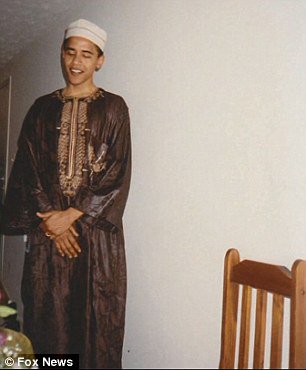
Obama In Muslim Dress

CmwzRv4WIAAVoZh

Source.

Posted in Barack Obama | Comments Off on Obama In Muslim Dress

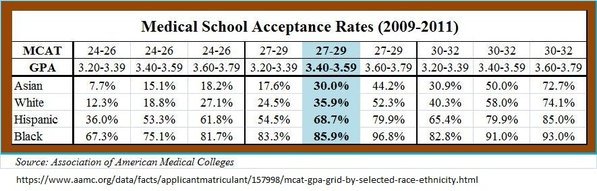
‘Affirmative Action in Med School isn’t just unfair to Whites & Asians – it’s a danger to our families.’

CmuXl7rUcAA9qgO

Source.

Posted in Affirmative Action | Comments Off on ‘Affirmative Action in Med School isn’t just unfair to Whites & Asians – it’s a danger to our families.’

Who Was Alton Sterling?

From Gotnews.com: Let’s sum it up: A convicted pedophile with previous charges ranging from drugs to illegal firearms. The police were called because he was pointing a gun at people in the parking lot…

Yet another narrative exploded… No, Alton Sterling wasn’t a good dad at all.

One of the lies currently being peddled about pedophile gang banger Alton Sterling is that he was a good father.

In fact Sterling was a dead beat dad who owned over $25,000 in child support, according to court records from the state of Louisiana.

From WTVM:

Sterling’s mother told the media that Sterling had a prior history with police including felony arrests. Court records show his arrest history includes:

9/09/96: Aggravated battery
10/31/97: Second-degree battery
1/06/98: Simple battery
5/04/00: Public intimidation
9/20/00: Carnal knowledge of a juvenile
9/04/01: Domestic violence
5/24/05: Burglary of an inhabited dwelling place
7/11/05: Receiving stolen things
9/12/05: Burglary of inhabited dwelling place
3/17/06: Simple criminal damage to property, simple robbery, simple theft, drug possession, misrepresentation during booking, simple battery, aggravated battery
4/12/06: Aggravated battery, simple criminal damage to property, disturbing the peace, unauthorized entry
4/04/08: Domestic abuse battery
6/03/09: Resisting an officer, drug possession, receiving stolen things, possession of stolen firearm, illegal carrying of a weapon with CDs, sound reproduct without consent
10/12/09: Illegal carrying of weapon, marijuana possession
8/13/15: Failure to register as a sex offender
4/08/16: Failure to register as a sex offender
6/14/16: Ecstasy and marijuana possession

Alton

CNN:

Sterling was known as the “CD man,” a laid-back guy who would sell tunes and DVDs outside the convenience store where he was shot, according to local media.
“Alton was a respected man. He was beloved in the community. He did not deserve the treatment and this excessive force that was exerted on him by the police department,” Jordan, his attorney, told CNN.
Now Sterling’s family is “grieving and mourning for an unnecessary loss of life,” the attorney said.
“Alton was out there selling CDs, trying to make a living. He was doing it with the permission of the store owner, so he wasn’t trespassing or anything like that. He wasn’t involved in any criminal conduct,” Jordan said.

Posted in Blacks, Crime | Comments Off on Who Was Alton Sterling?

Why Sugihara’s selflessness still matters

I wonder how many people would, without payment, risk their lives (and the lives of their families) to save strangers from a genocide?

I mention payment because “Righteous Gentiles” designation depends upon non-Jews saving Jews in the Holocaust without payment. The “Righteous Gentiles” categorization is a scam to denigrate gentiles by making the title “Righteous Gentile” hard to come by.

Elyse Glickman writes:

Most Jewish Americans are familiar with the story of heroism told in Steven Spielberg’s 1993 film “Schindler’s List” about German industrialist Oskar Schindler, who is credited with saving more than 1,000 Jewish lives during the Holocaust.
Far fewer know the story of how Chiune Sugihara — often called the “Japanese Schindler” — sacrificed his diplomatic career and defied his government to issue thousands of transit visas to Jews in 1940 from his post in Lithuania. It is estimated that 40,000 people are alive today as a result of his actions…
“It is extremely important to highlight this kind of story, especially as the film details a uniquely positive chapter in a period of history known for its immeasurable inhumanity,” said Janna Weinstein Smith, AJC regional director. “This event is a part of our ongoing efforts to build greater understanding between Jewish and non-Jewish communities here and throughout the world.”

Posted in Holocaust | Comments Off on Why Sugihara’s selflessness still matters

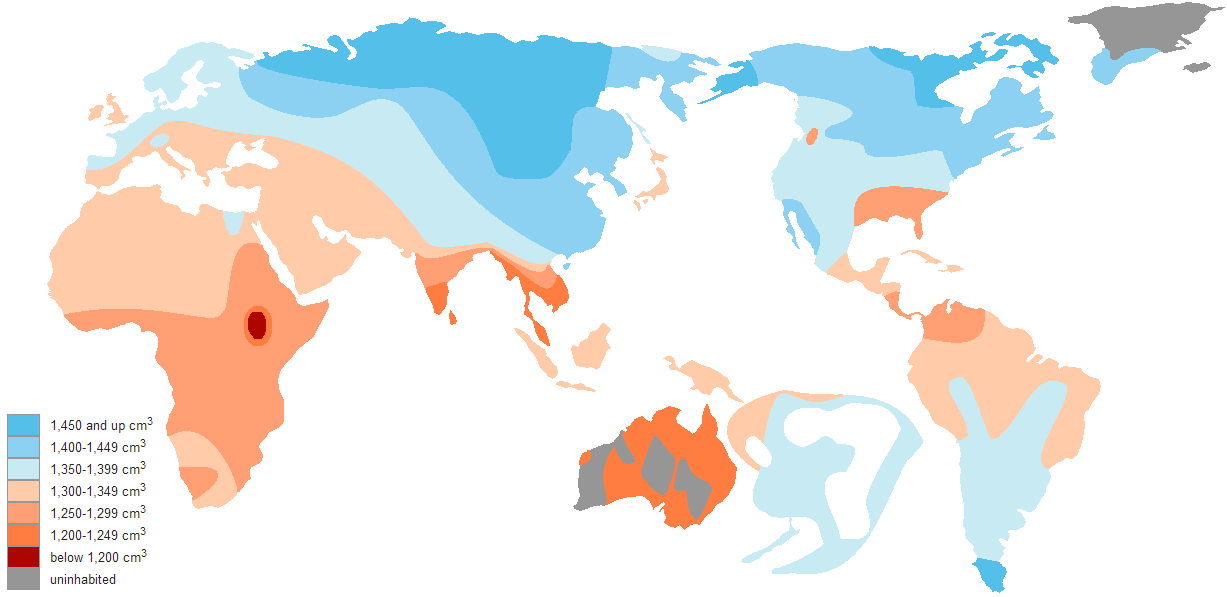
Global Differences In Brain Size

Brain size correlates with IQ.

brain_size_map

Jayman writes: There are global differences in brain size. Brain size is certainly related to intelligence, both on the individual level (Pietschnig et al 2015) and (even more so) on the group level (though the both the group level and individual level correlations are less than 1.0). In order for Chisala’s idea to work, these environmental insults must also cause certain racial group differences in brain size.

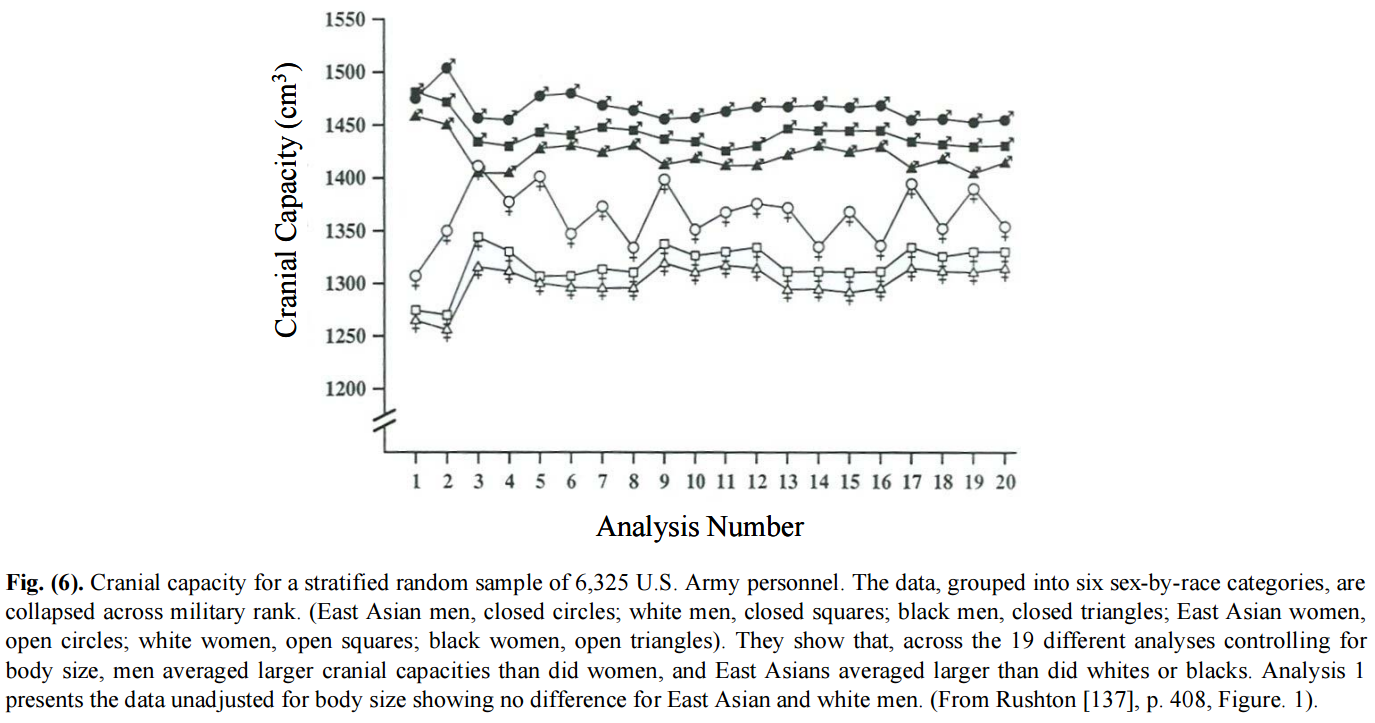
But, as we know, it’s not outside the realm of possibility that environmental insults can affect brain size (see the Zika virus). And sure, sub-Saharan Africa is loaded with pathogens and other environmental insults. But racial differences in brain size are seen between people of European, African, and Asian ancestry in the United States (from Rushton & Jensen, 2010):

Armed-Forces-Brain-Size-Rushton-Jensen

…brain structure differs detectably by race….

As we’ve seen before, and as Bryan Caplan recounts, the differences between human groups in development goes back thousands of years – such that level of development as far back as 1000 B.C. is predictive of development today…

It’s not like the poor performers and the strong performers of today are a new thing. They’ve been poor performers and strong performers throughout history (by and large). Indeed, in sub-Saharan Africa:

Why this meandering reminiscence of mine about a random ruin in Turkey? Because sub-Saharan Africa has remarkably few ruins for its immense size.

This fact is not well known. It is so hazy in the contemporary mind that Henry Louis Gates managed to sell PBS on a six episode miniseries about African ruins called The Wonders of Africa without, apparently, anybody in PBS management calling his bluff about the lack of wonders that his camera crew would wind up documenting in one of the most boring documentary series of the 21st Century.

Posted in IQ | Comments Off on Global Differences In Brain Size

The Talmudic Argument For a More Ethical Financial System

Jon Lukomnik writes:

It takes some chutzpah to write a book that takes on the whole financial system, let alone a plan to fix it. But that’s the task my co-authors and I undertook in writing “What They Do With Your Money.”
Why? Consider that Talmudic tradition tells us that the first question you are asked in making the transformation from this world to whatever comes next is “were you honest in business?” And that there are more mitzvot regarding business and property and buying and selling than there are for almost anything else. From the earliest of times, our ancestors understood that a fair economy is central to an ethical world.
Yet today, we seem very far away from even considering the question of ethics and purpose when it comes to capitalism. That’s a shame because doing so could not only provide a framework for how the financial sector should function, but also point a direction to tikkun olam, to improving our world…

For much of the world, the term “Jew” is synonymous with dishonesty in business. So I doubt that much of the world is going to want to hear about how the Talmud promotes financial honesty.

Judaism is a dual morality system (like the moral systems of all tribes but the anglos). There’s one morality for how you treat fellow Jews and another morality for how you treat non-Jews.

For Protestants and anglos, there is only one morality. There are not in-group and out-group moralities. That’s why the historically anglo countries such as the United States, Canada, England, and Australia are uniquely high-trust societies.

From the blog Those Who Can See:

Europe and the U.S. are both being overrun with illegal immigrants from the South. We recently asked the question, ‘Why?’ One answer, we’ve found, could be the former’s higher levels of Future Orientation. This ability to fully conceive of and plan for the future creates societies that are the envy of the world.

But we also argue that a second quality is drawing the masses to Euros’ doors. We call this trait Commonweal Orientation. Where it is found in abundance, safe and prosperous societies seem to flourish. So what is it, and why has it been so unevenly distributed on Planet Earth?

I. Low Commonweal: A character sketch

For those of us born in high-trust societies, it may come as a surprise that low commonweal orientation, also known as low trust, clannishness, or amoral familism, is anything but rare–globally, it is not the exception but the rule.

1) Low-trust: Don’t be a sucker

Let’s hear it from the horse’s mouth:

a) Semitics

Via HBD Chick, Marjorie Miller explains the Israeli concept of ‘freier’:
A freier, in Israeli eyes, is a shopper who waits in line to pay retail. It is a driver who searches for legal parking rather than pulling onto the sidewalk with the other cars. … The fear of being a sucker turns driving into a bumper-car competition and makes grocery shopping as trying as arm wrestling.

… ‘In London, the culture is to give way, be a gentleman, don’t compete,’ said Peri, the former editor. ‘But an Israeli is the opposite. If you are stronger, why should you give way to someone weaker? In a debate, the British will say, ‘You have a point.’ In a debate here, no Israeli will admit he has been persuaded to change his mind. That shows weakness.’

Americans often find the Israeli attitude intolerably rude. Israelis, meanwhile, find Americans to be the biggest freiers of all. They are naive idealists. … Americans are perceived as innocents who follow the rules and who believe a person will actually do what he promises to do. ‘An American is willing to trust until someone proves to be untrustworthy,’ Shahar said. ‘Israel is much more like the rest of the world, where the basic assumption is that people . . . should not be trusted until proven trustworthy.’

David Pryce-Jones, who lived many years among the Arabs:
‘Public welfare’ is a concept without meaningful application [in the Arab world]; there is no common good. Generosity is suspect as a ploy for advantage. Idealism and sincerity are penalized. Self-sacrifice is akin to lunacy or martyrdom.

David Lamb, after three years in Cairo:
But here’s the curious thing: While Egyptians are content to live in filthy, battered buildings, the insides of their homes are always immaculate. … When I asked friends if anyone had ever considered a neighborhood block association or an owners’ association to clean up common areas, they would chuckle and say “Oh, THAT would never work here.” No doubt it wouldn’t. My friends did not feel that their responsibility extended beyond their own boundaries.

b) Persians

Steve Sailer quotes Iranians Firoozeh Dumas and Dayi Hamid on the Persian concept of ‘zerangi’:
… When we first came to America in 1972, my father was amazed at the way Americans waited in line at Disneyland. No complaints, no cutting. In Iran, we have zerangi, a concept that loosely means “cleverness.”

… Most, if not all the time in Iranian culture and society, a zerang person is seen in a positive light … For example, a person who knows how the American legal system works and is able to work it to his or her advantage is zerang. A person who is resourceful in business and has made something of himself is zerang. … It does not stop here; a person who is able to wittingly cheat people, companies, businesses, governments of money is zerang and an idol for many Iranians. …We Iranians, although outwardly criticize corruption, internally glorify it and wish to master it.

Brazilian social anthropologist Roberto DaMatta has observed the stark contrasts between his countrymen’s behavior within the family circle and without. In sum:
If I am buying from or selling to a relative, I neither seek profit nor concern myself with money. The same can happen in a transaction with a friend. But, if I am dealing with a stranger, then there are no rules, other than the one of exploiting him to the utmost.

Lawrence Harrison, who spent decades working in Latin America, has identified what he calls the ‘attitude system typical of Hispanic America’:

[…] a limited radius of social identification resulting in a lack of concern for the interests and well-being of people outside the family, and for the society as a whole; the generalized absence of trust throughout the society; absence of due process, […] low incidence of organized group solutions to common problems; nepotism and corruption; tax evasion; absence of philanthropy…

In stark contrast to the above, NW Europeans–and first and foremost the English–are famous for their notion of ‘fair-play’. Salvador de Madariaga, in his Englishmen, Frenchmen, Spaniards (1929):

…the English sensitiveness to the ‘laws of things’–the law of the road, the law of the sea, the law of the hunting field. … the English are the teachers of the world, not merely in their quickness to perceive these natural laws, but in their cordial and sincere obedience to the restrictions which they impose upon each individual for the good of the whole.

Each Englishman is his own regulator. … The need of outside safeguards or guarantees of any kind is therefore less urgently felt than in other countries. The average level of honesty in English civil life is singularly high, as is shown in the usual disregard for detailed precautions against fraud or deceit.

… No bureaucracy in the world can vie with the English Civil Service in its devotion to the interests of the country. … it owes much also to that instinct for co-operation, that objectivity, that absence of self-seeking, of vanity and of personal passion which are typical of the whole race.

Posted in Ethics, Jews, Talmud | Comments Off on The Talmudic Argument For a More Ethical Financial System

8 Things You’ll Need To Know If You’re a Jew Living in Exile

The first thing you need to know, according to the author Sophia Marie Unterman, is how easy it is to cheat the goyim. Inspiring! Tikkun olam!

1. Capitalize on the convenient lack of knowledge about Jewish holidays.
When I was in eighth grade and unprepared for an upcoming French test, I told my teacher that I was very sorry but I couldn’t take an exam that day, as it was Yom Shalom. I was being strategic, of course; it was October, and thus in the vague timeframe of the High Holidays, and I was in Prairie Village, Kansas, where most folks were hazy on the details of Judaism in general. My teacher apologized profusely and said she would bump the test to the following Monday.
I pulled a similar stunt when working as a file clerk in Louisiana, when I took off some extra time around Yom Kippur, as my boss didn’t know how many days it lasted. This tactic of bending the length of or making up brand-new holidays works well for both children and adults, although the creativity and liberty you are able to take depends on your exact location…

Historically, many Jews have chosen to assimilate, to blend into American non-Jewish spaces. This tactic was oftentimes necessary for acceptance, and even for survival. I was lucky to be able to take the opposite route — to express my Jewishness to its full extent (to a rather obnoxious degree at times, I must admit).

I wonder if there could be any downside to goyim learning that Jews will cheat them if they think they can get away with it? Might there be a backlash?

Now it is entirely possible that the author is making it up that she routinely lied to the goyim about Jewish holidays to take advantage of their naivete. She may have just been taking literary license.

Posted in Jews | Comments Off on 8 Things You’ll Need To Know If You’re a Jew Living in Exile